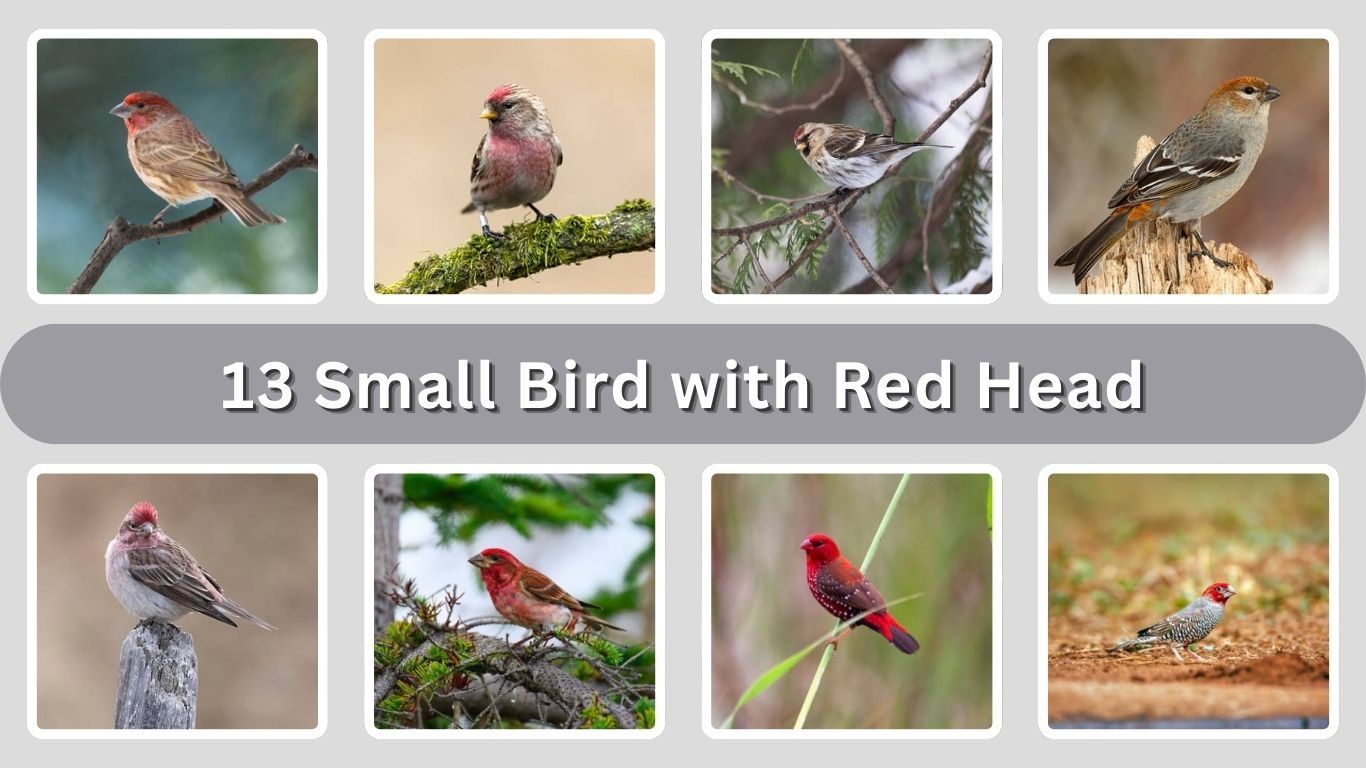
Small birds with red heads are some of the most eye-catching visitors in gardens, forests, and open landscapes. Their bright head coloring often stands out sharply against softer body tones, making them easy to notice even from a distance. In many species, the red head belongs mainly to males and plays an important role in attracting mates and signaling health. From tiny finches to colorful tropical birds, these red-headed species appear across many regions of the world.
1. House Finch
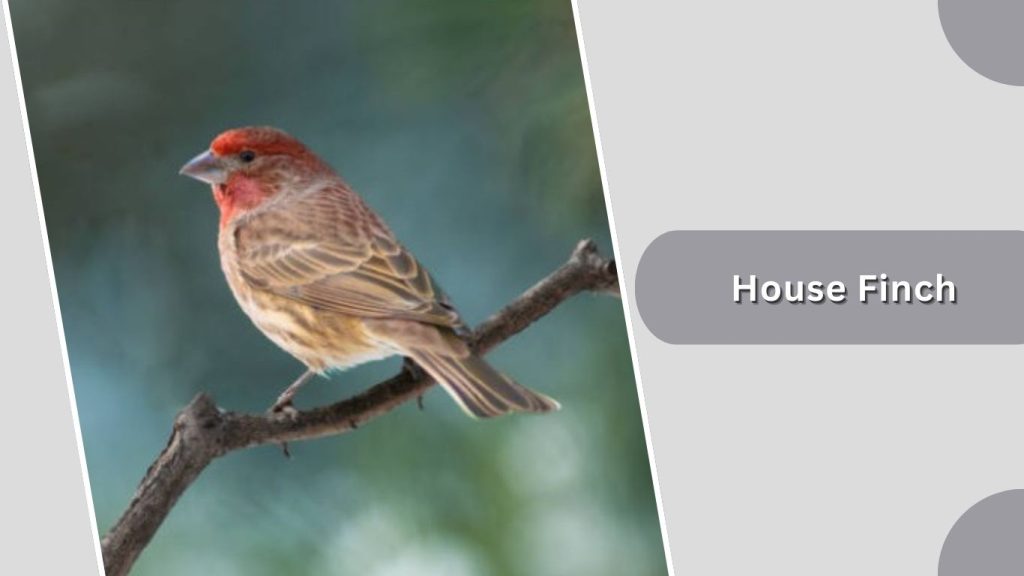
The House Finch is a small, social songbird widely found across North America. Males are best known for their red forehead, face, and upper chest, which can range from light orange-red to deep crimson. They often live close to humans, visiting gardens, parks, and backyard feeders, where they gather in noisy, active flocks.
Identification
- Small, stocky finch with a slightly rounded head
- Short, conical seed-cracking beak
- Males have a red head, face, and chest; females are brown and streaked
- Long, slightly notched tail
- Average length: about 5–6 inches
Habitat
House Finches adapt easily to many environments. They are commonly seen in urban neighborhoods, farmland, open woodlands, and desert edges. They prefer areas with scattered trees or buildings where they can nest and easily find food.
Diet
Their diet mainly consists of seeds, grains, buds, and fruits. House Finches frequently visit bird feeders for sunflower seeds and millet. During warmer months, they also eat small insects, which provide extra protein, especially for growing chicks.
Behavior
House Finches are very social and usually move in small flocks. Males often sing cheerful, warbling songs from rooftops or tree branches. They are active, agile flyers and are known for their constant movement and friendly presence around human settlements.
Nesting
They build cup-shaped nests using grass, string, feathers, and other soft materials. Nests are often placed in shrubs, trees, hanging planters, or building ledges. Females typically lay 3–6 eggs, and both parents help feed the chicks.
2. Common Redpoll
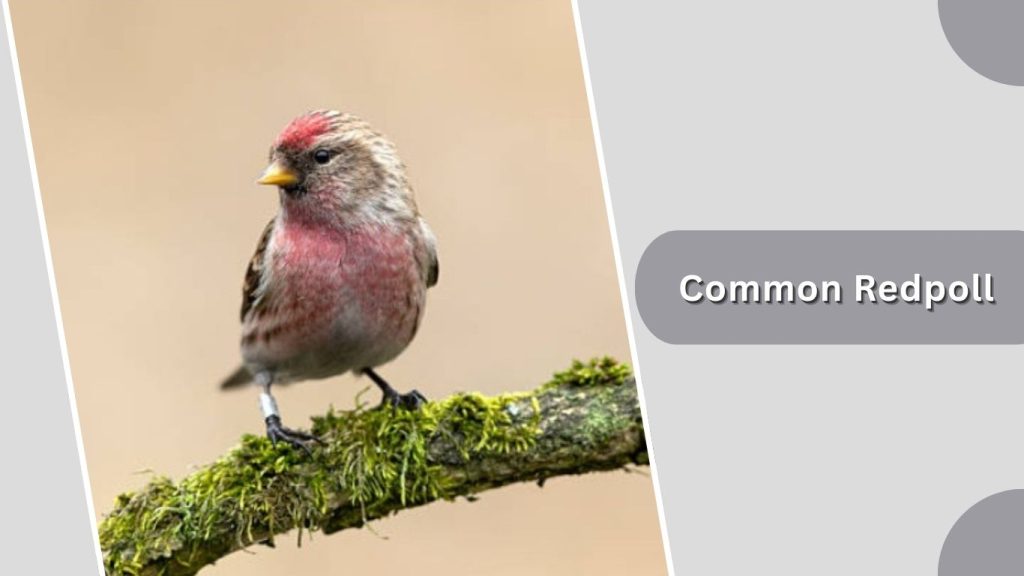
The Common Redpoll is a tiny, energetic finch known for the bright red patch on the top of its head. It lives mainly in northern regions but often moves south in winter, appearing in flocks at feeders and open fields. Its soft brown body, black chin, and cheerful calls make it easy to recognize.
Identification
- Very small, slim-bodied finch
- Distinct red cap on the forehead
- Black chin patch and small yellow bill
- Brown and white streaked body
- Average length: about 4.5–5.5 inches
Habitat
Common Redpolls breed in Arctic and subarctic scrublands, birch forests, and tundra edges. In winter, they migrate south into open woodlands, weedy fields, and backyard feeding areas, especially where birch and alder trees are common.
Diet
Their diet is heavily seed-based, with a strong preference for birch, alder, and grass seeds. They also eat buds and occasional insects. In winter, they frequently visit feeders for nyjer (thistle) and small sunflower seeds.
Behavior
These birds are highly social and usually travel in lively flocks. They are acrobatic feeders, often hanging upside down on seed heads. Their calls are constant and buzzy, helping flocks stay together while feeding.
Nesting
Nests are built low in shrubs or small trees, made from twigs, grass, and lined with feathers. Females typically lay 4–6 eggs, and both parents help raise the chicks.
3. Lesser Redpoll
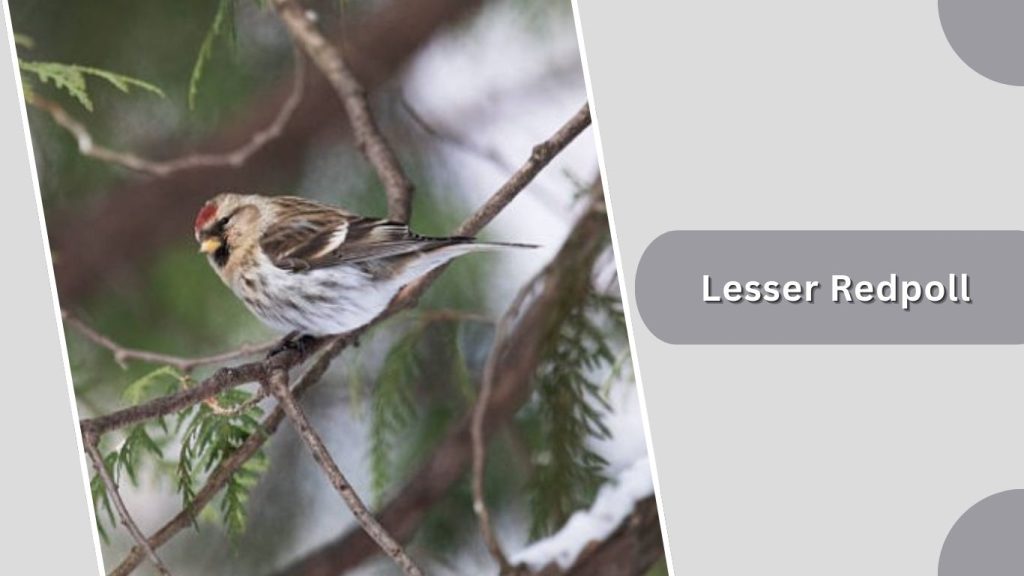
The Lesser Redpoll is a tiny, active finch recognized by its bright red forehead and finely streaked brown body. It is smaller and slimmer than many finches and is often seen feeding in flocks, especially during the colder months. Its constant chattering calls and energetic movements make it easy to notice.
Identification
- Very small, delicate finch
- Bright red patch on the forehead
- Black chin and short, pointed bill
- Brown, white, and black streaked body
- Average length: about 4.5–5 inches
Habitat
Lesser Redpolls are commonly found in birch woodlands, scrublands, gardens, and hedgerows. They prefer open areas with shrubs and small trees, and in winter they frequently visit backyard feeders and weedy fields.
Diet
Their diet consists mainly of tiny seeds from birch, alder, grasses, and weeds. They also eat buds and small insects during the breeding season. At feeders, they are especially attracted to nyjer and fine sunflower chips.
Behavior
These birds are highly social and usually move in restless flocks. They are agile climbers, often clinging to thin branches or seed heads while feeding. Their flight is bouncy, and they constantly call to one another.
Nesting
The nest is a compact cup built in shrubs or small trees using twigs, moss, and grass, then lined with feathers. The female lays 4–6 eggs and does most of the incubation, while both parents feed the young.
4. Pine Grosbeak
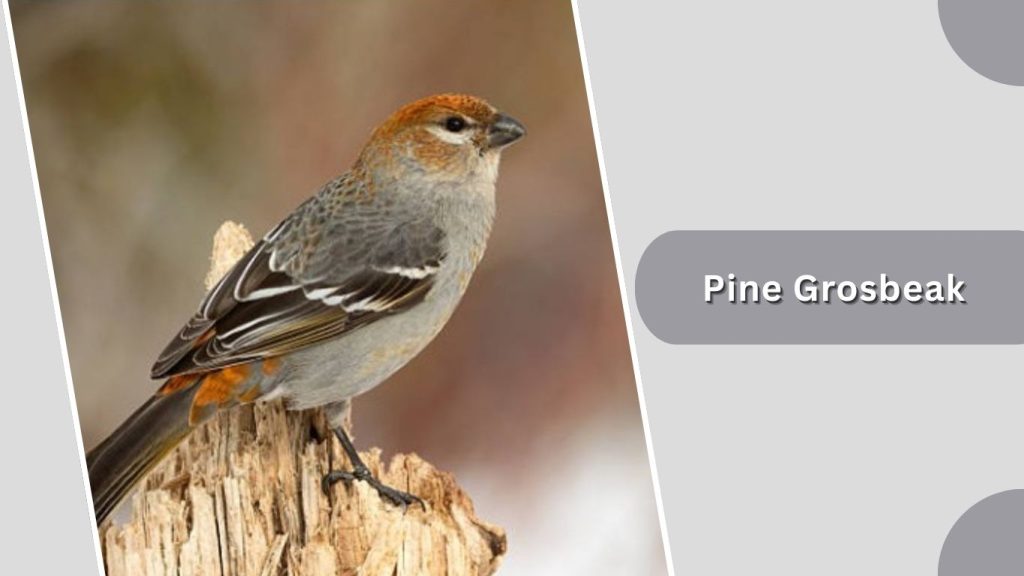
The Pine Grosbeak is a small, gentle finch best known for the rosy-red head and upper body of the male. Although larger than many finches, it is still considered a small bird and is slow-moving and calm compared to most seed-eaters. Females are gray with yellow or orange tones on the head.
Identification
- Plump-bodied finch with a rounded head
- Thick, conical beak adapted for seeds
- Males have a red head and chest; females show yellowish or orange highlights
- Dark wings with pale wing bars
- Average length: about 8–10 inches
Habitat
Pine Grosbeaks mainly live in northern coniferous forests, especially pine, spruce, and fir woodlands. In winter, they sometimes move south into open forests, parks, and mountain regions where food is available.
Diet
Their diet includes seeds, buds, berries, and fruits. Pine Grosbeaks are especially fond of mountain ash berries, crabapples, and sunflower seeds. They also eat insects during the warmer months.
Behavior
Unlike many fast, nervous finches, Pine Grosbeaks are slow and quiet. They often allow close approach and feed calmly in trees or on the ground. Their soft, whistling calls are gentle and pleasant.
Nesting
They build loose, shallow nests on conifer branches using twigs, grass, and moss. The female lays 3–4 eggs, and both parents take part in feeding the chicks once they hatch.
5. Cassin’s Finch
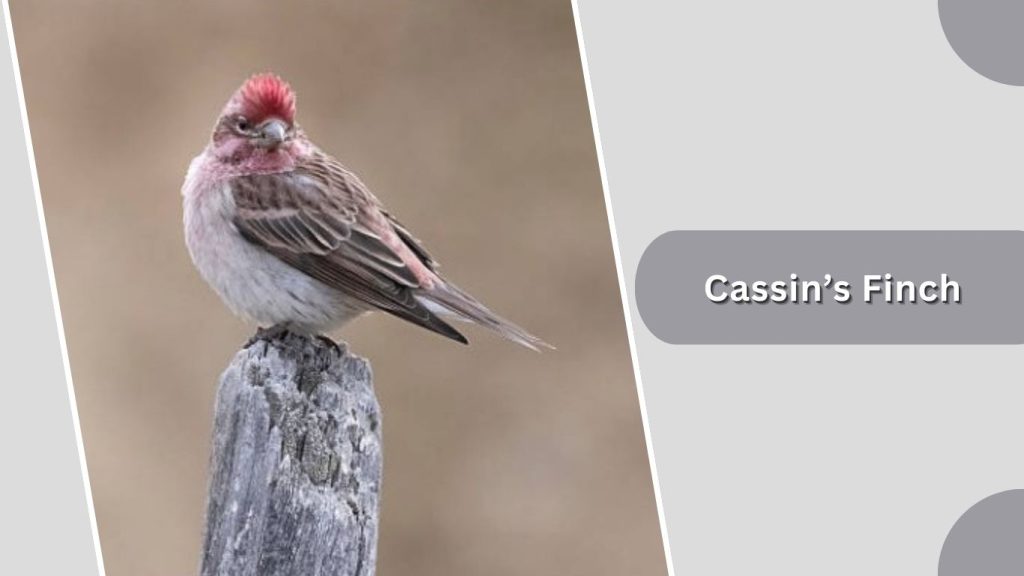
Cassin’s Finch is a small, rosy-colored finch of western North America, best recognized by the soft red crown and head of the male. Compared to other red-headed finches, its red is more concentrated on the top of the head rather than the whole face. It often lives in quiet mountain forests and sings a rich, musical song.
Identification
- Medium-small finch with a fairly long, notched tail
- Thick, pointed seed-eating bill
- Males have a red crown and head with a lighter belly
- Females are brown and heavily streaked
- Average length: about 6–6.5 inches
Habitat
Cassin’s Finches mainly inhabit coniferous forests, especially pine and fir woodlands in mountainous regions. During winter, some move to lower elevations, appearing in open forests, woodland edges, and occasionally backyard feeders.
Diet
They feed mostly on seeds from pine, fir, and weeds, along with buds and berries. In summer, they also eat insects, which are important for feeding their young. At feeders, they are attracted to sunflower seeds.
Behavior
These finches are usually seen in pairs or small flocks. Males often sing from treetops, producing long, varied, musical phrases. Their flight is smooth and slightly undulating, and they spend much of their time high in trees.
Nesting
Nests are built high in conifer trees, made from twigs, grass, and rootlets, then lined with soft plant fibers. The female lays 3–5 eggs, incubates them, and both parents help feed the chicks.
6. Purple Finch
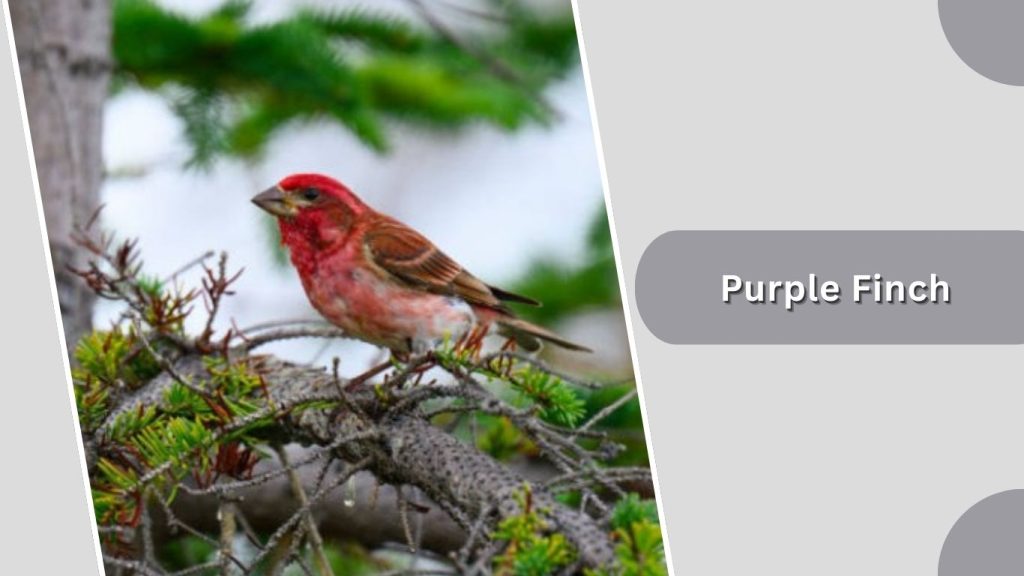
The Purple Finch is a small, chunky finch with a rich raspberry-red head and upper body in males. Its color often looks as if it has been dipped in red dye, covering the crown, face, and chest. Females lack red but are beautifully patterned with brown streaks and a bold facial design.
Identification
- Stocky finch with a large head and thick bill
- Males have a deep red head, face, and chest
- Females are brown with heavy streaking and a pale eyebrow
- Slightly notched tail
- Average length: about 5.5–6.5 inches
Habitat
Purple Finches live in coniferous and mixed forests, forest edges, and woodland clearings. In winter, they often move into gardens, parks, and backyard feeding stations, especially in northern and mountainous regions.
Diet
Their diet includes seeds, buds, berries, and small fruits. They also eat insects, particularly during the breeding season. At feeders, they prefer sunflower seeds and nyjer.
Behavior
They are active, strong-billed finches that can crack tough seeds. Males sing rich, warbling songs from high perches. Purple Finches are social outside the breeding season and often join mixed flocks.
Nesting
Nests are built in trees, usually on horizontal branches. They are made from twigs and grasses and lined with hair or fine plant fibers. The female lays 3–6 eggs and handles most incubation.
7. Red Avadavat
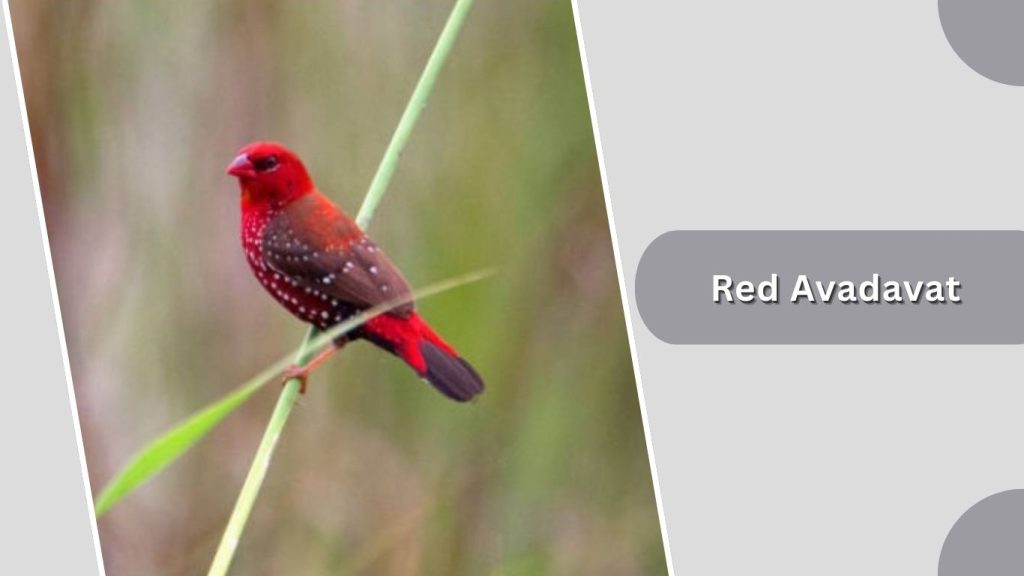
The Red Avadavat, also known as the Strawberry Finch, is a very small finch famous for its bright red head and body during the breeding season. Males become vivid crimson with white spots, making them one of the most striking small birds with red coloring. Outside the breeding season, they appear more brown and subtle.
Identification
- Very small, compact finch
- Short, thick, bright red beak (in breeding males)
- Males turn bright red with white spotting
- Females are light brown with paler underparts
- Average length: about 3.5–4 inches
Habitat
Red Avadavats are native to South Asia and are commonly found in grasslands, farmland, wetlands, and open scrub areas. They prefer warm climates with tall grasses and nearby water sources.
Diet
They mainly eat grass seeds, grains, and small plant materials. Insects are also taken, especially during breeding season. In captivity and in the wild, they readily feed on millet and other fine seeds.
Behavior
These birds are highly social and usually seen in flocks. They move actively through grasses and low shrubs, constantly calling to one another. During breeding season, males perform short display flights to attract females.
Nesting
They build round, grass-woven nests hidden in tall grasses or bushes. The female lays 4–6 eggs, and both parents take part in incubating and feeding the chicks.
8. Red-headed Weaver
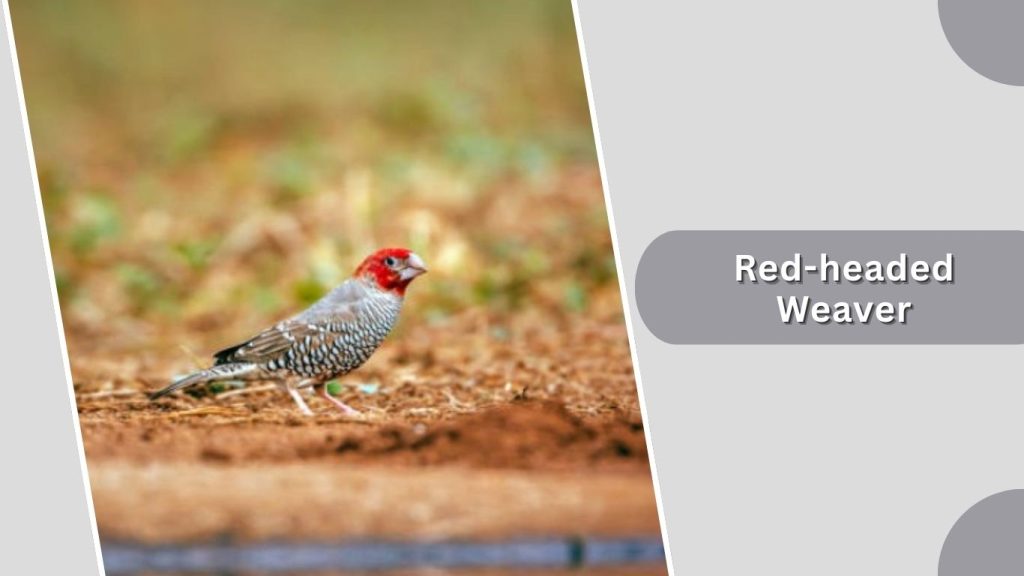
The Red-headed Weaver is a small, active bird well known for the male’s bright red head during the breeding season. This colorful head contrasts sharply with its dark face and yellow body. It is especially famous for its hanging, woven nests, which are often seen in groups on trees near water.
Identification
- Small, compact weaver bird
- Bright red head on breeding males
- Black face mask and yellow underparts
- Strong, conical bill
- Average length: about 4.5–5.5 inches
Habitat
Red-headed Weavers live in savannas, open woodlands, grasslands, and areas near rivers or lakes. They are commonly found across parts of sub-Saharan Africa, especially where tall trees and open feeding grounds are close together.
Diet
Their diet consists mainly of seeds and grains, along with insects and small invertebrates. During the breeding season, insects become especially important as a protein source for growing chicks.
Behavior
They are highly social birds, often living in loose colonies. Males build several woven nests to attract females, constantly fluttering and calling near their constructions. They are energetic, noisy, and very active around nesting sites.
Nesting
The male constructs a tightly woven, hanging nest from strips of grass and plant fibers. Once a female accepts a nest, she lines the inside and lays 2–4 eggs. Both parents help feed the chicks.
9. Northern Cardinal
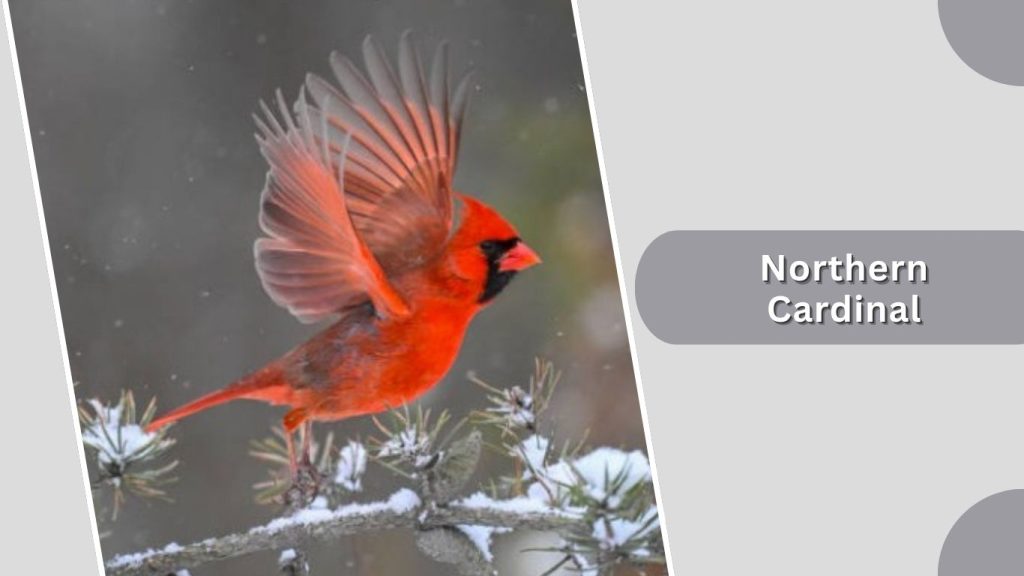
The Northern Cardinal is a small-to-medium songbird famous for its brilliant red head and face, especially in males. Although the entire male is bright red, the bold red head, tall crest, and black mask make it one of the most recognizable red-headed birds in the world. Females are warm brown with red highlights.
Identification
- Medium-small songbird with a tall, pointed crest
- Thick, orange-red conical bill
- Males are bright red with a black face mask
- Females are brown with reddish head and wings
- Average length: about 8–9 inches
Habitat
Northern Cardinals thrive in woodlands, forest edges, gardens, wetlands, and suburban areas. They adapt very well to human environments and are one of the most common birds at backyard feeders in North America.
Diet
They eat mainly seeds, grains, berries, and fruits. Insects such as beetles, caterpillars, and grasshoppers are also important, especially in summer. At feeders, they favor sunflower seeds and cracked corn.
Behavior
Cardinals are usually seen in pairs or small family groups. Males sing loudly from high perches to defend territory. Unlike many birds, both males and females sing, and they are active throughout the year.
Nesting
They build dense cup-shaped nests in shrubs and low trees. The female lays 2–5 eggs and incubates them, while the male brings food. Both parents feed the chicks after hatching.
10. Red-capped Robin
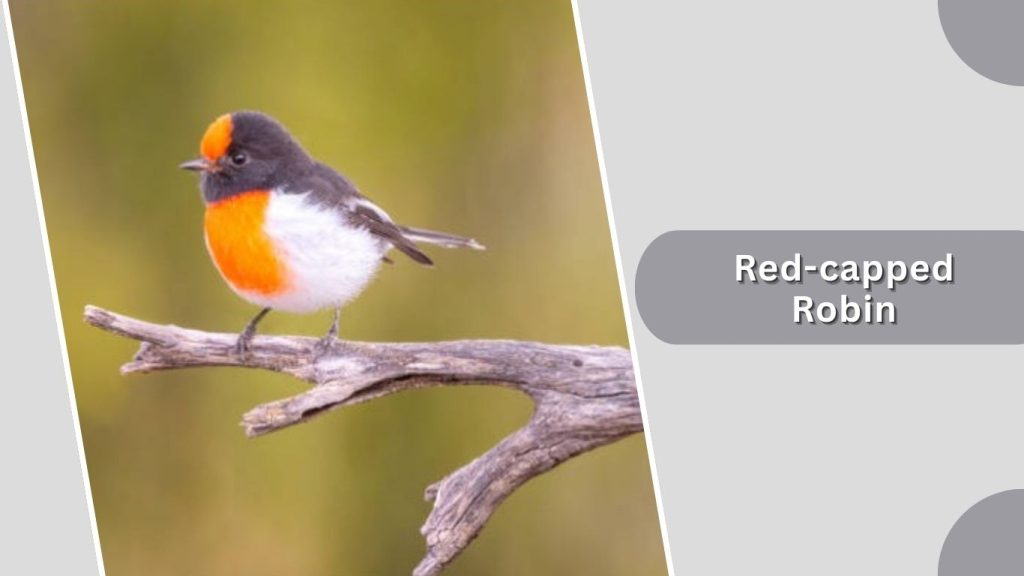
The Red-capped Robin is a small Australian bird recognized by the male’s vivid red crown and upper chest, which stand out strongly against its black-and-white body. Females are more softly colored, with brownish tones and a duller reddish wash. Despite its bright look, it often stays low and hidden in open woodland.
Identification
- Small, slender songbird
- Bright red cap and chest on males
- Black upperparts with white wing patches
- Females are brownish with faint red coloring
- Average length: about 4.5–5 inches
Habitat
Red-capped Robins are found in open forests, woodlands, scrublands, and dry bush areas across Australia. They prefer places with open ground for hunting insects and scattered trees or shrubs for perching.
Diet
They mainly feed on insects and small invertebrates, which they catch on the ground or by short flights from low perches. Occasionally, they may eat small seeds or plant material.
Behavior
These birds often perch quietly before darting down to the ground to catch prey. Males display their red caps while calling softly to defend territory. They are usually seen alone or in pairs rather than large flocks.
Nesting
They build small, neat cup-shaped nests hidden in shrubs or low branches. The female lays 2–3 eggs and incubates them, while the male helps feed the chicks.
11. Red-headed Parrotfinch

The Red-headed Parrotfinch is a tiny, tropical finch known for its bright red head and contrasting green body. Its thick, curved bill gives it a parrot-like appearance, which is how it gets its name. This colorful bird is usually seen moving quietly through dense vegetation in small groups.
Identification
- Very small, compact finch
- Bright red head with green body and wings
- Thick, curved, parrot-like bill
- Short tail and rounded body shape
- Average length: about 4–5 inches
Habitat
Red-headed Parrotfinches live in tropical forests, forest edges, bamboo thickets, and grasslands across parts of Southeast Asia and the Pacific islands. They prefer warm, humid environments with dense cover.
Diet
Their diet consists mainly of grass seeds, bamboo seeds, and soft fruits. They also eat small insects, especially during the breeding season, to provide extra protein for their chicks.
Behavior
They are shy, fast-moving birds that usually stay hidden in vegetation. They forage quietly in pairs or small flocks and communicate with soft, high-pitched calls while feeding.
Nesting
They build hidden nests in dense shrubs or bamboo clumps using grass and fine plant fibers. The female lays 3–6 eggs, and both parents take turns incubating and feeding the young.
12. Red-headed Finch
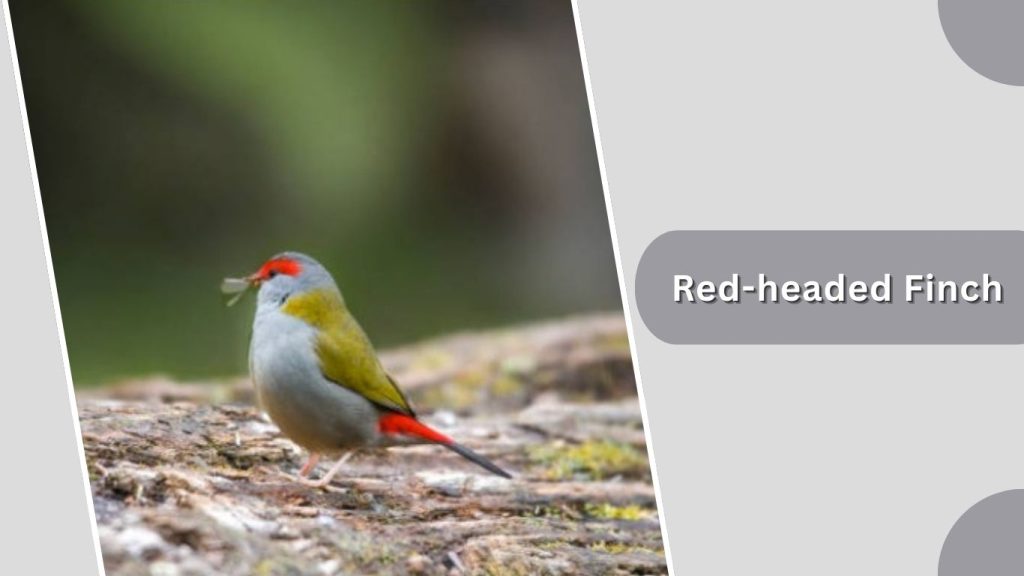
The Red-headed Finch is a small African finch easily recognized by its bright red head and face, which contrast with its gray-brown body. Its bold facial color makes it stand out in open landscapes where it often feeds on the ground in small, busy groups.
Identification
- Small, slim finch with a short tail
- Bright red head and face
- Gray to brown body with lighter underparts
- Short, conical seed-eating beak
- Average length: about 4–5 inches
Habitat
Red-headed Finches are commonly found in savannas, open woodlands, grasslands, and farmlands across much of sub-Saharan Africa. They prefer dry, open areas with scattered trees and access to water.
Diet
They mainly eat grass seeds and grains, along with small insects, especially during breeding season. They are frequent visitors to open feeding areas and sometimes mix with other finch species.
Behavior
These finches are very social and usually seen in flocks. They spend much of their time on the ground feeding, flying up quickly when disturbed. Their calls are soft but constant within groups.
Nesting
They build cup-shaped nests in shrubs or tree forks using grass and plant fibers. The female lays 3–6 eggs, and both parents share incubation and feeding duties.
13. Strawberry Finch
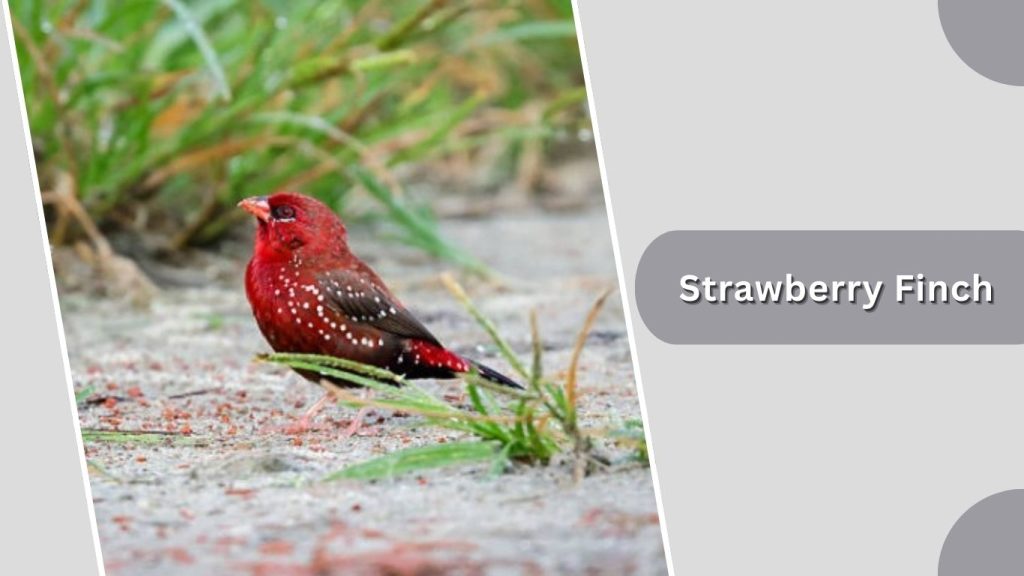
The Strawberry Finch, also called the Red Avadavat, is a tiny, brilliantly colored bird best known for the male’s bright red head and body covered with small white spots during the breeding season. Its cheerful appearance and constant activity make it one of the most eye-catching small birds with red coloring.
Identification
- Very small finch with a rounded body
- Bright red head and body in breeding males
- White spots scattered over the red plumage
- Females are light brown with paler underparts
- Average length: about 3.5–4 inches
Habitat
Strawberry Finches are native to South Asia and are commonly found in grasslands, rice fields, farmlands, wetlands, and open scrub areas. They prefer warm regions with tall grasses and nearby water.
Diet
They feed mainly on grass seeds, grains, and small plant matter. Insects are also eaten, especially during breeding season, to support growth of the chicks.
Behavior
These birds are very social and often seen in flocks. They move quickly through grasses, calling softly while feeding. Males perform short display flights and fluff their feathers to attract females.
Nesting
They weave round, ball-shaped nests from fine grass, usually hidden in bushes or tall reeds. The female lays 4–6 eggs, and both parents take part in caring for the young.
FAQs
What small birds commonly have red heads?
Several small birds are known for red coloring on the head, including the House Finch, Common Redpoll, Lesser Redpoll, Purple Finch, Red-headed Finch, Red Avadavat, and Red-headed Parrotfinch. In most species, the red head is brighter in males and helps attract mates.
Why do some small birds have red heads?
Red head coloration usually comes from pigments in the bird’s diet, especially carotenoids found in seeds, fruits, and insects. Bright red heads often signal good health and strong genetics, helping birds attract partners and establish dominance during breeding seasons.
Are red-headed small birds aggressive?
Most small red-headed birds are not aggressive toward humans. However, males can become territorial during breeding season and may chase other birds away from feeders or nesting areas. This behavior is natural and helps protect food sources and nesting sites.
Do female small birds also have red heads?
In many species, females have duller coloring and may lack bright red heads. For example, female House Finches and Purple Finches are mostly brown and streaked. However, some species show light red or orange shades on the head even in females.
Where can small red-headed birds usually be found?
Small red-headed birds live in many habitats worldwide, including gardens, forests, grasslands, wetlands, and farmland. Some prefer cold northern regions, while others are found in tropical and subtropical areas. Many are also common visitors to backyard bird feeders.