

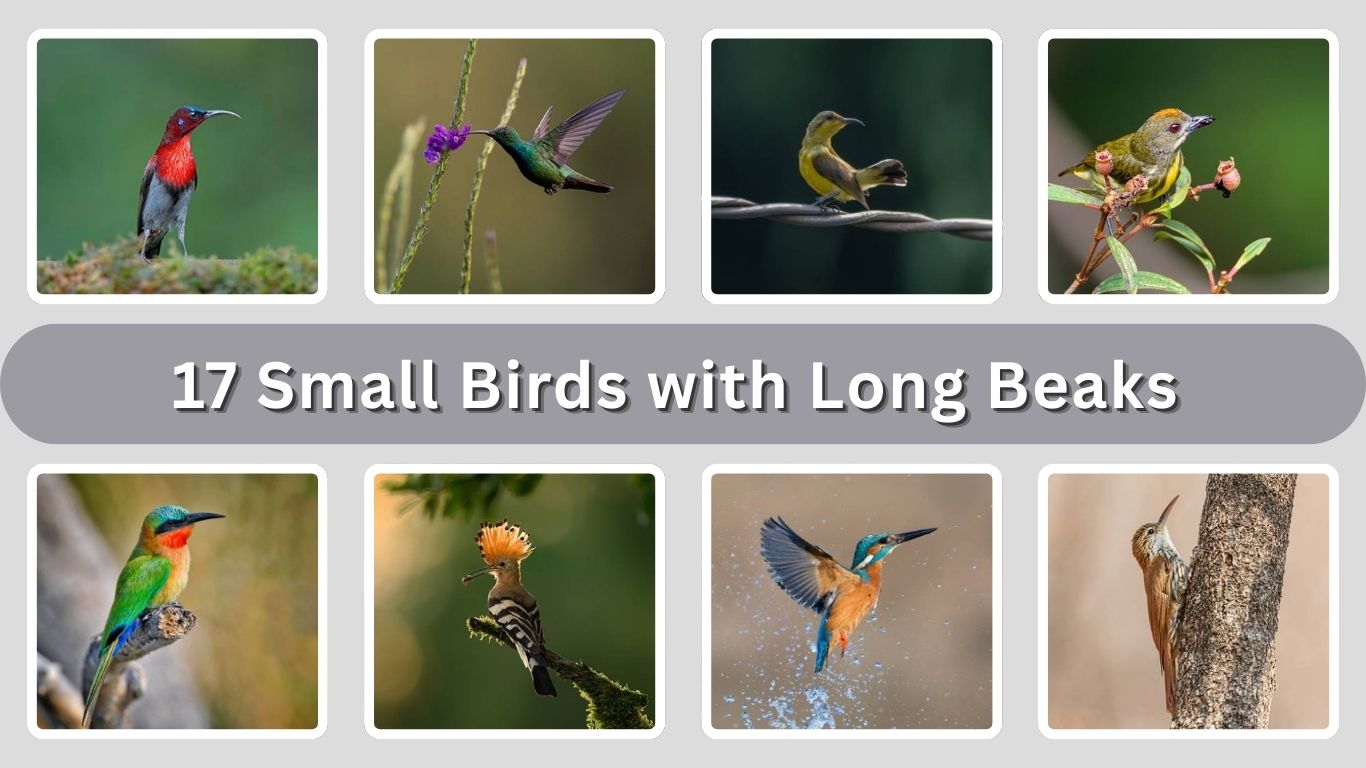
Small birds with long beaks are some of the most fascinating and specialized creatures in the avian world. These birds have evolved elongated beaks to feed on nectar, insects, fish, or other small prey, allowing them to thrive in diverse habitats ranging from tropical forests and wetlands to coastal mudflats. Despite their often tiny size, their long beaks give them remarkable adaptability, enabling them to extract food from flowers, probe the ground or water, and even hunt with precision.
1. Sunbird
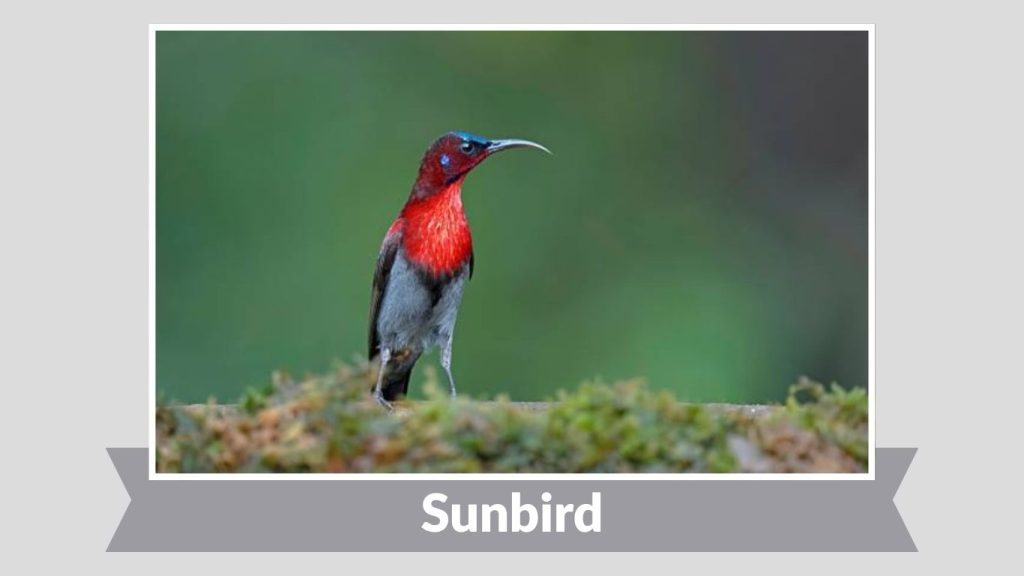
Sunbirds are small, colorful passerine birds known for their slender, curved beaks adapted for feeding on nectar. They are commonly found in Africa and parts of Asia and often resemble hummingbirds in behavior, though they are not closely related.
Identification
- Small body size
- Long, thin, curved beak
- Bright, iridescent plumage (especially males)
- Short wings and relatively long tail
Habitat
Sunbirds live in a wide range of habitats including gardens, forests, savannas, and mangroves, usually in areas with abundant flowering plants.
Diet
Their primary diet consists of nectar, but they also eat insects and spiders, which provide essential protein, especially during breeding season.
Behavior
Sunbirds are active and agile, often seen flitting between flowers or perching while feeding. They are territorial and known for their sharp calls and energetic movements.
2. Hummingbird
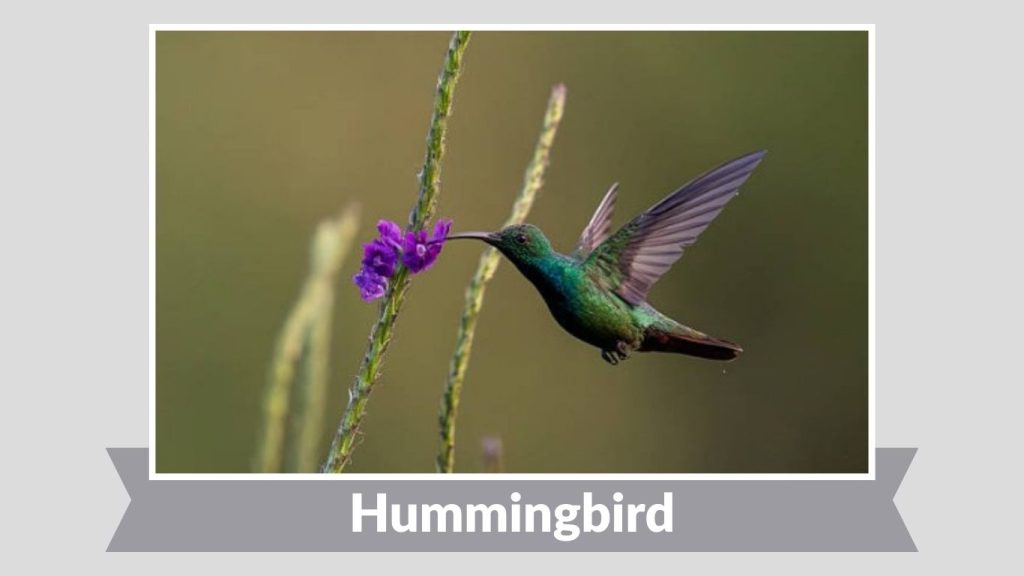
Hummingbirds are tiny, fast-flying birds famous for their long beaks and ability to hover in midair while feeding on nectar. They are native to the Americas and are known for their dazzling colors and rapid wingbeats.
Identification
- Very small body size
- Long, slender beak
- Iridescent, brightly colored feathers
- Extremely fast wing movement
Habitat
Hummingbirds are found in forests, gardens, meadows, and mountainous regions, often wherever flowering plants are abundant.
Diet
They mainly feed on flower nectar but also consume small insects and spiders to meet their protein needs.
Behavior
Hummingbirds can hover, fly backward, and change direction instantly. They are highly territorial and known for aggressive defense of feeding areas.
3. Sunbird-Asity
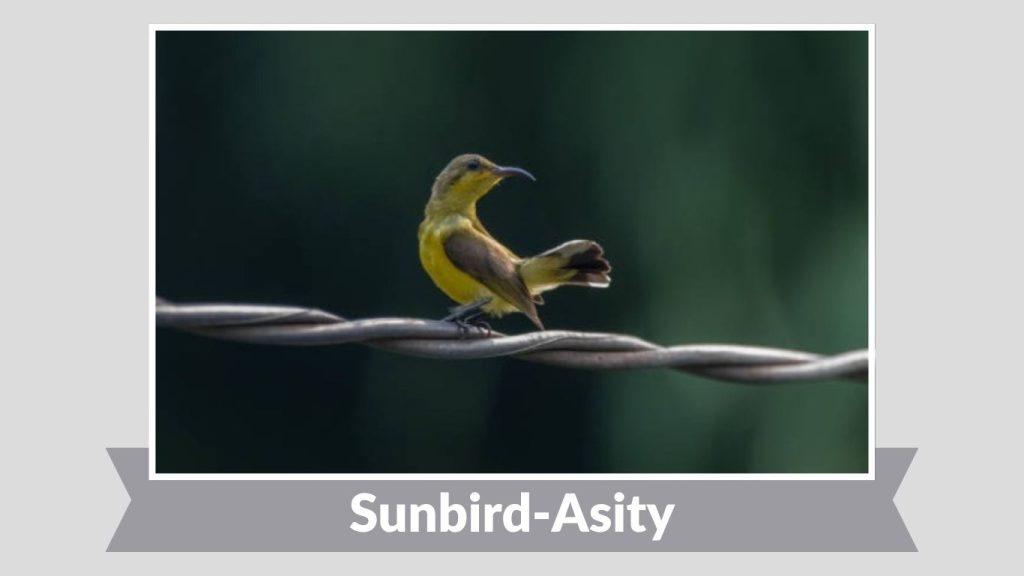
Sunbird-Asities are small, unique birds found only in Madagascar. They have long, slender beaks adapted for nectar feeding and are notable for the bare skin patches around their eyes.
Identification
- Small body size
- Long, thin beak
- Bare, colorful skin around the eyes
- Short wings and rounded tail
Habitat
They inhabit tropical rainforests and forest edges, usually in areas rich in flowering plants.
Diet
Their diet consists mainly of nectar, supplemented with insects and small invertebrates.
Behavior
Sunbird-Asities are active and curious birds, often seen moving quickly through foliage while feeding or calling softly.
4. Flowerpecker
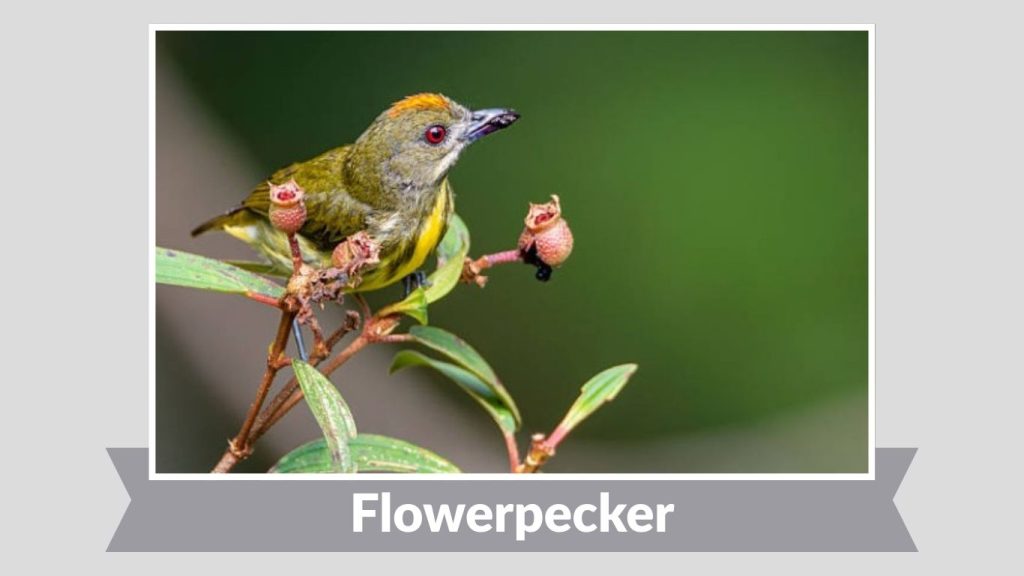
Flowerpeckers are among the smallest birds in the world, recognized for their short bodies and relatively long, sharp beaks. Despite their tiny size, they play an important ecological role by pollinating flowers and dispersing seeds. These birds are mainly found in South and Southeast Asia, thriving in warm, forested environments.
Identification
- Very small, compact body
- Short tail and rounded wings
- Slender, pointed beak suited for nectar and fruit
- Plumage often plain olive, gray, or black, sometimes with bright patches
Habitat
Flowerpeckers live in tropical and subtropical forests, forest edges, gardens, and plantations. They are especially common in areas with mistletoe plants, which form a key part of their lifestyle. Their ability to adapt allows them to survive even in human-altered landscapes, as long as flowering trees are present.
Diet
Their diet mainly includes nectar, berries, and small fruits, particularly mistletoe berries. They also feed on tiny insects to supplement their nutrition. While feeding, flowerpeckers help spread seeds, making them vital contributors to forest regeneration.
Behavior
Flowerpeckers are fast-moving and often difficult to spot due to their size. They usually forage alone or in pairs, moving quickly between branches. Their calls are high-pitched and sharp, often heard before the bird is seen. Although not showy, their constant activity and ecological importance make them fascinating members of the bird world.
5. Bee-eater
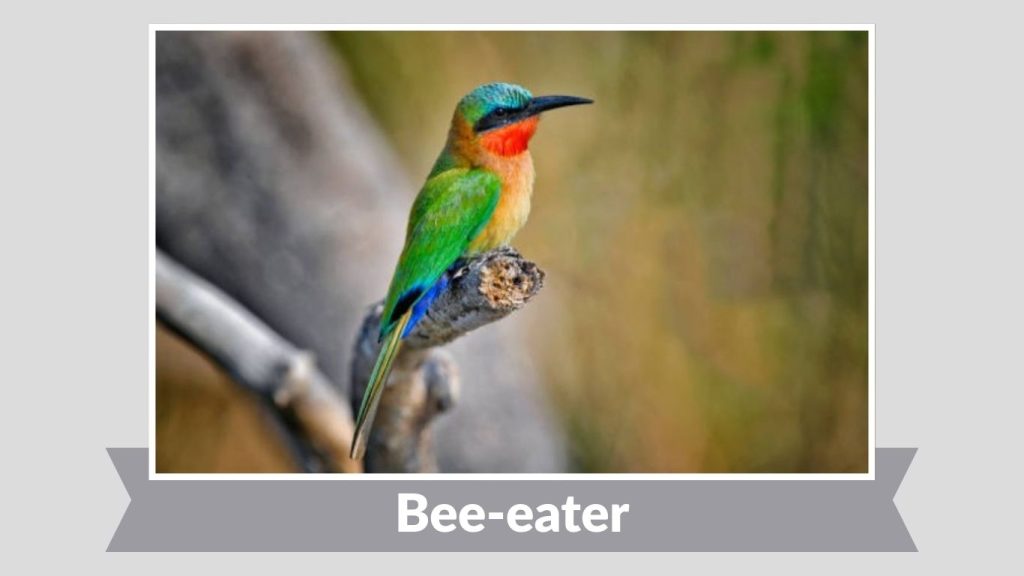
Bee-eaters are slender, colorful birds best known for their long, slightly curved beaks and graceful flight. They get their name from their habit of catching bees and other flying insects midair. Found across Africa, Asia, and parts of Europe, bee-eaters are among the most visually striking small birds, often displaying vibrant greens, blues, yellows, and chestnut tones.
Identification
- Slim body with long wings
- Long, slightly curved beak
- Bright, multicolored plumage
- Elongated central tail feathers in many species
Habitat
Bee-eaters inhabit open landscapes such as grasslands, savannas, riverbanks, farmland, and forest edges. They prefer areas with sandy or soft soil, which are ideal for nesting. These birds often form colonies, digging long tunnels into riverbanks or flat ground where they raise their young.
Diet
Their diet consists mainly of flying insects, especially bees, wasps, dragonflies, and butterflies. Before swallowing stinging insects, bee-eaters skillfully beat them against a branch to remove the sting. This specialized feeding behavior makes them highly efficient aerial hunters.
Behavior
Bee-eaters are social and vocal birds, frequently seen perched together on wires or branches. They are agile fliers, performing elegant swoops and glides while hunting. During breeding season, they display strong cooperative behavior, with some individuals helping others raise chicks. Their combination of beauty, intelligence, and teamwork makes bee-eaters a favorite among bird enthusiasts.
6. Hoopoe
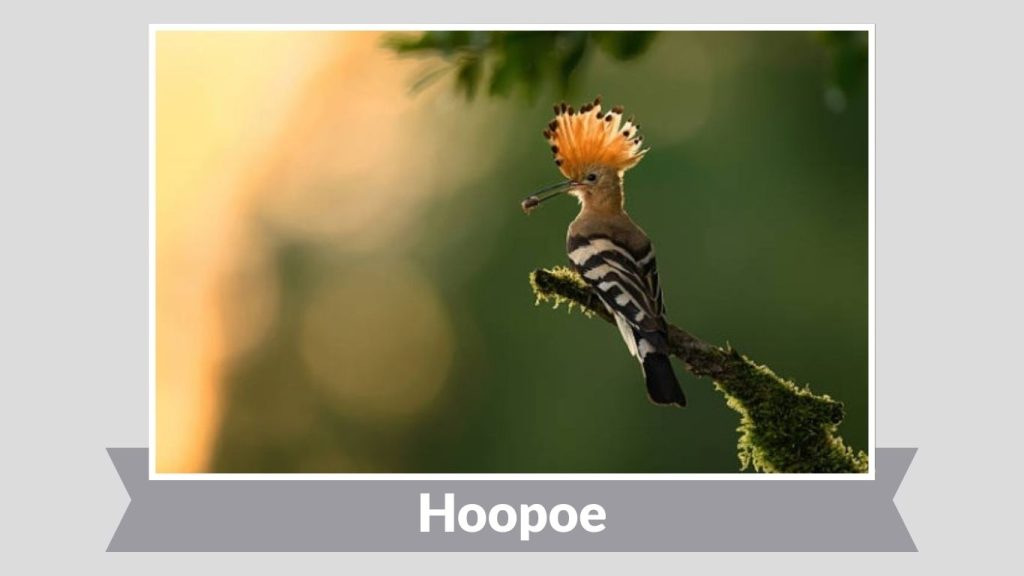
The Hoopoe is a distinctive small bird easily recognized by its long, slender, slightly curved beak and its striking fan-shaped crest. It is widely distributed across Europe, Asia, and Africa, and is often associated with open countryside and cultural folklore due to its unique appearance and call.
Identification
- Medium-small body size
- Long, thin, slightly curved beak
- Prominent crest with black-tipped feathers
- Bold black-and-white striped wings and tail
Habitat
Hoopoes prefer open habitats such as grasslands, farmland, savannas, and forest edges. They often nest in tree cavities, walls, or rocky crevices. These birds are well adapted to living near human settlements, where suitable nesting sites and feeding grounds are available.
Diet
Their diet mainly includes insects such as beetles, ants, crickets, and larvae, which they probe from the ground using their long beaks. Hoopoes also eat small reptiles and seeds on occasion, making them opportunistic feeders.
Behavior
Hoopoes are mostly solitary and spend much of their time foraging on the ground. They have a distinctive “hoo-poo” call, from which their name is derived. During courtship, males raise and fan out their crests in an impressive display. Known for their calm yet alert behavior, hoopoes are fascinating birds admired for both beauty and uniqueness.
7. Kingfisher
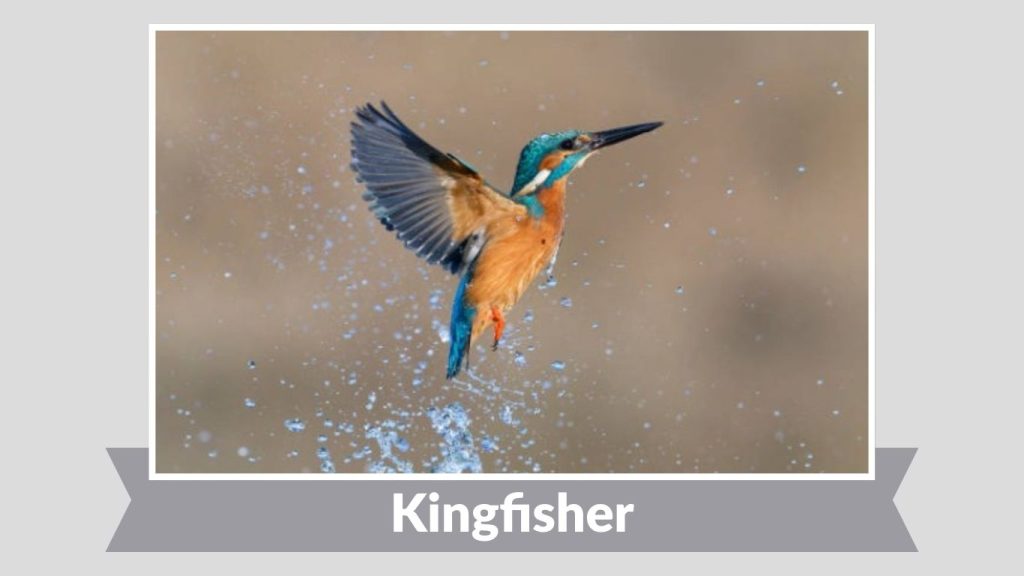
Kingfishers are small to medium-sized birds famous for their long, sharp beaks and brilliant colors. Although many people associate them only with water, kingfishers include several species that live in forests and feed away from rivers. They are found across Asia, Africa, Europe, and Australia, and are admired for their speed, precision, and vivid plumage.
Identification
- Compact body with short neck
- Long, strong, pointed beak
- Large head relative to body
- Bright blue, green, orange, or chestnut plumage
Habitat
Most kingfishers live near rivers, lakes, streams, wetlands, and mangroves, where clear water allows easy hunting. Some species prefer forests, woodlands, or plantations and may hunt insects instead of fish. They usually nest in burrows dug into riverbanks, soil walls, or termite mounds.
Diet
Fish-eating kingfishers primarily feed on small fish, tadpoles, and aquatic insects. Forest-dwelling species eat insects, spiders, lizards, and small frogs. They hunt by perching silently and then diving rapidly to seize prey with their beaks.
Behavior
Kingfishers are highly territorial and often seen alone or in pairs. They are patient hunters, remaining motionless for long periods before striking with remarkable accuracy. Their flight is fast and direct, usually low over water. Many species are known for sharp, piercing calls that announce their presence long before they are seen. With their striking appearance and skilled hunting techniques, kingfishers are among the most captivating birds in the natural world.
8. Woodcreeper
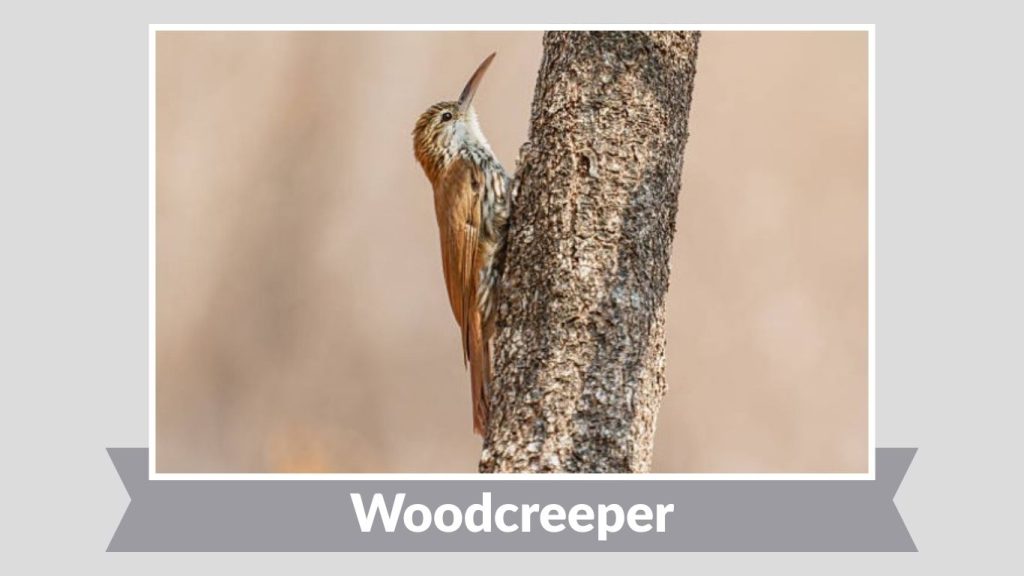
Woodcreepers are small to medium-sized birds known for their long, slender, often slightly curved beaks and their tree-climbing lifestyle. They are native to Central and South America and are closely related to ovenbirds. Woodcreepers play an important role in forest ecosystems by controlling insect populations.
Identification
- Slender body with stiff tail feathers
- Long, thin, slightly curved beak
- Brown, streaked, or mottled plumage for camouflage
- Strong feet and claws for clinging to tree trunks
Habitat
Woodcreepers inhabit tropical and subtropical forests, including rainforests, dry forests, and woodland edges. They are most commonly found on tree trunks and large branches, where their cryptic coloring blends perfectly with bark. Some species prefer dense primary forests, while others adapt well to secondary growth and forest fragments.
Diet
Their diet mainly consists of insects and other small invertebrates such as ants, beetles, spiders, and caterpillars. Woodcreepers probe into bark crevices and under loose bark using their long beaks. Many species follow army ant swarms, catching insects that flee from the advancing ants.
Behavior
Woodcreepers move in a distinctive upward spiral along tree trunks, using their stiff tails for support, similar to woodpeckers. They are usually solitary or seen in pairs, though some join mixed-species feeding flocks. Their calls are often loud and ringing, echoing through the forest. Quiet in appearance but active in behavior, woodcreepers are essential and fascinating members of tropical forest bird communities.
9. Treecreeper
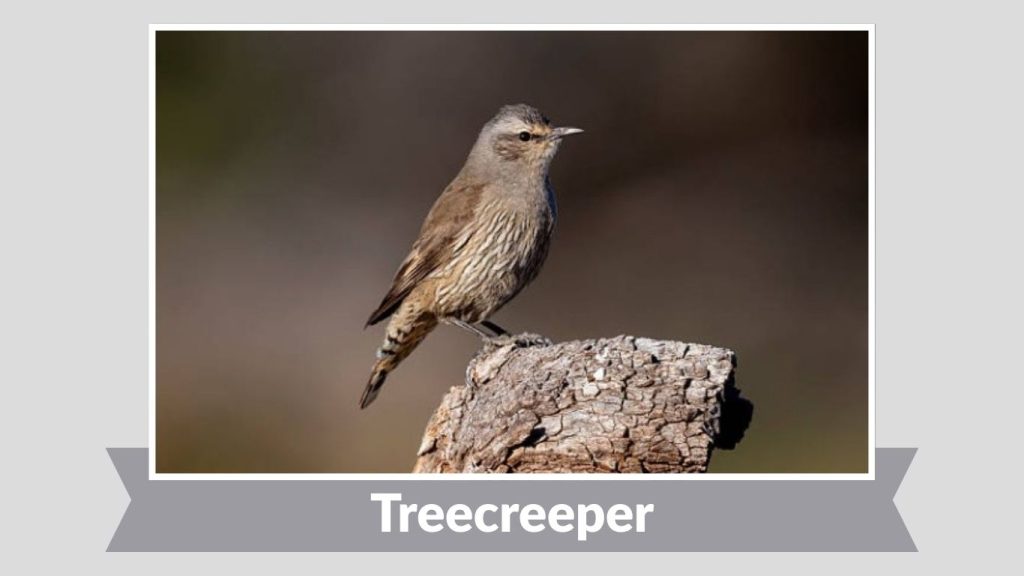
Treecreepers are small, well-camouflaged birds recognized for their slender, down-curved beaks and unique method of climbing tree trunks. Found mainly in Europe, Asia, and parts of North America, they are specialists at searching bark for hidden insects. Their subtle appearance makes them easy to miss, but their behavior is distinctive and fascinating.
Identification
- Small, slim body
- Long, thin, slightly curved beak
- Brown, white, and black mottled plumage
- Stiff tail feathers used for support
Habitat
Treecreepers live in mature woodlands, forests, parks, and large gardens with plenty of old trees. They prefer areas with rough-barked trunks, which provide both food and camouflage. These birds often rely on tree cavities or loose bark for nesting, making healthy forests essential for their survival.
Diet
Their diet mainly consists of insects, spiders, larvae, and other small invertebrates found hiding in bark crevices. Using their fine beaks, treecreepers carefully probe into cracks while moving upward along tree trunks. During winter, they may also eat seeds when insects are scarce.
Behavior
Treecreepers have a very distinctive foraging pattern: they start at the base of a tree and spiral upward, searching for food, then fly down to the base of another tree to repeat the process. They are quiet and unobtrusive, often detected by their thin, high-pitched calls. Usually seen alone or in pairs, treecreepers are shy but hardworking birds whose entire lifestyle revolves around trees.
10. Sapsucker
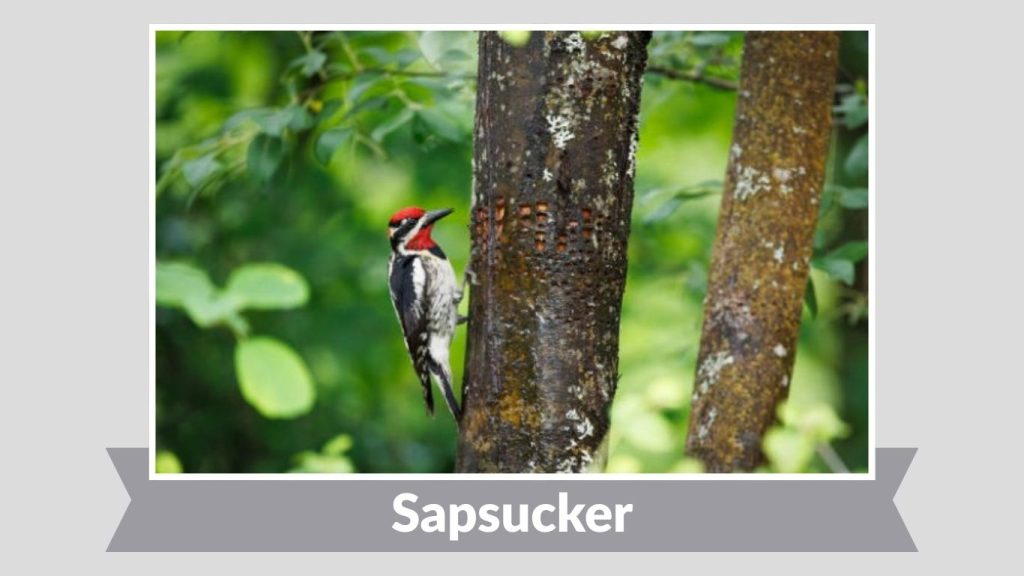
Sapsuckers are small woodpecker-like birds known for their long, chisel-like beaks used to drill holes in tree bark to feed on sap and insects. They are native to North America and are recognized for their role in creating sap wells that benefit many other species.
Identification
- Small to medium-sized body
- Straight, strong, pointed beak
- Often red, black, and white plumage patterns
- Stiff tail feathers for support while climbing
Habitat
Sapsuckers prefer forests, woodlands, and areas with abundant trees, particularly maple, birch, and pine. They may also be found in orchards, parks, and suburban areas where suitable trees are available.
Diet
Their primary diet is tree sap, which they access by drilling small, organized holes called sap wells. They also feed on insects attracted to the sap and occasionally consume fruit. This unique feeding strategy creates resources for other animals, such as hummingbirds, insects, and mammals.
Behavior
Sapsuckers are active and persistent, often returning to the same trees daily. They create neat rows of sap wells, which can be recognized by small, round holes in the bark. During breeding season, both males and females participate in drilling and defending their territory. Their calls are sharp and repetitive, serving to communicate territory boundaries and attract mates. Through their specialized feeding behavior, sapsuckers have a significant ecological impact in their habitats.
11. Ibis
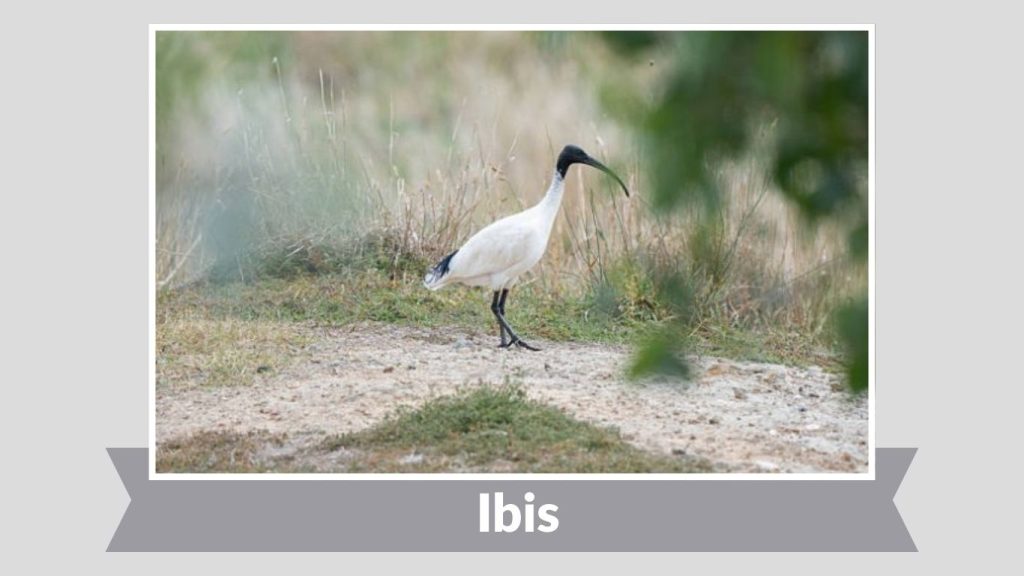
Ibises are wading birds recognized for their long, downward-curved beaks, which they use to probe mud and shallow water for food. They are found across wetlands, marshes, and riverbanks in parts of Africa, Asia, Europe, and the Americas. Known for their elegant posture and social behavior, ibises often gather in large flocks.
Identification
- Medium-sized, slender body
- Long, curved bill
- Long legs suited for wading
- Plumage varies: white, black, or iridescent, depending on species
Habitat
Ibises inhabit wetlands, marshes, swamps, mudflats, and floodplains. They are adaptable to both freshwater and brackish environments and often nest in trees, reed beds, or shrubs near water.
Diet
Their diet consists mainly of aquatic invertebrates such as insects, worms, crustaceans, and small fish. They use their long beaks to probe mud or shallow water, detecting prey by touch rather than sight. Some species may also consume plant material and seeds.
Behavior
Ibises are highly social birds, often forming large foraging or nesting colonies. They walk slowly through shallow water, probing for food, and can fly in elegant formations. Many species are migratory, traveling long distances to exploit seasonal wetlands. Their combination of long, graceful bills, social behavior, and adaptability makes them important members of wetland ecosystems.
12. Curlew
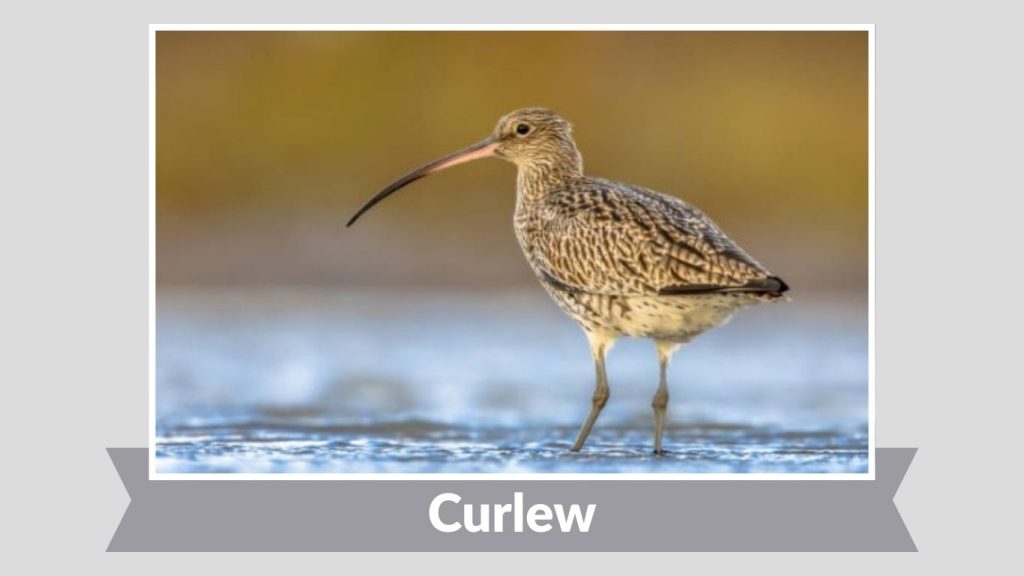
Curlews are medium-sized wading birds known for their exceptionally long, downward-curved beaks, which they use to probe soft mud for invertebrates. They are found across Europe, Asia, Africa, and Australasia, often in coastal wetlands, estuaries, and grasslands. Curlews are recognizable both by their long bills and their distinctive, melodious calls.
Identification
- Medium-sized body with long legs
- Very long, slender, downward-curved beak
- Brown, mottled plumage for camouflage
- Long wings and rounded tail
Habitat
Curlews inhabit wetlands, tidal flats, estuaries, marshes, meadows, and grasslands. They prefer areas with soft mud or sand that allows easy probing for food. Some species migrate seasonally between breeding and wintering grounds.
Diet
Their diet mainly consists of worms, crustaceans, insects, and other small invertebrates found in mud or shallow water. They use their long, curved beaks to reach prey hidden deep beneath the surface.
Behavior
Curlews are usually seen alone or in small groups while foraging. They move slowly, probing the ground methodically for food. During flight, they display broad, rounded wings and often emit their characteristic flute-like calls. Curlews are mostly migratory, with some species traveling thousands of kilometers between breeding and wintering areas. Their elegant bills and haunting calls make them one of the most iconic shorebirds in the world.
13. Sandpiper
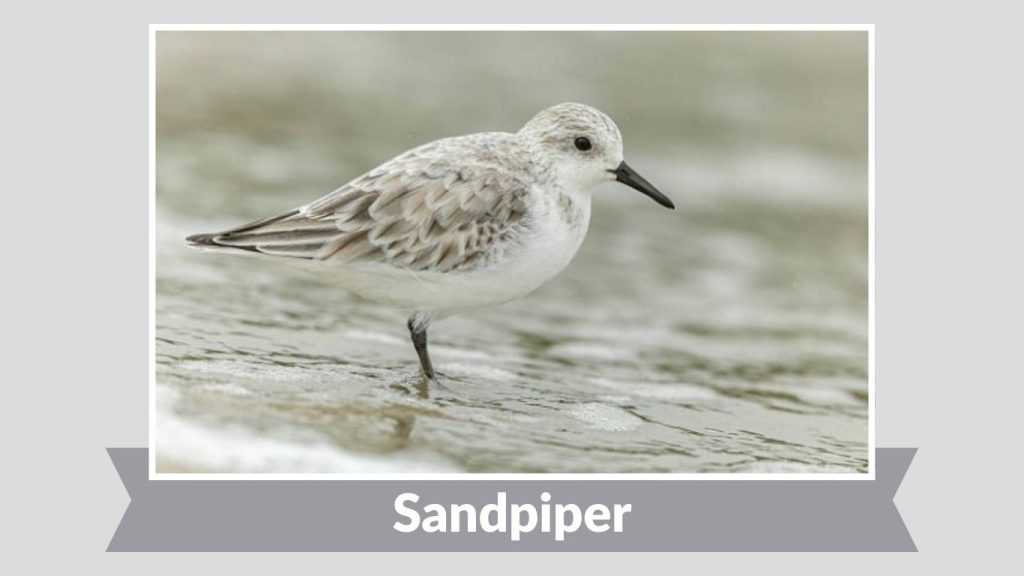
Sandpipers are small to medium-sized shorebirds known for their long, slender beaks and delicate legs. They are widely distributed across the world, especially along coasts, riverbanks, mudflats, and wetlands. Sandpipers are highly active birds, constantly probing the ground for invertebrates and small aquatic creatures.
Identification
- Small to medium-sized, slender body
- Long, thin, straight or slightly curved beak
- Long legs for wading
- Brown, gray, or streaked plumage for camouflage
Habitat
Sandpipers inhabit beaches, tidal flats, estuaries, marshes, riversides, and wetlands. They prefer areas with soft mud or sand where they can probe for food. Many species are migratory, traveling long distances between breeding and wintering grounds.
Diet
Their diet consists mainly of insects, worms, crustaceans, and small mollusks. Using their sensitive beaks, sandpipers detect prey hidden in mud or shallow water. Some species may also eat seeds and plant material occasionally.
Behavior
Sandpipers are active and constantly on the move while foraging, running and probing with quick, precise movements. They often form small flocks during migration or in feeding areas. Their flight is rapid and direct, with distinctive calls that help keep the flock coordinated. Sandpipers play a crucial role in controlling invertebrate populations and maintaining the health of wetland ecosystems.
14. Long-billed Spiderhunter
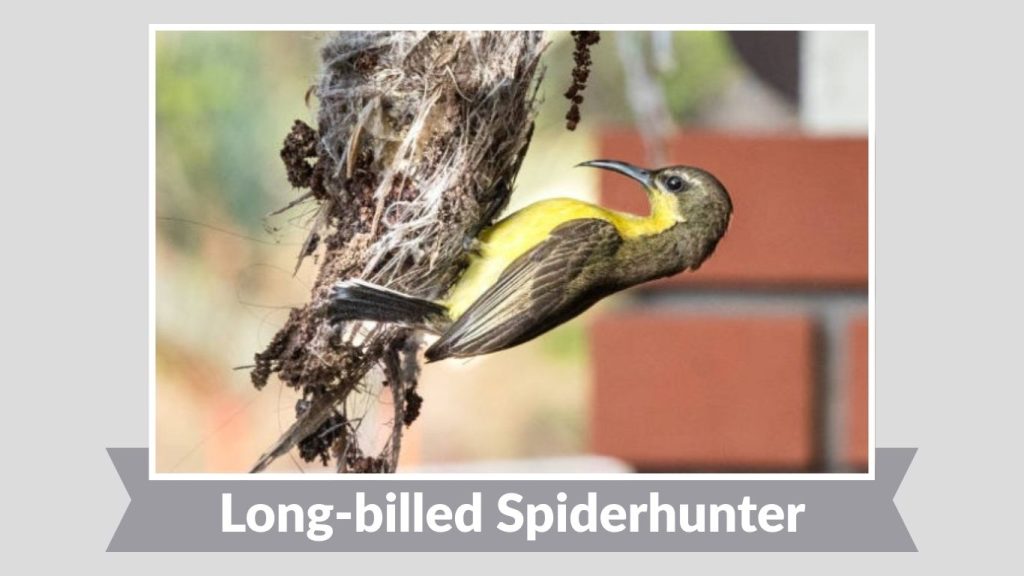
The Long-billed Spiderhunter is a slender, medium-small bird recognized for its extremely long, curved beak, which allows it to extract nectar from deep tubular flowers.
Identification
- Slender body with elongated appearance
- Very long, strongly down-curved beak
- Olive-brown upperparts with yellowish underparts
- Distinct dark eye-stripe
- Long tail compared to body size
Habitat
It is typically found in tropical and subtropical forests, forest edges, and gardens, especially in areas rich in flowering plants.
Diet
The diet consists mainly of nectar, supplemented with insects and spiders that it picks from foliage or flowers.
Behavior
Long-billed Spiderhunters are usually seen singly or in pairs, moving methodically through vegetation while foraging and occasionally giving sharp calls.
15. Jacana
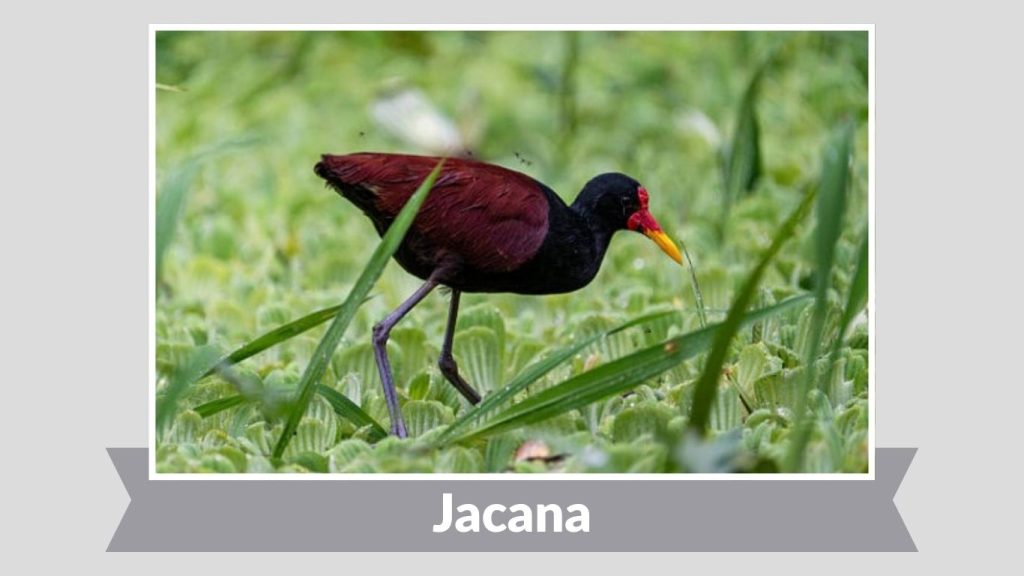
Jacanas are small, tropical wading birds famous for their long toes and slender, slightly curved beaks. They are often called “lily trotters” because their long toes allow them to walk on floating vegetation like water lilies. Jacanas are found across Africa, Asia, and the Americas in freshwater wetlands.
Identification
- Small to medium-sized body
- Long, thin, slightly curved beak
- Extremely long toes and claws for walking on floating plants
- Brightly colored plumage, often with chestnut, brown, or black tones
Habitat
Jacanas inhabit freshwater lakes, ponds, marshes, and slow-moving rivers with abundant floating vegetation. They rely on these habitats for feeding, nesting, and protection from predators.
Diet
Their diet consists mainly of insects, small invertebrates, and seeds found on or near water plants. Some species may also feed on small fish or snails. Their long toes allow them to reach food without sinking into the water.
Behavior
Jacanas are highly territorial, with males often guarding the nesting area while females may mate with multiple males. They are agile walkers on floating vegetation, often seen balancing gracefully while foraging. Their bright plumage, unusual locomotion, and unique reproductive behavior make jacanas fascinating birds of wetland ecosystems.
16. Sunbittern
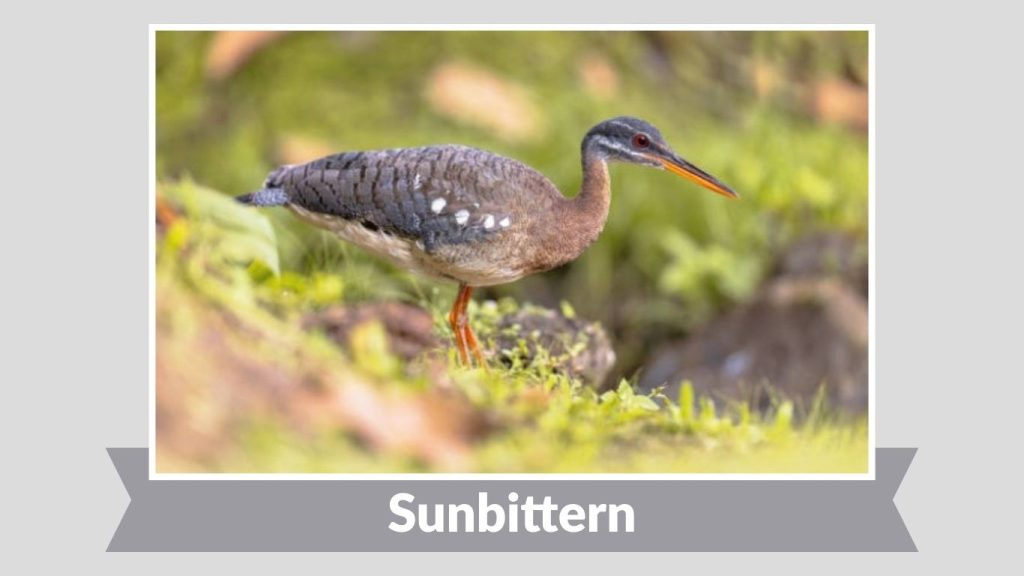
The Sunbittern is a small to medium-sized bird known for its long, slender beak and spectacular wing patterns, which are revealed when the wings are spread. Native to Central and South America, it inhabits rivers, streams, and forested wetlands. Sunbitterns are elusive birds, often remaining motionless and camouflaged along riverbanks.
Identification
- Medium-small body with long wings
- Long, thin, pointed beak
- Brown and gray plumage with intricate patterns
- Wings display striking eye-like patterns when spread
Habitat
Sunbitterns inhabit freshwater rivers, streams, marshes, and forest edges. They prefer quiet, shaded areas near water with abundant cover for hunting and protection from predators.
Diet
Their diet mainly consists of small fish, insects, crustaceans, and amphibians. They hunt by standing still near the water and quickly striking prey with their long beaks.
Behavior
Sunbitterns are shy and secretive, often blending perfectly into their surroundings. When threatened, they spread their wings to display bold patterns, startling predators. They are usually solitary or found in pairs and are highly territorial along watercourses. Their combination of camouflage, striking wing displays, and patient hunting style makes them one of the most unique small birds of the neotropics.
17. Shorebird
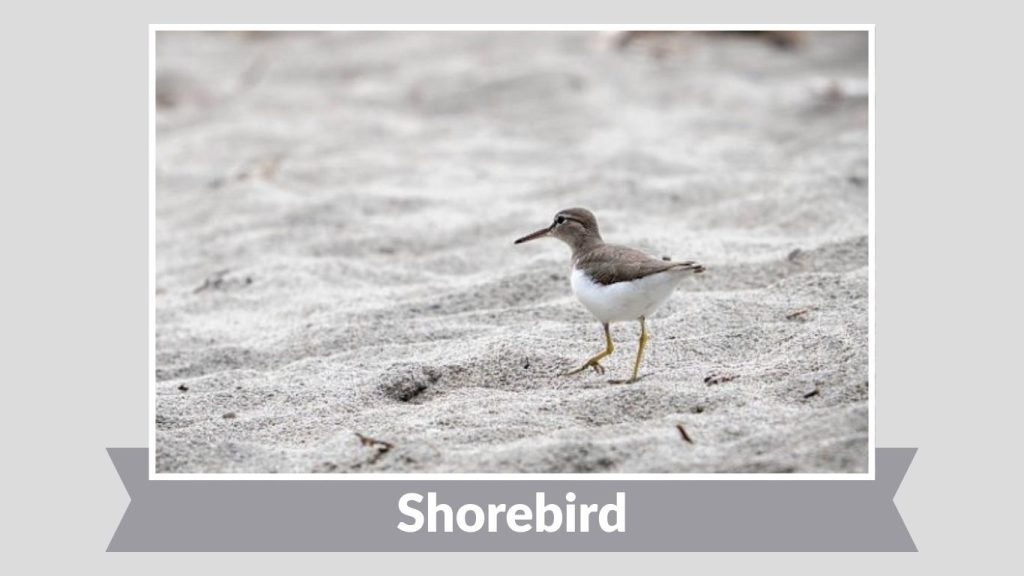
Shorebirds are a diverse group of small to medium-sized birds commonly found along coasts, rivers, and wetlands. They are known for their long, slender beaks adapted for probing mud, sand, or shallow water to find food. Shorebirds include sandpipers, plovers, curlews, and related species, and they are widespread across the world.
Identification
- Small to medium-sized body
- Long, thin, straight or slightly curved beak
- Long legs for wading
- Plumage often brown, gray, or mottled for camouflage
Habitat
Shorebirds inhabit mudflats, sandy beaches, estuaries, marshes, and freshwater wetlands. Many species migrate long distances between breeding and wintering grounds, often traveling thousands of kilometers.
Diet
Their diet consists mainly of insects, worms, crustaceans, mollusks, and small aquatic animals. They probe the substrate with their sensitive beaks to locate hidden prey.
Behavior
Shorebirds are highly active and often seen in flocks, moving quickly along the water’s edge while feeding. Their flight is usually rapid and direct, with calls used to maintain group cohesion. Many species display remarkable migratory behavior, navigating thousands of kilometers with incredible accuracy. Shorebirds play a critical role in coastal and wetland ecosystems by controlling invertebrate populations and contributing to nutrient cycling.