

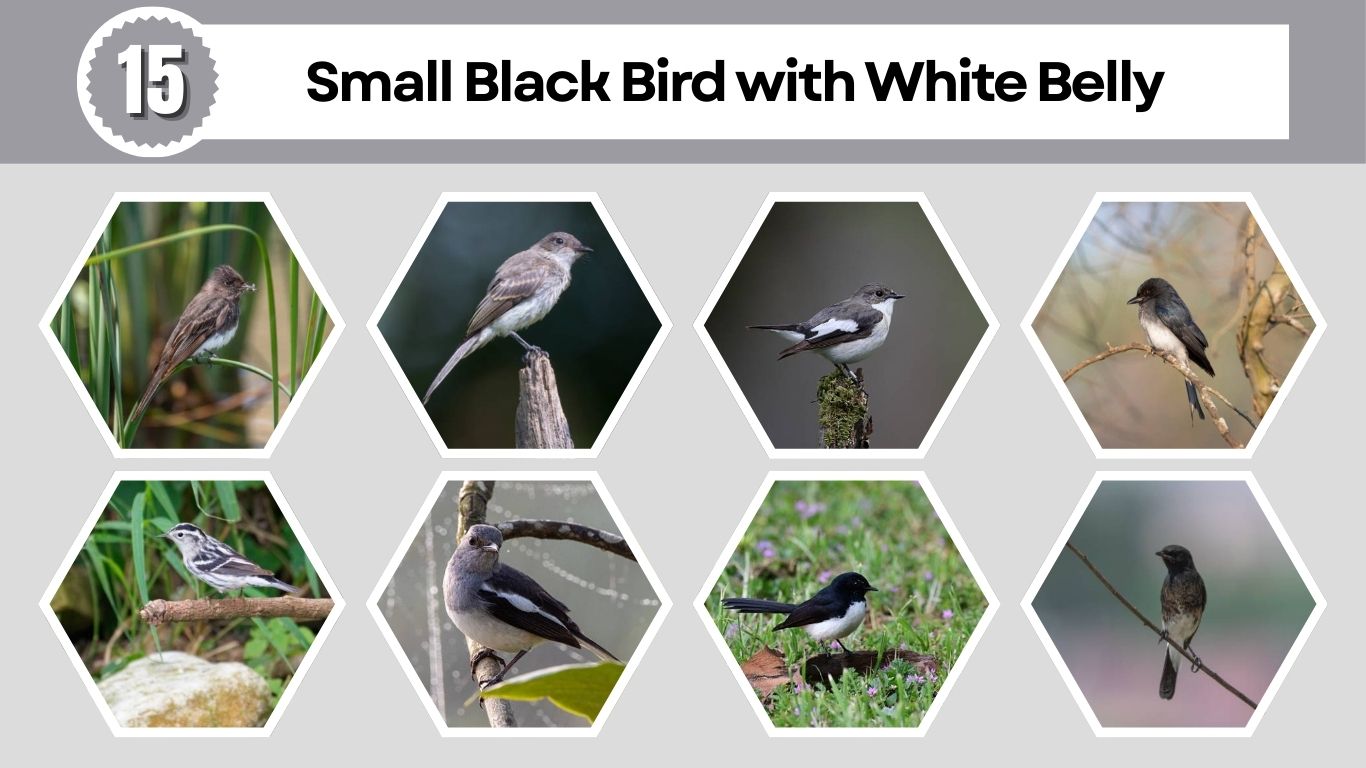
Small black birds with white bellies are among the easiest birds to recognize because of their bold, high-contrast colors. Found in forests, wetlands, gardens, and open countryside, these birds are often active insect hunters, constantly moving, tail-wagging, or darting into the air. From phoebes and wagtails to fantails and magpie-robins, each species has its own unique behavior and habitat preference. This guide explores some well-known examples and highlights what makes them special.
1. Black Phoebe (Sayornis nigricans)

The Black Phoebe is a small, active flycatcher commonly found near water sources such as streams, ponds, and bridges. It is well known for its bold black upperparts, bright white belly, and habit of constantly wagging its tail while perched. This species is widespread across the Americas and is often seen darting out to catch flying insects.
Identification
- Small, slim-bodied bird with a rounded head
- Upperparts mostly deep black
- Belly and lower chest clean white
- Short black bill adapted for catching insects
- Frequently pumps or flicks its tail while perched
Size and Appearance
The Black Phoebe typically measures about 6 to 7 inches (15–18 cm) in length. Its strong black-and-white contrast makes it easy to recognize. The head, back, and chest are dark black, while the lower belly and undertail area are bright white, creating a sharp visual divide.
Habitat and Range
Black Phoebes are commonly found near freshwater environments, including rivers, lakes, irrigation canals, and coastal areas. They range from the southwestern United States through Mexico and Central America, extending into much of South America.
Behavior
This bird often perches on low branches, rocks, or man-made structures before flying out to snatch insects in midair. It is usually seen alone or in pairs and is known for its repetitive tail-wagging motion, which helps birdwatchers identify it quickly.
Diet
The Black Phoebe mainly feeds on flying insects such as flies, mosquitoes, beetles, and wasps. It may also eat small spiders and occasionally pick insects off the ground or water surface, making it an effective natural pest controller.
2. Eastern Phoebe (Sayornis phoebe)
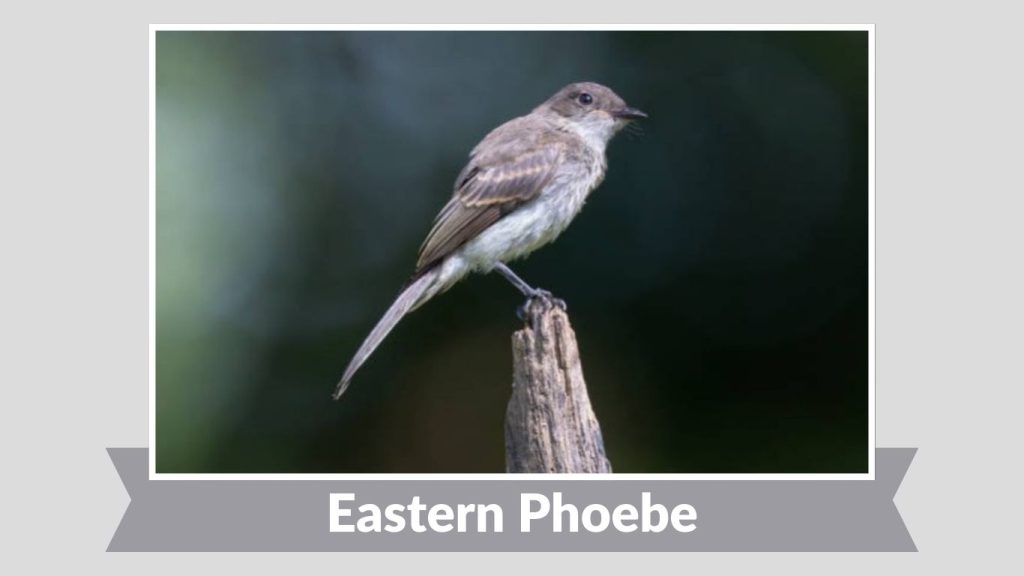
The Eastern Phoebe is a small, quietly active songbird often found near buildings, bridges, forest edges, and streams. It is known for its blackish head and upperparts, soft white belly, and constant tail-pumping behavior. This bird is one of the earliest spring migrants in many regions and is familiar to backyard birdwatchers.
Identification
- Small flycatcher with a round head and slim body
- Dark gray to blackish head and upperparts
- Clean white belly with a pale gray chest wash
- Thin, straight black bill
- Frequently flicks or pumps its tail
Size and Appearance
Eastern Phoebes usually measure about 5.5 to 7 inches (14–18 cm) long. They have a softer contrast than the Black Phoebe, with dusky gray-black upperparts and a white belly that blends into light gray on the chest, giving them a slightly smoky look.
Habitat and Range
This species is widely distributed across eastern North America. It prefers open woodlands, farm areas, riverbanks, and suburban settings. Eastern Phoebes often nest on ledges of houses, barns, culverts, and bridges, returning to the same sites each year.
Behavior
Eastern Phoebes are sit-and-wait hunters. They perch quietly before flying out to grab insects in midair, then return to the same perch. Their tail-bobbing habit is one of their most noticeable behaviors and helps distinguish them from similar small birds.
Diet
Their diet mainly consists of flying insects such as flies, moths, mosquitoes, and beetles. In colder months, they may also eat small fruits and berries, allowing some individuals to remain farther north than many other insect-eating birds.
3. Pied Flycatcher (Ficedula hypoleuca)
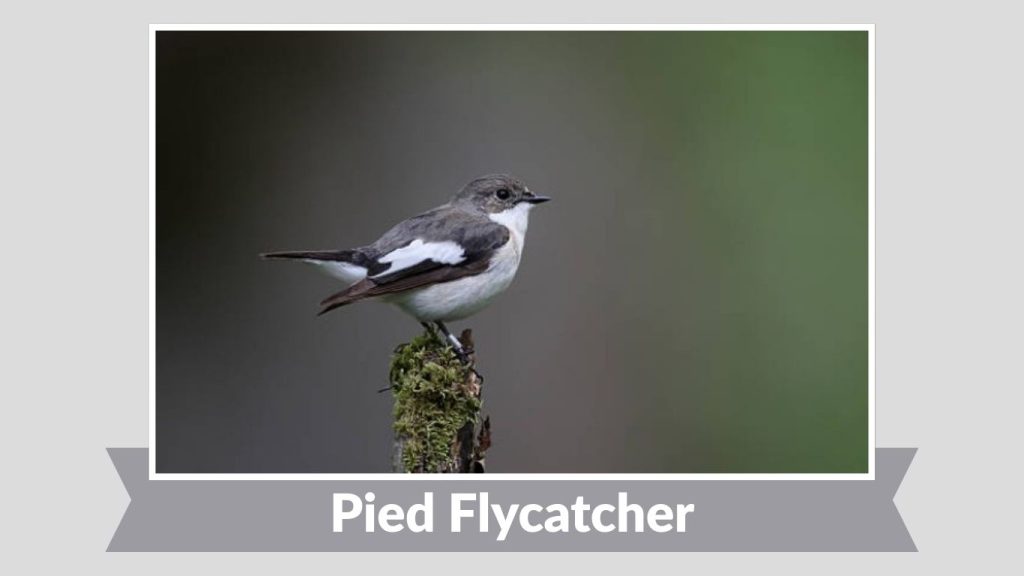
The Pied Flycatcher is a small, energetic songbird known for its striking black-and-white plumage and quick aerial hunting style. During the breeding season, males appear almost jet black on the upperparts with a bright white belly, making them easy to spot as they flit between branches in woodland habitats.
Identification
- Small, compact flycatcher with a short neck
- Male mostly black above with a white forehead spot
- Clean white belly and undertail
- Distinct white wing patch visible in flight
- Thin, pointed bill suited for insect catching
Size and Appearance
Pied Flycatchers are usually about 4.5 to 5 inches (11–13 cm) long. Breeding males show bold black-and-white contrast, while females are browner with a softer white belly. Both sexes have prominent dark eyes and a neat, tidy shape.
Habitat and Range
This species breeds across Europe and parts of western Asia, favoring open deciduous woodlands, forest edges, and parklands. In winter, Pied Flycatchers migrate long distances to sub-Saharan Africa, where they occupy savannas and wooded areas.
Behavior
Pied Flycatchers are agile and alert, often seen sallying out from exposed perches to catch insects midair. Males frequently sing from prominent branches to defend territory and attract mates, especially during spring.
Diet
Their diet consists mainly of flying insects such as flies, moths, caterpillars, and beetles. They may also pick spiders and small invertebrates from leaves and branches, particularly when feeding young.
4. White-bellied Drongo (Dicrurus caerulescens)
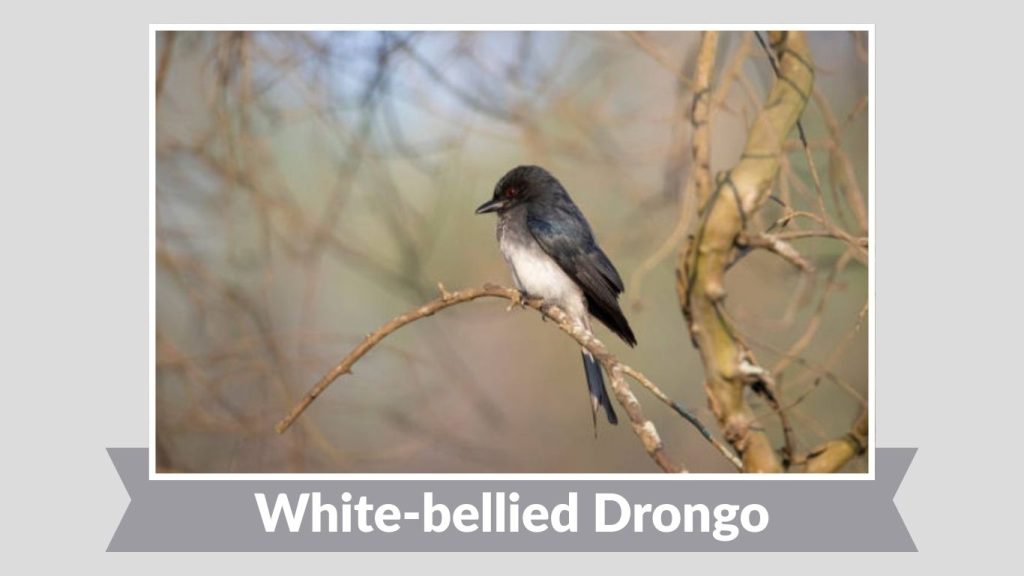
The White-bellied Drongo is a small, sleek songbird recognized for its glossy black upperparts, bright white belly, and agile flight. It is often seen perched conspicuously in open woodlands, gardens, and forest edges, where it actively hunts insects and occasionally mimics the calls of other birds.
Identification
- Slender bird with a slightly forked tail
- Shiny black head, back, and wings
- Clear white belly and vent
- Strong, slightly hooked black bill
- Often holds an upright, alert posture
Size and Appearance
White-bellied Drongos typically measure about 8 to 9 inches (20–23 cm) in length, making them slightly larger than most small flycatchers. Their glossy black plumage contrasts sharply with the white belly, and their eyes appear dark red-brown in good light.
Habitat and Range
This species is widely distributed across the Indian subcontinent and parts of Southeast Asia. It inhabits open forests, scrublands, plantations, and village groves, often staying near human settlements.
Behavior
White-bellied Drongos are bold and intelligent birds. They frequently sally from open perches to snatch insects and are known to harass larger birds. Their vocal ability includes a range of harsh calls and impressive mimicry.
Diet
Their diet mainly includes flying insects such as beetles, ants, termites, butterflies, and wasps. They may also feed on small lizards and steal food from other birds, showing opportunistic feeding behavior.
5. Black-and-white Warbler (Mniotilta varia)
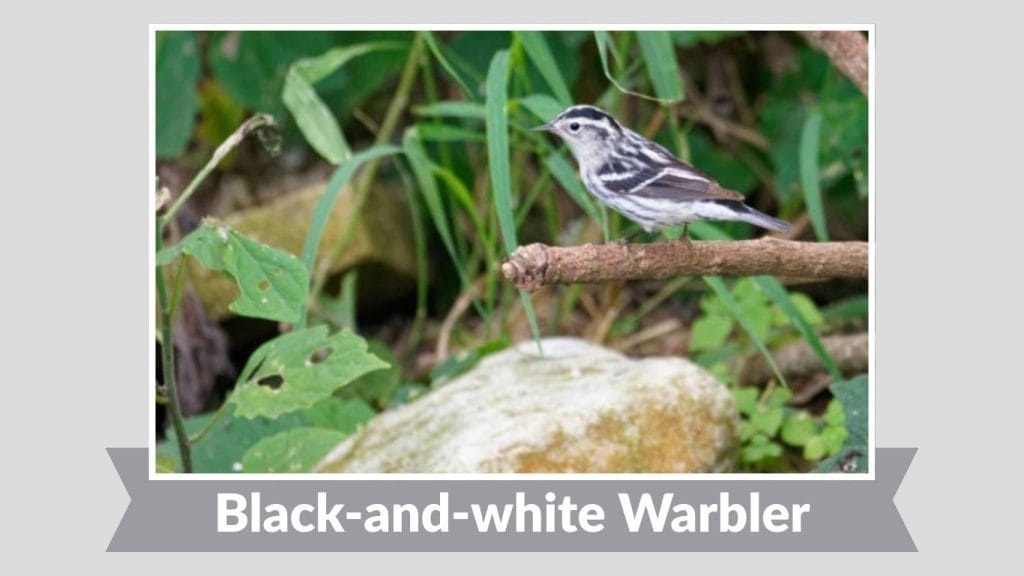
The Black-and-white Warbler is a small, restless songbird famous for its zebra-like black and white striping and its habit of creeping along tree trunks like a nuthatch. Its white belly and boldly patterned back make it one of the easiest North American warblers to recognize in forests and woodlands.
Identification
- Small, slim warbler with a slightly curved bill
- Strong black-and-white stripes over the entire body
- White belly with dark streaking on the sides
- Thin, pointed bill for picking insects
- Often seen climbing up and down tree trunks
Size and Appearance
This warbler is about 4.5 to 5 inches (11–13 cm) long. Both males and females are similarly patterned, though males tend to have darker black markings. The bold contrast and streaked crown give it a distinctive “striped” look unlike most other warblers.
Habitat and Range
Black-and-white Warblers breed across much of North America in mature deciduous and mixed forests. During migration and winter, they travel to the southern United States, Central America, the Caribbean, and parts of South America.
Behavior
Unlike many warblers that flit through leaves, this species creeps along bark, probing into cracks and crevices for insects. Its movements are quick and methodical, often spiraling up trunks and large branches.
Diet
The Black-and-white Warbler feeds mainly on spiders, beetles, ants, caterpillars, and other small insects. It also takes insect eggs and larvae hidden under bark, making it a specialist bark-foraging warbler.
6. Oriental Magpie-Robin (Copsychus saularis)
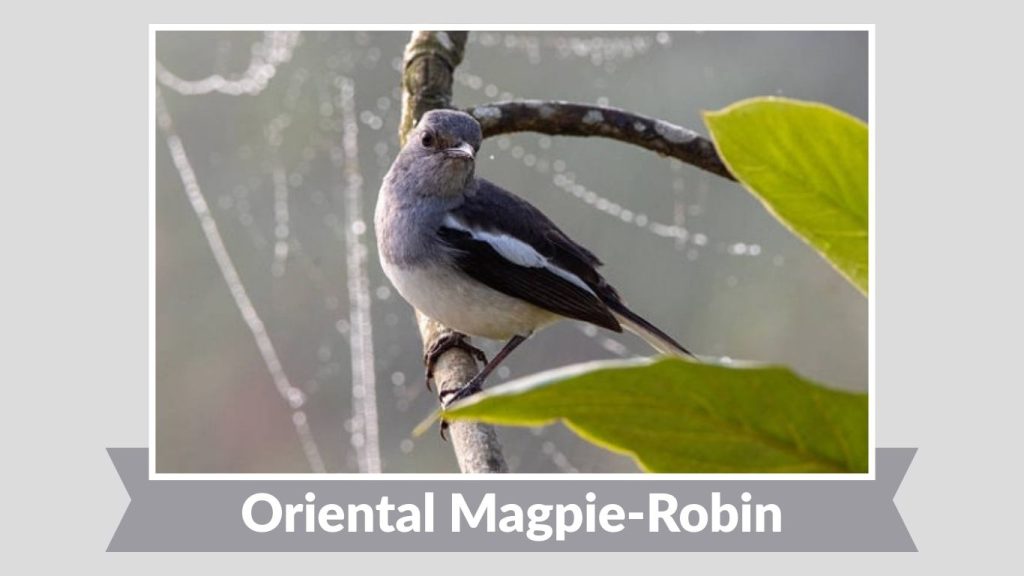
The Oriental Magpie-Robin is a small, elegant songbird admired for its glossy black upperparts, bright white belly, and rich, melodious song. Often seen hopping on the ground or perched on low branches, it is a familiar bird in gardens, villages, and forest edges across much of South and Southeast Asia.
Identification
- Small, upright songbird with long legs
- Glossy black head, back, and breast
- Clean white belly and vent
- Prominent white wing patches
- Slender black bill and long tail often flicked upward
Size and Appearance
Oriental Magpie-Robins measure about 7 to 8 inches (18–20 cm) in length. Males are striking black and white, while females are more grayish-black with a softer contrast. The long tail and white wing bars are especially noticeable in flight.
Habitat and Range
This species is widely distributed from the Indian subcontinent through Southeast Asia and parts of southern China. It thrives in open woodlands, city parks, home gardens, and farmland, often living close to people.
Behavior
Oriental Magpie-Robins are active and bold. They forage mainly on the ground, running and stopping suddenly to pick up prey. Males are excellent singers and often perform from rooftops, poles, or treetops, especially at dawn and dusk.
Diet
Their diet consists mainly of insects such as beetles, ants, grasshoppers, and termites. They also eat spiders, worms, and occasionally small fruits, making them adaptable feeders.
7. Willie Wagtail (Rhipidura leucophrys)
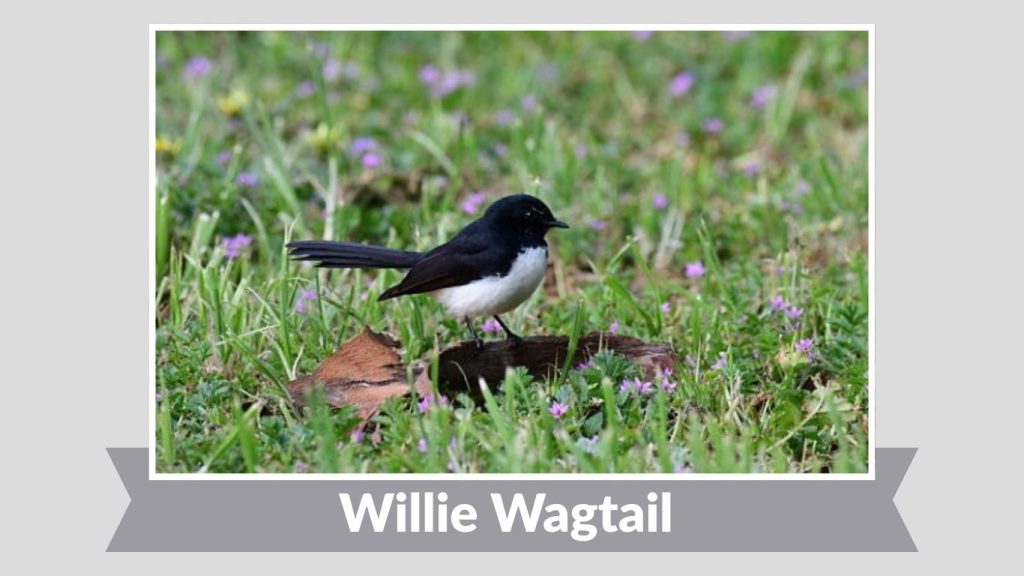
The Willie Wagtail is a lively, small black-and-white bird best known for its constantly fanned tail and bold, fearless personality. It has glossy black upperparts, a bright white belly, and a distinctive white eyebrow, making it one of the most recognizable birds in Australia and nearby regions.
Identification
- Small, slender bird with a long, frequently fanned tail
- Shiny black head, back, and chest
- Clean white belly and eyebrow stripe
- Large dark eyes and fine black bill
- Almost constantly wagging and spreading its tail
Size and Appearance
Willie Wagtails are about 7 to 8 inches (18–20 cm) long, much of that length coming from the tail. The strong contrast between the black chest and white belly, along with the expressive face pattern, makes them easy to identify.
Habitat and Range
This species is widespread across Australia, New Guinea, and nearby islands. It occupies open grasslands, parks, gardens, farmland, and forest edges, often living close to human activity.
Behavior
Willie Wagtails are extremely active and bold, frequently chasing insects on the ground and in midair. They are also famous for harassing much larger birds and even animals, diving at them to drive them away.
Diet
Their diet mainly includes flies, beetles, moths, and other small insects. They catch prey on the ground and in flight and will sometimes follow livestock or people to snatch disturbed insects.
8. Pied Bushchat (Saxicola caprata)
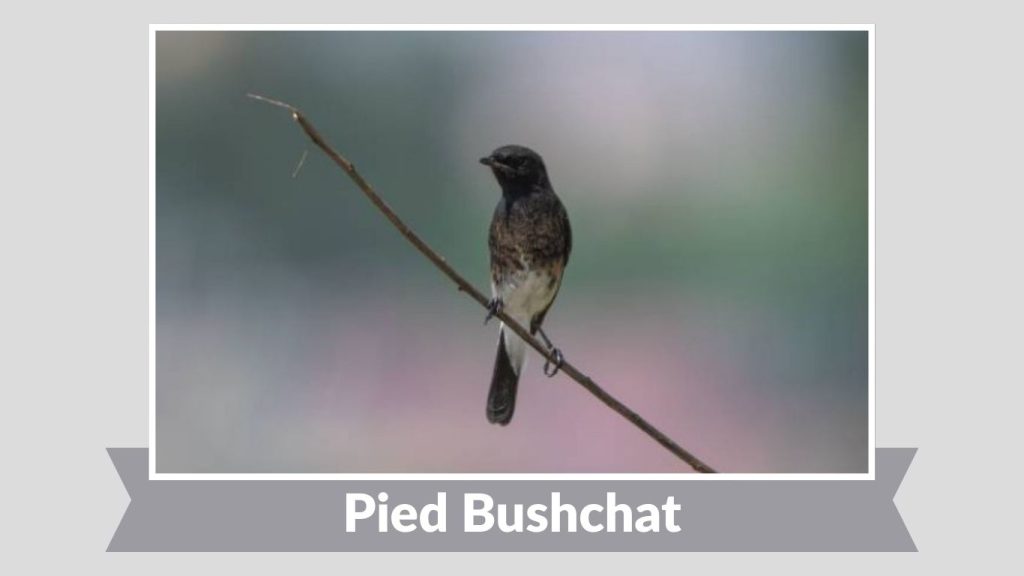
The Pied Bushchat is a small, perky songbird known for its striking black-and-white coloring and upright posture. Males are glossy black with a bright white belly and a bold white wing patch, often seen perched on low shrubs or fences while watching for insects.
Identification
- Small, compact bird with an upright stance
- Male mostly glossy black above
- Clean white belly and lower breast
- Prominent white wing patch
- Short, straight black bill
Size and Appearance
Pied Bushchats are about 5 to 6 inches (13–15 cm) long. Males are sharply black and white, while females are brownish with a pale belly. The strong contrast in males and their habit of perching in open places make them easy to spot.
Habitat and Range
This species is widely distributed across South and Southeast Asia. It prefers open scrubland, grasslands, agricultural fields, and roadside bushes, often near human settlements.
Behavior
Pied Bushchats usually hunt from low perches, flying down to catch insects on the ground before returning to the same spot. They are alert, territorial birds and often flick their tails while perched.
Diet
They mainly feed on insects such as beetles, ants, flies, and caterpillars. Occasionally, they may also eat small spiders and other invertebrates.
9. Black-billed Magpie (juvenile) (Pica hudsonia / Pica pica)

Juvenile Black-billed Magpies sometimes show softer black-and-white contrast, with dusky black upperparts and a pale or whitish belly, which can make them resemble small black birds with white underparts from a distance. They are intelligent, social birds commonly seen in open landscapes.
Identification
- Medium-small, long-tailed bird
- Black head, wings, and long tail
- Whitish to pale gray belly
- Strong straight black bill
- Often seen in pairs or small groups
Size and Appearance
Young magpies are about 17 to 22 inches (43–56 cm) long, including their very long tails. Juveniles have duller black feathers and less iridescence than adults, with a softer white belly and less sharply defined markings.
Habitat and Range
Black-billed Magpies are found across western and central North America, as well as parts of Europe and Asia (Eurasian Magpie). They favor open countryside, farmland, grasslands, and suburban areas.
Behavior
These birds are curious and highly intelligent. Juveniles often stay in family groups, hopping on the ground, exploring objects, and making harsh chattering calls.
Diet
Their diet is very varied and includes insects, seeds, fruit, small animals, eggs, and carrion. This adaptability helps magpies survive in many different environments.
10. White-bellied Fantail (Rhipidura leucogaster)

The White-bellied Fantail is a small, energetic bird famous for its constantly spreading, fan-shaped tail and quick, fluttering movements. It has dark blackish upperparts and a bright white belly, giving it a sharp contrast that stands out as it darts through forest edges and open woodlands.
Identification
- Small, slim bird with a long, fanned tail
- Black to dark gray head, back, and wings
- Clean white belly and undertail
- Fine black bill
- Frequently spreads and flicks its tail while moving
Size and Appearance
White-bellied Fantails are usually about 6 to 7 inches (15–18 cm) long. Their rounded body, large dark eyes, and constantly opening tail give them a very expressive look. The bold black-and-white pattern is especially noticeable when they are in motion.
Habitat and Range
This species is found across parts of South and Southeast Asia, including forest edges, mangroves, plantations, and village groves. It prefers open or semi-open habitats where it can easily chase flying insects.
Behavior
White-bellied Fantails are extremely active. They flit from perch to perch, often twisting in the air to catch insects. Their tail is frequently fanned and snapped shut, possibly to flush prey or signal other birds.
Diet
Their diet mainly consists of small flying insects such as flies, mosquitoes, moths, and beetles. They may also take spiders and other tiny invertebrates picked from leaves and branches.
11. Black-backed Wagtail (Motacilla lugens)
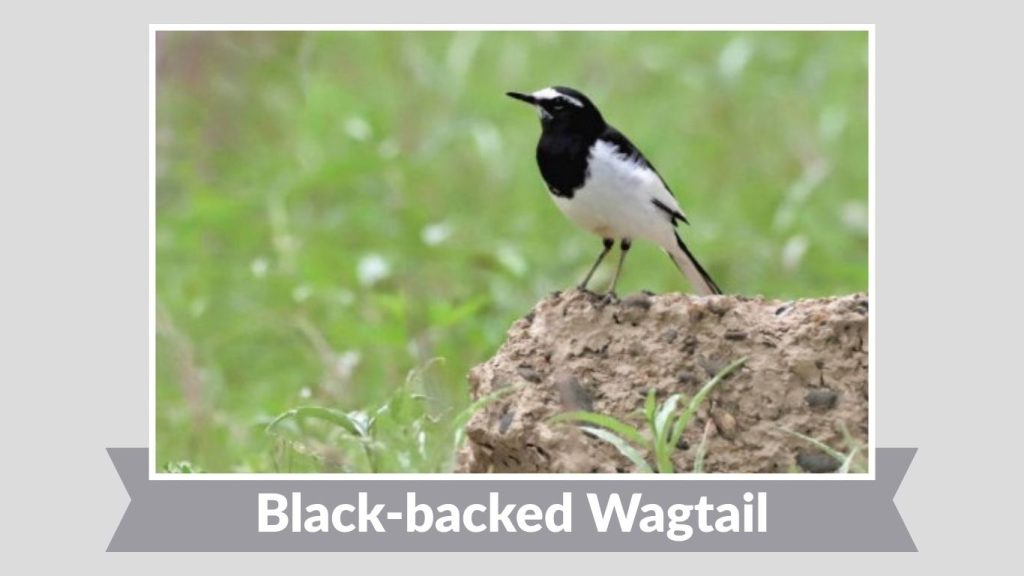
The Black-backed Wagtail is a slender, long-tailed bird with bold black-and-white coloring and a constantly wagging tail. It is closely associated with water and open ground, where it actively walks or runs while searching for insects.
Identification
- Slim-bodied bird with very long tail
- Black head, back, and throat
- Bright white belly and face markings
- Thin, pointed black bill
- Almost constantly pumps or wags its tail
Size and Appearance
Black-backed Wagtails usually measure about 7 to 8 inches (18–20 cm) long. They have a sharp contrast between the dark upperparts and the clean white underparts. The long tail and upright stance give them a distinctive, elegant silhouette.
Habitat and Range
This species is found mainly in East Asia, including Japan, Korea, and eastern China. It favors riverbanks, lakeshores, wetlands, open fields, and coastal areas, often staying close to water.
Behavior
Black-backed Wagtails are very active walkers. They run across the ground, stopping suddenly to pick up insects, and frequently bob their tails. During the breeding season, males perform display flights and defend small territories.
Diet
Their diet mainly consists of insects such as flies, beetles, ants, and aquatic larvae. They may also eat small spiders and other invertebrates found along shorelines and open ground.
12. African Pied Wagtail (Motacilla aguimp)
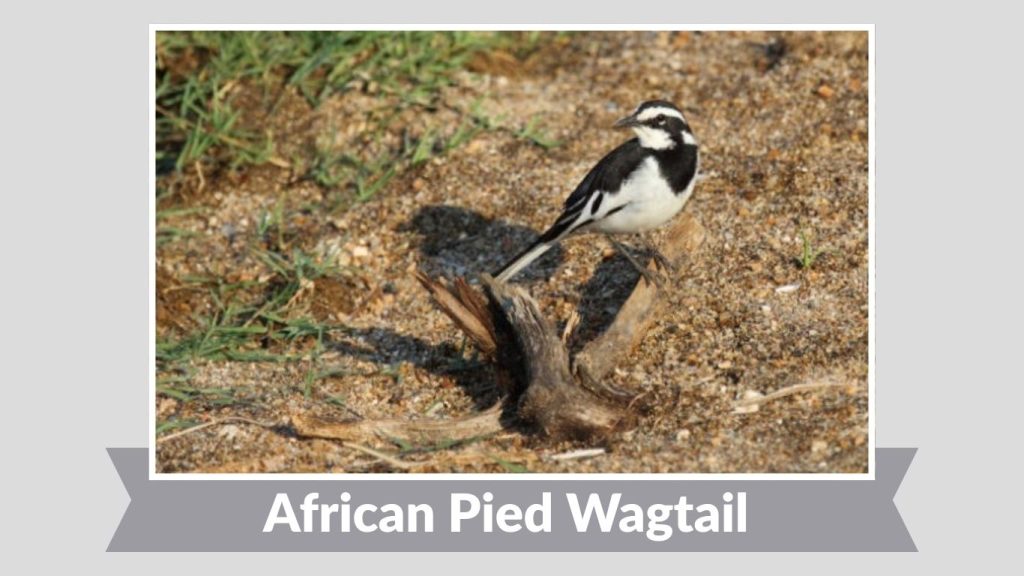
The African Pied Wagtail is a striking black-and-white bird commonly seen near rivers, lakes, and wetlands. Its glossy black upperparts, white face markings, and bright white belly make it highly visible as it walks along shorelines constantly wagging its long tail.
Identification
- Slender body with very long tail
- Black head, back, and throat
- White face pattern and clean white belly
- Thin, pointed black bill
- Almost always wagging its tail
Size and Appearance
African Pied Wagtails measure about 7 to 8.5 inches (18–22 cm) long. They have a sharp black-and-white contrast and a graceful shape, with long legs and a tail that makes up nearly half of their length.
Habitat and Range
This species is widespread across sub-Saharan Africa. It prefers freshwater habitats such as rivers, streams, dams, and lakeshores, but it is also found in parks, farmland, and urban areas.
Behavior
African Pied Wagtails are bold and approachable birds. They walk rather than hop, frequently stopping to pick insects from the ground or shallow water. They often perch on rocks, fences, and low branches.
Diet
Their diet mainly consists of flies, beetles, ants, aquatic insects, and larvae. They also feed on small crustaceans and spiders found near water.
13. White-bellied Blue Flycatcher (Cyornis pallipes)
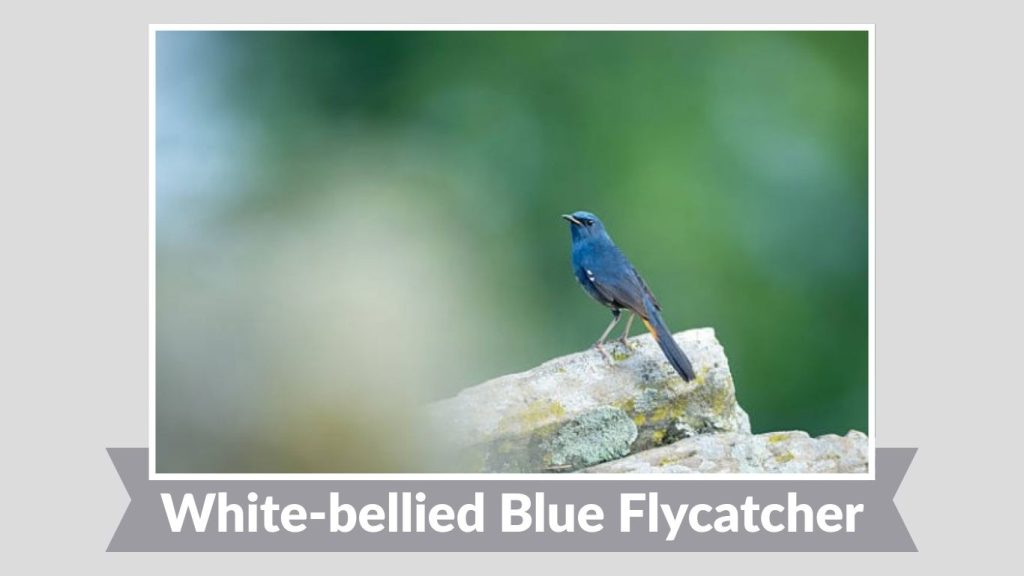
The White-bellied Blue Flycatcher is a small, colorful bird known for the male’s deep blue upperparts contrasted with a bright white belly. Although not entirely black, it is often included among dark-backed birds with pale underparts because of its strong contrast and shaded forest appearance.
Identification
- Small, compact flycatcher with a rounded head
- Male dark blue to bluish-black above
- Clean white belly and lower breast
- Thin black bill with a wide gape
- Large dark eyes giving a gentle expression
Size and Appearance
This species is usually about 4.5 to 5 inches (11–13 cm) long. Males are vivid blue on the head and back, while females are olive-brown above with a whitish belly. Both sexes have a neat, delicate shape suited for quick aerial feeding.
Habitat and Range
White-bellied Blue Flycatchers are found mainly in South Asia, especially in India, Sri Lanka, Nepal, and surrounding regions. They inhabit shaded forests, woodland edges, and dense undergrowth.
Behavior
These flycatchers often perch quietly at low to mid levels before darting out to snatch insects in flight. They return to the same perch repeatedly and are usually seen alone or in pairs.
Diet
They feed primarily on small flying insects such as flies, gnats, and moths, along with spiders and tiny invertebrates gathered from leaves.
14. Black-and-white Robin (genus Eopsaltria / Petroica)
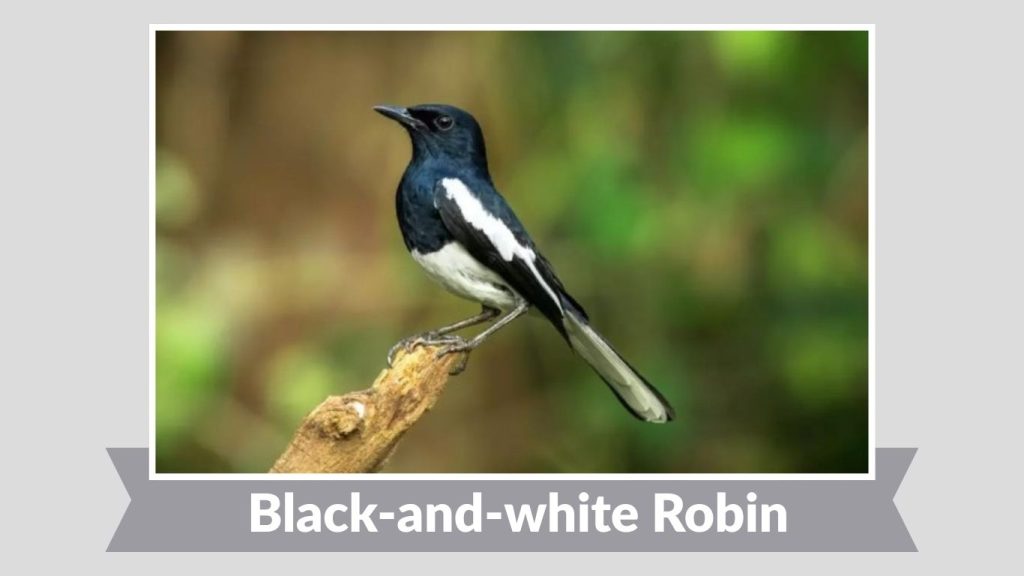
The term “Black-and-white Robin” is commonly used for several small Australasian robins that show dark upperparts and pale or white bellies. These birds are gentle, ground-feeding insect hunters often seen in forests and open woodlands, quietly watching for prey.
Identification
- Small, round-bodied songbird
- Dark black to charcoal upperparts
- White to pale gray belly
- Fine, straight bill
- Often perches low and drops to the ground for insects
Size and Appearance
Most black-and-white robins measure around 5 to 6 inches (13–15 cm) long. They have relatively large heads, short necks, and soft plumage. The contrast between their dark backs and light bellies gives them a clean, simple appearance.
Habitat and Range
Black-and-white robins are found mainly in Australia and nearby islands. They inhabit forests, woodlands, and sometimes gardens, preferring shaded areas with leaf litter for foraging.
Behavior
These robins typically hunt by sitting quietly on a low perch and then swooping down to grab insects from the ground. They are calm birds and often allow close approach.
Diet
Their diet consists mostly of insects, spiders, and small invertebrates picked from the ground, bark, or low vegetation.
15. White-bellied Minivet (Pericrocotus erythropygius)
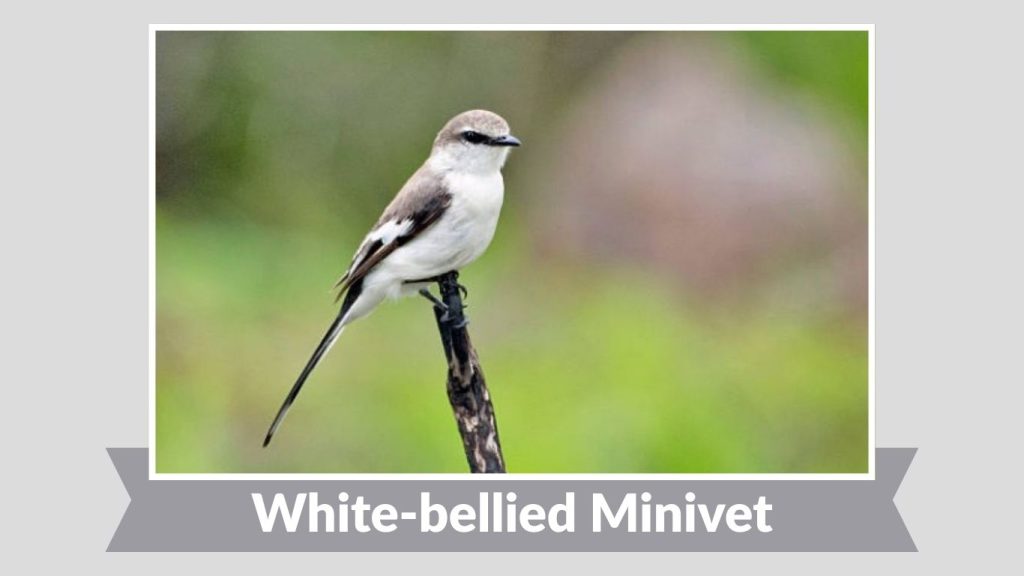
The White-bellied Minivet is a small, slim songbird known for its striking contrast between dark upperparts and a bright white belly. Although males are more colorful with red accents, the black-and-white pattern is very noticeable when the bird is perched high in trees searching for insects.
Identification
- Small, slender bird with a slightly long tail
- Dark black upperparts (male)
- Clean white belly and undertail
- Thin, pointed black bill
- Often seen in pairs or small groups
Size and Appearance
White-bellied Minivets usually measure about 7 to 8 inches (18–20 cm) long. Males show black upperparts with a clear white belly and red on the lower back and tail, while females are grayish above with the same white belly.
Habitat and Range
This species is found mainly across the Indian subcontinent. It prefers dry forests, open woodlands, scrublands, and lightly wooded countryside, often foraging high in tree canopies.
Behavior
White-bellied Minivets are active canopy birds. They move quickly through treetops, catching insects in short flights or picking them from leaves and branches while constantly calling to one another.
Diet
Their diet consists mainly of insects such as beetles, caterpillars, flies, and ants. They occasionally eat small berries, but insects make up the majority of their food.
FAQs
What makes a bird “black with a white belly”?
Birds described as black with a white belly usually have dark or black upperparts (head, back, wings, or chest) and noticeably lighter underparts. This strong contrast helps with identification in the field and is common in insect-eating birds such as flycatchers, wagtails, and fantails.
Are black-and-white birds found all over the world?
Yes, small black birds with white bellies are found on every major continent. Examples include phoebes and warblers in North America, wagtails in Africa and Asia, fantails in Australia, and magpie-robins in South and Southeast Asia.
Why do many of these birds live near water?
Many black-and-white birds are insect eaters, and water sources attract large numbers of insects. Rivers, lakes, wetlands, and streams provide rich feeding grounds, making them ideal habitats for species like wagtails, phoebes, and drongos.
Do these birds migrate or stay in one place year-round?
Some species are migratory, such as the Pied Flycatcher and Black-and-white Warbler, which travel long distances between breeding and wintering areas. Others, like the Oriental Magpie-Robin or Willie Wagtail, are mostly resident and stay in the same regions year-round.
What do small black-and-white birds usually eat?
Most of them primarily feed on insects, including flies, beetles, caterpillars, ants, and mosquitoes. Some species also eat spiders and occasionally small fruits or berries, especially when insects are less available