


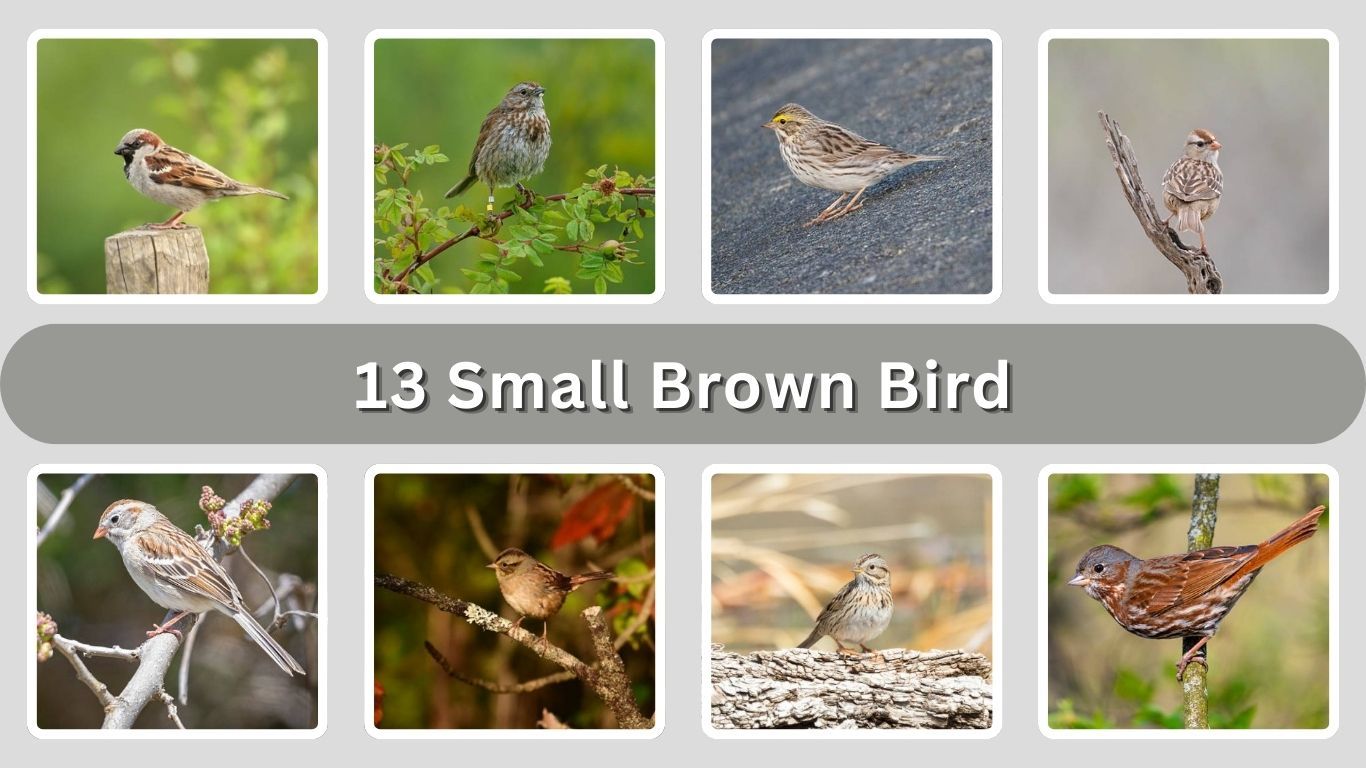
Small brown birds are some of the most familiar yet often overlooked birds in the world. They live in gardens, forests, wetlands, and open fields, quietly blending into their surroundings with soft brown, tan, and gray feathers. Although they may look similar at first glance, each species has its own unique features, behaviors, and songs. From lively sparrows to secretive wrens and tree-climbing creepers, these birds play an important role in nature and everyday ecosystems.
1. House Sparrow
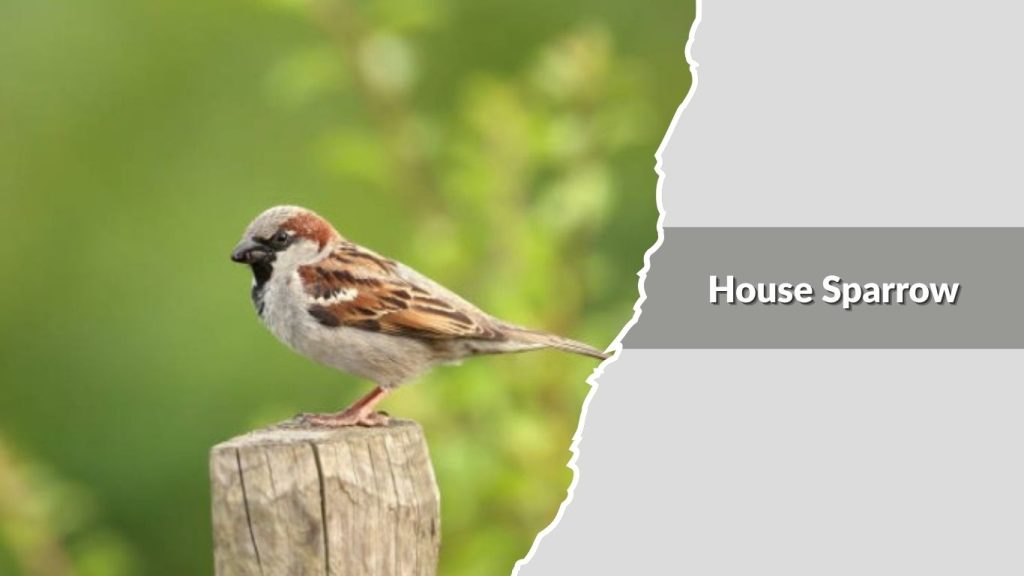
The house sparrow is one of the most familiar small brown birds in the world. It is commonly seen around homes, markets, farms, and city streets, where it lives very close to people. Although small in size, this bird is highly adaptable and can survive in many different environments, from crowded urban areas to quiet rural villages.
Identification
- Small, stocky brown bird with short tail and thick conical beak
- Males have a gray crown, black throat “bib,” and chestnut brown neck
- Females are mostly plain brown with light stripes on the head
- Body length usually around 14–16 cm
- Often seen hopping on the ground in noisy groups
Habitat and Range
House sparrows are found across much of the world, including Asia, Europe, Africa, and the Americas. They prefer living close to human settlements such as houses, shops, barns, and bridges. These birds often build nests in wall holes, roofs, and other small spaces in buildings.
Diet and Feeding Habits
This species mainly feeds on seeds, grains, and crumbs left by humans. During the breeding season, house sparrows also eat insects to provide extra protein for their chicks. They usually forage on the ground, picking up food in busy flocks.
Behavior and Social Life
House sparrows are very social birds. They are rarely seen alone and often gather in groups for feeding, bathing, and resting. Their constant chirping and quick movements make them easy to notice, especially in urban areas.
Breeding and Nesting
House sparrows breed several times a year. They build messy nests made of grass, feathers, and paper in sheltered places. The female lays several small eggs, and both parents help feed and protect the chicks until they are ready to leave the nest.
2. Song Sparrow
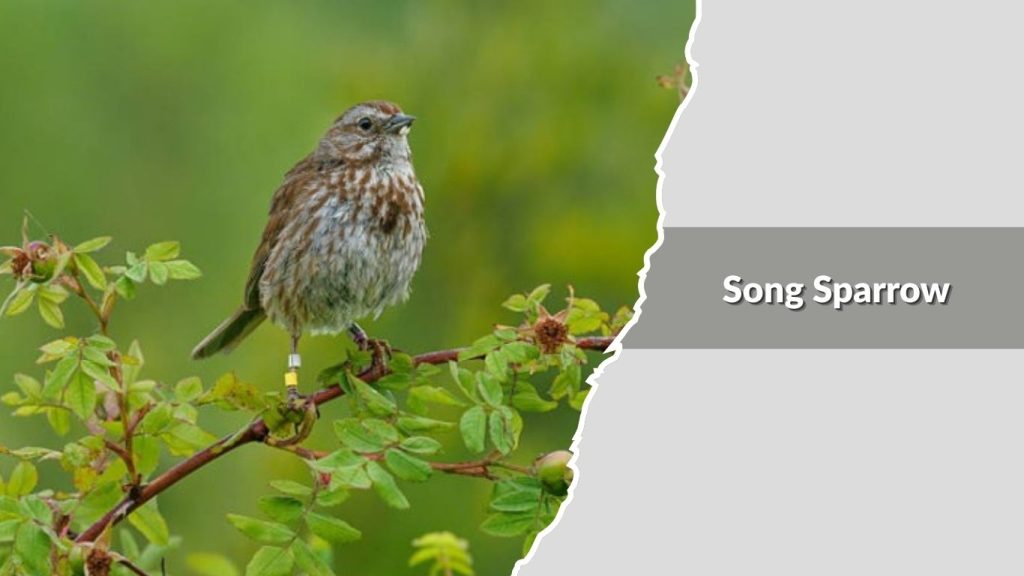
The song sparrow is a small brown bird well known for its rich, musical voice. It is commonly found near wetlands, gardens, fields, and forest edges. Although its colors are mostly brown and gray, the heavy streaking on its body and its long, lively songs make it easy to recognize among other small birds.
Identification
- Medium-small brown bird with thick streaks on chest and sides
- White or light gray breast with a central dark spot
- Rounded head and long, rounded tail
- Brown back with darker stripes
- Body length usually around 12–17 cm
Habitat and Range
Song sparrows are widely distributed across North America. They live in marshes, riversides, grassy fields, gardens, and shrubby areas. These birds prefer places with thick cover near the ground, where they can hide, forage, and build nests safely.
Diet and Feeding Habits
Their diet includes seeds, grasses, small fruits, and insects. In warmer months, they eat more insects such as beetles, caterpillars, and spiders. Song sparrows usually forage on the ground or low plants, often scratching leaves to uncover food.
Behavior and Vocalization
Song sparrows are famous for their loud, varied songs. Each male can have many different song patterns, which he uses to defend territory and attract mates. They are active birds, often seen hopping, flicking their tails, and singing from low branches.
Breeding and Nesting
They build cup-shaped nests made from grass and leaves, usually close to the ground or in low bushes. The female lays several eggs, and both parents take part in feeding the chicks. In good conditions, they may raise multiple broods in a single year.
3. Savannah Sparrow

The savannah sparrow is a small, slender brown bird commonly found in open grassy areas. It is known for its soft streaked appearance and its preference for fields, meadows, coastal marshes, and farmlands. Although it looks simple in color, its neat patterns and quiet behavior make it an interesting and widespread little bird.
Identification
- Small brown bird with fine dark streaks on the chest and sides
- Pale stripe over the eye, often with a slight yellow tint near the front
- Short, notched tail and thin pointed beak
- Brown back with black and buff streaking
- Body length usually around 11–14 cm
Habitat and Range
Savannah sparrows are found across North America and migrate to warmer regions in winter. They prefer open habitats such as grasslands, pastures, crop fields, coastal dunes, and marsh edges. They are rarely seen in deep forests, choosing low, open spaces instead.
Diet and Feeding Habits
Their diet mainly consists of seeds and grasses, but they also eat insects, especially during spring and summer. They forage mostly on the ground, walking or hopping through grass while picking up small seeds, beetles, and caterpillars.
Behavior and Movement
These birds are often shy and stay low in vegetation. When disturbed, they usually fly a short distance and drop back into the grass. Males sing from low perches or fence posts, producing thin, buzzing songs to mark their territory.
Breeding and Nesting
Savannah sparrows build their nests on the ground, hidden among grasses. The nest is made from dry grass and lined with finer material. The female lays several eggs, and both parents help feed the chicks until they are strong enough to leave the nest.
4. Chipping Sparrow
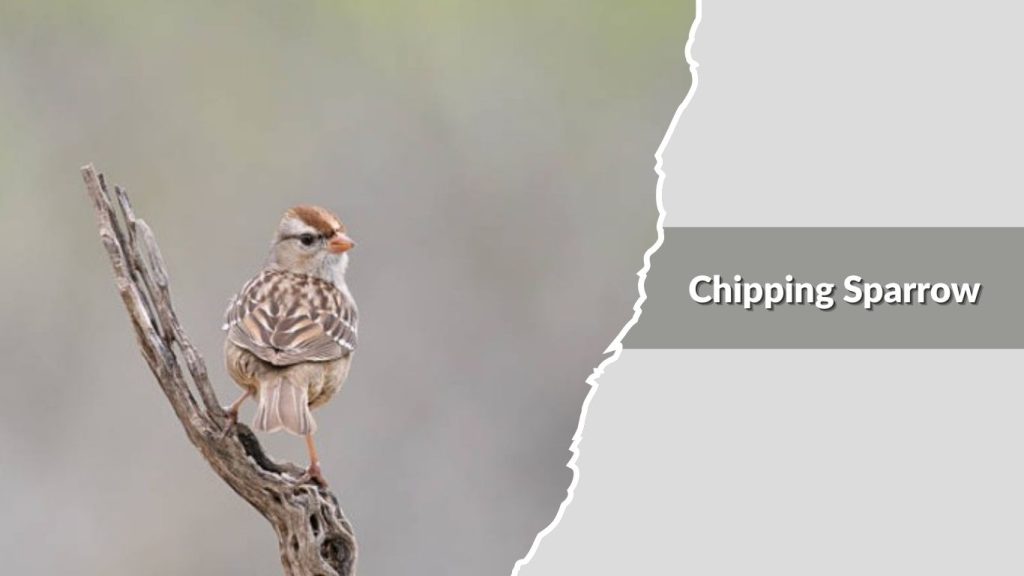
The chipping sparrow is a small, neat-looking brown bird often seen in gardens, parks, and woodland edges. It is especially noticeable for its clean patterns and its dry, fast trilling song. During warmer months, it is a familiar visitor around homes, lawns, and open wooded areas.
Identification
- Small, slim sparrow with a long tail
- Reddish-brown cap on the head and bright white eyebrow stripe
- Clean gray face and underparts with little streaking
- Thin, pointed black bill (dark in breeding season)
- Body length usually around 12–14 cm
Habitat and Range
Chipping sparrows are widely distributed across North America. They prefer open woodlands, forest edges, orchards, suburban yards, and city parks. These birds often nest in trees and shrubs but come down to the ground to feed.
Diet and Feeding Habits
They mainly eat seeds and small grains, but insects make up an important part of their diet in summer. You often see them hopping on open ground, picking up seeds, or catching small insects among low plants.
Behavior and Vocalization
Chipping sparrows are active and social birds. Outside the breeding season, they gather in loose flocks. Their song is a rapid series of dry, mechanical-sounding chips, which they repeat over and over from exposed branches.
Breeding and Nesting
The nest is a small, neat cup made of grass and hair, usually built in shrubs or trees. The female lays several pale eggs, and both parents help feed the young until they are ready to fly.
5. Field Sparrow
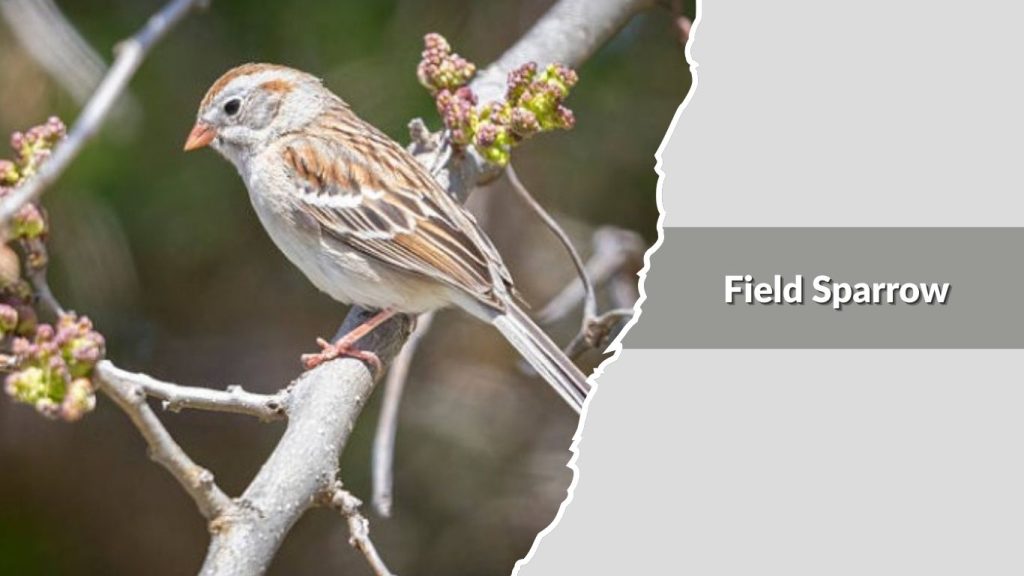
The field sparrow is a gentle-looking small brown bird known for its soft colors and sweet, whistling song. It is commonly found in open fields, brushy areas, and overgrown farmland. Compared to many other sparrows, it has a cleaner, less streaked appearance and a warm, earthy tone.
Identification
- Small brown bird with a plain, lightly streaked body
- Pinkish bill and pale gray face
- Warm brown crown and back
- Long tail with a slight notch
- Body length usually around 12–15 cm
Habitat and Range
Field sparrows are native to North America and prefer open habitats such as abandoned fields, grasslands with shrubs, forest edges, and hedgerows. They are often seen near the ground or perched on low bushes.
Diet and Feeding Habits
Their diet mainly includes seeds, grasses, and insects. During warmer months, they eat more insects like beetles and caterpillars. Field sparrows usually forage on the ground, walking rather than hopping as they search for food.
Behavior and Song
These birds are shy and quiet, often staying hidden in low vegetation. The male’s song starts with a few slow notes and speeds up into a rapid series of whistles, making it one of the easiest sparrow songs to recognize.
Breeding and Nesting
Field sparrows build cup-shaped nests of grass, usually on or near the ground in thick cover. The female lays several eggs, and both parents care for the chicks until they fledge.
6. Swamp Sparrow
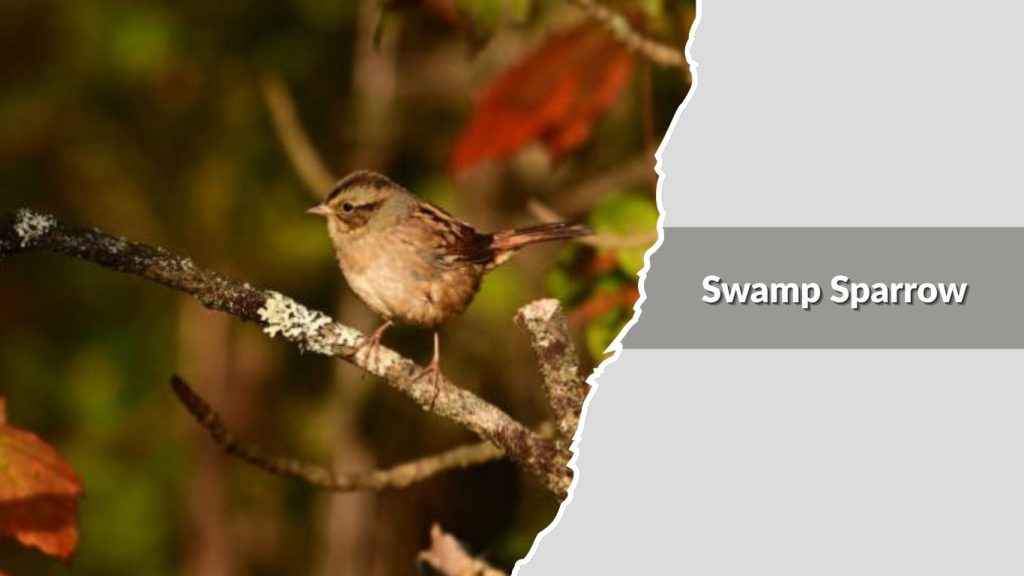
The swamp sparrow is a small brown bird that prefers wet, marshy environments. It is often seen moving quietly through reeds and grasses near water. Its rich brown tones, rusty wings, and clear whistling song make it a distinctive sparrow in wetlands.
Identification
- Small brown bird with a gray face and rufous (reddish-brown) wings
- Clean gray breast with little or no streaking
- Reddish crown, especially noticeable in breeding season
- Short tail and stout beak
- Body length usually around 12–14 cm
Habitat and Range
Swamp sparrows are mainly found in North America, especially around freshwater marshes, swamps, wet meadows, and pond edges. They prefer thick vegetation close to water, where they can hide easily and build their nests.
Diet and Feeding Habits
They eat seeds, aquatic plants, and small insects. During spring and summer, insects become an important food source. Swamp sparrows usually forage low in vegetation or on muddy ground near water.
Behavior and Vocalization
These birds are secretive and often stay hidden in dense reeds. Males sing a clear, slow trill from low shrubs or cattails to defend territory. When disturbed, they usually fly a short distance and drop back into cover.
Breeding and Nesting
Swamp sparrows build their nests close to or just above the water, attached to grasses or reeds. The female lays several eggs, and both parents help feed and protect the chicks until they leave the nest.
7. Lincoln’s Sparrow

Lincoln’s sparrow is a small, finely marked brown bird known for its delicate appearance and soft, musical song. It is often overlooked because it stays hidden in dense vegetation, but careful observation reveals beautiful buff and gray tones across its body.
Identification
- Small brown sparrow with fine, crisp streaks on the chest
- Buff-colored band across the upper chest and face
- Gray face with a narrow eye ring
- Slim body and short, rounded tail
- Body length usually around 13–15 cm
Habitat and Range
Lincoln’s sparrows breed in northern forests and wetlands and migrate to warmer regions in winter. They are commonly found in shrubby wetlands, stream edges, damp meadows, and thickets, where they stay low and concealed.
Diet and Feeding Habits
Their diet consists of seeds, small fruits, and insects. During the breeding season, they eat many insects such as flies, beetles, and caterpillars. They usually forage on the ground or low plants, carefully picking food from leaves and soil.
Behavior and Song
Lincoln’s sparrows are shy and quiet. Males sing a sweet, bubbling song, often from hidden perches. They prefer running or slipping through vegetation rather than flying into the open.
Breeding and Nesting
They build well-hidden nests on or near the ground, made from grasses and moss. The female lays several eggs, and both parents take care of feeding the chicks until they are ready to leave the nest.
8. Fox Sparrow
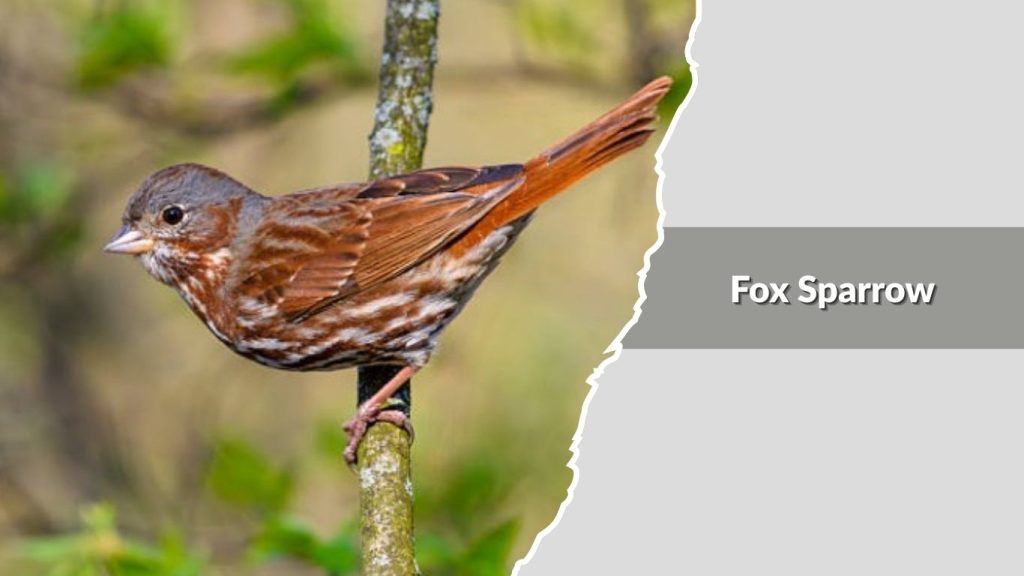
The fox sparrow is a large, rich-colored small brown bird known for its bold markings and strong scratching behavior. Compared to many sparrows, it is heavier and more powerfully built. Its warm reddish-brown tones and thick spots on the chest make it one of the most striking brown sparrows.
Identification
- Chunky brown sparrow with heavy dark spots on the breast
- Often rich reddish-brown on the back, wings, and tail
- Thick, pale bill and strong legs
- Rounded head and full chest
- Body length usually around 16–19 cm
Habitat and Range
Fox sparrows are found across North America, breeding in northern forests and mountain regions. During migration and winter, they are commonly seen in dense shrubs, forest edges, and overgrown gardens.
Diet and Feeding Habits
They eat seeds, berries, and insects. Fox sparrows are famous for their “double-scratch” feeding style, where they jump backward and scrape the ground with both feet to uncover food.
Behavior and Song
These birds are often seen kicking leaves aside while foraging. Males sing rich, clear songs from treetops during the breeding season. Despite their size, they prefer staying close to thick cover.
Breeding and Nesting
Fox sparrows build nests on the ground or low in shrubs. The female lays several eggs, and both parents share the job of feeding and protecting the young.
9. Carolina Wren
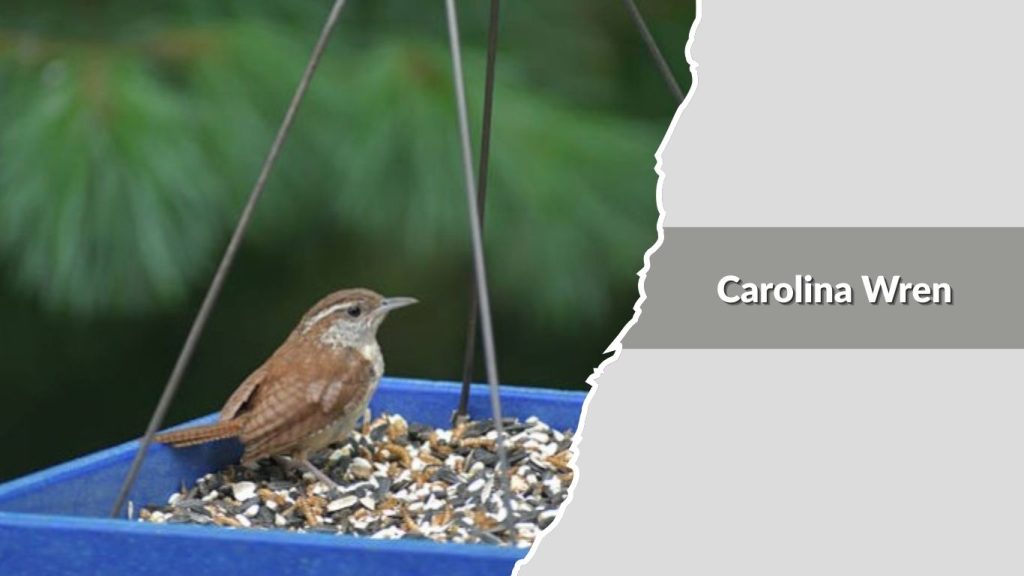
The Carolina wren is a small brown bird with a bold personality and a loud, ringing voice. Despite its small size, it is easily noticed because of its strong song and energetic movements. It is a common sight in gardens, woodpiles, and forest edges, especially in warmer regions.
Identification
- Small, compact brown bird with a long, slightly curved bill
- Rich reddish-brown upperparts and buff-colored underparts
- Bold white eyebrow stripe
- Short wings and an upright tail often held cocked
- Body length usually around 12–14 cm
Habitat and Range
Carolina wrens are mainly found in the eastern and southern parts of North America. They live in forests, thickets, suburban yards, parks, and farmland edges. They often stay close to dense cover and human structures.
Diet and Feeding Habits
Their diet consists mostly of insects and spiders, along with some seeds and berries. They search for food in bark crevices, leaf litter, and brush piles, often hopping and creeping with quick movements.
Behavior and Vocalization
Carolina wrens are active and curious birds. They sing loudly throughout the year, often producing repeated, clear phrases. Pairs usually stay together, defending their territory even outside the breeding season.
Breeding and Nesting
They build bulky nests in sheltered places such as boxes, pots, tree cavities, or old boots. The female lays several eggs, and both parents help feed the chicks until they fledge.
10. Bewick’s Wren

Bewick’s wren is a slim, small brown bird known for its long tail and bold white eyebrow. It is very active and expressive, often flicking its tail from side to side while moving through shrubs and low trees. Its rich, musical songs make it stand out despite its modest color.
Identification
- Small, slender brown bird with a long tail tipped in white
- Bold white eyebrow stripe
- Grayish-white underparts and warm brown back
- Thin, slightly curved bill
- Body length usually around 12–14 cm
Habitat and Range
Bewick’s wrens are found mainly in North America, especially in the southern and western regions. They prefer open woodlands, brushy fields, hedgerows, farms, and suburban gardens where shrubs and low cover are available.
Diet and Feeding Habits
They feed mostly on insects, spiders, and small invertebrates, along with some seeds. Bewick’s wrens forage actively on branches, tree trunks, and near the ground, picking prey from bark and leaves.
Behavior and Song
These birds are lively and vocal. Males sing complex, flowing songs from exposed perches. They frequently cock and swing their tails, which is one of their easiest behaviors to recognize.
Breeding and Nesting
Bewick’s wrens nest in cavities such as holes in trees, fence posts, and buildings. The female lays several eggs, and both parents work together to feed and protect the young.
11. Winter Wren
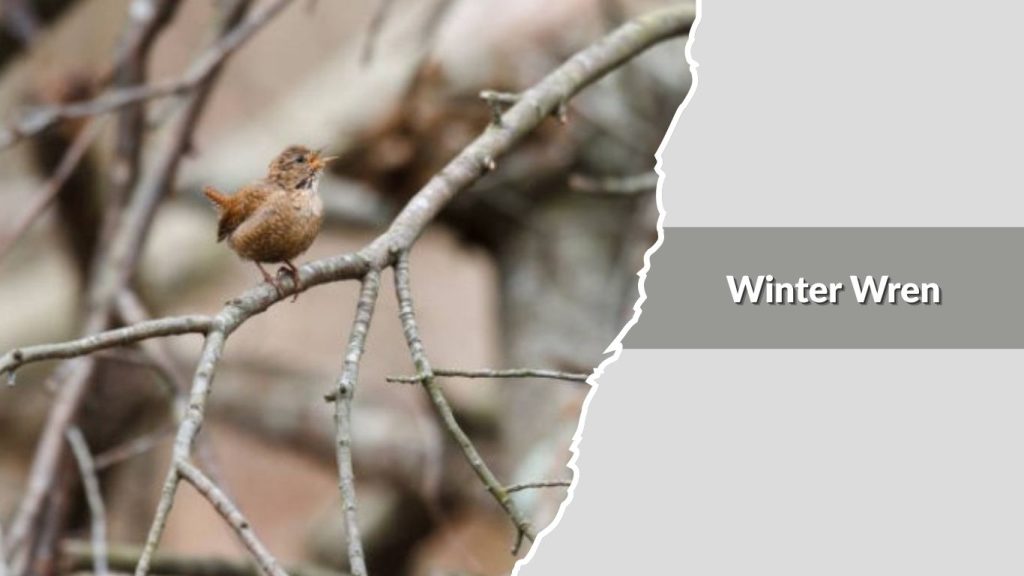
The winter wren is a tiny, round-bodied brown bird famous for its powerful, bubbling song. Despite its very small size, it produces one of the loudest and most complex songs among small birds. It is often seen creeping through tangled roots, fallen logs, and dense undergrowth.
Identification
- Very small, dark brown bird with fine barring on wings and tail
- Short neck and round body shape
- Very short tail, often held upright
- Thin, slightly curved bill
- Body length usually around 8–10 cm
Habitat and Range
Winter wrens are found across North America, Europe, and Asia. They prefer moist forests, woodland ravines, stream edges, and areas with dense ground cover. They are especially common in places with fallen trees, thick roots, and mossy logs.
Diet and Feeding Habits
Their diet mainly includes insects, spiders, and other small invertebrates. Winter wrens search for food by creeping into cracks, under bark, and among leaf litter, often disappearing into tight spaces.
Behavior and Song
Winter wrens are secretive and quick-moving. They often stay hidden near the ground. Males sing long, fast, and musical songs that echo through forests, making them easier to hear than to see.
Breeding and Nesting
They build dome-shaped nests made of moss, twigs, and leaves, usually hidden in roots, logs, or embankments. The female lays several eggs, and both parents take part in feeding the chicks.
12. Brown Creeper

The brown creeper is a small brown bird perfectly camouflaged against tree bark. It is best known for its unique feeding style—spiraling upward along tree trunks while searching for insects. Its mottled brown pattern helps it blend in, making it easy to miss unless you watch closely.
Identification
- Small, slim brown bird with heavily streaked, bark-like pattern
- White underparts and thin, slightly curved bill
- Long, stiff tail used for support on tree trunks
- Short wings and slender body
- Body length usually around 12–13 cm
Habitat and Range
Brown creepers are found across North America, Europe, and Asia. They live mainly in forests, woodlands, and parks with mature trees. They spend most of their time on tree trunks rather than on the ground or open branches.
Diet and Feeding Habits
Their diet consists mostly of insects, spiders, and larvae found hiding in bark crevices. Brown creepers start at the base of a tree and work their way upward, picking out tiny prey with their curved bills.
Behavior and Movement
They move in a distinctive upward spiral, then fly down to the base of another tree to start again. Their thin, high-pitched calls are soft and easy to overlook in the forest.
Breeding and Nesting
Brown creepers build their nests behind loose bark or in tree crevices. The nest is made from bark strips, grass, and feathers. Both parents feed the chicks until they are strong enough to leave the nest.
13. Dunnock
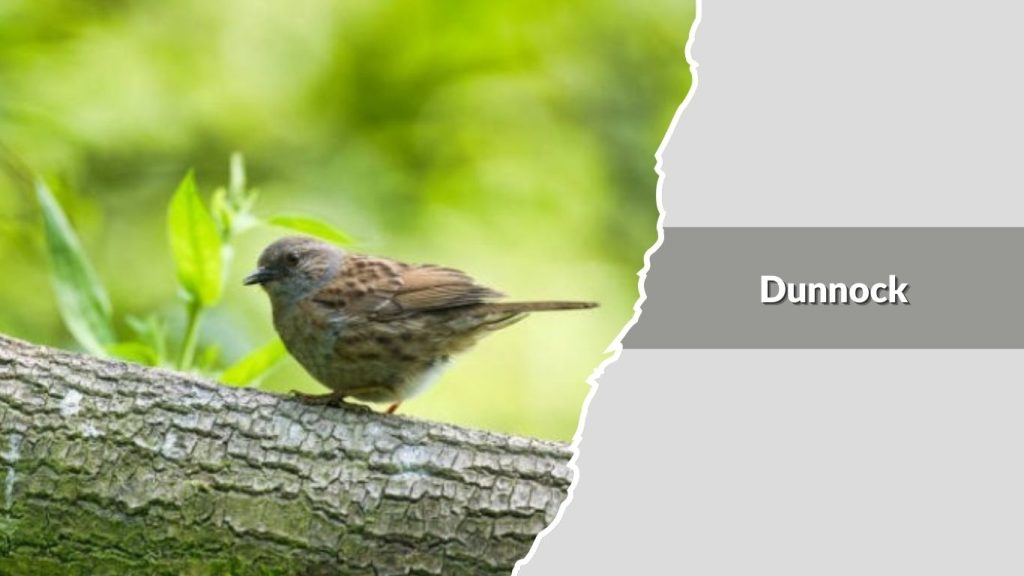
The dunnock, also known as the hedge sparrow, is a small, slim brown bird often seen quietly moving through hedges and gardens. Although it looks simple, it has a neat mix of brown, gray, and fine streaks that give it a soft, delicate appearance.
Identification
- Small brown bird with fine dark streaks on the back
- Gray face, throat, and chest
- Thin, pointed bill
- Slim body with a medium-length tail
- Body length usually around 13–14 cm
Habitat and Range
Dunnocks are native to Europe and parts of Asia. They are commonly found in gardens, hedgerows, woodland edges, and parks. They prefer low cover and are often seen close to the ground.
Diet and Feeding Habits
Their diet includes insects, spiders, seeds, and small worms. Dunnocks feed mostly on the ground, quietly picking food from soil, leaf litter, and low plants.
Behavior and Social Life
These birds are shy and unobtrusive. They often move with quick, mouse-like runs and flicking wings. Their soft calls and subtle behavior make them easy to miss.
Breeding and Nesting
Dunnocks build well-hidden cup-shaped nests in dense shrubs or hedges. The female lays several blue eggs, and both parents help feed the chicks until they leave the nest.
FAQs
What is considered a small brown bird?
A small brown bird usually refers to a small-sized species with mostly brown, tan, or streaked feathers. These birds are often under 18 cm long and include sparrows, wrens, creepers, and similar species that blend easily into natural environments like grass, trees, and shrubs.
Why do many small birds have brown coloring?
Brown coloring helps small birds stay camouflaged. It allows them to blend into soil, tree bark, dry grass, and leaves, which protects them from predators. This natural disguise is especially important for ground-feeding and nesting birds.
How can I tell different small brown birds apart?
You can identify them by looking at head markings, beak shape, tail length, habitat, and behavior. Some sing unique songs, some stay in wetlands, and others climb tree trunks. These small details make a big difference in identification.
Are small brown birds common around homes?
Yes, many small brown birds live close to people. Species like house sparrows and wrens often nest in buildings, gardens, and backyards. They are attracted to easy food sources, shelter, and insects found near human environments.
Do small brown birds migrate?
Some small brown birds migrate seasonally, especially those living in colder regions. Others stay in the same area all year. Migration depends on food availability, climate, and the specific species.