




Snapping turtles are large freshwater reptiles known for their powerful jaws, rugged shells, and prehistoric appearance. Found mainly in North America, these turtles spend most of their lives in water and are famous for their strong defensive bite. From their muddy habitats to their fascinating life cycle, snapping turtles play an important role in freshwater ecosystems. In this guide, you’ll learn about snapping turtle habitat, diet, eggs, baby development, and lifespan.
What Is a Snapping Turtle?
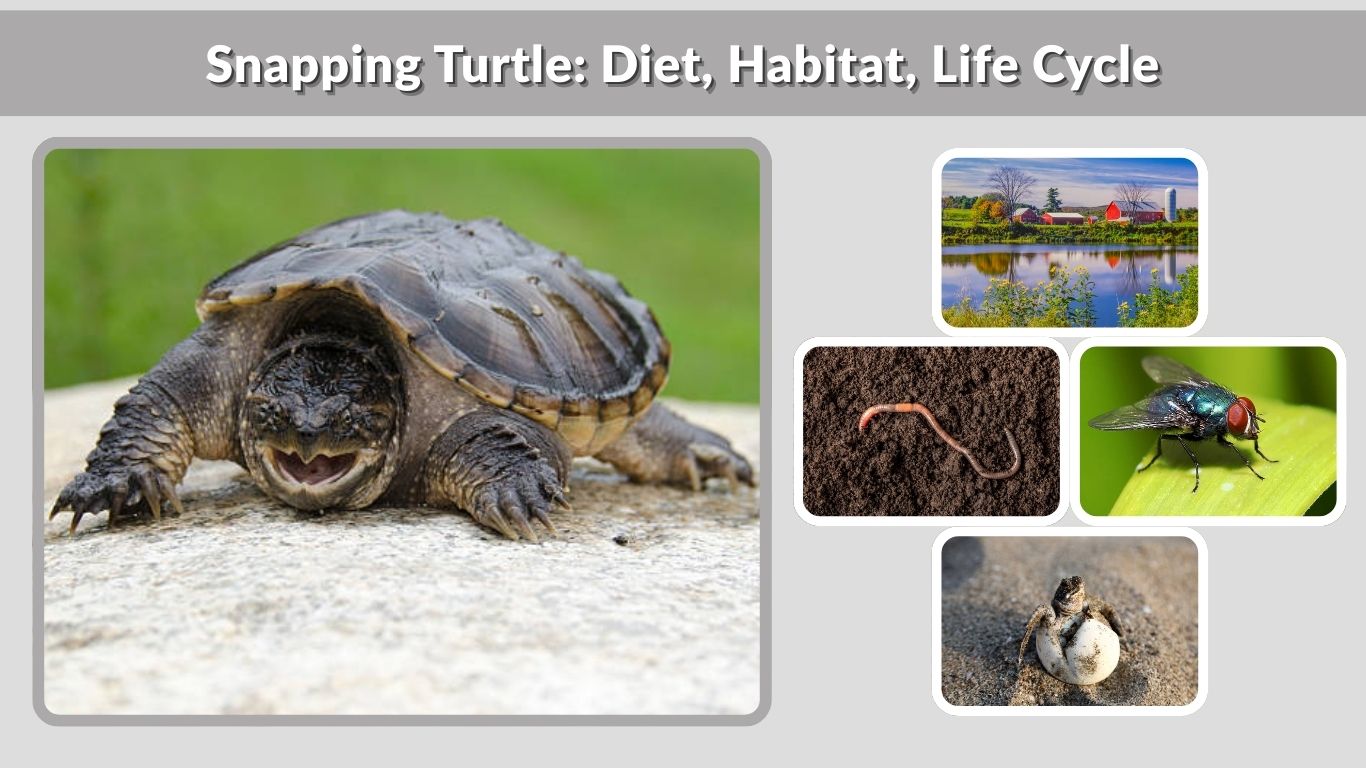
A snapping turtle is a large freshwater turtle belonging to the family Chelydridae. The most common species is the common snapping turtle (Chelydra serpentina), while the alligator snapping turtle (Macrochelys temminckii) is larger and mostly found in the southeastern United States.
Snapping turtles are easy to recognize. They have:
- A large head with a sharp, hooked beak
- Powerful jaws
- A long, thick tail with saw-like ridges
- A rough, dark-colored shell
Unlike many other turtles, snapping turtles cannot fully pull their heads into their shells. Instead, they rely on their strong bite and defensive behavior for protection. In water, however, they are usually calm and prefer to avoid confrontation.
Snapping Turtle Habitat
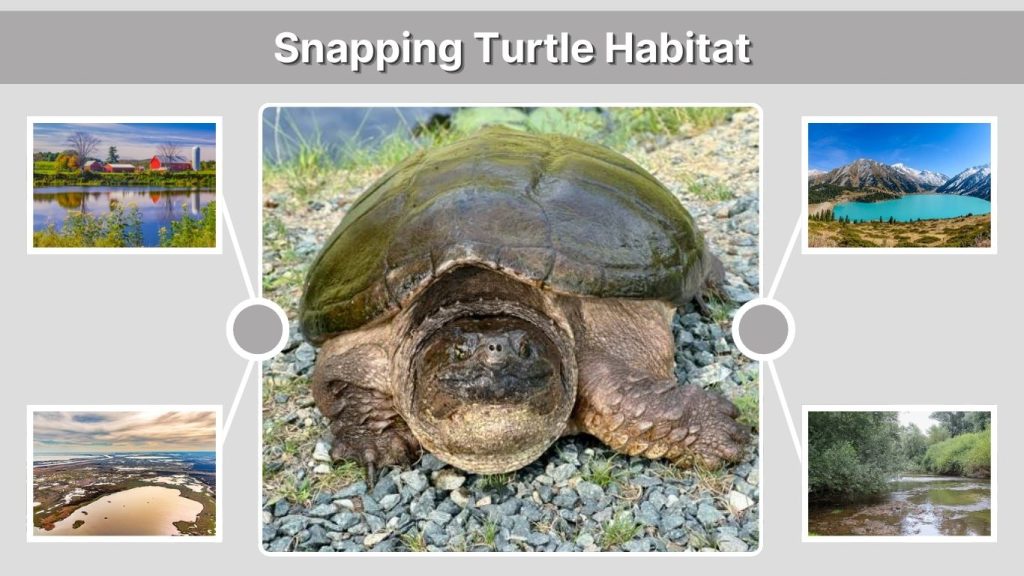
Snapping turtles live in a variety of freshwater environments. Their preferred habitats include:
- Ponds
- Lakes
- Slow-moving rivers
- Marshes
- Swamps
They favor areas with muddy or sandy bottoms where they can partially bury themselves. This helps them hide from predators and ambush prey. Aquatic vegetation and submerged logs provide additional cover.
Although snapping turtles spend most of their time in water, females leave the water during nesting season to lay eggs on land. They may travel surprising distances to find suitable nesting sites, often choosing sandy soil or loose dirt.
Snapping turtles are widely distributed across the United States and southern Canada. They are highly adaptable and can tolerate cold climates better than many other reptiles. In winter, they remain underwater in a semi-dormant state, sometimes buried in mud.
What Do Snapping Turtles Eat?
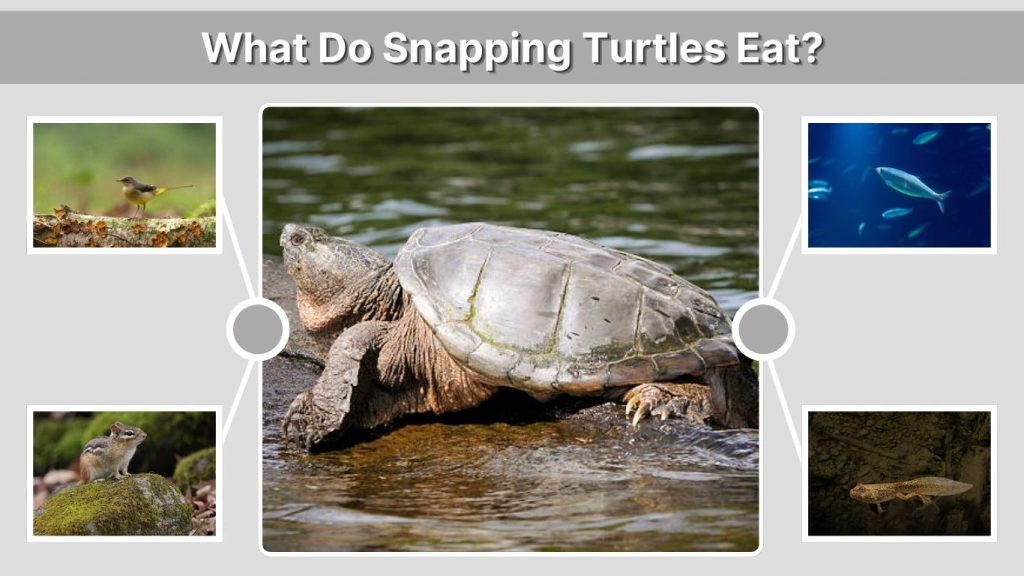
Snapping turtles are omnivores, meaning they eat both plants and animals. Their diet changes as they grow, but they are generally opportunistic feeders and will eat almost anything they can catch.
Snapping Turtle Diet in the Wild
In natural habitats, snapping turtles eat:
- Fish
- Frogs and tadpoles
- Aquatic insects
- Crayfish
- Small birds
- Small mammals
- Aquatic plants
- Algae
- Carrion (dead animals)
They are especially important as scavengers, helping clean up dead organisms from the water.
Diet by Age
A baby snapping turtle has slightly different feeding habits than an adult.
- Hatchlings and juveniles mainly eat small insects, worms, and tiny fish.
- As they grow, they begin catching larger prey.
- Adult snapping turtles consume a wider range of animals and plants, including larger fish and small mammals.
Because they are opportunistic, snapping turtles adapt their diet based on what is available in their environment.
Hunting and Feeding Behavior
Snapping turtles are ambush predators. They often remain still at the bottom of a pond or river, waiting for prey to swim close. Their dark shells and muddy surroundings provide excellent camouflage.
When prey comes within range, the turtle quickly extends its neck and snaps its powerful jaws shut. Their bite is extremely strong and can easily crush shells, bones, and tough plant material.
The alligator snapping turtle uses an especially unique method. It has a worm-like appendage on its tongue that wiggles to attract fish. When a fish swims in to investigate, the turtle snaps its jaws closed.
Snapping Turtle Life Cycle
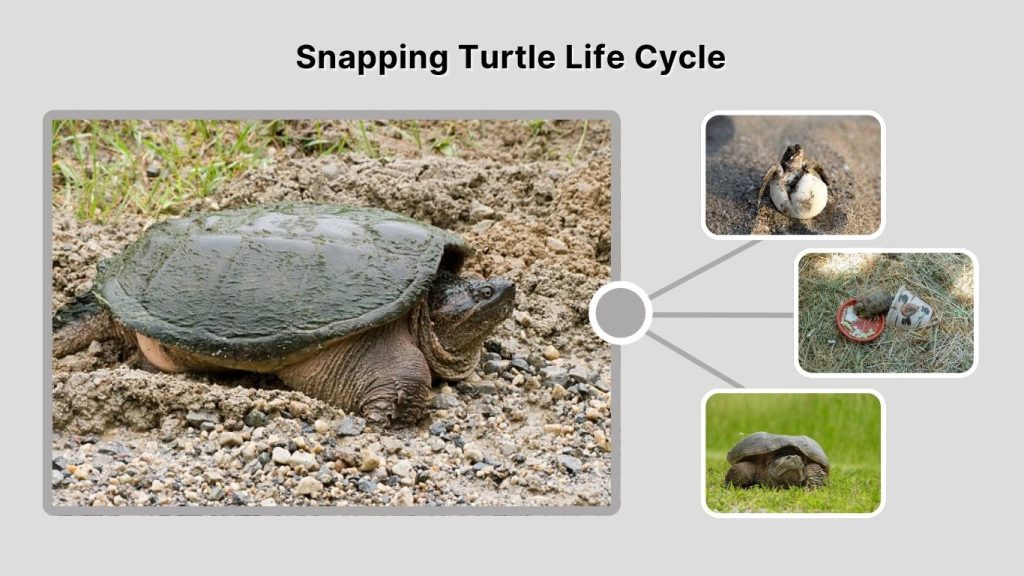
The snapping turtle life cycle includes several stages: egg, hatchling, juvenile, and adult. These turtles grow slowly and can live for decades.
Egg Stage
Snapping turtles mate in the spring, usually between April and May. After mating, the female searches for a suitable nesting site on land. She often travels at night to reduce the risk of predators.
Once she finds a sandy or soft patch of soil, she digs a hole using her hind legs. She then lays between 20 and 40 eggs, though some large females may lay more. After laying the eggs, she covers the nest and returns to the water. The eggs receive no further parental care.
The incubation period typically lasts 70 to 90 days, depending on temperature. Warmer temperatures generally speed up development.
Hatchling Stage
Snapping turtle hatching usually occurs in late summer or early fall. Hatchlings use a small temporary structure called an egg tooth to break out of their shells.
After emerging from the nest, baby snapping turtles must immediately make their way to water. This journey is extremely dangerous. Birds, raccoons, skunks, and other predators often target young turtles. As a result, only a small percentage survive to adulthood.
Hatchlings are about 1 inch long and already capable of defending themselves with quick snapping movements.
Snapping Turtle Eggs and Nesting
Nesting season for snapping turtles typically occurs from late spring to early summer, usually between May and July. During this time, females leave the safety of the water to find suitable nesting sites on land. They often choose sunny areas with loose, sandy, or well-drained soil, such as riverbanks, roadsides, gardens, or sandy trails.
Using their strong hind legs, females dig a flask-shaped hole several inches deep. Once the nest is ready, they lay a clutch of eggs that usually ranges from 20 to 40 eggs, though larger females may lay up to 50 or more. The eggs are round, white, and leathery, similar in appearance to ping-pong balls.
After laying the eggs, the female carefully covers the nest with soil to help conceal it from predators. She then returns to the water and does not return to care for the eggs.
The incubation period lasts about 70 to 90 days, depending on environmental conditions. One fascinating fact about snapping turtle eggs is that temperature plays a role in determining the sex of the hatchlings. Warmer or cooler nest temperatures can influence whether more males or females develop.
Unfortunately, many nests are destroyed by predators such as raccoons, foxes, and skunks. Some nests are also accidentally disturbed by human activity, especially when located near roads or developed areas.
Snapping Turtle Hatching
Snapping turtle hatching usually takes place in late summer or early fall. Inside the egg, the developing turtle absorbs nutrients from the yolk sac, which provides essential energy during early growth.
When ready to hatch, the baby turtle uses a temporary sharp structure called an egg tooth to break through the shell. After emerging, hatchlings may remain inside the nest for a short time before digging their way to the surface.
The journey from nest to water is one of the most dangerous periods in a snapping turtle’s life. Hatchlings are small, slow, and vulnerable to predators such as birds, snakes, and mammals. Many do not survive this first trip.
Those that reach the water begin feeding almost immediately. Despite their small size, baby snapping turtles are instinctively defensive and will snap if threatened.
Baby Snapping Turtle Facts
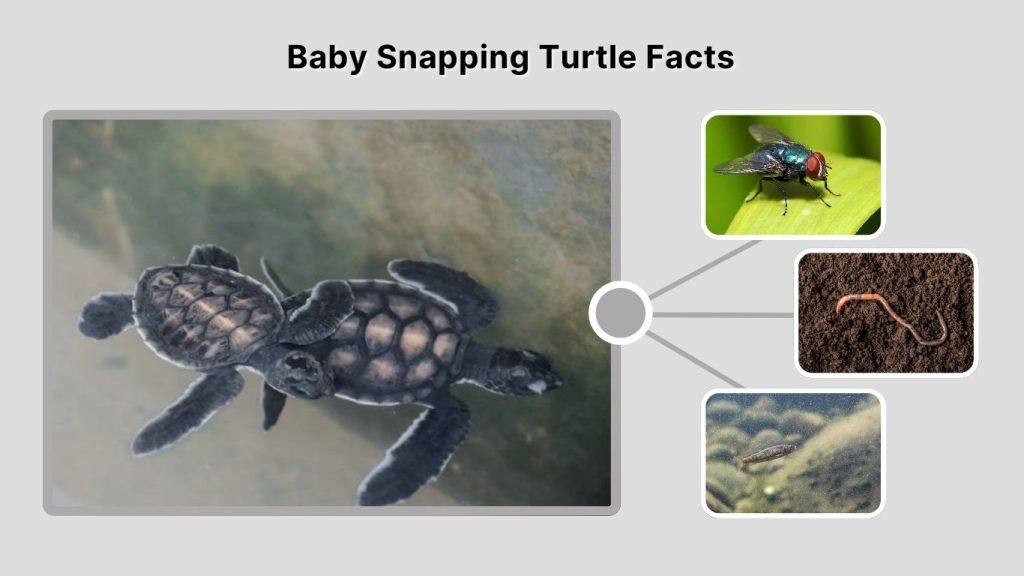
A baby snapping turtle looks like a miniature version of an adult but with more pronounced ridges along its shell. At birth, the shell length is typically around 1 inch, and the long tail often appears nearly as long as the body.
Baby snapping turtles are more active on land during their first days as they search for water. Once in the water, they tend to stay in shallow areas with plenty of vegetation for cover.
What Do Baby Snapping Turtles Eat?
The diet of a baby snapping turtle mainly includes:
- Small insects
- Worms
- Tiny fish
- Tadpoles
- Small aquatic invertebrates
Young turtles rely heavily on animal protein to support rapid growth. As they mature, they gradually expand their diet to include larger prey and plant matter.
Even at a young age, snapping turtles display defensive behavior. If approached, they may hiss, lunge, or snap their jaws. This instinct helps compensate for their small size and lack of protection compared to adults.
Snapping Turtle Lifespan
Snapping turtles are long-lived reptiles. In the wild, they commonly live 30 to 50 years, and some individuals may live even longer under favorable conditions. In captivity, with proper care and protection from predators, they can sometimes exceed 50 years.
Several factors influence snapping turtle lifespan, including:
- Habitat quality
- Food availability
- Predation risk
- Human-related threats such as vehicles and pollution
Snapping turtles grow slowly and may not reach sexual maturity until they are 8 to 20 years old, depending on environmental conditions. Their long lifespan and late maturity make population recovery slower if numbers decline.
Are Snapping Turtles Dangerous?
Snapping turtles have a reputation for being aggressive, but this is often misunderstood. In water, they are generally shy and prefer to avoid humans. Most aggressive behavior occurs when they are on land, where they feel more vulnerable because they cannot swim away quickly.
Their bite is extremely strong and can cause serious injury. For this reason, it is important not to handle wild snapping turtles. If you encounter one crossing a road, it is best to avoid direct contact or use extreme caution.
Respecting their space and observing from a distance is the safest approach for both humans and turtles.
Why Snapping Turtles Matter to the Ecosystem
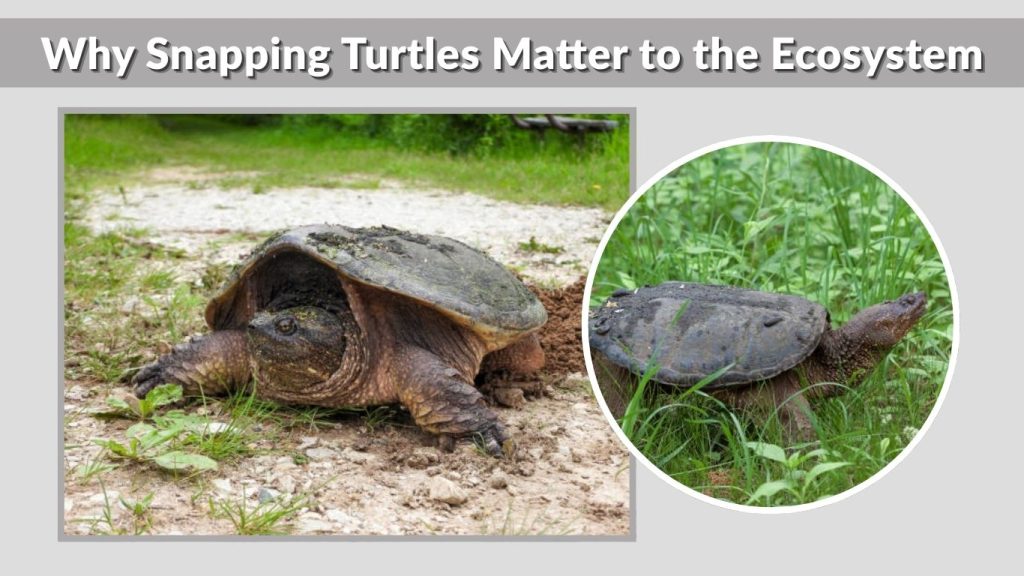
Snapping turtles play a vital role in freshwater ecosystems. As both predators and scavengers, they help maintain ecological balance.
They control populations of fish, amphibians, and insects, preventing overpopulation. By feeding on carrion, they also help keep waterways clean and reduce the spread of disease.
Because they are sensitive to environmental changes, snapping turtles can also serve as indicators of ecosystem health. Protecting wetlands and freshwater habitats helps ensure the survival of these ancient and important reptiles.
Conclusion
Snapping turtles are fascinating freshwater reptiles known for their strong jaws, adaptable diet, and long lifespan. From their carefully buried eggs to the challenging journey of hatchlings reaching the water, their life cycle is both complex and remarkable. Living primarily in ponds, lakes, and rivers, snapping turtles play an essential role in maintaining healthy ecosystems. By understanding their habitat, diet, and behavior, we can better appreciate and protect these resilient creatures for generations to come.