

The snowshoe hare (Lepus americanus) is a fascinating mammal found in the forests of North America. It is best known for its large hind feet, which help it travel easily across deep snow, giving the species its name. Snowshoe hares also have a remarkable ability to change their fur color with the seasons, turning brown in summer and white in winter for camouflage. These adaptations help them survive in cold environments where predators and harsh weather conditions are common.
What Is a Snowshoe Hare?
The snowshoe hare is a medium-sized hare species belonging to the Leporidae family, which includes rabbits and hares. Unlike rabbits, hares generally live above ground and depend on speed and camouflage rather than burrows for protection.
Snowshoe hares are specially adapted to life in northern forests and snowy regions. Their strong legs and large hind feet allow them to run quickly and move efficiently across snow-covered landscapes.
Scientific Classification
- Scientific name: Lepus americanus
- Family: Leporidae
- Order: Lagomorpha
- Common name: Snowshoe hare
Physical Characteristics
Snowshoe hares have several distinctive features that help them survive in cold and snowy environments.
- Large hind feet covered with fur that act like snowshoes
- Long hind legs used for fast running and jumping
- Thick fur that changes color with the seasons
- Large ears that help detect predators
- Strong body adapted for quick movement
These features make snowshoe hares well suited for life in snowy forests.
Size and Appearance
Snowshoe hares are medium-sized mammals. Adult hares typically measure about 40–52 centimeters in length and weigh between 1.2 and 1.7 kilograms.
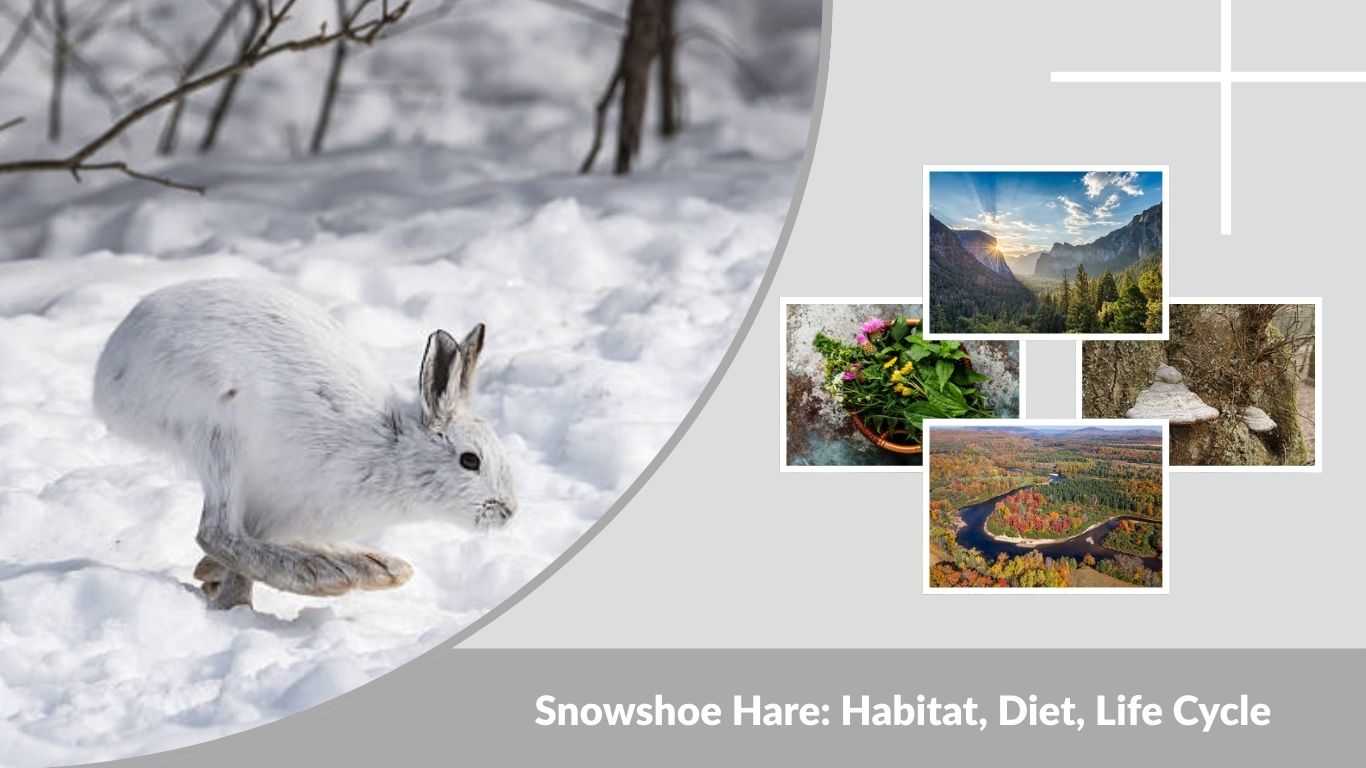
One of their most noticeable features is their large hind feet, which spread their weight across the snow and prevent them from sinking into soft snow.
Their fur changes color depending on the season. During summer, the fur is usually brown or gray, helping them blend into forest vegetation. In winter, the fur becomes white, allowing them to camouflage with snow-covered landscapes.
Snowshoe Hare Habitat
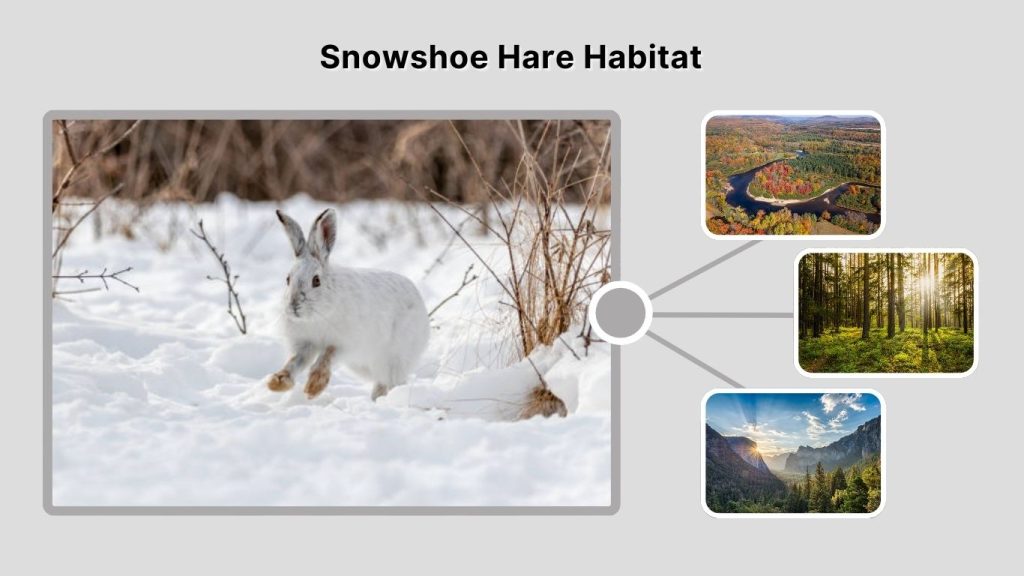
The snowshoe hare habitat includes forests and cold regions where deep snow is common during winter.
Where Do Snowshoe Hares Live?
Snowshoe hares are widely distributed across North America, particularly in northern regions. Their range includes:
- Canada
- Alaska
- Northern United States
- Parts of the Rocky Mountains
These areas contain forests with heavy snowfall during winter, which suits the snowshoe hare’s adaptations.
Preferred Habitat
Snowshoe hares prefer environments with dense vegetation that provides both shelter and food. Their most common habitats include:
- Boreal forests
- Coniferous forests
- Areas with thick shrubs and undergrowth
- Mountain forests
Dense vegetation allows snowshoe hares to hide from predators and find plant-based food sources.
Shelter and Survival Behavior
Snowshoe hares do not usually dig burrows. Instead, they rely on thick vegetation and natural cover for protection.
They often rest in shallow depressions in the snow or ground called forms. These forms help hide them from predators while they rest.
Snowshoe hares are mostly active at night or during dawn and dusk, which helps them avoid many predators that hunt during the day.
They also create well-used trails through the snow, which allow them to travel quickly between feeding areas and hiding spots.
Snowshoe Hare Identification
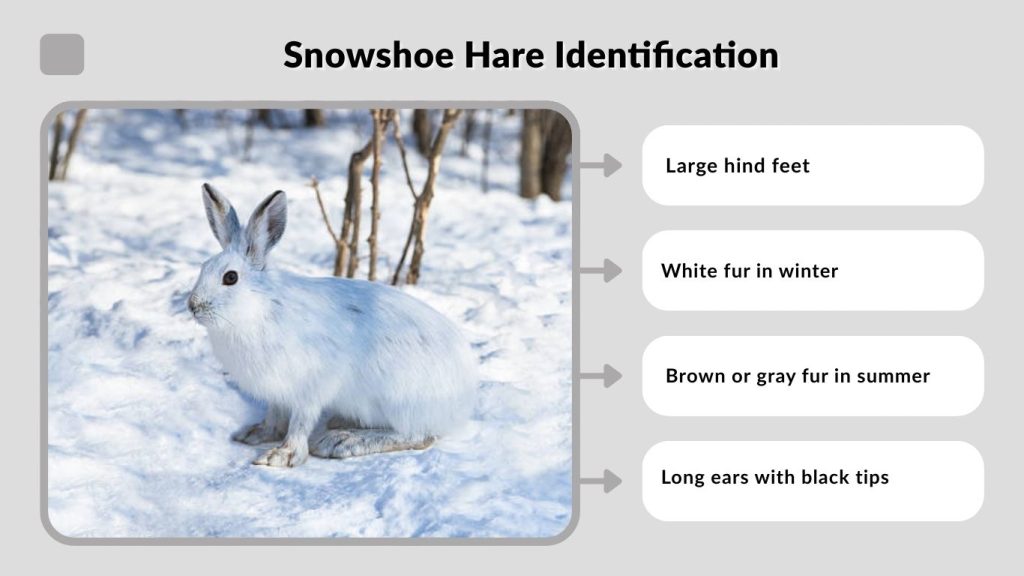
Recognizing a snowshoe hare in the wild is easier when you know its distinctive physical features.
Key Identification Features
Some of the most recognizable characteristics of snowshoe hares include:
- Large hind feet that act like natural snowshoes
- White fur in winter for camouflage in snowy environments
- Brown or gray fur in summer
- Long ears with black tips
- Strong hind legs for fast running
These traits help snowshoe hares survive in snowy forests where camouflage and speed are essential.
Adaptations for Snowy Environments
Snowshoe hares have several special adaptations that help them survive in cold climates.
One important adaptation is their large hind feet, which spread their body weight across snow. This allows them to run quickly across deep snow without sinking.
Another key adaptation is their seasonal camouflage. By changing fur color from brown in summer to white in winter, snowshoe hares can blend into their surroundings and avoid predators.
Their thick fur also provides insulation against cold temperatures, helping them survive harsh northern winters.
Snowshoe Hare Diet
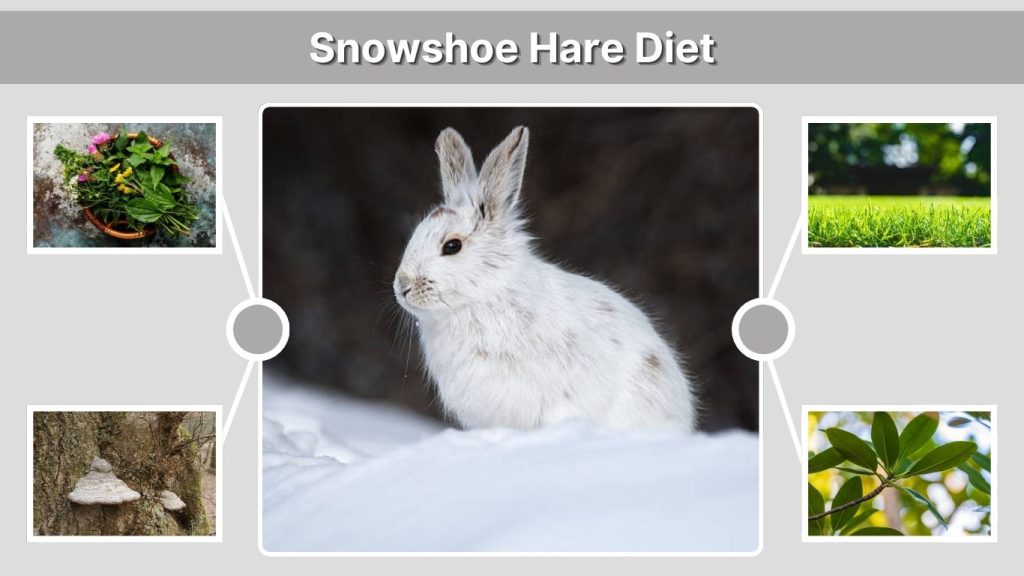
The snowshoe hare diet consists entirely of plant material. Like other hares and rabbits, snowshoe hares are herbivores.
What Do Snowshoe Hares Eat?
Common foods eaten by snowshoe hares include:
- Grasses
- Leaves
- Wild herbs
- Shrubs
- Tree bark and twigs
These plants provide the nutrients needed for survival in forest environments.
Seasonal Diet Changes
The diet of snowshoe hares changes with the seasons.
During spring and summer, they mainly eat fresh vegetation such as grasses, herbs, and leaves.
During fall and winter, when green plants become scarce, they rely more on woody plants, bark, and twigs.
Feeding Behavior
Snowshoe hares usually feed during dawn, dusk, or nighttime, when predators are less active.
They typically forage close to dense vegetation so they can quickly hide if danger appears.
Snowshoe Hare Life Cycle
The snowshoe hare life cycle is closely tied to seasonal changes in northern forests. Because winters are long and harsh in these regions, reproduction mainly occurs during warmer months when food is more abundant.
Breeding Season
Snowshoe hares typically breed from March to August. During this period, males compete for females, and mating may occur several times throughout the breeding season.
A female snowshoe hare can produce two to four litters per year, depending on environmental conditions and food availability.
Gestation Period
The gestation period for snowshoe hares lasts about 36 to 40 days. After this time, the female gives birth to a litter of babies called leverets.
Each litter usually contains 2 to 6 young hares, although the number can vary.
Birth and Early Development
Unlike many rabbits, snowshoe hare babies are relatively well developed at birth. Leverets are born:
- With fur covering their bodies
- With their eyes open
- Able to move shortly after birth
This early development helps them survive in forest environments where hiding quickly from predators is important.
The mother leaves the young hidden in vegetation and returns periodically to nurse them.
Growth Stages
Snowshoe hares grow rapidly and pass through several stages of development:
- Leverets (newborn hares) – Able to move and hide soon after birth.
- Juvenile stage – Begin eating vegetation and exploring nearby areas.
- Subadult stage – Continue growing and learning survival behaviors.
- Adult stage – Fully mature and capable of reproduction.
Young hares usually become independent within a few weeks.
Snowshoe Hare Lifespan
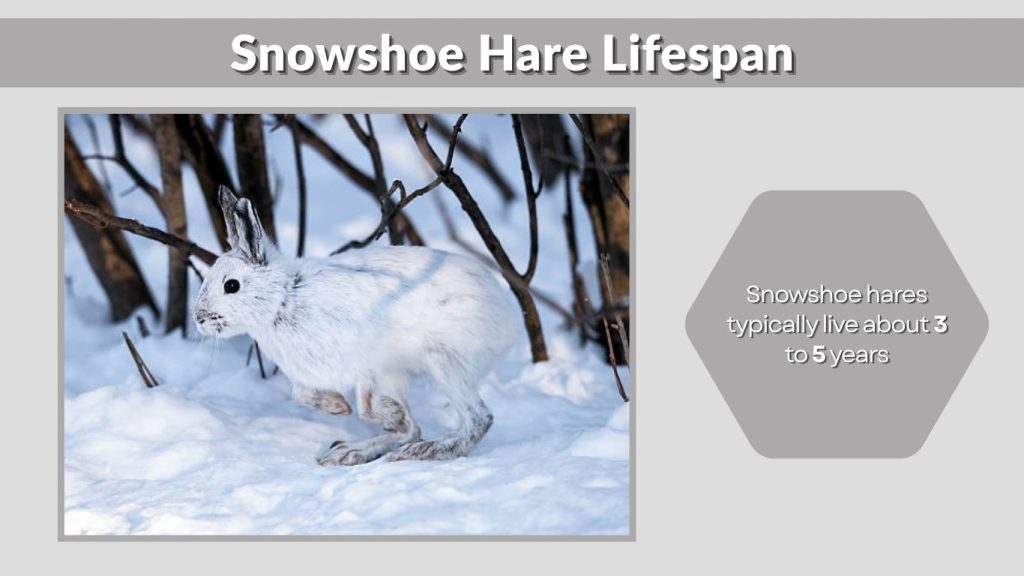
The snowshoe hare lifespan depends on environmental conditions, predators, and food availability in northern forests.
Lifespan in the Wild
In the wild, snowshoe hares typically live about 3 to 5 years. However, many individuals do not reach this age because they are frequently hunted by predators.
Weather conditions, food shortages, and disease can also affect survival.
Lifespan in Captivity
In captivity, snowshoe hares may live up to 7 years, as they are protected from predators and have consistent access to food and care.
Factors Affecting Lifespan
Several factors influence how long snowshoe hares live:
- Predators: Lynx, foxes, and birds of prey hunt hares.
- Food availability: Plant growth affects survival rates.
- Climate conditions: Severe winters may reduce survival.
- Disease and parasites: These can impact populations.
Because they face many threats, snowshoe hares rely on high reproduction rates to maintain stable populations.
Predators of the Snowshoe Hare
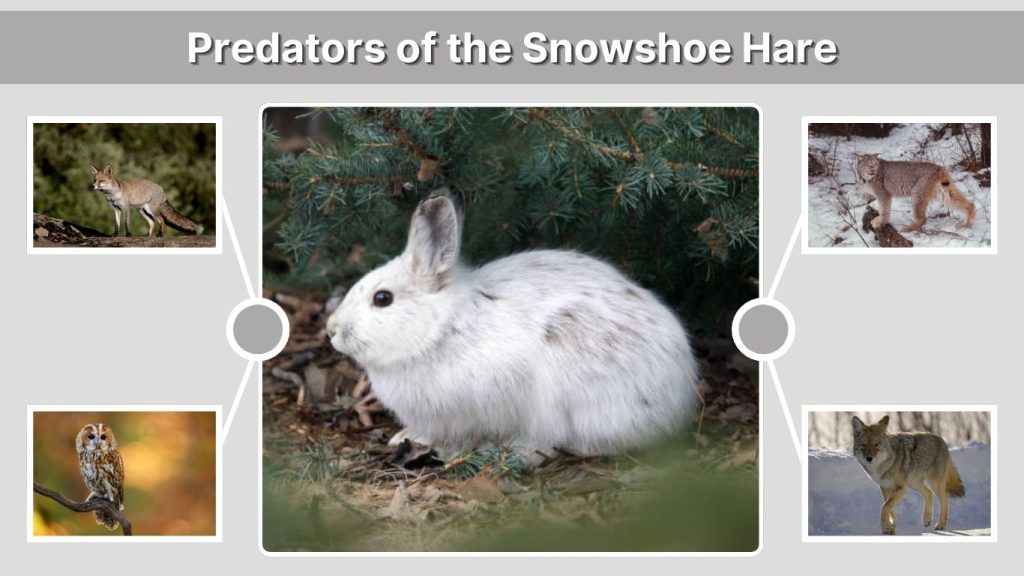
Snowshoe hares are a key prey species in northern forest ecosystems. Many predators depend on them as a major food source.
Common predators include:
- Canada lynx
- Coyotes
- Foxes
- Owls
- Hawks
One of the most famous ecological relationships is the lynx–hare population cycle. In this cycle, snowshoe hare populations rise and fall approximately every 8 to 11 years. When hare populations increase, lynx populations also grow because food is abundant. When hare numbers decline, lynx populations decrease as well.
Snowshoe hares rely on several survival strategies, including camouflage, speed, and hiding in dense vegetation.
Snowshoe Hare vs Arctic Hare
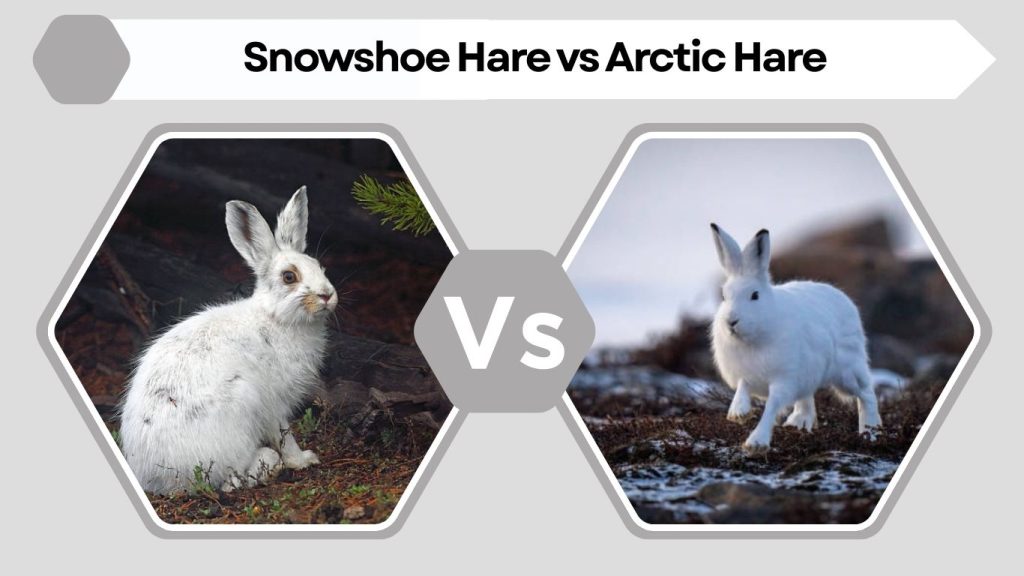
Although snowshoe hares and Arctic hares look somewhat similar, they live in different environments and have different adaptations.
Snowshoe Hare
- Lives in boreal forests of North America
- Medium body size
- Large hind feet that help travel across snow
- Changes fur color seasonally
Arctic Hare
- Lives in Arctic tundra regions
- Larger and heavier body
- Shorter ears and thicker fur
- Adapted to extremely cold tundra climates
Both species rely on camouflage and speed to survive in snowy environments.
Interesting Snowshoe Hare Facts
Snowshoe hares have several fascinating traits that help them survive in northern forests.
- Their fur changes color from brown in summer to white in winter.
- Large hind feet act like natural snowshoes for traveling on snow.
- They can run up to 45–50 km/h to escape predators.
- Snowshoe hare populations fluctuate in cycles every 8–11 years.
- They are one of the most important prey species in boreal forest ecosystems.
These unique adaptations allow snowshoe hares to thrive in cold climates.
Role in the Ecosystem
Snowshoe hares play an important role in forest ecosystems. As herbivores, they feed on grasses, shrubs, and tree bark, helping regulate plant growth.
They also serve as a major food source for predators, including lynx, foxes, and birds of prey. Because so many animals rely on them for food, snowshoe hares are essential for maintaining balance in northern ecosystems.
Conclusion
The snowshoe hare is a remarkable animal adapted to life in cold northern forests. Its large hind feet, seasonal camouflage, and fast running speed help it survive in snowy environments filled with predators. With a plant-based diet and rapid life cycle, the snowshoe hare plays a key role in the boreal forest ecosystem. Understanding its habitat, diet, and behavior helps highlight the incredible adaptations animals develop to survive in challenging climates.