

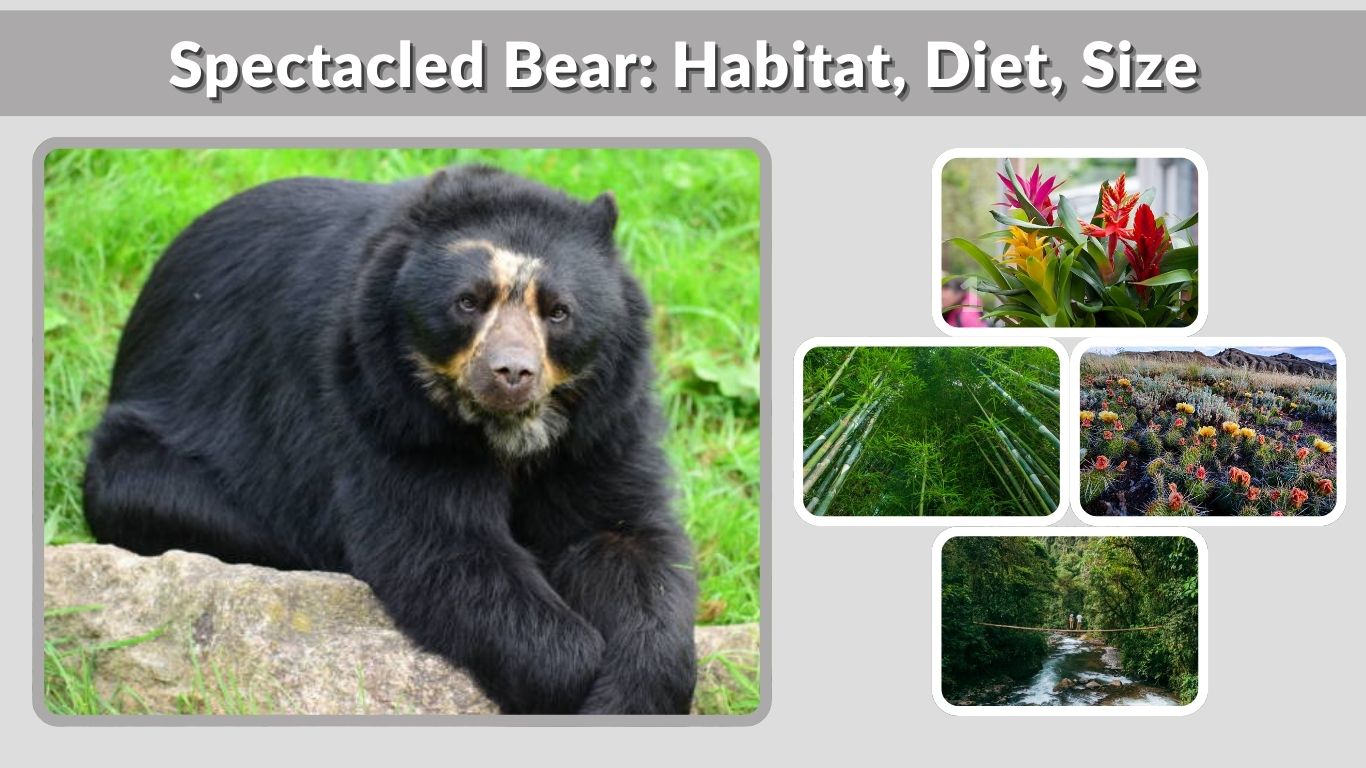
The spectacled bear, also known as the Andean spectacled bear, is the only bear species native to South America. Recognizable by the pale markings around its eyes that resemble glasses, this unique animal lives high in the Andes Mountains. Unlike many other bears, it feeds mostly on plants and is known for its shy nature. Although rarely seen in the wild, the spectacled bear plays an important role in its ecosystem and faces growing conservation challenges today.
What Is a Spectacled Bear?
The spectacled bear (Tremarctos ornatus) is a medium-sized bear species found in the Andes Mountains of South America. It is sometimes called the Andean bear because of its mountain habitat. The name “spectacled” comes from the light-colored fur markings around its eyes, which look like eyeglasses or spectacles.
Its scientific name, Tremarctos ornatus, means “decorated bear,” referring to its distinctive facial patterns. Interestingly, no two spectacled bears have identical markings, making each individual unique. In Spanish, the animal is known as “oso de anteojos,” which translates directly to “bear with glasses.”
Unlike polar bears or grizzlies, the spectacled bear is the only surviving member of the short-faced bear family in South America.
Spectacled Bear Habitat and Range
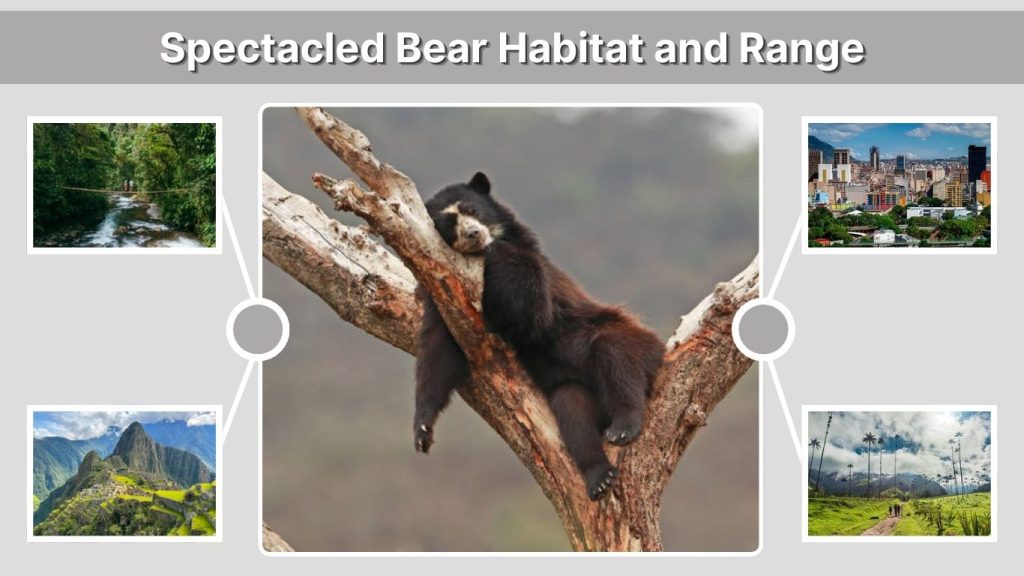
Where Are Spectacled Bears Found?
Spectacled bears live along the western side of South America, primarily in the Andes Mountains. Their range stretches across:
- Venezuela
- Colombia
- Ecuador
- Peru
- Bolivia
They inhabit cloud forests, humid montane forests, and high-altitude grasslands known as páramo ecosystems.
Spectacled Bear Range Map Overview
The spectacled bear range follows the Andes mountain chain, often at elevations between 1,000 and 4,300 meters (3,300 to 14,000 feet). They prefer dense forests where food is abundant and trees provide shelter.
These bears are excellent climbers and often build nest-like platforms in trees where they rest and feed. Because they rely heavily on forested areas, deforestation significantly affects their survival.
Florida Spectacled Bear – Is It Real?
There is no native population of spectacled bears in Florida or anywhere in North America. References to a “Florida spectacled bear” usually relate to zoo animals or confusion with the American black bear.
Spectacled bears are strictly South American wildlife.
Spectacled Bear Size and Physical Characteristics
The spectacled bear is considered medium-sized compared to other bear species.
Spectacled Bear Height
- Shoulder height: 24–31 inches (60–80 cm)
- Standing on hind legs: up to 6.5 feet (2 meters)
Males are noticeably larger than females.
Spectacled Bear Weight
- Adult males: 220–440 pounds (100–200 kg)
- Adult females: 77–180 pounds (35–82 kg)
Despite their solid build, spectacled bears are agile climbers. Their strong claws and muscular limbs help them scale trees easily, even at high altitudes.
They typically have thick black or dark brown fur, with cream or yellow markings around the face and sometimes extending down the chest.
Spectacled Bear Diet – What Do Spectacled Bears Eat?
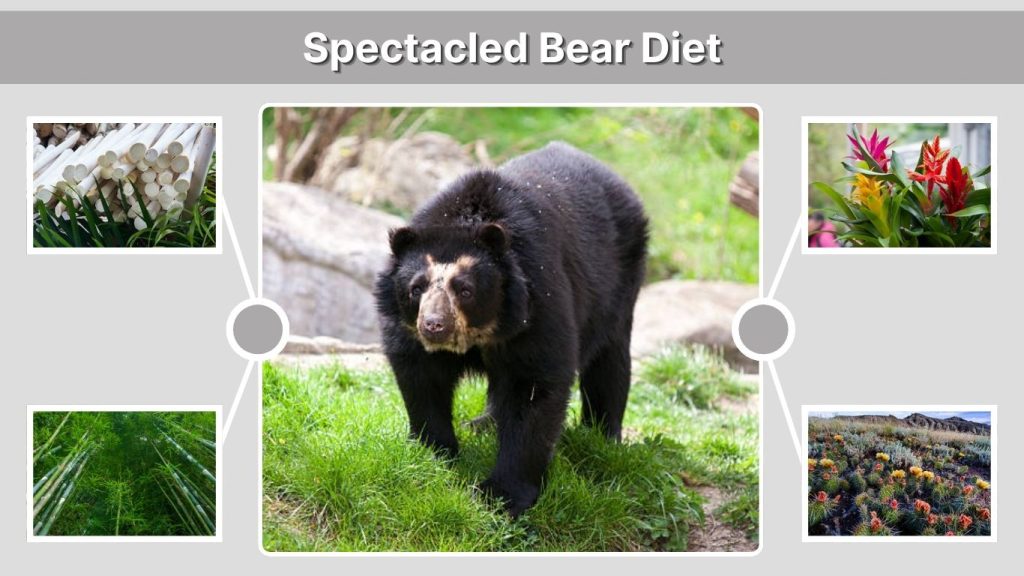
One of the most interesting facts about the spectacled bear is its diet. Unlike many other bear species that eat large amounts of meat, spectacled bears are primarily herbivorous.
Main Food Sources
About 80–90% of their diet consists of plant material, including:
- Fruits
- Bromeliads
- Cactus
- Palm hearts
- Bamboo
- Orchids
They use their strong jaws to tear open tough plants and extract nutritious inner parts.
Do Spectacled Bears Eat Meat?
Yes, but only occasionally. Spectacled bears may eat:
- Small mammals
- Birds
- Insects
- Carrion
In rare cases, they may prey on livestock, which sometimes leads to conflicts with farmers. However, meat is not a major part of their diet.
Because they consume so much fruit, spectacled bears play a vital ecological role as seed dispersers, helping forests regenerate naturally.
Spectacled Bear Behavior and Temperament
Are Spectacled Bears Dangerous?
Spectacled bears are generally shy and avoid humans whenever possible. They are not naturally aggressive and prefer to retreat rather than confront people.
Most encounters happen accidentally, especially when humans enter forested areas where bears live.
Spectacled Bear Attacks – How Common Are They?
Attacks are extremely rare. When they do occur, they are usually defensive, such as when a bear feels threatened or a mother is protecting her cubs.
Compared to other bear species worldwide, spectacled bear attacks are very uncommon.
Spectacled Bear Hunting and Human Conflict
Although they are not aggressive animals, spectacled bears face threats from humans. Historically, they were hunted due to myths and fears. Today, the main issues include:
- Habitat destruction
- Agricultural expansion
- Retaliatory killings when livestock is attacked
As human settlements expand into mountain forests, encounters become more frequent, increasing the risk for both bears and people.
Spectacled Bear vs Other Animals
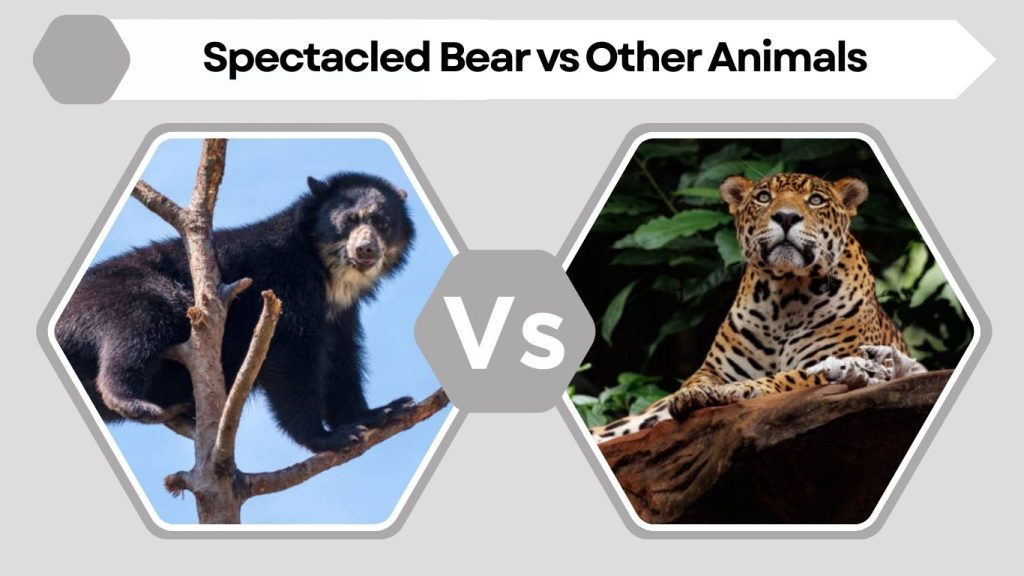
Spectacled Bear vs Jaguar
The jaguar is the largest big cat in South America and shares parts of its range with the spectacled bear. However, direct conflicts between the two are rare.
Jaguars are carnivorous predators, while spectacled bears are mostly herbivorous. Jaguars are generally more aggressive hunters and rely on stealth and strength to capture prey. Spectacled bears, on the other hand, prefer climbing trees and foraging for fruit.
In a physical comparison, adult male spectacled bears are typically heavier than jaguars, but jaguars possess stronger bite force relative to size. Because spectacled bears spend much of their time in mountainous forest regions and jaguars prefer lowland forests and wetlands, encounters are uncommon.
Spectacled Bear vs Black Bear
People often compare the spectacled bear to the American black bear. While they may look similar in body shape, they are different species living on separate continents.
Key differences include:
- Location: Spectacled bears live in South America; black bears live in North America.
- Diet: Both are omnivores, but spectacled bears rely more heavily on plant material.
- Size: Large male spectacled bears can match or exceed black bears in weight, though black bears vary widely in size.
- Facial Markings: Spectacled bears have distinct cream-colored markings; black bears usually do not.
Despite similarities, they evolved separately and belong to different bear lineages.
Spectacled Bear Reproduction and Baby Cubs
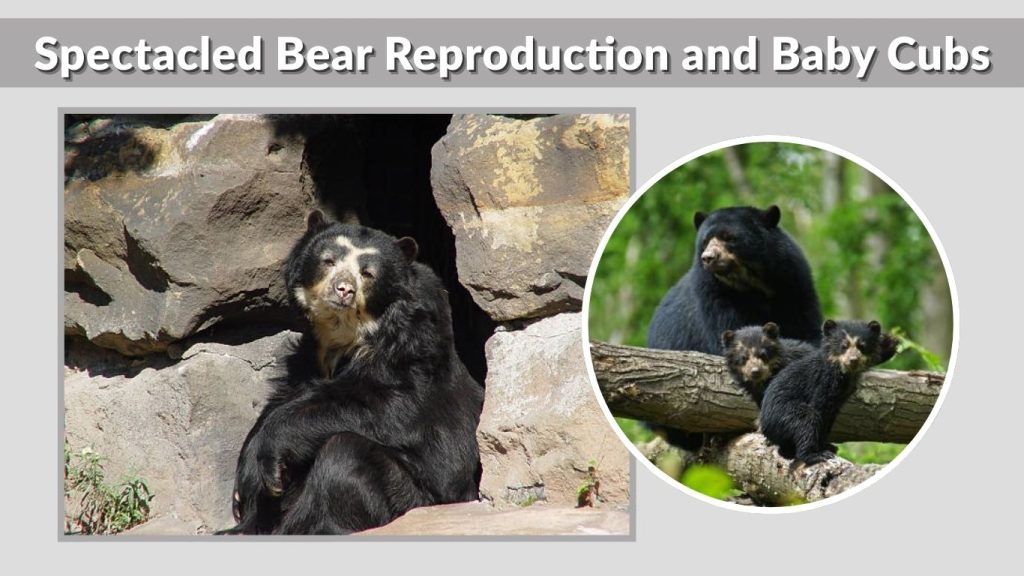
Spectacled Bear Baby (Cubs)
Female spectacled bears usually give birth to one or two cubs after a gestation period of about six to eight months. Cubs are typically born during the rainy season when food is more available.
At birth, spectacled bear cubs are very small and helpless, weighing only around 10 to 18 ounces (300–500 grams). They are born blind and rely entirely on their mother for warmth and nourishment.
Cub Development
Cubs open their eyes after a few weeks and grow quickly. The mother is highly protective and teaches them essential survival skills such as climbing and foraging.
Young bears typically stay with their mother for one to two years before becoming independent. During this time, they learn how to identify safe food sources and navigate mountainous terrain.
Because spectacled bears reproduce slowly and have small litters, population recovery can be challenging when numbers decline.
Spectacled Bear Lifespan
In the wild, spectacled bears generally live around 20 years. However, exact lifespan can vary depending on environmental conditions, food availability, and human-related threats.
In captivity, where food and medical care are consistent, spectacled bears can live up to 25–30 years.
Their relatively long lifespan combined with slow reproduction means conservation efforts must focus on protecting adult breeding individuals.
Are Spectacled Bears Endangered?
Conservation Status
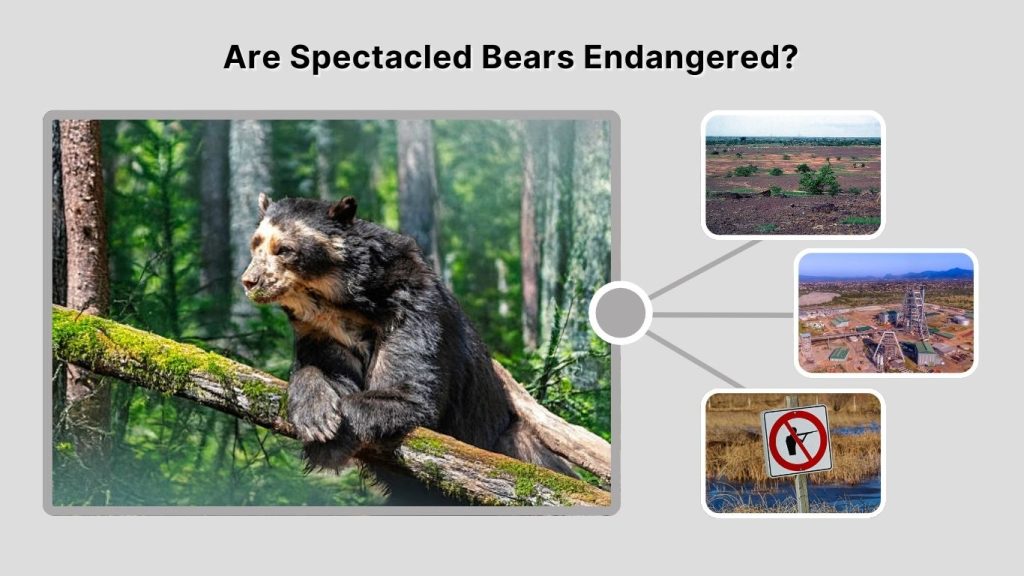
Spectacled bears are currently classified as Vulnerable on the International Union for Conservation of Nature (IUCN) Red List. This means they are not yet critically endangered but face a high risk of becoming endangered if threats continue.
Are Spectacled Bears Endangered of Extinction?
They are not considered immediately at risk of extinction, but their populations are declining in many areas. Estimates suggest that fewer than 20,000 spectacled bears remain in the wild.
Because their habitat stretches across multiple countries, conservation efforts require international cooperation.
Main Threats
The biggest threats to spectacled bears include:
- Deforestation for farming and cattle ranching
- Mining and infrastructure development
- Illegal hunting
- Human-wildlife conflict
As forests shrink, bear populations become isolated, reducing genetic diversity and increasing vulnerability.
Conservation Efforts
Several South American countries have created national parks and protected reserves within the spectacled bear range. Conservation organizations also work to:
- Promote wildlife corridors
- Educate local communities
- Reduce livestock conflict
- Monitor bear populations
Protecting mountain forests is essential not only for spectacled bears but for many other species that share the same ecosystem.
Interesting Spectacled Bear Facts
Here are some fascinating facts about the spectacled bear:
- It is the only bear species native to South America.
- No two bears have identical facial markings.
- They build tree platforms to rest and feed.
- They are excellent climbers, even as adults.
- Their diet is mostly vegetarian.
- They help forests grow by spreading seeds.
Because they are rarely seen and live in remote mountain forests, spectacled bears remain one of the least-studied bear species in the world.
FAQs
What is a spectacled bear?
A spectacled bear is a South American bear species known for the light-colored markings around its eyes that resemble glasses. Its scientific name is Tremarctos ornatus. It is also called the Andean bear and is the only bear species native to South America.
Where are spectacled bears found?
Spectacled bears are found along the Andes Mountains in Venezuela, Colombia, Ecuador, Peru, and Bolivia. They live in cloud forests, mountain forests, and high-altitude grasslands, often at elevations up to 14,000 feet.
Are spectacled bears dangerous to humans?
Spectacled bears are generally shy and avoid people. Attacks are extremely rare and usually occur only if the bear feels threatened or is protecting its cubs. Compared to many other bear species, they are not considered highly dangerous.
What do spectacled bears eat?
Spectacled bears primarily eat plant material such as fruits, bromeliads, cactus, and palm hearts. Although they occasionally eat small animals or carrion, about 80–90% of their diet consists of vegetation.
Are spectacled bears endangered species?
Spectacled bears are classified as Vulnerable, meaning they face a high risk of becoming endangered in the future. Habitat loss, deforestation, and human conflict are the main threats to their survival.