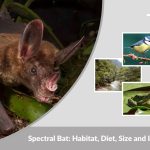
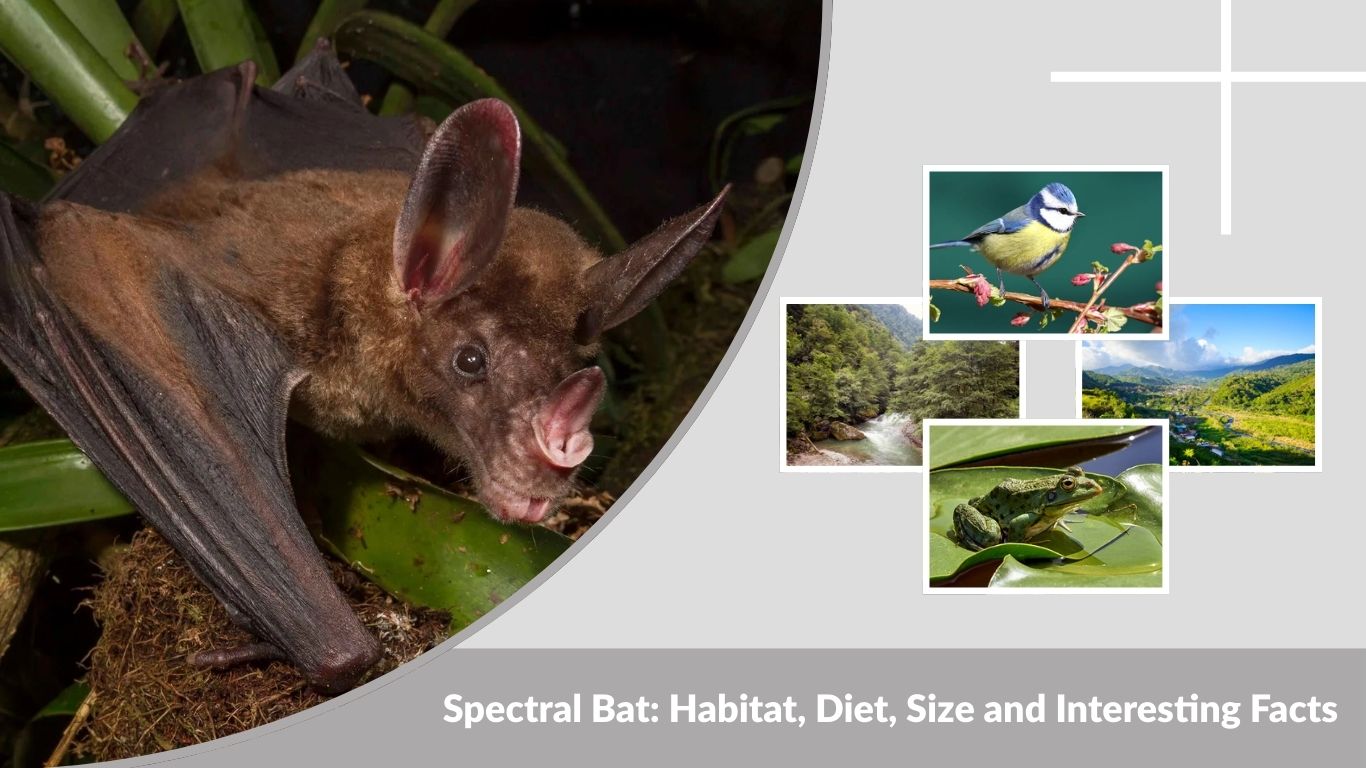
The spectral bat is one of the largest and most powerful bat species found in the Americas. Scientifically known as the Vampyrum spectrum, this impressive bat is sometimes called the false vampire bat because of its fierce appearance. Spectral bats live mainly in tropical forests where they hunt small animals and insects during the night. Unlike many bats that feed only on insects or fruit, the spectral bat is a carnivorous predator. Despite its intimidating name, it plays an important role in maintaining balance within forest ecosystems.
What Is a Spectral Bat?
The spectral bat is a large carnivorous bat species that belongs to the family Phyllostomidae, which includes many New World bats. It is the largest bat in the Americas and one of the most powerful predators among bat species.
Spectral bats are known for their large wings, strong jaws, and excellent hunting skills. They typically hunt small birds, rodents, reptiles, and insects. These bats are nocturnal and spend their days resting in tree cavities or hollow logs in tropical forests.
Because of their large size and predatory habits, spectral bats stand out from most other bat species.
Scientific Classification
The spectral bat belongs to the following scientific classification:
- Kingdom: Animalia
- Phylum: Chordata
- Class: Mammalia
- Order: Chiroptera
- Family: Phyllostomidae
- Genus: Vampyrum
- Species: Vampyrum spectrum
The order Chiroptera includes all bats, while the family Phyllostomidae contains many diverse bat species found in Central and South America.
Scientific Name (Vampyrum spectrum)
The scientific name Vampyrum spectrum reflects the bat’s mysterious and powerful appearance.
- Vampyrum refers to its vampire-like appearance.
- Spectrum means “ghostly” or “spectral,” referring to its pale coloration and large wings.
Despite its name, the spectral bat does not drink blood like true vampire bats.
Why It Is Called the False Vampire Bat
The spectral bat is sometimes called the false vampire bat because early scientists believed it might feed on blood. However, later research revealed that it actually hunts small animals instead.
Unlike vampire bats, which drink blood, spectral bats are predatory carnivores that capture and eat small vertebrates.
Physical Characteristics of the Spectral Bat
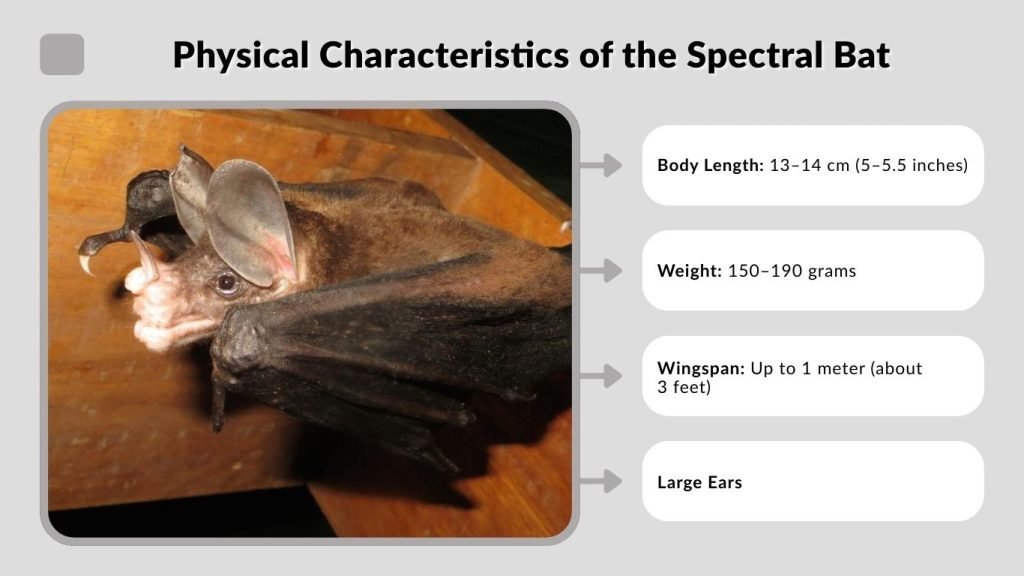
The spectral bat is one of the most impressive bats in the world due to its large size and powerful wings.
Key Physical Characteristics
- Body Length: Around 13–14 cm (5–5.5 inches)
- Weight: Approximately 150–190 grams
- Wingspan: Up to 1 meter (about 3 feet)
- Large Ears: Tall, rounded ears that help detect sounds
- Leaf-Shaped Nose: A nose leaf used to help direct echolocation sounds
- Strong Jaws: Adapted for capturing and eating prey
- Soft Fur: Usually grayish-brown or brown in color
These physical features make the spectral bat a highly skilled nocturnal predator.
Body Size and Wingspan
The spectral bat has one of the largest wingspans among bats in the Americas. Its wide wings allow it to glide silently through forests while hunting prey.
Despite its large wings, the bat’s body remains relatively compact and muscular, allowing it to maneuver easily through dense vegetation.
Large Ears and Facial Structure
Spectral bats have large ears and a leaf-shaped nose, which help them detect sounds and navigate in the dark. These features improve their ability to locate prey while flying at night.
Fur Color and Body Features
The spectral bat’s fur is usually grayish-brown or dark brown, helping it blend into the shadows of the forest canopy.
Its wings are thin and flexible, allowing silent flight that helps the bat approach prey without being detected.
Spectral Bat Habitat
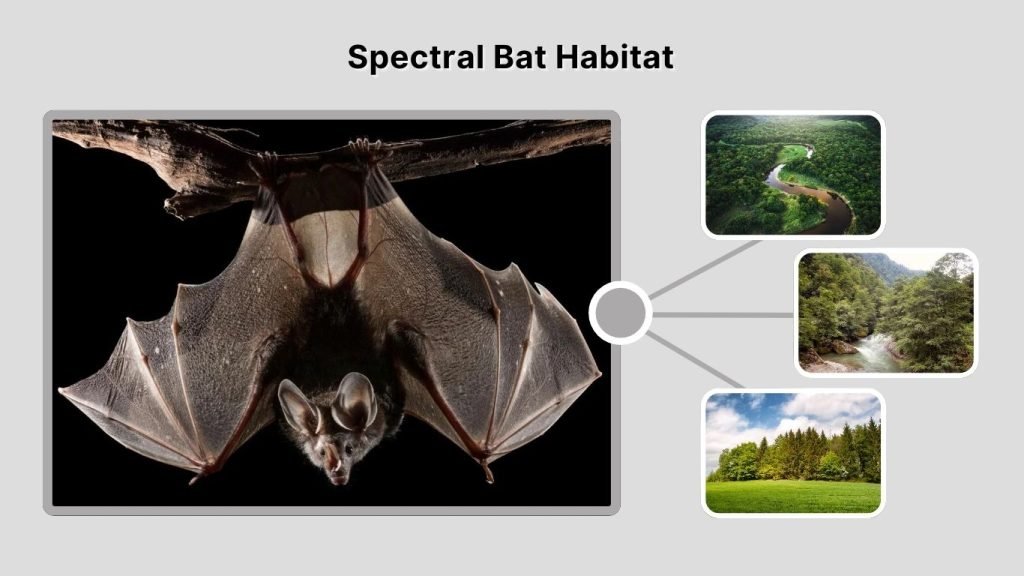
Spectral bats are found mainly in tropical forest environments where dense vegetation provides shelter and food sources.
Preferred Tropical Forest Habitats
These bats prefer habitats such as:
- Tropical rainforests
- Dense jungle regions
- Forest edges
- Areas near rivers and streams
Tropical forests provide the ideal environment because they support a wide variety of small animals that serve as prey.
Roosting Sites
During the day, spectral bats usually rest in sheltered locations such as:
- Hollow tree trunks
- Tree cavities
- Abandoned nests
- Large hollow logs
These roosting sites provide protection from predators and harsh weather.
Environmental Conditions They Prefer
Spectral bats prefer warm, humid climates typical of tropical regions. These conditions allow the forests to support the insects, birds, and small mammals that form part of their diet.
Where Do Spectral Bats Live?

Spectral bats are distributed across Central and South America, where tropical forests provide suitable habitats.
Geographic Distribution in the Americas
The spectral bat’s range extends from southern Mexico through Central America and into northern South America.
Countries Where They Are Found
Spectral bats have been recorded in several countries, including:
- Mexico
- Guatemala
- Costa Rica
- Panama
- Colombia
- Brazil
- Peru
These countries contain large tropical forests that provide ideal habitats.
Forest Regions Where They Are Common
Spectral bats are most commonly found in dense lowland rainforests where there is plenty of prey and shelter.
They usually avoid highly urbanized areas and depend heavily on healthy forest ecosystems.
Spectral Bat Diet
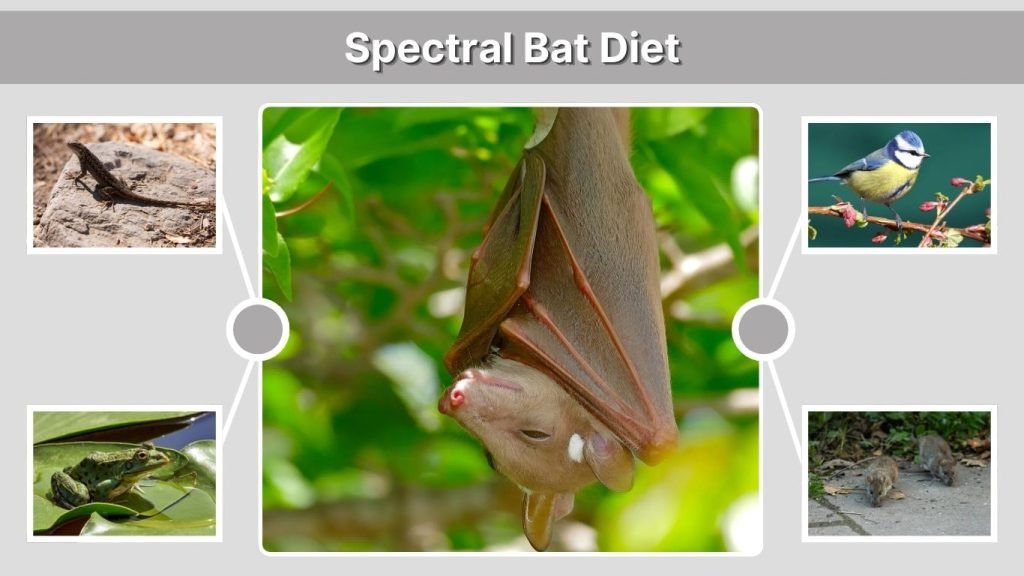
The spectral bat has a carnivorous diet, which makes it different from most bats.
Main Foods They Eat
Spectral bats eat a variety of animals, including:
- Small birds
- Rodents
- Small reptiles
- Frogs
- Large insects
This diverse diet allows them to survive in different tropical forest environments.
Carnivorous Hunting Behavior
Unlike many bats that catch insects while flying, spectral bats may capture prey from branches or the forest floor.
They often listen carefully for movement and then glide silently toward their prey.
Echolocation and Night Hunting
Spectral bats rely on echolocation to locate prey and navigate through dark forests.
They emit high-frequency sounds and listen for echoes bouncing off objects. This ability allows them to hunt effectively even in complete darkness.
Behavior and Lifestyle
Spectral bats display unique behaviors compared to many other bat species. Because they are carnivorous predators, their hunting habits and social behavior differ from bats that feed only on insects or fruit.
Nocturnal Activity
Spectral bats are nocturnal animals, meaning they are active during the night. After sunset, they leave their roosting sites and begin searching for prey.
They usually fly through dense forest areas, using their keen hearing and echolocation to locate animals moving in the trees or on the ground.
Social Behavior and Pair Living
Unlike many bats that form large colonies, spectral bats are often found living in small family groups or pairs. A male and female may share a roosting site and work together to care for their young.
These small groups help maintain territories and protect their roosting sites.
Territorial Behavior
Spectral bats are also known to be territorial animals. They may defend their hunting areas from other bats, ensuring enough food is available for themselves and their family.
Spectral Bat Life Cycle
The life cycle of the spectral bat includes several stages, beginning with mating and continuing through the growth of young bats.
Mating Season
Spectral bats usually mate during periods when food is abundant in their environment. This timing ensures that the young will have enough food once they are born.
Birth and Development of Young
Female spectral bats typically give birth to one pup at a time.
The pup is born small and helpless and relies completely on its mother for warmth and food. The mother nurses the pup with milk and protects it while resting in their roosting site.
Growth and Independence
As the pup grows, it begins to develop wings and stronger muscles. Within a few months, the young bat learns to fly and hunt on its own.
Eventually, it becomes independent and may establish its own territory in the forest.
Spectral Bat Lifespan
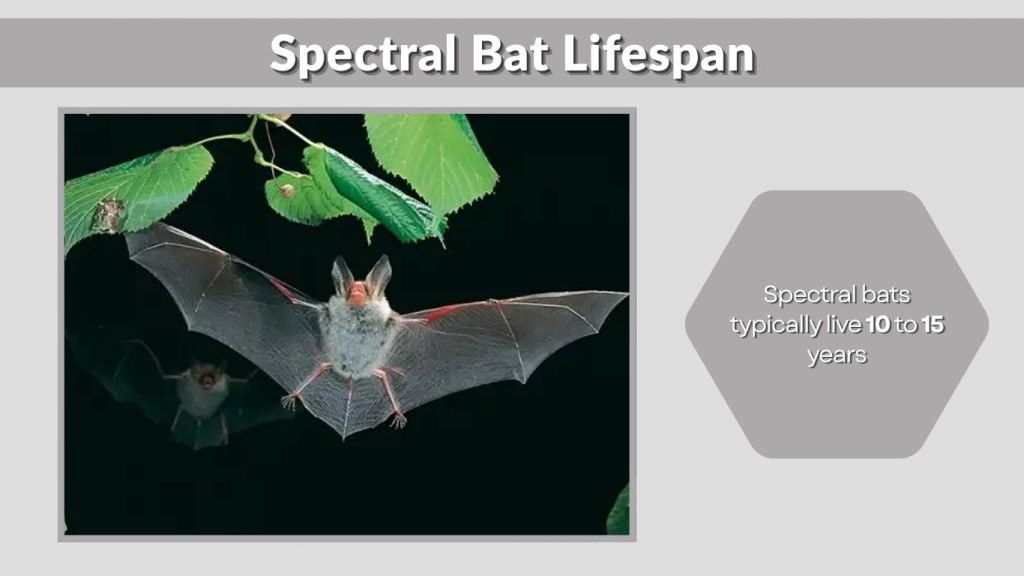
Spectral bats can live for many years if they survive natural threats and environmental challenges.
Average Lifespan in the Wild
In the wild, spectral bats typically live 10 to 15 years, although exact lifespan data is still being studied because these bats are relatively rare and difficult to observe.
Factors Affecting Lifespan
Several factors can influence the lifespan of spectral bats, including:
- Availability of prey
- Habitat quality
- Predators such as owls or snakes
- Habitat destruction
- Human disturbances
Healthy tropical forests help increase their chances of survival.
Importance of Spectral Bats in the Ecosystem
Spectral bats play an important role in maintaining balance within tropical ecosystems.
Controlling Animal Populations
Because spectral bats prey on small animals and insects, they help control populations of smaller species in forest ecosystems.
This helps maintain a balanced food chain.
Role in Tropical Food Chains
Spectral bats act as top predators among bat species. Their hunting behavior influences the populations of birds, rodents, and insects in their habitats.
Maintaining Ecosystem Balance
By regulating prey populations, spectral bats contribute to the overall health of tropical forest ecosystems.
Threats to Spectral Bats

Despite their ecological importance, spectral bats face several threats in the wild.
Habitat Loss
Deforestation is one of the biggest threats to spectral bats. When tropical forests are cleared for agriculture or development, these bats lose their homes and hunting grounds.
Deforestation
Large-scale forest destruction reduces the number of suitable roosting sites such as hollow trees.
Human Disturbance
Human activity near forest habitats can disturb roosting bats and reduce their ability to hunt and reproduce successfully.
Conservation Efforts
Efforts are being made to protect spectral bats and their habitats.
Protection of Tropical Forests
Conserving tropical rainforests is essential for the survival of spectral bats because these forests provide both shelter and food.
Wildlife Research and Monitoring
Scientists study spectral bats to better understand their behavior, population sizes, and ecological roles.
How People Can Help Protect Spectral Bats
People can help protect spectral bats by:
- Supporting rainforest conservation programs
- Protecting wildlife habitats
- Reducing deforestation
- Promoting awareness about bat conservation
Interesting Spectral Bat Facts
Here are some fascinating facts about spectral bats:
- They are the largest bats in the Americas.
- Their wingspan can reach about 1 meter (3 feet).
- Spectral bats are carnivorous predators, unlike most bats.
- They are sometimes called the false vampire bat.
- They usually live in small family groups rather than large colonies.
FAQs
Where do spectral bats live?
Spectral bats live mainly in Central and South America, especially in tropical forests.
What do spectral bats eat?
They eat small birds, rodents, reptiles, frogs, and large insects.
How big is a spectral bat?
Spectral bats can have a wingspan of about 1 meter (3 feet), making them the largest bats in the Americas.
Are spectral bats dangerous to humans?
No, spectral bats are not dangerous to humans and rarely interact with people.
Conclusion
The spectral bat is one of the most fascinating and powerful bat species in the Americas. Known for its large wingspan and carnivorous diet, it plays an important role in maintaining balance within tropical forest ecosystems. Although these bats face threats from habitat loss and deforestation, conservation efforts can help protect them and their habitats. Understanding the importance of spectral bats encourages greater appreciation and protection of these remarkable nocturnal predators.