
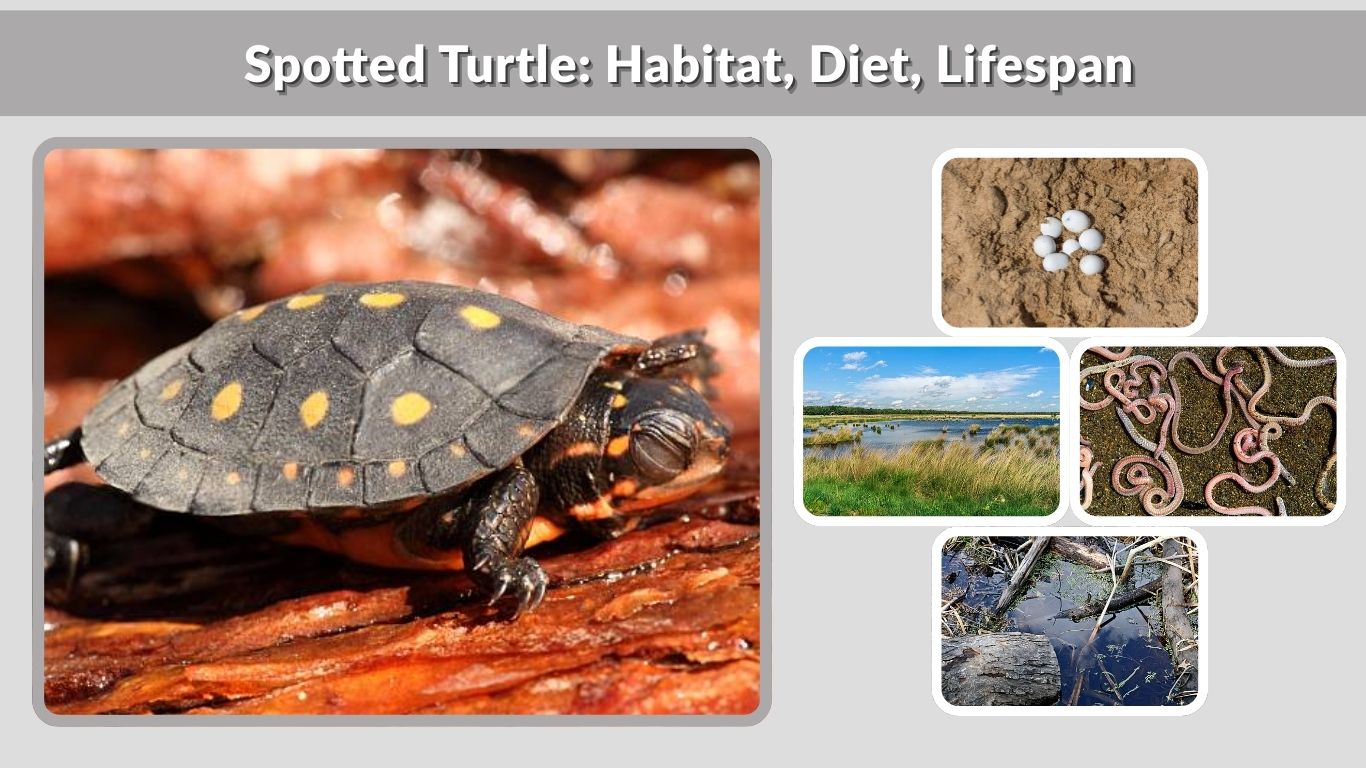
The spotted turtle (Clemmys guttata) is one of North America’s most recognizable small freshwater turtles. With its smooth black shell covered in bright yellow spots, this species stands out among wetland wildlife. Native to eastern North America, the spotted turtle prefers shallow marshes, bogs, and slow-moving wetlands. Despite its striking appearance, it faces growing threats from habitat loss and illegal collection. In this guide, we’ll explore the spotted turtle’s identification, habitat, and diet to better understand this unique reptile.
Overview of the Spotted Turtle
Scientific Classification
The spotted turtle belongs to the family Emydidae, which includes many common pond turtles. Its scientific name, Clemmys guttata, reflects its distinctive spotted appearance. Interestingly, it is the only living species within the genus Clemmys, making it taxonomically unique among North American turtles.
This species is small, semi-aquatic, and highly dependent on healthy wetland ecosystems. Because of its specific habitat needs, it is often considered an indicator species for wetland health.
Geographic Range
The spotted turtle is found in parts of eastern North America. Its range extends from southern Canada—particularly Ontario—down through the northeastern and mid-Atlantic United States, with scattered populations reaching into the southeastern U.S.
However, its distribution is patchy. Populations are often isolated due to habitat fragmentation. Unlike more adaptable turtle species, spotted turtles rely heavily on intact wetland systems and do not easily thrive in heavily altered environments.
Conservation Status
In many states and provinces, the spotted turtle is listed as threatened or endangered. Wetland destruction, drainage for agriculture, and urban development have significantly reduced available habitat. Illegal collection for the pet trade has also impacted wild populations.
Because of these pressures, conservation efforts focus heavily on habitat protection and preventing unauthorized collection.
Physical Characteristics and Identification
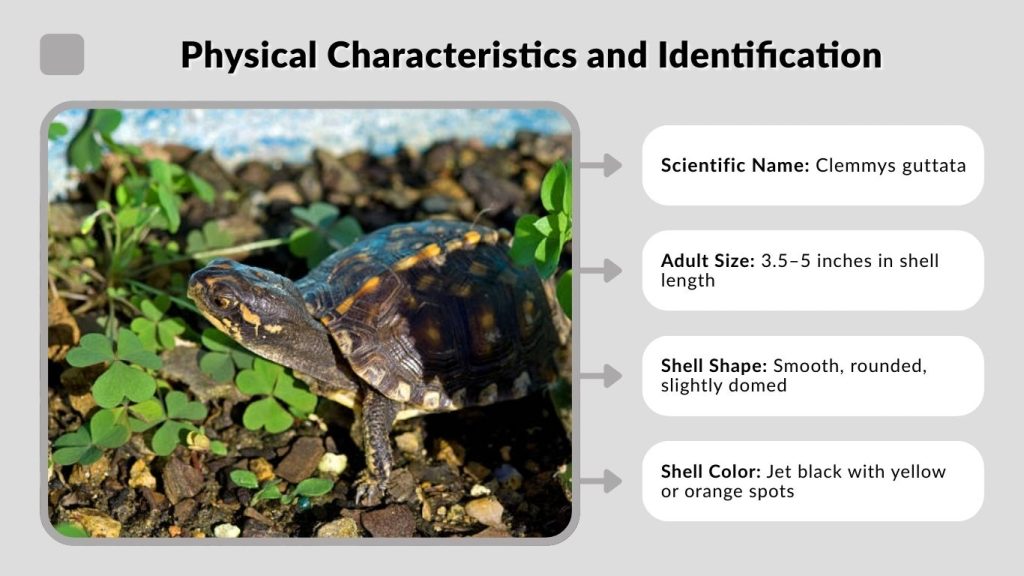
The spotted turtle is a small, smooth-shelled freshwater turtle easily recognized by its glossy black carapace marked with bright yellow spots. Its compact size and bold contrast coloring make it one of the most distinctive turtles in eastern North America. While small in stature, its physical traits are unique and consistent enough for reliable identification in the wild.
Key Identification Features
- Scientific Name: Clemmys guttata
- Adult Size: 3.5–5 inches in shell length
- Shell Shape: Smooth, rounded, slightly domed
- Shell Color: Jet black with yellow or orange spots
- Spot Pattern: Unique to each individual
- Plastron (Bottom Shell): Yellow to orange with dark markings
- Skin Color: Dark gray to black
- Head & Neck: Small yellow spots scattered on dark skin
- Male Traits: Concave plastron, darker chin, brown/black eyes
- Female Traits: Flat plastron, orange chin, bright orange eyes
These features help distinguish the spotted turtle from other small wetland turtles within its range.
Spotted Turtle Habitat
Preferred Wetland Environments
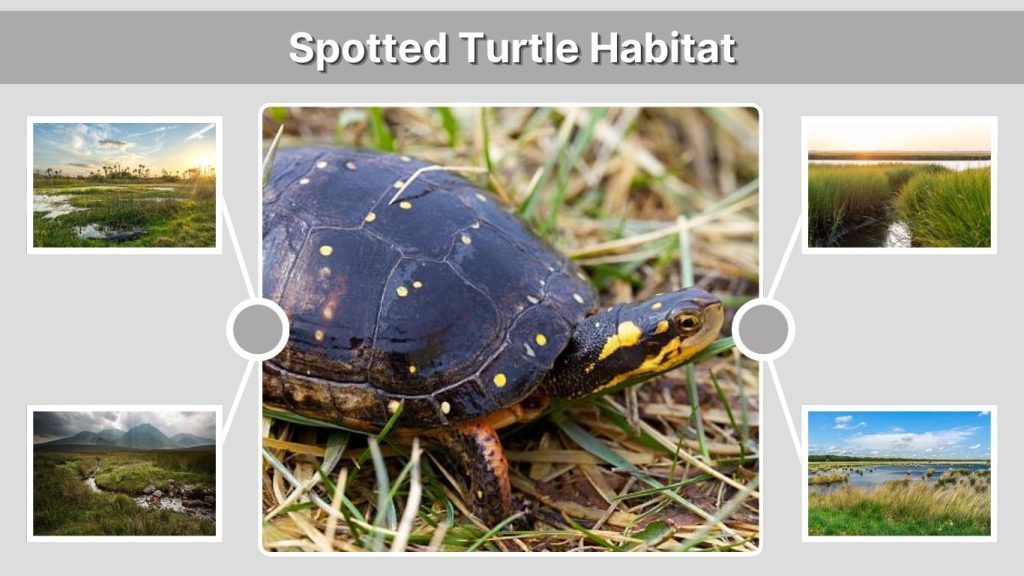
The spotted turtle habitat consists mainly of shallow freshwater wetlands. Ideal environments include:
- Marshes
- Bogs
- Swamps
- Wet meadows
- Shallow woodland pools
These habitats provide calm, shallow water with soft muddy bottoms and dense vegetation.
Water and Vegetation Requirements
Spotted turtles prefer clean, slow-moving or still water. Thick aquatic plants provide both cover and hunting grounds. Floating vegetation, grasses, and submerged roots offer protection from predators.
Because they rely on specific wetland conditions, even minor environmental changes can significantly impact local populations.
Seasonal Habitat Shifts
Spotted turtles are among the earliest turtles to emerge in spring. They are most active during cooler months, particularly in early spring and fall. During extremely hot summer periods, they may reduce activity or seek shaded, moist areas to avoid overheating—a behavior known as estivation.
In winter, they brumate underwater in muddy substrates or protected wetland areas until temperatures rise again.
Spotted Turtle Diet
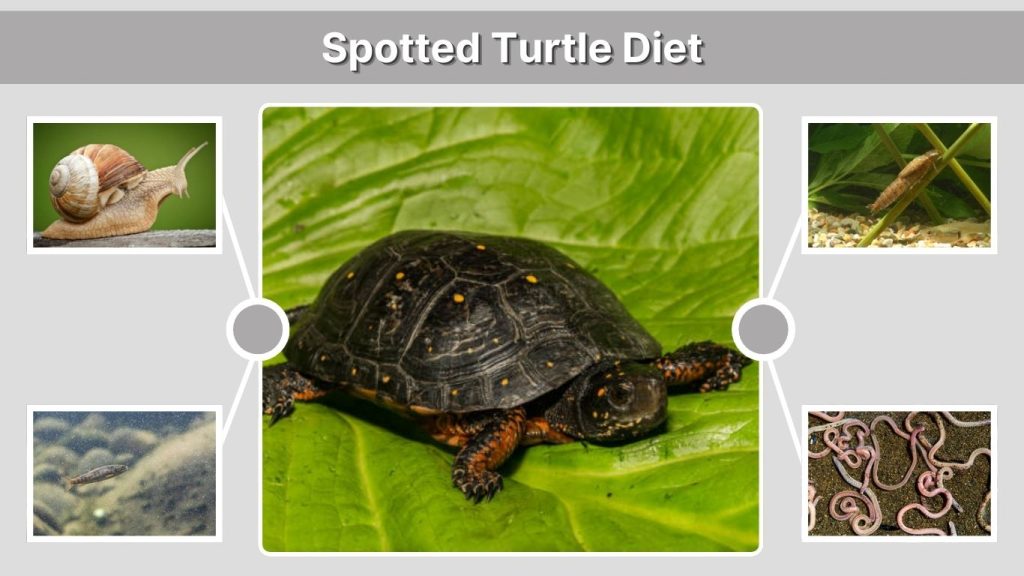
The spotted turtle diet is primarily carnivorous, especially in the wild. Although they may occasionally consume plant matter, most of their nutrition comes from small aquatic animals. Because they live in shallow wetlands rich in invertebrates, they have access to a wide variety of prey.
What Do Spotted Turtles Eat?
If you’re wondering what do spotted turtles eat, their typical diet includes:
- Aquatic insects and insect larvae
- Earthworms and aquatic worms
- Slugs and snails
- Small crustaceans
- Tadpoles and amphibian larvae
- Small fish
- Occasional aquatic vegetation
They use their sharp beak-like jaws to grasp and crush soft-bodied prey. Their feeding activity is most intense during spring and early summer when food is abundant.
Feeding Behavior
Spotted turtles forage in shallow water or along muddy edges of wetlands. They are active during the day (diurnal), often searching slowly through vegetation and leaf litter for movement.
Because they prefer cooler temperatures, their feeding activity may decrease during extremely hot summer weather. During these periods, they may become less active and conserve energy.
Diet Differences by Age
Juvenile spotted turtles consume a protein-rich diet to support rapid growth. As they mature, they remain largely carnivorous but may opportunistically eat plant material. Unlike some turtle species that become more herbivorous with age, spotted turtles generally maintain a mostly animal-based diet throughout life.
Spotted Turtle Lifespan and Reproduction
Spotted Turtle Lifespan
The spotted turtle lifespan is relatively long for such a small species. In the wild, individuals commonly live between 20 and 40 years. With minimal predation and protected habitat, some may live even longer.
Their long lifespan, combined with small clutch sizes, means population recovery can be slow if numbers decline.
Breeding Season
Mating typically occurs in early spring shortly after turtles emerge from winter brumation. Courtship takes place in shallow water and involves gentle nudging and positioning behaviors.
Because spotted turtles are often active during cooler months, breeding activity may begin earlier in the year compared to other turtle species.
Nesting and Hatchlings
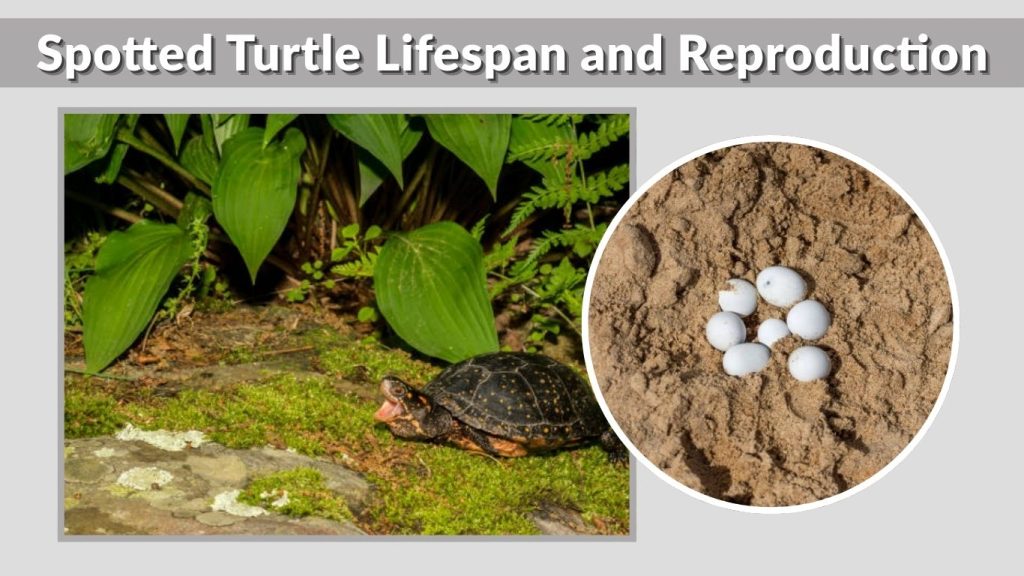
Females leave the water to lay eggs in soft, sandy, or loose soil near wetlands. Clutch sizes are small, usually ranging from 2 to 8 eggs.
Eggs incubate for several weeks depending on temperature. Hatchlings are tiny—around 1 inch in length—and have bright, clearly defined yellow spots. However, survival rates are low due to predators such as raccoons, skunks, birds, and snakes.
Behavior and Activity Patterns
Spotted turtles are diurnal and often seen basking in early spring sunshine. They prefer cooler temperatures compared to many other turtle species and may reduce activity during the hottest part of summer.
They are semi-aquatic, spending time both in shallow water and along damp shorelines. Despite their bright appearance, they are shy and cautious, quickly retreating into water or vegetation when disturbed.
One interesting trait is strong site fidelity. Spotted turtles often return to the same wetlands year after year, relying on familiar habitat structures for survival.
Interesting Spotted Turtle Facts
Here are some notable spotted turtle facts:
- Each turtle has a unique pattern of yellow spots.
- They are among the first turtles to become active in early spring.
- Their bright spots may fade slightly as they age.
- They are considered indicator species of healthy wetlands.
- They can travel short distances over land between wetland habitats.
Threats and Conservation
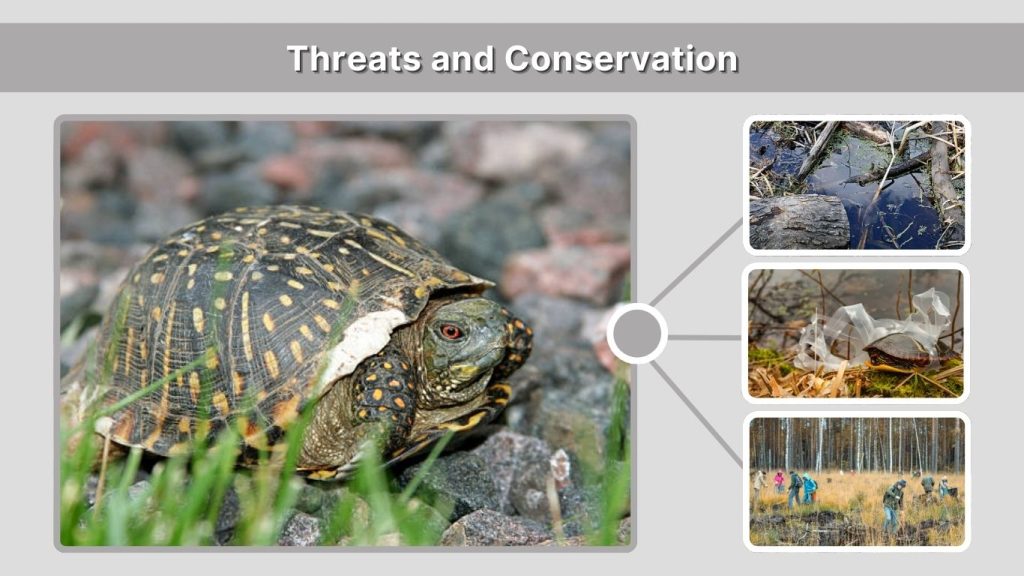
Spotted turtles face several environmental challenges. Wetland destruction and drainage remain the biggest threats to their survival. Habitat fragmentation isolates populations, making breeding and genetic diversity more difficult.
Illegal collection for the pet trade has also reduced numbers in certain regions. Because of these threats, spotted turtles are legally protected in many states and provinces.
Conserving wetlands, preventing illegal collection, and supporting habitat restoration efforts are critical to protecting this species.
Conclusion
The spotted turtle (Clemmys guttata) is a small yet remarkable freshwater species known for its black shell decorated with bright yellow spots. Found in marshes and shallow wetlands, it relies on clean habitats and abundant invertebrate prey. With a lifespan of up to 40 years and slow reproductive rates, conservation is essential for its continued survival. Protecting wetlands and respecting wildlife laws ensures that future generations can continue to appreciate this unique and beautiful turtle.