




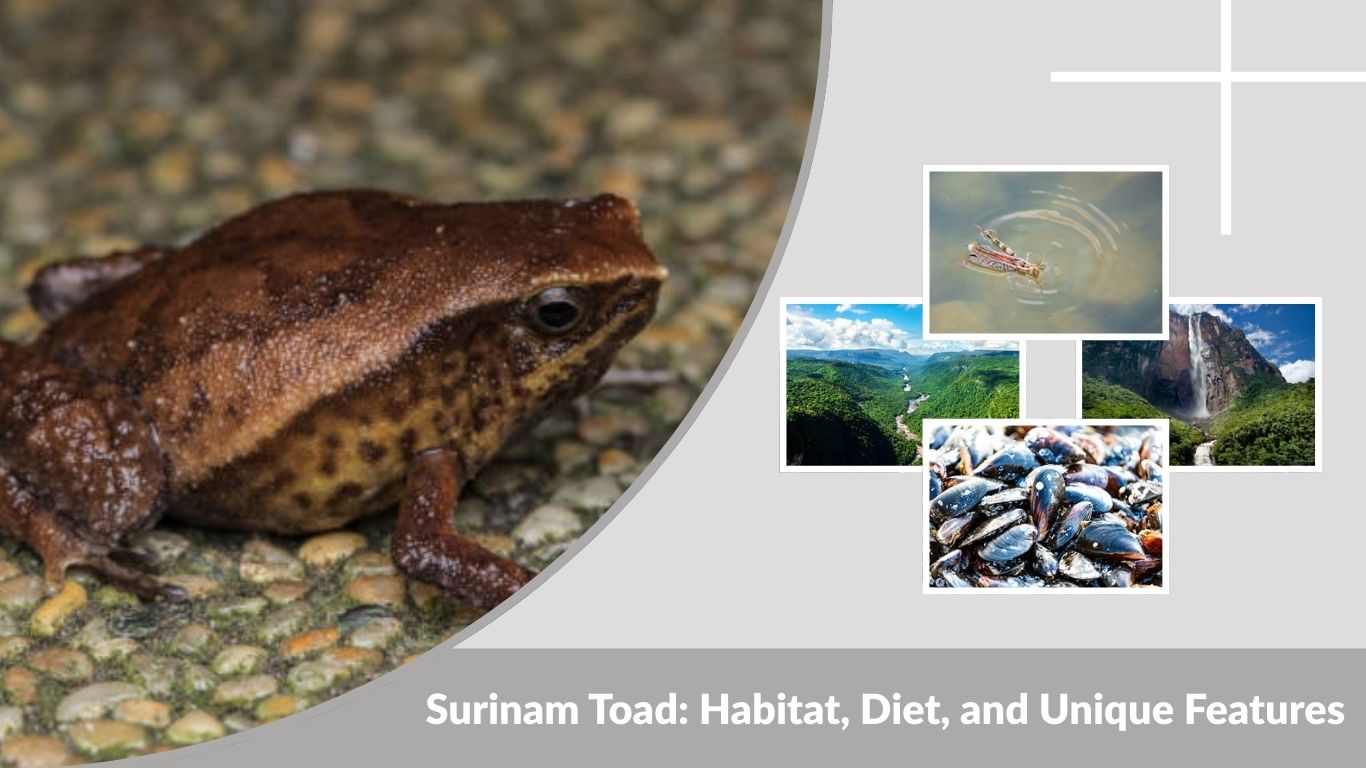
The Surinam toad (Pipa pipa) is one of the most unusual amphibians on Earth. Native to the tropical waters of South America, this fully aquatic frog is best known for its extraordinary method of reproduction, in which babies develop inside pockets on the mother’s back. With its flat, leaf-like body and star-shaped fingertips, the Surinam toad looks unlike most frogs people are familiar with. In this article, we’ll explore its appearance, habitat, behavior, and the remarkable adaptations that help it survive underwater.
Scientific Classification
- Kingdom: Animalia
- Phylum: Chordata
- Class: Amphibia
- Order: Anura
- Family: Pipidae
- Genus and Species: Pipa pipa
The Surinam toad belongs to the Pipidae family, a group of fully aquatic frogs that lack tongues and visible eardrums. Other members of this family include African clawed frogs, but Pipa pipa stands out due to its flattened body and highly specialized reproductive strategy.
Physical Description
Size and Body Shape
The Surinam toad typically grows between 4 to 8 inches (10–20 cm) in length, making it a medium-sized amphibian. Its body is extremely flat, giving it a leaf-like appearance. This flattened shape helps it blend seamlessly into muddy riverbeds and forest pools.
Unlike most frogs, the Surinam toad does not have a rounded body or bulging eyes. Instead, it has a triangular, almost pointed head with small eyes positioned near the top. This design allows it to remain mostly hidden while still observing its surroundings.
Skin Texture and Color
The skin of the Surinam toad is rough and bumpy, usually mottled in shades of brown, gray, or olive. This natural camouflage makes it difficult for predators to spot it among leaves and sediment.
During breeding season, the female’s back undergoes a dramatic transformation. The skin thickens and becomes spongy, forming individual pockets where fertilized eggs are embedded. This adaptation is one of the most fascinating features in the amphibian world.
Unique Features
One of the most distinctive traits of the Surinam toad is its star-shaped fingertips. Each front toe ends in a split, sensory structure that resembles a tiny star. These specialized fingertips are packed with nerve endings and help the toad detect movement and vibrations in murky water.
The Surinam toad also lacks a tongue and teeth. Instead of catching prey with a sticky tongue like other frogs, it uses a suction-feeding method. Additionally, it has fully webbed hind feet, which make it an excellent swimmer.
Habitat and Distribution
Geographic Range
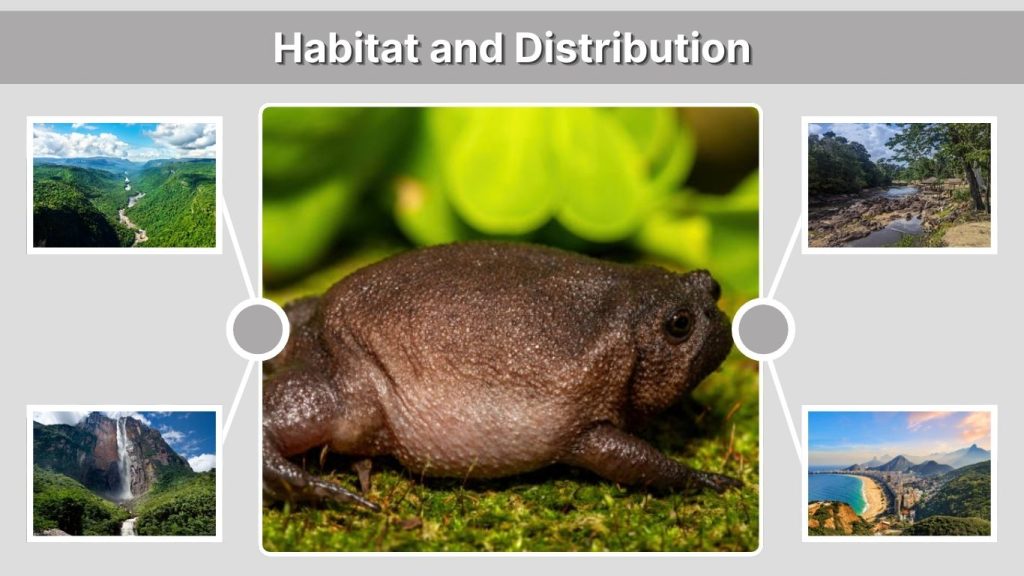
The Surinam toad is found in northern South America. Its range includes countries such as:
- Suriname
- Brazil
- Guyana
- Venezuela
- Colombia
- Ecuador
- Peru
It is especially common in the Amazon and Orinoco river basins.
Natural Habitat
This amphibian is completely aquatic and rarely leaves the water. It prefers slow-moving or still freshwater environments, including:
- Swamps
- Marshes
- Muddy ponds
- Flooded forest pools
- Calm river edges
The Surinam toad spends most of its time resting at the bottom, partially buried in mud or hidden beneath leaf litter.
Environmental Preferences
Surinam toads thrive in warm, tropical climates with high humidity. Clean, freshwater ecosystems are essential for their survival. Because they rely heavily on aquatic habitats, changes in water quality can significantly impact their populations.
Behavior and Lifestyle
Aquatic Adaptations
Unlike many frogs that split their time between land and water, the Surinam toad is fully aquatic. Its body is specially designed for life underwater. The flattened shape reduces resistance while swimming, and its webbed feet provide strong propulsion.
It surfaces occasionally to breathe air, as it has lungs, but it does not venture far from water.
Daily Activity
The Surinam toad is mostly nocturnal, meaning it is more active at night. During the day, it often remains still and camouflaged on the riverbed. At night, it becomes more active in search of food.
Because it blends so well with its surroundings, the toad relies heavily on stillness as a defense strategy. Remaining motionless helps it avoid detection by predators such as fish, snakes, and birds.
Communication
Although it lacks visible eardrums, the Surinam toad can detect sound vibrations through its body. Males produce soft clicking sounds underwater during mating season. These sounds travel as vibrations, helping attract females in murky environments where visibility is limited.
Diet and Feeding Habits
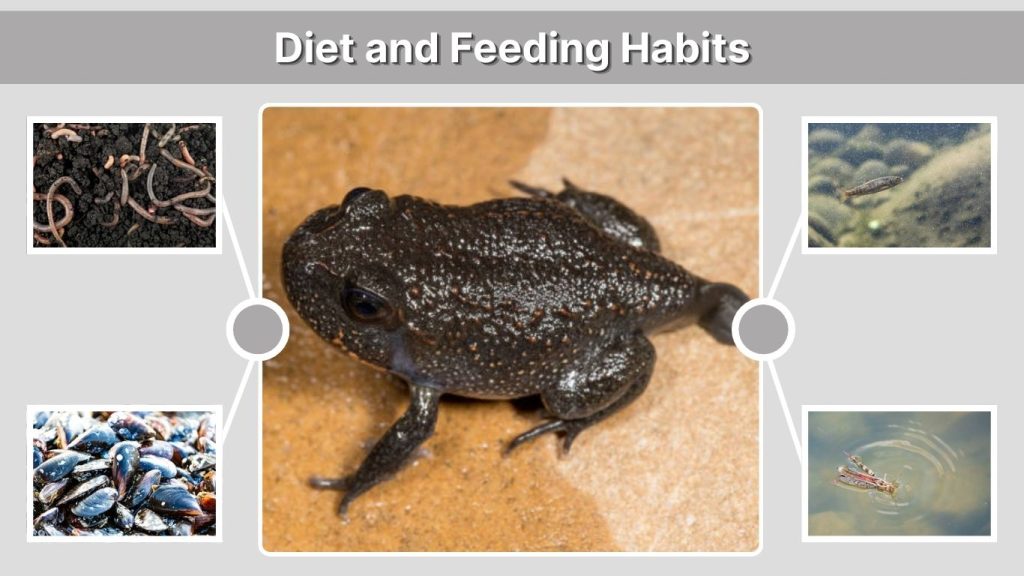
The Surinam toad is a carnivorous predator. Its diet mainly consists of:
- Small fish
- Aquatic insects
- Worms
- Crustaceans
- Tadpoles
Instead of using a tongue to catch prey, it relies on suction feeding. When prey comes close, the toad suddenly opens its large mouth, creating a vacuum that pulls water and prey inside. This action is extremely fast and effective.
Its sensitive, star-shaped fingertips help detect even slight movements in the water. In dark or muddy conditions, these sensory organs are crucial for locating food.
Reproduction: One of Nature’s Strangest Methods
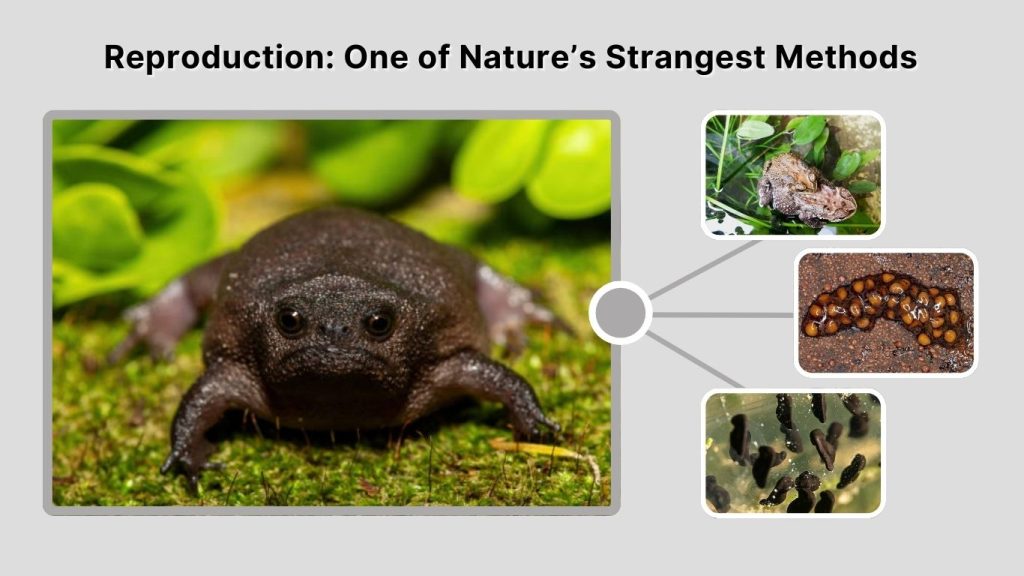
The Surinam toad is best known for its extraordinary and somewhat shocking reproductive process. Unlike most frogs that lay eggs in water and leave them to hatch on their own, the female Surinam toad carries her developing young inside her own skin.
Courtship and Mating
Breeding typically occurs during the rainy season when water levels rise. The male initiates courtship by producing soft clicking sounds underwater to attract a female. Once she responds, the pair begins a slow and synchronized underwater “dance.”
During this process, the male clasps the female in a mating position known as amplexus. The pair performs repeated somersaults in the water. Each time they flip, the female releases a few eggs, and the male fertilizes them externally.
Eggs Embedded in the Skin
Here is where the Surinam toad becomes truly unique. After fertilization, the male carefully presses the eggs onto the female’s back. Her skin, which has become thick and spongy during breeding season, begins to swell around each egg.
Over time, the skin grows over and encases the eggs, forming individual pockets. Each egg settles into its own chamber beneath the surface of the mother’s back. Depending on the female’s size, she may carry anywhere from 60 to over 100 eggs at once.
Development and Birth
Unlike most frogs, Surinam toad eggs do not hatch into free-swimming tadpoles. Instead, the embryos develop fully inside the protective skin pockets. They skip the free-living tadpole stage and transform directly into miniature toads.
After about 12 to 20 weeks, the fully formed young emerge from the mother’s back. Tiny toadlets push their way out of the skin pockets and swim away independently. Once all the young have emerged, the female sheds the old skin layer, and her back gradually returns to normal.
This remarkable form of parental care increases the survival rate of the offspring by protecting them from predators and environmental hazards during development.
Predators and Defense Mechanisms
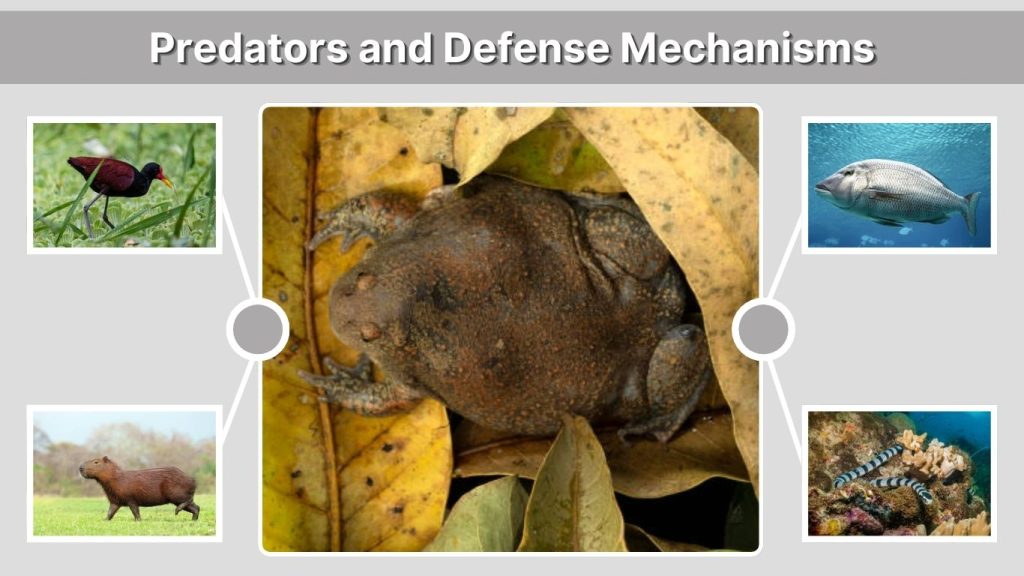
Despite their unusual adaptations, Surinam toads still face threats from natural predators. These may include:
- Large fish
- Aquatic snakes
- Wading birds
- River mammals
Their primary defense is camouflage. The toad’s flat body and mottled coloration allow it to resemble a dead leaf resting on the riverbed. By remaining completely motionless, it becomes nearly invisible in muddy water.
If threatened, the Surinam toad may quickly swim away using powerful kicks from its webbed hind legs. However, it relies more on blending in than on speed or aggression.
Lifespan and Growth
In the wild, Surinam toads typically live between 8 and 12 years, although exact lifespans can vary depending on environmental conditions and predation levels.
In captivity, where threats are reduced and food is consistent, they may live even longer with proper care.
Young toads grow steadily after emerging from their mother’s back. Because they are fully formed at birth, they immediately begin feeding on small aquatic organisms and do not require a tadpole phase for development.
Conservation Status
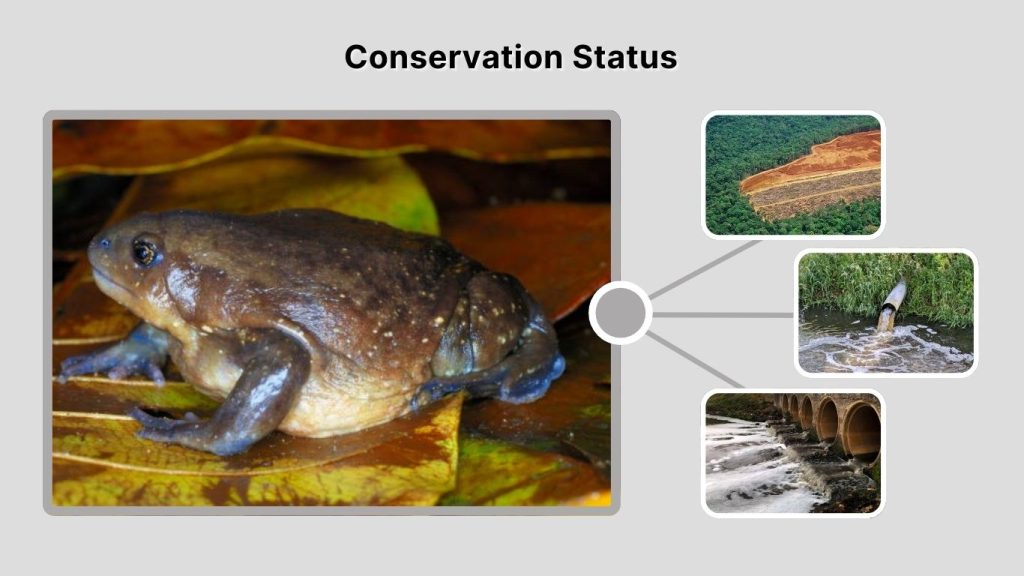
The Surinam toad is currently classified as a species of Least Concern by the International Union for Conservation of Nature (IUCN). This means it is not considered endangered at present.
However, that does not mean the species is free from risk.
Threats
The primary threats to Surinam toads include:
- Habitat destruction from deforestation
- Water pollution
- Agricultural runoff
- Climate change
- Wetland drainage
Because they are fully aquatic, changes in water quality can have a serious impact on their health and breeding success.
Conservation Efforts
Surinam toads benefit from conservation programs aimed at protecting tropical freshwater ecosystems. National parks and protected wetlands in the Amazon and surrounding regions play a key role in maintaining stable populations.
Ongoing research also helps scientists better understand their biology and environmental needs.
Surinam Toad in Captivity
Although not common as pets, Surinam toads are sometimes kept in zoos and by experienced amphibian enthusiasts. They require large, well-filtered aquariums with warm water and hiding places.
Breeding them in captivity can be challenging due to their specialized reproductive behavior. However, successful captive breeding programs have provided valuable insight into their life cycle.
Interesting Facts About the Surinam Toad
- It has no tongue.
- It has no visible eardrums.
- It detects vibrations through its body.
- It gives birth through its back.
- It is sometimes called the “star-fingered toad.”
- It is one of the few amphibians that bypass a free-swimming tadpole stage.
Conclusion
The Surinam toad is truly one of nature’s most extraordinary amphibians. From its flat, leaf-like body to its star-shaped fingertips, every aspect of this species reflects adaptation to life underwater. Yet its most remarkable trait remains its unique reproductive strategy, in which young develop safely within the mother’s back.
Although currently not endangered, protecting freshwater habitats is essential to ensure that this fascinating amphibian continues to thrive in the wild. The Surinam toad reminds us that nature still holds astonishing surprises beneath the surface.