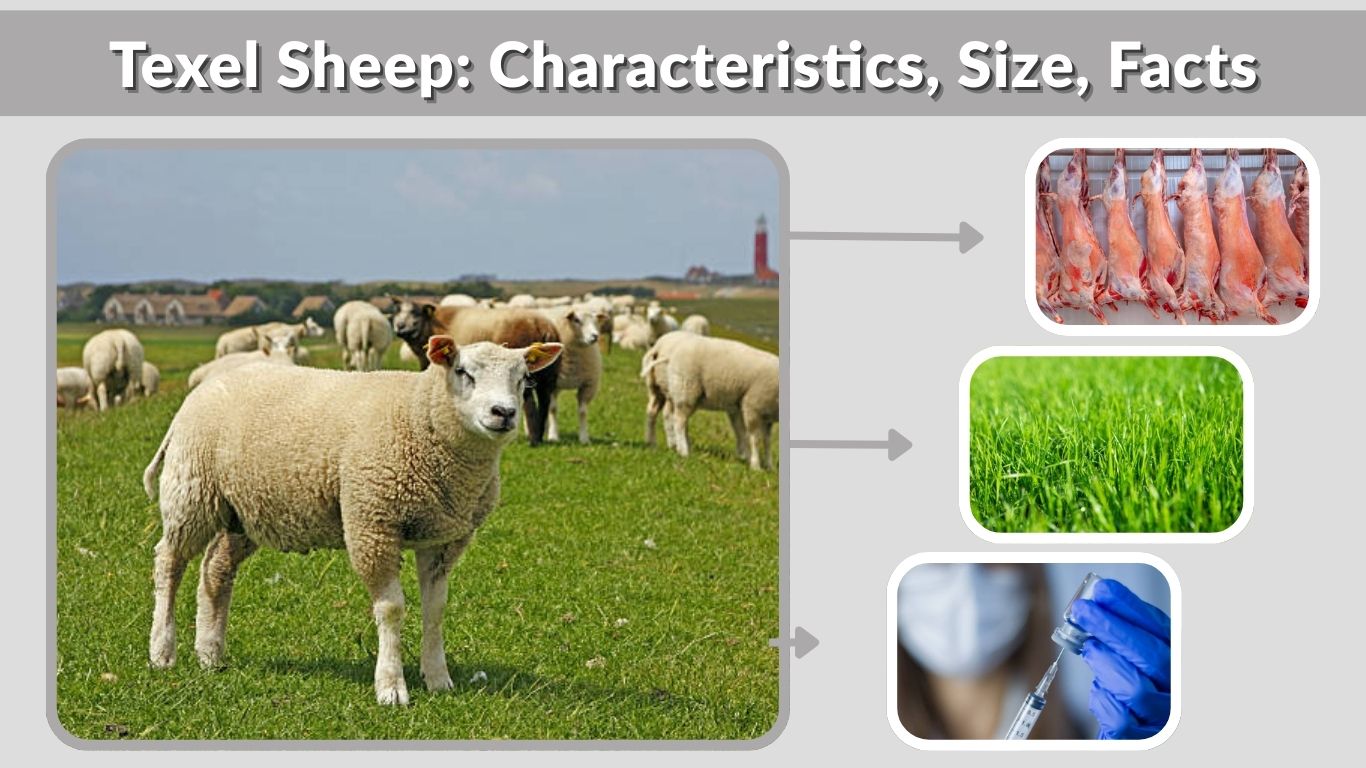
Texel sheep are one of the most well-known meat sheep breeds in the world. They are highly valued for their strong muscular build, excellent meat quality, and efficient growth rate. Originally developed in the Netherlands, Texel sheep have become popular in many countries due to their outstanding carcass traits and adaptability. Farmers often raise Texel sheep for commercial lamb production because they produce lean, high-quality meat. In this guide, we will explore Texel sheep characteristics, size, and interesting facts about this productive breed.
What is Texel Sheep?
Texel sheep are a specialized meat sheep breed that originated on the island of Texel in the Netherlands. Over time, selective breeding improved their body structure and meat production ability, making them one of the most muscular sheep breeds in the world.
Origin and History
The Texel sheep breed developed in the 18th and 19th centuries on the Dutch island of Texel. Local farmers selectively bred sheep to improve their growth rate and meat quality. Through careful breeding, the Texel sheep gradually developed its famous muscular body and strong carcass traits.
Because of their excellent meat quality, Texel sheep soon gained popularity beyond the Netherlands. Today, they are widely raised in:
- United Kingdom
- United States
- Australia
- New Zealand
- Several European countries
In many regions, Texel sheep are used both as purebred animals and in crossbreeding programs to improve lamb production.
Why Texel Sheep is Popular
Texel sheep are extremely popular among sheep farmers because they offer several advantages compared to many other breeds.
Some key reasons for their popularity include:
- Exceptional meat quality
- Highly muscular body structure
- Efficient feed conversion
- Strong growth performance
- Good carcass yield
Because of these traits, Texel sheep are often used to improve meat quality when crossed with other sheep breeds.
Texel Sheep Characteristics
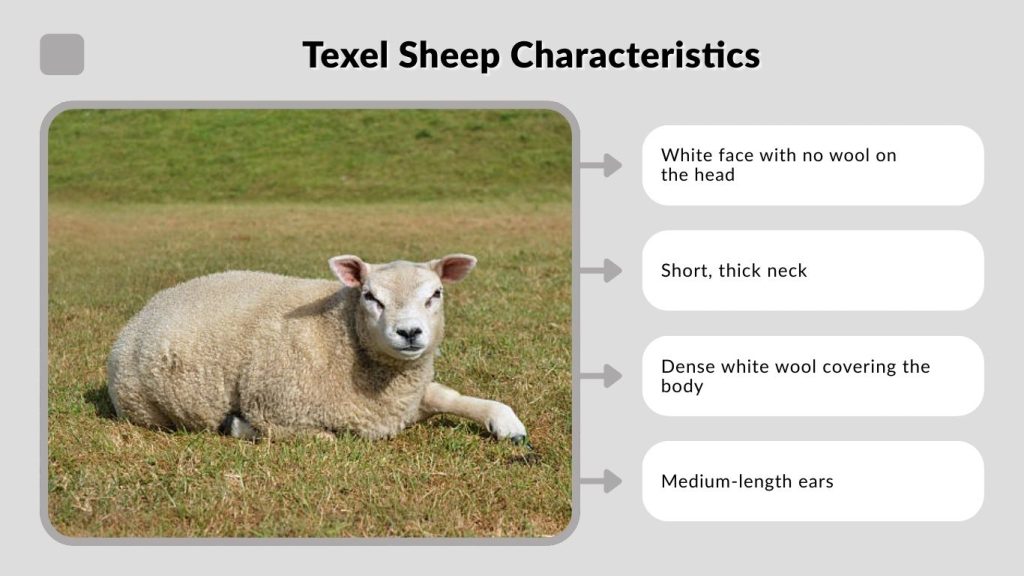
Texel sheep have several unique characteristics that make them one of the most recognizable meat sheep breeds.
Physical Appearance
Texel sheep have a distinctive appearance with a white face and white body covered in dense wool. Their muscular frame gives them a very strong and compact look.
Common physical features include:
- White face with no wool on the head
- Short, thick neck
- Dense white wool covering the body
- Strong and muscular build
- Medium-length ears
Their powerful body structure is one of the main reasons they are widely used in meat production systems.
Body Structure
One of the most impressive traits of Texel sheep is their extremely muscular body structure. Compared to many other sheep breeds, Texel sheep develop heavier muscle mass, especially in the hindquarters.
Important structural features include:
- Broad and deep chest
- Wide back
- Thick hindquarters
- Strong legs and balanced body frame
This body structure allows Texel sheep to produce high-quality carcasses with excellent meat yield.
Temperament
Texel sheep are generally known for having a calm and manageable temperament. They adapt well to both small farms and large commercial sheep operations.
Typical temperament traits include:
- Calm behavior
- Easy management
- Good adaptability to pasture systems
Their manageable temperament makes them suitable for farmers with different levels of experience.
Texel Sheep Size
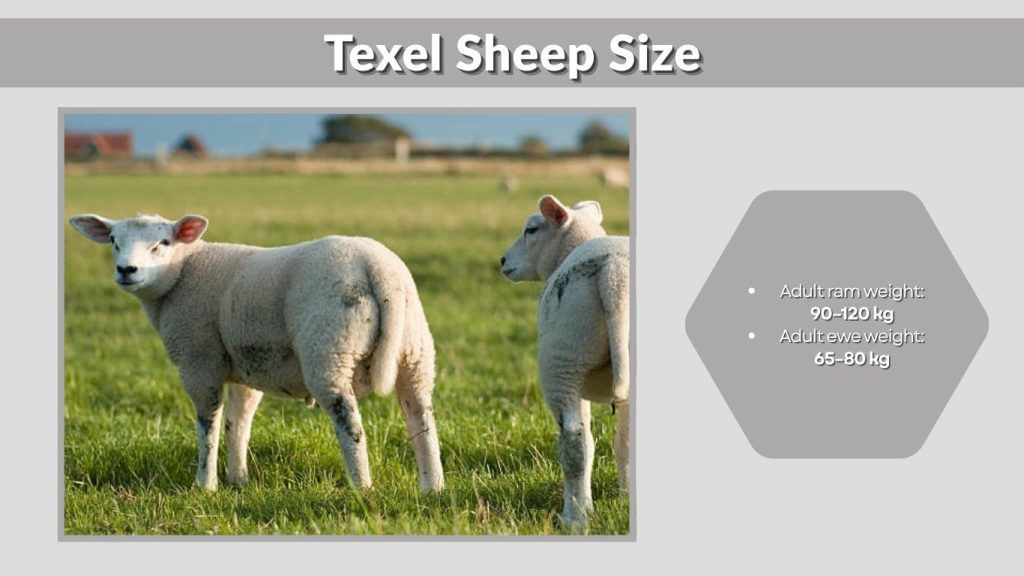
Texel sheep are considered a medium to large-sized meat breed. Their compact but muscular body frame contributes to their excellent meat production ability.
Adult Body Weight
The body weight of Texel sheep varies depending on genetics, feeding conditions, and farm management.
Typical body weights include:
- Adult ram weight: 90–120 kg
- Adult ewe weight: 65–80 kg
Under good feeding conditions, some animals may grow even larger.
Growth Rate
Texel lambs are known for their efficient growth rate and strong muscle development. Although they may not grow as quickly as some other meat breeds, their carcass quality is often superior.
Key growth advantages include:
- Strong muscle development
- Good feed efficiency
- High-quality meat production
These qualities make Texel sheep one of the most valuable breeds for lamb production.
Body Frame
Texel sheep have a compact yet powerful body frame. Their body shape is specifically suited for meat production.
Important body frame features include:
- Short but muscular body
- Thick muscle distribution
- Strong skeletal structure
These characteristics help Texel sheep produce excellent carcass quality, which is highly valued in commercial meat markets.
Texel Sheep Facts
Texel sheep have several interesting traits that make them one of the most important meat sheep breeds in the world. Their exceptional muscle development and carcass quality have made them highly valuable in modern sheep farming.
Known for Exceptional Muscling
One of the most remarkable facts about Texel sheep is their extreme muscular development. Compared with many other sheep breeds, Texel sheep produce a higher proportion of lean muscle.
Their strong muscling is especially noticeable in:
- Hindquarters
- Back muscles
- Shoulder area
Because of this muscular structure, Texel sheep produce excellent carcass quality, which is highly valued by meat producers.
Produces Lean Meat
Texel sheep are famous for producing lean lamb meat with low fat content. Their meat is tender, flavorful, and widely preferred in many markets.
Important meat qualities include:
- Lean muscle with minimal fat
- High dressing percentage
- Excellent carcass yield
These qualities make Texel lamb highly desirable in commercial meat production.
Popular for Crossbreeding
Texel sheep are widely used in crossbreeding programs to improve meat production in other sheep breeds. When crossed with other breeds, Texel genetics often increase muscle development and carcass quality.
Crossbreeding with Texel sheep can help:
- Improve lamb growth performance
- Increase meat yield
- Enhance carcass quality
Because of these benefits, Texel rams are commonly used in breeding programs.
Widely Used in Commercial Lamb Production
Texel sheep are raised in many parts of the world for commercial lamb production. Their consistent meat quality and strong growth performance make them a reliable choice for farmers.
Major farming regions include:
- United Kingdom
- Netherlands
- United States
- Australia
- New Zealand
Texel Sheep Farming Guide
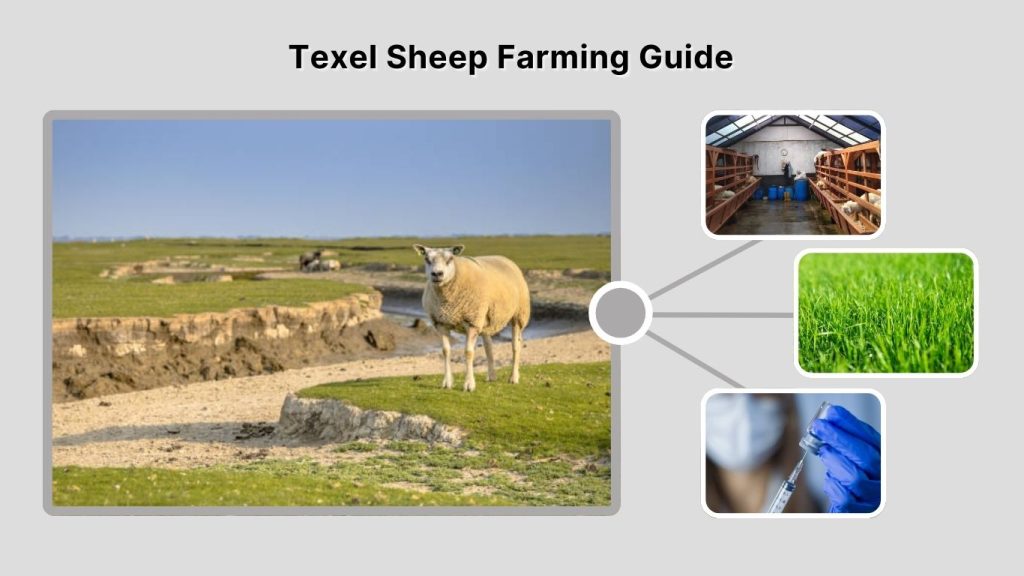
Raising Texel sheep can be profitable when proper farm management practices are followed. Farmers must ensure good housing, balanced nutrition, and proper health care.
Housing Requirements
Texel sheep are hardy animals, but they still require suitable shelter to stay healthy and productive.
Important housing features include:
- Clean and dry shelter
- Good ventilation
- Protection from extreme weather
- Adequate space for each sheep
Proper housing helps prevent disease and improves overall productivity.
Feeding Management
Texel sheep rely mainly on pasture grazing for their nutrition. However, farmers may provide supplementary feed to support growth and reproduction.
Common feed sources include:
- Natural grasses
- Legumes such as clover
- Hay and silage during winter
- Grain supplements
Providing balanced nutrition helps maintain healthy body weight and improves meat production.
Health Management
Good health management is essential for maintaining a productive flock.
Basic health management practices include:
- Regular vaccination programs
- Deworming to control parasites
- Maintaining clean housing conditions
- Monitoring sheep for signs of illness
Early treatment of health problems helps prevent serious losses in sheep farming.
Advantages of Raising Texel Sheep
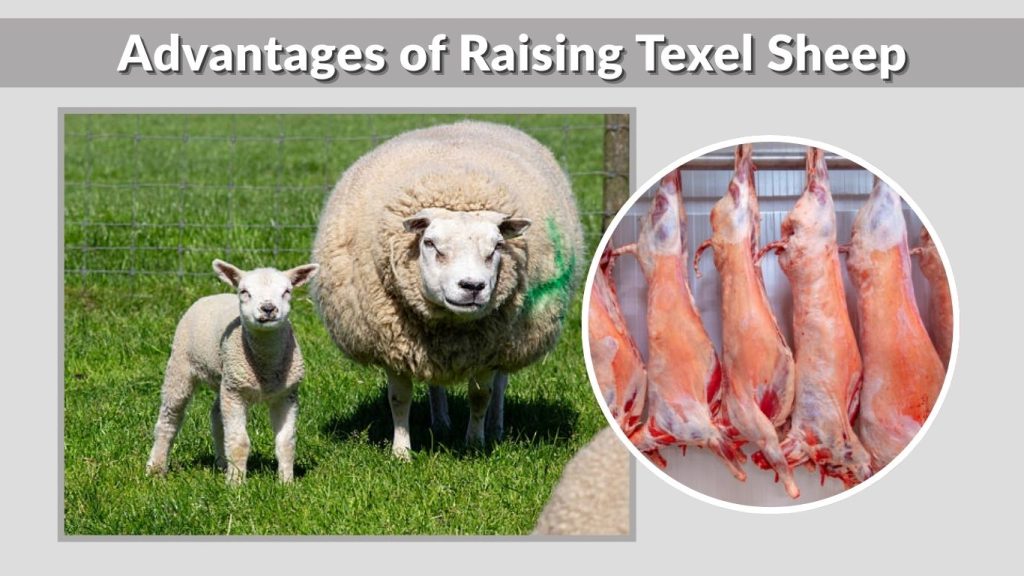
Texel sheep provide several advantages for farmers focused on meat production.
Excellent Meat Production
Texel sheep are known for producing high-quality lamb meat with excellent carcass traits. Their muscular body allows them to produce a large proportion of lean meat.
High Carcass Quality
Because of their muscle development, Texel sheep produce carcasses that are highly valued in commercial markets.
Strong Growth Performance
Texel lambs grow efficiently and develop strong muscles, making them suitable for meat production systems.
Good Crossbreeding Potential
Texel sheep are often used to improve meat production in other sheep breeds through crossbreeding programs.
Texel Sheep vs Other Sheep Breeds
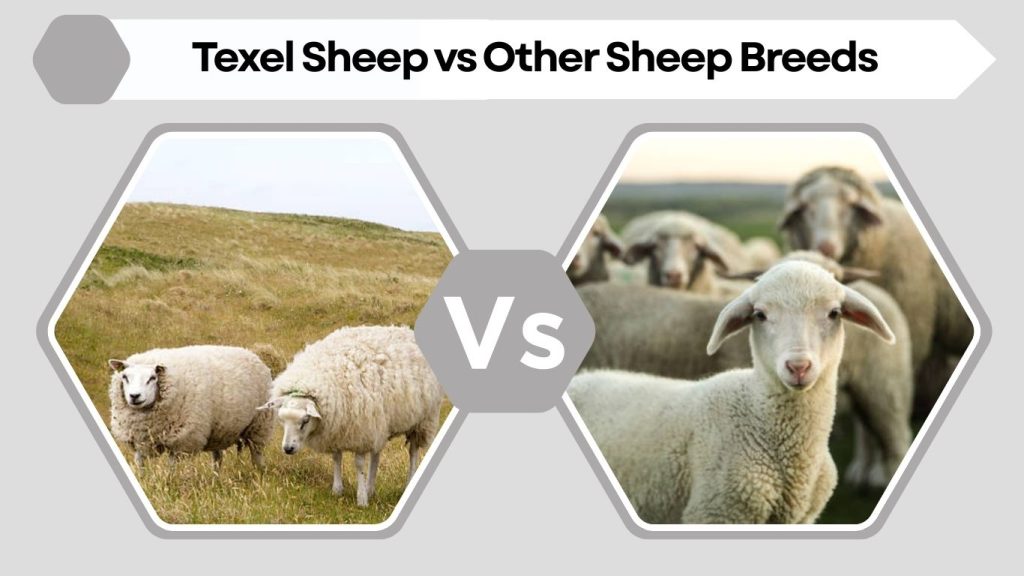
Farmers often compare Texel sheep with other breeds when selecting animals for meat production.
Texel vs Suffolk
Suffolk sheep are known for rapid growth and large body size. Texel sheep, on the other hand, are famous for their superior muscle development and lean meat quality.
Texel vs Dorset
Dorset sheep are known for their ability to breed throughout the year, while Texel sheep are primarily valued for their outstanding carcass quality.
Differences in Meat Quality
Different sheep breeds specialize in different traits. Texel sheep are particularly valued for their lean meat and muscular carcass, which often makes them the preferred breed for high-quality lamb production.
Conclusion
Texel sheep are one of the most valuable meat sheep breeds in the world. Their muscular body structure, excellent carcass quality, and efficient growth make them highly popular among sheep farmers. In addition to producing high-quality lamb meat, Texel sheep also contribute to improving meat production in other breeds through crossbreeding. With proper feeding, housing, and health management, Texel sheep farming can provide consistent production and profitable results for livestock farmers.