

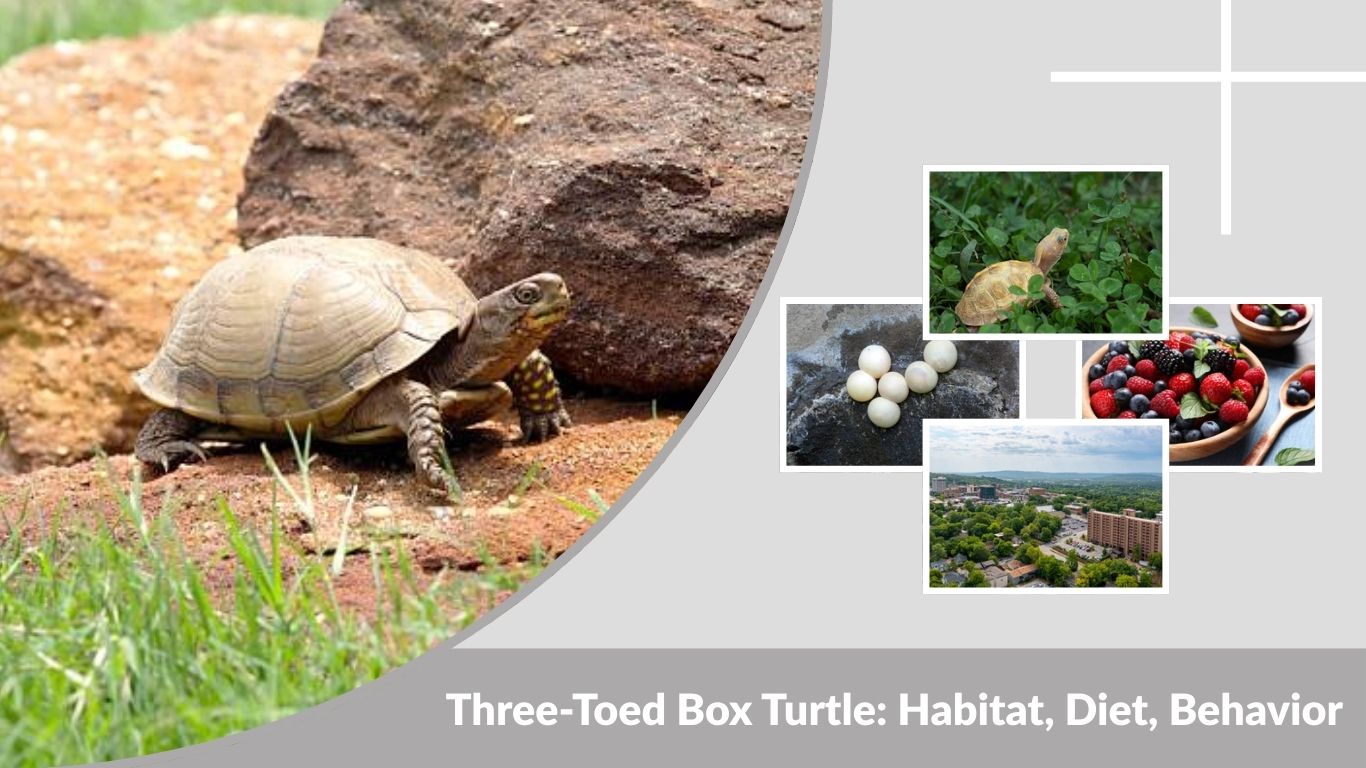
The three-toed box turtle is a fascinating land-dwelling turtle known for its unique appearance and calm behavior. Native to parts of the United States, this turtle is a subspecies of the common box turtle and is easily recognized by the three toes on its hind feet. It is also famous for its ability to completely close its shell for protection. These turtles play an important role in their ecosystems by helping control insects and spreading plant seeds. Understanding their habitat, diet, and behavior helps people appreciate why they deserve protection.
What Is a Three-Toed Box Turtle?
The three-toed box turtle (Terrapene carolina triunguis) is one of the subspecies of the eastern box turtle. It is a terrestrial turtle, meaning it spends most of its life on land rather than in water. These turtles are well known for their domed shells and the ability to close themselves completely inside their shells using a hinged plastron. This protective feature allows them to hide from predators and harsh environmental conditions.
The name “three-toed” comes from the number of toes on the turtle’s hind feet. Unlike many other turtles that have four toes, this species typically has three toes on each hind foot. Although this characteristic is common, there can sometimes be slight variations. The species is widely admired for its adaptability and ability to survive in various woodland environments.
Taxonomy and Classification
The three-toed box turtle belongs to the reptile group known as Testudines, which includes turtles, tortoises, and terrapins. Its scientific classification places it within the Emydidae family, a group that includes several freshwater and box turtle species.
Its classification is as follows:
- Kingdom: Animalia
- Phylum: Chordata
- Class: Reptilia
- Order: Testudines
- Family: Emydidae
- Genus: Terrapene
- Subspecies: Terrapene carolina triunguis
This classification helps scientists better understand how the three-toed box turtle is related to other turtle species and how it fits into the broader reptile family.
Physical Characteristics
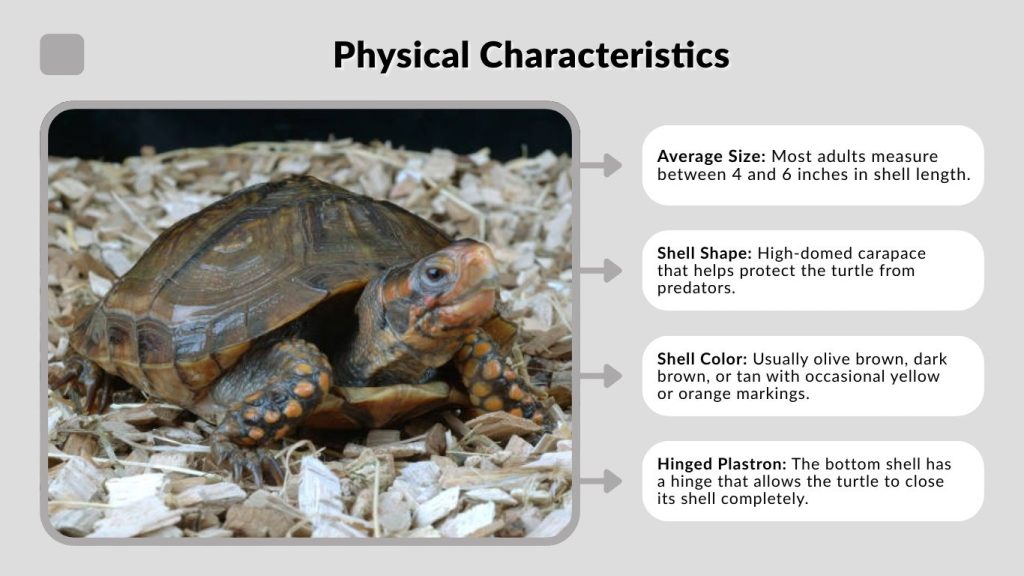
The three-toed box turtle has several unique physical traits that help it survive in the wild. It is a medium-sized terrestrial turtle with a high-domed shell and strong protective features. Like other box turtles, it has a hinged plastron that allows it to completely close its shell when threatened. Its colors and markings can vary between individuals, but most have natural tones that help them blend into forest environments. Below are some key physical characteristics of this species.
- Average Size: Most adults measure between 4 and 6 inches in shell length.
- Shell Shape: High-domed carapace that helps protect the turtle from predators.
- Shell Color: Usually olive brown, dark brown, or tan with occasional yellow or orange markings.
- Hinged Plastron: The bottom shell has a hinge that allows the turtle to close its shell completely.
- Number of Toes: Typically three toes on each hind foot, which gives the species its name.
- Eye Color Differences: Males often have red or orange eyes, while females usually have brown or yellow eyes.
- Tail Length: Males generally have slightly longer and thicker tails than females.
- Strong Legs: Short but powerful legs designed for walking on land and digging into soil.
These physical features help the three-toed box turtle adapt to terrestrial environments while providing strong protection from predators.
Natural Habitat and Distribution
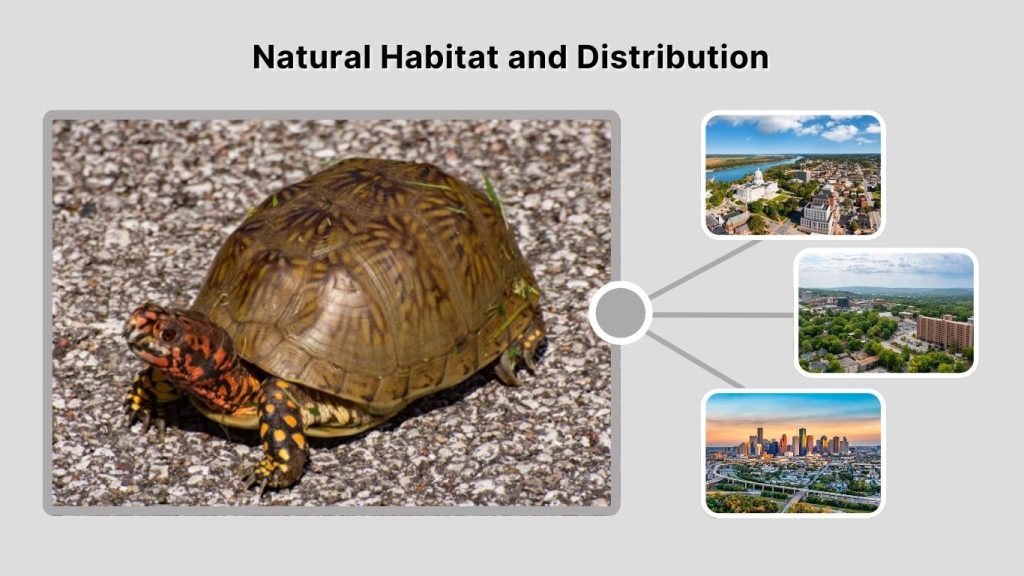
The three-toed box turtle is primarily found in the south-central region of the United States. This turtle prefers warm climates and environments that provide plenty of shelter and food sources. Because it spends most of its life on land, it requires habitats with loose soil, vegetation, and shaded areas.
These turtles are well adapted to environments where they can easily dig into the soil or hide beneath leaves and logs. Moist conditions are particularly important because turtles rely on humidity to prevent dehydration.
Geographic Range
The natural range of the three-toed box turtle covers several states in the central and southern United States. Some of the most common locations where they are found include:
- Missouri
- Arkansas
- Texas
- Oklahoma
- Louisiana
- Mississippi
In some areas, they are even considered a symbol of local wildlife. For example, the three-toed box turtle is the state reptile of Missouri, highlighting its importance in the region.
Preferred Environment
Three-toed box turtles thrive in habitats that provide both food and protection. Their preferred environments typically include:
- Moist woodlands
- Forest edges
- Meadows and grasslands
- Areas with dense vegetation
They often hide under fallen logs, leaf litter, or shrubs during the hottest parts of the day. During extremely hot or dry conditions, these turtles may burrow into the soil to stay cool and conserve moisture.
These habitats allow the turtles to find a variety of foods while also providing shelter from predators and extreme weather conditions.
Diet and Feeding Habits
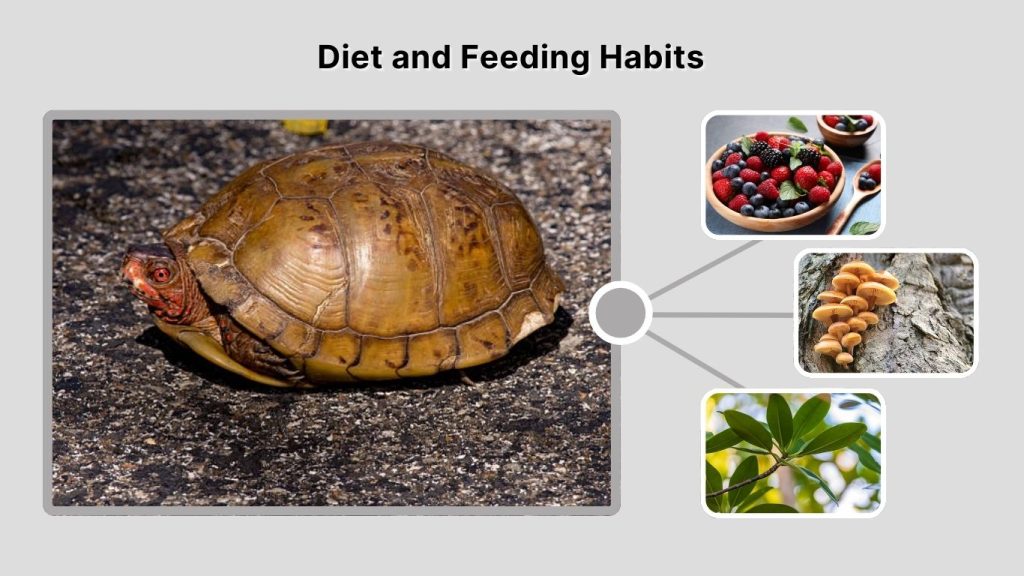
Three-toed box turtles are omnivores, meaning they eat both plant and animal matter. Their diet is quite varied and depends on what food sources are available in their habitat. This flexible feeding behavior helps them survive in different environments throughout their range.
These turtles are opportunistic feeders. They often move slowly through forests, fields, and leaf-covered ground while searching for food. Because they eat many different types of food, they play an important role in maintaining ecological balance. For example, they help control insect populations and spread plant seeds through their droppings.
Plant-Based Foods
Plant materials make up an important part of the three-toed box turtle’s diet. They consume a variety of vegetation that grows naturally in their habitat. Some common plant-based foods include:
- Berries such as strawberries and blackberries
- Mushrooms and fungi
- Leaves and flowers
- Grass and tender plant shoots
Fruits are especially attractive to these turtles because of their sweetness and high water content. Eating fruits and berries also helps turtles stay hydrated during warmer months.
Animal-Based Foods
In addition to plants, three-toed box turtles also eat small animals and insects. Protein from these foods is important for growth, energy, and overall health. Their animal-based diet often includes:
- Earthworms
- Insects such as beetles and grasshoppers
- Snails and slugs
- Small amphibians
- Occasionally carrion (dead animals)
Young turtles tend to eat more animal protein than adults because they require extra nutrients while growing. As they mature, they gradually consume more plant-based foods.
Behavior and Lifestyle
Three-toed box turtles are generally slow-moving and solitary animals. They spend most of their time searching for food, exploring their surroundings, or resting under vegetation. Unlike aquatic turtles, they rarely swim and prefer to stay on land.
These turtles are also known for their strong sense of territory. Many individuals remain within a small home range for most of their lives. If moved to a new location, they may attempt to return to their original area.
Daily Activity
Three-toed box turtles are most active during warm and humid conditions. Their daily activities often depend on temperature and weather. On cooler mornings or after rainfall, they are more likely to be seen moving around in search of food.
During extremely hot afternoons, they usually rest under shaded areas such as:
- Leaf litter
- Bushes or shrubs
- Fallen logs
- Burrows in soft soil
Rainy days are particularly favorable for these turtles because moisture helps keep their skin hydrated and brings out many of the insects and worms they eat.
Defensive Behavior
One of the most remarkable behaviors of the three-toed box turtle is its defense mechanism. When threatened by predators, the turtle quickly pulls its head, legs, and tail inside its shell.
Thanks to the hinged plastron, the turtle can completely close its shell, forming a tight protective box. This makes it very difficult for predators to reach the soft parts of its body.
In addition to this defense strategy, their shell colors often blend well with leaves and soil, providing natural camouflage that helps them avoid detection.
Reproduction and Life Cycle
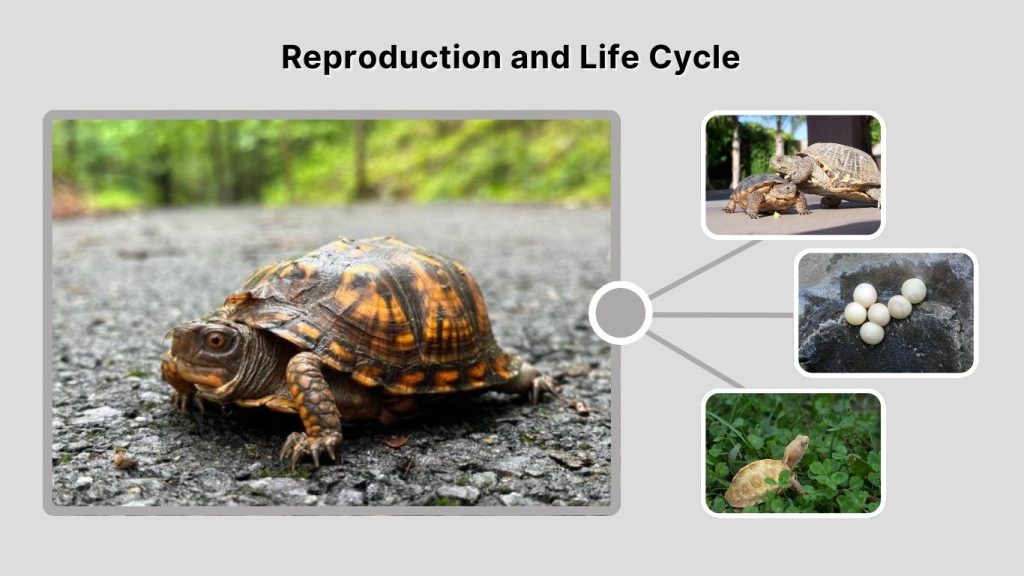
The breeding season for three-toed box turtles usually occurs during spring and early summer. During this time, males actively search for females and may follow them closely while attempting to mate.
Mating Behavior
Male turtles often perform courtship behaviors to attract females. These behaviors may include nudging, circling, or gently biting the female’s shell. Once the female accepts the male, mating occurs on land.
A female may store sperm for several months, allowing her to fertilize eggs even after the mating season has ended.
Eggs and Hatchlings
After mating, the female searches for a suitable nesting site with soft soil. She digs a small nest using her hind legs and lays 3 to 8 eggs in the hole.
The eggs usually incubate for about 60 to 90 days, depending on temperature and environmental conditions. Once the eggs hatch, the baby turtles must dig their way out of the nest.
Unlike many other animals, hatchling turtles receive no parental care. They must immediately begin searching for food and shelter on their own. Young turtles are extremely vulnerable during this stage, and only a small number survive to adulthood.
Predators and Threats
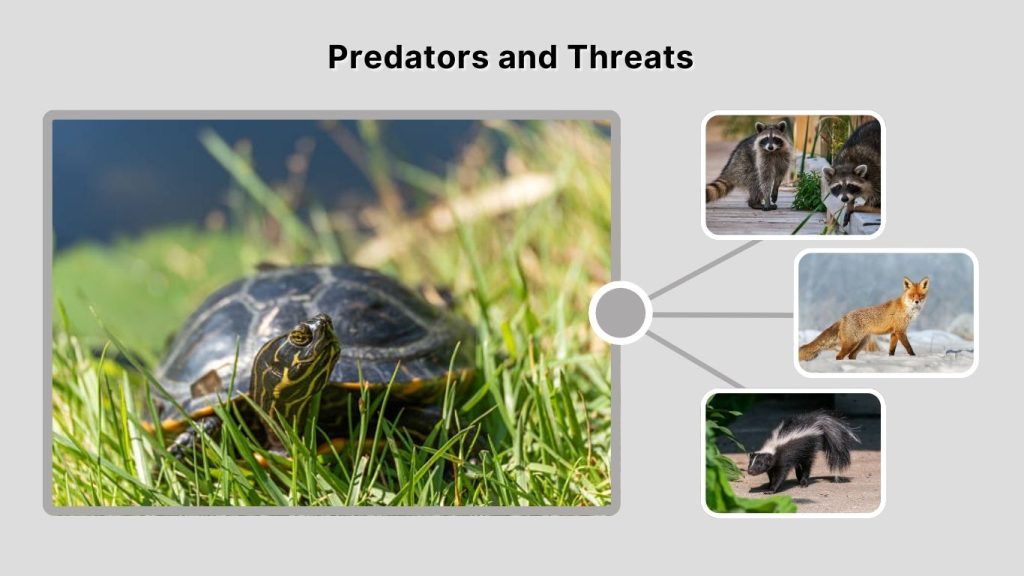
Three-toed box turtles face many natural and human-related threats throughout their lives. While adult turtles have strong shells for protection, eggs and young turtles are much more vulnerable.
Natural Predators
Several animals prey on box turtle eggs and hatchlings. Common predators include:
- Raccoons
- Foxes
- Skunks
- Snakes
- Birds of prey
These predators often dig up turtle nests to eat the eggs. Hatchlings that emerge from the nest must quickly find shelter to avoid being eaten.
Human-Related Threats
Human activities pose some of the greatest dangers to three-toed box turtles. One major threat is habitat destruction, which occurs when forests and grasslands are cleared for agriculture or urban development.
Roads also present serious risks. Because these turtles move slowly, many are killed while attempting to cross roads. In addition, some people collect wild turtles to keep as pets, which reduces wild populations.
Conservation and Protection
In many areas, three-toed box turtle populations are declining due to environmental pressures and human activities. Protecting these turtles requires both conservation efforts and public awareness.
Wildlife organizations and researchers are working to study turtle populations and protect important habitats. Some states have also introduced regulations to prevent the capture of wild turtles.
How People Can Help
Individuals can play an important role in protecting these turtles. Some simple actions include:
- Avoid removing turtles from the wild
- Help turtles safely cross roads in the direction they were traveling
- Protect forests and natural habitats
- Educate others about turtle conservation
By respecting wildlife and protecting natural ecosystems, people can help ensure that the three-toed box turtle continues to thrive in the wild.
Conclusion
The three-toed box turtle is a remarkable reptile known for its unique physical features, calm behavior, and important ecological role. From its distinctive three-toed hind feet to its ability to completely close its shell for protection, this turtle is well adapted to life on land. It plays a valuable role in maintaining ecosystem balance by controlling insects and spreading plant seeds. However, habitat loss and human activities threaten many populations. Protecting natural habitats and respecting wildlife are essential steps in ensuring the survival of this fascinating species for future generations.