




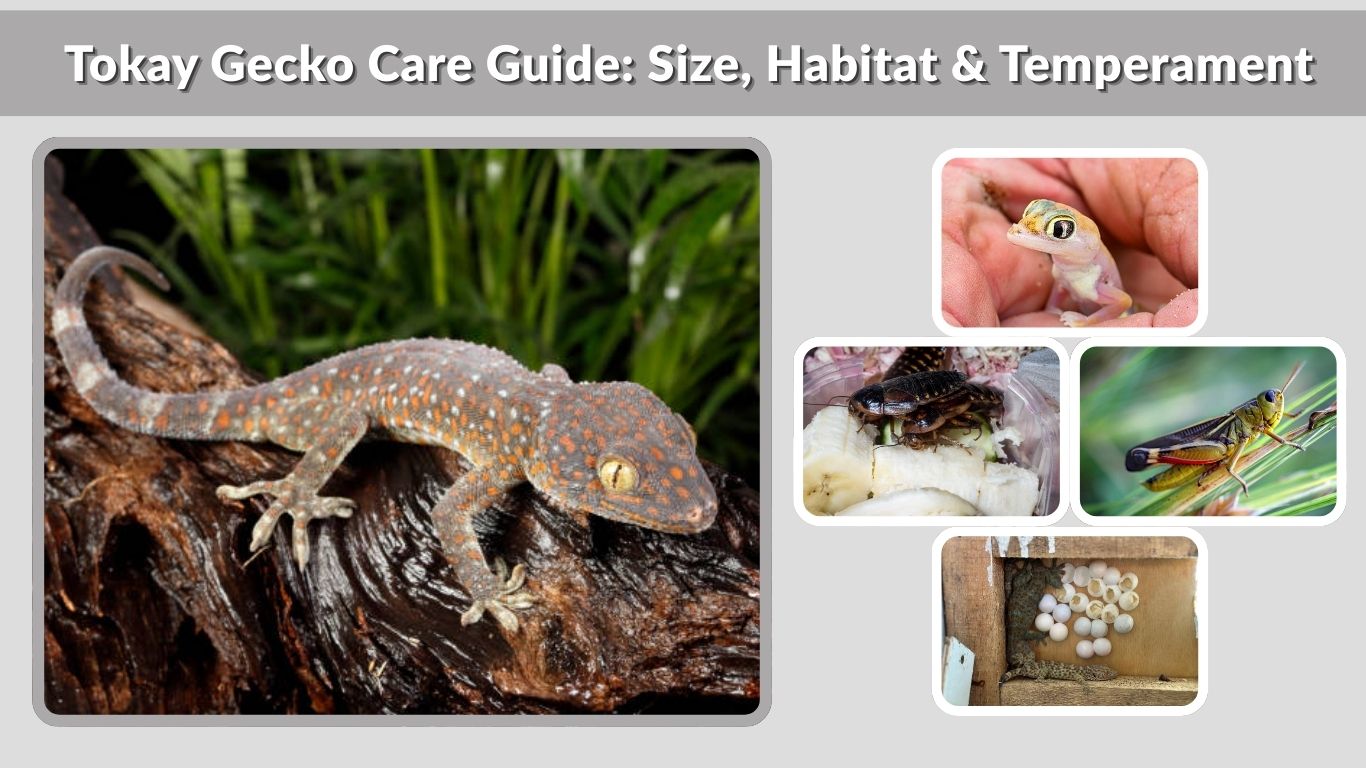
The Tokay gecko (Gekko gecko) is one of the most striking and recognizable gecko species in the reptile world. Known for its vibrant blue-gray body covered in bright orange or red spots, this large arboreal lizard is both admired and feared. While hardy and long-lived, Tokay geckos are not beginner-friendly due to their strong territorial nature and powerful bite. This complete Tokay gecko care guide covers size, lifespan, temperament, habitat setup, and feeding requirements.
Tokay Gecko Facts
Tokay geckos are native to Southeast Asia, including Thailand, Indonesia, Vietnam, and surrounding regions. They inhabit forests, trees, cliffs, and even human structures.
Here are some important Tokay gecko facts:
- Scientific name: Gekko gecko
- Second-largest gecko species in the world
- Strictly nocturnal
- Arboreal (tree-dwelling)
- Known for loud “To-kay!” vocal calls
- Extremely territorial
Their name comes from their distinctive call, which sounds like “To-kay! To-kay!” and can be surprisingly loud, especially at night.
Unlike smaller pet geckos, Tokays are muscular and powerful. Their bright coloration serves as both camouflage and warning in their natural environment.
Tokay Gecko Size and Appearance
Tokay geckos are large compared to most commonly kept gecko species.
Average Tokay Gecko Size
- Length: 10–14 inches
- Weight: 150–400 grams
- Males typically larger than females
Their body is thick and muscular, with a large head and powerful jaws. The skin is blue or gray with bright orange or red spots, making them one of the most colorful geckos in captivity.
Their toes feature adhesive pads that allow them to climb vertical glass and smooth surfaces with ease.
Male vs Female Tokay Gecko
There are subtle differences between males and females:
- Males are usually larger.
- Males have visible femoral pores on the underside.
- Males tend to have slightly broader heads.
These differences become clearer once the gecko reaches maturity.
Tokay Gecko Lifespan
With proper Tokay gecko care, they typically live between 10 and 15 years in captivity. Some individuals may live even longer with excellent husbandry.
In the wild, lifespan is usually shorter due to predators, environmental stress, and food competition.
Factors that influence Tokay gecko lifespan include:
- Proper temperature and humidity
- Nutritious insect-based diet
- Minimal stress
- Clean enclosure
- Veterinary care when needed
Because of their long lifespan and strong temperament, Tokay geckos are a serious commitment best suited for experienced reptile keepers.
Tokay Gecko Temperament
Tokay gecko temperament is one of the most discussed aspects of this species. Unlike leopard or crested geckos, Tokays are known for being defensive and territorial.
They are not naturally tame and may display aggressive behaviors such as:
- Hissing
- Lunging
- Biting
- Loud vocalizing
Wild-caught Tokay geckos are typically more defensive than captive-bred individuals. However, even captive-bred Tokays are rarely considered handle-friendly pets.
Do Tokay Geckos Bite?
Yes, Tokay geckos can bite, and their bite is strong. They have powerful jaws and sharp teeth designed to grip prey firmly.
If they latch onto something, they may hold on for several seconds. While their bite is rarely medically dangerous, it can be painful.
To reduce the risk of bites:
- Avoid sudden movements.
- Do not corner the gecko.
- Use tools for enclosure maintenance.
- Limit handling.
Some experienced keepers practice hook training and gradual desensitization to reduce defensive responses. However, Tokays are generally display animals rather than handling pets.
Tokay Gecko Habitat Setup
Creating a proper Tokay gecko habitat is essential for maintaining health and reducing stress. Because they are arboreal, vertical space is more important than floor space.
Enclosure Size
Minimum recommended enclosure:
- 18x18x24 inches (vertical)
Larger enclosures are strongly recommended, especially for adult males. A tall terrarium allows climbing and natural behaviors.
The enclosure must have a secure locking lid, as Tokay geckos are strong and capable escape artists.
Temperature Requirements
Tokay geckos require a warm tropical environment.
- Daytime temperature: 80–85°F
- Basking area: 88–90°F
- Nighttime temperature: 70–75°F
Overheating should be avoided. Use thermostats to regulate heat sources safely.
Humidity Levels
Humidity should stay between 60–80%.
Daily misting helps maintain proper hydration and supports healthy shedding. The enclosure should not remain constantly wet but should cycle between damp and slightly dry conditions.
Substrate Options
Safe substrate options include:
- Coconut fiber
- Orchid bark
- Reptile soil blends
These substrates help retain humidity while supporting a naturalistic environment.
Climbing Decor
Tokay geckos need vertical enrichment:
- Cork bark tubes
- Sturdy branches
- Dense artificial or live plants
- Multiple hiding spots
Providing hiding areas reduces stress and helps prevent defensive behavior.
Tokay Gecko Diet and Feeding
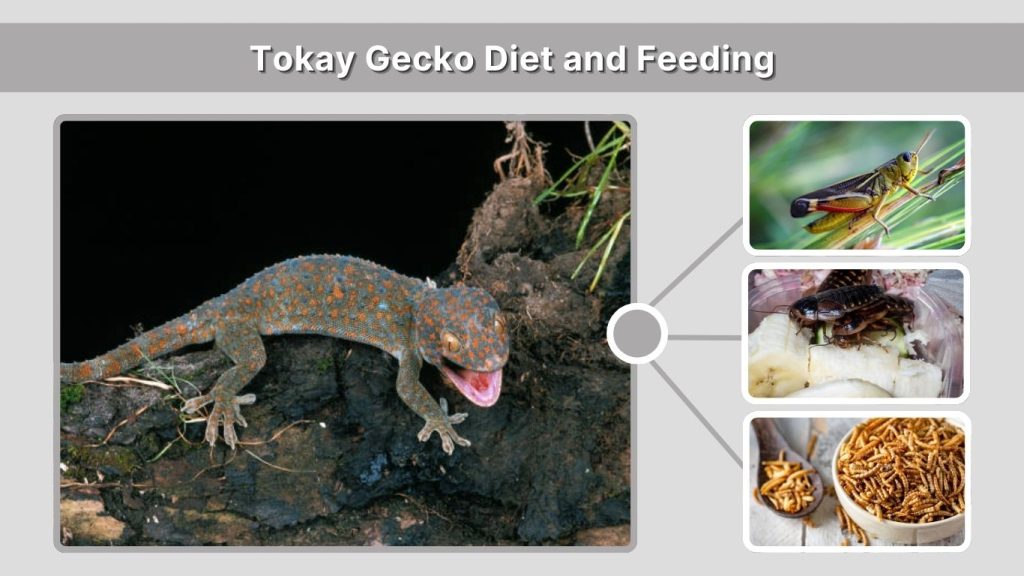
A proper Tokay gecko diet is entirely insect-based. In the wild, they hunt a wide variety of insects and occasionally small vertebrates. In captivity, providing a diverse and nutrient-rich diet is essential for long-term health.
What Do Tokay Geckos Eat?
Tokay geckos thrive on live prey. Suitable feeder insects include crickets, dubia roaches, mealworms, superworms, and locusts. Adult Tokays may occasionally consume pinky mice, but this should be rare and not a staple.
Insects should always be gut-loaded 24 hours before feeding. Gut-loading means feeding the insects nutritious vegetables or commercial insect diets so the gecko receives better overall nutrition.
Feeding Schedule
Juvenile Tokay geckos should be fed every other day to support rapid growth. Adults typically eat two to three times per week. Portion size depends on the gecko’s size, but most adults will eat several appropriately sized insects per feeding session.
Overfeeding should be avoided, as obesity can lead to fatty liver disease and other health problems. A healthy Tokay gecko should appear muscular but not bloated.
Supplementation
Calcium supplementation is critical to prevent metabolic bone disease. Insects should be lightly dusted with calcium powder several times per week. A multivitamin supplement can be offered once or twice per month.
Fresh water should always be available in a sturdy dish, even though Tokays often drink droplets after misting.
Tokay Gecko Handling and Safety
Tokay geckos are not recommended for frequent handling. Their defensive nature makes them better suited as display animals.
If handling is necessary, it should be done carefully and calmly. Never grab a Tokay gecko from above, as this can trigger a defensive response. Instead, allow the gecko to see your approach and move slowly.
Protective gloves are sometimes used by experienced keepers, especially when working with large or particularly defensive individuals. Hook training can also help move the gecko safely during enclosure cleaning.
Stress signals include rapid breathing, open-mouth displays, tail twitching, and loud vocalizations. If these behaviors occur, it is best to leave the animal alone.
Tokay Gecko Shedding and Health
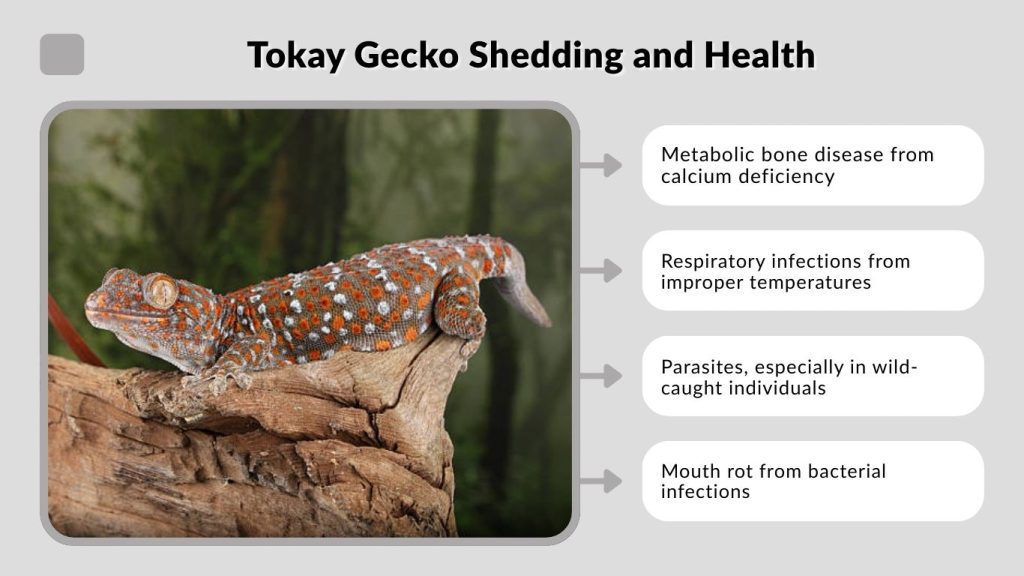
Healthy Tokay geckos shed their skin regularly as they grow. Proper humidity levels are essential to ensure complete shedding. If humidity is too low, retained shed may stick to the toes or tail.
Common health problems in Tokay geckos include:
- Metabolic bone disease from calcium deficiency
- Respiratory infections from improper temperatures
- Parasites, especially in wild-caught individuals
- Mouth rot from bacterial infections
Maintaining proper humidity, temperature, and hygiene significantly reduces the risk of these issues.
A healthy Tokay gecko should have clear eyes, firm body structure, strong grip strength, and consistent appetite.
Tokay Gecko Breeding and Eggs
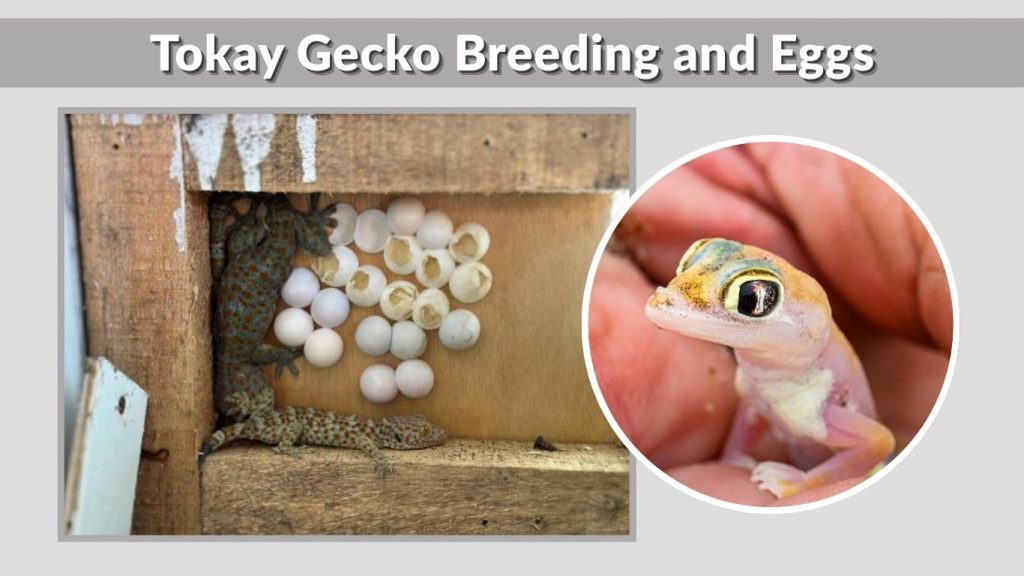
Tokay geckos reach sexual maturity around 18 to 24 months of age. Breeding should only be attempted by experienced keepers due to their territorial behavior.
Females typically lay two eggs per clutch. Unlike many reptiles, Tokay geckos often attach their eggs firmly to surfaces within the enclosure. The eggs incubate for approximately 60 to 120 days, depending on temperature and humidity conditions.
Some Tokay geckos may guard their eggs, displaying protective behavior. Stable environmental conditions are essential during incubation to ensure proper development.
Wild-Caught vs Captive-Bred Tokay Geckos
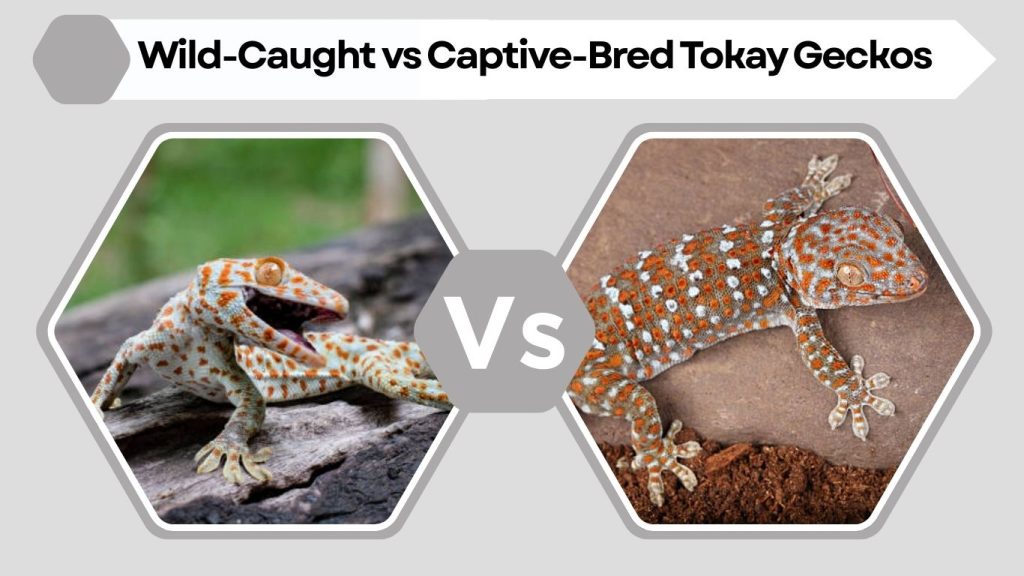
Most Tokay geckos available in the pet trade have historically been wild-caught. However, captive breeding has become more common in recent years.
Wild-caught Tokays are often more defensive and may carry internal parasites. They may also require more time to adapt to captivity. Captive-bred Tokays are generally healthier, easier to acclimate, and somewhat less reactive.
Whenever possible, choosing a captive-bred Tokay gecko is the safer and more ethical option.
Is a Tokay Gecko a Good Pet?
Tokay geckos are stunning reptiles with bold personalities. However, they are not ideal for beginners or those seeking a handle-friendly pet.
They are best suited for experienced reptile keepers who appreciate observing natural behaviors rather than frequent interaction. With proper Tokay gecko care, they can be hardy, long-lived, and fascinating display animals.
Complete Tokay Gecko Care Checklist
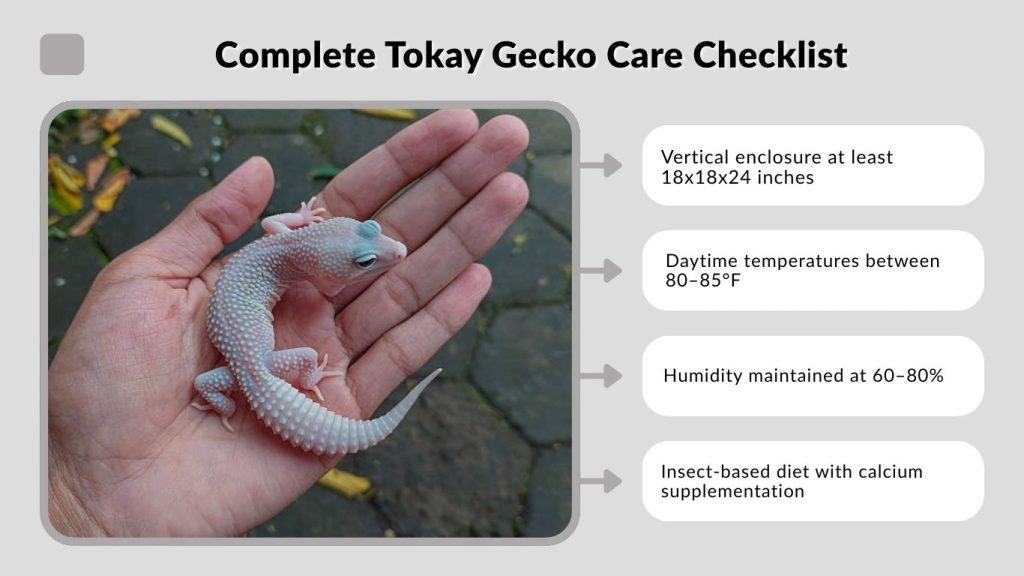
- Vertical enclosure at least 18x18x24 inches
- Daytime temperatures between 80–85°F
- Humidity maintained at 60–80%
- Insect-based diet with calcium supplementation
- Minimal handling to reduce stress
- Secure enclosure to prevent escapes
Providing consistent care, proper environmental conditions, and a varied diet ensures your Tokay gecko remains healthy for many years.
FAQs
Are Tokay geckos aggressive?
Tokay geckos are naturally territorial and defensive, which many people interpret as aggression. They may hiss, lunge, or bite when threatened. While some captive-bred individuals can become calmer over time, they are generally not considered beginner-friendly or ideal for frequent handling.
How strong is a Tokay gecko bite?
A Tokay gecko has a surprisingly strong bite due to its large head and powerful jaws. While not medically dangerous in most cases, the bite can be painful and may cause minor bleeding. They may hold on briefly before releasing.
How long do Tokay geckos live?
With proper Tokay gecko care, they typically live 10 to 15 years in captivity. Stable temperatures, correct humidity, and a balanced insect-based diet are key factors that support a healthy and long life span.
What do Tokay geckos eat in captivity?
Tokay geckos eat live insects such as crickets, dubia roaches, mealworms, and superworms. Adults may occasionally eat pinky mice, though this should be rare. Insects should be gut-loaded and dusted with calcium to ensure proper nutrition.
Can Tokay geckos be handled?
Tokay geckos can be handled, but it is not recommended for beginners. They are display reptiles rather than interactive pets. Slow movements, minimal stress, and proper training techniques may reduce defensive behavior, but many individuals remain cautious throughout their lives.