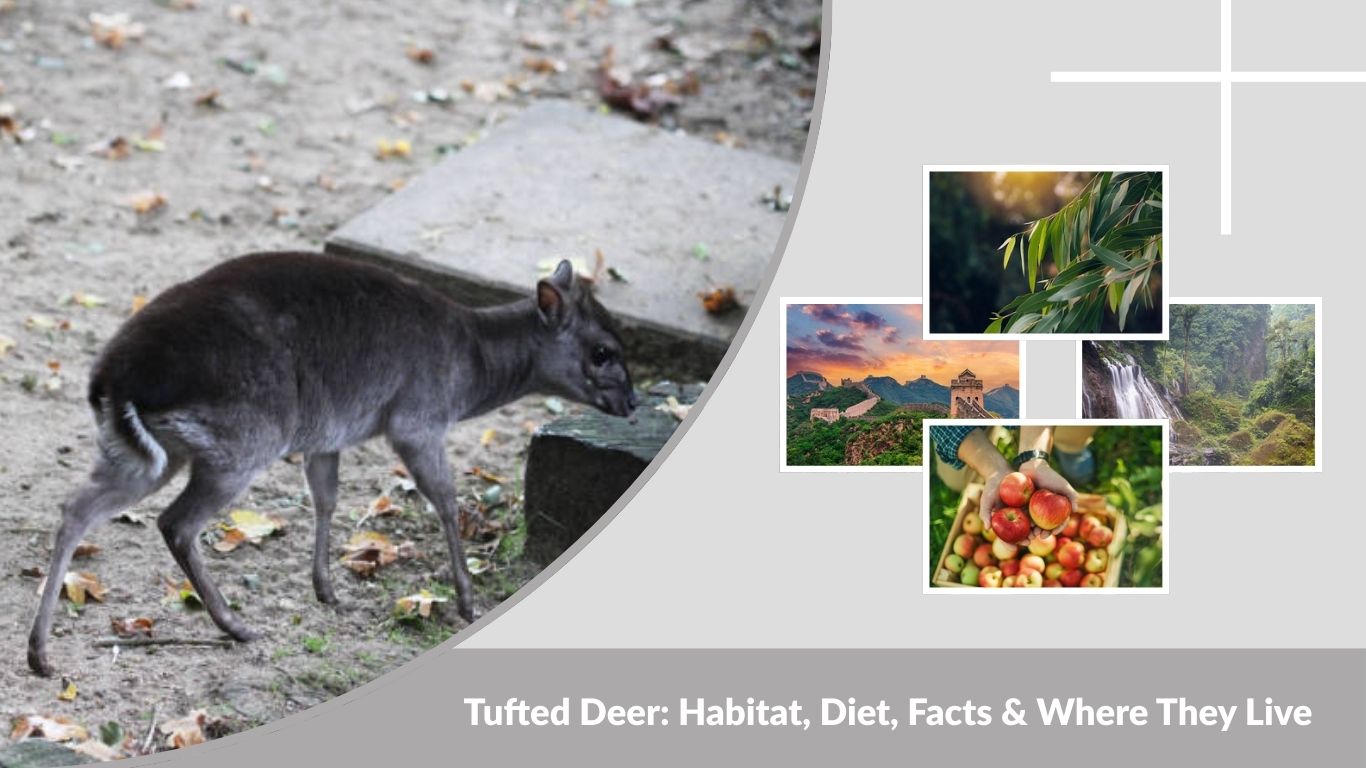
The tufted deer is one of the most unusual and mysterious deer species in the world. Known for the distinctive tuft of black hair on its forehead and its small fang-like teeth, this animal looks quite different from typical deer. Native to the mountainous forests of Asia, the tufted deer lives a quiet and secretive life, making it rarely seen in the wild. In this article, we will explore fascinating tufted deer facts, their natural habitat, diet, and where these unique animals live.
What Is a Tufted Deer?
The tufted deer (Elaphodus cephalophus) is a small species of deer that belongs to the family Cervidae. It is closely related to other deer species but stands out due to its unusual physical features and shy behavior.
Scientific Classification
The scientific name of the tufted deer is Elaphodus cephalophus. It is the only species in the genus Elaphodus. This deer is native to parts of East Asia and is mainly found in forested mountain regions.
Physical Appearance
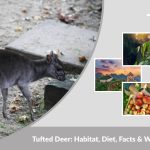
One of the most recognizable features of the tufted deer is the thick tuft of dark hair that grows on its forehead. This tuft often partially hides the deer’s short antlers, which are typically only present in males.
Male tufted deer also have small but noticeable canine teeth that resemble short fangs. These teeth give the animal a slightly unusual appearance compared to other deer species.
The coat of a tufted deer is usually dark brown or chocolate-colored. The underside of the body is often lighter, and the tail is short with a white underside that becomes visible when the deer runs.
Size and Weight
Tufted deer are relatively small compared to many other deer species. Adults typically stand about 50 to 70 centimeters (20 to 28 inches) tall at the shoulder. Their body length usually ranges from 110 to 160 centimeters (43 to 63 inches).
Most tufted deer weigh between 17 and 30 kilograms (37 to 66 pounds). Despite their small size, they are agile and capable of moving quickly through dense forest vegetation.
Tufted Deer Habitat
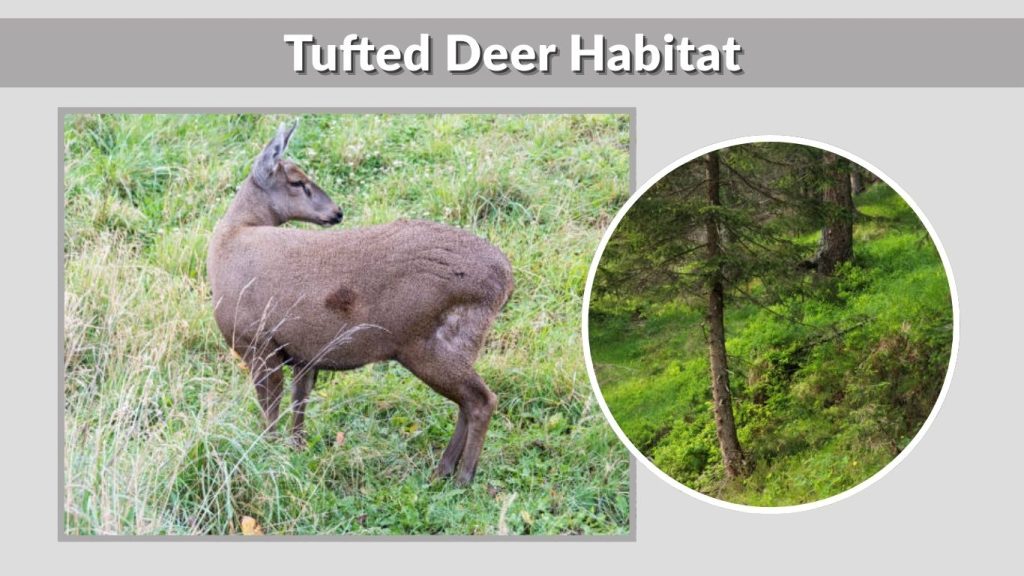
Tufted deer prefer environments that provide dense vegetation and plenty of cover.
Preferred Environment
These animals typically live in mountain forests with thick undergrowth. Such environments allow them to hide easily from predators and move quietly through the forest.
They are commonly found at elevations ranging from 300 to 4,500 meters (1,000 to 14,700 feet) above sea level.
Climate Conditions
Tufted deer thrive in temperate and subtropical climates. These regions usually have cool temperatures, moderate rainfall, and dense forest vegetation.
Moist forest environments also support a wide variety of plants, which provide food for the deer.
Why Forests Suit Them
Dense forests are ideal habitats for tufted deer because they offer both protection and food. The thick vegetation helps them stay hidden from predators while also providing leaves, shrubs, and fruits that form their diet.
Where Do Tufted Deer Live?
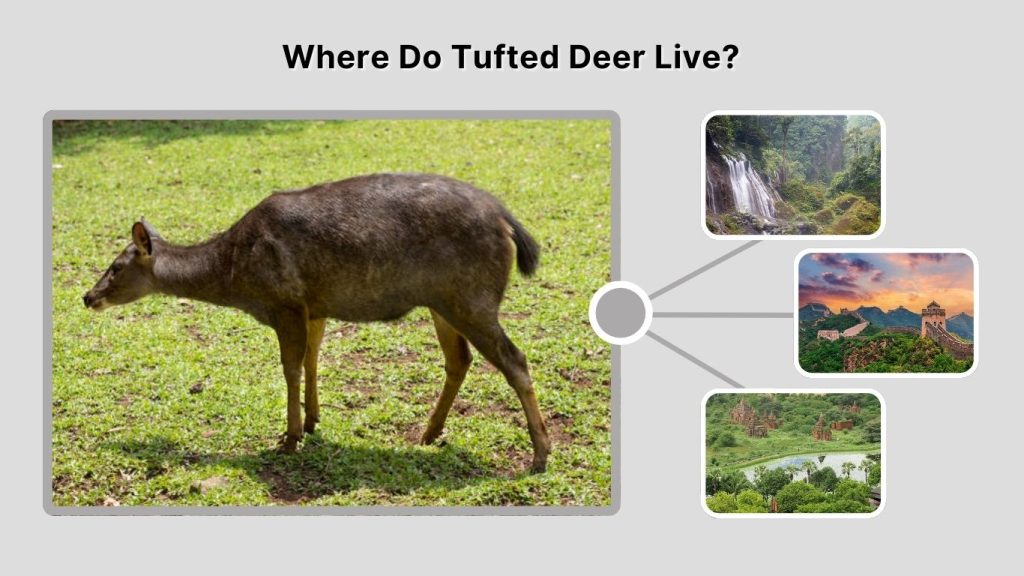
Tufted deer are native to parts of East and Southeast Asia, where they inhabit forested mountain regions. Their distribution is mainly limited to certain areas with suitable climate and vegetation.
Geographic Distribution
Tufted deer primarily live in China and Myanmar. China is home to the largest populations, especially in the central and southern mountainous regions. These areas provide the dense forests and cool climates that the species prefers.
Although their range is somewhat limited, they are still found across several provinces where natural forest habitats remain intact.
Regions With Large Populations
In China, tufted deer are most commonly found in provinces such as Sichuan, Yunnan, Zhejiang, Hubei, and Shaanxi. These regions contain mountainous landscapes with thick forests, making them ideal environments for the species.
The combination of steep terrain and dense vegetation helps protect them from predators and human disturbance.
Population Status
Tufted deer are not considered extremely rare, but they are difficult to observe in the wild because of their secretive behavior. Their conservation status is generally listed as Near Threatened in some assessments due to habitat loss and hunting pressures.
Protecting forest habitats is essential for maintaining stable populations of this species.
What Do Tufted Deer Eat?
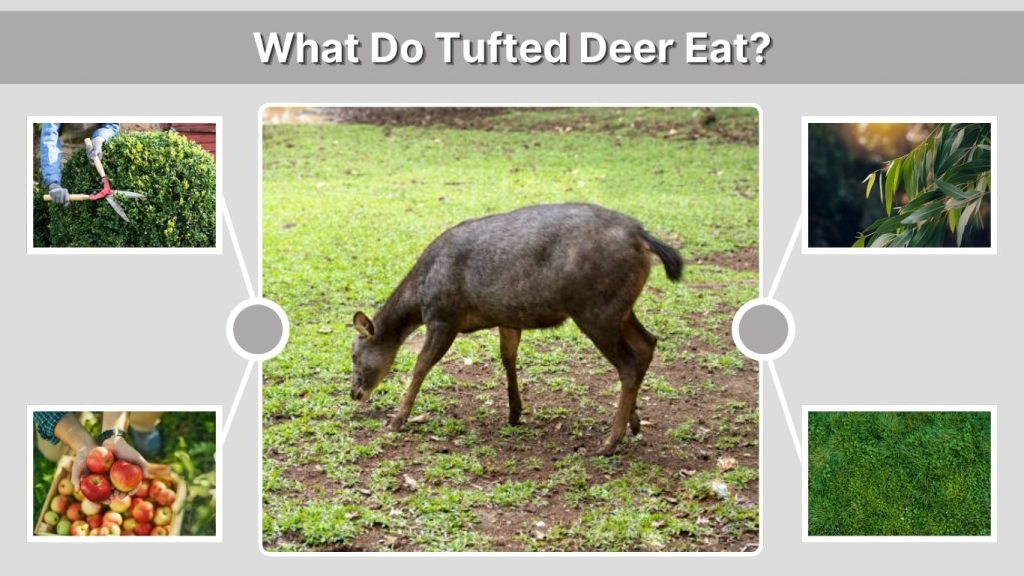
Tufted deer are herbivores, meaning they eat plant-based foods. Their diet mainly consists of leaves, plants, and fruits that grow in forest environments.
Primary Diet
The typical diet of a tufted deer includes:
- Leaves
- Grass
- Shrubs
- Fruits
- Bamboo shoots
- Tender plant stems
These foods are abundant in forest ecosystems, allowing the deer to find nutrition throughout the year.
Seasonal Diet Changes
The availability of food changes with the seasons. During spring and summer, tufted deer often eat fresh leaves, herbs, and soft plant shoots.
In autumn and winter, when fresh vegetation becomes less available, they rely more on fallen fruits, woody plants, and evergreen leaves.
Feeding Behavior
Tufted deer are mainly browsers, which means they feed on leaves and shrubs rather than grazing heavily on grass. They usually forage quietly in dense vegetation.
They tend to feed during the early morning and late evening, when the forest is calmer and there is less risk of encountering predators.
Reproduction and Life Cycle
Like many deer species, tufted deer reproduce once a year.
Breeding Season
The breeding season, also known as the rut, usually occurs in late autumn or early winter. During this time, males compete for access to females.
Male tufted deer may use their small tusk-like canine teeth during fights with rivals.
Gestation Period
After mating, the female carries the pregnancy for about six to seven months.
Offspring
Most female tufted deer give birth to one fawn, although twins can occasionally occur. The young deer are usually born in late spring or early summer when food is plentiful.
Newborn fawns remain hidden in dense vegetation while the mother searches for food nearby.
Conservation Status
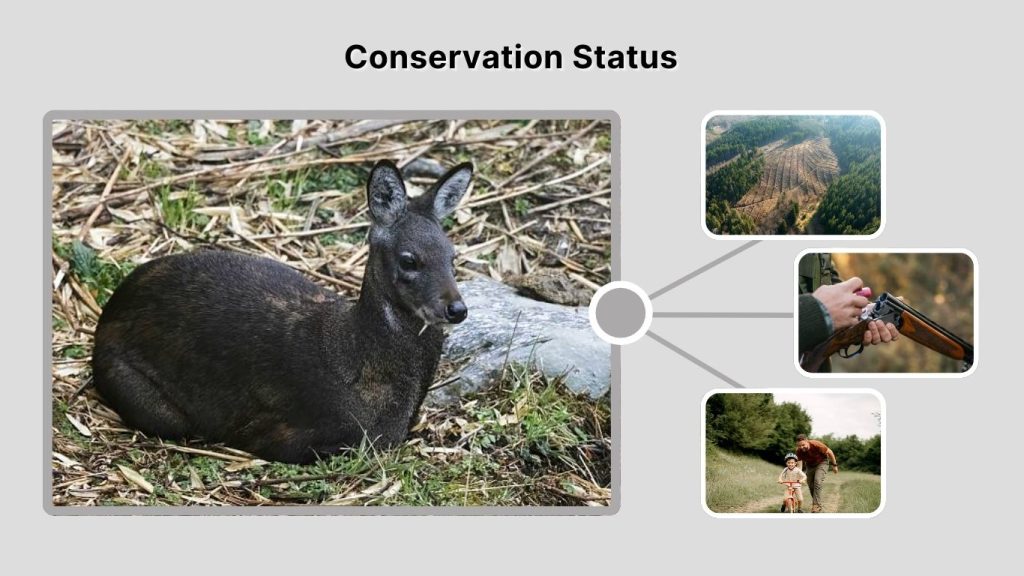
Although tufted deer are still found in several regions, they face challenges that could affect their long-term survival.
IUCN Status
The tufted deer is often classified as Near Threatened due to declining habitat quality in parts of its range.
Major Threats
The biggest threats to tufted deer include:
- Habitat loss from deforestation
- Illegal hunting for meat or traditional medicine
- Human expansion into forest areas
These factors can reduce available habitat and disturb natural populations.
Conservation Efforts
Many countries have established protected forest reserves and wildlife conservation programs to help preserve tufted deer populations.
Maintaining healthy forest ecosystems is the most important step in protecting this unique species.
Tufted Deer Facts
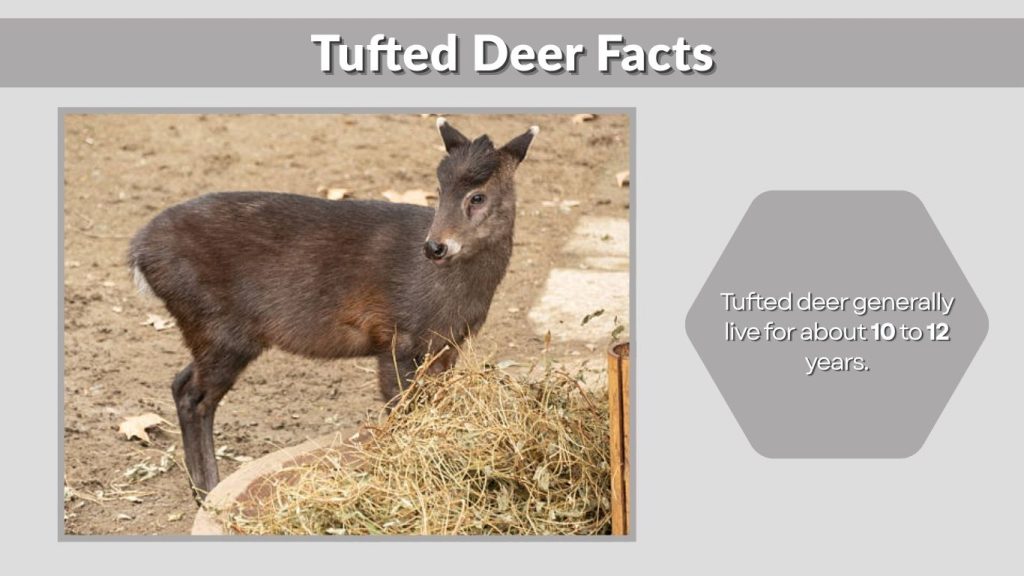
The tufted deer has several interesting characteristics that make it unique among deer species.
Unique Characteristics
One of the most fascinating tufted deer facts is the presence of fang-like canine teeth in males. These teeth can grow several centimeters long and are used during fights with other males, especially during the breeding season.
Another interesting fact is that tufted deer are extremely shy animals. They tend to avoid humans and prefer to stay hidden in thick vegetation. Because of this behavior, scientists have limited information about their daily habits.
Lifespan
In the wild, tufted deer generally live for about 10 to 12 years. When kept in protected environments such as wildlife reserves or zoos, they may live slightly longer due to the absence of predators and better access to food.
Behavior and Lifestyle
Tufted deer are mostly solitary animals. Unlike some deer species that live in large herds, these animals prefer to live alone or in small pairs.
They are most active during dawn and dusk, a behavior known as crepuscular activity. During the daytime, they usually rest in dense vegetation to avoid predators.
Tufted deer are also very territorial. Males often mark their territory using scent glands to warn other males to stay away.
Predators and Threats
In the wild, tufted deer face several natural predators. Large carnivores such as leopards, wild dogs, and large birds of prey may hunt them.
However, one of the biggest threats to tufted deer today is human activity. Habitat destruction, forest clearing, and illegal hunting have reduced their population in some areas.
Interesting Facts About Tufted Deer
Here are a few fascinating facts about tufted deer:
- They are sometimes nicknamed the “vampire deer” because of their fang-like teeth.
- The tuft of hair on their forehead can hide their small antlers.
- Tufted deer are among the most secretive deer species in the world.
- They communicate using scent markings and vocal sounds.
- Despite their shy nature, they are strong climbers and move easily through mountainous terrain.
Conclusion
The tufted deer is a unique and fascinating member of the deer family. With its distinctive forehead tuft, small antlers, and fang-like teeth, it stands out from other deer species. Native to the forested mountains of China and nearby regions, this shy animal thrives in dense habitats where it can hide from predators and find plenty of plant-based food.
Learning about tufted deer facts, their habitat, diet, and geographic range helps highlight the importance of protecting forest ecosystems. Conservation efforts and habitat protection will play a key role in ensuring that this unusual and elusive deer continues to survive in the wild.