
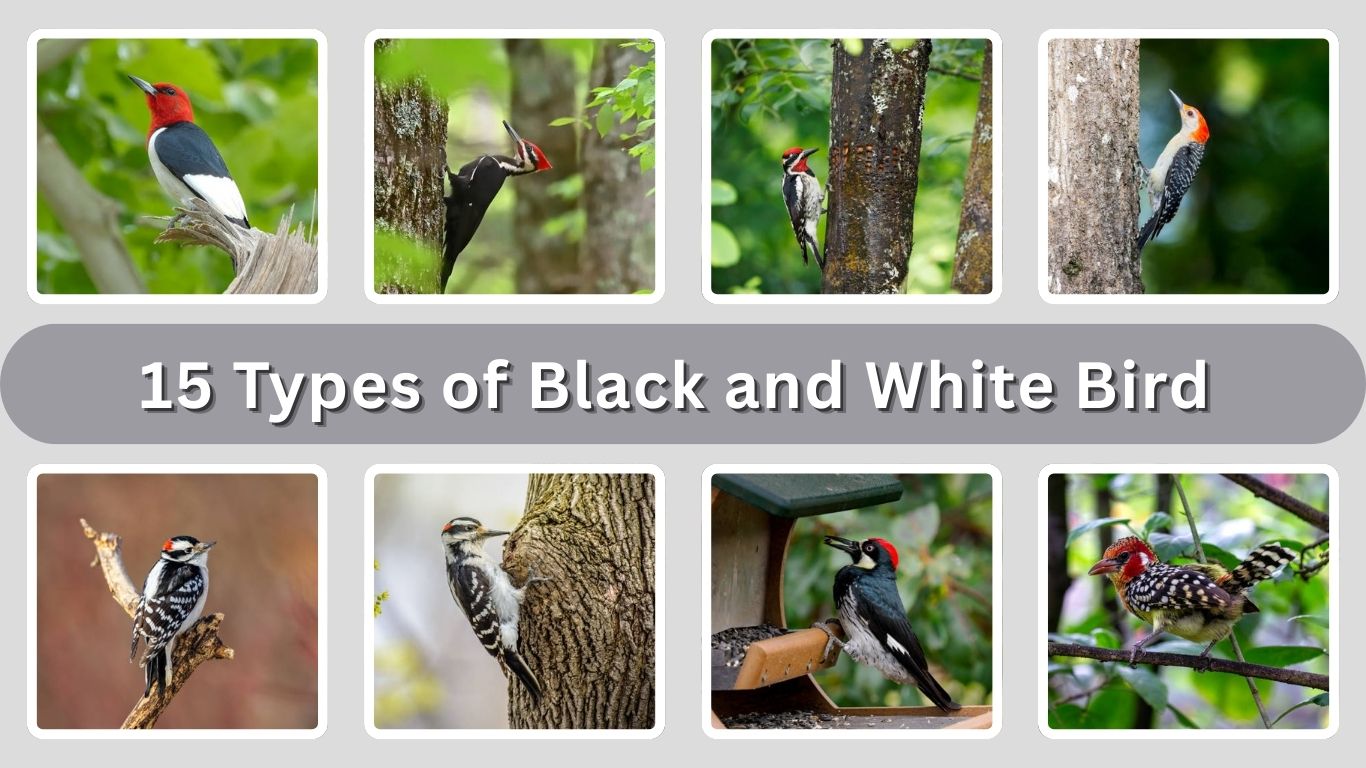
Black and white birds with red heads are some of the most striking and memorable species in the bird world. The bold contrast of dark and light feathers combined with vivid red markings makes these birds easy to recognize and fascinating to observe. Found across many continents, they range from small woodland birds to large wetland and coastal species. Their red head patches often play important roles in communication, mating displays, and territorial behavior.
1. Red-headed Woodpecker
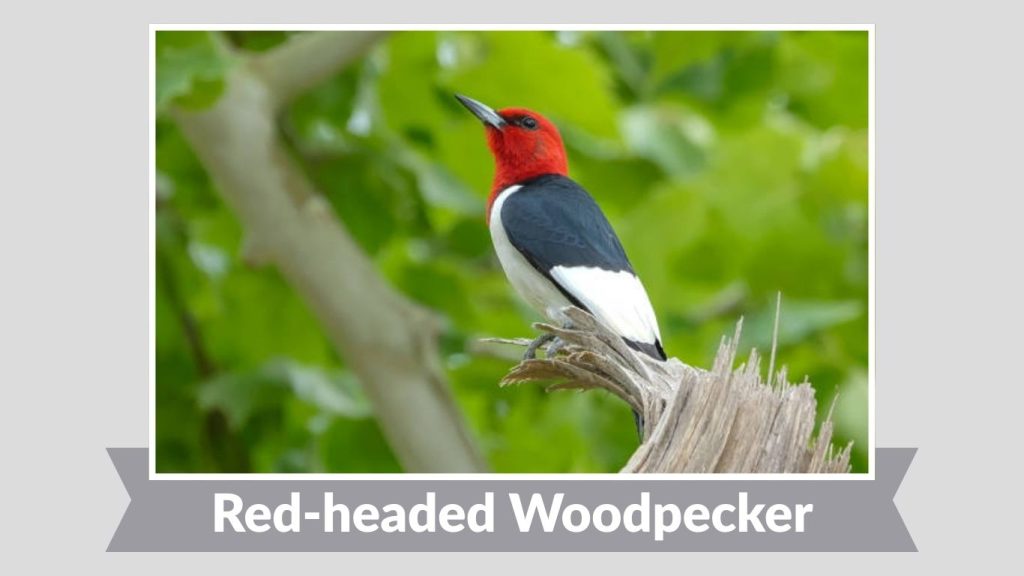
The Red-headed Woodpecker is a striking black-and-white bird instantly recognized by its bold crimson-red head. Its sharp color contrast and confident behavior make it one of the most distinctive woodpeckers in North America.
Identification
- Entire head and neck bright red
- Black back, wings, and tail
- Large white wing patches visible in flight
- White belly and lower back
- Medium-sized body with a straight, chisel-like bill
Habitat
This species prefers open woodlands, forest edges, savannas, orchards, and areas with scattered mature trees. It often selects habitats with dead trees or snags that provide nesting cavities and feeding sites.
Behavior
Red-headed Woodpeckers are active, bold, and highly territorial. They are skilled flyers and frequently catch insects in midair. Unlike many woodpeckers, they often store food in tree crevices and fiercely defend these caches from other birds.
Diet
Their diet includes insects, beetles, ants, grasshoppers, fruits, nuts, seeds, and occasionally bird eggs or small vertebrates. Seasonal changes strongly influence what they eat.
Lifespan
In the wild, Red-headed Woodpeckers typically live around 9 to 12 years, though some individuals may live longer under favorable conditions.
2. Pileated Woodpecker
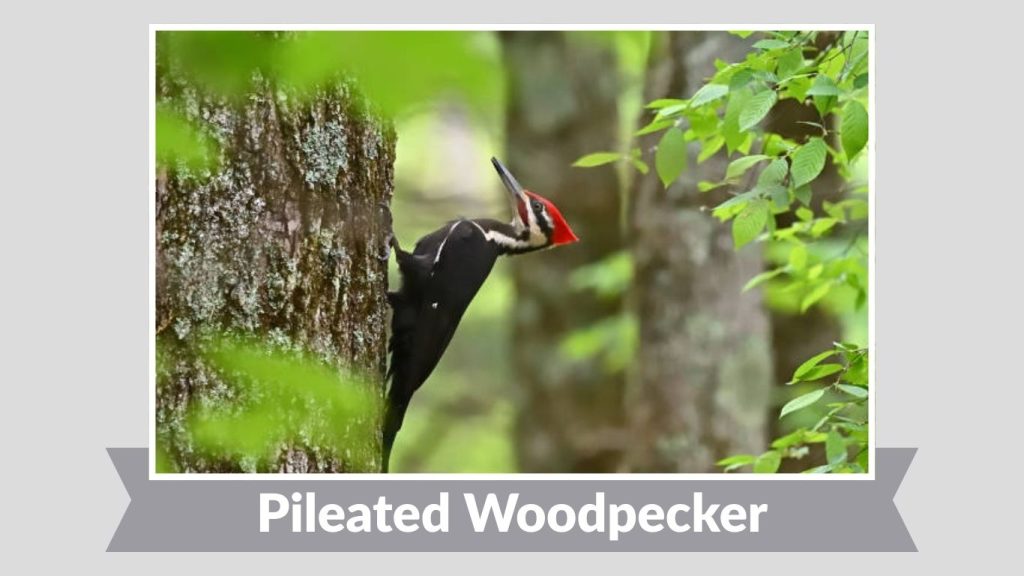
The Pileated Woodpecker is one of the largest and most impressive woodpeckers in North America. Its bold black-and-white body combined with a bright red crest gives it a dramatic and powerful appearance.
Identification
- Large black body with white neck stripes
- Bright red crest on the head
- Long, strong chisel-shaped bill
- White underwings visible in flight
- Crow-sized body
Habitat
This species is primarily found in mature forests, especially those with large trees and plenty of dead wood. It favors deciduous and mixed forests where it can excavate deep cavities for nesting and feeding.
Behavior
Pileated Woodpeckers are strong, noisy, and highly active. They use powerful blows to dig large rectangular holes in trees while searching for insects. Their loud calls and drumming can be heard from far away, and pairs often maintain long-term territories.
Diet
Their diet mainly consists of carpenter ants and wood-boring beetle larvae. They also eat fruits, nuts, and berries, particularly during colder months.
Lifespan
In the wild, Pileated Woodpeckers typically live between 7 and 11 years, depending on habitat quality and survival conditions.
3. Red-naped Sapsucker
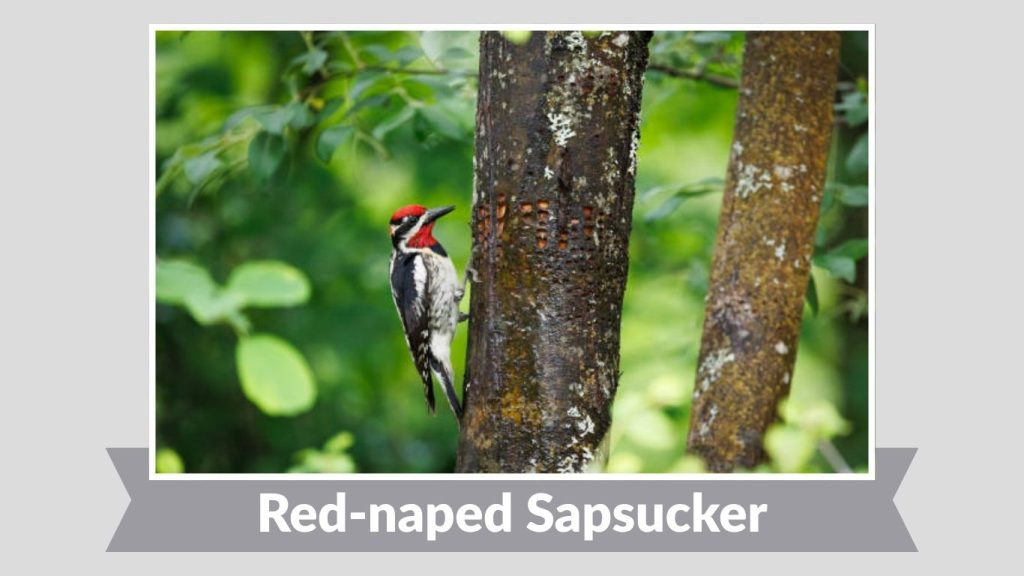
The Red-naped Sapsucker is a medium-sized woodpecker known for its bold black-and-white pattern and the bright red patch on the back of its head. It gets its name from its habit of drilling sap wells in trees to feed.
Identification
- Black-and-white striped face
- Red patch on the nape (back of the head)
- Black back with white barring
- White belly with dark markings
- Medium-sized body with a straight bill
Habitat
This species inhabits mixed and deciduous forests, especially areas with aspen, birch, and willow trees. During migration and winter, it may also be found in orchards, parks, and open woodlands.
Behavior
Red-naped Sapsuckers drill neat rows of holes in tree bark to access sap, which also attracts insects they later eat. They are generally solitary and territorial, especially during the breeding season. Their drumming is slower and more irregular than many other woodpeckers.
Diet
Their diet includes tree sap, insects trapped in sap wells, ants, beetles, and occasionally fruits and berries. Sap makes up a significant portion of their feeding routine.
Lifespan
In the wild, Red-naped Sapsuckers typically live around 5 to 7 years, depending on environmental conditions and predation.
4. Red-bellied Woodpecker

The Red-bellied Woodpecker is a common black-and-white woodpecker with subtle red coloring on the head and nape. Despite its name, the red on its belly is faint and often hard to see, while the red head markings are much more noticeable.
Identification
- Black-and-white barred back and wings
- Red cap and nape (males), red nape only (females)
- Pale gray to buff underparts
- Medium-sized body with a straight, pointed bill
Habitat
This species thrives in deciduous forests, mixed woodlands, forest edges, swamps, and suburban areas with mature trees. It adapts well to human-altered landscapes, including parks and backyards.
Behavior
Red-bellied Woodpeckers are active and vocal birds. They frequently climb tree trunks and branches while foraging and are known for their rolling “churr” calls. They readily visit bird feeders and are skilled at storing food in bark crevices.
Diet
Their diet includes insects, spiders, fruits, berries, nuts, seeds, and occasionally small vertebrates or eggs. They are versatile feeders and change food sources seasonally.
Lifespan
In the wild, Red-bellied Woodpeckers typically live around 9 to 12 years, depending on habitat quality and survival conditions.
5. Downy Woodpecker
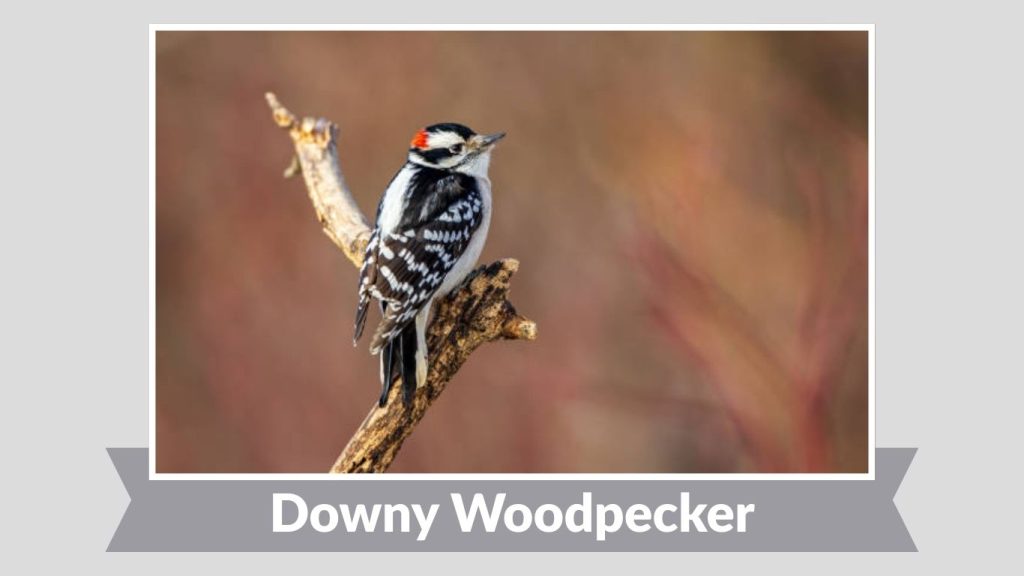
The Downy Woodpecker is the smallest woodpecker in North America, easily recognized by its crisp black-and-white pattern and the small red patch on the back of the male’s head. Despite its tiny size, it is energetic and bold.
Identification
- Black-and-white checkered wings
- White back and underparts
- Small red patch on the nape (males only)
- Short, straight bill
- Compact body size
Habitat
This species is highly adaptable and can be found in deciduous forests, woodlands, orchards, parks, and suburban backyards. It prefers areas with trees and shrubs that provide food and nesting sites.
Behavior
Downy Woodpeckers are active and agile, often seen climbing tree trunks, branches, and even thin plant stems. They are frequent visitors to bird feeders and are generally tolerant of human presence.
Diet
Their diet consists mainly of insects such as beetles, ants, and caterpillars. They also eat seeds, berries, and suet, especially during winter.
Lifespan
In the wild, Downy Woodpeckers typically live around 6 to 10 years, though many face challenges from predators and harsh weather.
6. Hairy Woodpecker
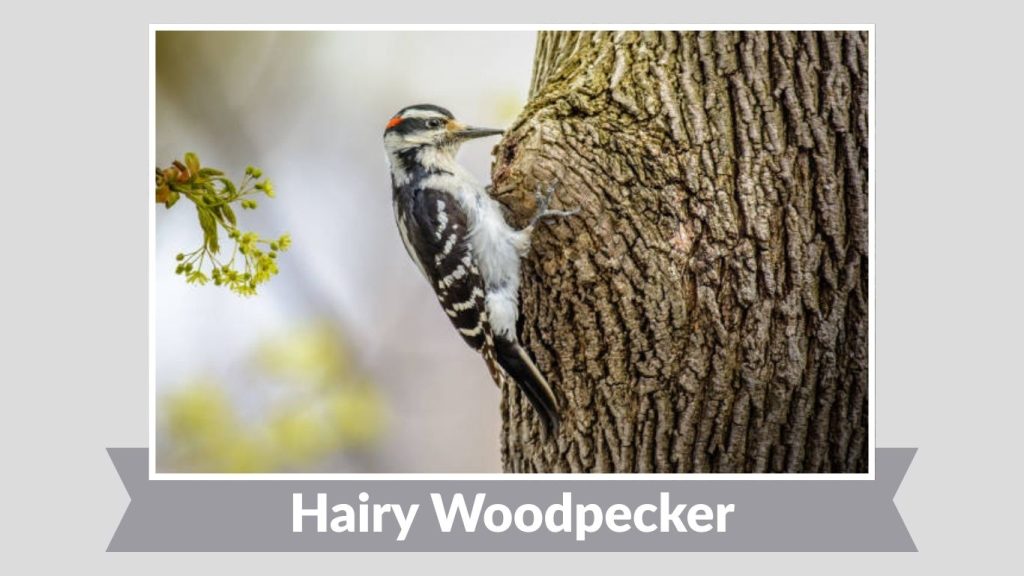
The Hairy Woodpecker closely resembles the Downy Woodpecker but is noticeably larger and more robust. Its black-and-white body pattern and small red patch on the head make it a classic example of a black-and-white bird with red head markings.
Identification
- Black-and-white patterned back and wings
- White underparts
- Small red patch on the back of the head (males)
- Long, strong chisel-shaped bill
- Larger body than Downy Woodpecker
Habitat
This species prefers mature forests, woodlands, and forest edges but can also be found in parks and suburban areas with large trees. It often selects habitats with dead wood for nesting and feeding.
Behavior
Hairy Woodpeckers are less tolerant of close human activity than Downy Woodpeckers. They use strong pecking to excavate wood in search of insects and are often seen foraging alone or in pairs.
Diet
Their diet mainly consists of insects such as beetle larvae, ants, and caterpillars. They also consume seeds, nuts, and berries, especially in colder months.
Lifespan
In the wild, Hairy Woodpeckers typically live around 8 to 15 years, depending on habitat quality and environmental pressures.
7. Acorn Woodpecker
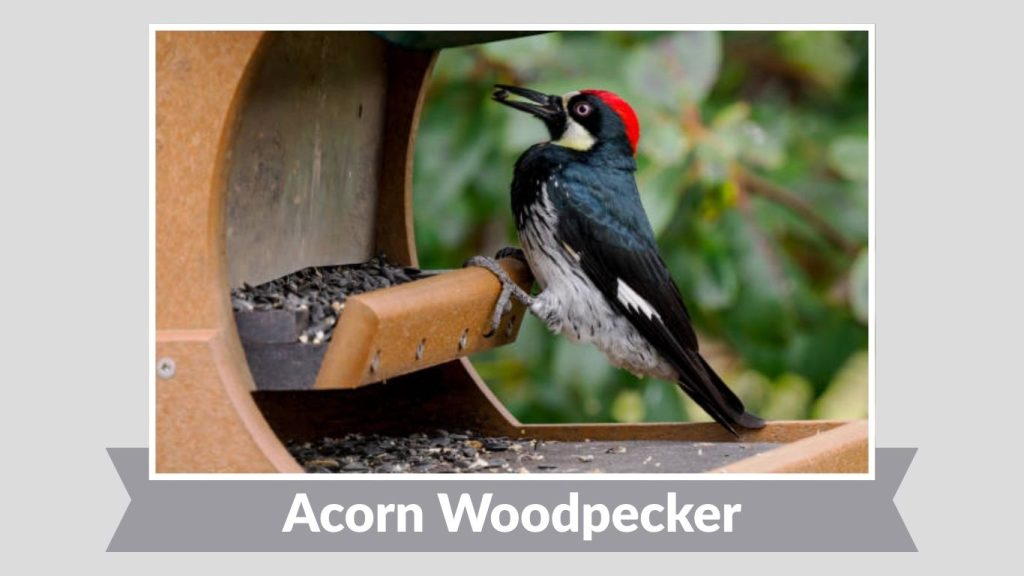
The Acorn Woodpecker is a striking black-and-white bird with a bright red crown that stands out against its bold facial pattern. It is especially famous for its unique habit of storing thousands of acorns in tree trunks.
Identification
- Bright red crown on the head
- Black face with white forehead and eye markings
- Black back and wings with white patches
- White underparts
- Medium-sized body
Habitat
This species is commonly found in oak woodlands, mixed forests, and forest edges where oak trees are abundant. It depends heavily on oaks for both food and nesting.
Behavior
Acorn Woodpeckers are highly social and live in cooperative family groups. They create large “granaries” by drilling holes in trees or wooden structures to store acorns, which are used as a year-round food source.
Diet
Their diet includes acorns, insects, fruits, nuts, seeds, and tree sap. Acorns play a central role, especially during winter.
Lifespan
In the wild, Acorn Woodpeckers typically live around 8 to 12 years, though individuals in stable groups may live longer.
8. Red-headed Barbet
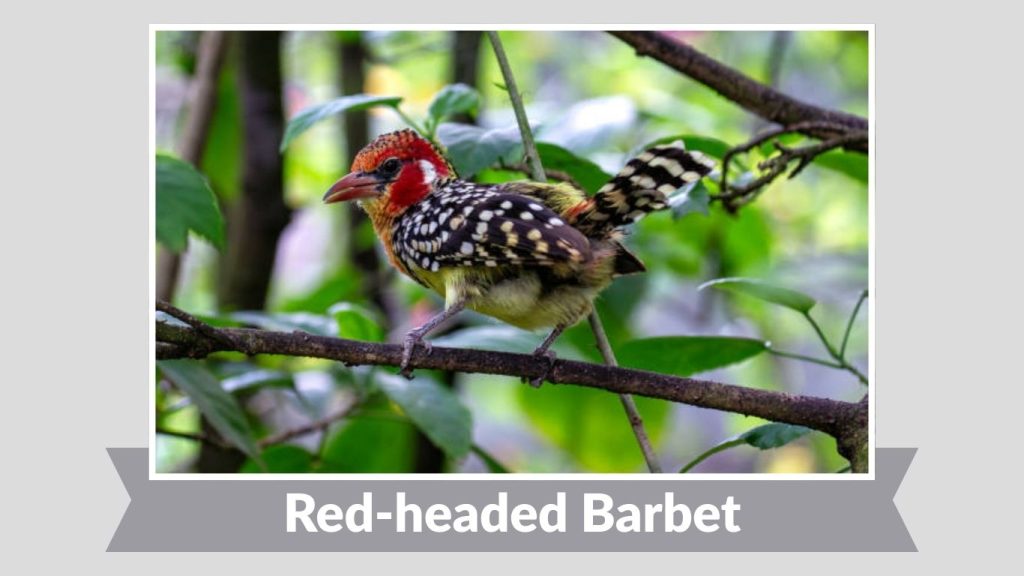
The Red-headed Barbet is a small to medium-sized bird known for its bold black-and-white body pattern combined with a vivid red head. Its chunky shape and loud, repetitive calls make it easy to notice in wooded habitats.
Identification
- Bright red head and face
- Black-and-white spotted wings and back
- Yellowish throat and breast
- Thick, heavy bill
- Compact, stocky body
Habitat
This species is commonly found in tropical forests, open woodlands, gardens, orchards, and plantations. It prefers areas with fruiting trees and is often seen in both natural and human-modified landscapes.
Behavior
Red-headed Barbets are usually seen alone or in pairs. They are vocal birds, frequently giving loud, rhythmic calls. They perch quietly for long periods and then move suddenly to feed. Nesting typically occurs in tree cavities.
Diet
Their diet mainly consists of fruits, berries, figs, and insects. Fruits make up a large portion of their diet, while insects provide additional nutrition, especially during breeding.
Lifespan
In the wild, Red-headed Barbets generally live around 7 to 12 years, depending on habitat conditions and food availability.
9. Red-crowned Crane
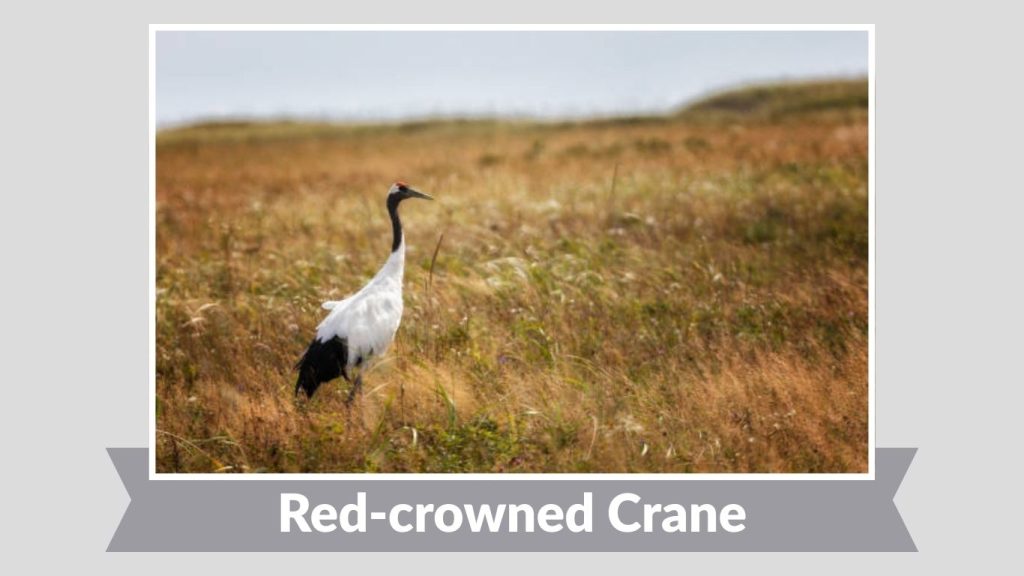
The Red-crowned Crane is a large, elegant bird known for its striking black-and-white plumage and the vivid red patch on the top of its head. It is one of the tallest flying birds in the world and is often associated with longevity and good fortune in many cultures.
Identification
- White body with black neck, face, and wing feathers
- Bright red bare skin patch on the crown
- Long legs and long neck
- Large wingspan
- Slender, pointed bill
Habitat
This species inhabits wetlands, marshes, riverbanks, wet grasslands, and coastal plains. During different seasons, it may also use agricultural fields and shallow water areas for feeding.
Behavior
Red-crowned Cranes are known for their graceful movements and elaborate courtship dances, which include jumping, bowing, and wing spreading. They are generally seen in pairs or small family groups and are highly territorial during the breeding season.
Diet
Their diet includes aquatic plants, grains, insects, fish, amphibians, and small mammals. They forage by walking slowly through shallow water and grasslands.
Lifespan
Red-crowned Cranes are long-lived birds and can live 30 to 40 years in the wild, with some individuals surviving even longer under favorable conditions.
10. Red-faced Cormorant
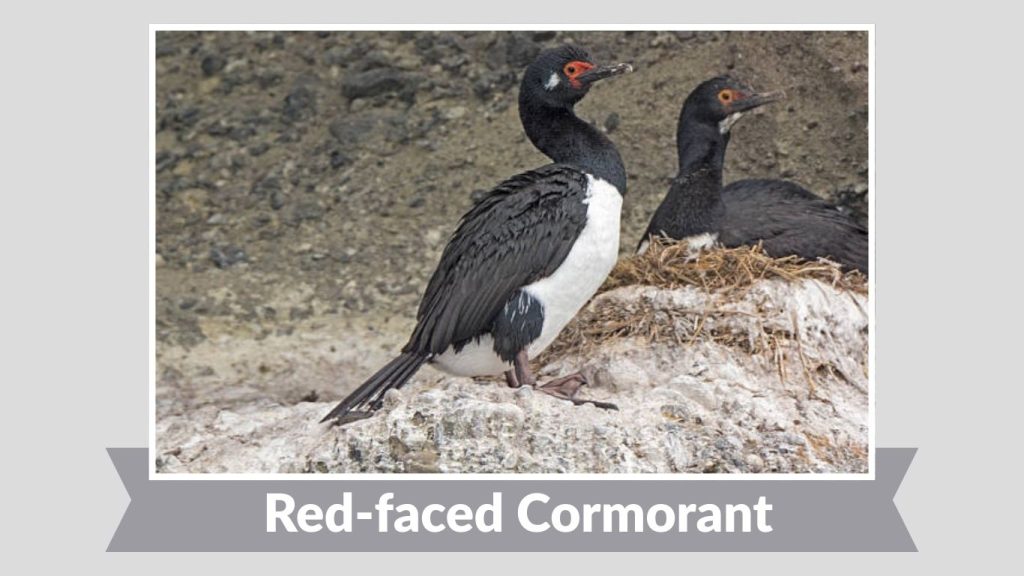
The Red-faced Cormorant is a sleek seabird recognized for its glossy black body, white flank patches, and the vivid red facial skin around its eyes and bill. It is a strong swimmer and an expert diver.
Identification
- Glossy black plumage
- Bright red facial skin around the eyes and base of the bill
- Small white flank patches
- Long neck and slender, hooked bill
- Medium to large body size
Habitat
This species inhabits rocky coastlines, sea cliffs, offshore islands, and cold marine waters. It nests on steep cliffs and ledges close to the ocean and rarely ventures far inland.
Behavior
Red-faced Cormorants are powerful divers, using their feet to propel themselves underwater while hunting. After diving, they are often seen perched with wings spread to dry. They usually forage alone or in small groups.
Diet
Their diet mainly consists of fish, along with crustaceans and other marine invertebrates captured during deep dives.
Lifespan
In the wild, Red-faced Cormorants typically live around 10 to 15 years, depending on environmental conditions and food availability.
11. Red-headed Vulture
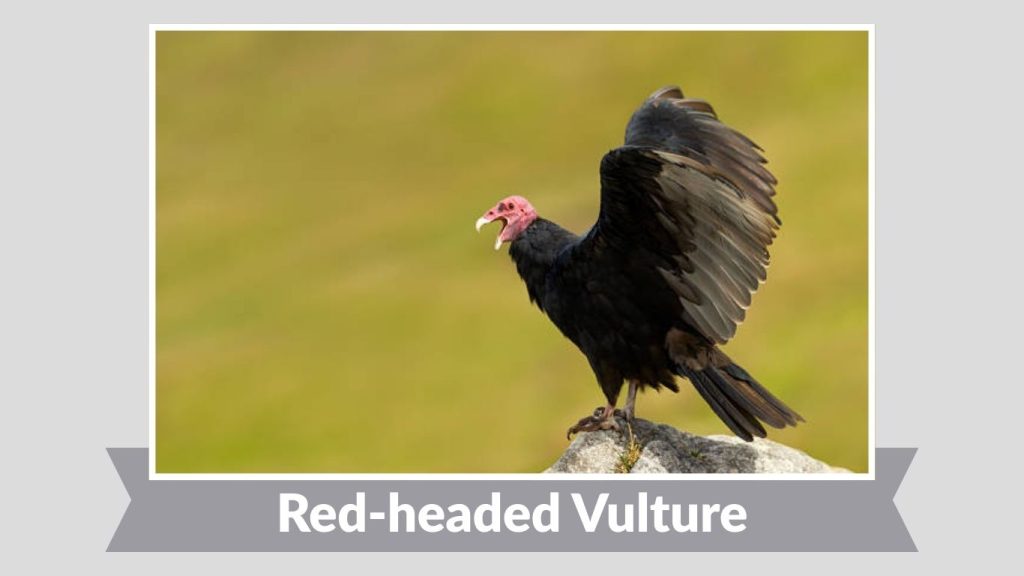
The Red-headed Vulture is a large scavenging bird recognized for its stark black-and-white body and its bare, bright red head. This striking appearance, combined with its important ecological role, makes it one of the most distinctive vultures.
Identification
- Bare red head and neck
- Black body with contrasting white wing panels
- Broad wings adapted for soaring
- Strong, hooked bill
- Large, heavy-bodied appearance
Habitat
This species inhabits open landscapes such as grasslands, savannas, scrublands, and lightly wooded areas. It is often found near carcasses in rural countryside and open plains.
Behavior
Red-headed Vultures are usually solitary or seen in pairs. They soar high on thermal currents while searching for food and tend to dominate other scavengers at carcasses due to their aggressive feeding behavior.
Diet
Their diet consists almost entirely of carrion. They rely on keen eyesight to locate dead animals rather than following other scavengers.
Lifespan
In the wild, Red-headed Vultures typically live around 15 to 20 years, though lifespan varies with food availability and environmental conditions.
12. Red-capped Cardinal
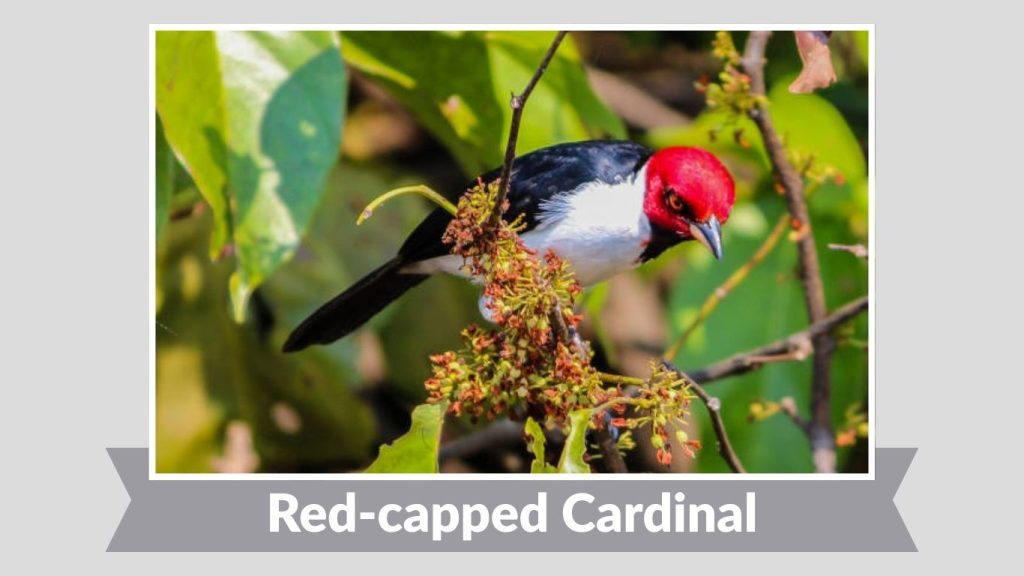
The Red-capped Cardinal is a small, eye-catching bird known for its bright red head contrasted with a mostly black, white, and gray body. Despite its name, it is not a true cardinal but belongs to a different bird family.
Identification
- Bright red cap and face
- Black facial mask around the eyes
- Gray upperparts
- White underparts
- Thick, conical bill
Habitat
This species is commonly found in open woodlands, savannas, grasslands, gardens, and agricultural areas. It adapts well to human-modified environments and is often seen near farms and villages.
Behavior
Red-capped Cardinals are social and active birds. They are usually seen in pairs or small groups and spend much of their time foraging on the ground. Their calls are sharp and repetitive, making them easy to detect.
Diet
Their diet mainly consists of seeds and grains, along with fruits, berries, and small insects, especially during the breeding season.
Lifespan
In the wild, Red-capped Cardinals typically live around 6 to 10 years, depending on environmental conditions and predation.
13. Red-crested Turaco
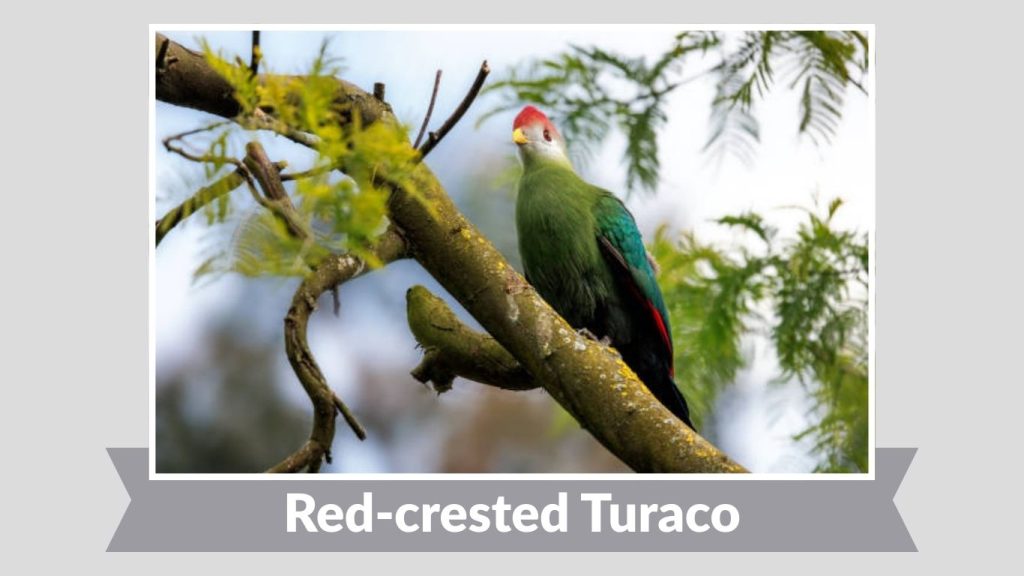
The Red-crested Turaco is a large, distinctive bird known for its bold black-and-white patterning combined with a vivid red crest. Its unique pigments and elegant movements make it one of Africa’s most recognizable forest birds.
Identification
- Bright red crest on the head
- Dark blackish upperparts with white markings
- Long tail and broad wings
- Thick yellow bill
- Medium to large body size
Habitat
This species inhabits forests, woodland edges, riverine forests, and dense vegetation. It prefers areas with tall trees and abundant fruiting plants that provide both food and cover.
Behavior
Red-crested Turacos are agile climbers and strong gliders. They move through trees by hopping and short flights rather than long-distance flying. They are usually shy but vocal, often giving loud calls to communicate with others.
Diet
Their diet consists mainly of fruits, berries, and figs. They may also eat flowers and occasionally insects, especially during the breeding season.
Lifespan
In the wild, Red-crested Turacos generally live around 10 to 15 years, depending on habitat quality and food availability.
14. Magpie Robin
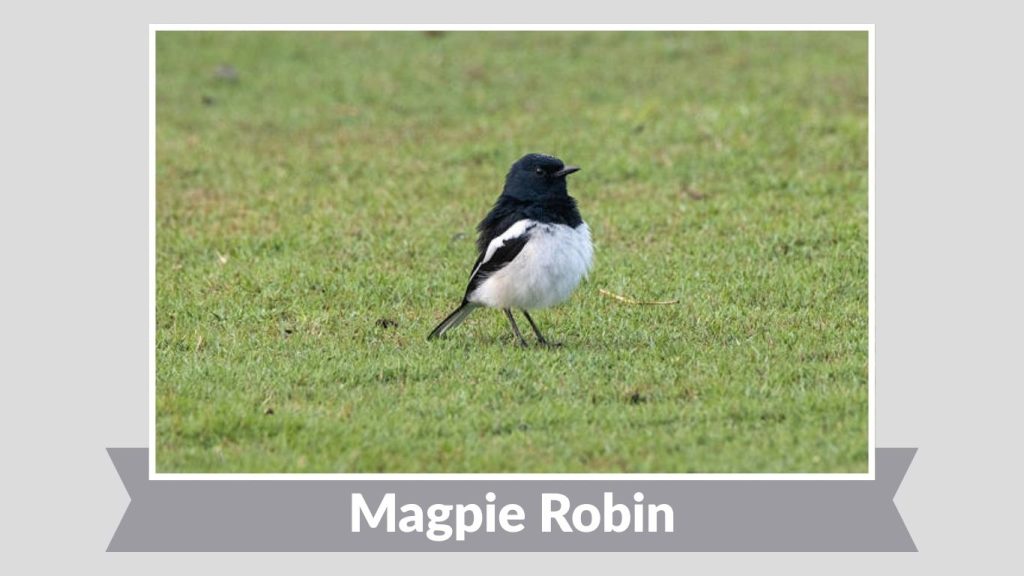
The Magpie Robin is a striking black-and-white songbird with a small red patch on the head in some subspecies and during certain displays. It is well known for its beautiful, melodious singing and bold posture.
Identification
- Black head, back, and upperparts
- White belly, wing patches, and shoulder areas
- Small red patch on the crown (in some populations or breeding displays)
- Slender body with a long tail
- Thin, pointed bill
Habitat
Magpie Robins are commonly found in open woodlands, gardens, parks, forest edges, and urban areas. They adapt well to human environments and are often seen near houses and cultivated land.
Behavior
This species is highly territorial and confident. Males sing loudly from exposed perches, especially at dawn and dusk. They often flick their tails and stand upright while scanning the ground for prey.
Diet
Their diet mainly consists of insects, worms, spiders, and other small invertebrates. They occasionally eat small fruits or berries.
Lifespan
In the wild, Magpie Robins typically live around 8 to 13 years, depending on habitat quality and environmental conditions.
15. Pied Kingfisher
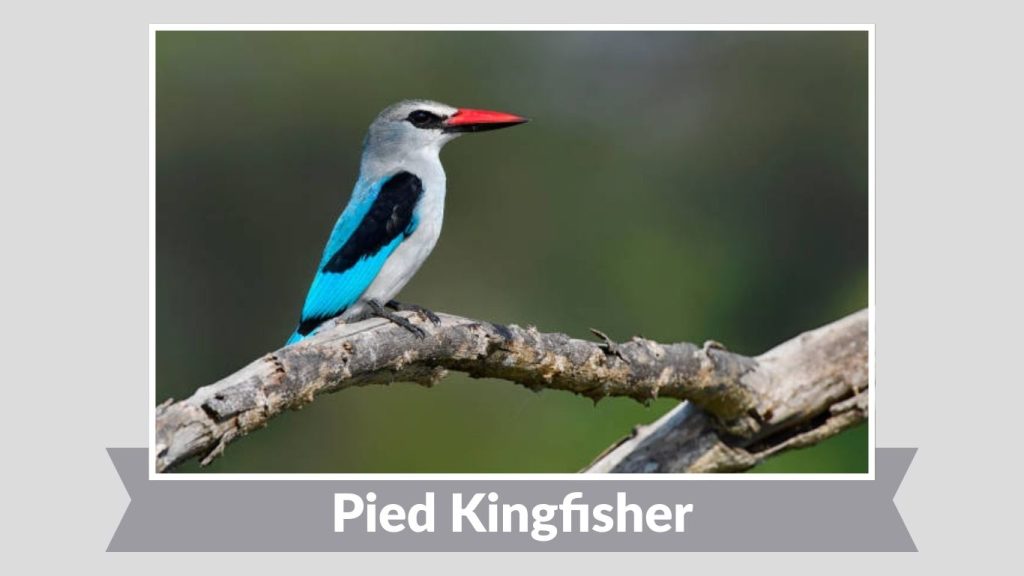
The Pied Kingfisher is a striking black-and-white bird with a bold red bill and dark head markings that give it a distinctive appearance. It is well known for its remarkable hunting style, often hovering above water before diving for prey.
Identification
- Black-and-white plumage with spotted wings
- Black crown and facial markings
- Long, sharp red bill
- Short legs and compact body
- Medium-sized kingfisher
Habitat
Pied Kingfishers are commonly found near rivers, lakes, wetlands, estuaries, and coastal lagoons. They prefer clear water bodies where fish are easily visible and often perch on branches or poles near water.
Behavior
This species is famous for its ability to hover in midair before plunging headfirst into the water to catch fish. Pied Kingfishers are highly active and alert, often seen alone or in pairs, though they may gather in small groups near good feeding sites.
Diet
Their diet consists mainly of fish. They also eat aquatic insects, crustaceans, and occasionally small amphibians.
Lifespan
In the wild, Pied Kingfishers typically live around 6 to 10 years, depending on food availability, habitat quality, and environmental conditions.
FAQs
Are black-and-white birds with red heads closely related?
No. These birds belong to different families such as woodpeckers, cranes, vultures, and kingfishers. Their similar coloring evolved independently and does not mean they are closely related.
Why do some black-and-white birds have red on their heads?
Red head markings are often used for communication, mate attraction, and territorial displays. Bright colors can signal health, maturity, or dominance.
Do female birds also have red head markings?
In many species, males have brighter or larger red patches than females. In some birds, females have reduced red markings or none at all.
Where are black-and-white birds with red heads found?
They are found across North America, South America, Africa, Asia, and parts of Europe, depending on the species and habitat requirements.
Are any of these birds endangered?
Yes. Some species, such as the Red-crowned Crane and Red-headed Vulture, are threatened due to habitat loss, pollution, and human activity, while others remain common.