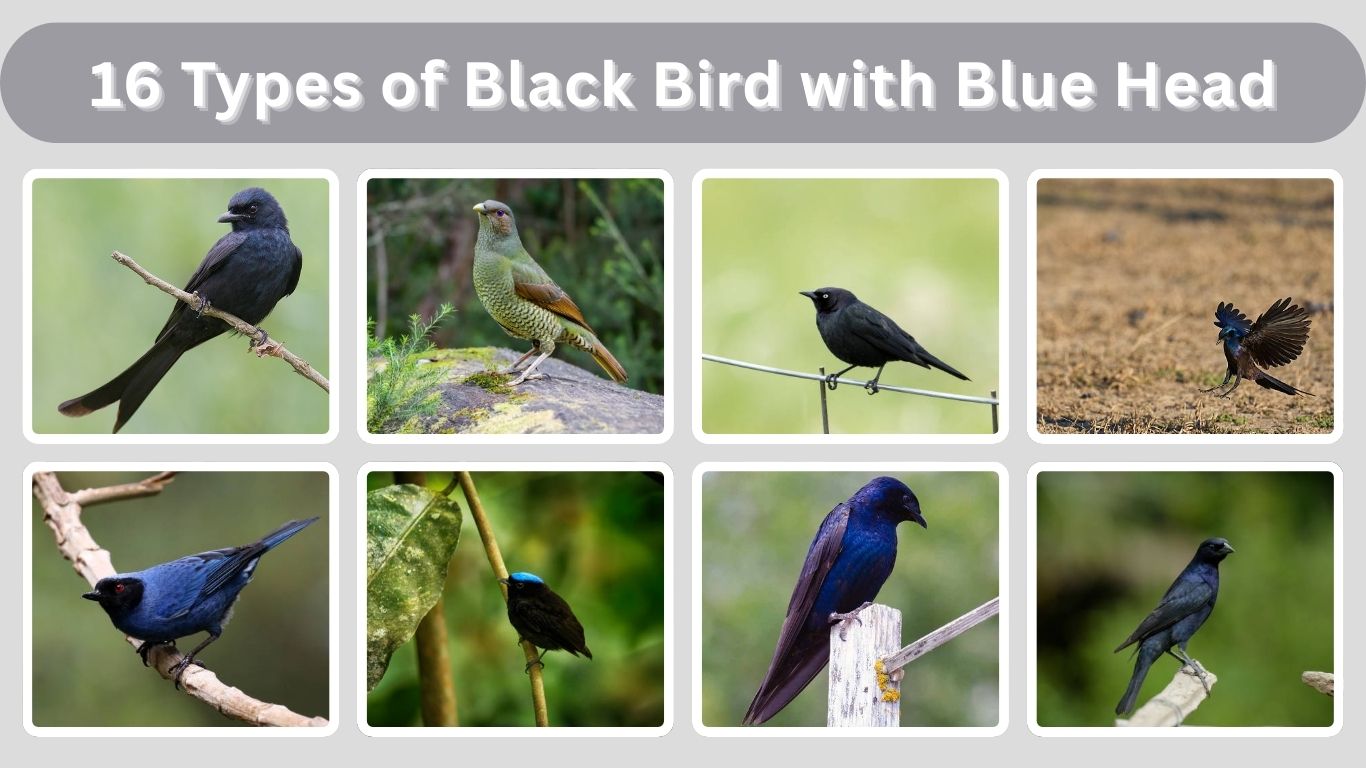
Black birds with blue heads are visually striking, often appearing black in shade but flashing brilliant blue when sunlight hits their feathers. This unique coloration is usually created by iridescent feather structures rather than pigment. Found across many regions of the world, these birds occupy diverse habitats ranging from tropical forests to open grasslands and urban areas. Despite similar appearances, each species differs in behavior, diet, and ecological role, making them fascinating subjects for bird enthusiasts.
1. Black Drongo

The Black Drongo is a sleek, glossy bird known for its deep black body and a subtle blue sheen on the head and upperparts when seen in good light. It is widely admired for its fearless nature and bold behavior despite its relatively small size.
Identification
- Jet-black body with blue-green gloss on head and wings
- Slightly hooked black beak
- Long, deeply forked tail
- Bright red eyes in adults
- Medium-sized, slim, agile body
Habitat
Black Drongos are highly adaptable and occur in open woodlands, grasslands, farmlands, forest edges, and urban areas. They are especially common near agricultural fields where insects are abundant. The species prefers open spaces with scattered trees or wires for perching and hunting.
Behaviors
This bird is famously aggressive and fearless, often chasing away much larger birds such as hawks and crows. Black Drongos are excellent aerial hunters, frequently seen sallying out from perches to catch insects mid-air. They are also known for loud, sharp calls and, in some regions, the ability to mimic other bird species.
Diet and Lifespan
The Black Drongo feeds mainly on flying insects such as beetles, grasshoppers, moths, and flies. Occasionally, it may eat small reptiles or nectar. By controlling insect populations, it plays an important ecological role. The average lifespan of a Black Drongo ranges from 6 to 10 years in the wild, depending on habitat and environmental conditions.
2. Satin Bowerbird
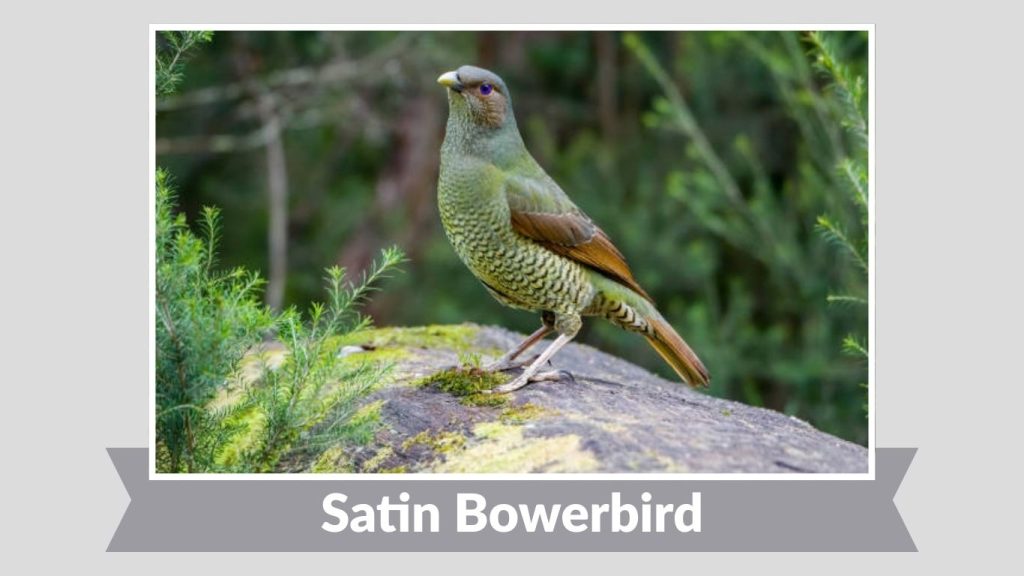
The Satin Bowerbird is well known for the male’s striking black body and deep blue to violet-blue head sheen, which becomes especially vivid in sunlight. Native to Australia, this bird is famous for its unique courtship behavior rather than its bold coloring alone.
Identification
- Adult male has glossy black plumage with blue-purple sheen on head
- Bright violet-blue eyes in males
- Pale gray to yellowish beak
- Females are greenish-brown with scalloped markings
- Medium-sized bird with strong legs
Habitat
Satin Bowerbirds inhabit forests, woodlands, rainforest edges, and nearby suburban gardens in eastern Australia. They prefer areas with dense vegetation for shelter, combined with open spaces where food is easily available.
Behaviors
Males build elaborate stick bowers on the forest floor and decorate them with blue objects to attract females. These bowers are not used for nesting but solely for mating displays. Satin Bowerbirds are generally shy and cautious, spending much of their time in trees when not courting.
Diet and Lifespan
Their diet consists mainly of fruits, berries, leaves, flowers, and insects. They sometimes feed on cultivated fruits in gardens. The average lifespan of a Satin Bowerbird is around 8–12 years in the wild, with some individuals living longer under favorable conditions.
3. Brewer’s Blackbird
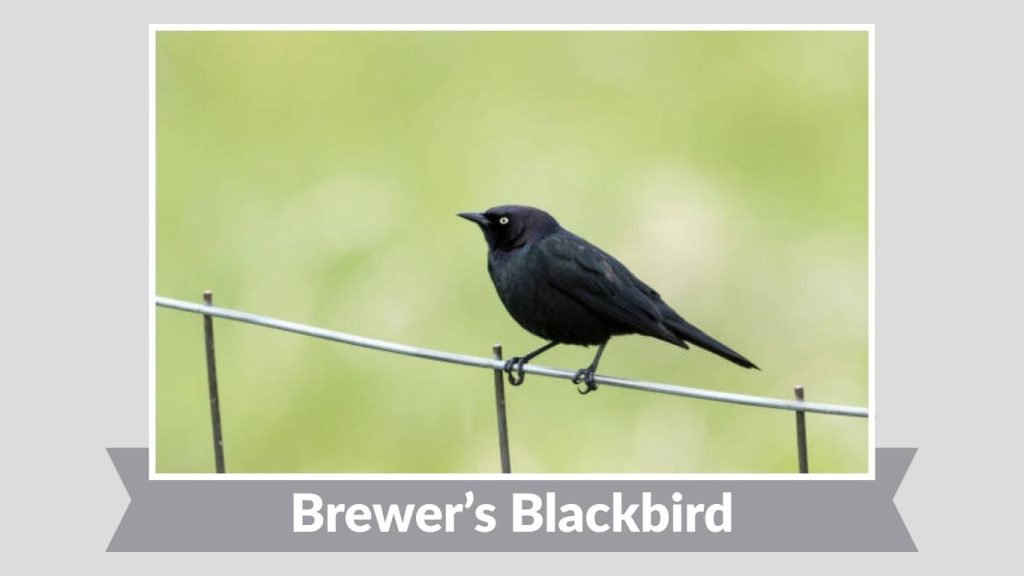
Brewer’s Blackbird is a common North American bird known for its glossy black body and metallic blue-purple head, especially striking in adult males. It is often seen in open areas and urban environments.
Identification
- Adult male has glossy black plumage
- Strong blue to purple sheen on head and neck
- Pale yellow eyes
- Long legs and straight, pointed bill
- Females are dark brown with duller coloration
Habitat
Brewer’s Blackbirds are highly adaptable and inhabit grasslands, farmland, wetlands, parks, parking lots, and city areas. They prefer open or semi-open habitats and are frequently found near human activity, especially where food sources are plentiful.
Behaviors
This species is social and often seen in flocks, particularly outside the breeding season. Brewer’s Blackbirds spend much of their time walking on the ground rather than hopping. They are bold birds and readily forage near people, sometimes mixing with other blackbird species.
Diet and Lifespan
Their diet includes insects, seeds, grains, berries, and food scraps. During breeding season, insects make up a larger portion of their diet. Brewer’s Blackbirds typically live around 4–7 years in the wild, though some individuals may live longer in favorable conditions.
4. Blue-headed Grackle
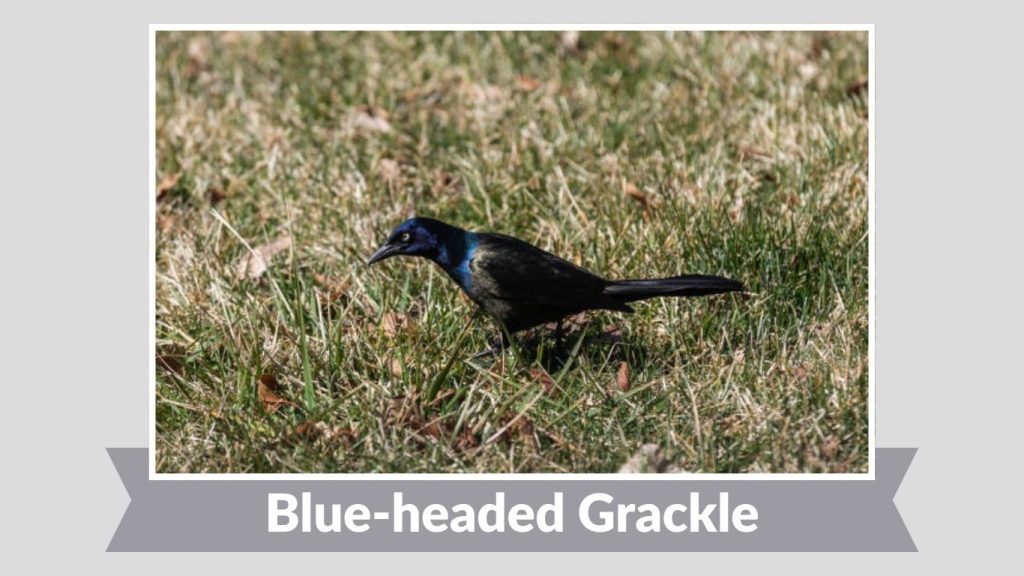
The Blue-headed Grackle is a striking bird noted for its glossy black body and iridescent blue head that shimmers in sunlight. It is commonly found in open habitats and is known for its bold and adaptable nature.
Identification
- Glossy black body with metallic blue head
- Bright yellow eyes
- Long, keel-shaped tail
- Strong, slightly curved black beak
- Large, sturdy blackbird build
Habitat
Blue-headed Grackles inhabit open woodlands, farmlands, wetlands, parks, and urban areas. They adapt well to human-altered landscapes and are often seen near agricultural fields, parking lots, and city streets where food is abundant.
Behaviors
These birds are highly social and often gather in large, noisy flocks. Blue-headed Grackles are bold foragers and will aggressively compete with other birds for food. They are also known for their harsh, creaking calls and confident posture.
Diet and Lifespan
Their diet is omnivorous, consisting of insects, seeds, grains, fruits, small vertebrates, and human food scraps. This varied diet helps them thrive in many environments. The average lifespan of a Blue-headed Grackle is approximately 7–10 years in the wild.
5. Black-and-blue Manakin
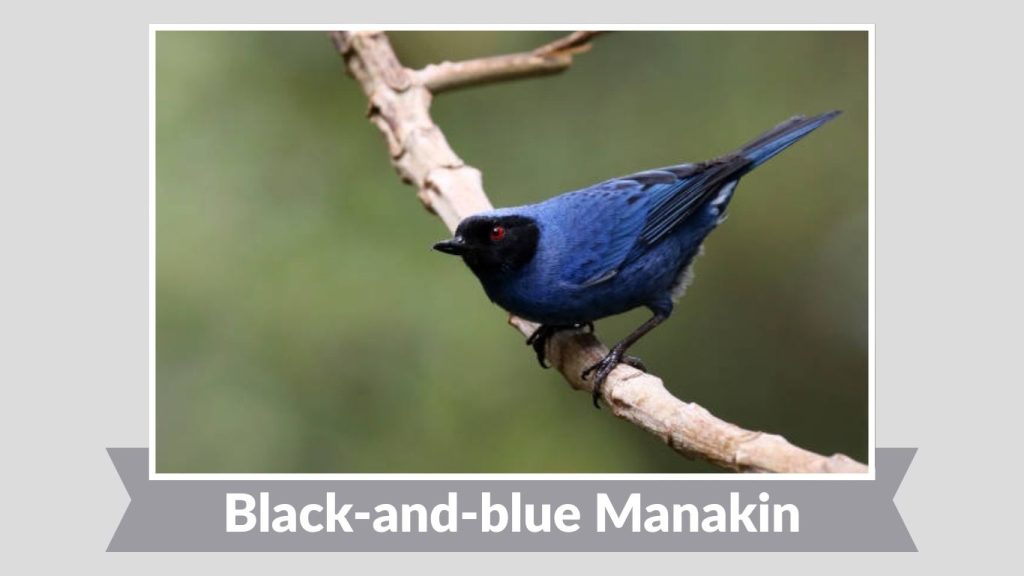
The Black-and-blue Manakin is a small but striking bird known for its jet-black body and vivid blue head. Native to Central and South America, it is best known for its energetic courtship displays rather than its size.
Identification
- Jet-black body with a bright blue crown and head
- Short, thick black beak
- Compact body with short tail
- Strong legs adapted for rapid movements
- Males are more colorful than females
Habitat
This species lives primarily in tropical rainforests, forest edges, and dense understory vegetation. It prefers humid lowland forests but can also be found in foothill regions. Black-and-blue Manakins stay mostly in shaded areas beneath the forest canopy, where dense foliage provides protection.
Behaviors
Black-and-blue Manakins are famous for their elaborate courtship displays. Males perform quick jumps, wing snaps, and rapid movements to attract females at traditional display sites called leks. Outside the breeding season, they are quiet and elusive, often remaining hidden in thick vegetation.
Diet and Lifespan
Their diet consists mainly of fruits, berries, and small insects. By feeding on fruit, they play an important role in seed dispersal within tropical forests. The average lifespan of the Black-and-blue Manakin is estimated to be around 5–8 years in the wild, though precise data is limited due to their secretive nature.
6. Blue-crowned Manakin
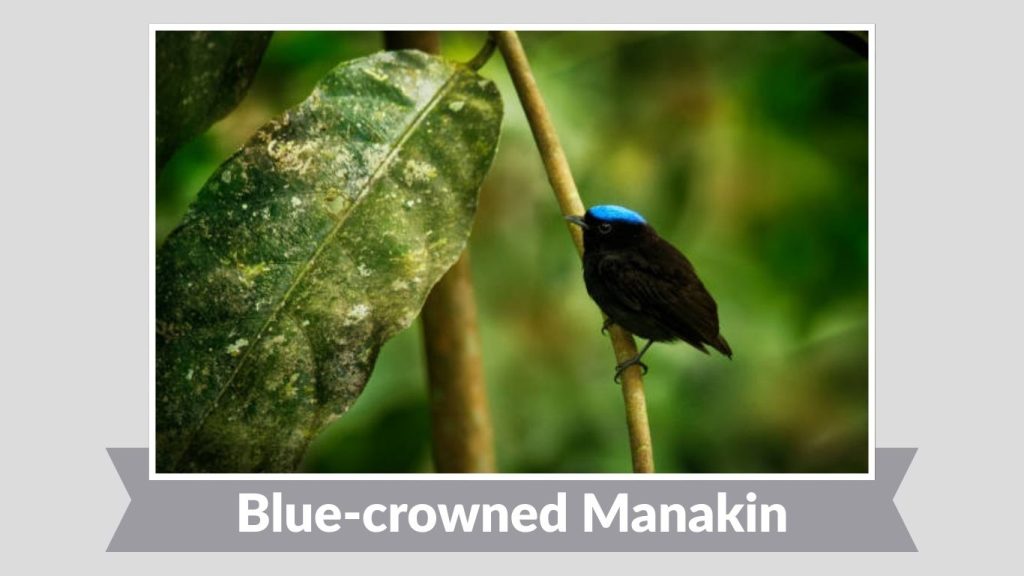
The Blue-crowned Manakin is a small, eye-catching bird with a glossy black body and a brilliant blue crown. Found in Central and South America, it is especially admired for its lively movements and striking contrast in coloration.
Identification
- Black body with a vivid blue crown
- Short, stout black beak
- Compact body with short tail
- Strong legs suited for quick hops
- Females are greenish and less colorful
Habitat
This species inhabits tropical rainforests, forest edges, and secondary growth areas. It is most commonly found in lowland forests but may also occur in foothills. Blue-crowned Manakins prefer dense understory vegetation, where they can move quickly between branches and vines.
Behaviors
Blue-crowned Manakins are best known for their energetic courtship behavior. Males perform rapid hopping displays and wing snaps at communal display grounds known as leks. Outside the breeding season, they remain quiet and inconspicuous, spending much of their time foraging within dense foliage.
Diet and Lifespan
Their diet mainly includes fruits, berries, and small insects. As fruit eaters, they contribute significantly to seed dispersal in forest ecosystems. The average lifespan of a Blue-crowned Manakin is estimated to be about 5–7 years in the wild.
7. Purple Martin
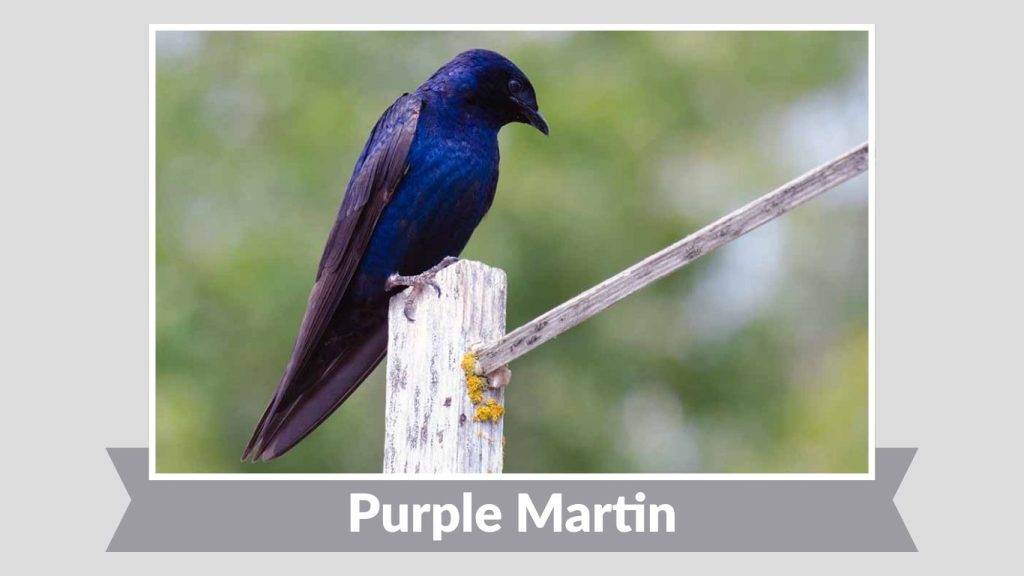
The Purple Martin is the largest swallow in North America and is known for its dark body and glossy blue-purple head and upperparts. Despite the name, its coloration appears more blue-black than purple in most lighting.
Identification
- Adult male has deep blue-purple glossy plumage
- Slightly forked tail
- Short, wide bill adapted for catching insects
- Long, pointed wings
- Females and juveniles are duller with gray underparts
Habitat
Purple Martins prefer open areas near water, such as lakes, rivers, wetlands, and fields. In much of North America, they rely heavily on human-provided nesting structures like martin houses and gourds. In natural settings, they may nest in tree cavities or cliffs.
Behaviors
These birds are highly aerial and spend most of their time flying. Purple Martins are social and often nest in colonies. They are active during daylight hours and are graceful fliers, easily catching insects while in flight.
Diet and Lifespan
Purple Martins feed almost entirely on flying insects, including flies, beetles, dragonflies, and wasps. They help reduce insect populations naturally. The average lifespan of a Purple Martin is around 5–7 years in the wild, though some individuals live longer.
8. Shining Starling
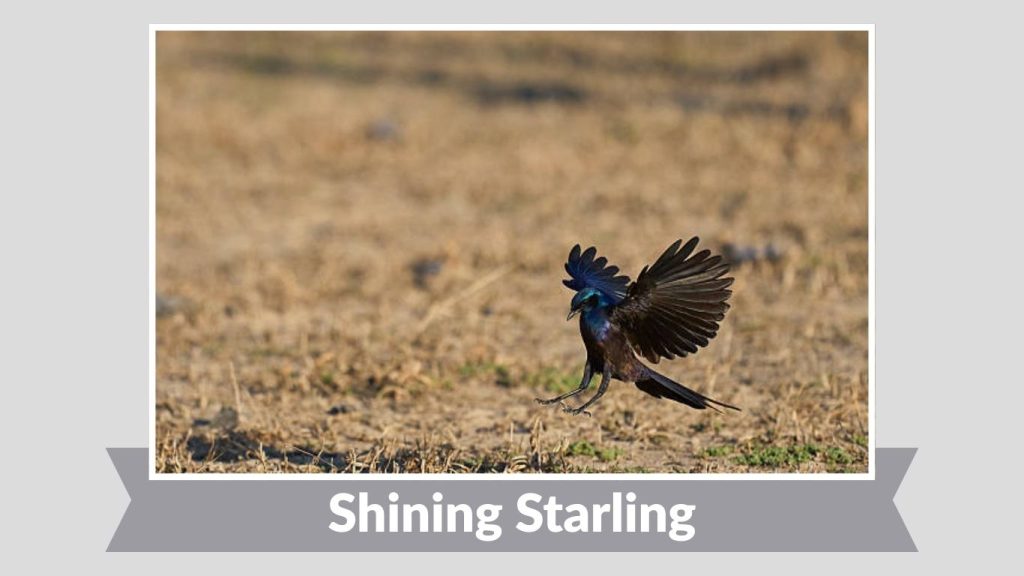
The Shining Starling is a glossy, eye-catching bird known for its black body and metallic blue head that gleams in sunlight. Native to parts of Africa, this bird is admired for its vivid iridescence and active behavior.
Identification
- Glossy black plumage with metallic blue head
- Short, straight black beak
- Bright, alert eyes
- Medium-sized, compact body
- Strong legs suited for perching
Habitat
Shining Starlings are typically found in open woodlands, savannas, forest edges, and cultivated areas. They are often seen near human settlements, especially where trees and open feeding grounds are available. This adaptability allows them to thrive in both natural and modified landscapes.
Behaviors
These birds are social and frequently observed in pairs or small groups. Shining Starlings are active and noisy, often moving quickly between trees and the ground. They are strong fliers and use a variety of calls to communicate with one another.
Diet and Lifespan
Their diet includes insects, fruits, berries, and nectar. By feeding on fruits, they contribute to seed dispersal. The average lifespan of Shining Starlings is estimated to be around 6–10 years in the wild.
9. Blue-headed Cowbird
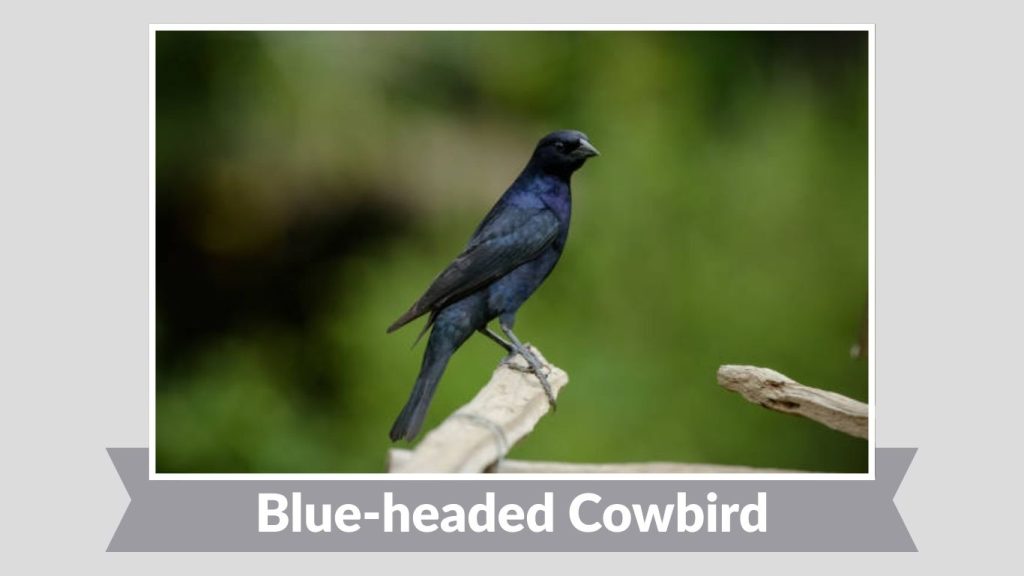
The Blue-headed Cowbird is a distinctive black bird recognized by its glossy dark body and a noticeable blue sheen on the head, especially in adult males. It is best known for its unique breeding behavior rather than its appearance alone.
Identification
- Glossy black body with blue-toned head
- Short, thick, conical black beak
- Dark eyes
- Compact body with short tail
- Females are brownish and less colorful
Habitat
Blue-headed Cowbirds are commonly found in open woodlands, grasslands, farmland, forest edges, and suburban areas. They prefer open or semi-open habitats where they can easily forage on the ground and observe other bird species’ nests.
Behaviors
This species is a brood parasite, meaning it lays its eggs in the nests of other birds. The host birds then raise the cowbird chick, often at the expense of their own young. Blue-headed Cowbirds are social and frequently seen in flocks, especially outside the breeding season.
Diet and Lifespan
Their diet consists mainly of seeds, grains, insects, and small invertebrates. They forage primarily on the ground, often near grazing animals. The average lifespan of a Blue-headed Cowbird is about 4–6 years in the wild.
10. Velvet Asity
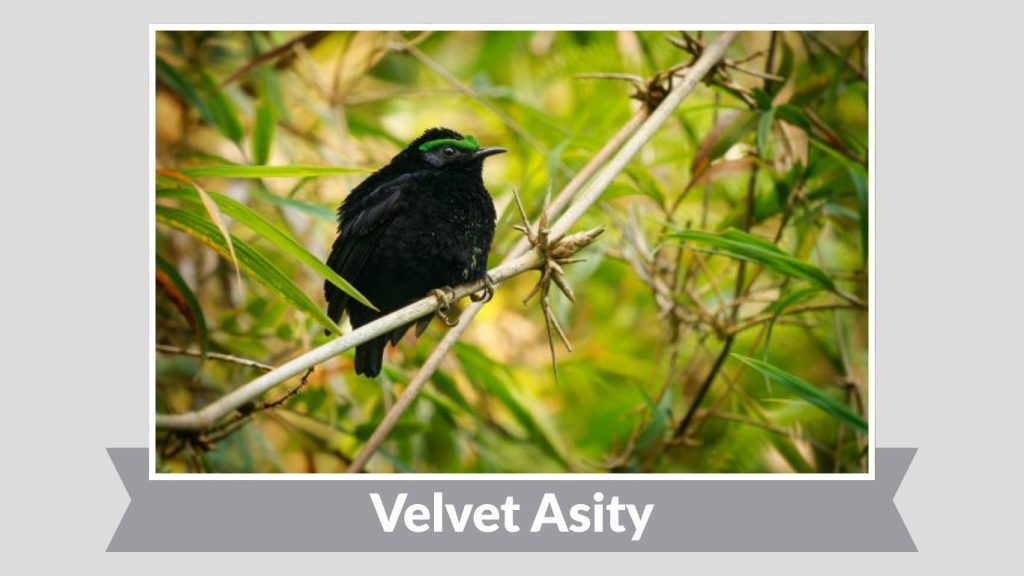
The Velvet Asity is a small but striking bird known for its deep black body and shimmering blue skin on the head, which is especially visible during the breeding season. It is native to Madagascar and is often associated with dense forest habitats.
Identification
- Velvety black plumage in adult males
- Bright blue bare skin around the eyes and face
- Short, straight black beak
- Compact body with short tail
- Females are olive-green and lack blue facial skin
Habitat
Velvet Asities inhabit tropical rainforests, forest edges, and secondary forests in Madagascar. They prefer humid, densely vegetated areas where flowering plants are abundant. This species is usually found in lowland forests but may also occur in foothills.
Behaviors
These birds are generally quiet and elusive, spending much of their time in the forest understory. During the breeding season, males perform subtle displays, using their bright blue facial skin to attract females. Velvet Asities move actively among branches and flowers while foraging.
Diet and Lifespan
Their diet mainly consists of nectar, fruits, and small insects. They play an important role as pollinators in their native ecosystems. The lifespan of the Velvet Asity is not well documented but is estimated to be around 4–6 years in the wild.
11. Blue-headed Vireo
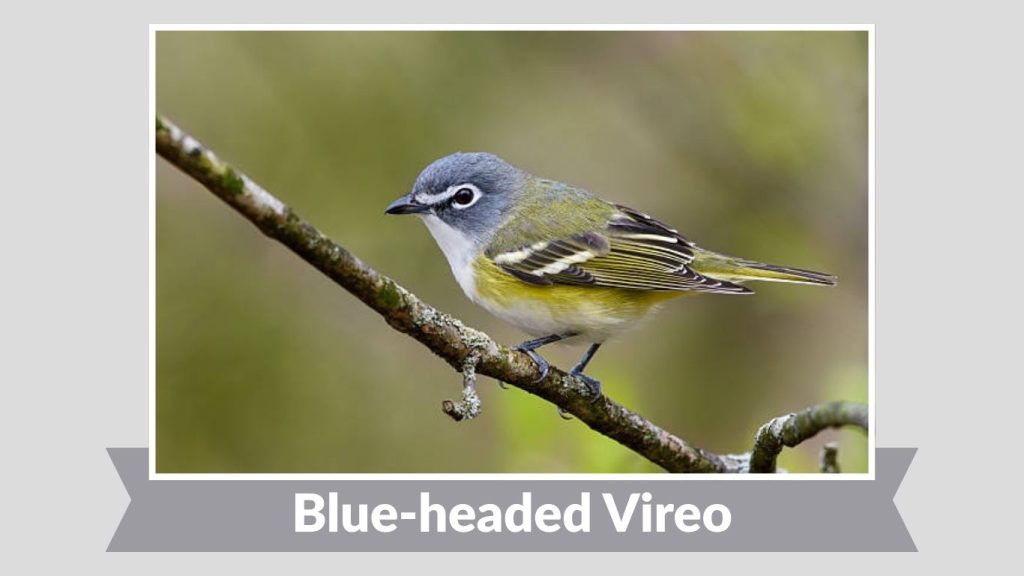
The Blue-headed Vireo is a small songbird with a dark body and a distinctly blue-gray head that gives it a bold, clean appearance. It is widely appreciated for its steady song and calm presence in wooded habitats.
Identification
- Blue-gray head with white spectacles around the eyes
- Dark olive to blackish upperparts
- White throat and underparts with slight yellow wash
- Short, thick bill suited for insect feeding
- Compact body with rounded wings
Habitat
Blue-headed Vireos are commonly found in mature forests, mixed woodlands, and coniferous forests. During breeding season, they prefer dense, cool forests, while in migration and winter they may use forest edges and wooded parks. They are often seen high in the tree canopy.
Behaviors
This species is generally calm and methodical. Blue-headed Vireos move slowly through branches, carefully inspecting leaves for insects. Males are known for their clear, repeated songs, which they sing persistently during the breeding season to defend territory.
Diet and Lifespan
Their diet consists mainly of insects, caterpillars, spiders, and small fruits. They forage by gleaning prey from leaves and twigs. The average lifespan of a Blue-headed Vireo is around 5–7 years in the wild, though some individuals may live longer under favorable conditions.
12. Black-headed Grosbeak
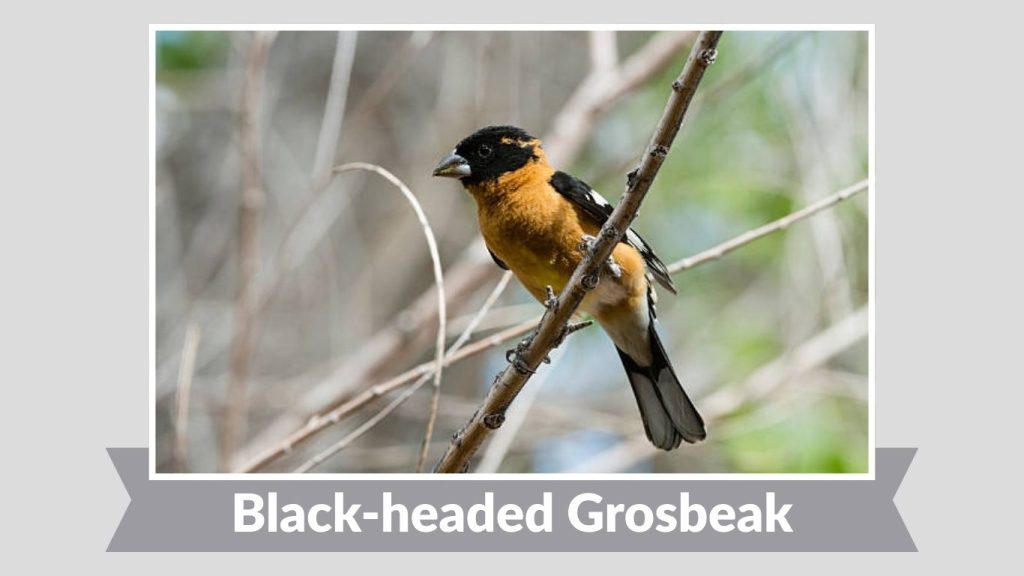
The Black-headed Grosbeak is a bold, colorful songbird with a striking contrast between its dark head and rich body tones. While not entirely black, the deep blue-black head in adult males gives it a dramatic appearance.
Identification
- Adult male has a deep blue-black head
- Thick, pale conical beak
- Bright orange to cinnamon underparts
- Black wings with white patches
- Females are brown and streaked
Habitat
Black-headed Grosbeaks inhabit deciduous forests, woodland edges, riverside groves, and suburban gardens. They prefer areas with tall trees and dense foliage, especially near water sources. During migration, they may also appear in parks and open wooded areas.
Behaviors
These birds are generally calm and deliberate. Males sing rich, melodious songs from high perches during the breeding season. Black-headed Grosbeaks are also known for eating monarch butterflies, as they can tolerate the toxins that deter many predators.
Diet and Lifespan
Their diet includes insects, seeds, berries, fruits, and buds. They play a role in controlling insect populations and dispersing seeds. The average lifespan of a Black-headed Grosbeak is around 7–10 years in the wild.
13. Blue-capped Rock Thrush
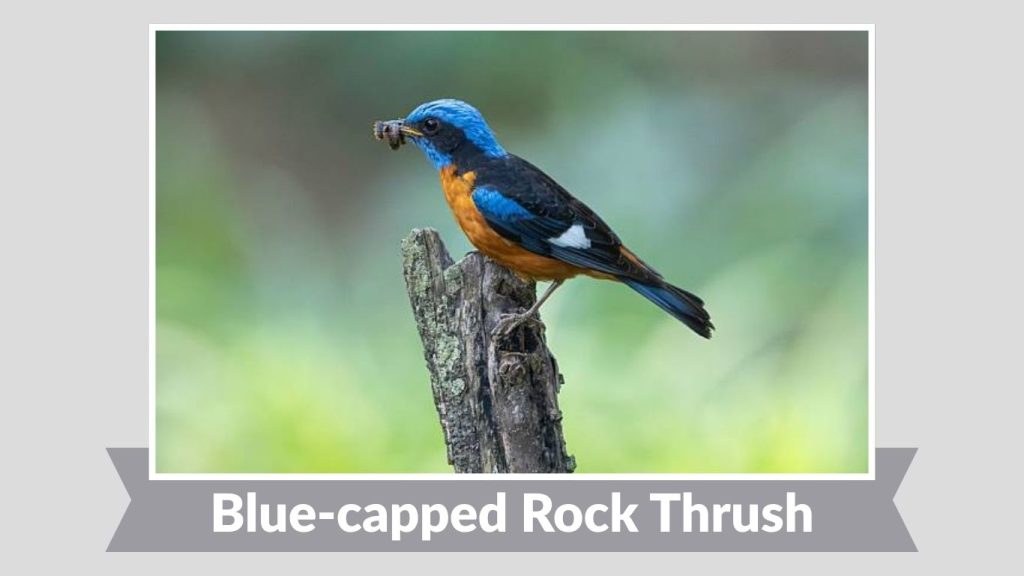
The Blue-capped Rock Thrush is a striking bird known for its deep blue head contrasting with a darker body. It is admired for both its vivid coloration and its rich, melodic song.
Identification
- Bright blue head and crown in adult males
- Dark to blackish face and upperparts
- Pale underparts with warm tones
- Slim thrush-like body
- Medium-length tail
Habitat
This species is typically found in rocky hillsides, cliffs, open woodlands, and mountainous regions. It prefers rugged landscapes with scattered trees and open ground, often nesting in rock crevices or holes in cliffs.
Behaviors
Blue-capped Rock Thrushes are usually solitary or seen in pairs. Males sing from exposed perches such as rocks or treetops to establish territory. They often forage on the ground, making short flights to catch insects.
Diet and Lifespan
Their diet consists mainly of insects, larvae, small invertebrates, and occasionally berries. They are active hunters and contribute to insect control in their habitats. The average lifespan of the Blue-capped Rock Thrush is estimated to be around 5–8 years in the wild.
14. Black-naped Monarch
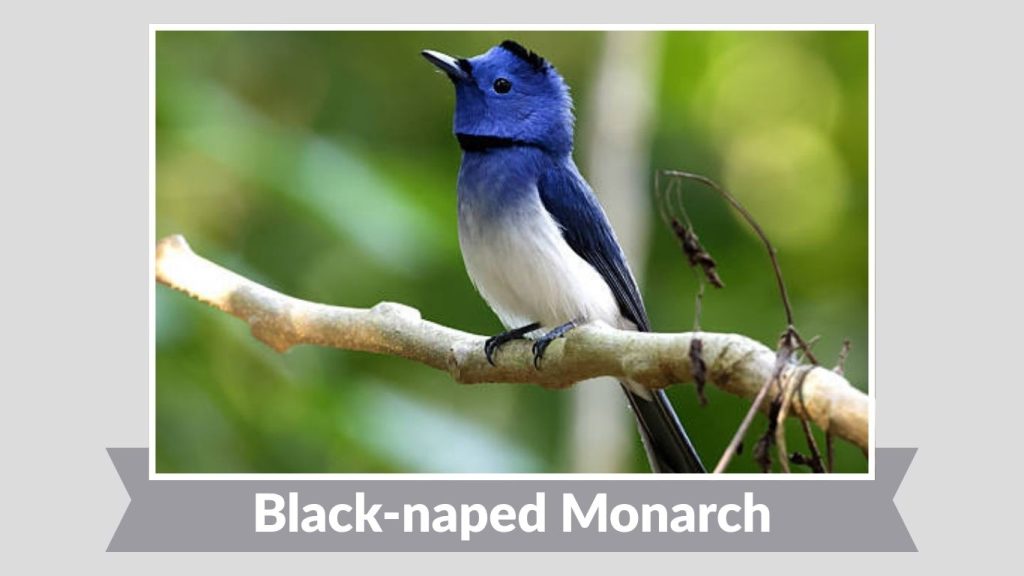
The Black-naped Monarch is a graceful bird recognized for its dark body and a glossy blue-black head. It is admired for its elegant flight and constant movement through forest canopies.
Identification
- Blue-black head with a distinct black nape patch
- Pale gray to whitish underparts
- Slender black beak
- Long tail with white edges
- Slim, agile body
Habitat
This species inhabits tropical and subtropical forests, forest edges, mangroves, and wooded gardens. It prefers dense foliage and is often found in lowland forests but may also occur in foothills and coastal regions.
Behaviors
Black-naped Monarchs are active and restless, frequently flitting between branches. They catch insects in mid-air or glean them from leaves. These birds are usually seen alone or in pairs and are known for their soft, pleasant calls.
Diet and Lifespan
Their diet mainly includes insects, spiders, and other small invertebrates. By feeding on insects, they help maintain ecological balance. The average lifespan of the Black-naped Monarch is around 6–9 years in the wild.
15. Blue-and-black Tanager
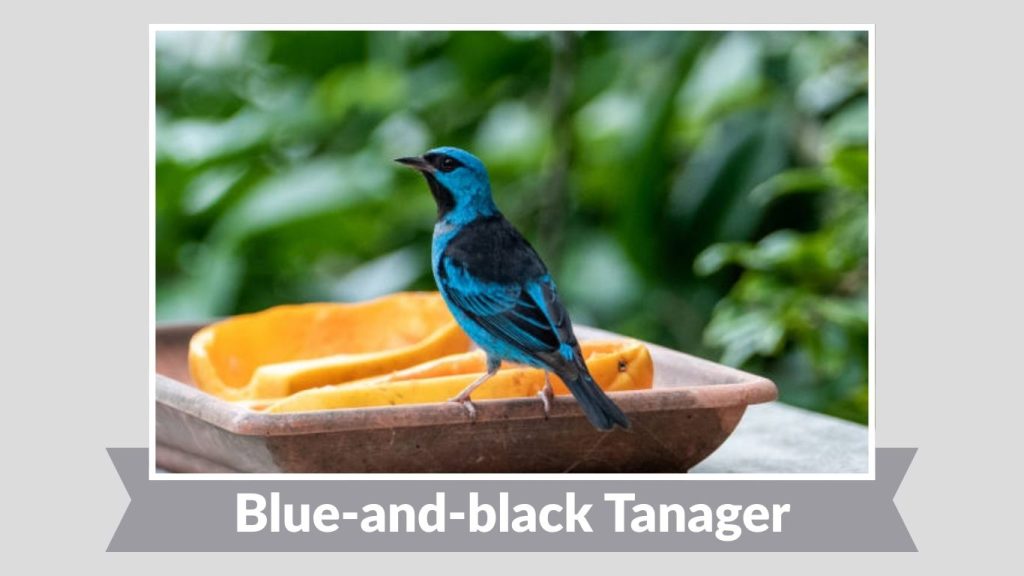
The Blue-and-black Tanager is a vividly colored bird with a striking contrast between its deep blue head and black body. Native to Central and South America, it is commonly seen moving energetically through forest canopies.
Identification
- Bright blue head and upperparts
- Black wings, back, and tail
- Short, pointed black beak
- Compact body with strong legs
- Males and females are similar in appearance
Habitat
This species inhabits tropical rainforests, forest edges, secondary growth, and plantations. It prefers mid to upper forest levels and is often found in humid lowland regions, though it may also occur in foothills.
Behaviors
Blue-and-black Tanagers are active and social birds, frequently seen in pairs or small flocks. They often join mixed-species feeding groups and move quickly between branches while foraging. Their calls are short and sharp, used to stay in contact with flock members.
Diet and Lifespan
Their diet consists mainly of fruits, berries, insects, and small invertebrates. As frequent fruit eaters, they play an important role in seed dispersal. The average lifespan of the Blue-and-black Tanager is estimated to be around 6–10 years in the wild.
16. Indigo Bunting
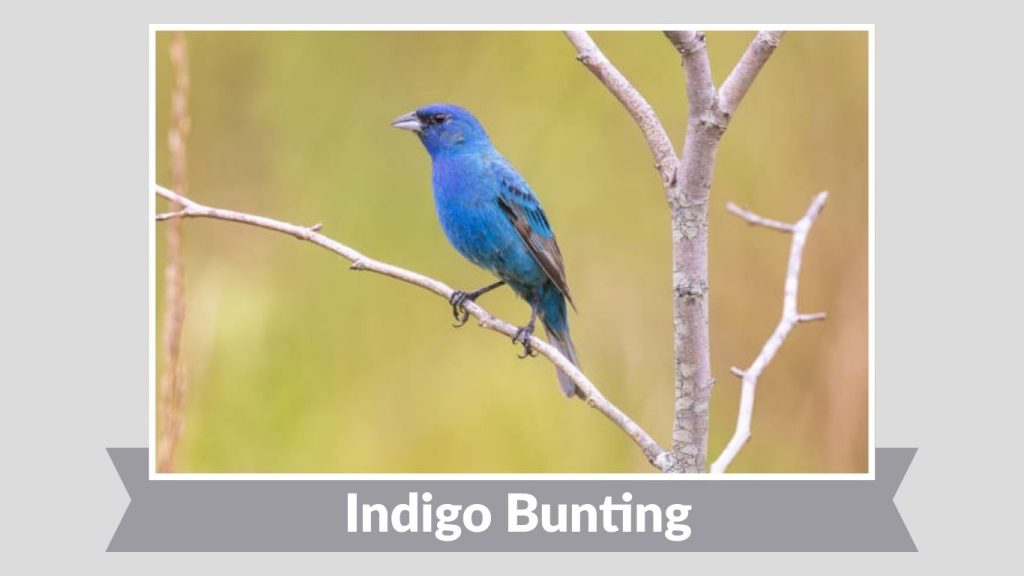
The Indigo Bunting is a small, vibrant songbird best known for the male’s brilliant blue head and upperparts, which can appear almost black in low light. It is a familiar and much-loved bird across North America.
Identification
- Adult male has bright blue head and upperparts
- Wings and tail appear darker, almost blackish
- Short, conical silver-gray beak
- Compact body with short tail
- Females are brown with faint bluish tones
Habitat
Indigo Buntings are commonly found in open woodlands, forest edges, grasslands, roadsides, and shrubby fields. They prefer semi-open habitats with dense shrubs for nesting and nearby open areas for feeding. During migration and winter, they may also visit gardens and agricultural lands.
Behaviors
These birds are active and alert, often seen perched on exposed branches or wires while singing. Males produce a sweet, high-pitched song throughout the breeding season to defend territory and attract mates. Indigo Buntings are migratory and navigate at night using stars.
Diet and Lifespan
Their diet consists mainly of seeds, grains, berries, and insects, with insects being especially important during the breeding season. Indigo Buntings help control insect populations and disperse seeds. The average lifespan of an Indigo Bunting is around 5–8 years in the wild.
FAQs
What does it mean when a black bird has a blue head?
A blue head on a black bird is usually caused by iridescent feathers that reflect light. In many species, this coloration helps attract mates and signal maturity, especially during the breeding season.
Are black birds with blue heads rare?
Some species are common, like Brewer’s Blackbird and Indigo Bunting, while others such as Velvet Asity or certain manakins are limited to specific regions. Their rarity depends on location and habitat availability.
Do female black birds also have blue heads?
In many species, only males have bright blue heads. Females are often duller in color to help them stay camouflaged while nesting and raising young.
Where can black birds with blue heads be found?
They are found worldwide, including North America, South America, Africa, Asia, and Australia. Habitats range from tropical rainforests to grasslands, forests, and urban areas.
Why do blue-headed birds look black in low light?
Blue feathers often appear black in shade or poor lighting because they rely on light reflection rather than pigment. Without direct sunlight, the blue coloration becomes less visible.