


Black birds with orange wings are some of the most visually striking birds in the natural world. The bold contrast between dark plumage and bright orange markings makes them easy to identify and fascinating to observe. These birds inhabit a wide range of environments, from wetlands and grasslands to forests and mountain regions. Found across different continents, each species displays unique behaviors, songs, and feeding habits that highlight the incredible diversity of bird life.
1. Red-winged Blackbird
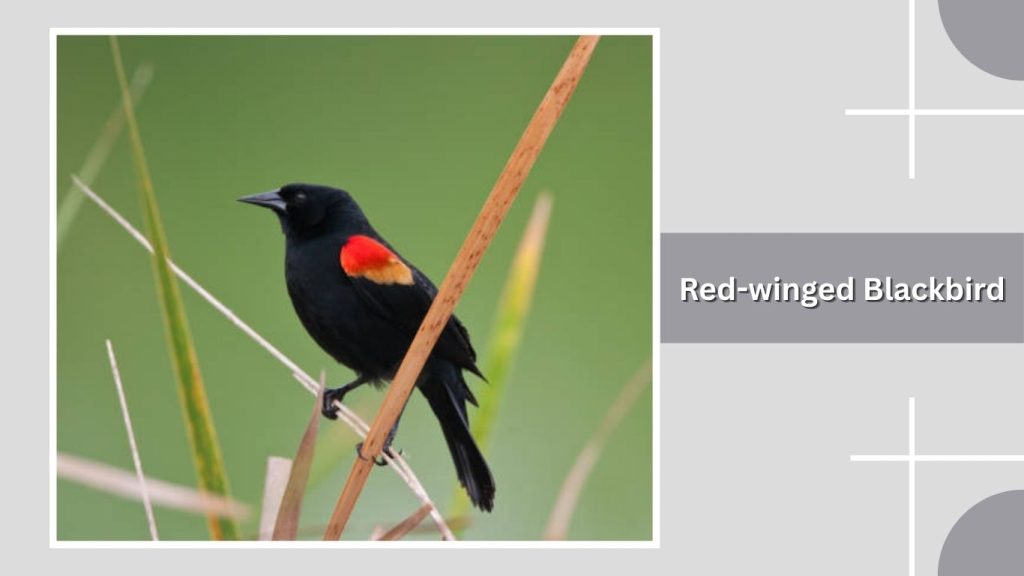
The Red-winged Blackbird is one of the most recognizable blackbirds in North America, famous for the male’s bright orange-red wing patches. These bold markings are especially noticeable during flight or when the bird is defending its territory.
Identification
- Glossy black body (males)
- Bright orange-red shoulder patches edged with yellow
- Medium-sized body with a conical bill
- Females are brown and heavily streaked
Habitat
This species is strongly associated with wetlands, including marshes, swamps, ponds, and wet grasslands. It is also commonly found in agricultural fields, roadside ditches, and open meadows near water.
Behavior
Red-winged Blackbirds are highly territorial during the breeding season. Males perch prominently and display their colorful wing patches while singing loudly to warn intruders. Outside the breeding season, they gather in large mixed flocks.
Diet
Their diet includes insects, seeds, grains, and plant matter. During warmer months, insects make up a large portion of their food, while seeds and grains dominate in winter.
Range
The Red-winged Blackbird is widespread across North America, from southern Canada through the United States and into parts of Central America.
2. Baltimore Oriole
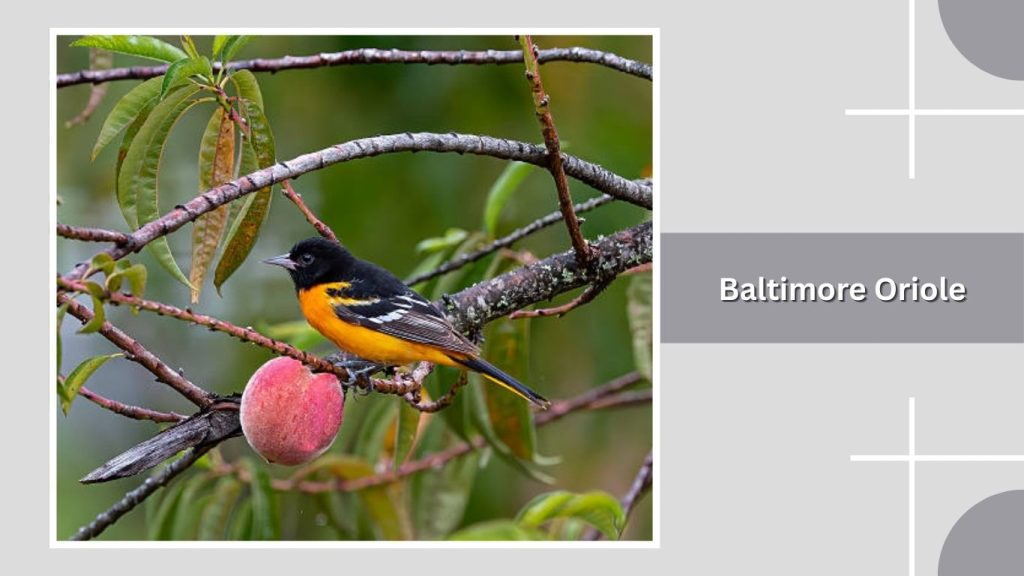
The Baltimore Oriole is a striking songbird known for its deep black plumage contrasted with vivid orange wings and underparts. Its bright colors and rich whistling song make it a favorite among bird enthusiasts.
Identification
- Black head, back, and throat
- Bright orange wings, belly, and rump
- White wing bars on black wings
- Slender, pointed bill adapted for feeding
Habitat
This species prefers open woodlands, forest edges, riverbanks, orchards, and suburban parks. It is often found high in trees, especially during the breeding season.
Behavior
Baltimore Orioles are agile and active birds. They are skilled weavers, creating hanging pouch-shaped nests suspended from tree branches. Males sing clear, flute-like songs to attract mates and defend territory.
Diet
Their diet consists of insects, caterpillars, beetles, fruit, and nectar. They may visit feeders offering oranges or sugar water.
Range
Baltimore Orioles breed in eastern and central North America and migrate to Central America, northern South America, and the Caribbean for the winter.
3. Orchard Oriole
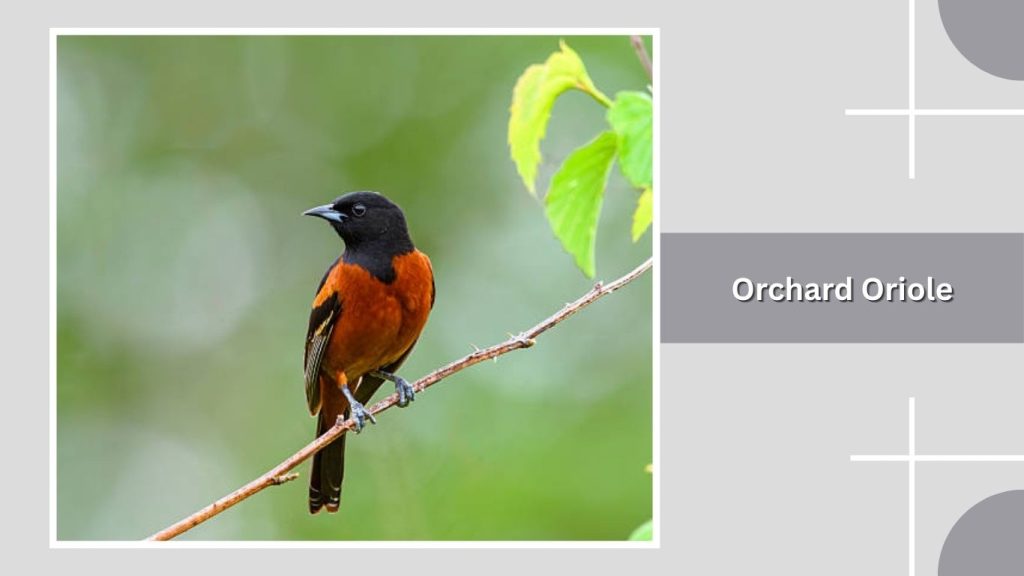
The Orchard Oriole is the smallest oriole species in North America, recognized for its dark body and rich orange wing and chest coloration. Its subtle beauty and pleasant song make it a rewarding sight during the breeding season.
Identification
- Black head and upperparts
- Deep orange to chestnut wings and underparts
- Slender, slightly curved bill
- Females are yellow-green with darker wings
Habitat
This species favors open woodlands, river edges, orchards, farms, and suburban areas with scattered trees. It often nests near water sources.
Behavior
Orchard Orioles are active and often remain hidden among foliage. Males sing fast, musical warbles from treetops, especially in spring and early summer. They are generally solitary or seen in pairs.
Diet
Their diet includes insects, caterpillars, spiders, fruits, and nectar. Insects form a major part of their diet during breeding.
Range
Orchard Orioles breed across central and eastern North America and migrate to Mexico, Central America, and northern South America during winter.
4. Altamira Oriole
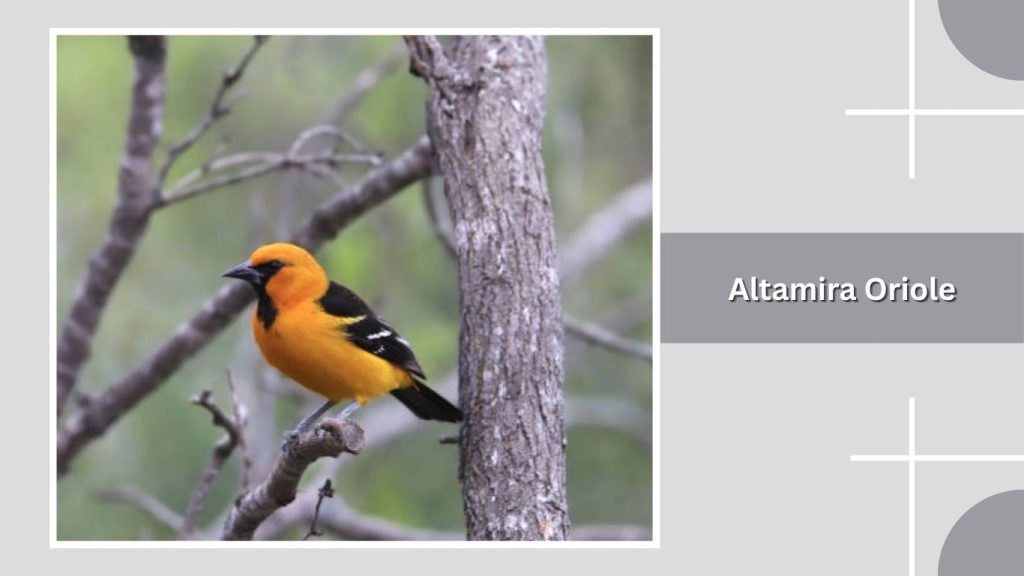
The Altamira Oriole is a large, boldly colored oriole admired for its striking black-and-orange plumage and powerful voice. It is best known for its impressive size and its long, pendulous nests that hang from tall trees.
Identification
- Black head, back, and upper breast
- Bright orange wings, underparts, and rump
- Long, slightly curved bill
- White wing markings visible in flight
Habitat
This species is commonly found in open woodlands, forest edges, river corridors, savannas, and suburban areas. It prefers regions with tall trees that provide suitable nesting sites, especially near water.
Behavior
Altamira Orioles are confident and vocal birds. Males sing loud, clear whistles that carry over long distances. They are usually seen alone or in pairs and can be aggressive when defending nesting territories. Their hanging nests are among the longest of any oriole species.
Diet
Their diet includes insects, caterpillars, beetles, fruits, berries, and nectar. They often forage high in trees but will also visit feeders offering fruit.
Range
The Altamira Oriole is native to Mexico and Central America, with populations extending into southern Texas, where it is a year-round resident.
5. Hooded Oriole
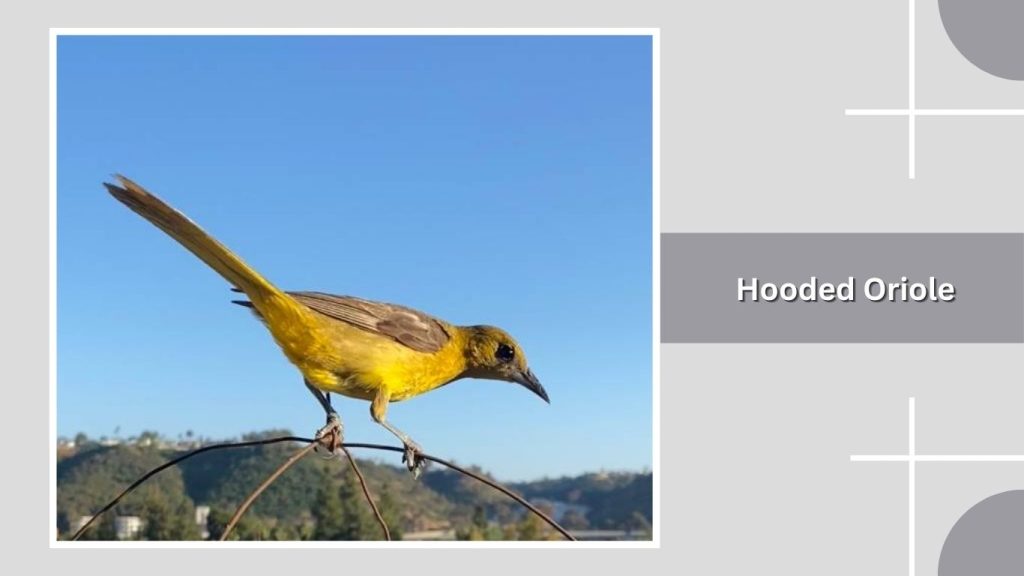
The Hooded Oriole is a slender, brightly colored bird known for its vivid orange hood and contrasting black wings and back. Its elegant appearance and preference for warm climates make it a distinctive species of the American Southwest.
Identification
- Bright orange head and chest
- Black back, wings, and tail
- White wing bars
- Thin, slightly curved bill
Habitat
This species favors open woodlands, palm groves, desert oases, river valleys, and suburban areas. It is especially associated with tall palms, which it often uses for nesting.
Behavior
Hooded Orioles are active and graceful foragers, often moving quickly through trees and shrubs. Males sing clear, whistling songs during the breeding season. They build hanging nests woven from plant fibers, frequently suspended beneath palm fronds.
Diet
Their diet consists mainly of insects, spiders, nectar, and fruit. They may visit feeders offering sugar water or orange slices.
Range
Hooded Orioles are found in the southwestern United States and Mexico. Northern populations migrate south during winter, while southern populations may remain year-round.
6. Streak-backed Oriole
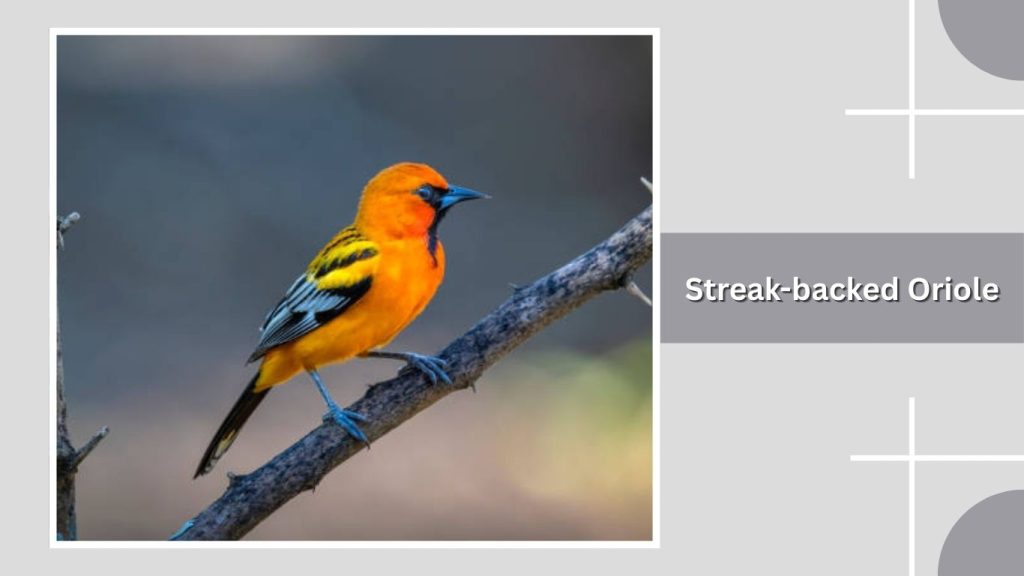
The Streak-backed Oriole is a striking bird known for its fiery orange body marked with bold black streaks and contrasting black wings. Its vivid coloration and loud calls make it easy to recognize in its native range.
Identification
- Bright orange body with black streaks on the back
- Black wings and tail with white markings
- Strong, slightly curved bill
- Long tail
Habitat
This species prefers open woodlands, thorn forests, forest edges, scrublands, and agricultural areas. It is commonly found in warm, dry regions with scattered trees.
Behavior
Streak-backed Orioles are energetic and vocal. They often move quickly through vegetation while foraging and are frequently heard before they are seen. Males sing loud, sharp songs to defend their territory during the breeding season.
Diet
Their diet includes insects, caterpillars, spiders, fruits, and nectar. They often feed in trees but may also forage on flowering plants.
Range
The Streak-backed Oriole is native to Mexico and parts of Central America, where it is mostly a year-round resident.
7. Venezuelan Troupial
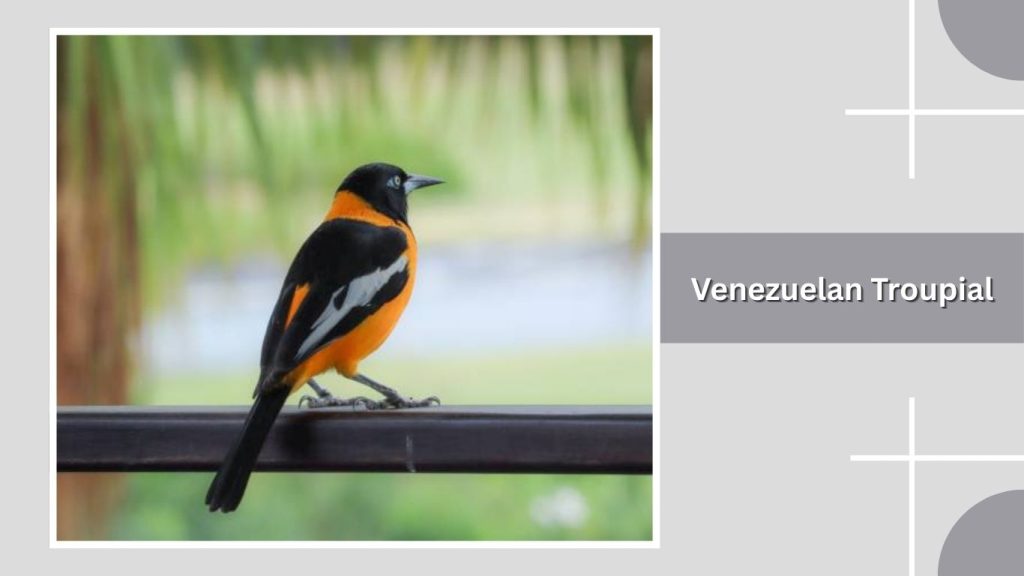
The Venezuelan Troupial is a bold and colorful bird admired for its striking black-and-orange plumage and confident behavior. It is the national bird of Venezuela and is well known for its strong presence and loud, musical calls.
Identification
- Black head, upperparts, and wings
- Bright orange wings, chest, and belly
- Blue skin patch around the eye
- Strong, pointed bill
Habitat
This species inhabits open woodlands, dry forests, savannas, scrublands, and gardens. It adapts well to human-altered environments and is often seen near towns and farmland.
Behavior
Venezuelan Troupials are assertive and sometimes aggressive birds. They are often seen alone or in pairs and may take over nests built by other birds rather than constructing their own. Their calls are loud, clear, and melodious.
Diet
Their diet consists of insects, fruits, berries, small reptiles, eggs, and occasionally nestlings. This varied diet contributes to their adaptability in different environments.
Range
The Venezuelan Troupial is found mainly in northern South America, particularly Venezuela and Colombia, with smaller populations in nearby regions.
8. Montezuma Oropendola
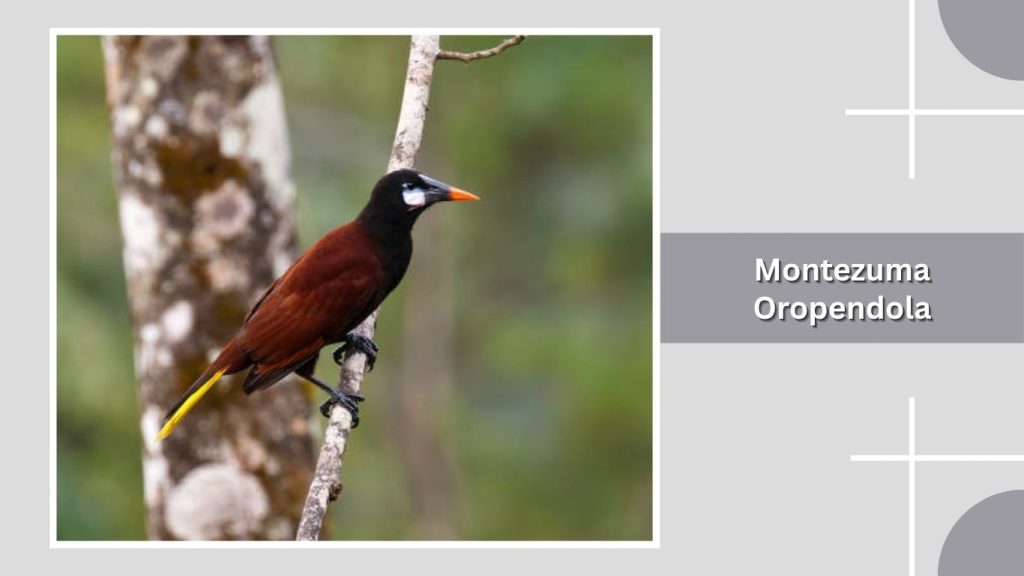
The Montezuma Oropendola is a large, dramatic bird known for its black body contrasted with bright orange wing accents and tail feathers. It is especially famous for its colonial nesting behavior and unusual, mechanical-sounding calls.
Identification
- Mostly black body
- Bright orange wings and lower back
- Long, pointed bill
- Bare blue skin patch on the face
- Large body size with long tail
Habitat
This species inhabits tropical forests, forest edges, plantations, and wooded clearings. It is often found in lowland rainforests and areas with tall trees suitable for nesting colonies.
Behavior
Montezuma Oropendolas are highly social and live in large colonies. Males perform elaborate bowing displays and produce loud, metallic calls to attract females. Their long, hanging nests are woven and suspended from high tree branches.
Diet
Their diet includes fruits, insects, nectar, and small vertebrates. They forage both in trees and on the ground, often traveling in groups while feeding.
Range
The Montezuma Oropendola is native to southern Mexico, Central America, and parts of northern South America, mainly in tropical regions.
9. Yellow-winged Blackbird
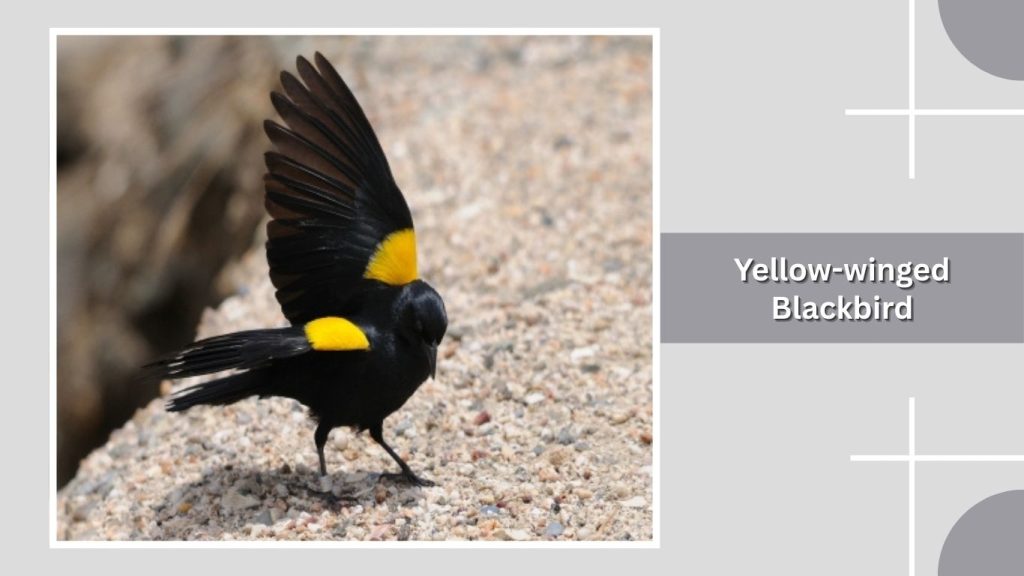
The Yellow-winged Blackbird is a rare and distinctive species recognized for its dark body contrasted with bright yellow to orange wing patches. Its limited range and specialized habitat make it an important species for conservation.
Identification
- Mostly black body
- Bright yellow to orange shoulder and wing patches
- Strong, pointed bill
- Medium-sized blackbird shape
Habitat
This species is strongly tied to freshwater marshes, reed beds, and wetlands with tall grasses. It prefers areas with dense vegetation near shallow water, which provide nesting sites and food.
Behavior
Yellow-winged Blackbirds are usually seen in pairs or small groups. They are territorial during the breeding season and remain close to wetland vegetation. Their calls are sharp and repetitive, often heard before the bird is seen.
Diet
Their diet consists mainly of insects, larvae, and other small invertebrates, along with seeds from wetland plants. They forage by climbing reeds and probing vegetation.
Range
The Yellow-winged Blackbird is native to southern South America, primarily found in Argentina, Uruguay, southern Brazil, and Paraguay.
10. Orange-backed Blackbird
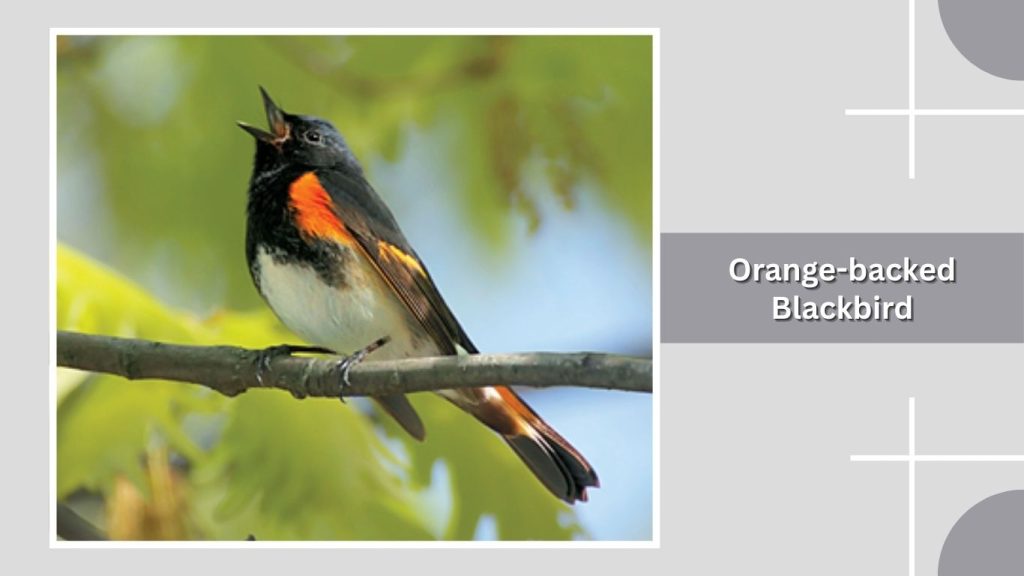
The Orange-backed Blackbird is a rare and striking species noted for its dark body and vivid orange coloring on the wings and back. Its unique appearance makes it easily distinguishable among blackbirds.
Identification
- Mostly black plumage
- Bright orange patch on the back and wings
- Strong, pointed bill
- Medium-sized body
Habitat
This species inhabits open woodlands, savannas, grasslands, and agricultural areas. It prefers regions with scattered trees and open ground for foraging.
Behavior
Orange-backed Blackbirds are usually seen alone or in pairs. They are alert and active, often perching in open areas while scanning for food. During breeding, they may become territorial and vocal.
Diet
Their diet includes insects, seeds, grains, and small invertebrates. They forage both on the ground and in low vegetation.
Range
The Orange-backed Blackbird is found in parts of South America, particularly in Bolivia, Paraguay, and northern Argentina.
11. Flame-colored Tanager
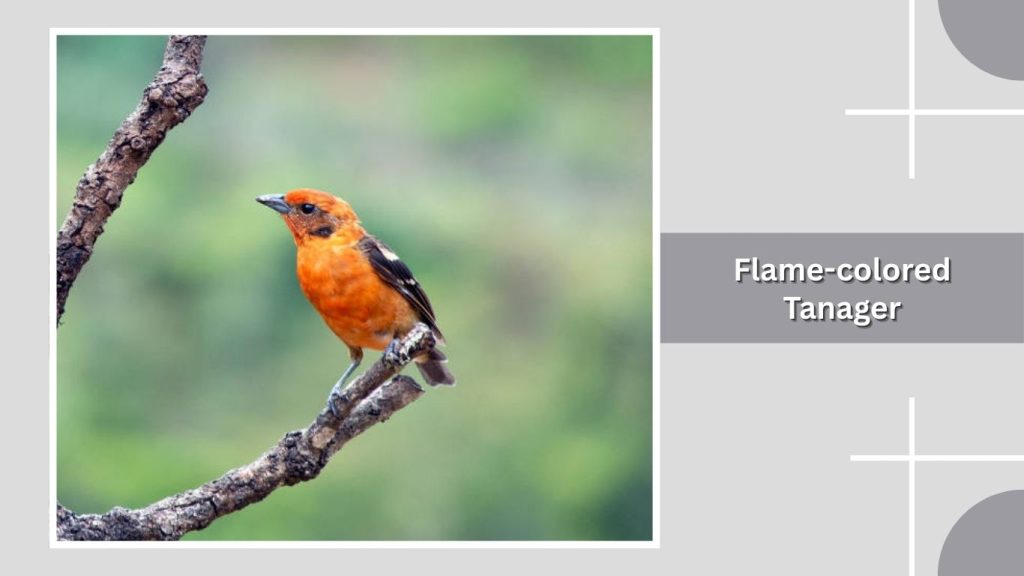
The Flame-colored Tanager is a brilliantly colored songbird known for its black upperparts contrasted with glowing orange wings and underparts. Its vivid coloration and active nature make it a standout species in mountainous forests.
Identification
- Black head, back, and wings
- Bright orange to flame-colored underparts and wing panels
- Medium-sized body
- Thick, slightly pointed bill
Habitat
This species is typically found in montane forests, pine–oak woodlands, forest edges, and highland clearings. It prefers cooler elevations with dense trees and shrubs.
Behavior
Flame-colored Tanagers are energetic and often move quickly through the canopy. They are usually seen alone or in pairs and may join mixed-species flocks outside the breeding season. Their calls are short and sharp.
Diet
Their diet consists mainly of insects such as beetles, caterpillars, and ants. They also eat fruits and berries, especially when insects are less abundant.
Range
The Flame-colored Tanager is native to Mexico and Central America, particularly in highland regions extending into parts of western Panama.
12. Black-and-orange Flycatcher
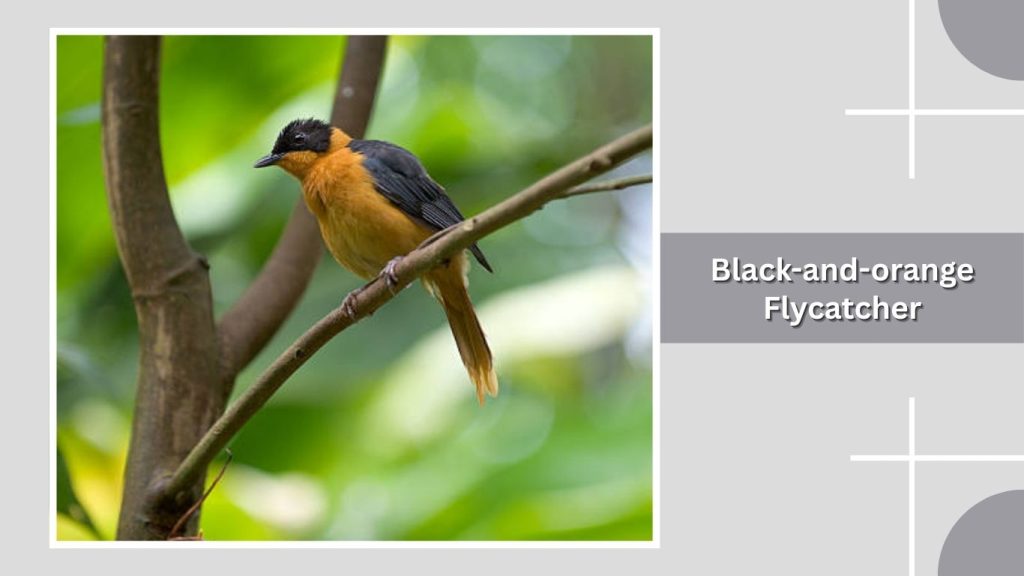
The Black-and-orange Flycatcher is a small, elegant bird admired for its sharp contrast of dark plumage and bright orange wing and underpart coloration. It is a shy species, often found quietly foraging in dense forest habitats.
Identification
- Black head, back, and wings
- Bright orange wings, chest, and belly
- Slender body with a fine, pointed bill
- Long tail often held upright
Habitat
This species prefers moist montane forests, evergreen forests, and dense wooded areas, especially in higher elevations. It is commonly found in shaded understory and along forest edges.
Behavior
Black-and-orange Flycatchers are usually seen alone or in pairs. They perch quietly before making short, quick flights to catch insects. They are relatively secretive and tend to stay low within thick vegetation.
Diet
Their diet mainly consists of flying insects such as flies, beetles, and small moths. They occasionally feed on spiders and other small invertebrates.
Range
The Black-and-orange Flycatcher is native to the Western Ghats of southern India, where it is restricted to high-altitude forest regions.
13. Tawny-shouldered Blackbird
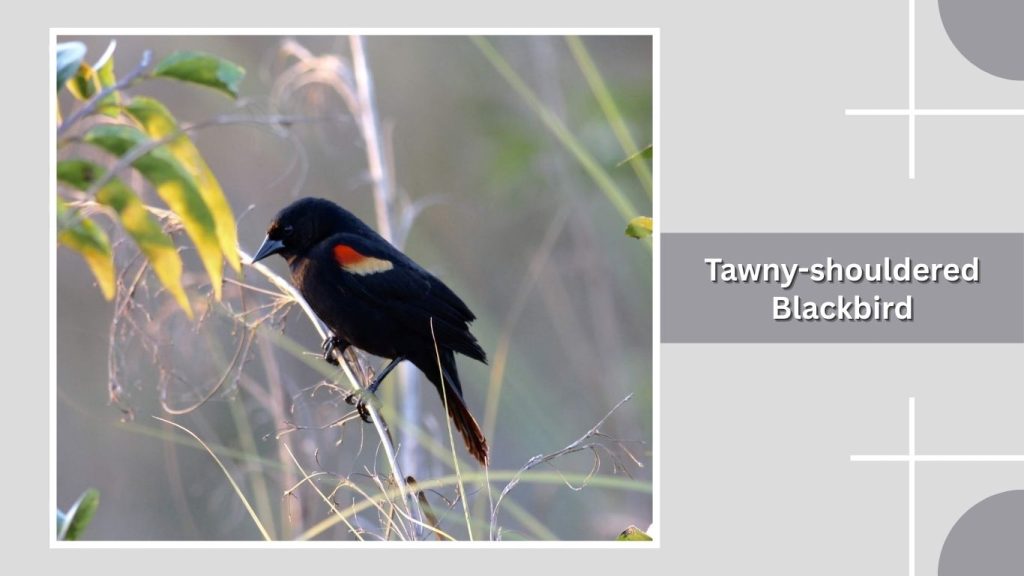
The Tawny-shouldered Blackbird is a distinctive South American bird known for its glossy black body accented by rich orange to tawny shoulder patches. Its bold markings and social nature make it easy to recognize in open landscapes.
Identification
- Glossy black body
- Tawny to orange shoulder patches
- Strong, conical bill
- Medium-sized blackbird shape
Habitat
This species is commonly found in open grasslands, wetlands, marsh edges, agricultural fields, and pastures. It often stays close to water and open feeding areas.
Behavior
Tawny-shouldered Blackbirds are highly social and usually seen in pairs or small flocks. They are vocal birds, producing sharp calls while foraging or flying between perches. During breeding, males defend small territories.
Diet
Their diet includes insects, seeds, grains, and small invertebrates. They frequently forage on the ground or among low vegetation.
Range
The Tawny-shouldered Blackbird is native to southern South America, including Argentina, Uruguay, southern Brazil, and parts of Paraguay.
FAQs
Are black birds with orange wings rare?
Some black birds with orange wings are common and widespread, while others have limited ranges and are considered rare. Their abundance depends on habitat availability, geographic location, and conservation status.
Why do these birds have orange wings?
Orange wing coloration is often used for attracting mates, signaling dominance, or helping birds recognize members of their own species. Bright colors usually indicate good health and strong genetics.
Do female birds also have orange wings?
In many species, males have brighter orange or yellow wing markings than females. Females are often duller in color, which helps them stay camouflaged while nesting.
Where are black birds with orange wings commonly found?
These birds are found across North America, Central America, South America, and parts of Asia. Each species occupies specific habitats such as forests, wetlands, grasslands, or mountainous regions.
Are these birds protected by conservation laws?
Some species are protected due to declining populations or restricted ranges, while others are not currently threatened. Conservation status varies by species and country.