
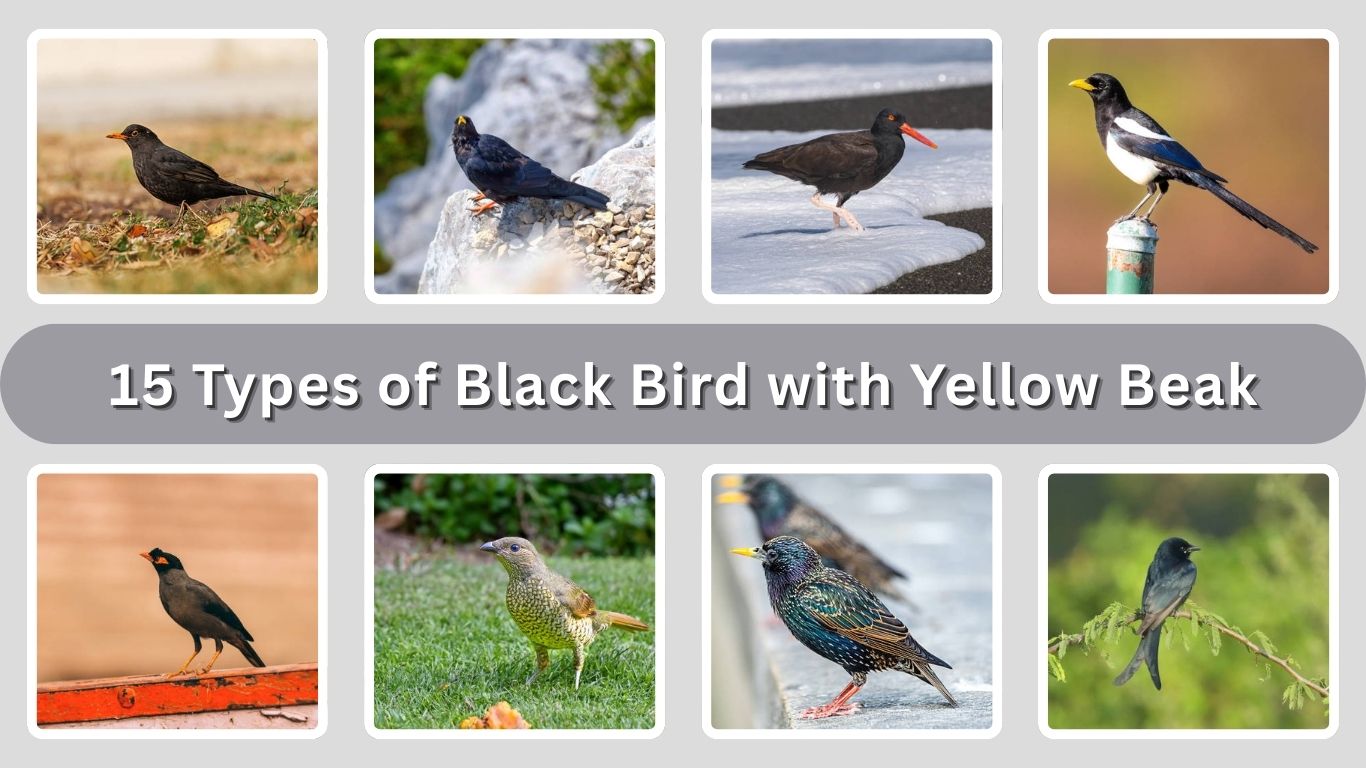
Black birds with yellow beaks are striking and easy to recognize, standing out strongly against natural landscapes. Found across different continents, these birds belong to various families and habitats, ranging from forests and mountains to gardens and coastal areas. While their dark plumage may look similar, each species has unique behaviors, diets, and ecological roles. The bright yellow beak often becomes more vivid during breeding seasons, making these birds especially noticeable and fascinating to observe.
1. Common Blackbird
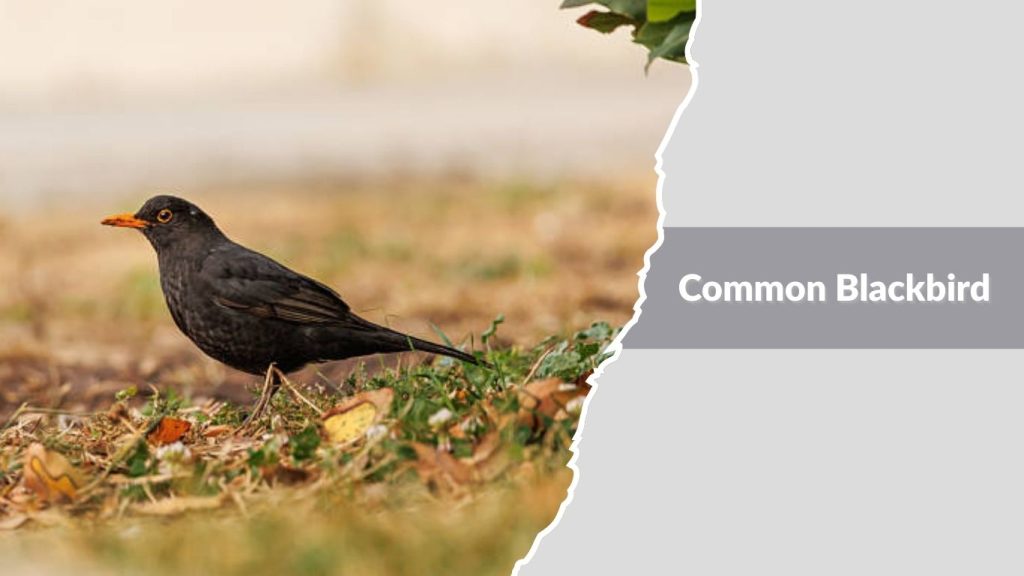
The Common Blackbird is a well-known and widely distributed bird, easily recognized by its dark plumage and bright yellow beak. It is especially familiar in gardens, woodlands, and urban areas, where its rich, melodic song is often heard at dawn and dusk.
Identification
- Adult male has glossy black feathers
- Bright yellow to orange-yellow beak
- Yellow eye-ring around dark eyes
- Females are dark brown with a duller beak
- Medium-sized bird with a long tail
Habitat
Common Blackbirds are highly adaptable and live in a wide range of environments. They are commonly found in forests, woodland edges, parks, gardens, hedgerows, and farmlands. In urban and suburban areas, they often nest in shrubs, trees, and even building ledges, making them one of the most familiar backyard birds.
Behaviors
This species is mostly ground-feeding and is often seen hopping or running on lawns. Males are known for their loud, flute-like songs, especially during the breeding season. Common Blackbirds are territorial and may aggressively defend nesting areas from rivals. They are generally solitary or found in pairs rather than large flocks.
Diet and Lifespan
Their diet includes earthworms, insects, berries, fruits, and seeds. During warmer months, they rely more on insects, while fruits become important in winter. The average lifespan of a Common Blackbird is about 3–5 years, though some individuals can live much longer in the wild.
2. Yellow-billed Blackbird
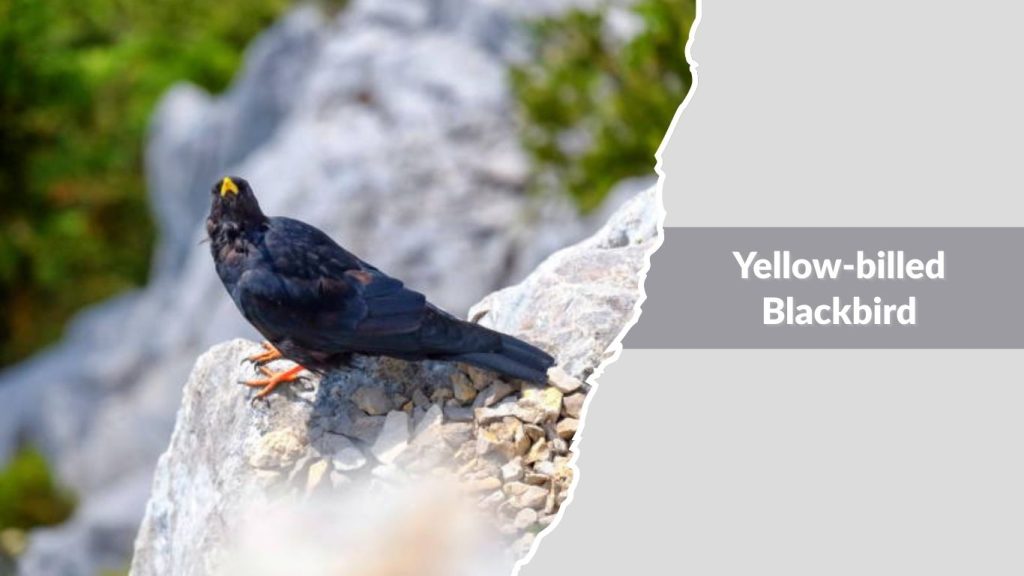
The Yellow-billed Blackbird is a striking and uncommon bird known for its glossy black plumage and vivid yellow bill. Native to South America, this species is often associated with wetlands and open landscapes, where it stands out clearly against its surroundings.
Identification
- Entire body covered in shiny black feathers
- Bright yellow, slightly curved beak
- Sturdy, medium-sized body
- Strong legs adapted for ground foraging
- Males and females appear similar in color
Habitat
Yellow-billed Blackbirds are primarily found in marshes, wet grasslands, reed beds, and agricultural fields near water sources. They prefer open habitats with tall vegetation, which provide suitable nesting sites and protection from predators. This species is often seen in lowland regions and avoids dense forests.
Behaviors
These birds are highly social and are usually seen in small groups or flocks, especially outside the breeding season. They are active foragers, spending much of their time on the ground or perched on reeds. During breeding season, they become more territorial and vocal, using sharp calls to communicate and defend nesting areas.
Diet and Lifespan
Their diet mainly consists of insects, larvae, seeds, and small invertebrates, making them beneficial for controlling pests. They may also feed on grains in agricultural areas. The average lifespan of the Yellow-billed Blackbird is estimated to be around 4–6 years in the wild, depending on environmental conditions and predation.
3. Alpine Chough
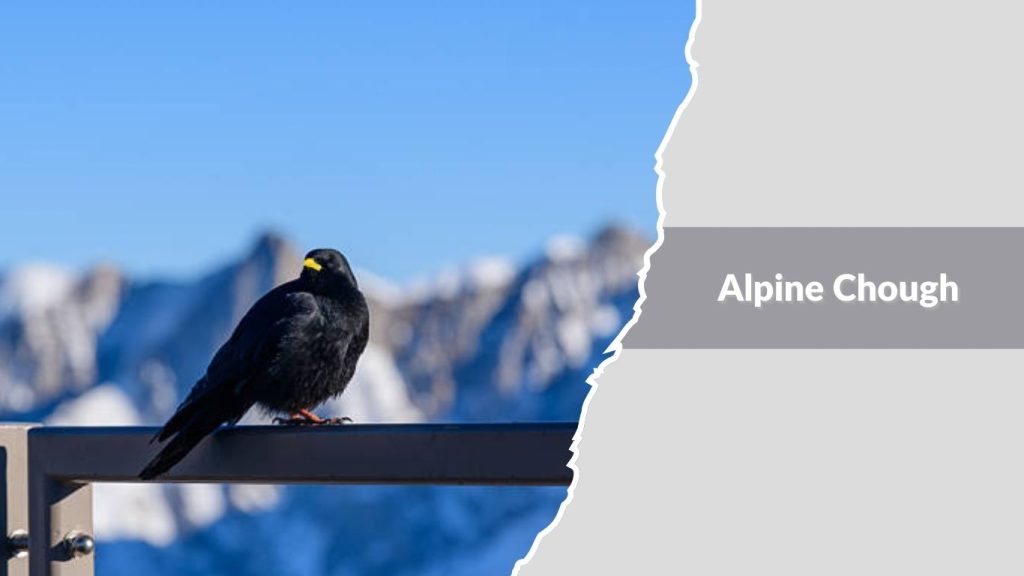
The Alpine Chough is a high-altitude bird known for its glossy black plumage and bright yellow beak. Often seen soaring over mountains, it is highly intelligent and well adapted to cold, rugged environments.
Identification
- Glossy black feathers with a slight sheen
- Bright yellow, slightly curved beak
- Red legs and feet
- Long, broad wings suited for soaring
- Graceful flight with acrobatic movements
Habitat
Alpine Choughs live mainly in mountainous regions, especially alpine meadows, rocky cliffs, and high plateaus. They are commonly found above the tree line and often nest in crevices of cliffs or rocky slopes. During winter, they may descend to lower elevations, sometimes visiting villages or ski resorts in search of food.
Behaviors
This species is highly social and usually seen in flocks. Alpine Choughs are excellent fliers, frequently performing aerial displays and gliding effortlessly on mountain winds. They are curious birds and often approach humans in high-altitude tourist areas. Their calls are loud and ringing, helping flock members stay connected over long distances.
Diet and Lifespan
Alpine Choughs are omnivorous, feeding on insects, seeds, berries, and leftover food near human settlements. In winter, they rely more on plant material and scraps. Their average lifespan is around 10–15 years, with some individuals living even longer in favorable conditions.
4. Black Oystercatcher

The Black Oystercatcher is a bold coastal bird recognized for its entirely black body and contrasting yellow to orange-yellow beak. It is most often seen along rocky shorelines, where it plays an important role in coastal ecosystems.
Identification
- Entire body covered in black plumage
- Long, strong yellow to orange-yellow beak
- Bright yellow eyes with a red eye-ring
- Pinkish legs and feet
- Large, sturdy shorebird shape
Habitat
Black Oystercatchers inhabit rocky coastlines, tidal flats, and offshore islands. They prefer areas with exposed rocks and intertidal zones, which provide abundant food sources. Nests are usually simple scrapes made on gravelly beaches or rocky surfaces just above the high-tide line.
Behaviors
These birds are usually seen alone or in pairs and are highly territorial, especially during breeding season. They are known for their loud, piping calls, which are often used to warn intruders. Black Oystercatchers are strong fliers but spend most of their time walking along the shoreline in search of food.
Diet and Lifespan
Their diet consists mainly of marine invertebrates such as mussels, clams, limpets, and snails, which they pry open with their powerful beaks. The average lifespan of a Black Oystercatcher is around 10–15 years, though some individuals may live longer in protected coastal areas.
5. Yellow-billed Magpie
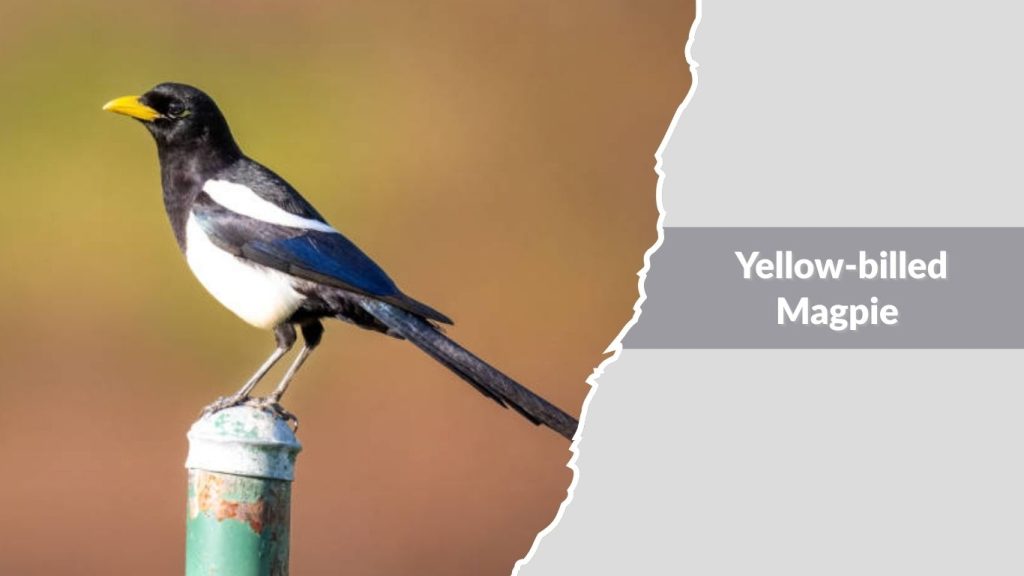
The Yellow-billed Magpie is a striking black-and-white bird best known for its bright yellow beak and long tail. Endemic to California, it is a close relative of the Black-billed Magpie and is easily recognized by its bold appearance.
Identification
- Black head, chest, and wings with white patches
- Bright yellow beak and eye-ring
- Long, graduated tail with greenish-blue sheen
- Strong legs adapted for walking and hopping
- Large, crow-like body
Habitat
Yellow-billed Magpies are commonly found in open woodlands, oak savannas, grasslands, and farmlands. They prefer areas with scattered trees, which provide nesting sites and vantage points. This species avoids dense forests and is often seen near agricultural lands and rural communities.
Behaviors
These birds are highly intelligent and social, often forming small groups. They are vocal and use a variety of calls to communicate with flock members. Yellow-billed Magpies spend much of their time on the ground searching for food but will also forage in trees and shrubs.
Diet and Lifespan
Their diet includes insects, small mammals, eggs, fruits, seeds, and carrion, making them opportunistic feeders. They also help control insect populations in farmlands. The average lifespan of a Yellow-billed Magpie is about 6–8 years, though some individuals may live longer in the wild.
6. Hill Myna
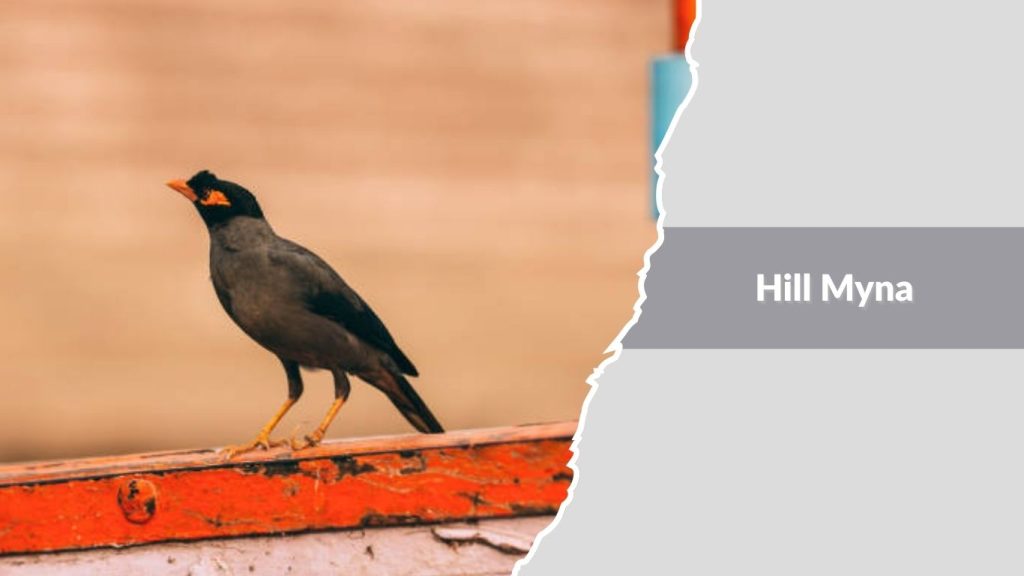
The Hill Myna is a glossy black bird famous for its bright yellow beak and exceptional ability to mimic human speech and sounds. Native to South and Southeast Asia, it is often associated with dense forests and tropical landscapes.
Identification
- Shiny black plumage with a metallic sheen
- Bright yellow beak and fleshy wattles
- Yellow patches of bare skin behind the eyes
- Strong legs and feet for perching
- Medium-sized body with short tail
Habitat
Hill Mynas inhabit tropical and subtropical forests, including evergreen forests, forest edges, and wooded hills. They are typically found in areas with tall trees that provide nesting cavities. This species prefers undisturbed forests but may also be seen near plantations and rural settlements.
Behaviors
These birds are usually seen in pairs or small groups. Hill Mynas are highly vocal and well known for their clear, loud calls and impressive mimicry skills. They are active during the day and spend much of their time in the tree canopy, rarely coming to the ground.
Diet and Lifespan
Their diet mainly consists of fruits, berries, nectar, insects, and small invertebrates. Hill Mynas play an important role in seed dispersal within forest ecosystems. In the wild, they typically live around 10–15 years, while individuals in captivity may live even longer.
7. Satin Bowerbird
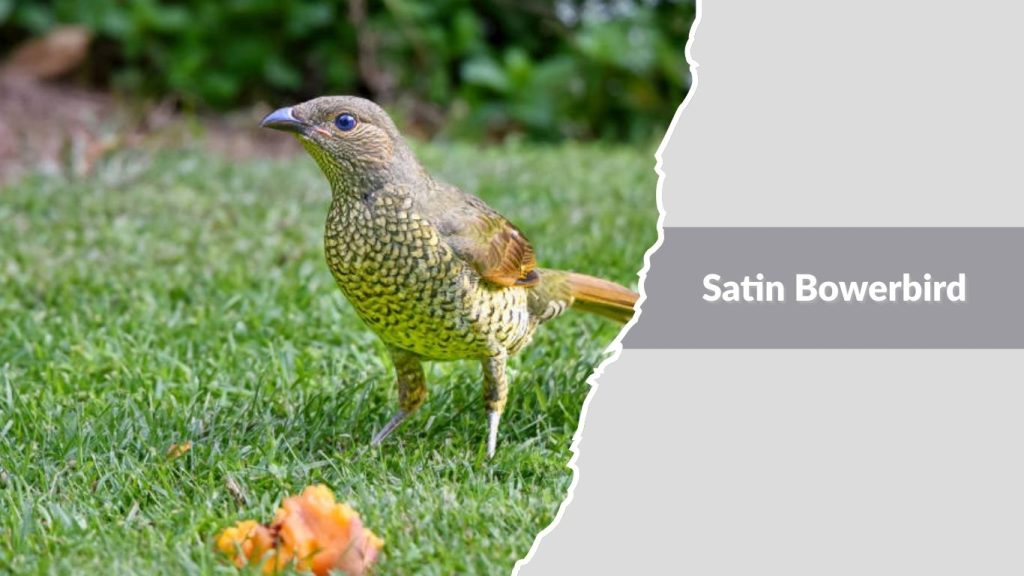
The Satin Bowerbird is an eye-catching bird known for the male’s glossy black-blue plumage and pale yellow beak. Native to Australia, it is especially famous for its unique courtship behavior involving decorative bowers.
Identification
- Adult male has shiny black-blue feathers
- Pale yellow to cream-colored beak
- Bright violet-blue eyes in males
- Females are greenish-brown with pale markings
- Medium-sized bird with a sturdy build
Habitat
Satin Bowerbirds are found in forests, woodlands, and rainforest edges across eastern Australia. They are also common in suburban gardens and parks near forested areas. Dense vegetation provides shelter, while open spaces nearby offer good feeding opportunities.
Behaviors
Males are best known for building and decorating bowers using sticks and blue objects to attract females. These structures are not nests but are used solely for courtship displays. Satin Bowerbirds are generally shy and spend much of their time in trees, moving quietly through the canopy.
Diet and Lifespan
Their diet includes fruits, berries, leaves, flowers, and insects. They may also feed on cultivated fruits in gardens. The average lifespan of a Satin Bowerbird is around 8–12 years in the wild, with some individuals living longer under favorable conditions.
8. European Starling
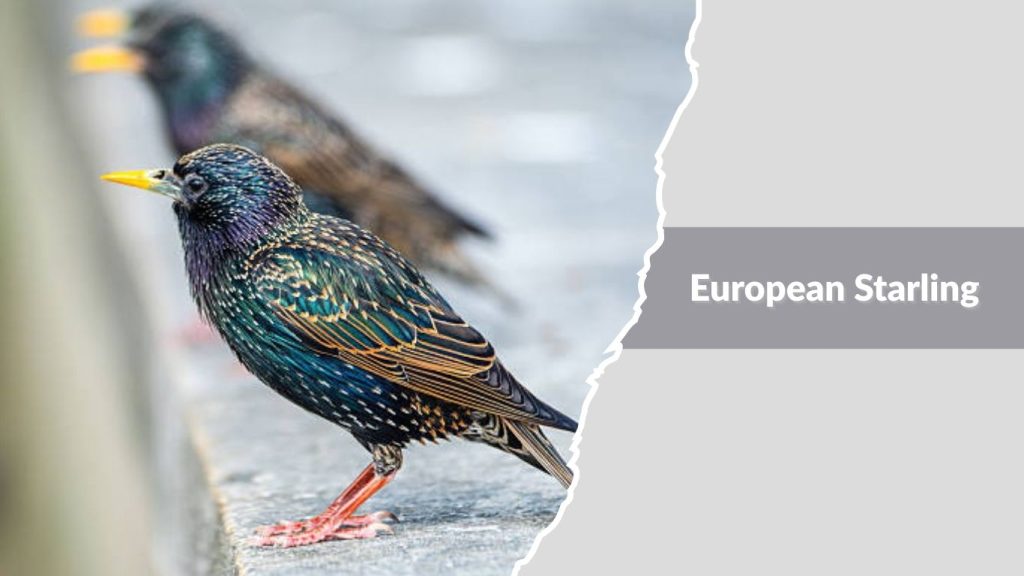
The European Starling is a glossy black bird with a bright yellow beak, especially noticeable during the breeding season. It is highly adaptable and widely distributed across Europe, Asia, and introduced regions worldwide.
Identification
- Iridescent black feathers with purple and green sheen
- Bright yellow beak in breeding season
- Short tail and compact body shape
- Pinkish legs
- White speckles visible outside breeding season
Habitat
European Starlings thrive in a wide range of habitats, including grasslands, farmland, urban areas, parks, and open woodlands. They commonly nest in tree cavities, building crevices, and nest boxes, making them frequent residents of cities and towns.
Behaviors
This species is famous for forming large, synchronized flocks known as murmurations. European Starlings are highly vocal and capable of mimicking sounds from their environment. They are aggressive competitors for nesting sites and often displace native birds.
Diet and Lifespan
Their diet is omnivorous, consisting of insects, earthworms, fruits, seeds, and human food scraps. They forage mainly on the ground. The average lifespan of a European Starling is about 2–3 years, though some individuals can live significantly longer.
9. Black Drongo
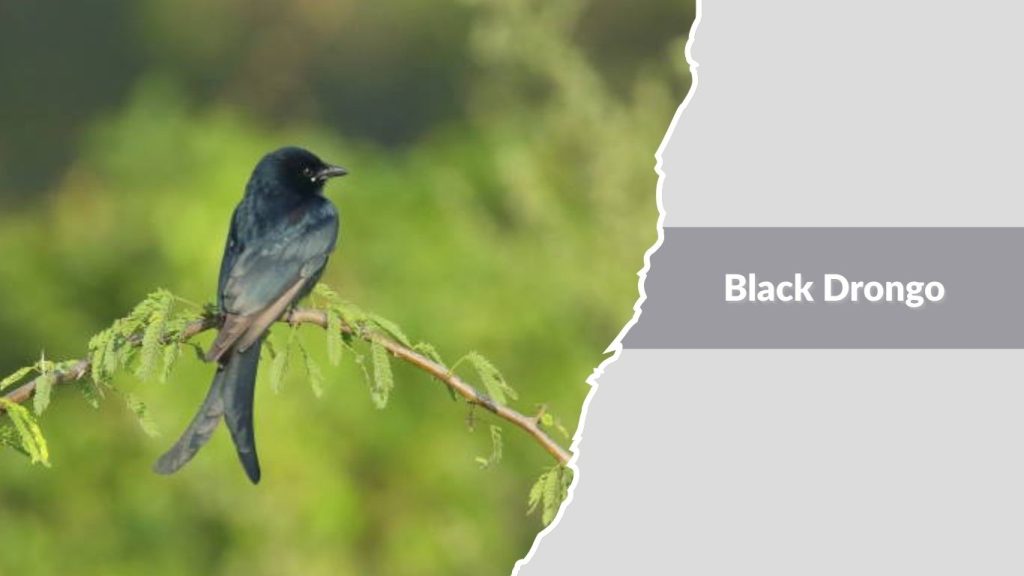
The Black Drongo is a sleek, jet-black bird with a slightly curved beak that can appear dark gray to black, often contrasting with its glossy feathers. It is widely known for its fearless nature and aggressive defense of territory.
Identification
- Entire body covered in glossy black plumage
- Slender, slightly hooked beak
- Long, deeply forked tail
- Bright red eyes in adults
- Medium-sized, agile body
Habitat
Black Drongos are commonly found in open woodlands, farmland, grasslands, and forest edges. They are especially abundant near agricultural areas, where insects are plentiful. This species is highly adaptable and often seen perched on wires, fences, or exposed branches.
Behaviors
Known for their bold and aggressive behavior, Black Drongos frequently chase away much larger birds, including raptors. They are excellent aerial hunters and catch insects in flight. Black Drongos are also known for their loud, harsh calls and, in some cases, their ability to mimic other bird species.
Diet and Lifespan
Their diet mainly consists of flying insects such as beetles, grasshoppers, and flies. They may also eat small reptiles or nectar on occasion. The average lifespan of a Black Drongo is around 6–10 years in the wild, depending on environmental conditions.
10. Black Bulbul
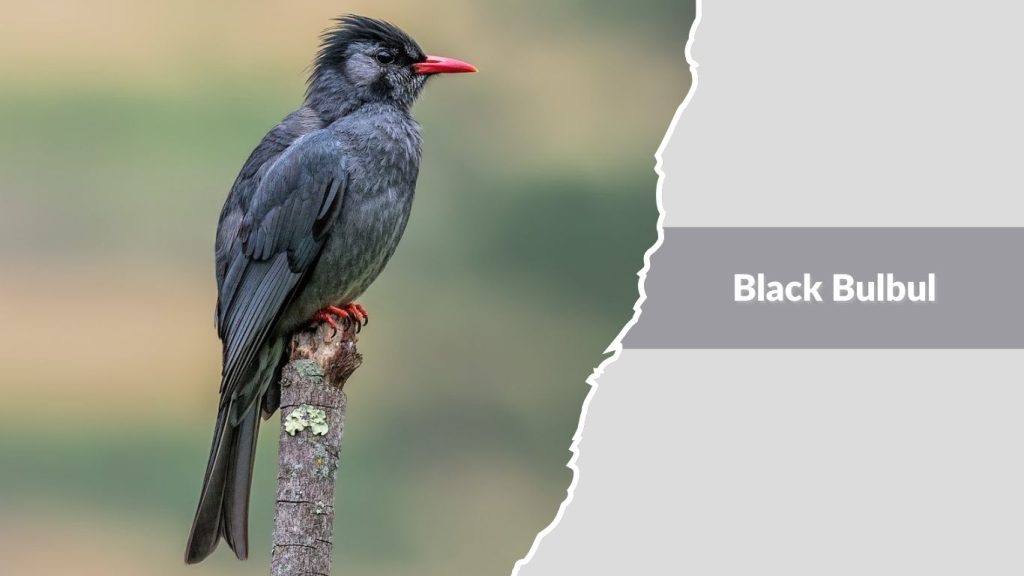
The Black Bulbul is a medium-sized bird with dark plumage and a bright yellow beak, giving it a striking appearance. It is commonly found in forested regions of South and Southeast Asia and is often heard before it is seen.
Identification
- Dark gray to blackish body feathers
- Bright yellow beak
- Distinct yellow eye-ring
- Long tail with slightly rounded tip
- Slim, elegant body shape
Habitat
Black Bulbuls inhabit hill forests, evergreen forests, forest edges, and wooded gardens. They are typically found at higher elevations but may move to lower areas during colder months. This species prefers dense vegetation with tall trees for shelter and nesting.
Behaviors
These birds are social and often seen in small flocks, especially outside the breeding season. Black Bulbuls are active and agile, moving quickly through tree canopies. They are vocal birds, producing a variety of musical and chattering calls throughout the day.
Diet and Lifespan
Their diet consists mainly of fruits, berries, nectar, and insects. Black Bulbuls play an important role in seed dispersal within forest ecosystems. The average lifespan of this species is estimated to be around 8–12 years in the wild.
11. Black Catbird
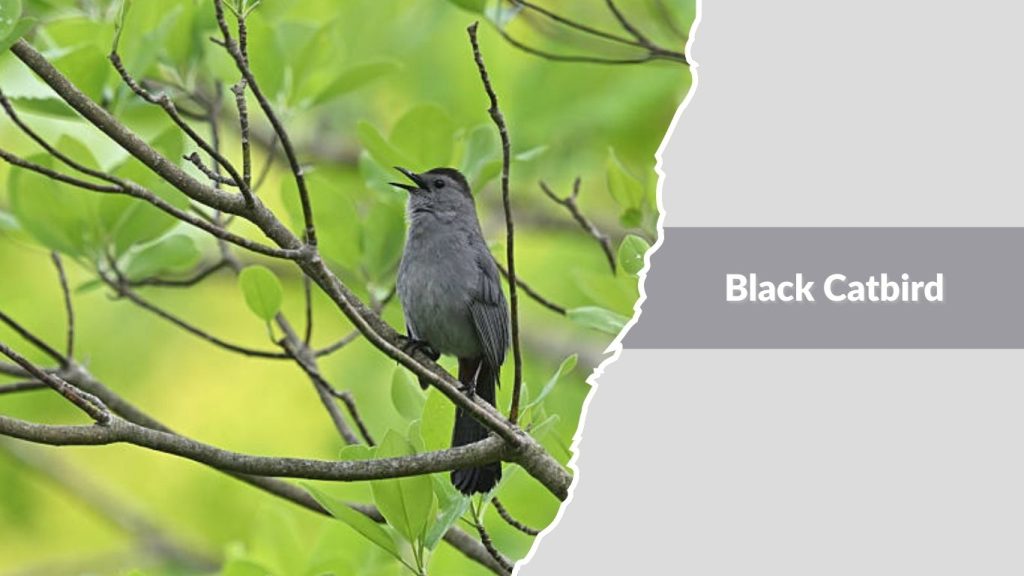
The Black Catbird is a secretive, glossy black bird best known for its bright yellow eyes and distinctive vocalizations. It is native to the Caribbean, particularly the Bahamas, and is often hidden within dense vegetation.
Identification
- Entire body covered in black plumage
- Bright yellow eyes
- Dark, slightly curved beak
- Long tail with rounded tip
- Medium-sized, slender body
Habitat
Black Catbirds are commonly found in mangroves, coastal scrub, thickets, and dense shrubs. They prefer low, tangled vegetation near the coast but may also inhabit inland brushy areas. This species relies heavily on thick cover for protection and nesting.
Behaviors
These birds are shy and elusive, spending most of their time within dense foliage. Black Catbirds are named for their cat-like mewing calls, along with a variety of whistles and harsh notes. They are usually seen alone or in pairs rather than in large flocks.
Diet and Lifespan
Their diet includes insects, spiders, berries, and small fruits. They forage quietly within shrubs and low trees. The average lifespan of a Black Catbird is not well documented, but it is believed to be around 7–10 years in the wild.
12. Blackbird (Turdus mandarinus)
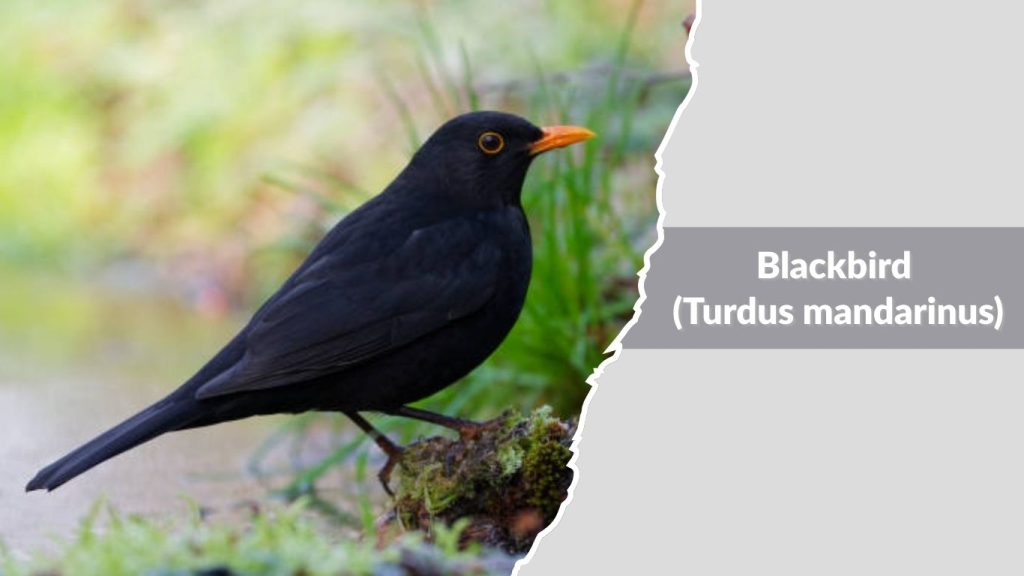
The Chinese Blackbird is a striking thrush species recognized by its dark plumage and bright yellow beak. It is native to East Asia and is often found in wooded areas and cultivated landscapes.
Identification
- Glossy black feathers in adult males
- Bright yellow beak
- Yellow eye-ring
- Females are dark brown with mottled markings
- Medium-sized thrush body
Habitat
This species inhabits forests, forest edges, gardens, parks, and farmland near wooded areas. It is commonly found in lowlands and foothills and often adapts well to human-altered environments, including urban parks.
Behaviors
Chinese Blackbirds are usually solitary or seen in pairs. They are ground feeders and often forage by hopping and pausing to search for prey. Males are known for their pleasant, melodic songs, especially during the breeding season.
Diet and Lifespan
Their diet consists of insects, earthworms, fruits, and berries. Seasonal changes influence their feeding habits, with more insects consumed in warmer months. The average lifespan of this species is estimated to be around 4–6 years in the wild.
13. Blackbird (Turdus ignobilis)
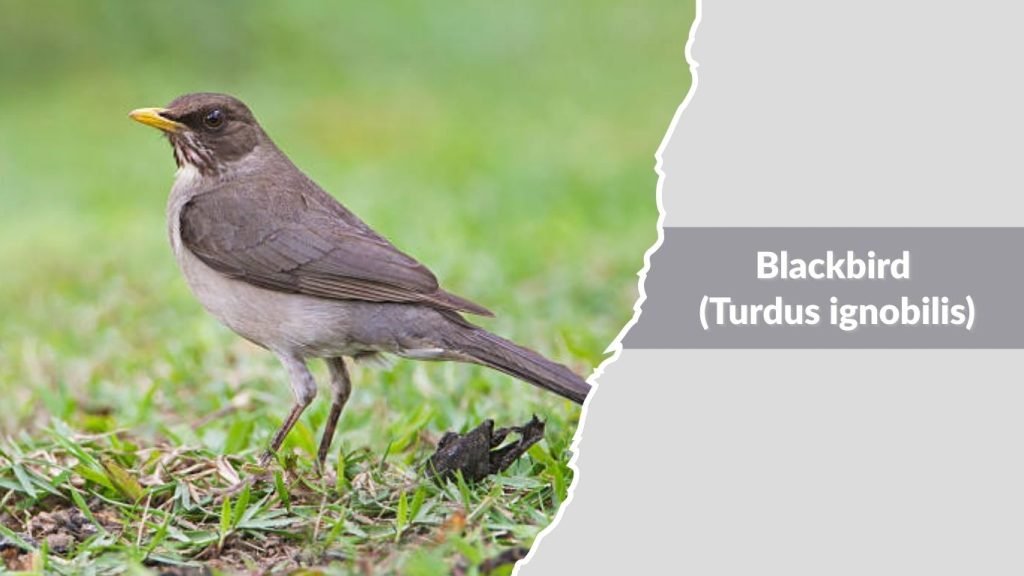
The Black Thrush, also known as the Blackbird (Turdus ignobilis), is a dark-plumaged thrush species with a yellow beak. It is native to parts of Central and South America and is commonly found in forested landscapes.
Identification
- Dark blackish to dark brown plumage
- Yellow to yellow-orange beak
- Pale eye-ring
- Sturdy thrush-like body
- Long tail
Habitat
This species inhabits tropical and subtropical forests, forest edges, plantations, and gardens. It is often found in humid lowland areas but can also occur in foothills. Black Thrushes adapt well to semi-open habitats with dense vegetation and nearby open feeding grounds.
Behaviors
Black Thrushes are generally solitary or seen in pairs. They spend much of their time foraging on the ground, flipping leaves in search of food. Their song is rich and melodious, usually delivered from a concealed perch within trees or shrubs.
Diet and Lifespan
Their diet includes insects, worms, fruits, and berries. They play an important role in controlling insect populations and dispersing seeds. The average lifespan of the Black Thrush is believed to be around 4–7 years in the wild.
14. Blackbird (Turdus lawrencii)
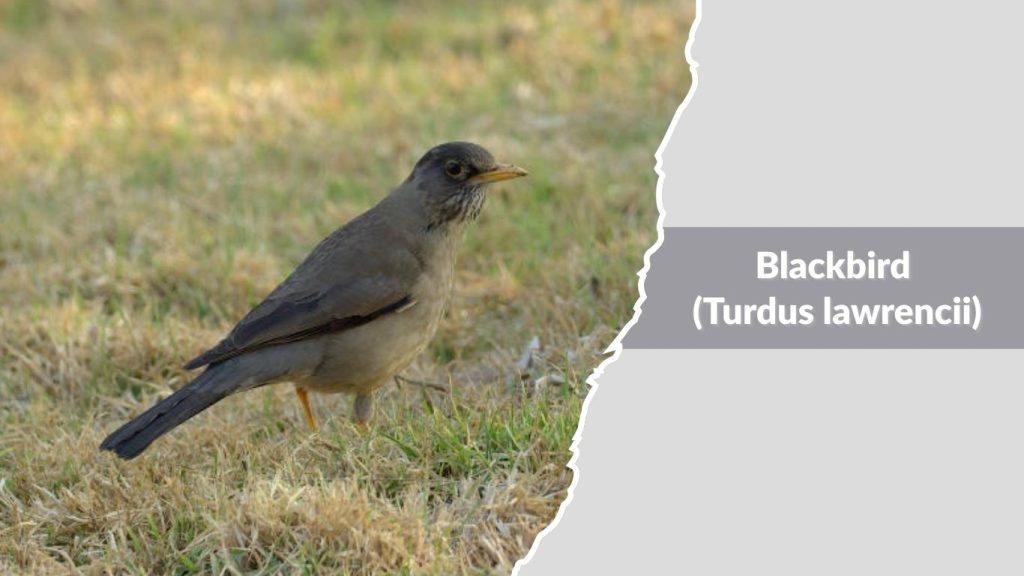
Lawrence’s Blackbird is a lesser-known thrush species distinguished by its dark plumage and yellow beak. It is native to parts of Southeast Asia and typically inhabits forested and semi-open landscapes.
Identification
- Dark blackish-brown to black plumage
- Yellow to yellow-orange beak
- Subtle eye-ring
- Medium-sized thrush body
- Long tail with rounded tip
Habitat
This species is mainly found in tropical and subtropical forests, forest edges, and secondary growth areas. It often occurs in hilly or mountainous regions, favoring dense vegetation that provides good cover for nesting and foraging. Occasionally, it may be seen near plantations or wooded rural areas.
Behaviors
Lawrence’s Blackbird is generally shy and elusive. It is most often seen alone or in pairs, foraging quietly on the forest floor or in low shrubs. Males are known to sing from concealed perches, producing soft, melodious songs that blend into the forest background.
Diet and Lifespan
Its diet consists mainly of insects, earthworms, berries, and small fruits. Seasonal availability of food influences its feeding behavior. The exact lifespan of this species is not well documented, but it is estimated to live around 4–6 years in the wild.
15. Yellow-billed Cuckoo
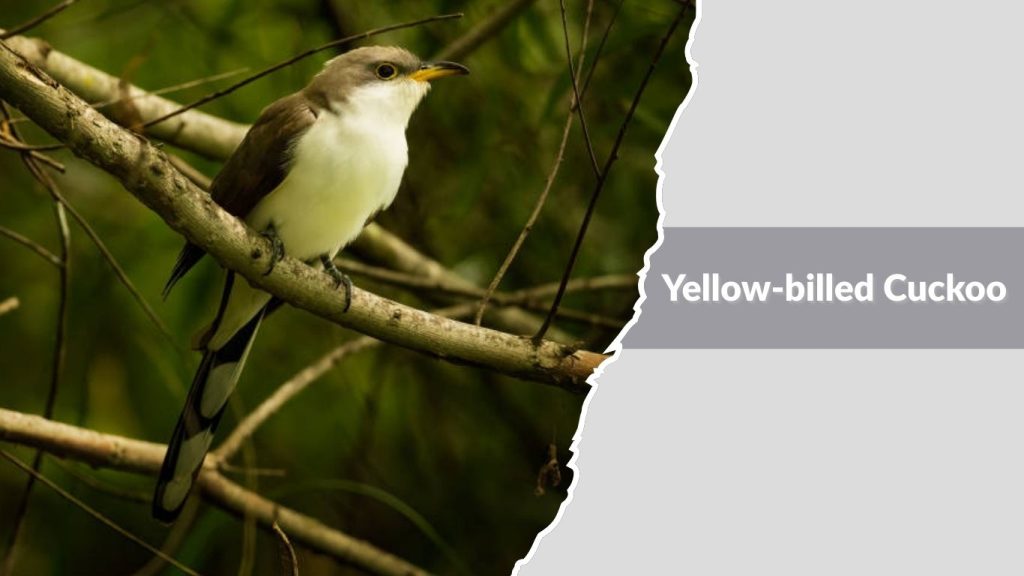
The Yellow-billed Cuckoo is a slender, mostly dark bird recognized by its long tail and distinctive yellow-and-black bill. Although not entirely black, it is often included due to its dark upperparts and clearly yellow beak.
Identification
- Dark brown to blackish upperparts
- Long, graduated tail with white spots underneath
- Distinctive yellow lower mandible with dark upper mandible
- Slim body with long wings
- Yellow eye-ring
Habitat
Yellow-billed Cuckoos are found in woodlands, forest edges, riverbanks, and dense thickets. They prefer areas with thick vegetation and are often associated with deciduous forests and shrubby habitats. During migration, they may also appear in gardens and coastal areas.
Behaviors
This species is known for its secretive nature and slow, deliberate movements through foliage. Yellow-billed Cuckoos are famous for their brood-parasitic behavior, occasionally laying eggs in the nests of other birds. Their calls are soft and repetitive, often heard more than the bird is seen.
Diet and Lifespan
Their diet mainly consists of caterpillars, insects, spiders, and occasionally small lizards or fruits. They are especially valued for consuming hairy caterpillars avoided by many other birds. The average lifespan of a Yellow-billed Cuckoo is around 5–7 years in the wild.
FAQs
What are black birds with yellow beaks called?
Black birds with yellow beaks include several different species rather than a single group. Common examples are the Common Blackbird, Yellow-billed Blackbird, Hill Myna, and European Starling. The yellow beak is often more noticeable during the breeding season.
Are all black birds with yellow beaks the same species?
No, they belong to different families and regions around the world. Some are thrushes, others are mynas, corvids, or starlings. Their similar appearance is a result of adaptation, not close relation.
Why do some black birds have yellow beaks?
A yellow beak often signals maturity and breeding readiness. In many species, beak color becomes brighter during breeding season due to hormonal changes, helping attract mates.
Where are black birds with yellow beaks commonly found?
They are found worldwide, including Europe, Asia, Australia, Africa, and the Americas. Habitats range from forests and mountains to gardens, wetlands, and urban areas.
Are black birds with yellow beaks aggressive?
Aggression depends on the species. Some, like the Black Drongo, are very territorial and bold, while others, such as thrushes, are generally calm and shy except during breeding season.