
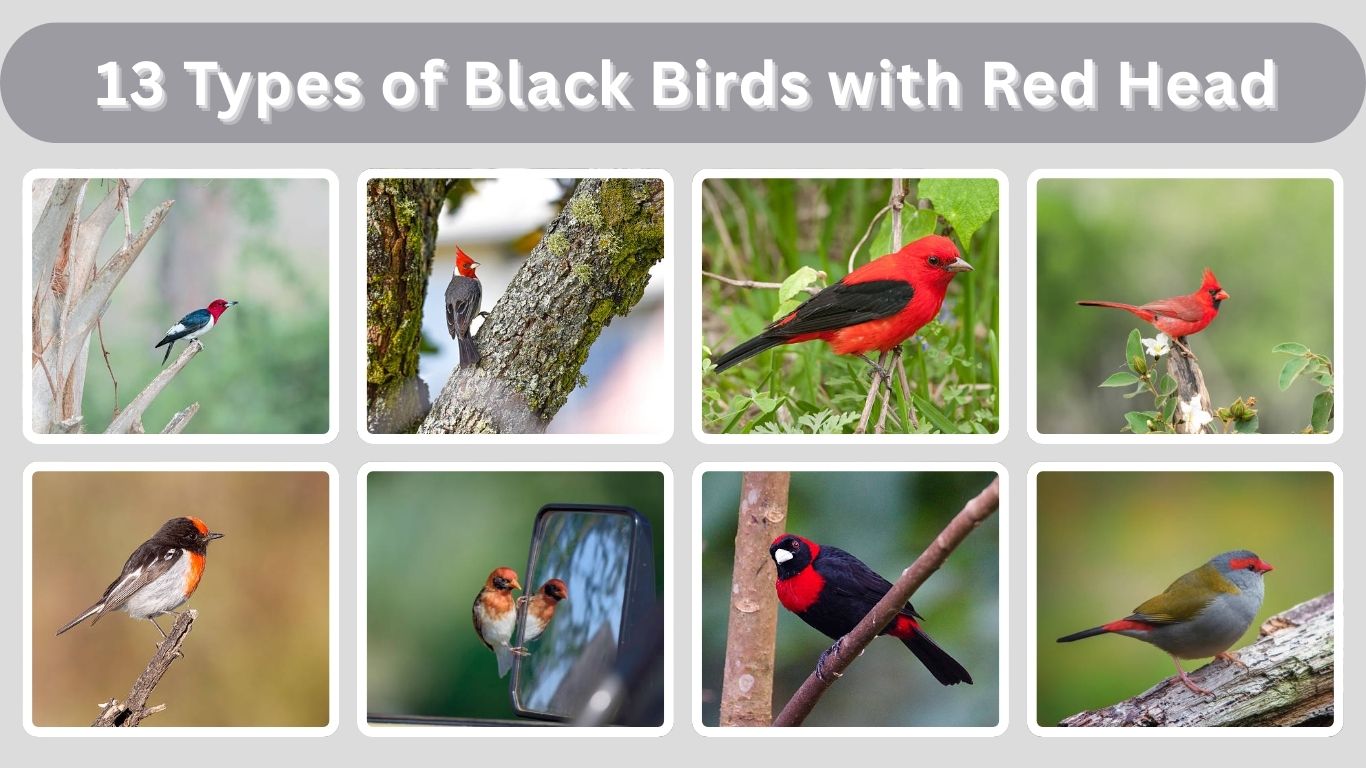
Black birds with red heads are among the most eye-catching and fascinating species in the bird world. The striking contrast between dark feathers and vivid red coloring makes these birds easy to recognize and highly appealing to birdwatchers. Found across different continents, they vary widely in size, behavior, and habitat. From forest songbirds to wetland dwellers and scavengers, each species plays an important role in its ecosystem while showcasing nature’s remarkable diversity.
1. Red-headed Woodpecker
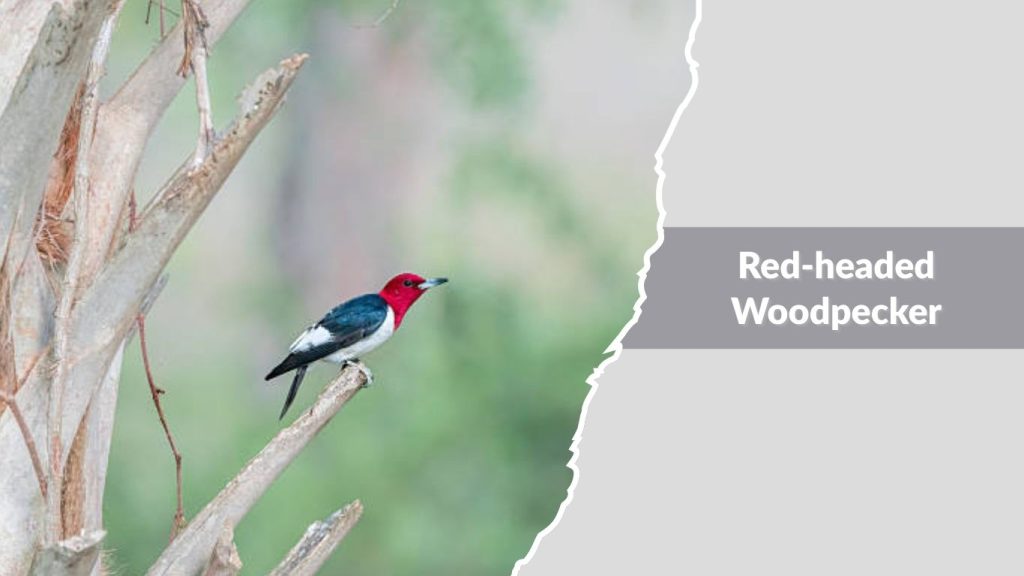
The Red-headed Woodpecker is a striking North American bird known for its bold color contrast and agile behavior. Its vivid red head paired with a mostly black-and-white body makes it one of the easiest woodpeckers to recognize.
Identification
- Bright crimson-red head and neck
- Black back and wings with large white wing patches
- White belly and lower back
- Medium-sized, straight bill
Habitat
This species prefers open woodlands, forest edges, orchards, and areas with scattered trees. It is often seen in savannas, farmlands, and even suburban parks where mature trees are present.
Behavior
Red-headed Woodpeckers are highly active and acrobatic. They are known for catching insects in midair, storing food in tree crevices, and aggressively defending their territory from other birds.
Diet
Their diet includes insects, beetles, ants, grasshoppers, fruits, nuts, seeds, and occasionally small vertebrates or bird eggs.
Range
They are primarily found across eastern and central North America, with populations migrating short distances depending on food availability.
2. Red-crested Cardinal
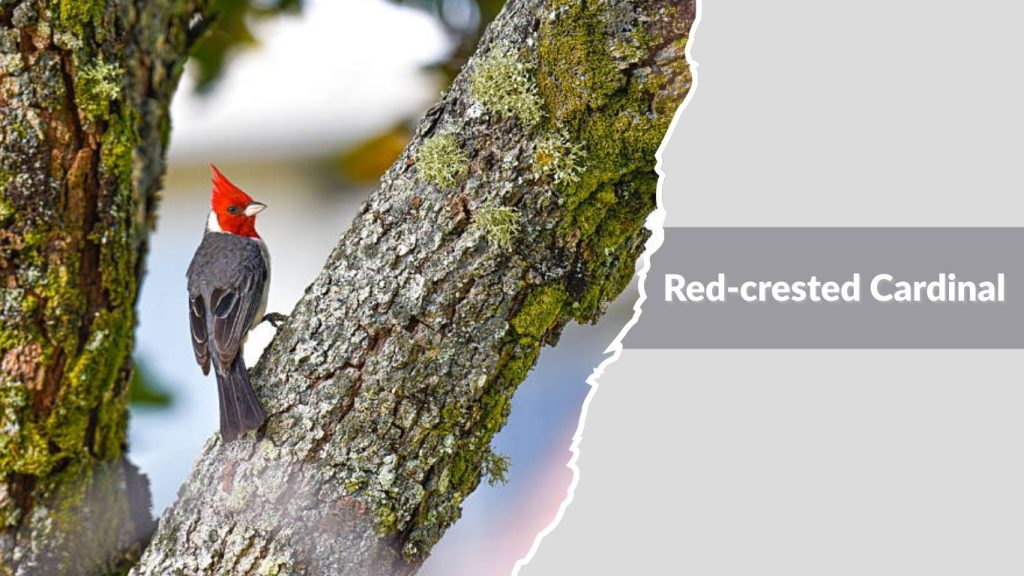
The Red-crested Cardinal is a visually striking bird admired for its bold red head and crest contrasted against a mostly gray and black body. Though called a cardinal, it belongs to a different bird family and is commonly kept as an ornamental bird in some regions.
Identification
- Bright red head with a pointed, raised crest
- Gray back and wings
- White underparts
- Black face mask around the eyes and bill
- Thick, conical bill suited for seeds
Habitat
This species is commonly found in open woodlands, savannas, grasslands, gardens, and agricultural areas. It adapts well to human-altered landscapes and is often seen near farms, city parks, and rural settlements.
Behavior
Red-crested Cardinals are social birds, frequently seen in pairs or small groups. They are active during the day and often forage on the ground or low vegetation. Their calls are sharp and repetitive, making them easy to notice even when partially hidden.
Diet
Their diet mainly consists of seeds and grains, but they also eat fruits, berries, and small insects. This flexible feeding behavior helps them thrive in both natural and urban environments.
Range
The Red-crested Cardinal is native to South America, particularly Argentina, Bolivia, Brazil, Paraguay, and Uruguay. Introduced populations also exist in places such as Hawaii and Puerto Rico.
3. Scarlet Tanager
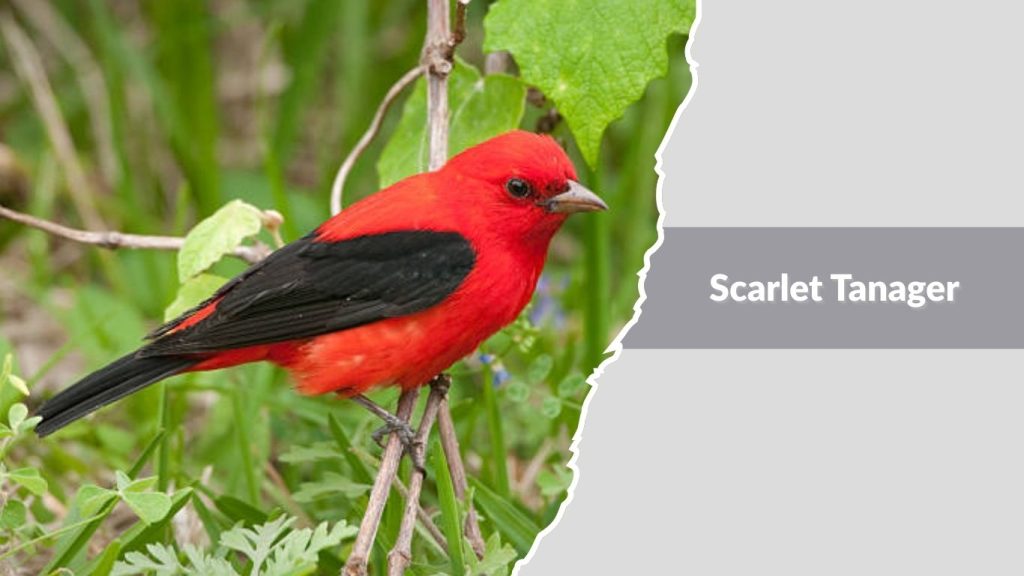
The Scarlet Tanager is a brilliantly colored songbird best known for its vivid red head and body contrasted with jet-black wings and tail. It is a seasonal migrant and a favorite among birdwatchers due to its dramatic appearance during the breeding season.
Identification
- Bright scarlet red head and body (breeding males)
- Black wings and tail
- Thick, pale bill
- Females are olive-yellow with darker wings
Habitat
This species prefers mature deciduous forests, especially areas with tall trees and dense canopies. During migration, it may also be found in forest edges, parks, and wooded suburban areas.
Behavior
Scarlet Tanagers are often heard before they are seen, as they spend much of their time high in the forest canopy. They are relatively solitary outside the breeding season and are known for their robin-like song with a hoarser tone.
Diet
Their diet mainly consists of insects such as beetles, caterpillars, ants, and bees. They also consume fruits and berries, especially during migration and in their wintering grounds.
Range
Scarlet Tanagers breed in eastern North America and migrate to northwestern South America for the winter, traveling long distances each year.
4. Northern Cardinal
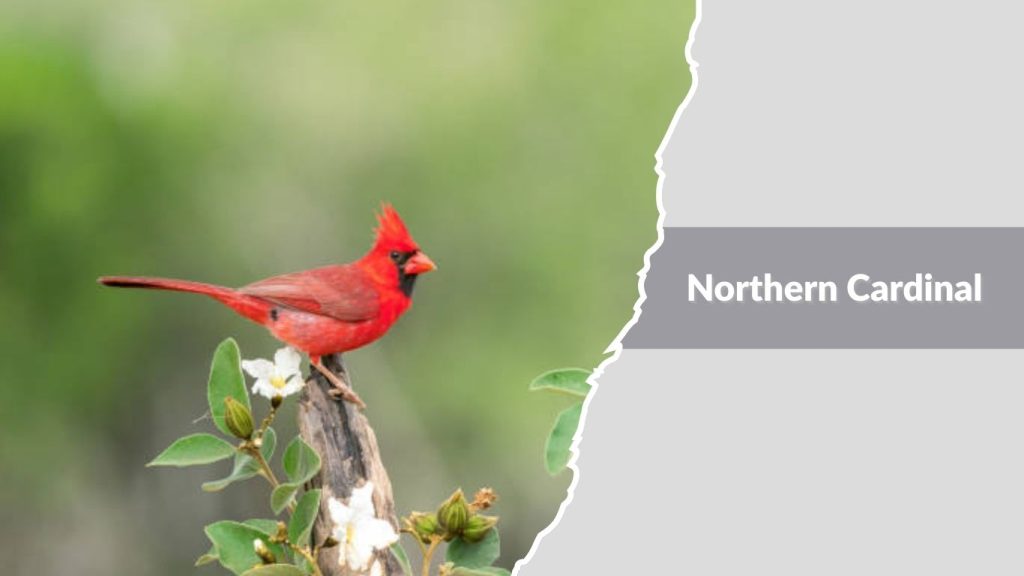
The Northern Cardinal is a well-known songbird recognized for its vivid red head and face, paired with darker wings and tail. It is popular for its strong presence, melodic songs, and year-round visibility in many regions.
Identification
- Bright red head and face (males)
- Dark gray to black wings and tail
- Prominent crest on the head
- Thick, orange-red conical bill
- Females are pale brown with reddish highlights
Habitat
Northern Cardinals thrive in a wide range of environments including woodlands, forest edges, wetlands, gardens, shrublands, and suburban neighborhoods. They prefer areas with dense shrubs for nesting and cover.
Behavior
This species is territorial and often aggressive toward intruders, especially during the breeding season. Males are known to sing loudly from exposed perches, and both sexes may sing. Cardinals do not migrate and remain in their territory year-round.
Diet
Their diet consists mainly of seeds, grains, fruits, and berries, along with insects such as beetles, grasshoppers, and caterpillars. Strong bills allow them to crack tough seeds with ease.
Range
Northern Cardinals are found throughout eastern and central North America, extending from southern Canada through the eastern United States and into parts of Mexico.
5. Red-capped Robin

The Red-capped Robin is a small, eye-catching bird known for its bright red crown that contrasts with its dark upperparts. Despite its name, it is not a true robin but is admired for its active nature and sharp calls.
Identification
- Bright red cap on the crown
- Black to dark gray upperparts
- White underparts
- Slim, pointed bill
- Compact body with relatively long legs
Habitat
This species is commonly found in open woodlands, dry forests, scrublands, and forest edges. It prefers areas with scattered trees and open ground where it can forage easily.
Behavior
Red-capped Robins are energetic and alert birds. They are often seen hopping on the ground or perching low while scanning for prey. They are generally solitary or seen in pairs and can be quite territorial during the breeding season.
Diet
Their diet mainly consists of insects and other small invertebrates such as beetles, ants, spiders, and larvae. Occasionally, they may consume small fruits or seeds when insects are scarce.
Range
The Red-capped Robin is native to parts of Australia, where it is found across southern and eastern regions, particularly in drier inland areas.
6. Red-headed Weaver

The Red-headed Weaver is a striking African bird known for the male’s bright red head contrasted with a dark body. It is especially famous for its complex woven nests and energetic breeding displays.
Identification
- Bright red head and face (breeding males)
- Black to dark brown body
- Strong, conical black bill
- Females and non-breeding males are duller with brownish tones
Habitat
This species inhabits open woodlands, savannas, grasslands, riverbanks, and cultivated areas. It is often found near water sources and human settlements where suitable nesting trees are available.
Behavior
Red-headed Weavers are highly social birds, usually seen in colonies. Males are skilled nest builders, constructing tightly woven nests to attract females. They are active, noisy, and frequently engage in displays during the breeding season.
Diet
Their diet consists mainly of seeds and grains, supplemented by insects such as beetles, caterpillars, and grasshoppers. They often forage in groups, both on the ground and in vegetation.
Range
The Red-headed Weaver is widely distributed across sub-Saharan Africa, from West Africa through East Africa and into southern regions.
7. Crimson-collared Grosbeak
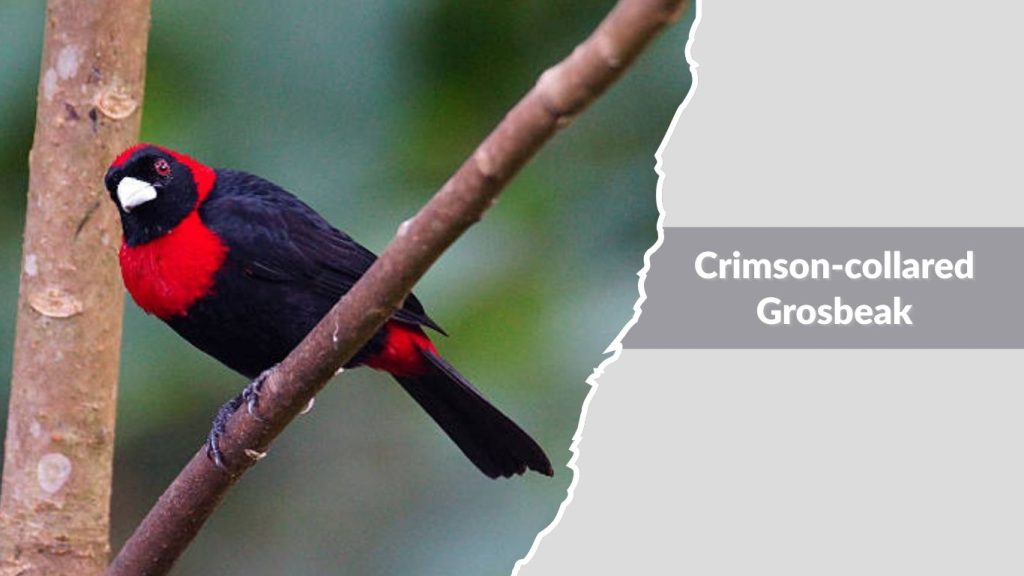
The Crimson-collared Grosbeak is a bold, tropical songbird known for the male’s vivid red head and collar sharply contrasted against a black body. Its striking appearance and rich song make it a standout species in its native range.
Identification
- Bright crimson-red head and neck collar (males)
- Black back, wings, and tail
- Thick, pale bill adapted for cracking seeds
- Females are olive-brown with subtle reddish tones
Habitat
This species prefers tropical forests, forest edges, dense thickets, and wooded clearings. It is often found in lowland forests and areas with thick vegetation that provide cover and food sources.
Behavior
Crimson-collared Grosbeaks are usually seen alone or in pairs. They are shy and often remain hidden in dense foliage, though males may perch in exposed spots while singing during the breeding season. Their song is loud, clear, and melodious.
Diet
Their diet includes seeds, fruits, berries, and insects. The strong bill allows them to crack hard seeds, while insects provide additional protein, especially during breeding.
Range
The Crimson-collared Grosbeak is native to southern Mexico, Guatemala, Belize, Honduras, Nicaragua, and Costa Rica, mainly in Central America’s tropical regions.
8. Red-headed Finch
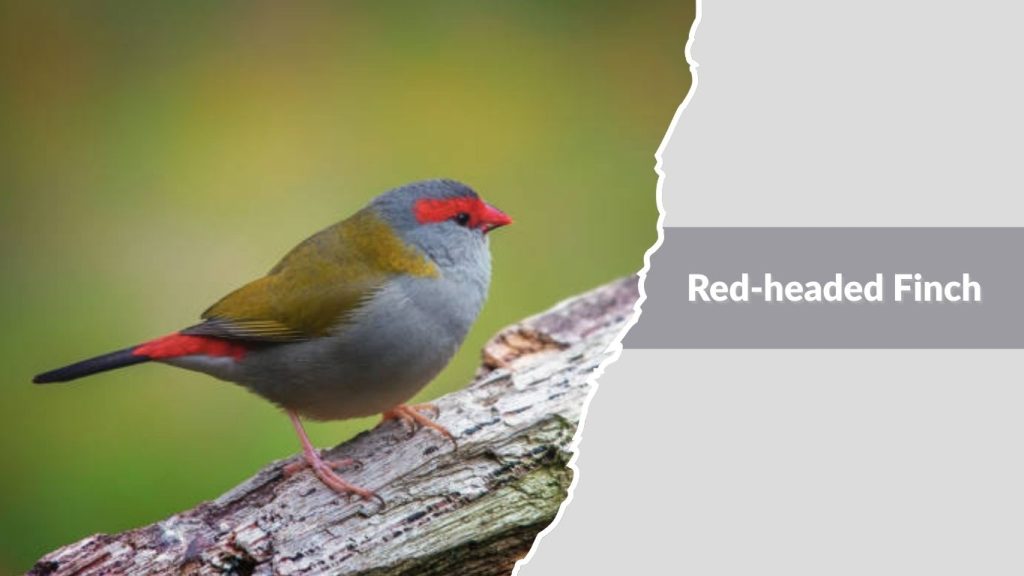
The Red-headed Finch is a small but colorful bird admired for its bright red head paired with darker body tones. It is often seen in flocks and is known for its cheerful calls and active foraging behavior.
Identification
- Bright red head and face
- Dark brown to black upperparts
- Pale underparts
- Short, conical bill adapted for seed eating
- Compact body structure
Habitat
This species inhabits open grasslands, woodland edges, shrublands, and agricultural fields. It adapts well to human-modified environments and is frequently observed near farms and rural settlements.
Behavior
Red-headed Finches are social birds, usually found in pairs or small groups. They are active during daylight hours and often forage on the ground. Their calls are sharp and repetitive, helping flock members stay in contact.
Diet
Their diet mainly consists of seeds and grains, but they also consume small insects, especially during the breeding season when extra protein is needed.
Range
The Red-headed Finch is native to parts of South Asia, particularly India, Nepal, and surrounding regions.
9. Vermilion Flycatcher
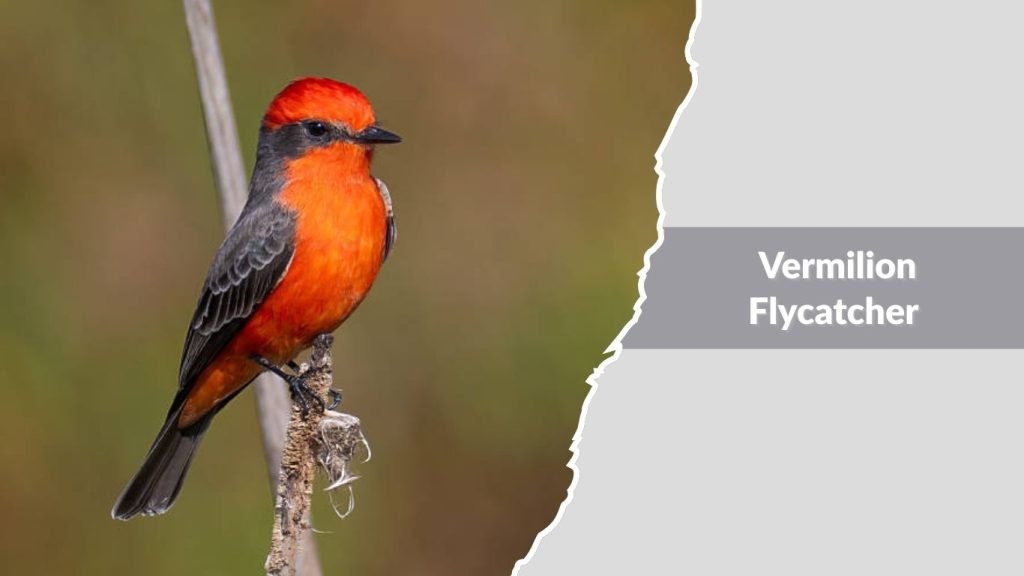
The Vermilion Flycatcher is a small, eye-catching bird famous for the male’s intense red head and chest contrasted with dark brown to blackish wings and tail. Its vivid coloration and graceful flight make it one of the most admired flycatchers.
Identification
- Bright red head and underparts (adult males)
- Dark brown to black wings and tail
- Slim, slightly flattened bill
- Females are grayish-brown with pale streaking and light red on the belly
Habitat
This species prefers open habitats such as grasslands, savannas, deserts, riverbanks, and open woodlands. It is often found near water and in areas with scattered trees or shrubs that provide suitable perches.
Behavior
Vermilion Flycatchers are often seen perched quietly before making quick, agile flights to catch insects in midair. They are territorial during the breeding season and frequently return to the same perch after each flight.
Diet
Their diet consists almost entirely of insects, including flies, beetles, grasshoppers, and bees. They occasionally consume small spiders or other invertebrates.
Range
The Vermilion Flycatcher is found across the southwestern United States, Mexico, Central America, and much of South America, with some populations migrating seasonally.
10. Red-faced Cormorant
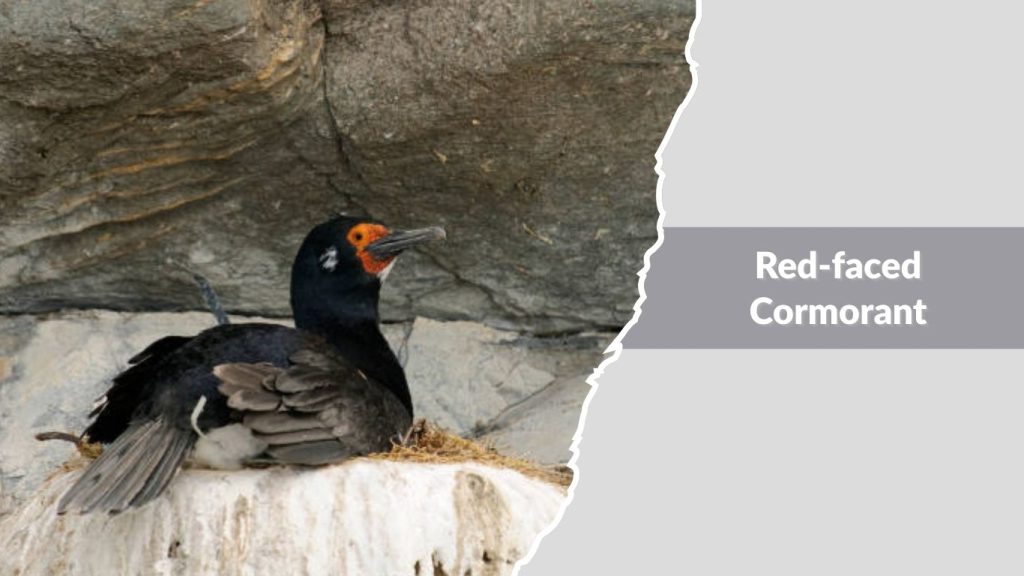
The Red-faced Cormorant is a large seabird recognized for its glossy black body and distinctive red facial skin. It is a powerful diver and spends much of its life along rugged coastlines and offshore waters.
Identification
- Mostly black, glossy plumage
- Bright red facial skin around the eyes and bill
- Long neck and slender hooked bill
- Blue-green eye ring
- Large, heavy-bodied appearance
Habitat
This species inhabits rocky coastlines, offshore islands, sea cliffs, and cold marine waters. It nests on steep cliffs and ledges close to the ocean and is rarely found far inland.
Behavior
Red-faced Cormorants are excellent swimmers and divers, using their strong feet to propel themselves underwater in search of prey. They are often seen perched on rocks or cliffs with wings spread to dry after fishing. They usually forage alone or in small groups.
Diet
Their diet consists mainly of fish, along with crustaceans and other marine invertebrates. They dive deep to capture prey, relying on strong vision underwater.
Range
The Red-faced Cormorant is found in the North Pacific region, particularly along the coasts of Alaska, eastern Russia, and nearby islands.
11. Red-capped Blackbird
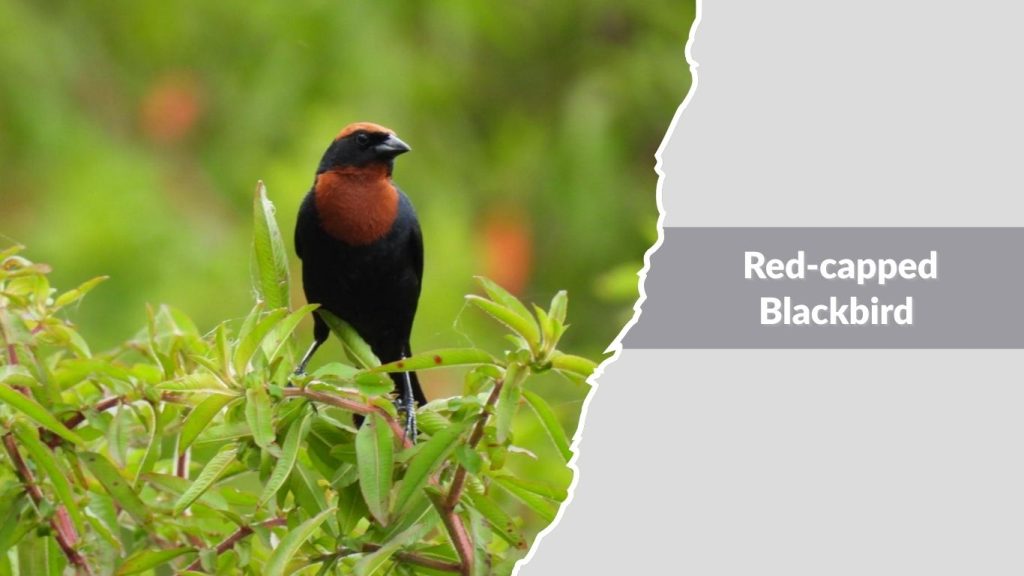
The Red-capped Blackbird is a striking marsh-dwelling bird known for the male’s bright red crown contrasting with its mostly black body. It is often seen moving through reeds and wet grasses in noisy flocks.
Identification
- Black body with a vivid red crown (males)
- Slightly glossy feathers
- Strong, pointed bill
- Females are brownish with streaked underparts
Habitat
This species prefers freshwater wetlands, marshes, swamps, reed beds, and flooded grasslands. It is strongly associated with areas that have dense aquatic vegetation.
Behavior
Red-capped Blackbirds are highly social and often gather in large flocks, especially outside the breeding season. They are active and vocal, with a variety of sharp calls. During breeding, males defend small territories within marshes.
Diet
Their diet includes insects, larvae, seeds, and aquatic invertebrates. They often forage by climbing reeds or searching near the water’s surface.
Range
The Red-capped Blackbird is native to South America, mainly found in Argentina, Uruguay, Paraguay, Bolivia, and southern Brazil.
12. Red-headed Vulture
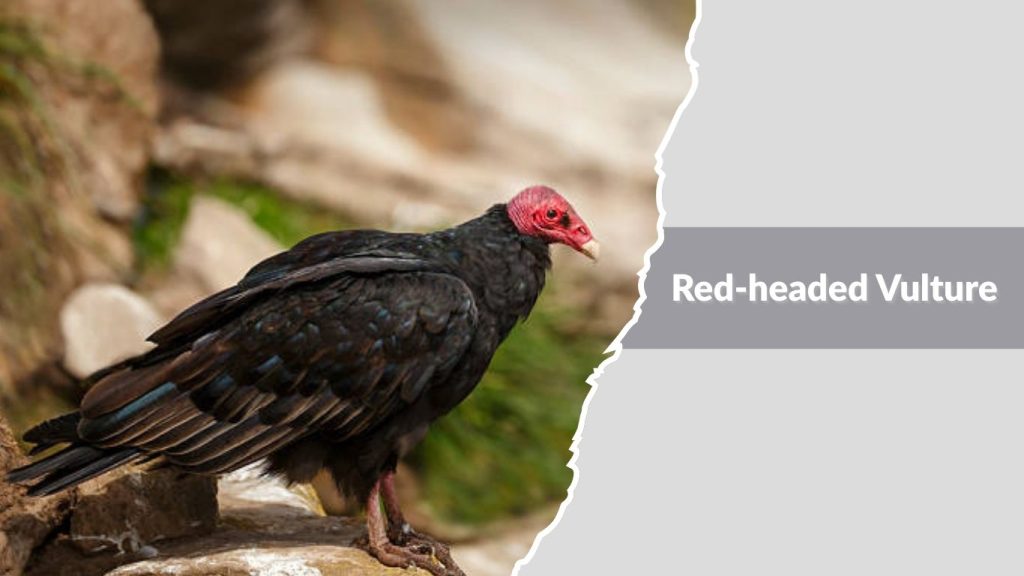
The Red-headed Vulture is a large scavenging bird recognized for its bare red head and dark body. It plays a crucial ecological role by feeding on carrion and helping prevent the spread of disease in its environment.
Identification
- Bare red head and neck
- Black to dark brown body and wings
- Strong, hooked bill adapted for tearing flesh
- Broad wings suited for soaring
- Large body size
Habitat
This species inhabits open landscapes such as grasslands, savannas, scrublands, and lightly wooded areas. It is often seen near human settlements, slaughterhouses, and open countryside where food sources are available.
Behavior
Red-headed Vultures are usually seen soaring high on thermal currents or perched near carcasses. They are typically solitary or found in pairs and are less social than many other vulture species. When feeding, they can be aggressive and dominant over other scavengers.
Diet
Their diet consists almost entirely of carrion, including the remains of dead animals. They rely on keen eyesight to locate food from great distances rather than following other scavengers.
Range
The Red-headed Vulture is found across the Indian subcontinent and parts of Southeast Asia, including India, Nepal, Bangladesh, and surrounding regions.
13. Red-crested Turaco
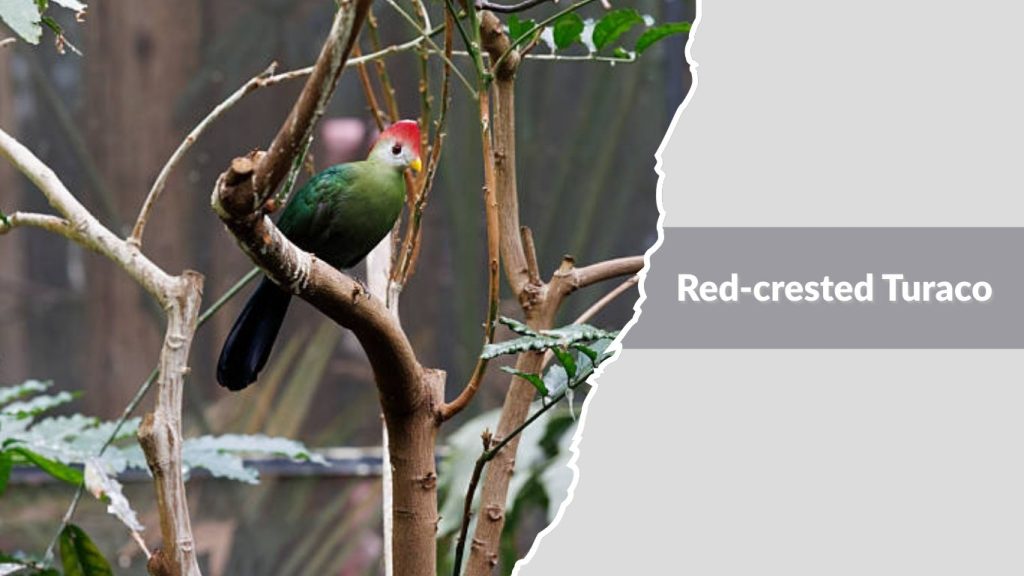
The Red-crested Turaco is a large, colorful bird best known for its vivid red crest and dark, glossy body. Its unique pigments and striking appearance make it one of the most distinctive birds in Africa.
Identification
- Bright red crest on the head
- Dark blue to greenish-black body
- Thick yellow bill
- Long tail and broad wings
- Medium-to-large body size
Habitat
This species inhabits forests, woodland edges, riverine forests, and dense vegetation. It prefers areas with tall trees and abundant fruit-bearing plants.
Behavior
Red-crested Turacos are agile climbers and strong gliders, often moving through trees by hopping and short flights. They are generally shy but vocal, producing loud calls that help maintain contact within family groups.
Diet
Their diet consists mainly of fruits, berries, and figs. They may also eat flowers and occasionally insects, especially during the breeding season.
Range
The Red-crested Turaco is native to central and southern Africa, occurring in countries such as Angola, Zambia, Zimbabwe, and Mozambique.
FAQs
1. Are all black birds with red heads closely related?
No. Birds with black bodies and red heads belong to different families and regions. Their similar coloration is a result of evolution and does not mean they are closely related.
2. Do female birds also have red heads like males?
In many species, males have brighter red coloring than females. Females are often duller or lack the red head entirely, which helps with camouflage during nesting.
3. Why do some birds have red heads?
Red coloration is often linked to mate attraction, dominance, and species recognition. Bright colors can signal good health and strong genetics.
4. Are black birds with red heads found all over the world?
Yes, but not evenly. They are found across North America, South America, Africa, Asia, and Australia, depending on the species.
5. Are these birds endangered?
Some species are stable, while others face threats from habitat loss, climate change, and human activity. Conservation status varies by species and region.