
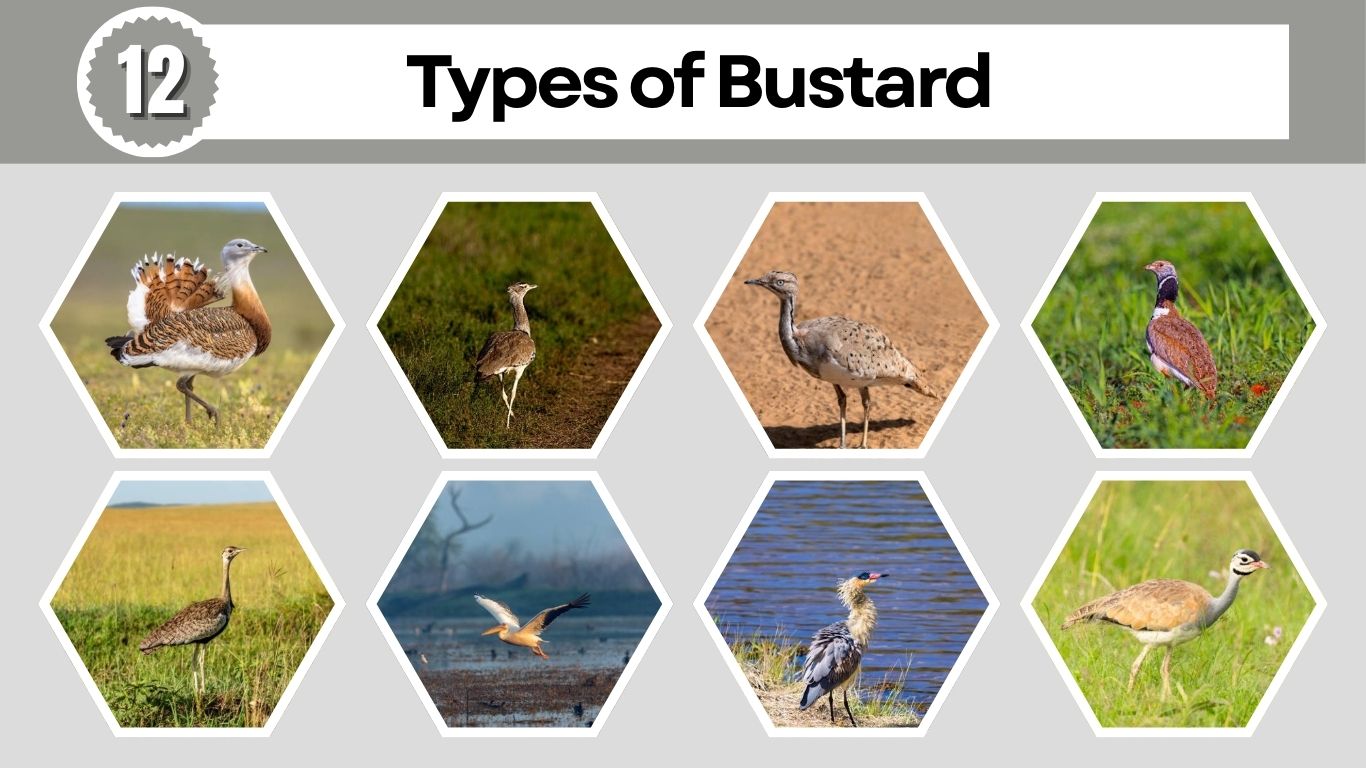
Bustards are large, ground-dwelling birds famous for their powerful legs, heavy bodies, and preference for wide open landscapes. They are most often seen walking slowly through grasslands, plains, and semi-deserts rather than flying. Many species are known for spectacular courtship displays, where males inflate their feathers, call loudly, or leap into the air. Found across Europe, Asia, Africa, and Australia, bustards play an important role in open-country ecosystems.
1. Great Bustard
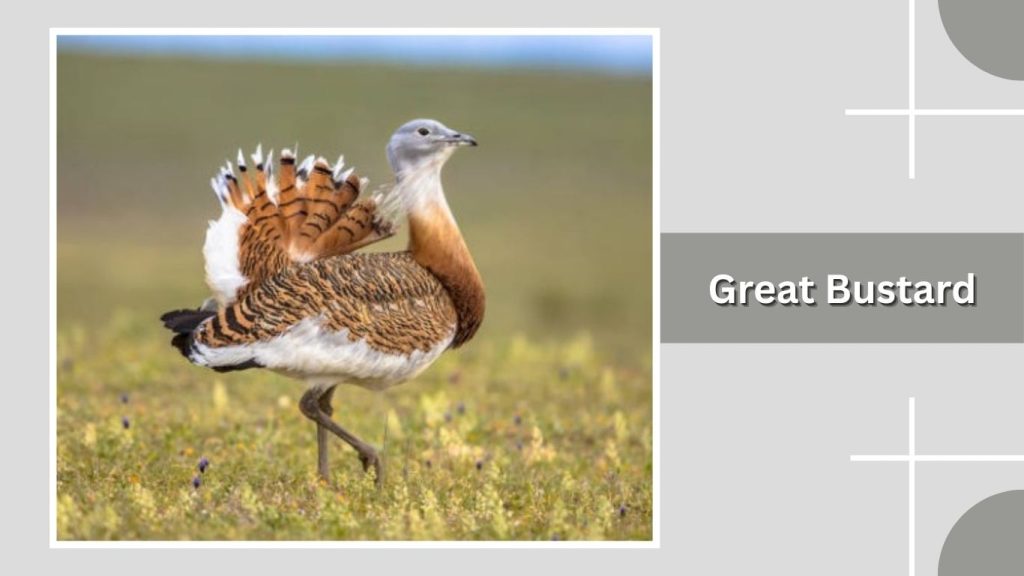
The Great Bustard is one of the heaviest flying birds in the world and is famous for its impressive size and powerful build. Native to open plains and grasslands of Europe and Asia, this species is known for its strong legs, broad wings, and striking courtship displays. Despite its large body, the Great Bustard is capable of sustained flight and long-distance movement.
Identification
- Very large ground-dwelling bird with a heavy, broad body
- Long, thick neck and relatively small head
- Males much larger than females
- Brown, buff, and black patterned upperparts with a white underside
- In breeding season, males develop long white “whisker-like” feathers on the face
Habitat
Great Bustards live mainly in open, flat landscapes. They are commonly found in natural grasslands, steppe regions, agricultural fields, and wide plains with low vegetation. These open habitats allow them to spot predators from a distance and provide space for their elaborate courtship displays. They avoid dense forests and mountainous terrain.
Behaviors
This species spends most of its time on the ground, walking slowly and deliberately while foraging. When threatened, Great Bustards prefer to walk or run rather than fly, taking off only when necessary. During the breeding season, males perform dramatic display rituals, inflating their neck feathers, spreading their tails, and turning parts of their plumage inside out to attract females.
Diet and Lifespan
Great Bustards are omnivorous. They feed on grasses, seeds, grains, insects, small reptiles, and occasionally rodents. Their flexible diet helps them survive in both natural and farmed landscapes. In the wild, Great Bustards can live around 10 to 15 years, with some individuals reaching even greater ages under good conditions.
2. Kori Bustard

The Kori Bustard is the largest flying bird native to Africa and is well known for its massive size and upright posture. It is a powerful, long-legged bird that spends most of its life walking across open land in search of food. With its bold black-and-white markings and heavy build, the Kori Bustard is one of the most impressive birds of the African savannas.
Identification
- Extremely large, heavy-bodied bird with long, strong legs
- Thick neck and large head with a straight, sturdy bill
- Brown and gray mottled upperparts with black-and-white markings
- White belly and bold black crest and neck pattern
- Males noticeably larger and heavier than females
Habitat
Kori Bustards inhabit open and semi-open environments. They are commonly found in savannas, open grasslands, lightly wooded plains, and arid scrublands. These birds prefer wide landscapes with scattered vegetation, which provide both feeding opportunities and clear views to detect predators from a distance.
Behaviors
Kori Bustards are slow-moving and deliberate walkers. They usually forage alone or in pairs, searching the ground for food. When threatened, they rely on camouflage and stillness before choosing to walk away or fly. During breeding season, males perform courtship displays that include inflating the throat, drooping the wings, and producing deep booming calls.
Diet and Lifespan
They are omnivorous, feeding on insects, small reptiles, rodents, seeds, berries, and roots. They may also eat carrion. In the wild, Kori Bustards often live around 10 to 12 years, though some individuals may survive longer in protected environments.
3. Houbara Bustard
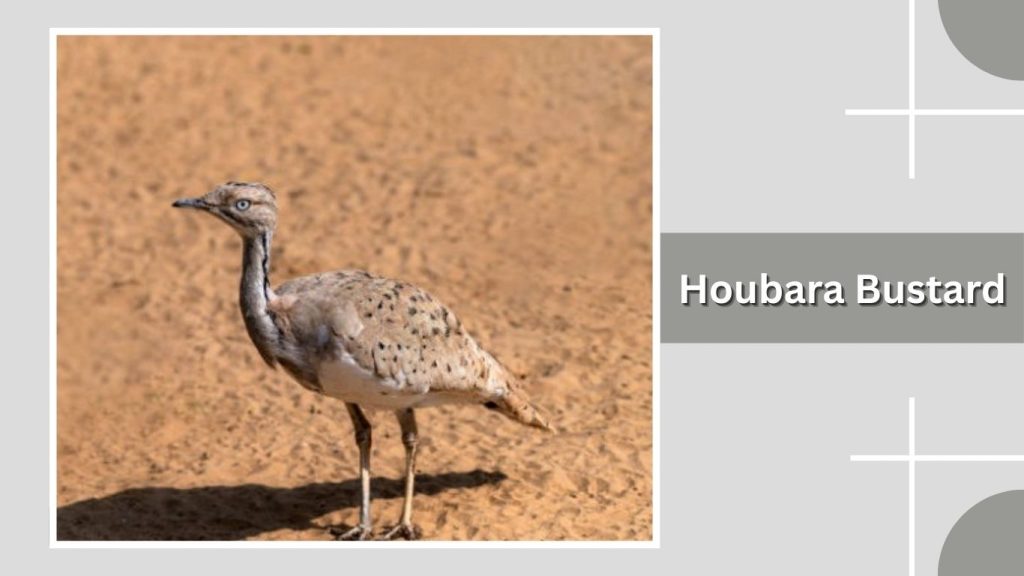
The Houbara Bustard is a medium-sized bustard known for its sandy coloring and strong adaptation to desert and semi-desert landscapes. It is widely distributed across North Africa, the Middle East, and parts of Central and South Asia. This species is especially famous for its spectacular courtship displays and its ability to survive in extremely dry environments.
Identification
- Medium-sized bustard with a slim but sturdy body
- Sandy-brown and buff plumage with fine black markings
- Pale underside and long, strong legs
- Long neck with decorative black and white plumes in breeding males
- Broad wings with contrasting dark flight feathers
Habitat
Houbara Bustards mainly inhabit arid and semi-arid regions. They are found in deserts, dry steppes, scrublands, and sparsely vegetated plains. These birds favor flat or gently rolling terrain with scattered shrubs, which provide both food and concealment from predators.
Behaviors
This species spends much of its time walking slowly across open ground while searching for food. When disturbed, it often freezes in place, relying on camouflage. During the breeding season, males perform elaborate displays, raising their neck feathers, running rapidly, and circling females to attract mates.
Diet and Lifespan
Houbara Bustards feed on insects, beetles, grasshoppers, small reptiles, seeds, shoots, and berries. Their flexible diet allows them to cope with harsh desert conditions. In the wild, they are believed to live around 10 years, though lifespan varies depending on hunting pressure and habitat quality.
4. Little Bustard
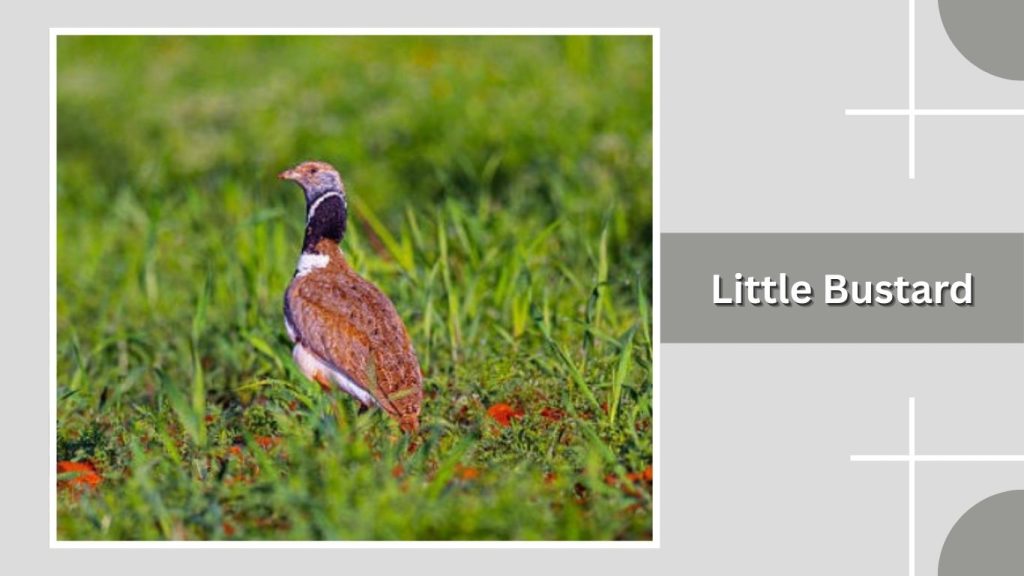
The Little Bustard is a small and slender member of the bustard family, found mainly across Europe, western Asia, and parts of North Africa. Despite its name, it is still a strong, ground-dwelling bird that prefers open landscapes. It is well known for the striking black-and-white neck pattern of breeding males and its distinctive rattling calls during the mating season.
Identification
- Small to medium-sized bustard with a compact body
- Sandy-brown upperparts with fine dark markings
- White underside and pale chest
- Breeding males show a bold black neck band with white borders
- Long legs adapted for walking and running
Habitat
Little Bustards live in open, dry environments. They are commonly found in grasslands, steppe regions, cereal fields, and lightly grazed farmland. These habitats provide both seeds and insects for food and enough cover to hide from predators. They avoid forests and dense shrublands.
Behaviors
This species spends most of its time walking through low vegetation while feeding. When alarmed, it usually crouches or runs rather than flying immediately. During breeding season, males perform display flights and produce soft, rattling calls to attract females. Outside breeding time, Little Bustards may gather in small flocks.
Diet and Lifespan
Little Bustards eat a mixture of plant and animal matter, including seeds, green shoots, beetles, grasshoppers, and ants. Their varied diet supports survival in agricultural areas. In the wild, they typically live around 8 to 10 years, though some individuals may live longer.
5. MacQueen’s Bustard
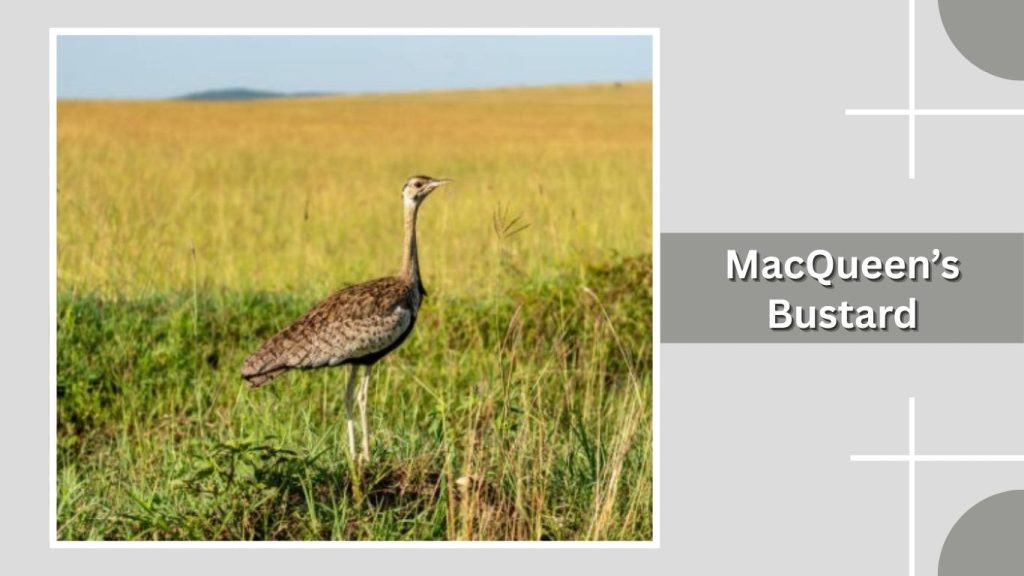
MacQueen’s Bustard, often considered a form of the Houbara Bustard, is a graceful, desert-adapted species found across Central Asia, the Middle East, and parts of South Asia. It is well known for its pale coloration, long legs, and spectacular breeding displays. This bustard is highly adapted to open, dry landscapes where it can move long distances in search of food and water.
Identification
- Medium-sized bustard with a slim, upright body
- Pale sandy-brown plumage with fine dark barring
- Long neck and relatively small head
- Breeding males develop long black and white neck plumes
- Broad wings with contrasting dark and light patterns
Habitat
MacQueen’s Bustards mainly inhabit arid and semi-arid regions. They are commonly found in deserts, dry steppes, open scrublands, and sparsely vegetated plains. These birds prefer wide, open areas with scattered shrubs, which offer both food sources and shelter from extreme heat.
Behaviors
They are primarily ground walkers, moving steadily across the landscape while foraging. When threatened, they rely on camouflage and stillness before running or flying. During breeding season, males perform energetic courtship displays, running rapidly, raising their decorative plumes, and circling in open areas to attract females.
Diet and Lifespan
Their diet includes insects, beetles, small reptiles, seeds, shoots, and berries. This flexible feeding behavior helps them survive in harsh environments. In the wild, MacQueen’s Bustards are believed to live around 8 to 12 years, depending on environmental conditions.
6. Bengal Florican
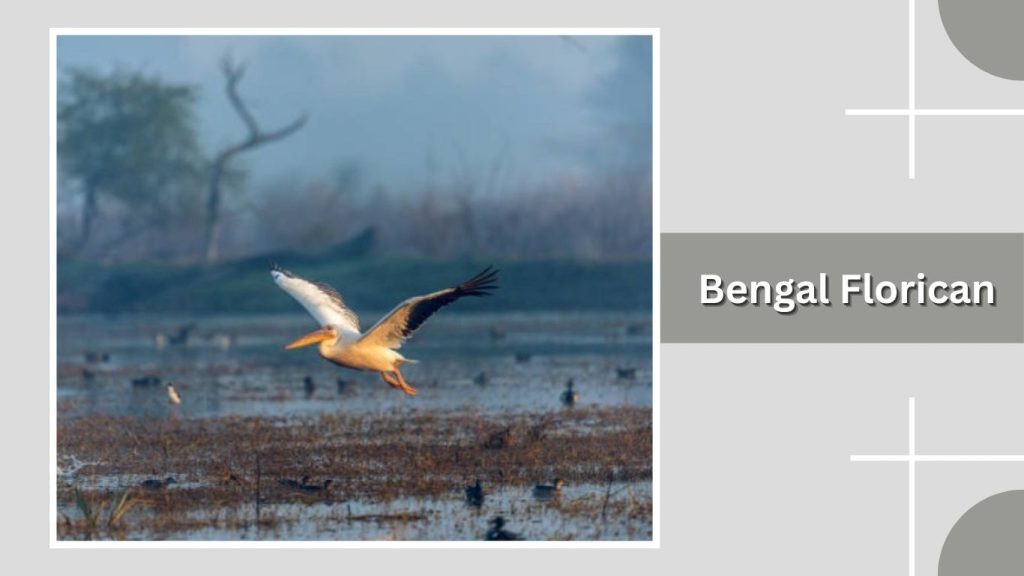
The Bengal Florican is a rare and striking bustard species native to the grasslands of the Indian subcontinent. It is especially well known for the dramatic black-and-white plumage of breeding males and its spectacular vertical jumping displays. Due to habitat loss, this bird is now considered one of the most threatened bustards in the world.
Identification
- Medium-sized bustard with long legs and upright stance
- Males are black with white wings and a white throat in breeding season
- Females are brown and heavily patterned for camouflage
- Short, thick bill adapted for picking food from the ground
- Broad wings used in display jumps
Habitat
Bengal Floricans live almost entirely in tall natural grasslands and open plains. They prefer undisturbed grassland habitats with a mix of tall grasses and open patches. These areas provide both nesting cover and feeding grounds. They are rarely found in farmland or heavily modified landscapes.
Behaviors
This species is famous for its unique courtship behavior. Breeding males leap straight into the air, flashing their white wings before dropping back into the grass. Outside the breeding season, they are shy and secretive, spending much of their time walking slowly and hiding in tall vegetation.
Diet and Lifespan
Bengal Floricans feed on insects such as grasshoppers and beetles, along with seeds, shoots, and small invertebrates. They pick food from the ground while walking. In the wild, their lifespan is not well documented, but it is believed to be around 8 to 10 years.
7. Lesser Florican
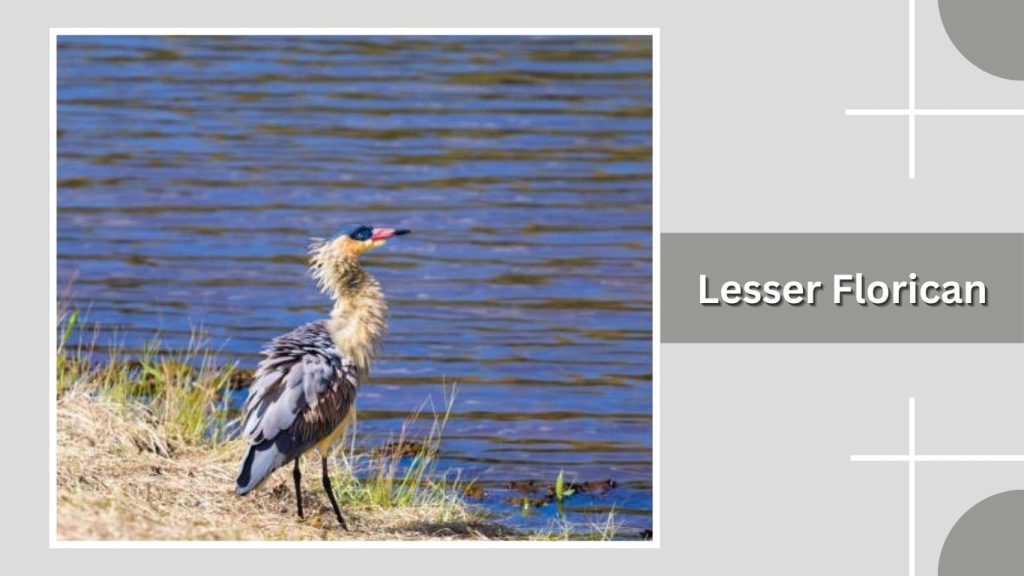
The Lesser Florican is the smallest bustard species and one of the most distinctive birds of the Indian subcontinent. It is especially famous for the spectacular jumping displays of breeding males, which leap vertically above tall grasses while producing snapping sounds with their wings. This secretive grassland bird depends heavily on seasonal habitats shaped by rainfall.
Identification
- Small bustard with a compact body and long legs
- Breeding males are black with a white throat and long ear-like head plumes
- Females and non-breeding males are brown and heavily patterned
- Short, strong bill suited for picking insects and seeds
- Rounded wings adapted for sudden vertical flights
Habitat
Lesser Floricans live mainly in open grasslands, grassy plains, and lightly cultivated fields. During the monsoon season, they favor tall natural grasses, while outside breeding time they may move to drier open country and agricultural areas. These birds depend on landscapes that provide both cover and open display sites.
Behaviors
They are shy and difficult to observe outside the breeding season. Males perform dramatic vertical leaps to advertise their territory and attract females. When not displaying, Lesser Floricans walk quietly through grass, often remaining hidden until flushed. They are usually solitary or found in pairs.
Diet and Lifespan
Their diet consists mainly of insects such as grasshoppers, beetles, and ants, along with seeds and green plant material. They forage on the ground, picking prey from vegetation or soil. In the wild, Lesser Floricans are believed to live around 6 to 10 years.
8. Black Bustard
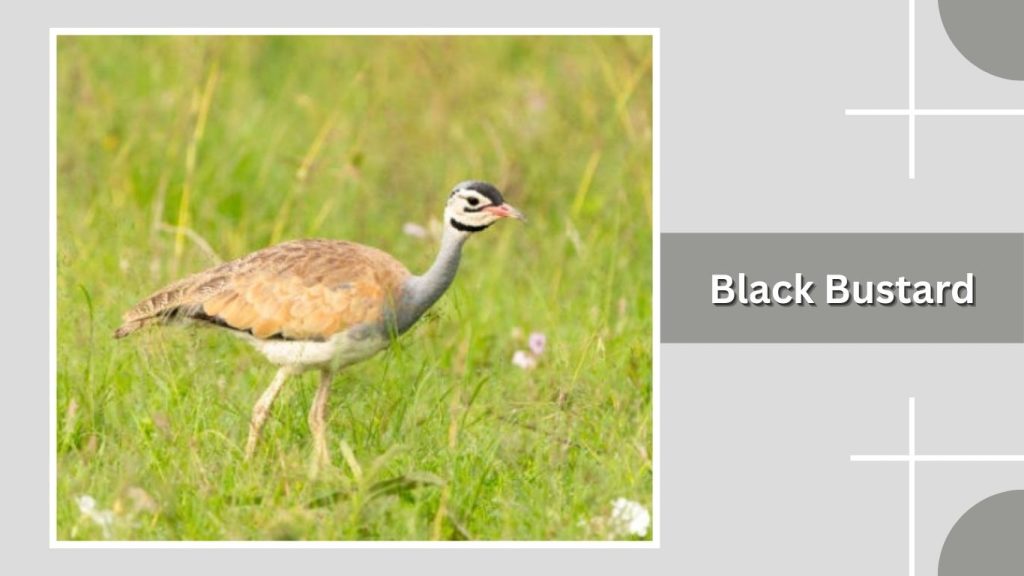
The Black Bustard, more widely known as the Black-bellied Bustard, is a medium-sized bustard found across much of sub-Saharan Africa. It is a bold, upright bird that favors open landscapes where it can walk long distances in search of food. Its strong contrast between dark and pale plumage makes it one of the more easily recognized African bustards.
Identification
- Medium-sized bustard with long legs and upright posture
- Black belly and throat contrasting with pale chest and neck
- Brown and buff patterned upperparts
- Strong, straight bill adapted for ground feeding
- Broad wings with dark flight feathers
Habitat
Black Bustards inhabit open savannas, dry grasslands, lightly wooded plains, and agricultural edges. They prefer habitats with low vegetation that allow easy movement and clear visibility. These birds avoid dense forests and very wet environments.
Behaviors
They usually walk slowly through open country, stopping often to look around before feeding. When threatened, they may freeze in place or run before taking flight. During the breeding season, males perform display behaviors that include puffing the chest, raising feathers, and making deep calls.
Diet and Lifespan
Their diet includes insects, small reptiles, seeds, berries, and shoots. They are opportunistic feeders, taking both animal and plant matter. In natural conditions, Black Bustards commonly live around 8 to 12 years.
9. Arabian Bustard
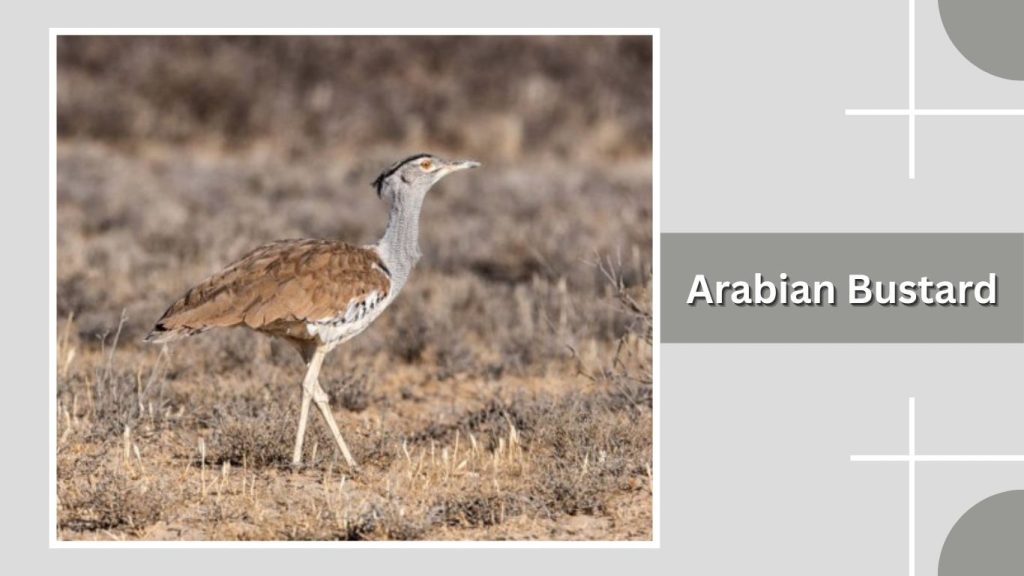
The Arabian Bustard is a tall, long-legged bustard native mainly to the Arabian Peninsula and parts of northeastern Africa. It is a powerful ground bird adapted to hot, open landscapes where it spends most of its time walking in search of food. Its pale sandy coloring blends well with desert surroundings, helping it remain hidden from predators.
Identification
- Large bustard with long legs and an upright stance
- Pale sandy-brown upperparts with fine dark markings
- Whitish underparts and long, thick neck
- Straight, strong bill suited for picking food from the ground
- Broad wings with contrasting dark flight feathers
Habitat
Arabian Bustards live in arid and semi-arid environments. They are found in deserts, dry plains, scrublands, and sparsely vegetated steppe regions. These birds prefer wide open areas with scattered shrubs, which provide shade, food, and nesting cover.
Behaviors
They are mainly solitary birds, walking slowly through open land while scanning for food. When alarmed, they rely on camouflage and stillness, often crouching before running or flying. During the breeding season, males perform courtship displays that include posturing, feather-raising, and low vocalizations.
Diet and Lifespan
Arabian Bustards eat insects, small reptiles, seeds, berries, and green shoots. Their flexible diet helps them survive in harsh desert conditions. In the wild, their lifespan is not well documented, but it is believed to be around 8 to 12 years.
10. White-bellied Bustard
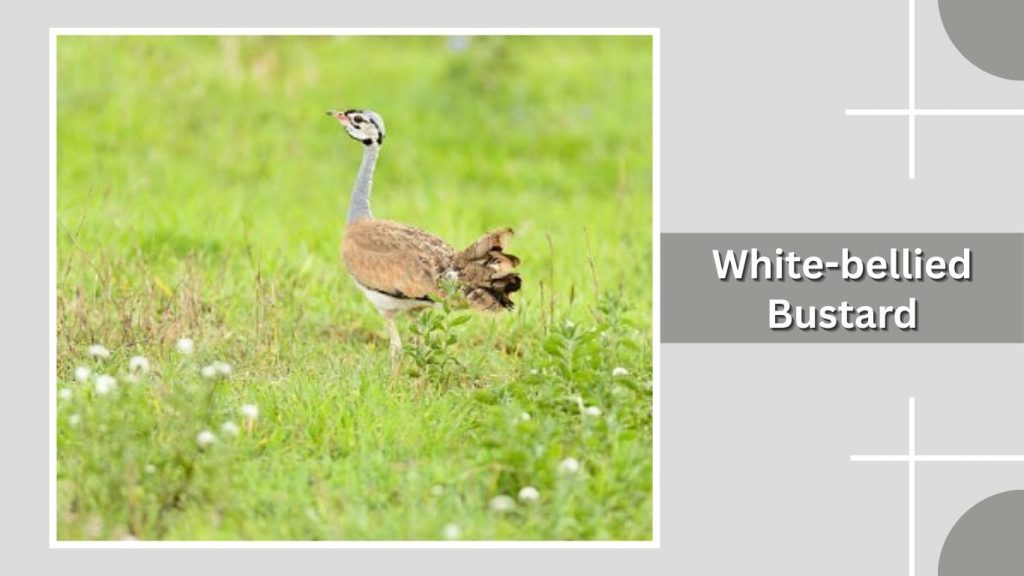
The White-bellied Bustard is a medium-sized bustard widely distributed across sub-Saharan Africa. It is known for its upright stance, strong walking legs, and the clear white coloring of its belly, which contrasts with its darker upperparts. This species is often seen striding through open country, where it feeds on a wide variety of ground-dwelling prey.
Identification
- Medium-sized bustard with long legs and upright posture
- Distinct white belly and pale chest
- Brown and gray patterned upperparts
- Long neck and straight, sturdy bill
- Broad wings with dark flight feathers
Habitat
White-bellied Bustards inhabit open and semi-open landscapes. They are commonly found in savannas, dry grasslands, open woodlands, farmland edges, and scrubby plains. They prefer habitats with low to medium vegetation that allow easy walking and good visibility.
Behaviors
They usually move slowly and deliberately while foraging, stopping often to scan their surroundings. When threatened, they may crouch to blend into the vegetation or walk away quietly before taking flight. During the breeding season, males perform display behaviors involving puffed feathers, raised tails, and deep calls.
Diet and Lifespan
Their diet includes insects, grasshoppers, beetles, seeds, fruits, small reptiles, and green plant matter. They are opportunistic feeders that adjust their diet to seasonal food availability. In the wild, White-bellied Bustards commonly live around 8 to 12 years.
11. Red-crested Bustard
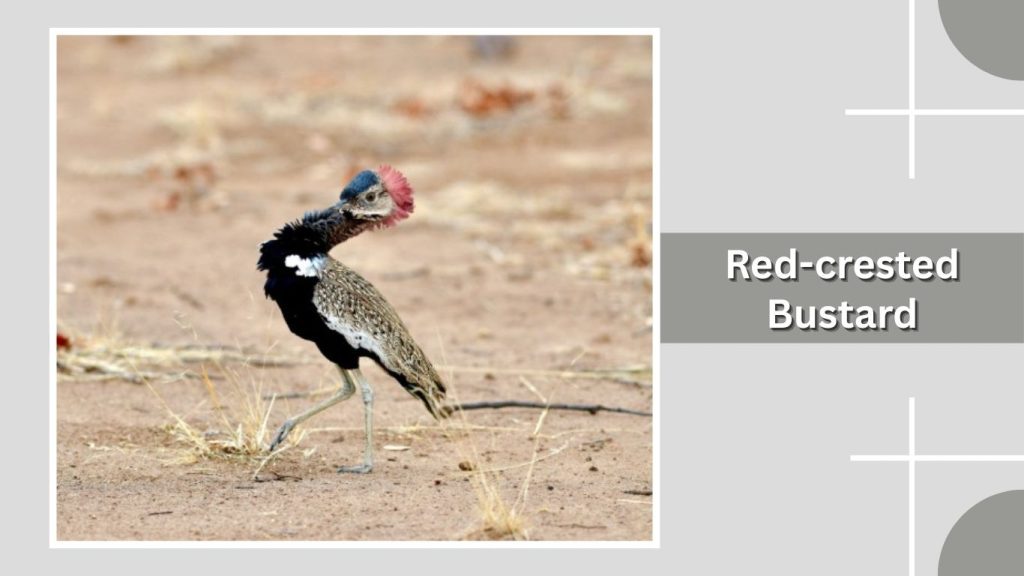
The Red-crested Bustard is a striking and uncommon bustard species native to parts of southern and eastern Africa. It is especially known for the rich reddish tones on the head and crest, which become more visible during the breeding season. Like other bustards, it is primarily ground-dwelling and adapted to life in open, grassy landscapes.
Identification
- Medium-sized bustard with long legs and upright posture
- Reddish or chestnut-colored crest and head tones
- Brown and buff patterned upperparts
- Pale underside and strong, straight bill
- Broad wings with contrasting dark feathers
Habitat
Red-crested Bustards inhabit open grasslands, lightly wooded savannas, and dry plains. They prefer areas with low to moderate vegetation that provide both feeding opportunities and cover from predators. These birds are usually found in warm, open environments rather than dense forests or wetlands.
Behaviors
They are generally shy and solitary birds, spending much of their time walking slowly through grass while foraging. When disturbed, they often freeze in place before running or flying. During the breeding season, males display by raising the crest, puffing body feathers, and performing ritualized movements.
Diet and Lifespan
Their diet consists of insects, seeds, berries, small reptiles, and green plant material. They forage on the ground, picking food from soil and vegetation. In the wild, Red-crested Bustards are believed to live around 8 to 11 years.
12. Australian Bustard
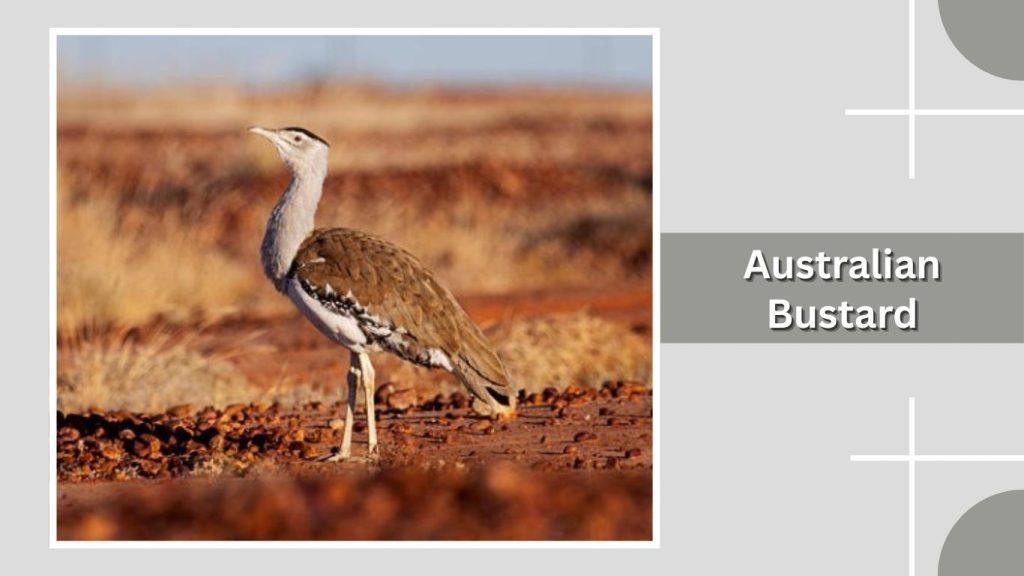
The Australian Bustard is the largest terrestrial bird native to Australia and one of the most impressive members of the bustard family. It is well adapted to wide, open landscapes and is often seen walking across plains with a slow, deliberate stride. Its powerful build, long legs, and broad wings allow it to travel long distances across harsh environments.
Identification
- Very large bustard with a tall, upright stance
- Brown, black, and buff patterned upperparts
- Whitish underparts and long, thick neck
- Strong, straight bill suited for ground feeding
- Broad wings capable of strong, steady flight
Habitat
Australian Bustards inhabit open grasslands, savannas, semi-arid plains, agricultural fields, and desert margins. They prefer wide, flat areas with low vegetation where they can easily walk and forage. They are rarely found in dense forests or mountainous regions.
Behaviors
They are mostly solitary or seen in small groups. Australian Bustards spend much of their time walking while searching for food. When threatened, they often rely on stillness and camouflage before flying. During the breeding season, males perform elaborate displays, inflating their throat and strutting to attract females.
Diet and Lifespan
Their diet includes insects, small reptiles, rodents, seeds, fruits, and green plant matter. This varied diet helps them survive in both natural and human-modified landscapes. In the wild, Australian Bustards commonly live around 10 to 15 years.
FAQs
What is a bustard bird?
Bustards are large, ground-dwelling birds found mainly in open landscapes such as grasslands, steppes, savannas, and deserts. They are known for their long legs, strong walking ability, and heavy bodies. Many bustard species are famous for elaborate courtship displays performed by males during the breeding season.
Where are bustards found in the world?
Bustards are native to Europe, Asia, Africa, and Australia. Most species live in open, dry or semi-dry environments including grasslands, plains, agricultural fields, and semi-deserts. They generally avoid forests and wetlands, preferring wide spaces where they can walk freely and detect predators.
What do bustards usually eat?
Bustards are omnivorous birds. Their diet includes insects, grasshoppers, beetles, seeds, grasses, fruits, small reptiles, and sometimes rodents. This varied diet allows them to survive in different habitats and seasons, especially in environments where food availability changes throughout the year.
Why are many bustard species threatened?
Many bustards are threatened due to habitat loss, agricultural expansion, hunting, and collisions with power lines. Because they depend on large open landscapes, changes in land use can quickly reduce suitable habitat. Some species, such as the Bengal Florican, are now considered among the world’s most endangered birds.
How long do bustards live?
Most bustard species live between 8 and 15 years in the wild. Lifespan varies depending on species, habitat quality, and human pressures. In protected areas with low disturbance and good food availability, some bustards may live longer than average.