




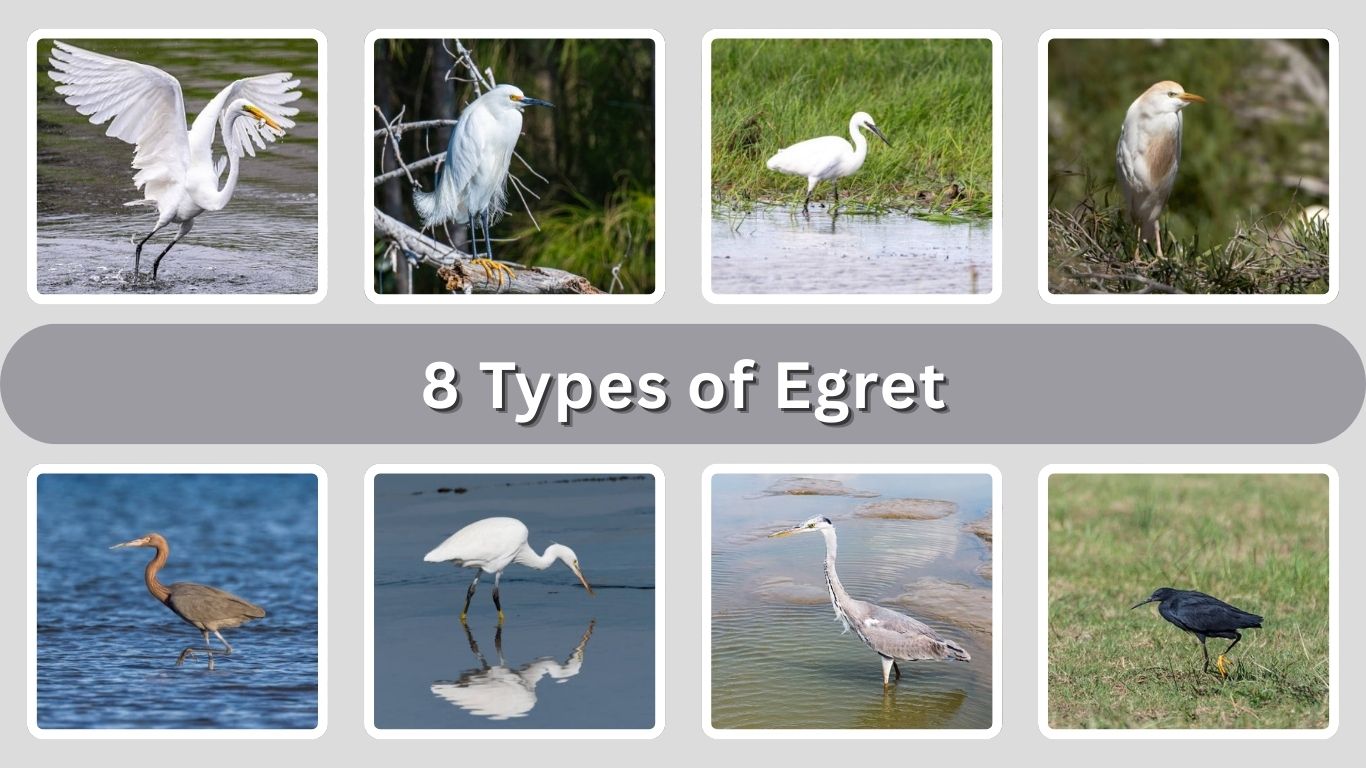
Egrets are graceful wading birds known for their slender bodies, long necks, and striking plumage. Most species are bright white, though some, like the Black Egret, display dramatic dark coloring. These birds are closely associated with wetlands and shallow waters, where they patiently hunt fish and other small creatures. Found across many parts of the world, egrets play an important role in aquatic ecosystems and are admired for their elegant movements and calm presence.
1. Great Egret
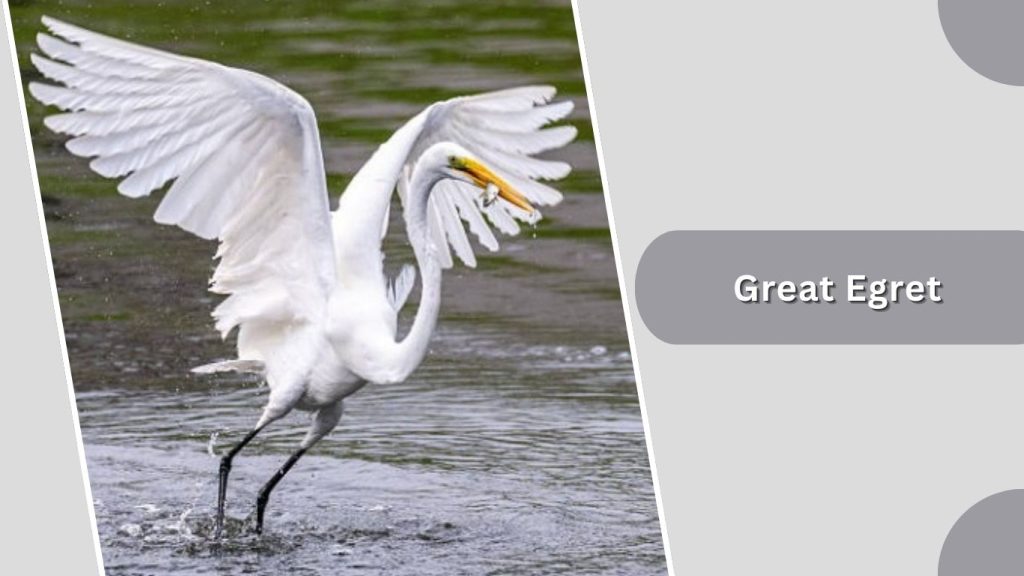
The Great Egret is one of the largest and most elegant members of the egret family. Known for its tall stature, snow-white feathers, and slow, graceful movements, this bird is commonly seen wading through shallow water in search of prey. Its calm behavior and striking appearance make it one of the most recognizable wetland birds across many parts of the world.
Identification
- Large, tall white wading bird with a slim body
- Long, S-shaped neck and straight, pointed yellow bill
- Black legs and dark feet that contrast with its white plumage
- Broad wings with slow, steady wingbeats in flight
- Breeding adults develop long, delicate ornamental plumes
Habitat
Great Egrets inhabit a wide range of wetland environments. They are commonly found in freshwater marshes, lakes, rivers, ponds, and flooded agricultural fields. Along coastlines, they also live in mangroves, estuaries, lagoons, and tidal flats. These habitats provide shallow water, which is essential for their hunting style and nesting behavior.
Behaviors
This species is known for its patience while hunting. Great Egrets often stand perfectly still or walk slowly through shallow water before suddenly striking at prey with great speed. They are mostly solitary while feeding but gather in groups at roosting sites and form large colonies during the breeding season.
Diet and Lifespan
Great Egrets feed mainly on fish but also eat frogs, small reptiles, insects, and crustaceans. They catch prey by spearing or grasping it with their sharp bill. In the wild, Great Egrets usually live between 10 and 15 years, although some individuals have been recorded living longer.
2. Snowy Egret
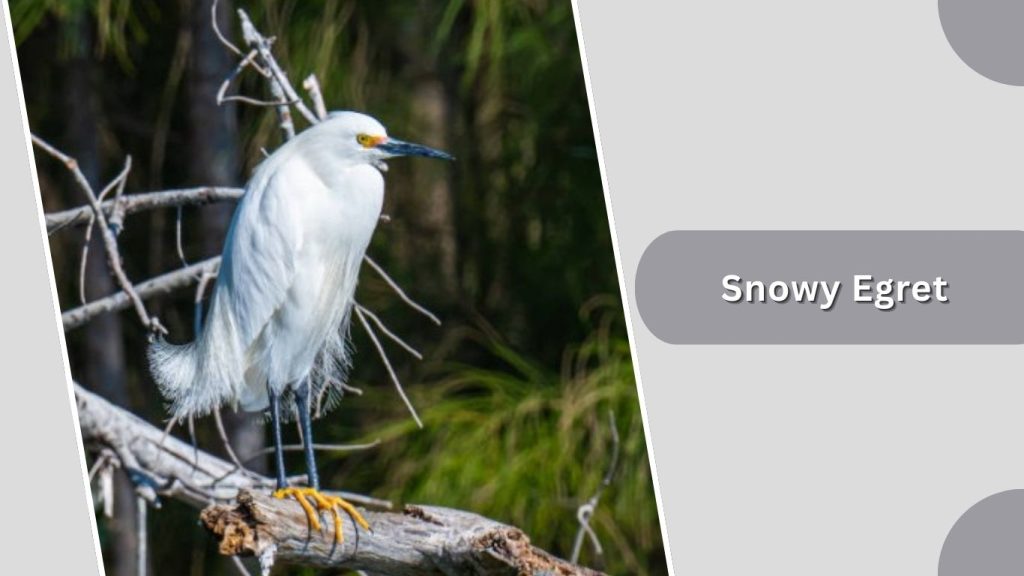
The Snowy Egret is a medium-sized egret famous for its bright white feathers, slim black bill, and striking black legs with vivid yellow feet. It is more active and energetic than many other egrets, often seen quickly stepping through shallow water as it hunts. Because of its graceful movements and bold feeding style, the Snowy Egret is one of the most easily recognized egrets in wetlands and coastal areas.
Identification
- Medium-sized white egret with a slender body
- Thin black bill and bright yellow lores during breeding season
- Black legs with distinctive yellow feet, often called “golden slippers”
- Narrow wings and a relatively short neck compared to larger egrets
- Breeding adults grow long plumes on the head, neck, and back
Habitat
Snowy Egrets are strongly associated with shallow-water habitats. They live in freshwater marshes, ponds, rivers, lake edges, and flooded fields. In coastal regions, they are common in tidal flats, mangroves, estuaries, and salt marshes. These birds prefer areas with calm, shallow water where small fish and invertebrates are easy to spot and catch.
Behaviors
Unlike more motionless egrets, Snowy Egrets are very active hunters. They may run, shuffle their bright feet, flap their wings, or stir the water to flush prey into view. They are often seen feeding alone, but many individuals may gather where food is abundant. During breeding season, they nest in colonies, often alongside herons and other egret species.
Diet and Lifespan
Their diet includes small fish, shrimp, crabs, insects, tadpoles, and other aquatic creatures. They use quick jabs of the bill to capture prey. In the wild, Snowy Egrets generally live around 10 years, though some can survive longer under favorable conditions.
3. Little Egret
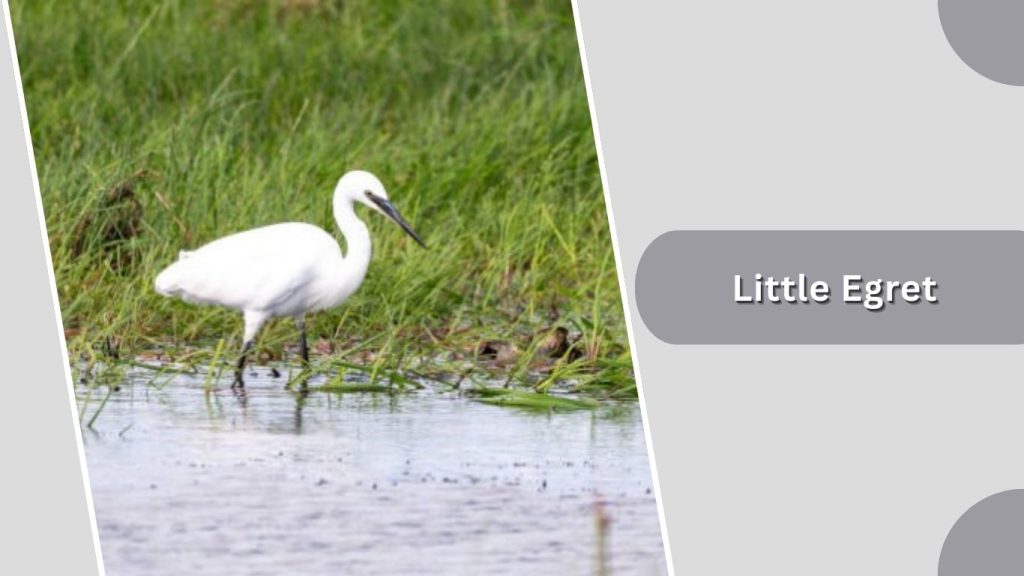
The Little Egret is a graceful, slim-bodied egret widely known for its pure white plumage and elegant movements. Smaller than the Great Egret, it is a common sight in wetlands, riverbanks, and coastal shallows across many parts of the world. Its active feeding style and delicate appearance make it one of the most familiar egrets in both freshwater and marine environments.
Identification
- Small to medium-sized white egret with a slender build
- Thin black bill and narrow head
- Black legs with bright yellow feet
- Long neck often held in a gentle curve
- Breeding birds develop fine plumes on the head and back
Habitat
Little Egrets occupy a wide range of wet habitats. They are frequently found around ponds, lakes, marshes, slow-moving rivers, rice fields, and flooded grasslands. Along coastlines, they live in estuaries, lagoons, tidal flats, and mangrove swamps. Their adaptability allows them to live near both natural wetlands and human-altered environments.
Behaviors
This species is an energetic feeder. Little Egrets walk quickly through shallow water, often running, hopping, or spreading their wings to startle prey. They may also stand still briefly before striking. Outside the breeding season, they often roost communally, while during breeding they nest in colonies, sometimes with other herons and egrets.
Diet and Lifespan
Little Egrets mainly eat small fish but also feed on insects, crustaceans, mollusks, frogs, and worms. They catch prey with fast thrusts of their pointed bill. In the wild, they commonly live around 8 to 12 years, though longer lifespans have been recorded.
4. Cattle Egret
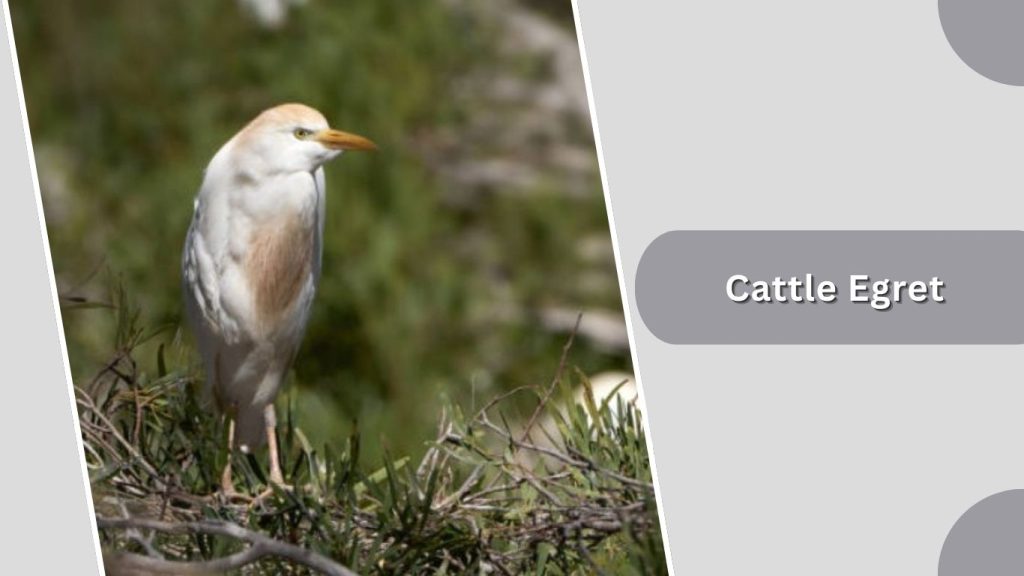
The Cattle Egret is a unique and highly adaptable egret that is often seen far from water, walking through grasslands, pastures, and agricultural fields. Unlike most egrets, it frequently associates with grazing animals, using their movement to flush insects from the ground. Its compact body, short neck, and upright posture make it easy to distinguish from other, more aquatic egret species.
Identification
- Small, stocky white egret with a short neck
- Thick yellow bill, turning orange in breeding season
- Legs usually yellow to grayish rather than black
- Breeding adults show buff or orange feathers on the head, chest, and back
- Compact shape compared to taller, slimmer egrets
Habitat
Cattle Egrets prefer open landscapes rather than wetlands alone. They are commonly found in grasslands, farmlands, pastures, roadsides, and agricultural fields. They also use wetlands, marsh edges, and riverbanks for roosting and nesting. Their ability to thrive in dry habitats has helped them spread rapidly across many continents.
Behaviors
This egret is famous for following cattle, buffalo, tractors, and other large animals. As these animals disturb insects, the birds quickly grab exposed prey. They often feed in groups and walk steadily through fields. During the breeding season, they nest in dense colonies, often in trees near water, and can be quite noisy and social.
Diet and Lifespan
Cattle Egrets mainly eat insects such as grasshoppers, beetles, and flies. They also take spiders, frogs, small reptiles, and occasionally fish. In the wild, their average lifespan is about 10 to 15 years, depending on habitat quality and food availability.
5. Reddish Egret
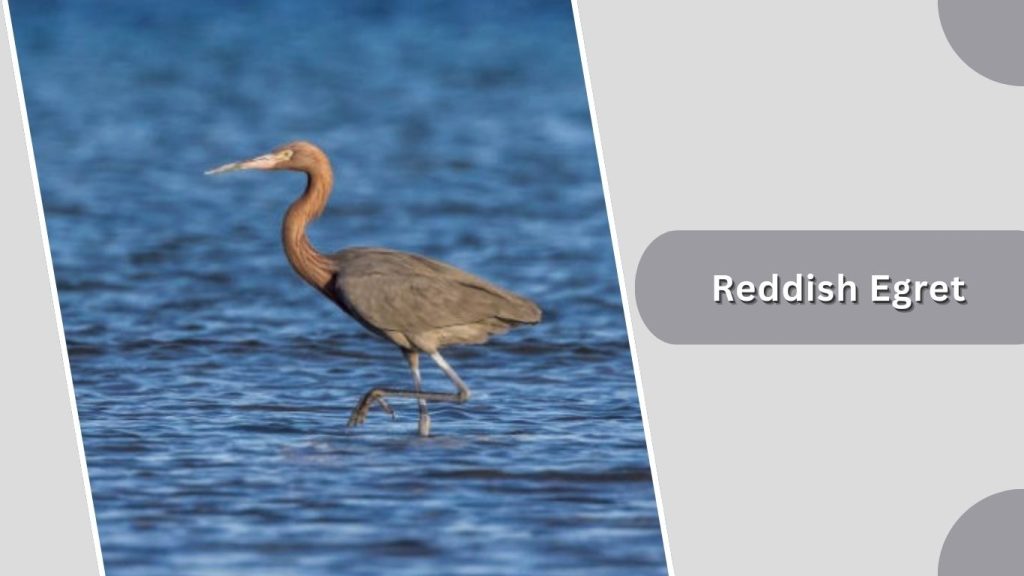
The Reddish Egret is one of the most visually striking and behaviorally unique egret species. It occurs in both a dark morph and a white morph, but both forms are known for their energetic and almost playful hunting style. Unlike the slow, still posture of many egrets, this species is often seen running, jumping, and spreading its wings through shallow coastal waters.
Identification
- Medium-sized egret with long legs and a shaggy neck
- Two color forms: dark (reddish head and neck, gray body) and white
- Long, slightly downcurved bill, pinkish at the base
- Blue-gray legs and bare facial skin
- Breeding adults develop shaggy plumes on the head and neck
Habitat
Reddish Egrets are strongly tied to coastal environments. They are most commonly found on tidal flats, shallow lagoons, salt marshes, and sandy or muddy shorelines. They prefer warm coastal regions and rarely venture far inland. Shallow, open water areas are essential for their active feeding behavior.
Behaviors
This species is famous for its dramatic feeding style. Reddish Egrets often dash through shallow water, spin suddenly, leap, and spread their wings like a canopy to shade the water and confuse prey. They are generally solitary feeders but gather in loose groups where food is plentiful. They nest in small colonies, often on low islands or mangroves.
Diet and Lifespan
Their diet consists mainly of small fish, along with crustaceans and aquatic insects. They rely on speed and agility rather than stillness to catch prey. In the wild, Reddish Egrets typically live around 10 to 12 years, although some individuals may live longer.
6. Intermediate Egret
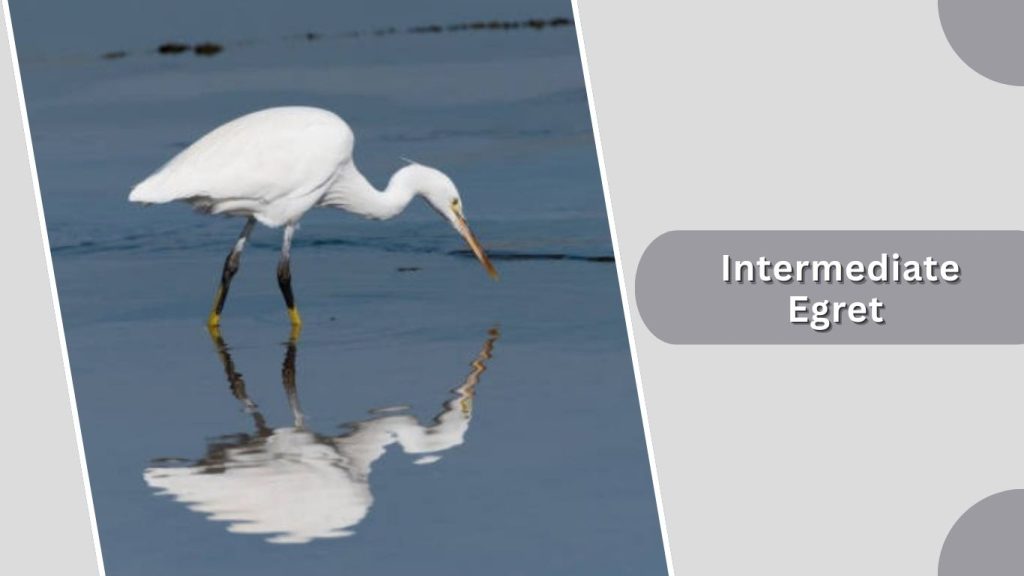
The Intermediate Egret is a medium-to-large white egret that appears in size between the Great Egret and the Little Egret, which is how it gets its common name. It is a graceful wading bird with a calm presence, often seen slowly moving through shallow water while searching for prey. Its balanced proportions and gentle feeding style make it a common resident of wetlands in many regions.
Identification
- Medium-large white egret, smaller than Great Egret but larger than Little Egret
- Yellow bill that becomes darker in breeding season
- Black legs, sometimes with dull yellowish feet
- Neck length appears moderate, not extremely long
- Breeding birds develop long ornamental plumes on the back and chest
Habitat
Intermediate Egrets are mainly birds of freshwater environments. They are commonly found in marshes, swamps, lakes, ponds, slow rivers, and flooded grasslands. They also use rice paddies and irrigation canals. Although primarily freshwater birds, they may sometimes occur in estuaries and coastal lagoons, especially outside the breeding season.
Behaviors
This egret feeds in a calm, methodical way. It usually walks slowly or stands still before making a quick strike at prey. Compared to Snowy or Reddish Egrets, it is less energetic but very efficient. Intermediate Egrets often feed alone or in small groups and form nesting colonies in trees, often together with other herons and egrets.
Diet and Lifespan
Their diet includes fish, frogs, aquatic insects, small reptiles, and crustaceans. They catch prey by stabbing with their sharp bill. In natural conditions, Intermediate Egrets commonly live between 10 and 15 years.
7. Chinese Egret
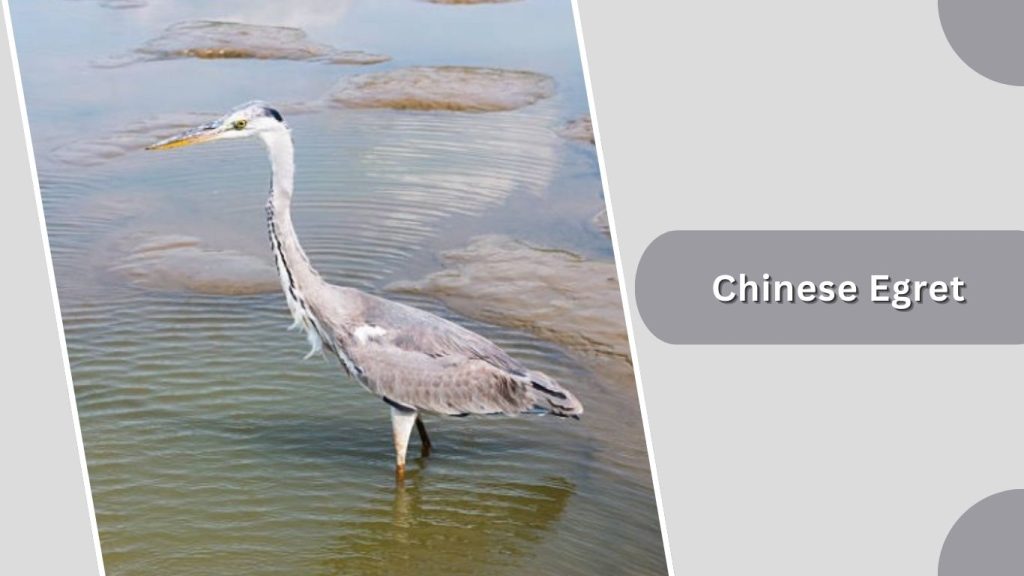
The Chinese Egret is a rare and elegant egret species best known for its limited global range and declining population. It is a medium-sized white egret with a slim body and delicate appearance. Because it depends heavily on coastal habitats, this bird is most often seen along shorelines and tidal flats, where it quietly searches for small aquatic animals.
Identification
- Medium-sized white egret with a slender build
- Thin black bill with a slightly paler base
- Black legs with yellowish feet
- Smooth white plumage with fine breeding plumes
- Narrow head and long, graceful neck
Habitat
Chinese Egrets are strongly associated with coastal environments. They live mainly along shorelines, tidal mudflats, estuaries, and shallow coastal lagoons. During the breeding season, they nest on offshore islands or isolated coastal areas with shrubs or low trees. They rely on clean, undisturbed coastal wetlands for feeding and survival.
Behaviors
This egret usually feeds quietly and methodically. It walks slowly through shallow water or stands still before striking quickly at prey. Chinese Egrets are often seen alone or in small groups while feeding. During breeding season, they form small colonies, and like other egrets, they use courtship displays involving head movements and raised plumes.
Diet and Lifespan
Their diet consists mainly of small fish, shrimp, crabs, and other marine invertebrates. They capture prey with quick thrusts of the bill. Due to their rarity, lifespan data is limited, but they are believed to live around 10 years or more in the wild.
8. Black Egret
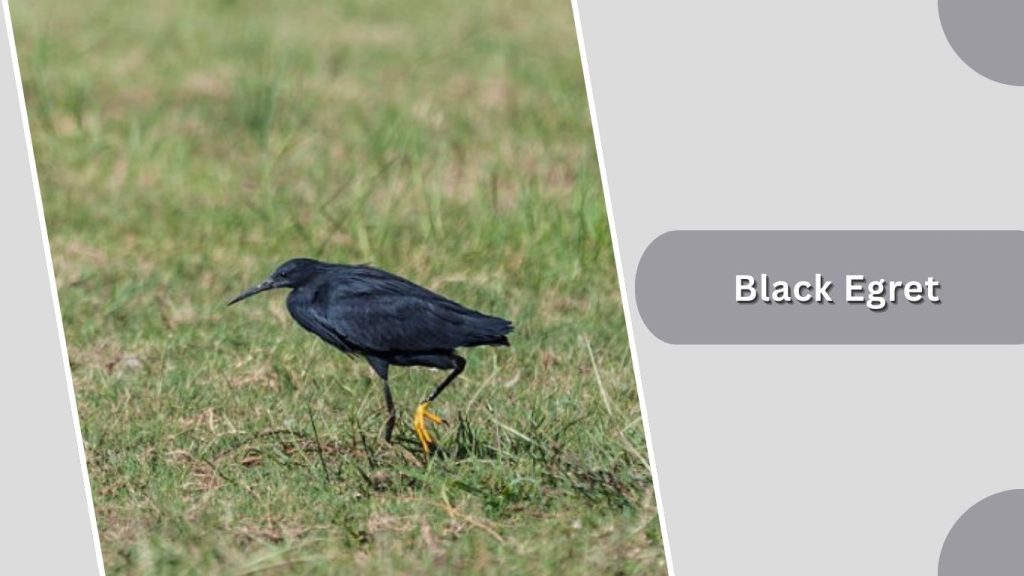
The Black Egret is one of the most distinctive egret species, instantly recognized by its entirely black plumage and unusual hunting technique. Native mainly to Africa, this medium-sized egret prefers shallow freshwater habitats where it can easily practice its specialized feeding behavior. Its dark feathers and dramatic movements make it stand out strongly from other egrets.
Identification
- Medium-sized egret with completely black plumage
- Long black neck and straight, pointed black bill
- Black legs and feet
- Long wings often used in a unique canopy-like posture
- Slight shaggy appearance during breeding season
Habitat
Black Egrets are most commonly found in freshwater environments such as lakes, marshes, swamps, slow-moving rivers, and floodplains. They may also occur in shallow coastal lagoons and estuaries. These habitats provide open, shallow water that allows them to use their wing-spreading feeding method effectively.
Behaviors
This species is famous for its “umbrella feeding.” The egret spreads its wings in a circular shape over the water, creating shade that attracts or confuses fish. It then quickly strikes at prey beneath this dark canopy. Black Egrets usually feed alone but may gather in small numbers where food is plentiful. They nest in loose colonies, often near water.
Diet and Lifespan
Black Egrets feed mainly on small fish, along with amphibians, aquatic insects, and crustaceans. Their specialized feeding style improves hunting success in bright conditions. In the wild, Black Egrets are believed to live around 10 to 12 years, though exact lifespan records are limited.
FAQs
What is the main difference between an egret and a heron?
Egrets are actually a type of heron. The term “egret” is commonly used for herons that are mostly white or have decorative plumes. In structure and behavior, egrets and herons are very similar, sharing long legs, long necks, and a strong connection to wetland habitats.
Where are egrets most commonly found?
Egrets are most often found around shallow water. Typical habitats include marshes, lakes, ponds, rivers, rice fields, estuaries, and tidal flats. Some species also live in grasslands or farmland. They are widely distributed across tropical, subtropical, and temperate regions of the world.
What do egrets usually eat?
Egrets mainly feed on small aquatic animals. Their diet commonly includes fish, frogs, tadpoles, insects, crustaceans, and small reptiles. They hunt by standing still or slowly walking through shallow water, then striking quickly with their sharp bill to capture prey.
Are egrets migratory birds?
Some egret species are migratory, while others are resident. In colder regions, many egrets move south during winter to find unfrozen wetlands and reliable food. In tropical areas, populations may stay year-round, making only short seasonal movements based on rainfall and food availability.
How long do egrets live in the wild?
Most egrets live around 8 to 15 years in natural conditions. Lifespan depends on species, habitat quality, and threats such as predators and human disturbance. With good wetland environments and low risk, some individuals are known to survive even longer.