
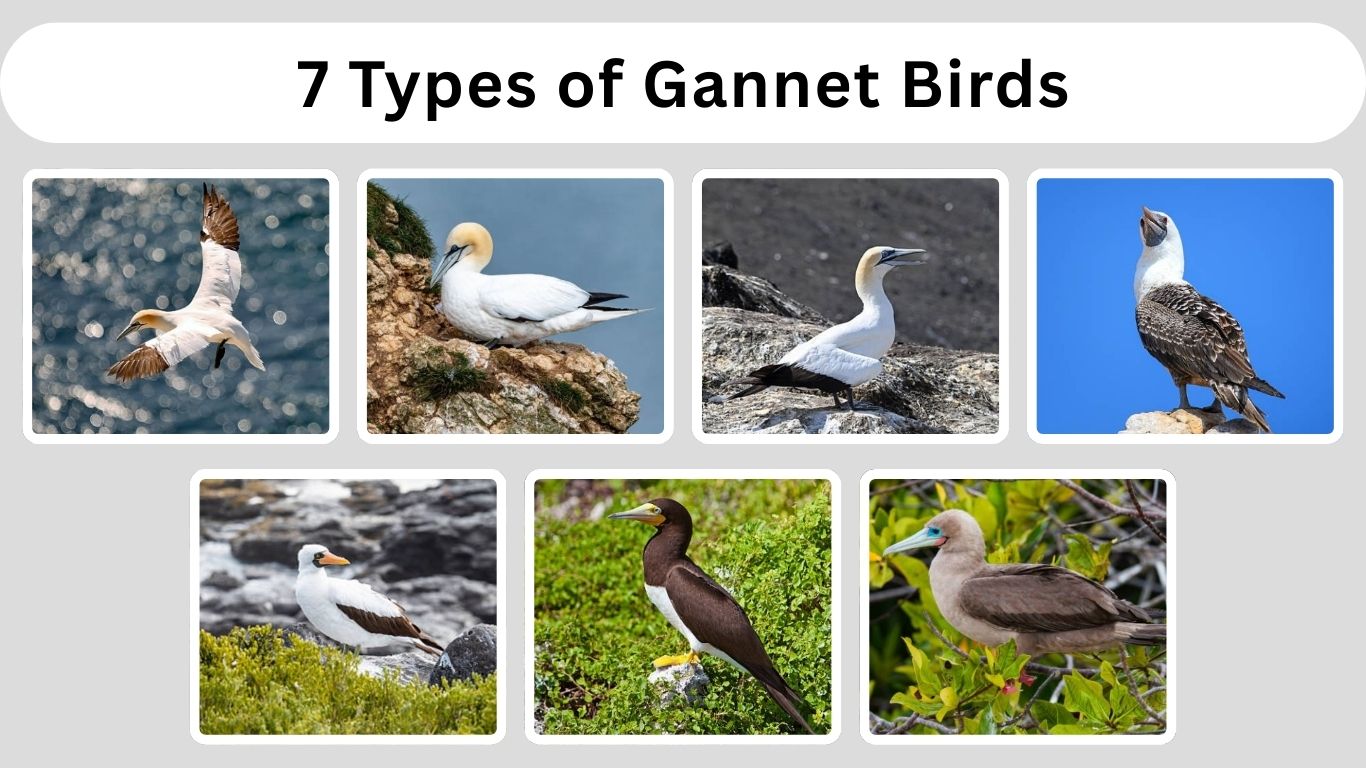
Gannet birds are powerful ocean seabirds best known for their dramatic plunge-diving behavior. With long, narrow wings and sharply pointed bills, they are perfectly adapted for spotting fish from high above the sea and diving at incredible speed. Gannets and closely related boobies are found across many of the world’s oceans, from cold northern waters to warm tropical seas. Each species shows unique markings, habitats, and feeding patterns, making gannets fascinating birds of the open ocean
1. Northern Gannet
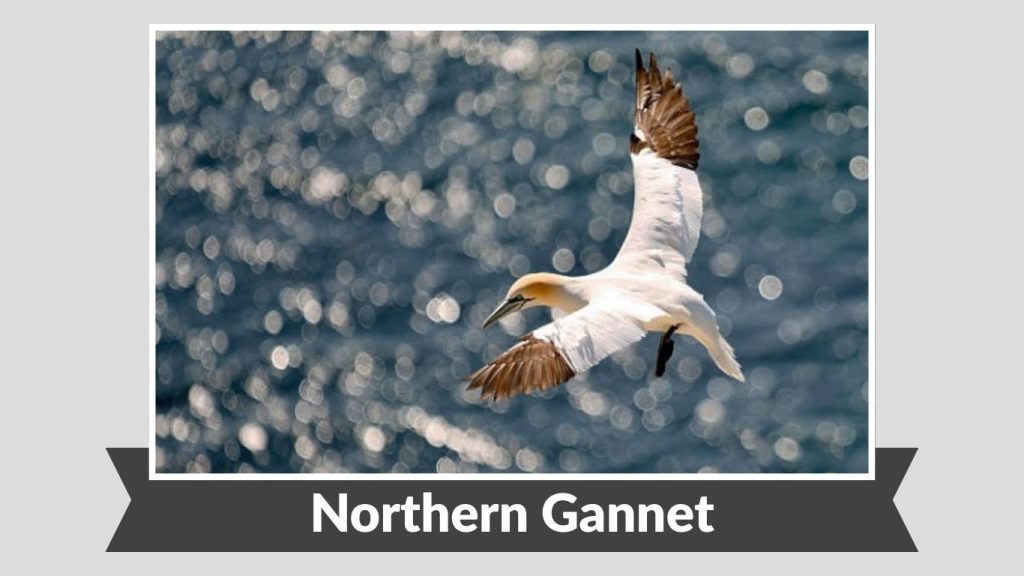
The northern gannet is the largest seabird in the gannet family and is famous for its spectacular plunge-diving behavior. With its white body, black-tipped wings, and pale yellow head, it is one of the most striking ocean birds of the North Atlantic. Northern gannets spend most of their lives at sea and only come to land to breed on steep coastal cliffs and rocky islands.
Identification
- Large white body with black wing tips
- Pale yellow to buff-colored head
- Long, pointed gray bill with sharp edges
- Blue skin around the eyes
- Very long, narrow wings adapted for high-speed diving
Habitat
Northern gannets live almost entirely in marine environments. They are found over the cold and temperate waters of the North Atlantic Ocean. Breeding colonies are located on offshore islands, steep cliffs, and rocky headlands, where thousands of birds may nest close together.
Behavior
This species is best known for plunge-diving from great heights, sometimes over 30 meters. It folds its wings back and enters the water like a spear to catch fish. Northern gannets are highly social birds, nesting in dense colonies and often traveling and feeding in groups. They are strong fliers, capable of long-distance travel across open oceans.
Diet
Northern gannets mainly eat fish such as mackerel, herring, sardines, and capelin. They also take squid when available. After diving, they swallow prey whole, usually while still on the water’s surface.
Lifespan
Northern gannets are long-lived seabirds and can survive 20 to 30 years in the wild. Some individuals have been recorded living even longer in protected colonies.
2. Cape Gannet
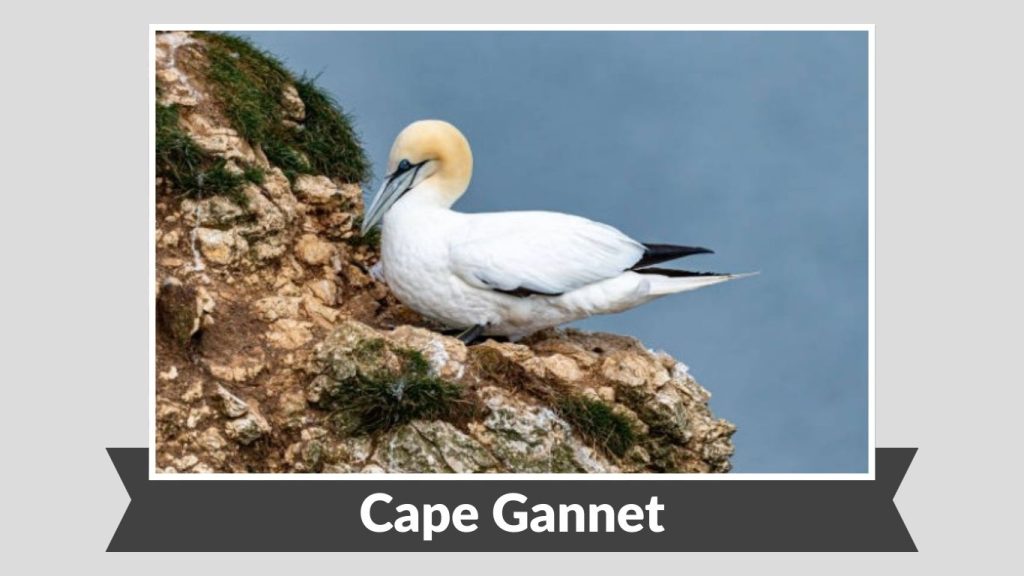
The Cape gannet is a striking seabird found mainly along the southern African coastline. It is closely related to the northern gannet and shares the same dramatic plunge-diving hunting style. With its white body, black wing edges, and golden-yellow head, the Cape gannet is an impressive sight as it soars over cold ocean waters in search of fish.
Identification
- Bright white body with black trailing edges on wings
- Golden-yellow head and nape
- Long, pointed pale gray bill
- Distinct black line around the eye area
- Long, narrow wings designed for fast flight and diving
Habitat
Cape gannets live in marine environments along the Atlantic and Indian Ocean coasts of southern Africa. They breed on offshore islands and rocky coastal outcrops, forming large, noisy colonies. Outside the breeding season, they range widely over open ocean waters.
Behavior
This species is famous for its powerful plunge-dives, dropping from high above the sea to catch fish beneath the surface. Cape gannets are extremely social, often nesting shoulder to shoulder in dense colonies. They are strong and efficient fliers, gliding low over waves or soaring high before diving.
Diet
Cape gannets mainly feed on schooling fish such as sardines and anchovies. They also eat squid and other small marine animals. They usually swallow prey whole shortly after surfacing.
Lifespan
Cape gannets can live around 20 to 25 years in the wild. Survival depends on ocean food availability and the safety of their breeding colonies.
3. Australasian Gannet
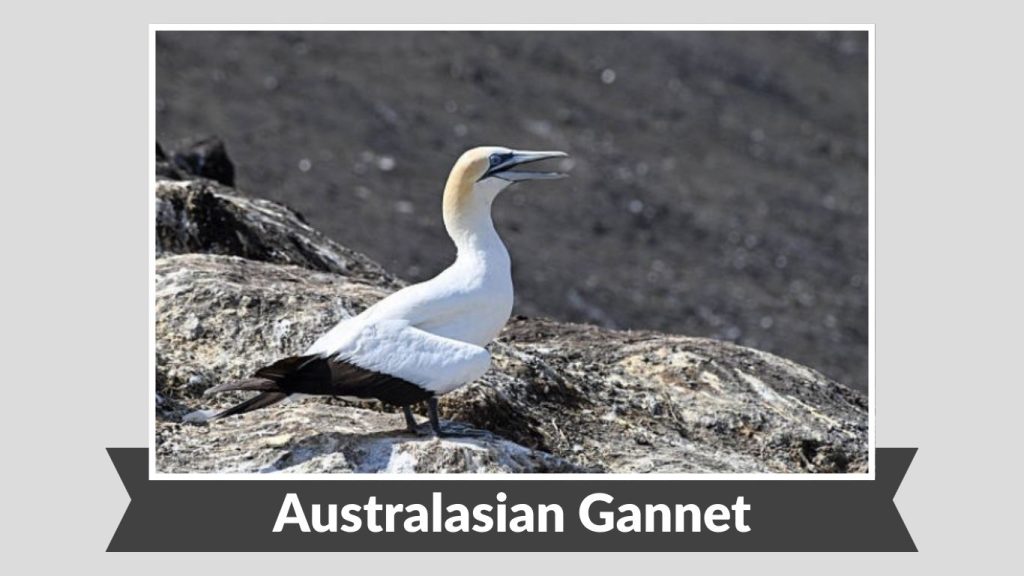
The Australasian gannet is a large seabird native to the southern oceans, especially around Australia and New Zealand. It closely resembles the northern and Cape gannets but is often recognized by its darker facial markings and slightly different head coloring. This species is famous for its powerful plunge-diving technique and long-distance ocean travel.
Identification
- White body with black wing tips
- Pale yellow head with dark markings around the eyes
- Long, sharp, bluish-gray bill
- Blue-gray facial skin
- Long, narrow wings built for fast gliding and diving
Habitat
Australasian gannets inhabit coastal and offshore waters of Australia, New Zealand, and nearby southern oceans. They breed on rocky islands, coastal cliffs, and offshore stacks, forming large, dense colonies. Outside the breeding season, they roam widely over open seas.
Behavior
These gannets are highly social and nest in crowded colonies. They are expert plunge-divers, dropping from great heights and entering the water at high speed to capture fish. Australasian gannets are strong fliers and can travel hundreds of kilometers from their nesting sites to find food.
Diet
Their diet mainly includes fish such as pilchards, anchovies, and mackerel, as well as squid. They hunt by diving deep into the ocean and catching prey underwater before returning to the surface.
Lifespan
Australasian gannets often live 20 to 30 years in the wild. Some individuals may live longer if they avoid major threats and have stable breeding conditions.
4. Peruvian Gannet (Peruvian Booby)
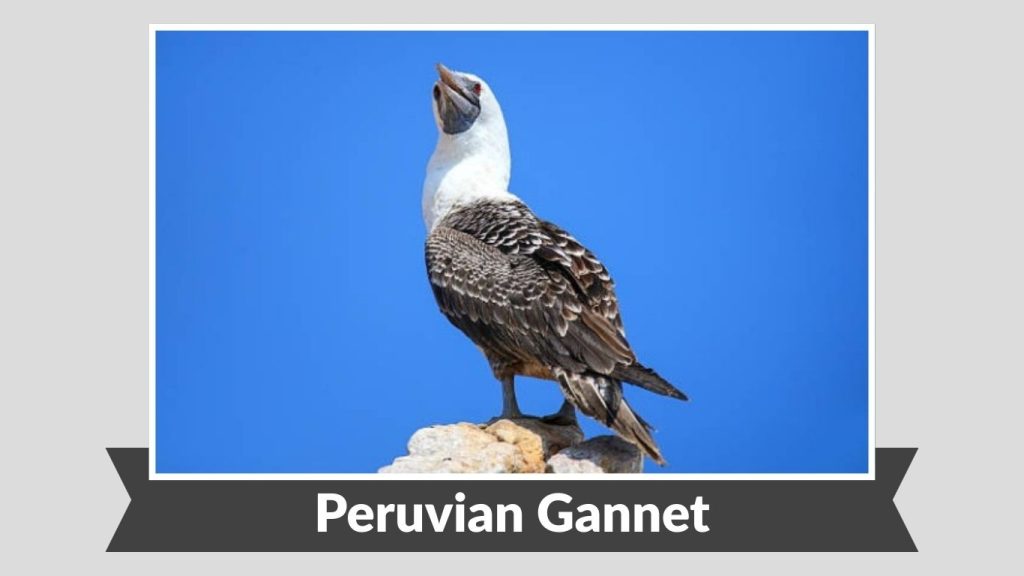
The Peruvian gannet, more commonly known as the Peruvian booby, is a large seabird found along the Pacific coast of South America. It is strongly associated with the cold, nutrient-rich waters of the Humboldt Current, which support huge numbers of fish. This species is darker overall than true gannets and forms massive breeding colonies on offshore islands.
Identification
- Dark brown to grayish body with white underparts
- Long, pointed gray bill
- Pale face with contrasting dark eye area
- Long, narrow wings adapted for plunge-diving
- Strong, streamlined body shape
Habitat
Peruvian gannets live along coastal marine environments, including open ocean, rocky shores, and offshore islands. They breed mainly on barren islands and coastal cliffs, often in extremely large colonies where thousands of birds nest close together.
Behavior
This species is a powerful plunge-diver, dropping from the air to catch fish beneath the surface. Peruvian gannets are highly social and often hunt in large flocks, following schools of fish and fishing boats. They are noisy and active around breeding colonies.
Diet
Their diet consists mostly of anchoveta, sardines, and other small schooling fish. They may also eat squid. They swallow prey whole shortly after surfacing from a dive.
Lifespan
Peruvian gannets usually live around 15 to 25 years in the wild. Lifespan depends heavily on ocean conditions and food supply.
5. Masked Booby
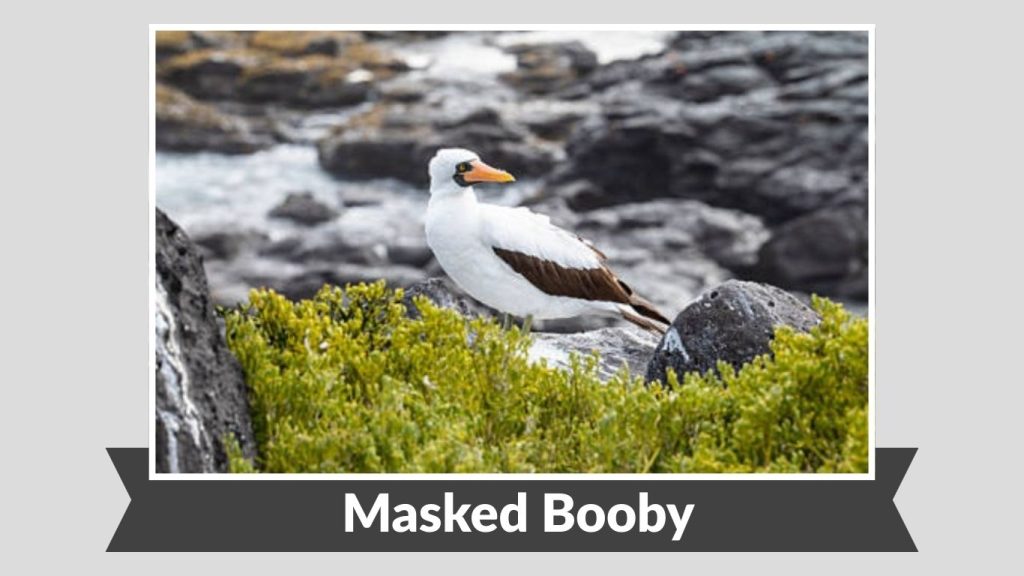
The masked booby is a large, powerful seabird often grouped with gannet-like birds because of its similar shape and plunge-diving behavior. It is widely distributed across tropical oceans and is one of the largest booby species. Its white body and dark facial mask give it a bold, high-contrast appearance that is easy to recognize at sea.
Identification
- Bright white body with black wings and tail
- Distinct dark “mask” around the eyes and face
- Long, pointed yellow bill
- Strong, streamlined body
- Long wings suited for soaring and diving
Habitat
Masked boobies live mainly in tropical and subtropical oceans around the world. They are usually seen far offshore but return to isolated islands, coral atolls, and remote coastal cliffs to breed. These nesting areas are often dry, rocky, and exposed.
Behavior
This species is an excellent plunge-diver, dropping from great heights to capture fish and squid. Masked boobies are often seen soaring alone or in small groups over open ocean. During breeding season, they form loose colonies and defend small nesting territories on the ground.
Diet
Their diet mainly consists of flying fish, squid, and other surface-schooling fish. They hunt by spotting prey from the air and diving steeply into the water.
Lifespan
Masked boobies can live around 20 to 25 years in the wild. Some individuals may live longer in undisturbed island colonies.
6. Brown Booby
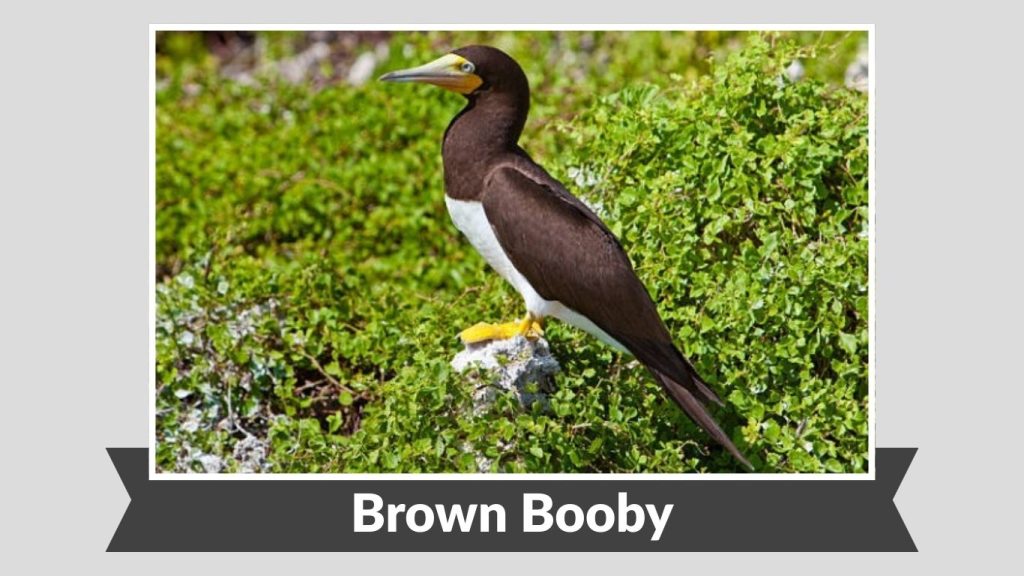
The brown booby is a sleek tropical seabird known for its dark brown body, bright white belly, and long pointed wings. Although not a true gannet, it shares similar hunting behavior and body shape. Brown boobies are commonly seen flying low over warm oceans and resting on buoys, ships, and rocky islands.
Identification
- Dark brown head, back, and wings
- Bright white belly and lower chest
- Long, pointed gray to yellowish bill
- Pale facial skin, often bluish or yellowish
- Slim, streamlined body
Habitat
Brown boobies inhabit tropical and subtropical oceans worldwide. They are usually found along warm coastlines, coral reefs, and offshore waters. Breeding takes place on isolated islands, rocky shores, and coral atolls, often with little vegetation.
Behavior
This species is an active plunge-diver and also catches prey by snatching it from the surface. Brown boobies are strong, agile fliers and may follow fishing boats. They are social at nesting sites but often hunt alone or in small groups.
Diet
Their diet mainly includes flying fish, sardines, anchovies, and squid. They capture prey by diving from the air or making shallow surface dives.
Lifespan
Brown boobies usually live around 15 to 25 years in the wild. With safe nesting sites and abundant food, some individuals may live longer.
7. Red-footed Booby
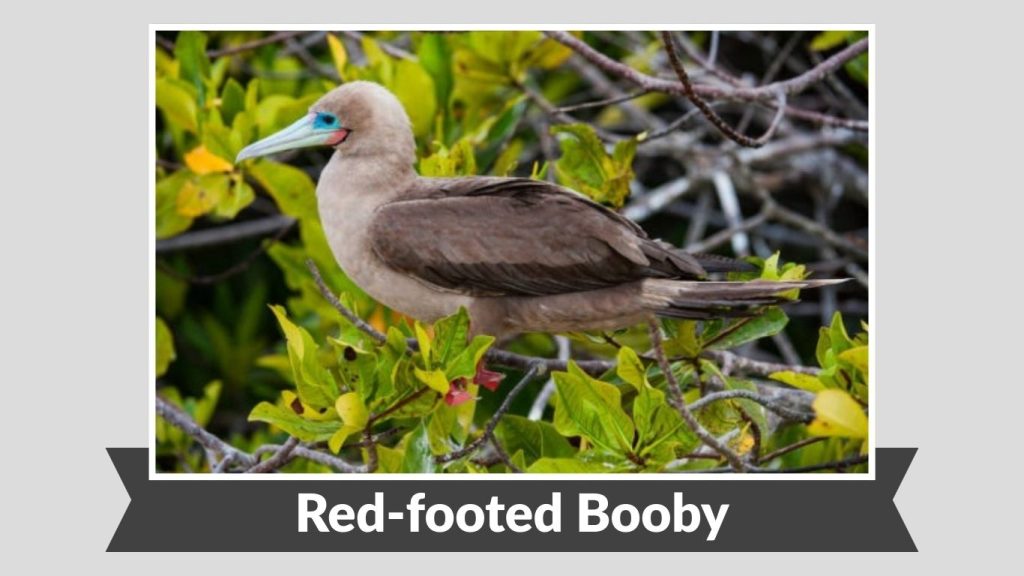
The red-footed booby is the smallest of the booby species and is well known for its bright red feet and graceful flight. Although smaller than true gannets, it shares the same streamlined body and plunge-diving hunting style. This species is widely distributed across tropical oceans and often nests in large colonies on remote islands.
Identification
- Bright red feet, a key identifying feature
- White, brown, or mixed color morphs
- Long, pale blue to gray bill
- Dark eyes and slim, pointed wings
- Smaller and more lightly built than other gannet-like birds
Habitat
Red-footed boobies live over tropical and subtropical oceans worldwide. They spend most of their lives at sea but return to remote islands, coral atolls, and coastal forests to breed. Unlike many other boobies, they often nest in trees and shrubs rather than on open ground.
Behavior
This species is an agile flier and often feeds far from land. Red-footed boobies hunt by plunge-diving and surface-snatching. They are highly social, nesting in large colonies and often roosting close together in trees. They are generally quieter and more graceful in movement than larger gannets.
Diet
Their diet consists mainly of flying fish, squid, and small surface-dwelling fish. They usually catch prey by diving from the air and swallowing it while floating on the water.
Lifespan
Red-footed boobies can live around 20 years or more in the wild. In safe breeding colonies with stable food supplies, some individuals may live even longer.
FAQs
What is the difference between gannets and boobies?
Gannets and boobies belong to the same bird family, Sulidae, and share similar body shapes and hunting styles. Gannets are generally larger and live mostly in cooler oceans, while boobies are smaller and mainly inhabit tropical seas. Both are famous for plunge-diving to catch fish.
How do gannet birds dive without getting injured?
Gannets have special air sacs under their skin and in their chest that cushion the impact when they hit the water. Their streamlined bodies and narrow wings reduce resistance, allowing them to enter the sea at high speed and reach fish swimming below the surface.
Where do gannet birds usually live?
Gannets mostly live over open oceans and coastal waters. They only come to land to breed, forming large colonies on steep cliffs, offshore islands, and rocky headlands. Different species are found in the North Atlantic, southern oceans, and along productive coastal regions.
What do gannet birds eat?
Gannets mainly eat fish such as mackerel, sardines, anchovies, and herring. Some species also eat squid. They hunt by spotting prey from above and plunge-diving straight into the water, then swallowing fish whole after surfacing.
How long do gannet birds live?
Most gannet species are long-lived seabirds, often surviving 20 to 30 years in the wild. Their lifespan depends on food availability, ocean conditions, and the safety of their breeding colonies.