
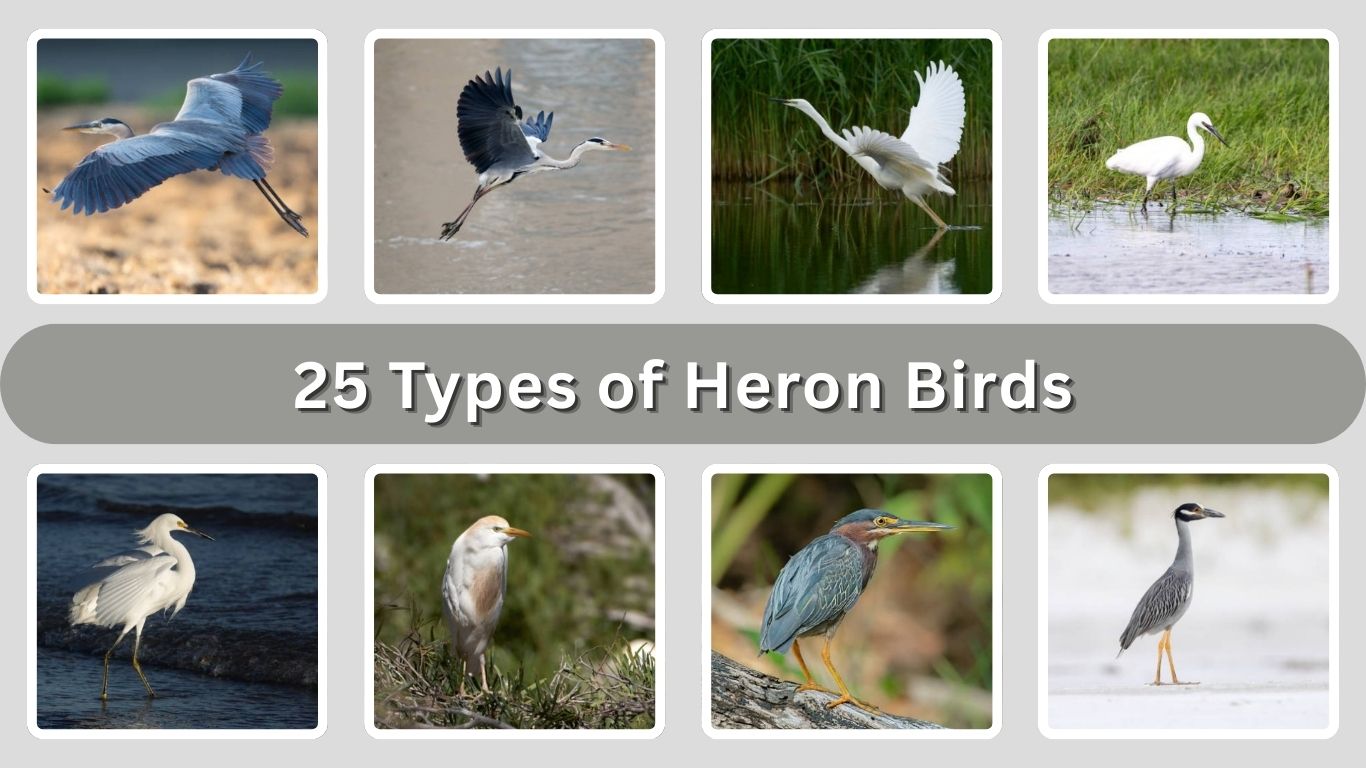
Herons are elegant wading birds known for their long legs, S-shaped necks, and sharp, spear-like bills. Found on every continent except Antarctica, they are most commonly seen around wetlands such as rivers, lakes, marshes, swamps, and coastal shores. Herons are expert hunters, famous for standing motionless before striking prey with incredible speed. From towering great blue herons to small, secretive pond herons, this diverse bird family plays an important role in aquatic ecosystems worldwide.
1. Great Blue Heron
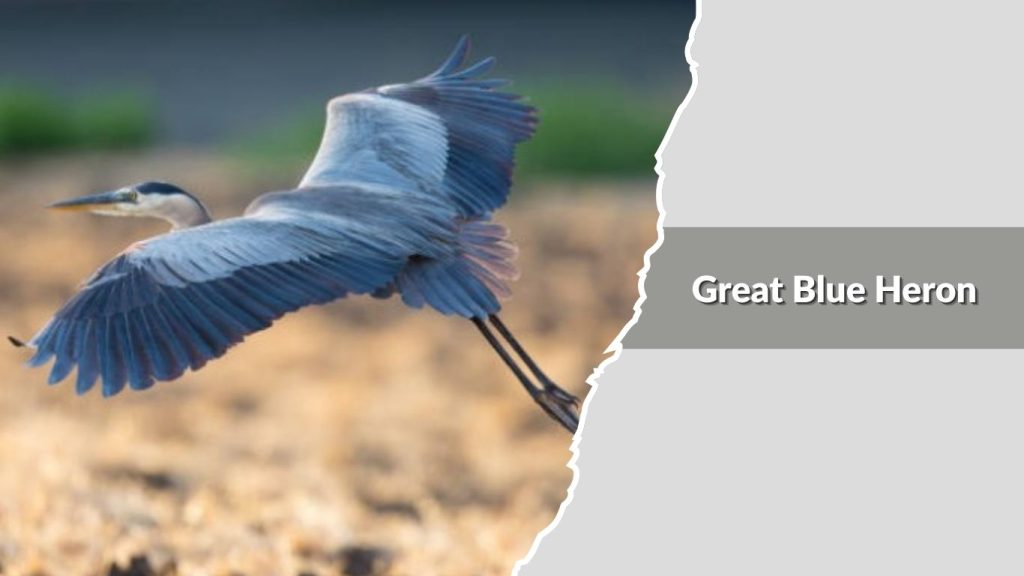
The great blue heron is the largest and most widespread heron in North America, well known for its tall body, slow wingbeats, and patient hunting style. It is a highly adaptable bird found in a wide range of wetland and coastal habitats, where it often stands motionless before striking prey with lightning speed.
Identification
- Tall gray-blue body with long neck and legs
- White face with a black stripe extending above the eye
- Long, sharp yellowish bill
- Black shoulder patches and shaggy chest plumes
- Wingspan often reaching over 180 cm
Habitat
Great blue herons inhabit freshwater and saltwater environments, including marshes, lakes, rivers, swamps, estuaries, mangroves, and coastal shorelines. They can also be found near ponds, canals, and even urban waterways, as long as shallow water and food are available.
Behaviors
They are usually solitary hunters, slowly stalking prey or standing still for long periods before striking. Great blue herons are strong flyers and often seen gliding with slow, deep wingbeats. During the breeding season, they nest in large colonies called heronries.
Diet and Lifespan
Their diet mainly includes fish, frogs, insects, crustaceans, reptiles, small mammals, and even small birds. They hunt by spearing or grasping prey with their bill. In the wild, great blue herons commonly live around 15–25 years.
2. Grey Heron
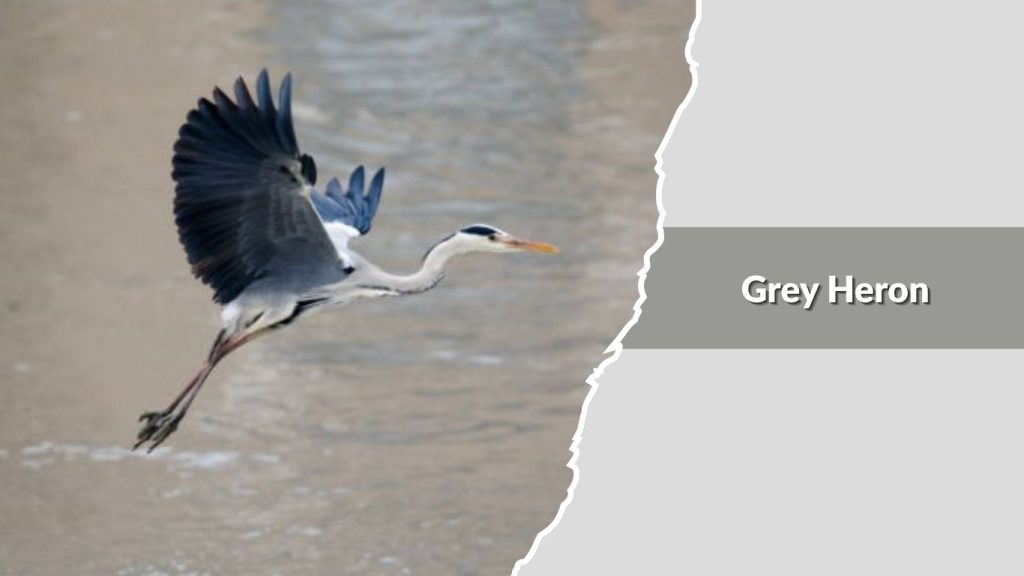
The grey heron is a tall, elegant wading bird widely distributed across Europe, Asia, and parts of Africa. It is closely related to the great blue heron and is well known for its slow, deliberate movements and powerful fishing skills in shallow water.
Identification
- Tall gray body with long neck and legs
- White head with a bold black stripe extending behind the eye
- Long, sharp yellow bill
- Black shoulder patches and shaggy chest feathers
- Broad wings with slow, deep wingbeats
Habitat
Grey herons inhabit freshwater and coastal wetlands, including lakes, rivers, marshes, ponds, estuaries, and flooded fields. They are highly adaptable and may also be found in parks, canals, and urban waterways where fish and amphibians are present.
Behaviors
They are mostly solitary feeders, standing motionless or walking slowly while hunting. Grey herons are strong flyers and often seen commuting between feeding and nesting areas. During the breeding season, they nest in colonies, often high in trees near water.
Diet and Lifespan
Their diet consists mainly of fish, frogs, insects, crustaceans, reptiles, small mammals, and occasionally birds. They catch prey by rapidly striking with the bill. In the wild, grey herons usually live about 15–25 years.
3. Great Egret
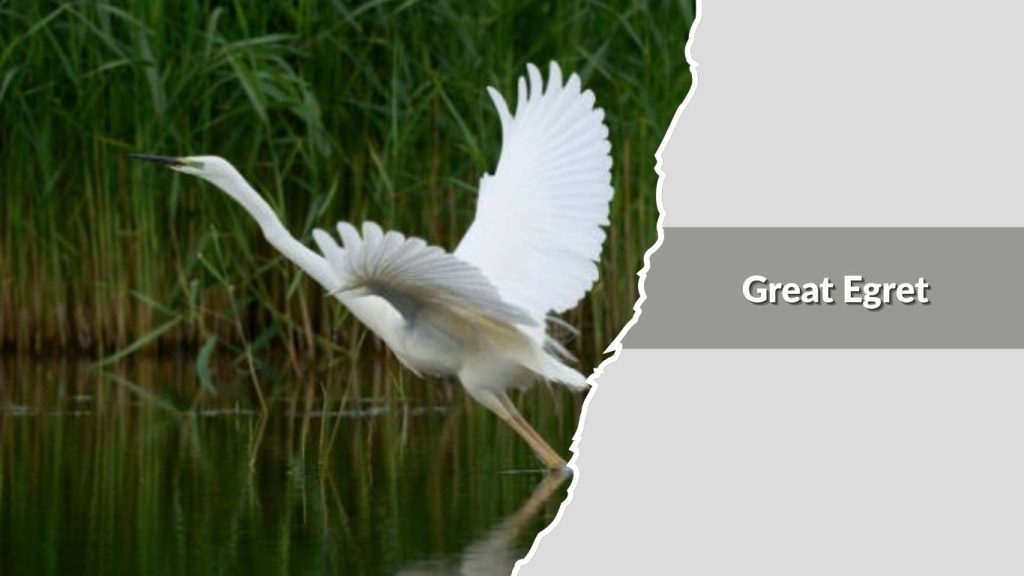
The great egret is a tall, elegant white heron species famous for its pure white plumage and long, graceful neck. It is widely distributed across the world and commonly seen in wetlands, coastlines, and shallow waters where it hunts fish and other small animals.
Identification
- Tall, entirely white body
- Long S-shaped neck
- Long yellow dagger-like bill
- Long black legs and feet
- Broad wings with slow, steady wingbeats
Habitat
Great egrets inhabit freshwater marshes, lakes, rivers, swamps, estuaries, mangroves, and coastal lagoons. They are highly adaptable and can also be found in agricultural wetlands and flooded fields.
Behaviors
They are usually solitary or loosely social while feeding, often standing motionless before striking prey. Great egrets are strong, graceful flyers and frequently nest in large mixed-species colonies with other herons and egrets.
Diet and Lifespan
Their diet includes fish, frogs, insects, crustaceans, reptiles, and small mammals. They hunt by slowly stalking prey or waiting still and striking quickly. In the wild, great egrets typically live around 15–20 years.
4. Little Egret
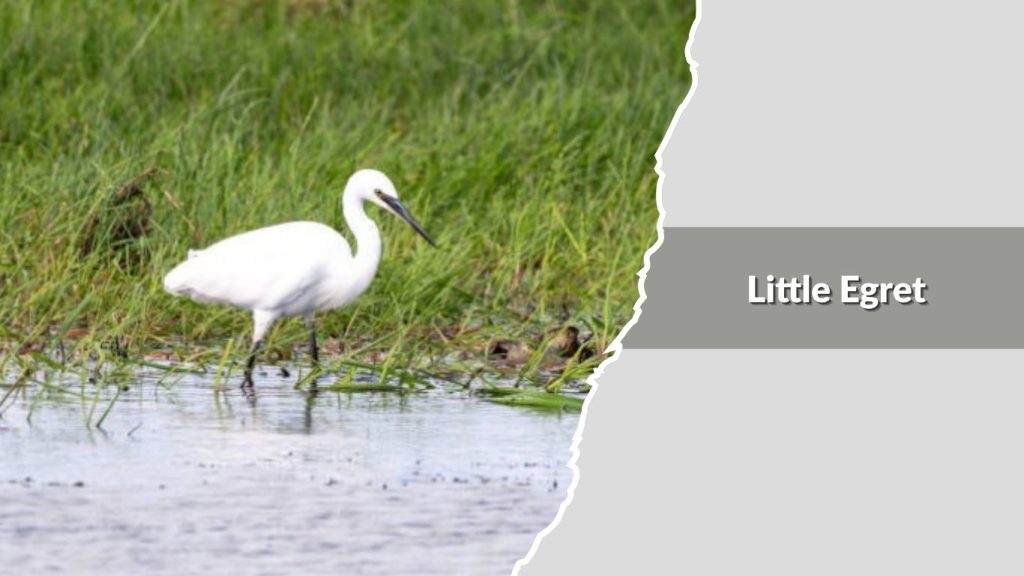
The little egret is a small, elegant white heron known for its slender build, black legs, and bright yellow feet. It is widely found across Europe, Africa, Asia, and Australia, often seen actively foraging in shallow waters.
Identification
- Small, entirely white body
- Long thin black bill
- Black legs with bright yellow feet
- Slim neck and delicate appearance
- Light, buoyant flight style
Habitat
Little egrets inhabit shallow freshwater and coastal wetlands, including marshes, lakes, rivers, tidal flats, lagoons, and estuaries. They are also common in flooded fields and fish ponds.
Behaviors
They are active hunters, often seen running, stirring the water with their feet, or spreading their wings to flush prey. Little egrets may feed alone or in small groups and usually nest in colonies with other waterbirds.
Diet and Lifespan
Their diet consists mainly of fish, insects, crustaceans, frogs, and small reptiles. They hunt by quick movements and sudden strikes. In the wild, little egrets generally live around 10–15 years.
5. Snowy Egret
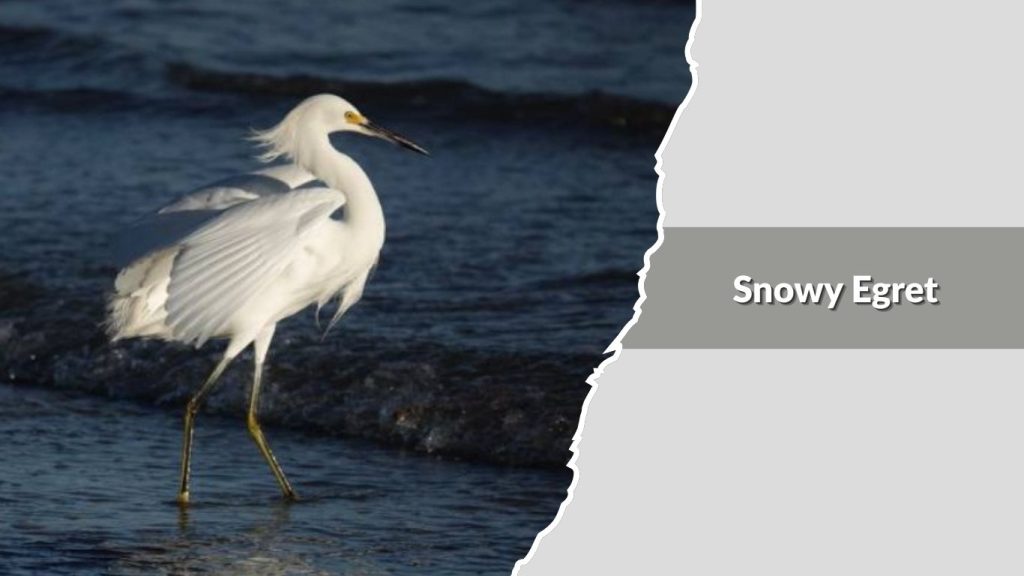
The snowy egret is a graceful white heron species admired for its delicate appearance, black bill, and striking golden-yellow feet. It is widely distributed in the Americas and parts of Africa and Asia, where it inhabits wetlands and coastal environments.
Identification
- Slender, all-white body
- Long black bill and black legs
- Bright yellow feet used to stir prey
- Thin, elegant neck
- Often shows wispy breeding plumes
Habitat
Snowy egrets inhabit freshwater marshes, swamps, lakes, rivers, estuaries, mangroves, tidal flats, and coastal lagoons. They prefer shallow water where small fish and invertebrates are abundant.
Behaviors
They are very active foragers, often running, shuffling their feet, or spreading their wings to startle prey. Snowy egrets are social birds and commonly feed and nest in colonies.
Diet and Lifespan
Their diet includes fish, shrimp, insects, frogs, and small reptiles. They catch prey with quick jabs of the bill. In the wild, snowy egrets usually live around 10–15 years.
6. Cattle Egret
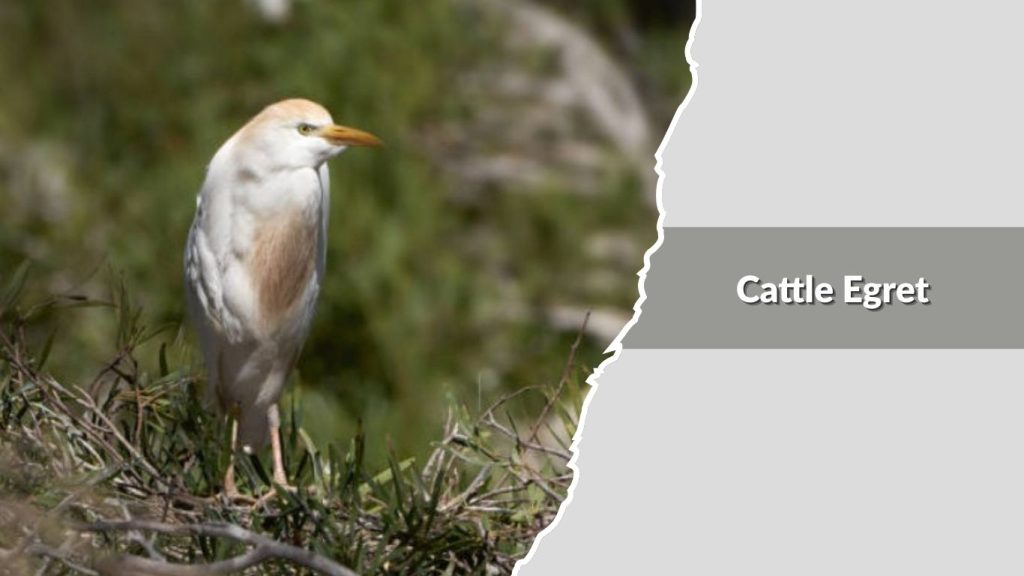
The cattle egret is a small, stocky heron species best known for its close association with grazing animals and agricultural landscapes. Unlike most herons, it often forages far from water, following cattle, buffalo, and farm machinery to catch disturbed insects.
Identification
- Shorter, stockier build than most egrets
- White body, often with buff or orange patches in breeding season
- Short yellow bill that may turn orange during breeding
- Yellow to orange legs
- Compact neck and posture
Habitat
Cattle egrets inhabit grasslands, farmland, savannas, wetlands, and flooded fields. They are highly adaptable and can be found in dry pastures as well as near rivers, marshes, and lakes.
Behaviors
They are very social birds, often seen in large flocks around livestock or tractors. Cattle egrets actively walk and run to catch insects flushed from the ground. They nest in large colonies, frequently with other heron species.
Diet and Lifespan
Their diet mainly consists of insects such as grasshoppers, crickets, and beetles, along with frogs, spiders, and small reptiles. They forage mostly on land. In the wild, cattle egrets typically live around 10–15 years.
7. Green Heron
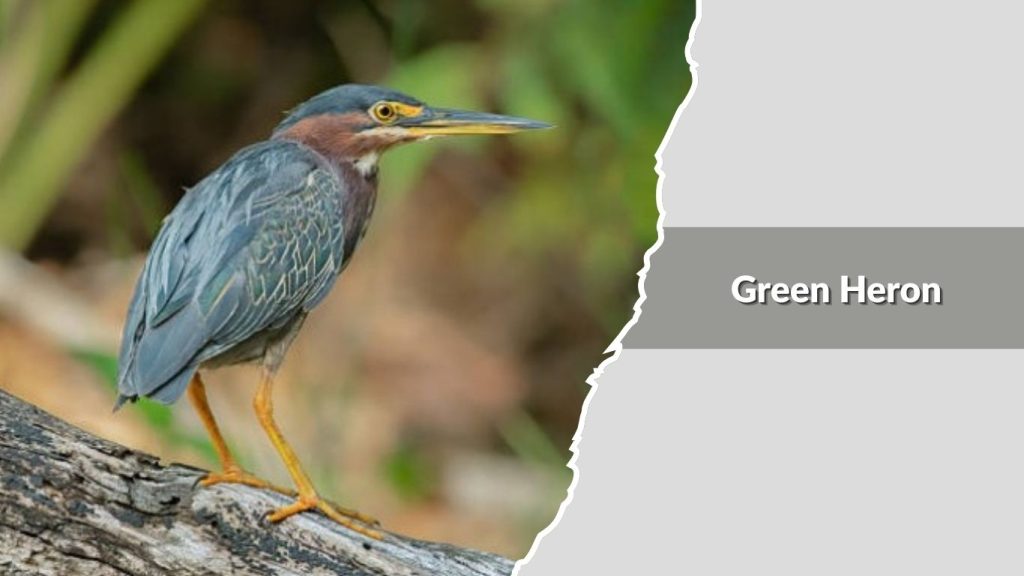
The green heron is a small, compact heron species known for its rich chestnut and greenish-black coloring and clever hunting behavior. It is widely found in the Americas and is often seen quietly stalking prey along the edges of ponds and streams.
Identification
- Small, stocky body with short neck
- Dark greenish-black back and cap
- Chestnut neck and breast
- Short yellow legs and dark pointed bill
- Often appears hunched when perched
Habitat
Green herons inhabit ponds, marshes, swamps, streams, mangroves, and wooded wetlands. They prefer sheltered waters with overhanging vegetation.
Behaviors
They are solitary and secretive birds, often standing still at the water’s edge. Green herons are known to use tools, sometimes dropping insects or feathers onto the water to lure fish. They usually nest in small colonies or loose groups.
Diet and Lifespan
Their diet includes small fish, insects, crustaceans, frogs, and tadpoles. They hunt by patiently waiting and striking quickly. In the wild, green herons generally live around 7–15 years.
8. Black-crowned Night Heron
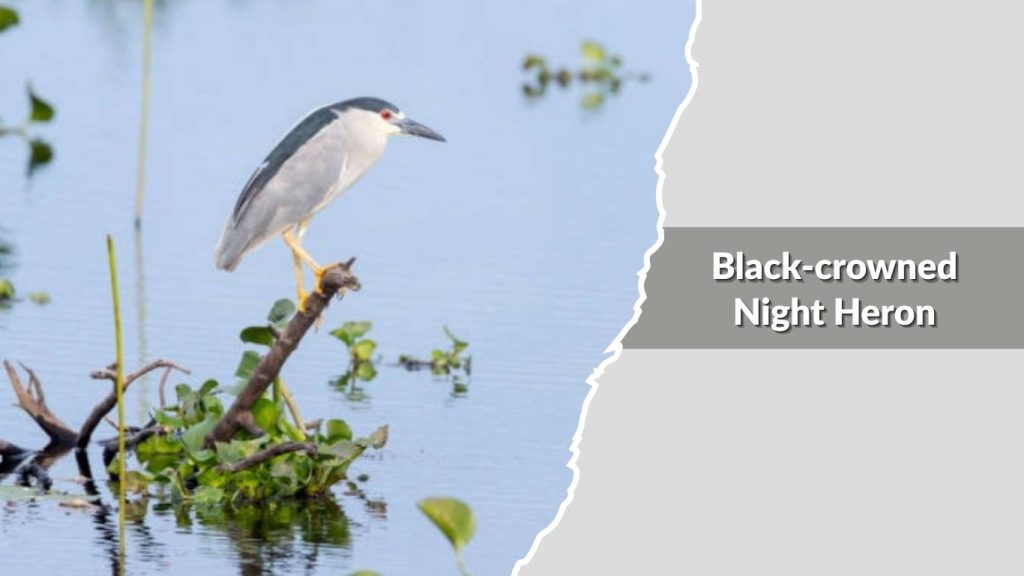
The black-crowned night heron is a stocky, medium-sized heron best known for its nocturnal feeding habits and thick neck. It is widely distributed across the world and is commonly seen roosting in trees during the day.
Identification
- Black crown and back with pale gray wings
- White face and underparts
- Red eyes and short thick black bill
- Relatively short legs compared to other herons
- Stocky body and compact neck
Habitat
Black-crowned night herons inhabit marshes, lakes, rivers, swamps, estuaries, mangroves, and coastal wetlands. They often roost in trees or shrubs near water.
Behaviors
They are mostly active at dusk and night, leaving roosts in the evening to feed. Black-crowned night herons often forage alone but nest in colonies. Their flight is slow and steady with deep wingbeats.
Diet and Lifespan
Their diet includes fish, frogs, insects, crustaceans, small mammals, and birds. They hunt by standing still or slowly stalking prey. In the wild, they typically live about 10–20 years.
9. Yellow-crowned Night Heron
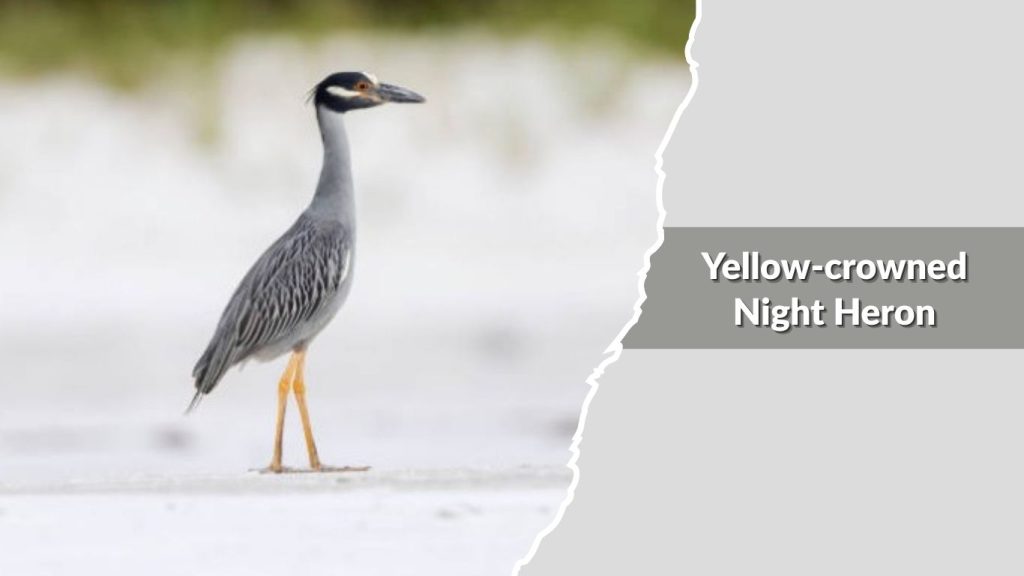
The yellow-crowned night heron is a medium-sized, stocky heron recognized for its yellowish crown and preference for feeding on crustaceans. It is mainly found in the Americas, especially in coastal and wetland regions.
Identification
- Gray body with black head pattern
- Pale yellow to white crown and cheek stripe
- Thick, dark bill and short legs
- Red eyes and compact build
- Smooth, rounded head shape
Habitat
Yellow-crowned night herons inhabit coastal mangroves, tidal flats, estuaries, marshes, swamps, and riverbanks. They are often associated with areas rich in crabs and crayfish.
Behaviors
They are mostly active at dusk and during the night but may also feed during the day. Yellow-crowned night herons often forage alone and nest in small colonies. They move slowly and deliberately while hunting.
Diet and Lifespan
Their diet mainly consists of crabs, crayfish, shrimp, insects, fish, and small amphibians. They specialize in catching crustaceans. In the wild, yellow-crowned night herons usually live around 10–15 years.
10. Striated Heron
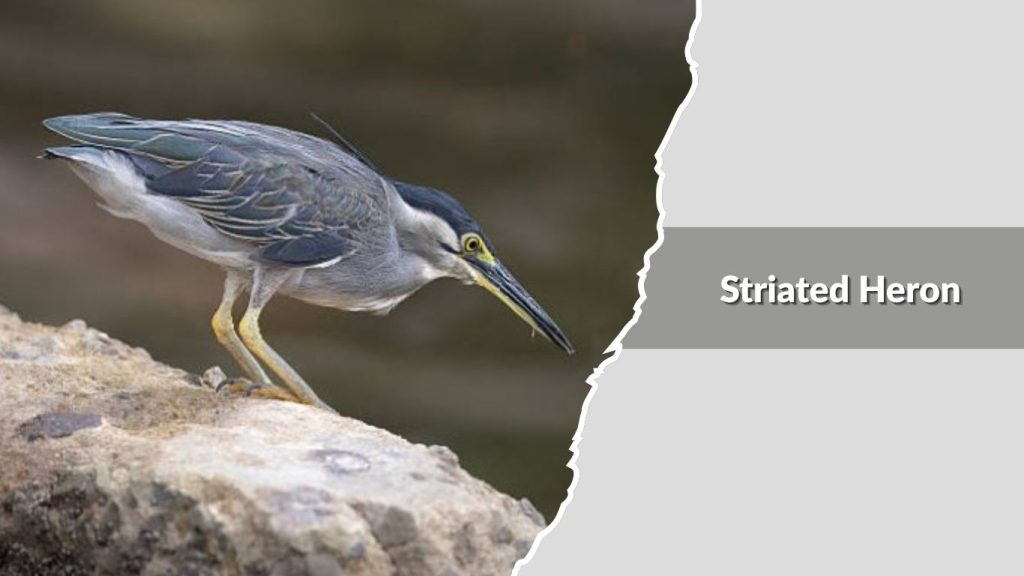
The striated heron is a small, adaptable heron species widely distributed across tropical and subtropical regions of the world. It is known for its streaked neck pattern and ability to live in both coastal and freshwater environments.
Identification
- Small, compact body
- Dark gray to greenish-black cap and back
- Striped neck and pale underparts
- Short yellowish legs and sharp dark bill
- Often appears crouched when resting
Habitat
Striated herons inhabit mangroves, tidal flats, riverbanks, ponds, lakes, marshes, and forested wetlands. They are often found along sheltered shorelines and slow-moving waters.
Behaviors
They are solitary and secretive, usually feeding alone. Striated herons hunt by standing still or slowly stalking prey along the water’s edge. They may nest alone or in loose colonies.
Diet and Lifespan
Their diet includes small fish, insects, crustaceans, frogs, and tadpoles. They capture prey with quick strikes of the bill. In the wild, striated herons typically live around 7–12 years.
11. Squacco Heron
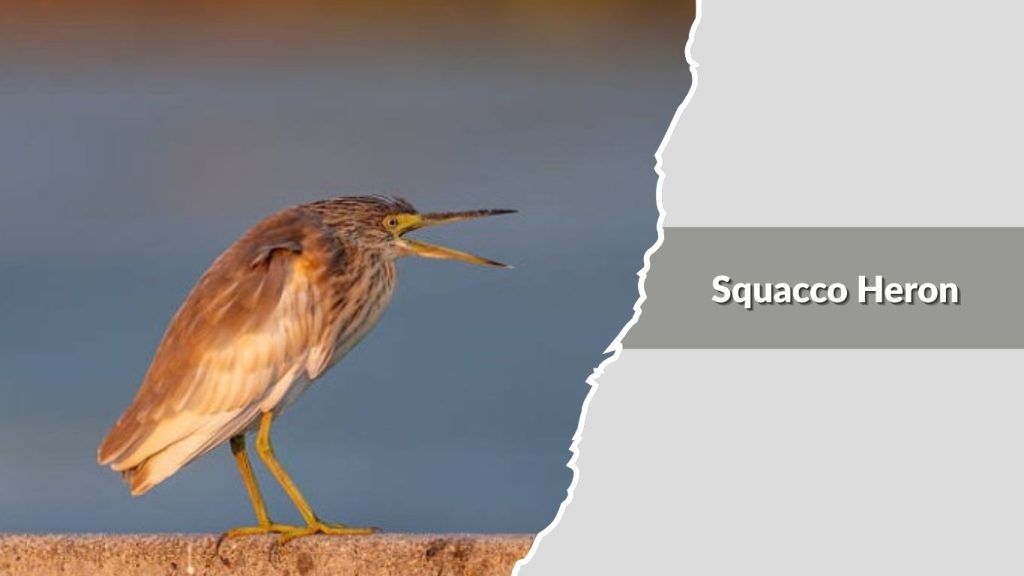
The squacco heron is a small, compact heron species best known for its buff-colored plumage and striking white wings visible in flight. It breeds in parts of Europe, Asia, and Africa and migrates to warmer regions in winter.
Identification
- Buff to pale brown body with streaked back
- Bright white wings visible in flight
- Short neck and stocky build
- Yellow bill that turns bluish in breeding season
- Short greenish-yellow legs
Habitat
Squacco herons inhabit marshes, swamps, lakesides, riverbanks, flooded fields, and shallow wetlands. They often stay in dense vegetation near water.
Behaviors
They are usually solitary feeders, quietly stalking prey along the water’s edge. Squacco herons are slow-moving and secretive, often freezing when disturbed. They nest in small colonies, usually mixed with other heron species.
Diet and Lifespan
Their diet includes insects, fish, frogs, small reptiles, and crustaceans. They hunt by slowly walking and striking quickly. In the wild, squacco herons generally live around 7–12 years.
12. Purple Heron
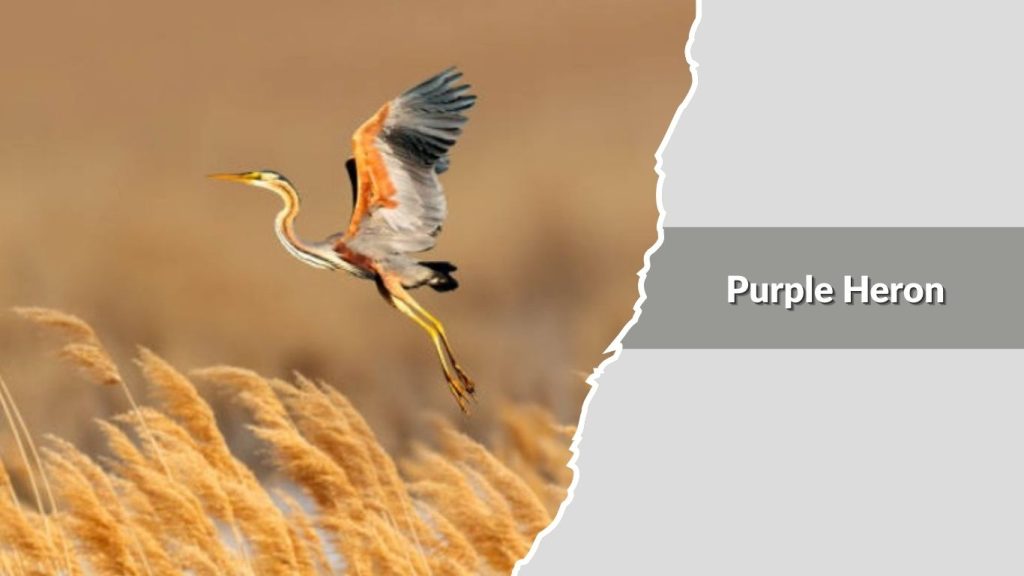
The purple heron is a tall, slender heron species known for its dark, reddish-purple tones and secretive lifestyle. It is mainly found in Europe, Africa, and Asia, where it inhabits reed-filled wetlands and quiet marshes.
Identification
- Slim body with chestnut and dark gray coloring
- Black stripes along the neck
- Long, sharp yellowish bill
- Long dark legs and slender neck
- Narrow wings and graceful flight
Habitat
Purple herons inhabit reed beds, marshes, swamps, river margins, lakesides, and flooded wetlands. They prefer dense vegetation where they can hide while hunting.
Behaviors
They are shy and elusive, often staying hidden among reeds. Purple herons usually hunt alone, slowly stalking prey. During breeding season, they nest in colonies within reed beds or trees near wetlands.
Diet and Lifespan
Their diet includes fish, frogs, insects, reptiles, and small mammals. They capture prey with rapid thrusts of the bill. In the wild, purple herons commonly live around 10–15 years.
13. Tricolored Heron
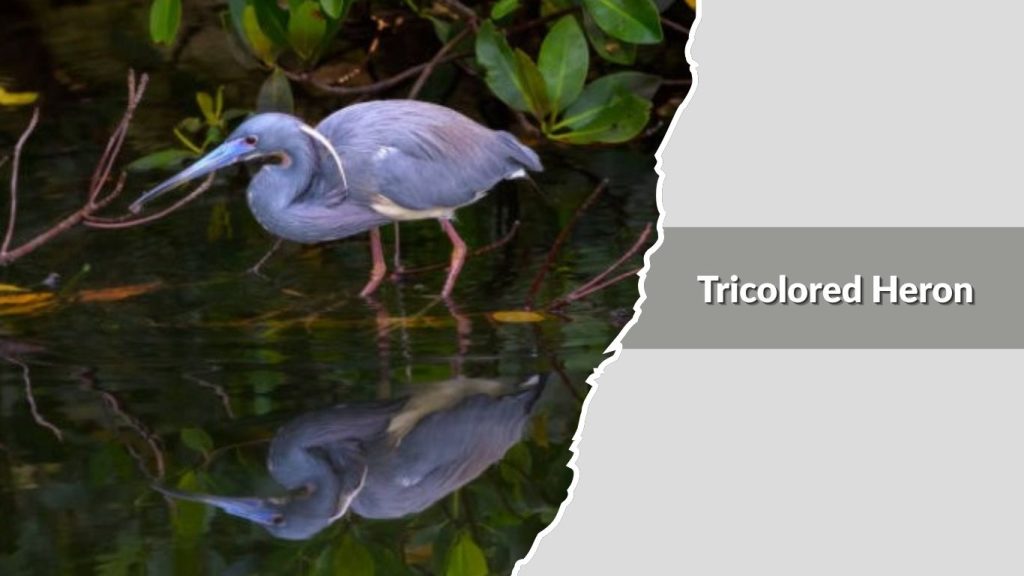
The tricolored heron is a slender, active heron species recognized for its blue-gray body, white belly, and long neck. It is mainly found in the southeastern United States, Central America, the Caribbean, and parts of South America.
Identification
- Slender blue-gray body with white belly
- Long white stripe running down the throat
- Reddish-brown neck during breeding season
- Long pointed bill and long yellowish legs
- Narrow wings and graceful posture
Habitat
Tricolored herons inhabit coastal marshes, mangroves, estuaries, lagoons, and shallow freshwater wetlands. They prefer shallow water where small fish are abundant.
Behaviors
They are very active hunters, often running, darting, and turning quickly while chasing prey. Tricolored herons usually feed alone but nest in colonies with other herons.
Diet and Lifespan
Their diet mainly includes small fish, insects, shrimp, tadpoles, and crustaceans. They hunt by rapid movements and quick strikes. In the wild, tricolored herons generally live around 10–15 years.
14. Reddish Egret
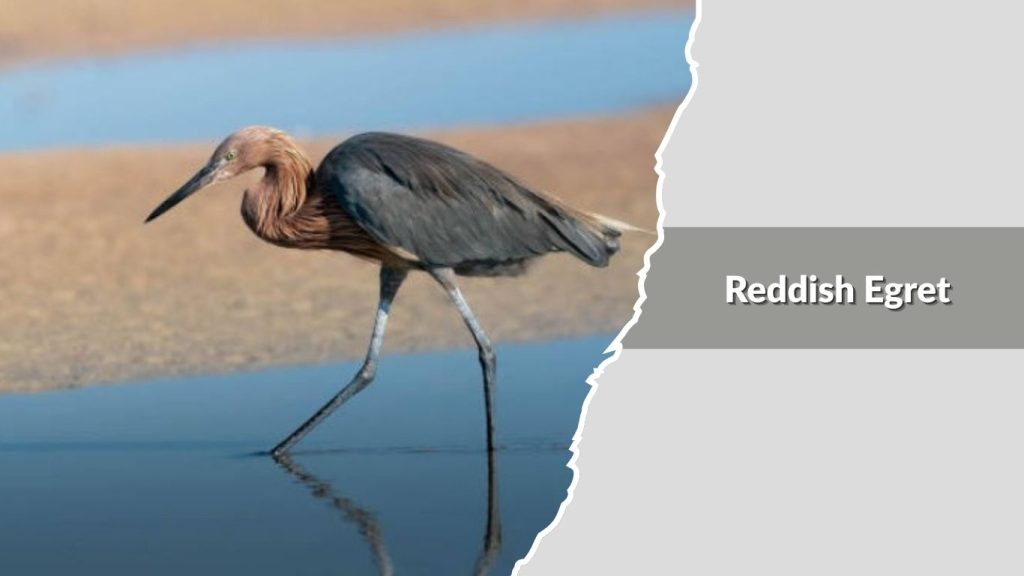
The reddish egret is one of the most energetic and visually striking herons, famous for its active hunting style and shaggy appearance. It occurs mainly along the coasts of the southern United States, Mexico, Central America, and the Caribbean.
Identification
- Medium-sized heron with shaggy neck and body feathers
- Reddish neck and head with gray body
- Pink base to the bill with black tip
- Long dark legs and slender build
- Also occurs in a white color morph
Habitat
Reddish egrets inhabit shallow coastal waters, tidal flats, lagoons, mangroves, and salt ponds. They prefer warm coastal habitats rather than inland wetlands.
Behaviors
They are famous for their dramatic hunting style, running, spinning, wing spreading, and jumping to chase fish. Reddish egrets are usually solitary feeders but nest in colonies.
Diet and Lifespan
Their diet includes small fish, shrimp, crabs, and aquatic insects. They actively chase prey rather than waiting motionless. In the wild, reddish egrets typically live around 10–15 years.
15. Goliath Heron
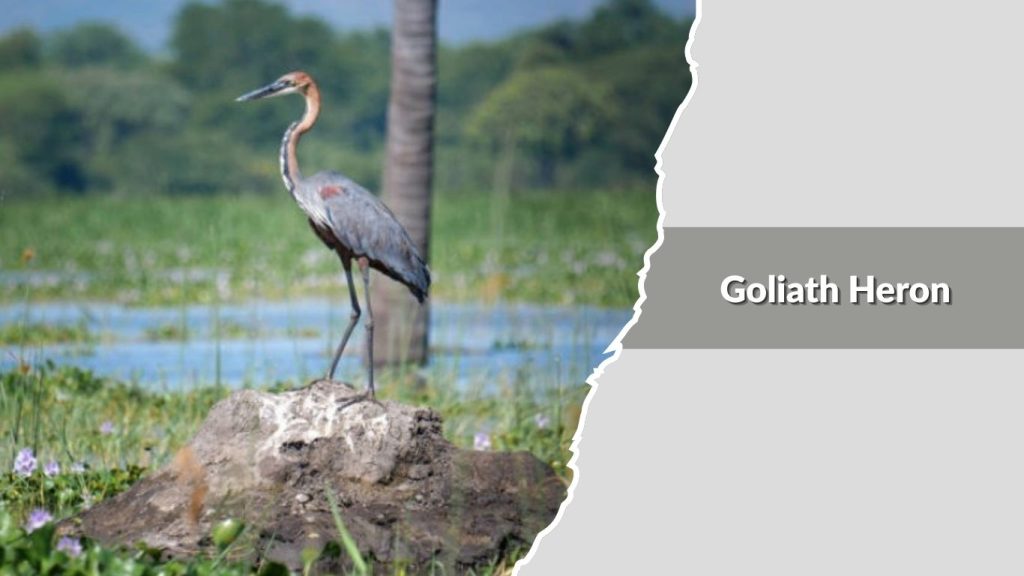
The goliath heron is the largest heron species in the world, towering over most other wading birds. It is found across Africa and parts of southern Asia, where it inhabits large wetlands and slow-moving water bodies.
Identification
- Very large body with chestnut head and neck
- Gray wings and back with streaked chest
- Massive, heavy yellowish bill
- Long dark legs and extremely tall stature
- Deep, booming call unlike smaller herons
Habitat
Goliath herons inhabit large rivers, lakes, swamps, estuaries, mangroves, and coastal lagoons. They prefer wide, open waters with abundant fish.
Behaviors
They are solitary and territorial hunters, often standing motionless for long periods. Goliath herons hunt by slowly stalking or suddenly striking prey. They usually nest alone or in small, loose colonies.
Diet and Lifespan
Their diet mainly consists of large fish, frogs, reptiles, small mammals, and crustaceans. They can take surprisingly large prey. In the wild, goliath herons often live around 15–25 years.
16. Cocoi Heron
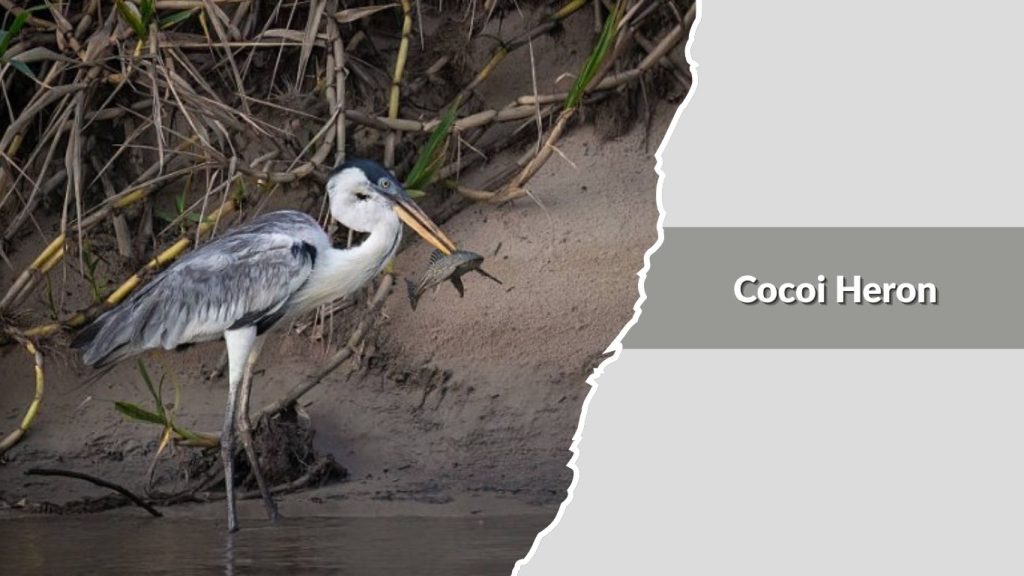
The cocoi heron is a large South American heron species closely related to the great blue heron. It is easily recognized by its bold black-and-white head pattern and tall, powerful build.
Identification
- Gray body with white neck and underparts
- Black cap and black stripe extending down the neck
- Long yellow to orange sharp bill
- Long dark legs adapted for wading
- Broad wings and tall upright posture
Habitat
Cocoi herons inhabit rivers, lakes, marshes, swamps, flooded forests, and estuaries throughout much of South America. They are usually found near large water bodies with abundant fish.
Behaviors
They are mostly solitary hunters, standing motionless or walking slowly while searching for prey. Cocoi herons are strong flyers and often commute between feeding and nesting areas. They usually nest in colonies.
Diet and Lifespan
Their diet includes fish, frogs, reptiles, crustaceans, and small mammals. They catch prey with quick thrusts of the bill. In the wild, cocoi herons generally live around 15–20 years.
17. Agami Heron
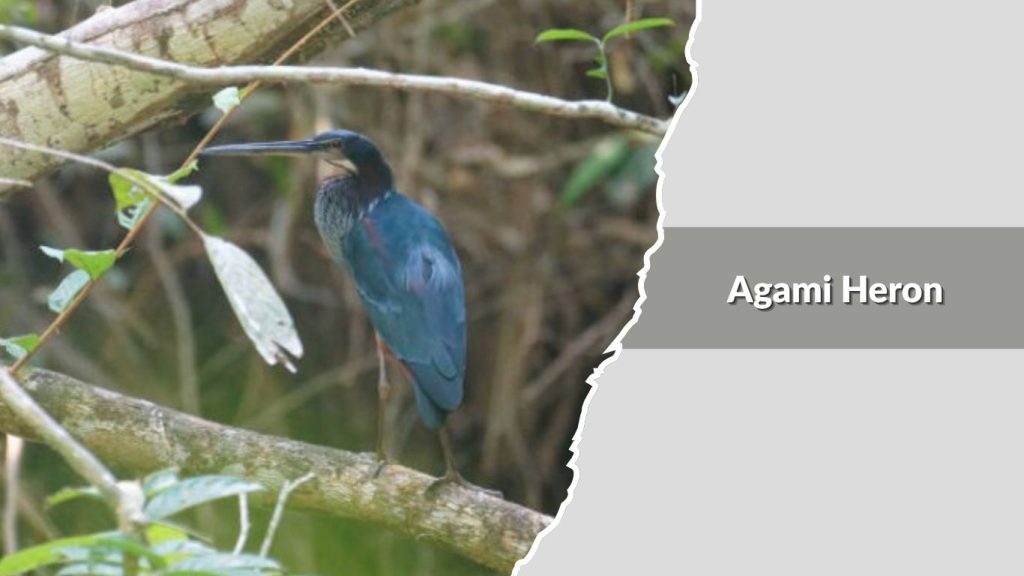
The agami heron is a striking and slender heron species famous for its long neck, rich chestnut and slate-blue colors, and extremely secretive nature. It is found in Central and South America, mainly in dense tropical forests near slow-moving water.
Identification
- Slender body with long, thin neck
- Chestnut-colored head and neck
- Slate-blue to gray wings and back
- Long, sharp yellow bill
- Very short legs compared to most herons
Habitat
Agami herons inhabit lowland rainforests, forested rivers, flooded forests, swamps, and shaded lagoons. They prefer quiet, slow-moving waters under dense vegetation and are rarely seen in open wetlands.
Behaviors
They are solitary, shy, and difficult to observe, often standing motionless under cover before striking prey. Agami herons are mostly crepuscular, being more active at dawn and dusk. They nest in colonies at hidden forest sites.
Diet and Lifespan
Their diet mainly includes small fish, frogs, aquatic insects, and crustaceans. They hunt by remaining still and making sudden, rapid strikes. In the wild, agami herons are believed to live around 10–15 years.
18. Boat-billed Heron
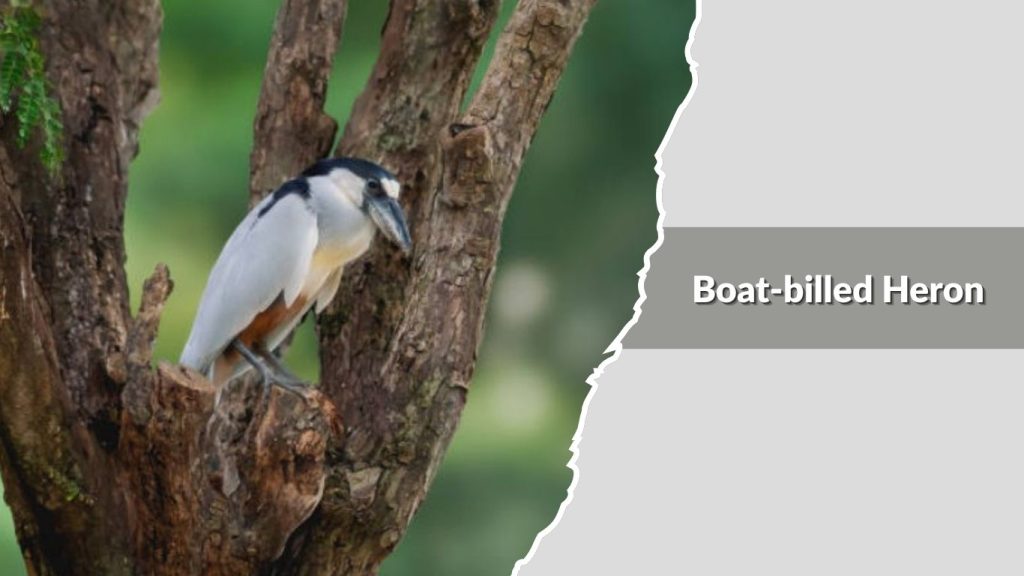
The boat-billed heron is a unique-looking heron species best known for its extremely broad, scoop-shaped bill. It is found in Central and South America, where it lives mainly in mangroves and shaded wetlands.
Identification
- Very large, broad, boat-shaped bill
- Pale gray body with darker wings
- Black crown with pale face
- Red eyes and short legs
- Stocky body with thick neck
Habitat
Boat-billed herons inhabit mangrove forests, tidal creeks, swamps, lagoons, and slow-moving rivers. They prefer sheltered coastal and forested wetlands, often roosting in dense vegetation.
Behaviors
They are mostly nocturnal, resting quietly during the day and feeding at night. Boat-billed herons hunt by standing still or slowly walking in shallow water. They often nest in colonies, sometimes with other heron species.
Diet and Lifespan
Their diet includes fish, crustaceans, frogs, aquatic insects, and small mammals. They use their wide bill to scoop and grasp prey. In the wild, boat-billed herons usually live around 10–15 years.
19. Little Blue Heron
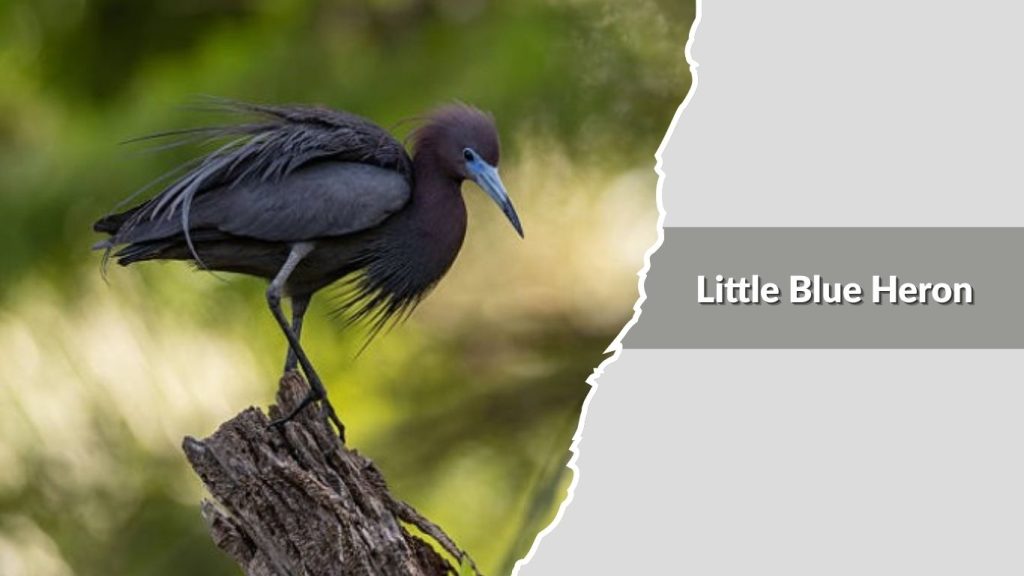
The little blue heron is a slender heron species that changes color dramatically as it matures. Adults are dark bluish-gray, while juveniles are entirely white. It is commonly found in the Americas, especially in warm coastal and inland wetlands.
Identification
- Adults with slate-blue to purplish body
- Juveniles completely white
- Long dark bill with bluish base
- Long dark legs and slender neck
- Slim, graceful overall shape
Habitat
Little blue herons inhabit freshwater marshes, swamps, lakes, rivers, estuaries, mangroves, and flooded fields. They prefer shallow wetlands where small fish and invertebrates are abundant.
Behaviors
They are slow, deliberate hunters, often moving carefully through shallow water. Little blue herons usually feed alone but may join mixed flocks with other herons and egrets. They nest in colonies, often alongside other wading birds.
Diet and Lifespan
Their diet includes small fish, insects, crustaceans, frogs, and tadpoles. They hunt by stalking prey and striking quickly. In the wild, little blue herons generally live around 10–15 years.
20. Western Reef Heron
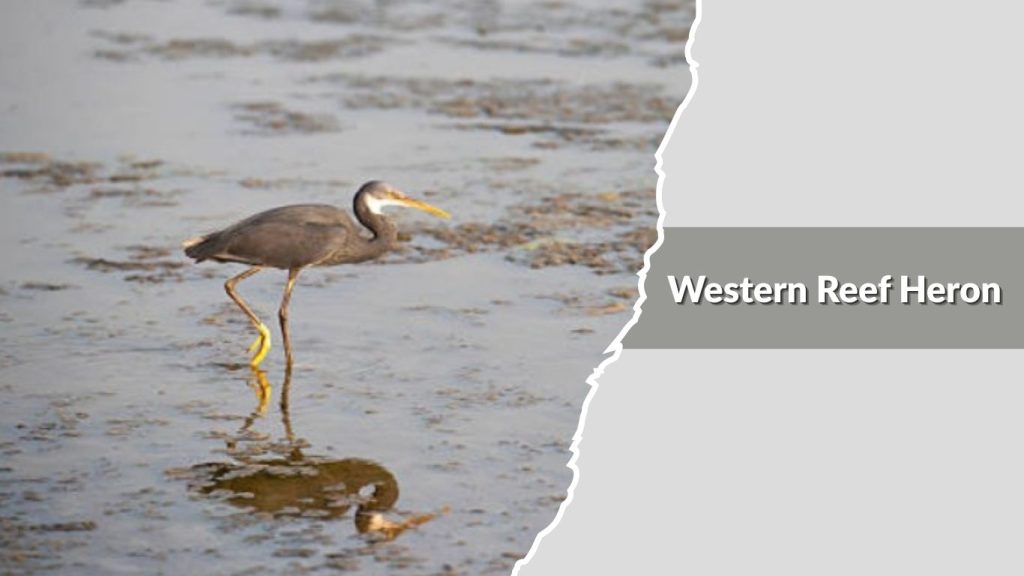
The western reef heron is a highly variable coastal heron species that occurs in both dark and white color forms. It is widely distributed along the coasts of Africa, the Middle East, and South Asia, where it specializes in hunting in shallow marine environments.
Identification
- Occurs in dark gray and pure white color morphs
- Slender body with long neck and legs
- Long, sharp bill usually yellowish to dark
- Smooth, streamlined appearance
- Often seen flying low over the water
Habitat
Western reef herons inhabit rocky shores, coral reefs, tidal flats, mangroves, estuaries, and shallow coastal lagoons. They are rarely found far from the sea and prefer warm coastal regions.
Behaviors
They are active coastal hunters, often running, wing-spreading, and darting to catch prey. Western reef herons are usually solitary feeders but roost and nest in loose colonies.
Diet and Lifespan
Their diet mainly consists of small fish, crabs, shrimp, and marine invertebrates. They forage in very shallow water and along shorelines. In the wild, western reef herons typically live around 10–15 years.
21. Intermediate Egret
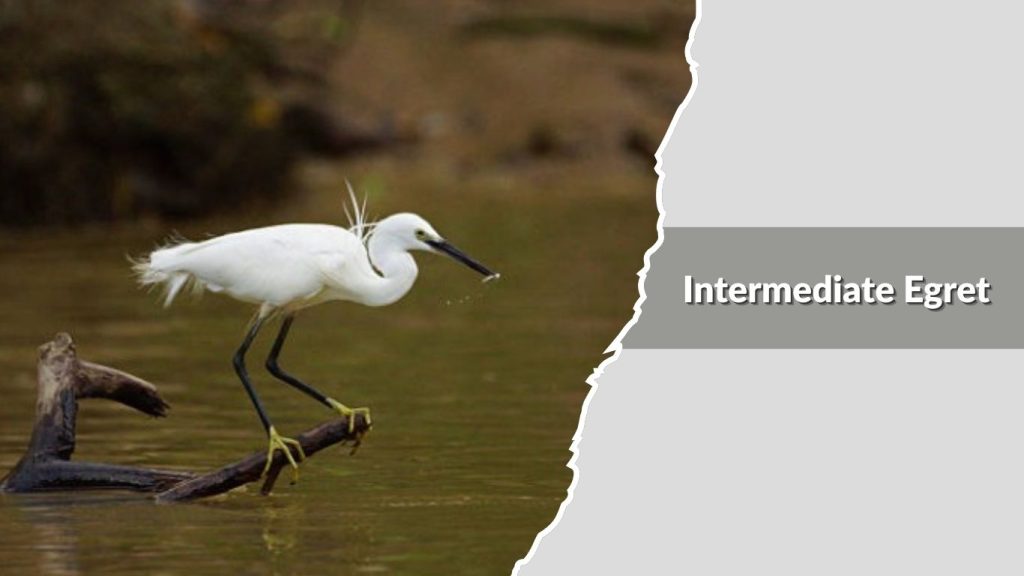
The intermediate egret is a medium-sized white heron that falls between the great egret and little egret in size. It is found across Africa, Asia, Australia, and parts of Europe, where it occupies a wide variety of wetland habitats.
Identification
- All-white plumage
- Medium height compared to other egrets
- Yellow bill that becomes darker in breeding season
- Black to dark gray legs
- Slender neck and balanced proportions
Habitat
Intermediate egrets inhabit marshes, lakes, rivers, swamps, floodplains, rice fields, estuaries, and coastal lagoons. They are commonly seen in both freshwater and coastal environments.
Behaviors
They are calm, deliberate feeders, often standing still before striking prey. Intermediate egrets may feed alone or in small groups and usually nest in mixed colonies with other herons and egrets.
Diet and Lifespan
Their diet includes fish, frogs, insects, crustaceans, and small reptiles. They hunt by slowly stalking prey in shallow water. In the wild, intermediate egrets typically live around 10–15 years.
22. Chinese Pond Heron
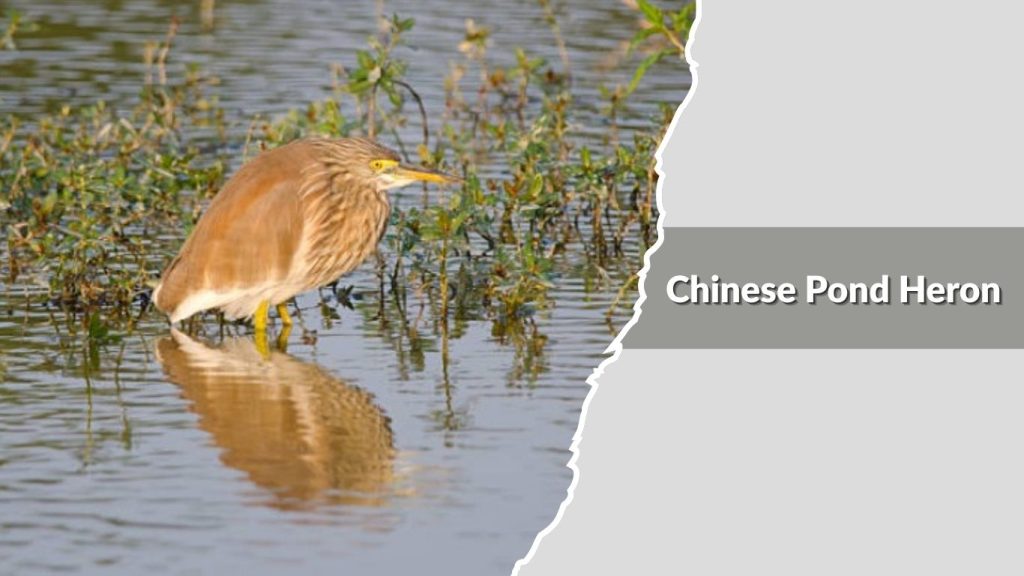
The Chinese pond heron is a small, compact heron species well known for its dramatic color change between breeding and non-breeding seasons. It is native to East and Southeast Asia and is commonly seen around quiet freshwater wetlands and rice fields.
Identification
- Small, stocky body with short neck
- Breeding adults show deep chestnut, black, and white plumage
- Non-breeding birds appear mostly brown and streaked
- Yellow bill and yellowish legs
- White wings visible in flight
Habitat
Chinese pond herons inhabit ponds, marshes, lakesides, riverbanks, flooded fields, canals, and rice paddies. They prefer shallow freshwater habitats with dense vegetation.
Behaviors
They are usually solitary and secretive, often standing motionless near the water’s edge. Chinese pond herons rely on camouflage and patience rather than active chasing. They nest in small colonies, often with other heron species.
Diet and Lifespan
Their diet includes fish, frogs, insects, crustaceans, and tadpoles. They hunt by slowly stalking prey and striking quickly. In the wild, Chinese pond herons generally live around 8–12 years.
23. Javan Pond Heron
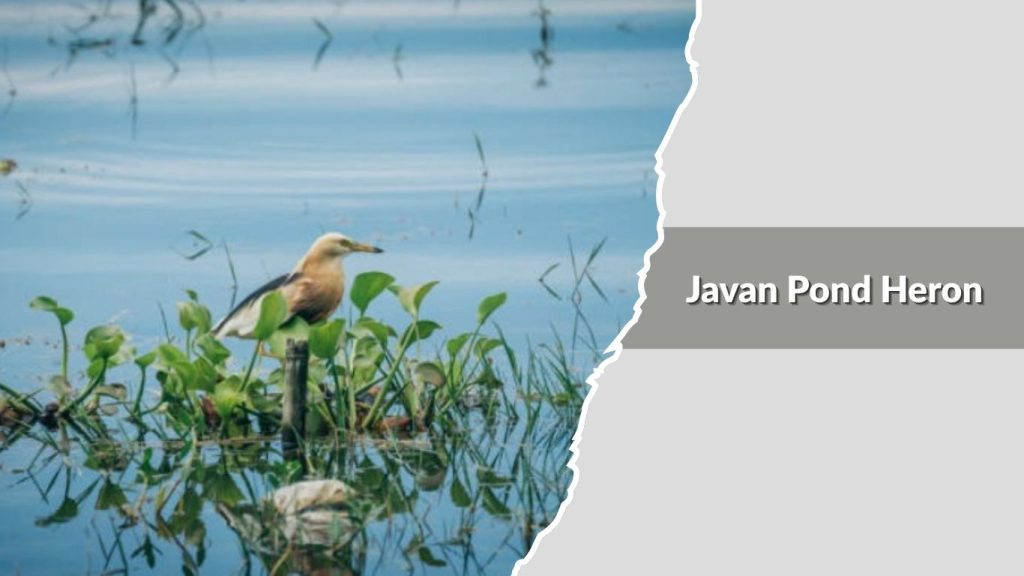
The Javan pond heron is a small, compact heron species native to South and Southeast Asia. It is especially common around rice fields and village wetlands, where it often remains motionless until prey comes within striking distance.
Identification
- Small, stocky body with short neck
- Breeding adults show rich chestnut, black, and white plumage
- Non-breeding birds appear mostly brown and streaked
- Yellow bill and yellowish-green legs
- Bright white wings visible in flight
Habitat
Javan pond herons inhabit ponds, marshes, canals, flooded fields, riverbanks, lakesides, and rice paddies. They are highly adaptable and often live close to human settlements where shallow water is available.
Behaviors
They are solitary, quiet, and secretive, usually standing still at the water’s edge. Javan pond herons rely on camouflage and patience rather than active pursuit. They nest in small colonies, often together with other herons.
Diet and Lifespan
Their diet includes fish, frogs, insects, crustaceans, tadpoles, and small aquatic animals. They hunt by waiting and striking suddenly. In the wild, Javan pond herons typically live around 8–12 years.
24. Malayan Night Heron
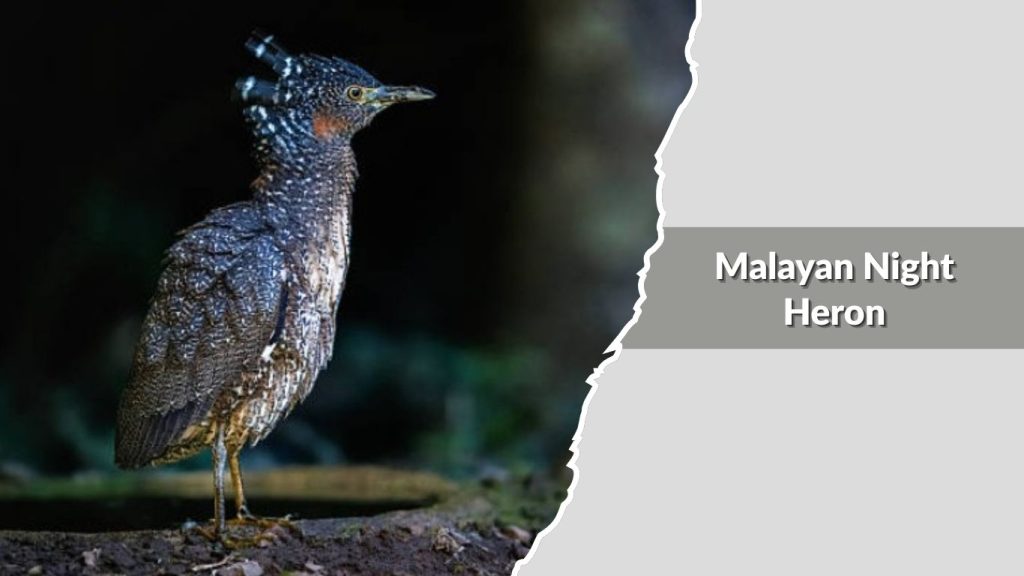
The Malayan night heron is a medium-sized, secretive heron species native to Southeast Asia. It is mostly nocturnal and prefers dense forested wetlands, making it much less visible than many other herons.
Identification
- Dark brown body with fine white spotting
- Thick neck and stocky build
- Short yellowish bill and strong legs
- Red eyes, especially visible at night
- Compact, rounded appearance
Habitat
Malayan night herons inhabit forest streams, swamp forests, shaded wetlands, and river valleys. They prefer dense vegetation and usually stay hidden during the day.
Behaviors
They are mainly nocturnal, resting quietly in trees during daylight and feeding at night. Malayan night herons walk slowly along forest streams while hunting. They are usually solitary and nest in trees near water.
Diet and Lifespan
Their diet includes insects, fish, frogs, crustaceans, worms, and small reptiles. They forage on land and in shallow water. In the wild, Malayan night herons generally live around 8–12 years.
25. Rufous-bellied Heron
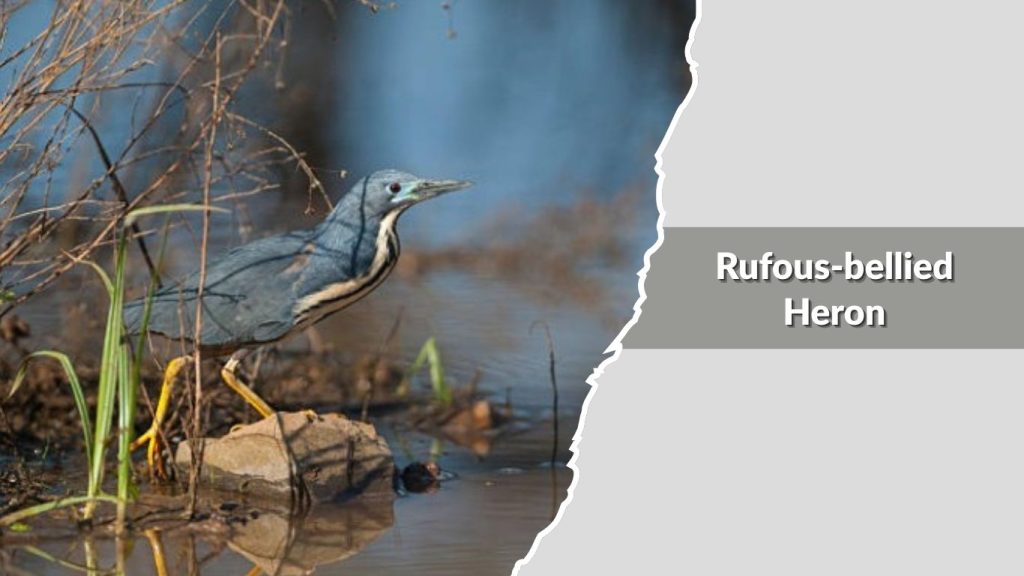
The rufous-bellied heron is a rare and secretive heron species native to parts of South America. It is known for its dark plumage and rich rufous-colored underparts, and it is usually found in quiet, remote wetlands with dense vegetation.
Identification
- Dark gray to blackish upperparts
- Distinct rufous or chestnut-colored belly and thighs
- Long, sharp dark bill
- Long dark legs adapted for wading
- Slim body with a slightly hunched posture
Habitat
Rufous-bellied herons inhabit freshwater marshes, swamps, wet grasslands, river floodplains, and densely vegetated wetlands. They prefer secluded areas and are rarely seen in open, heavily disturbed habitats.
Behaviors
They are shy and solitary birds, usually feeding alone and remaining hidden in tall vegetation. Rufous-bellied herons hunt by slowly stalking prey or standing motionless before striking. Little is known about their breeding behavior due to their secretive nature.
Diet and Lifespan
Their diet includes small fish, insects, frogs, crustaceans, and other aquatic invertebrates. They forage mainly in shallow water. In the wild, rufous-bellied herons are believed to live around 10–15 years.
FAQs
What is the main difference between herons and egrets?
Herons and egrets belong to the same bird family (Ardeidae). The term “egret” usually refers to heron species that are mostly white. Structurally and behaviorally, they are very similar, sharing long legs, S-shaped necks, and sharp bills for hunting.
Where are herons commonly found?
Herons are found on every continent except Antarctica. They mainly live around wetlands such as marshes, rivers, lakes, swamps, estuaries, mangroves, and coastal lagoons. Some species also adapt well to ponds, canals, and agricultural wetlands.
What do herons usually eat?
Herons are carnivorous birds that feed mostly on fish, but they also eat frogs, insects, crustaceans, reptiles, small mammals, and even small birds. They hunt by standing still or slowly stalking before striking quickly with their sharp bills.
Are herons solitary or social birds?
Herons are usually solitary while feeding, but they are social when nesting. Many species breed in colonies called heronries, sometimes with hundreds of birds sharing trees or reed beds close to water.
How long do herons live in the wild?
Most herons live between 8 and 20 years in the wild, depending on species and environmental conditions. Larger herons such as great blue herons and goliath herons often live longer than smaller pond herons and night herons.