
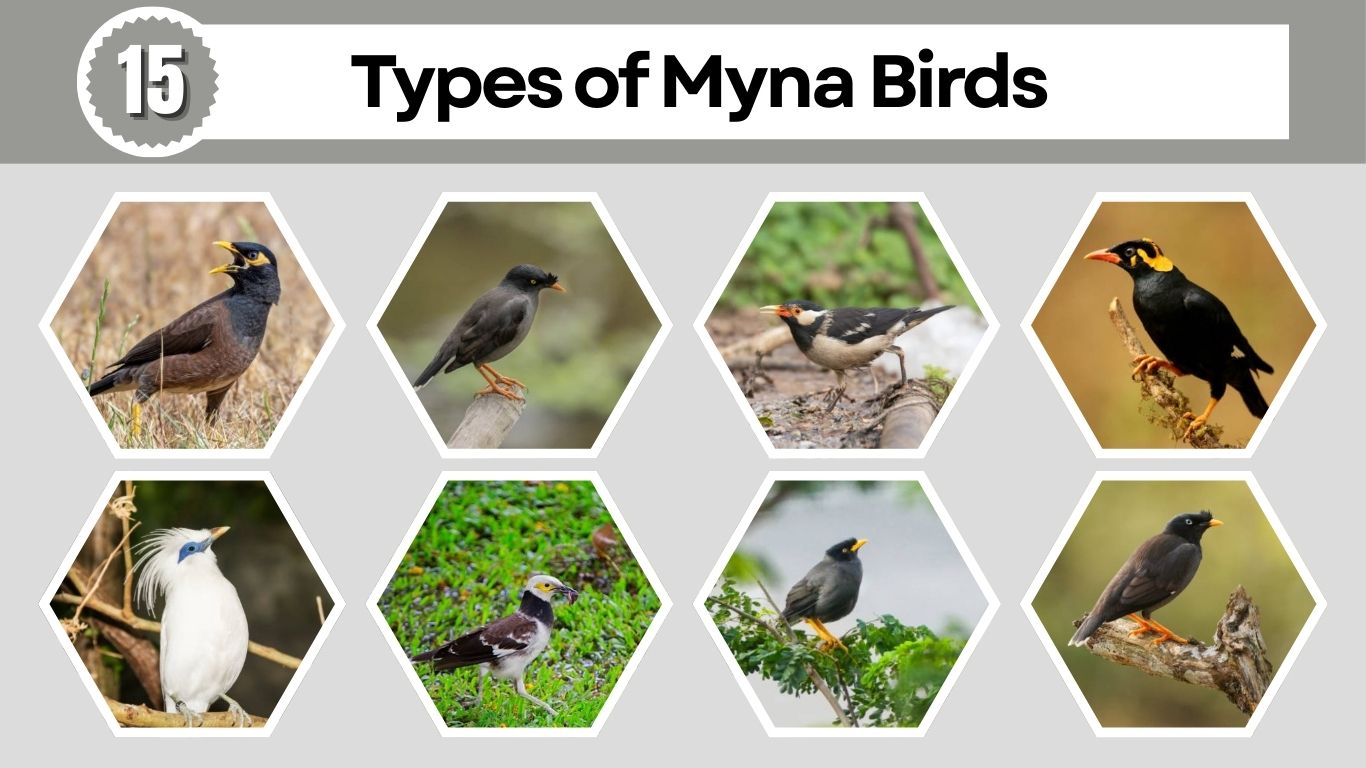
Myna birds are intelligent, vocal, and highly adaptable members of the starling family, widely known for their bold behavior and, in some species, their impressive ability to mimic sounds. Found across South Asia, Southeast Asia, East Asia, and parts of the Pacific, mynas inhabit forests, farmlands, wetlands, and even busy urban environments. From the familiar Common Myna to rare island species, these birds display remarkable diversity in color, habitat, and lifestyle, making them fascinating subjects for bird enthusiasts and nature learners alike.
1. Common Myna (Acridotheres tristis)
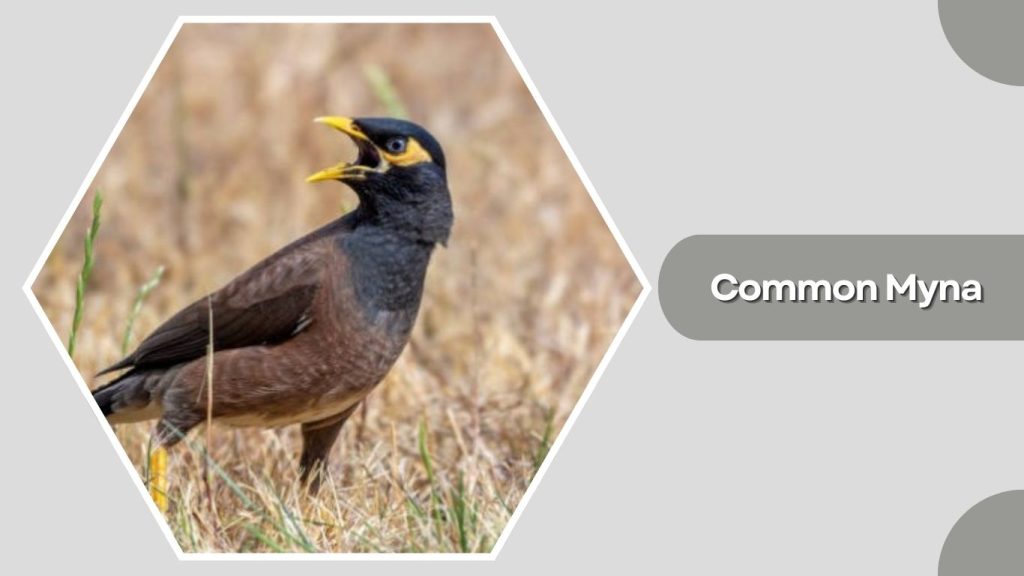
The Common Myna is one of the most widespread and easily recognized myna birds in the world. Native to South Asia but now found across many continents, this bird is well known for its bold behavior, loud calls, and close association with human settlements. It adapts quickly to cities, farmlands, and open woodland areas.
Identification
- Medium-sized bird with a sturdy body and strong legs
- Brown body with a black head and throat
- Bright yellow eye patch and yellow bill
- White wing patches visible in flight
- Short tail with white tips
Habitat
Common mynas thrive in open and semi-open environments. They are especially common around towns, villages, agricultural fields, parks, and gardens. This species prefers areas with scattered trees and open ground, which make it easy to forage and nest close to human activity.
Diet
The Common Myna is an omnivorous bird. It feeds on insects, worms, fruits, grains, nectar, and human food scraps. This flexible diet allows it to survive in many environments, from rural farmland to busy urban streets.
Behavior
Common mynas are highly social and intelligent birds. They are often seen in pairs or small groups, walking confidently on the ground. Known for loud calls and mimicry, they can imitate various sounds. They are also territorial and may aggressively defend nesting sites.
2. Jungle Myna (Acridotheres fuscus)
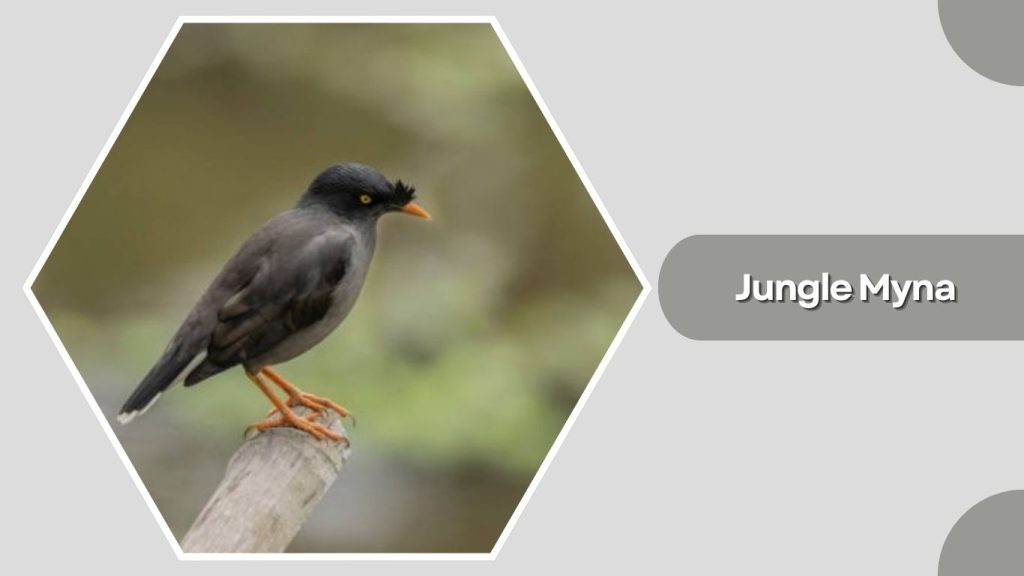
The Jungle Myna is a sleek, dark-colored myna species commonly found across South and Southeast Asia. It is often seen in open countryside, forest edges, and near human settlements, where it moves confidently on the ground searching for food. Compared to the Common Myna, it has a more uniform, darker appearance.
Identification
- Medium-sized bird with a slim, upright posture
- Dark brown to blackish body
- Small yellow bare patch behind the eye
- Pale yellow bill with darker base
- White wing patch visible in flight
Habitat
Jungle mynas prefer open woodland, cultivated areas, village outskirts, and forest margins. They are frequently seen near grazing fields, roadsides, and lightly wooded zones, where insects and fallen fruits are abundant.
Diet
This species feeds mainly on insects, larvae, fruits, seeds, and scraps of human food. It often forages on the ground, probing soil and leaf litter, but will also take food from trees and shrubs.
Behavior
Jungle mynas are active and alert birds, usually found in pairs or small flocks. They communicate with sharp calls and are known to be bold around people. During breeding season, they become more territorial and vocal.
3. Bank Myna (Acridotheres ginginianus)
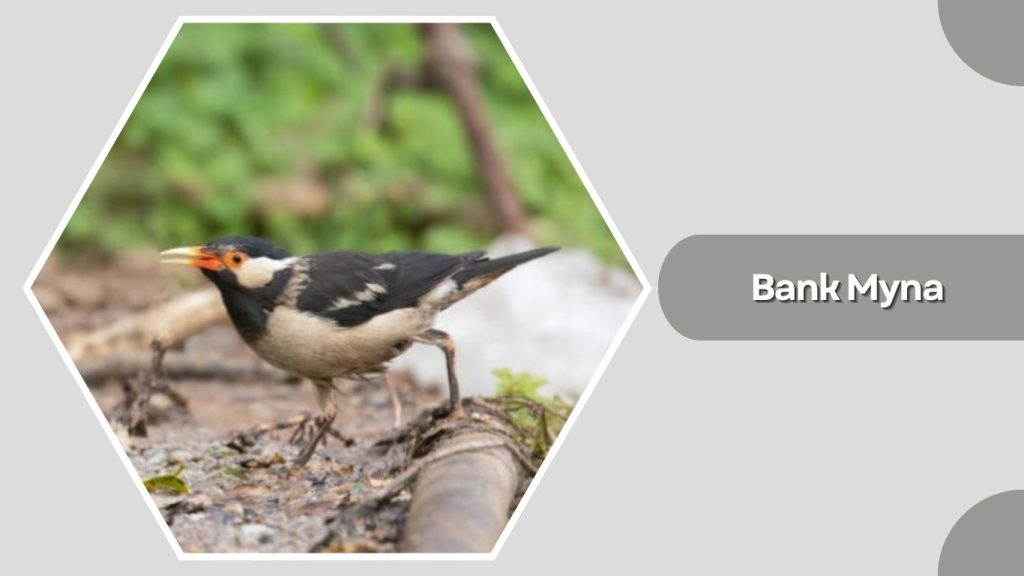
The Bank Myna is a distinctive pale-gray myna species best known for nesting in colonies along riverbanks and sandy cliffs. It is mainly found in northern India, Nepal, and Bangladesh, often living close to rivers, open plains, and human settlements.
Identification
- Light gray body with darker wings and tail
- Bright orange to red bare skin around the eyes
- Yellow bill with slightly darker tip
- White wing patches visible during flight
- Short, square-shaped tail
Habitat
Bank mynas are strongly associated with rivers, sandbanks, and eroded embankments. They also visit towns, farmlands, and open dry areas, but usually stay close to water sources where nesting sites are available.
Diet
They feed on insects, grains, fruits, nectar, and food waste. Bank mynas are often seen walking on open ground, following livestock, or foraging near markets and riversides.
Behavior
This species is highly social and usually seen in flocks. They are colonial nesters, digging holes into riverbanks. Bank mynas are noisy, active, and frequently interact with other myna species while foraging.
4. Hill Myna (Gracula religiosa)
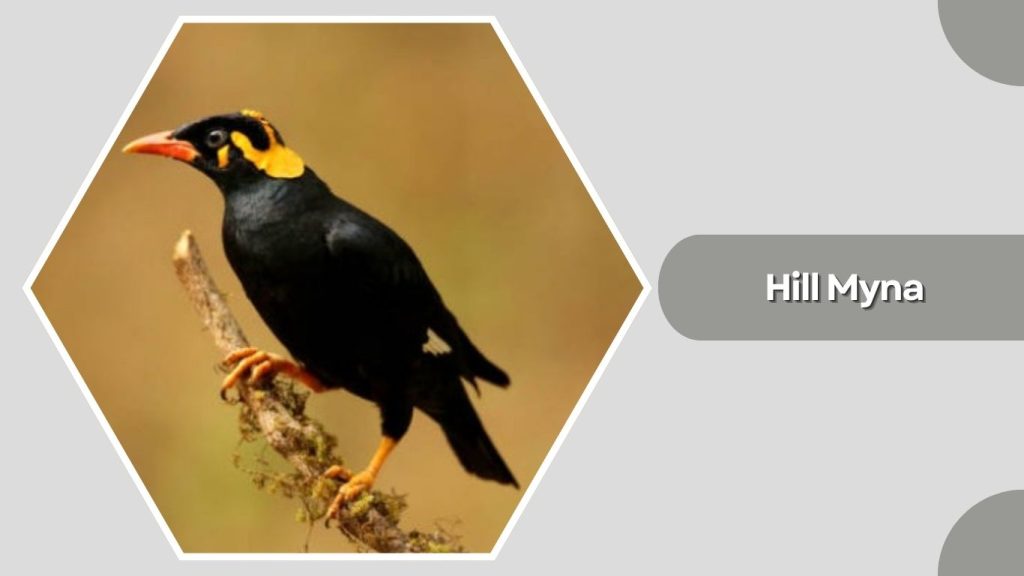
The Hill Myna is one of the most famous myna birds, especially known for its remarkable ability to mimic human speech and other sounds. Native to South and Southeast Asia, this glossy black bird is often associated with forests and hill regions, where it spends much of its time in trees.
Identification
- Medium to large bird with a stocky build
- Glossy black plumage with greenish sheen
- Bright yellow wattles on the sides of the head
- Strong orange-yellow bill
- Broad white wing patches visible in flight
Habitat
Hill mynas mainly inhabit evergreen forests, forest edges, and wooded hills. They prefer dense tree cover and are commonly found in lowland forests as well as foothills, often near fruiting trees.
Diet
Their diet consists mostly of fruits, berries, nectar, insects, and small invertebrates. They play an important ecological role by dispersing seeds through their feeding habits.
Behavior
Hill mynas are intelligent and vocal birds. They are often seen in pairs or small groups high in the canopy. Their loud whistles, clicks, and exceptional mimicry abilities make them one of the most recognizable talking birds.
5. Great Myna (Acridotheres grandis)
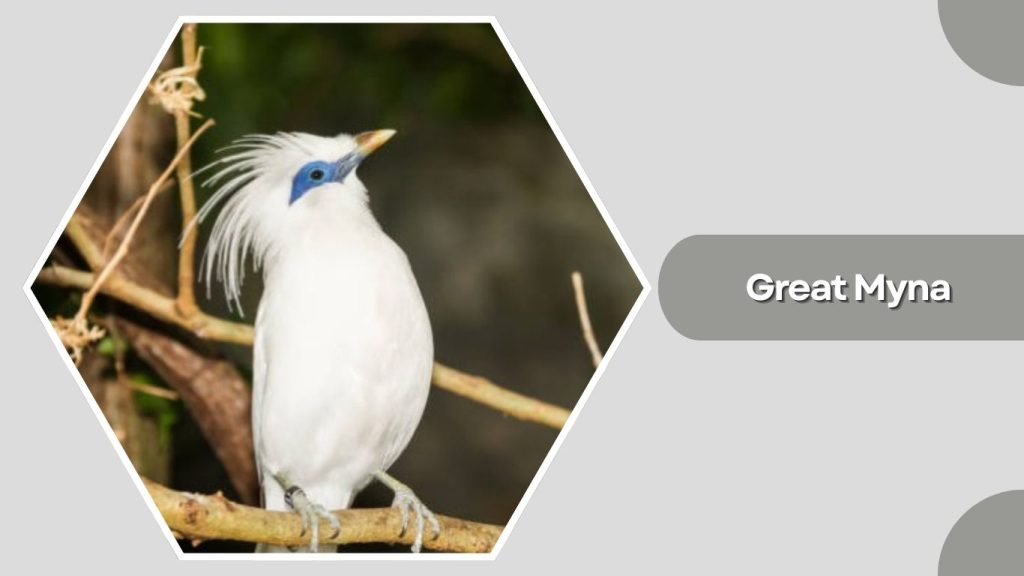
The Great Myna is a large, striking species found mainly in Southeast Asia. It resembles the Jungle Myna but is bigger, bolder, and more contrasting in color. This bird is usually seen in open country, forest edges, and agricultural landscapes.
Identification
- Large myna with a strong, heavy body
- Black head and upperparts with brownish wings
- Bright yellow bill and legs
- Yellow bare skin behind the eyes
- White wing patches clearly visible in flight
Habitat
Great mynas prefer open woodland, cultivated areas, clearings, and forest margins. They often stay near large trees for nesting while feeding in nearby open ground.
Diet
They are omnivorous, feeding on insects, fruits, seeds, nectar, and small animals. They may also scavenge around human habitation for scraps.
Behavior
Great mynas are confident, noisy birds that are usually found in pairs or small family groups. They are alert and often perch high before descending to the ground to feed.
6. Collared Myna (Gracupica nigricollis)
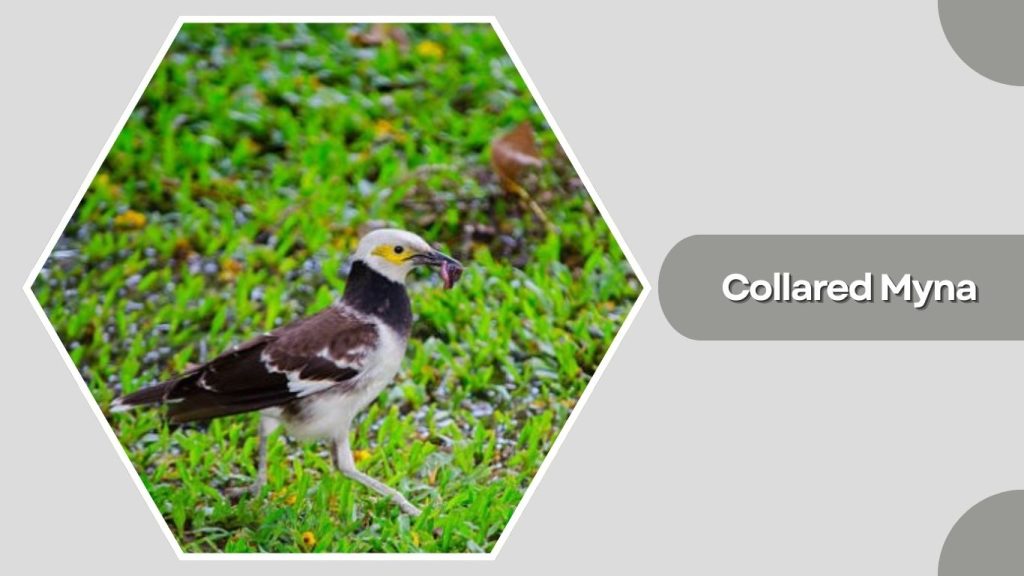
The Collared Myna is a striking black-and-white myna species native to Southeast Asia. It is easily recognized by its bold contrast in plumage and its bright facial skin. This bird is often seen in small groups in open areas close to water and human settlements.
Identification
- Black head, throat, and upper breast forming a “collar”
- White lower body and wings
- Bright yellow bare skin around the eyes
- Yellow bill and legs
- Medium-sized, upright stance
Habitat
Collared mynas favor open countryside, wetlands, river edges, rice fields, and village surroundings. They are commonly found near water sources and open agricultural land.
Diet
Their diet includes insects, small invertebrates, grains, fruits, and food scraps. They forage mostly on the ground, often in loose flocks.
Behavior
Collared mynas are social, noisy birds. They frequently gather in small groups and communicate with sharp calls. During breeding season, they may defend nesting areas aggressively.
7. Javan Myna (Acridotheres javanicus)
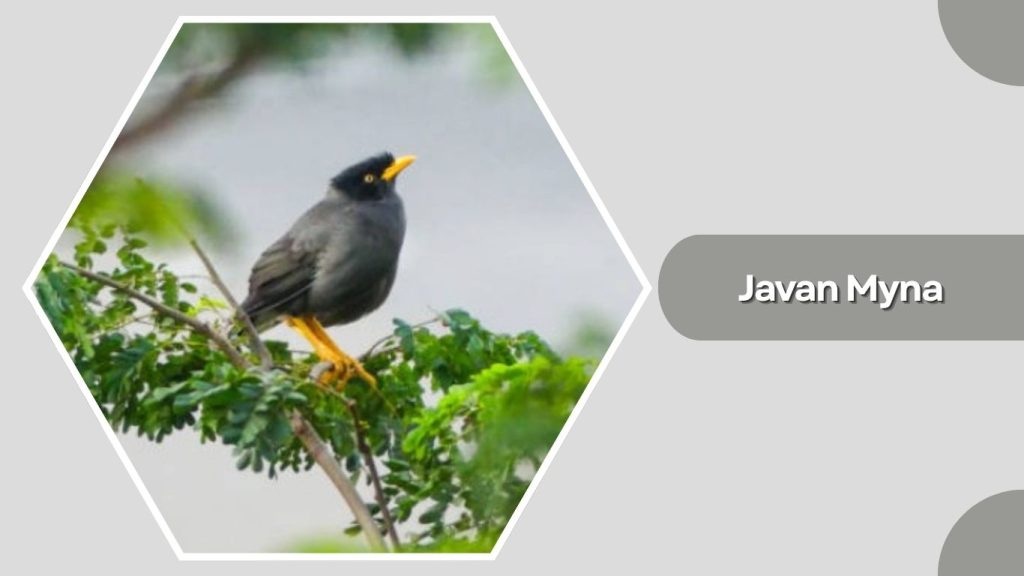
The Javan Myna, also known as the White-vented Myna, is a widespread species in Southeast Asia. It is commonly seen in cities, farmland, and open lowlands, where it thrives near people and cultivated landscapes.
Identification
- Dark brown to black body
- Distinct white vent and undertail area
- Bright yellow bill and legs
- Yellow bare skin around the eyes
- White wing patches visible in flight
Habitat
Javan mynas occupy open country, urban areas, parks, plantations, and agricultural fields. They adapt well to human environments and are often abundant in towns and cities.
Diet
They eat insects, fruits, grains, nectar, and human food waste. This flexible feeding habit helps them survive in many different habitats.
Behavior
Javan mynas are active, bold, and social. They are often seen walking on the ground, foraging in flocks, and roosting communally in large numbers.
8. Crested Myna (Acridotheres cristatellus)
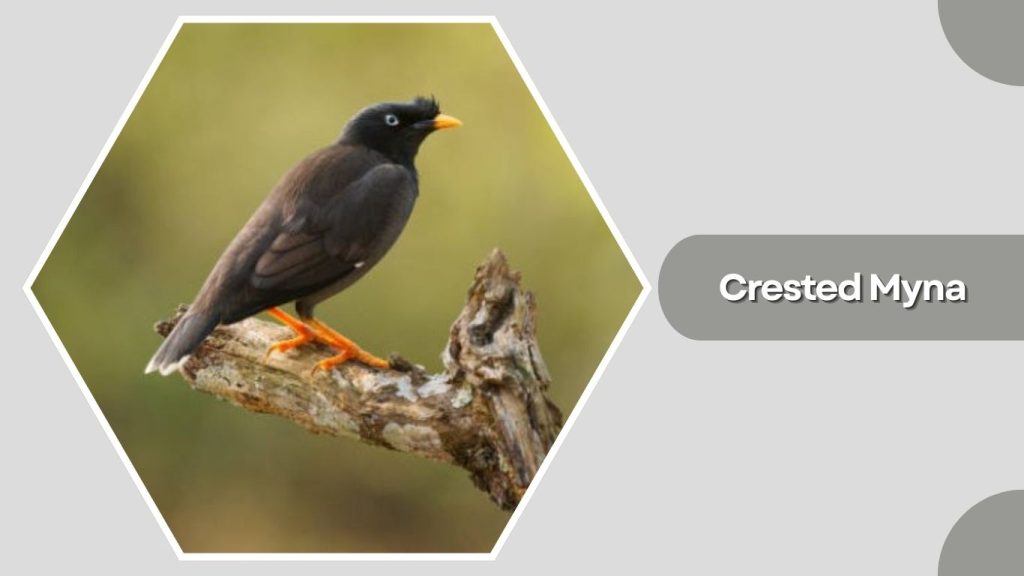
The Crested Myna is a distinctive species known for the small crest of feathers on its forehead and its glossy black appearance. Native to East Asia, it has also been introduced to other regions, where it often lives close to human settlements.
Identification
- Medium-sized bird with a short, forward-pointing crest
- Glossy black plumage with a slight purple-green sheen
- Bright yellow bill and legs
- Yellow bare skin around the eyes
- White wing patches visible in flight
Habitat
Crested mynas inhabit open woodlands, farmland, city parks, gardens, and suburban areas. They prefer landscapes with scattered trees and open ground for foraging.
Diet
They feed on insects, fruits, seeds, nectar, and scraps from human activity. They often forage on the ground but will also feed in trees.
Behavior
Crested mynas are social and alert birds. They are commonly seen in pairs or small flocks and are known for their loud calls and confident behavior around people.
9. Black-winged Myna (Acridotheres melanopterus)
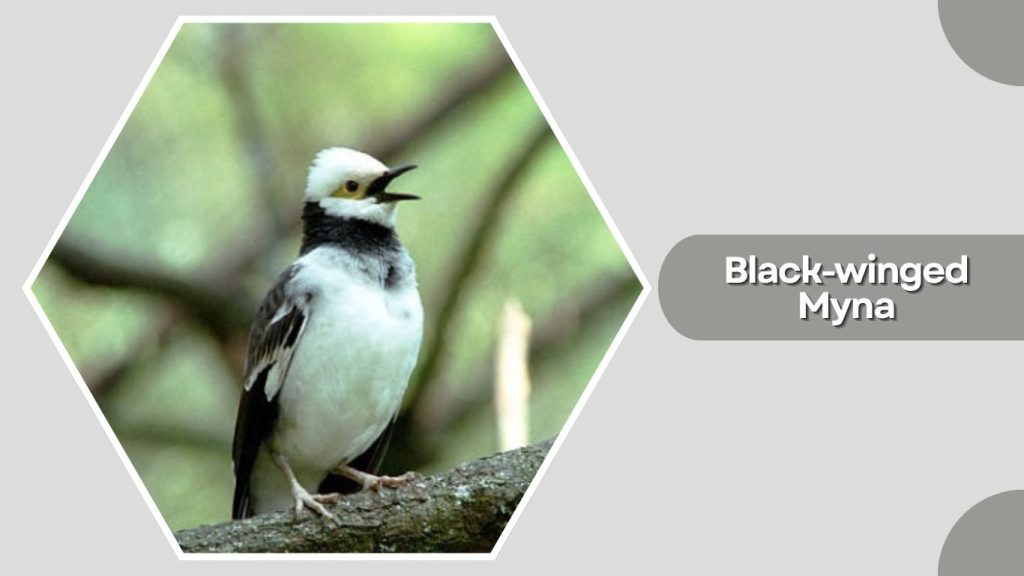
The Black-winged Myna is a rare and visually striking species, recognized by its white body and contrasting black wings. It is native to Indonesia and is considered critically endangered due to habitat loss and trapping.
Identification
- Mostly white body and head
- Deep black wings and tail
- Bright yellow bare skin around the eyes
- Yellow bill and legs
- Clean, bold color contrast
Habitat
Black-winged mynas are found in open woodland, grasslands, forest edges, and cultivated areas. Today, most remaining populations survive in protected areas and conservation centers.
Diet
Their diet consists of insects, fruits, seeds, and small invertebrates. They forage both on the ground and in low vegetation.
Behavior
They are social birds, usually seen in pairs or small groups. Black-winged mynas are alert and vocal, often perching in open areas before descending to feed.
10. White-vented Myna (Acridotheres javanicus)
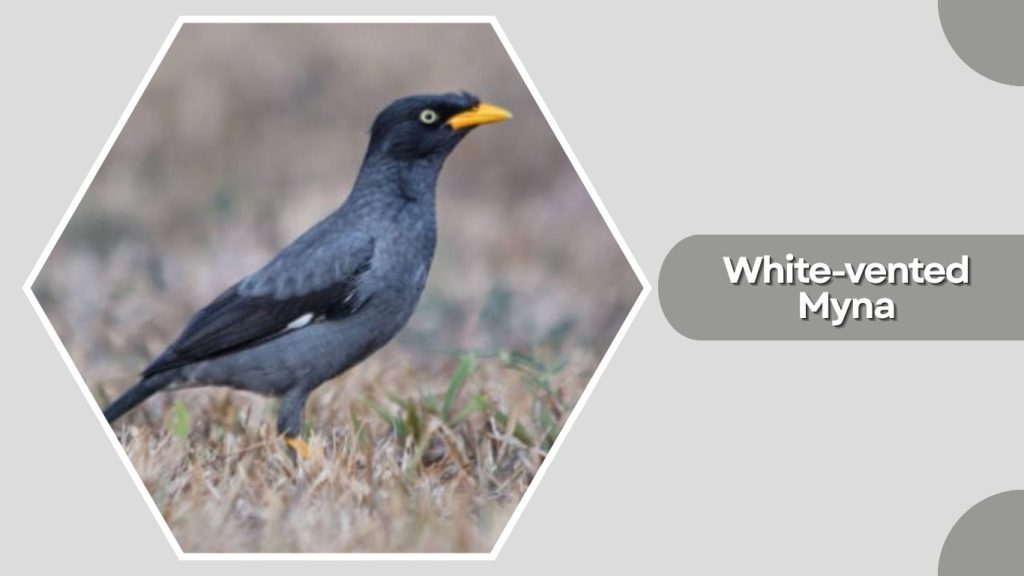
The White-vented Myna is a very common myna species across Southeast Asia and is especially well adapted to city life. It is often seen in busy urban areas, agricultural land, and open countryside, where it confidently forages on the ground.
Identification
- Dark brown to blackish body
- Bright white vent and undertail coverts
- Yellow bill, legs, and eye skin
- White wing patches visible in flight
- Medium-sized, sturdy build
Habitat
This species thrives in open lowlands, towns, villages, parks, farmland, and roadside areas. It is rarely far from human activity and often nests in buildings or tree cavities.
Diet
White-vented mynas eat insects, fruits, grains, nectar, and human food waste. Their adaptable diet allows them to survive in a wide range of environments.
Behavior
They are bold, noisy, and highly social birds. White-vented mynas often gather in large flocks, especially at communal roosts, and are known for their constant vocal activity.
11. Pale-bellied Myna (Acridotheres cinereus)
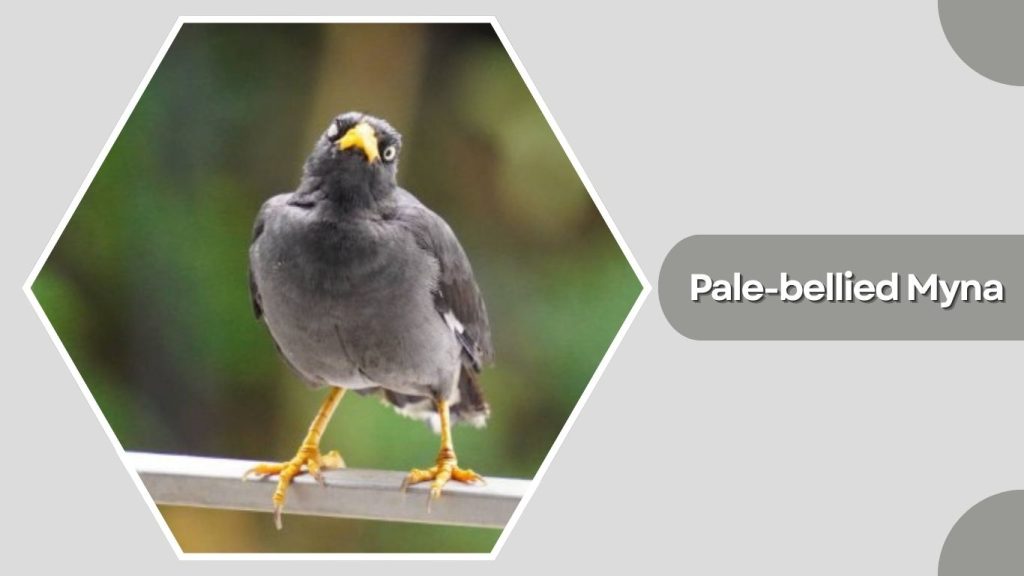
The Pale-bellied Myna is a softer-colored species found mainly in South and Southeast Asia. It is less flashy than some other mynas but is easily recognized by its pale underparts and contrasting darker head.
Identification
- Gray-brown upperparts with paler belly
- Darker head and throat
- Yellow bill and legs
- Yellow bare patch around the eye
- White wing patch visible in flight
Habitat
Pale-bellied mynas prefer open woodland, forest edges, cultivated land, and lightly wooded countryside. They are often found near villages and agricultural areas.
Diet
Their diet includes insects, fruits, seeds, and small invertebrates. They usually forage on the ground, sometimes in mixed flocks with other starling species.
Behavior
Pale-bellied mynas are active but generally less aggressive than Common Mynas. They are usually seen in pairs or small groups, moving between open ground and nearby trees.
12. Golden Myna (Mino anais)
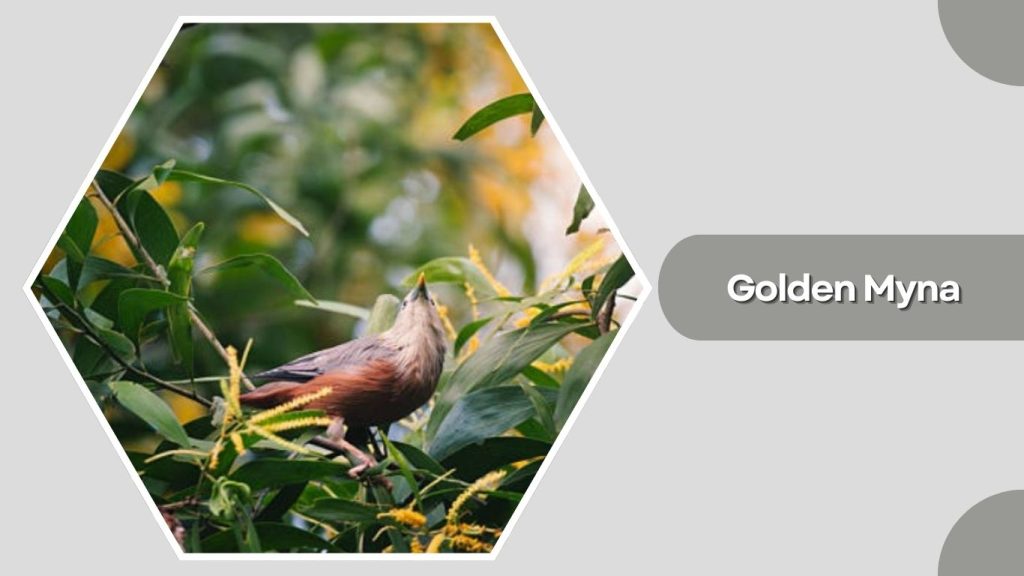
The Golden Myna is a beautiful and less commonly known myna species distinguished by its warm yellow-gold plumage. Native to New Guinea and nearby islands, this bird is mainly associated with tropical forests and forest edges rather than busy urban areas.
Identification
- Yellow to golden-olive body plumage
- Slightly darker wings and tail
- Pale to yellow bill
- Dark eyes with minimal bare skin
- Medium-sized, slim body
Habitat
Golden mynas inhabit lowland rainforests, forest margins, and wooded foothills. They are most often seen in the upper canopy or along forest edges where fruiting trees are common.
Diet
Their diet is mainly frugivorous, including fruits, berries, nectar, and insects. They play an important role in seed dispersal within forest ecosystems.
Behavior
Golden mynas are usually found in pairs or small groups. They are active, agile birds that move quickly through tree canopies and produce a variety of clear, ringing calls.
13. Sri Lanka Myna (Gracula ptilogenys)
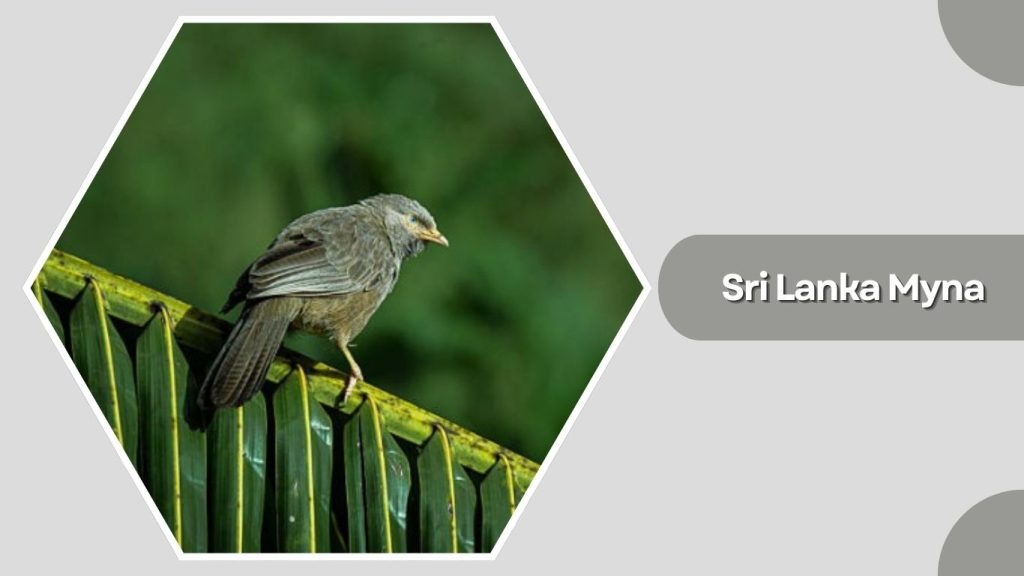
The Sri Lanka Myna is an endemic species found only on the island of Sri Lanka. It closely resembles the Hill Myna but has distinctive facial wattles and vocalizations. This species is strongly associated with dense forests.
Identification
- Glossy black plumage with greenish sheen
- Bright yellow facial wattles
- Orange-yellow bill
- White wing patches visible in flight
- Stocky body and strong legs
Habitat
Sri Lanka mynas mainly inhabit wet-zone rainforests, forest edges, and tall wooded areas. They prefer dense, mature forests and are less commonly seen in open farmland.
Diet
They feed on fruits, berries, insects, and nectar. Like other forest mynas, they contribute to seed dispersal and forest regeneration.
Behavior
Sri Lanka mynas are usually seen in pairs or small family groups. They are loud, vocal birds with rich, varied calls and strong territorial behavior during breeding season.
14. Enggano Myna (Acridotheres enganensis)
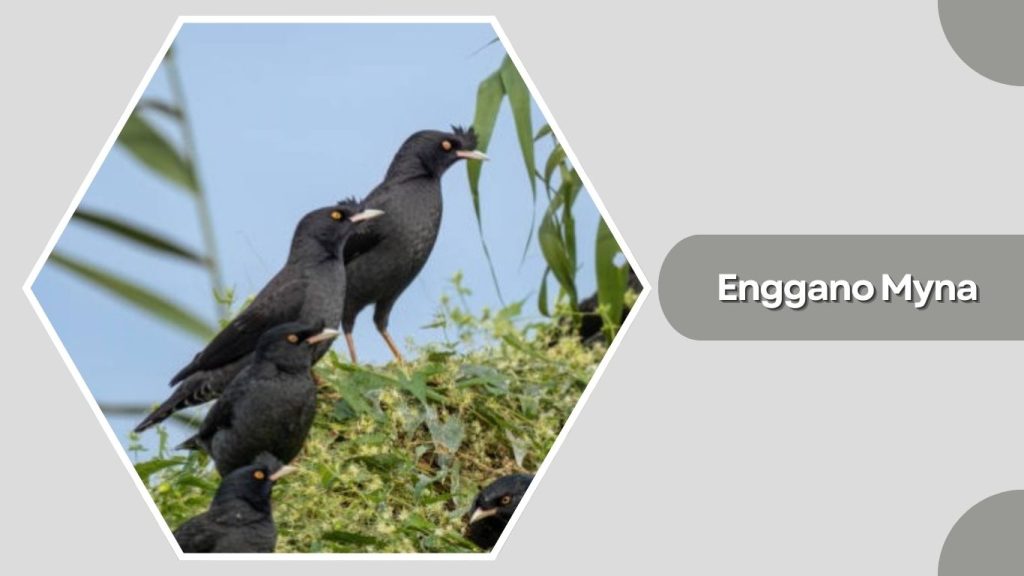
The Enggano Myna is a rare and localized myna species found only on Enggano Island off the coast of Indonesia. Because of its restricted range, it is less well known than other mynas and is considered vulnerable due to habitat loss.
Identification
- Dark brown to blackish body
- Slightly paler underparts
- Yellow bill and legs
- Yellow bare skin around the eyes
- White wing patches visible in flight
Habitat
Enggano mynas live in lowland forests, forest edges, coconut plantations, and open woodland. They are often seen near clearings and along forest margins.
Diet
They feed on insects, fruits, seeds, and small invertebrates. Their flexible diet allows them to survive in both natural forests and lightly cultivated areas.
Behavior
Enggano mynas are usually observed in pairs or small groups. They are alert, vocal, and often perch openly before dropping to the ground to forage.
15. Yellow-faced Myna (Mino dumontii)
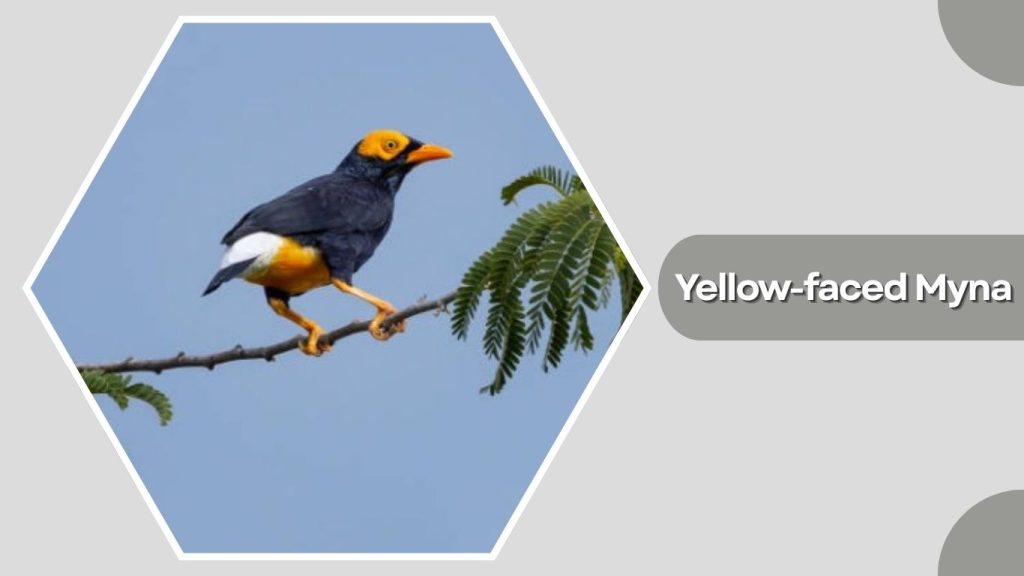
The Yellow-faced Myna is a distinctive forest myna from New Guinea, easily recognized by its bright facial skin and dark plumage. It mainly inhabits tropical forests and wooded regions.
Identification
- Dark, glossy black plumage
- Bright yellow bare facial skin
- Strong yellow bill
- Medium-sized, solid build
- Short tail and broad wings
Habitat
Yellow-faced mynas are found in lowland and hill forests, forest edges, and tall secondary growth. They prefer well-wooded habitats with abundant fruiting trees.
Diet
Their diet consists of fruits, insects, nectar, and small invertebrates. They often feed high in the canopy but also forage on lower branches.
Behavior
They are social birds, commonly seen in pairs or small flocks. Yellow-faced mynas are vocal and active, frequently calling while moving through the forest canopy.