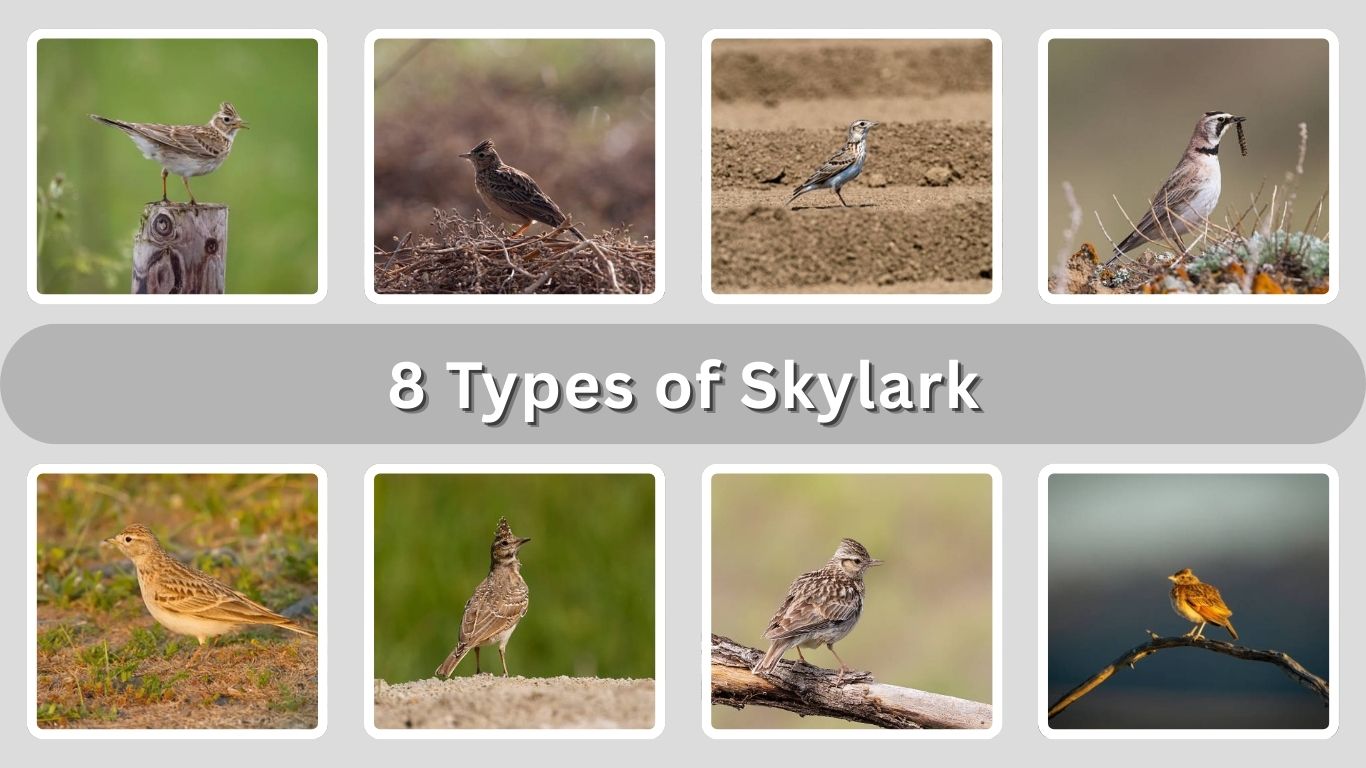
Skylarks are well known for their uplifting songs and spectacular aerial displays, where males rise high into the sky while singing continuously. These ground-dwelling birds are closely associated with open landscapes such as grasslands, farmland, steppes, and deserts. Although often plain in color, skylarks are rich in behavior and voice, playing an important role in natural soundscapes across Europe, Asia, Africa, and beyond. In this guide, you’ll discover eight common types of skylarks and their unique characteristics.
1. Eurasian Skylark (Alaudala arvensis)
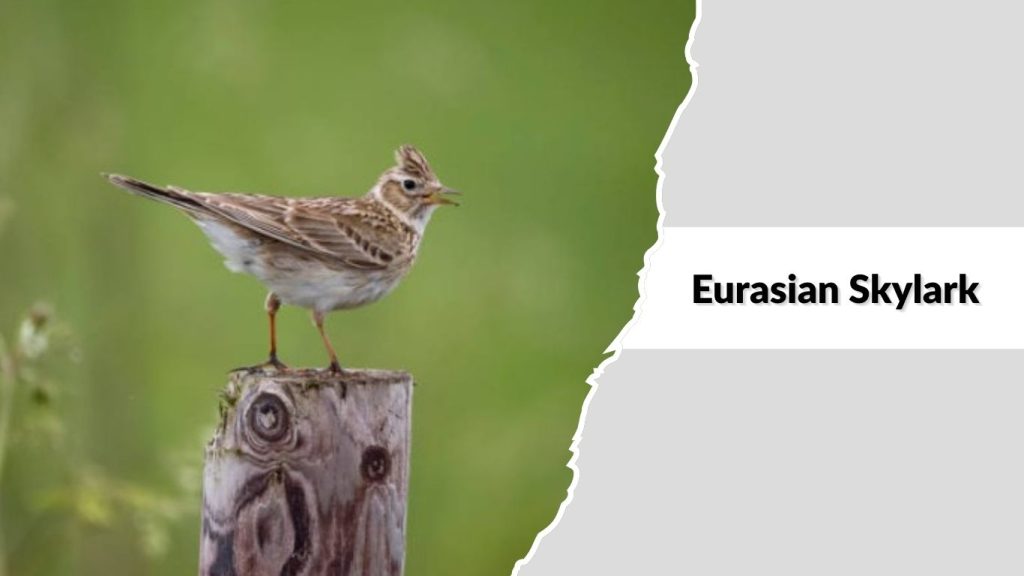
The Eurasian Skylark is one of the most well-known skylarks in the world, famous for its long, continuous, and uplifting song delivered while flying high in the sky. It is widely distributed across Europe and Asia and is often associated with open countryside and farmland.
Identification
- Small to medium-sized songbird, about 16–18 cm long
- Brown, streaked upperparts providing excellent camouflage
- Pale underparts with dark streaks on the breast
- Slight, short crest that can be raised
- Short tail and broad wings
- Strong, straight beak adapted for seeds and insects
Habitat
Eurasian Skylarks prefer open habitats such as grasslands, agricultural fields, meadows, heathlands, and open steppes. They avoid dense forests and instead favor wide, open spaces where they can nest on the ground and perform their characteristic aerial song displays.
Behavior
They are ground-dwelling birds that often walk or run rather than hop. Males are famous for rising almost vertically into the air and singing continuously for several minutes before slowly descending. Outside the breeding season, they form flocks and spend much of their time foraging on open ground.
Diet and Lifespan
Their diet includes seeds, grasses, grains, and a wide variety of insects, especially during breeding season when protein is needed for chicks. In the wild, Eurasian Skylarks usually live around 3 to 5 years, though some individuals may survive longer.
2. Oriental Skylark (Alaudala cheleensis)
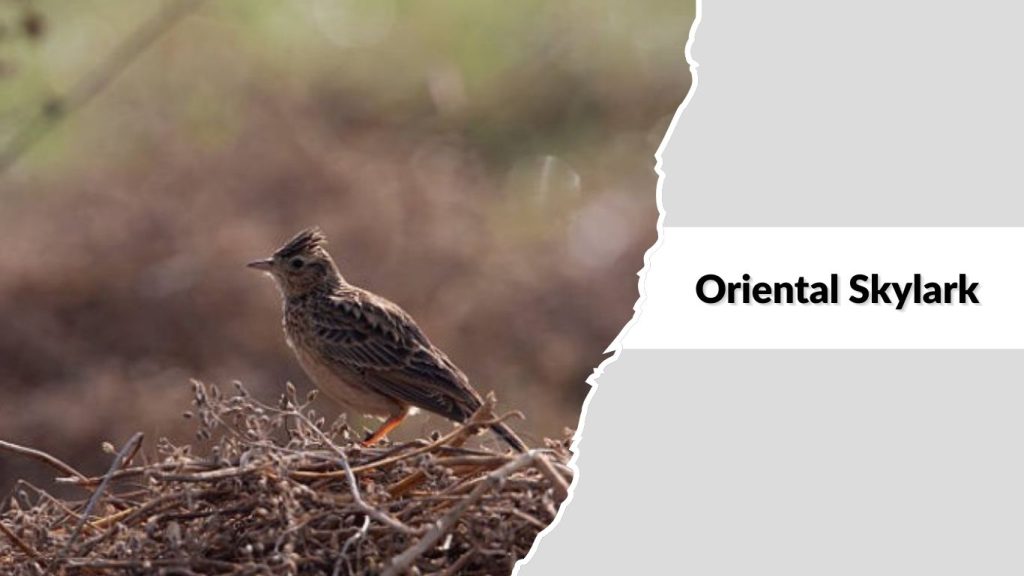
The Oriental Skylark is a widespread skylark species found across Central and East Asia. It is known for its clear, melodious song and its ability to thrive in a variety of open landscapes, from dry steppes to cultivated farmland.
Identification
- Small to medium-sized skylark, about 15–17 cm long
- Sandy-brown upperparts with fine dark streaks
- Pale underparts with light breast streaking
- Short, slightly raised crest
- Broad wings and short tail
- Straight, pointed beak suited for seeds and insects
Habitat
Oriental Skylarks inhabit open grasslands, semi-deserts, steppes, agricultural fields, and dry plains. They prefer flat or gently rolling terrain with low vegetation, where they can forage easily and build ground nests.
Behavior
They are mostly ground-dwelling birds that run and walk rather than hop. Males perform aerial song flights, rising into the air while singing continuously before gliding back down. Outside breeding season, they often gather in loose flocks.
Diet and Lifespan
Their diet consists mainly of seeds, grasses, and insects. During breeding season, insects form an important part of the diet. In the wild, Oriental Skylarks typically live around 3 to 6 years.
3. Japanese Skylark (Alaudala japonica)
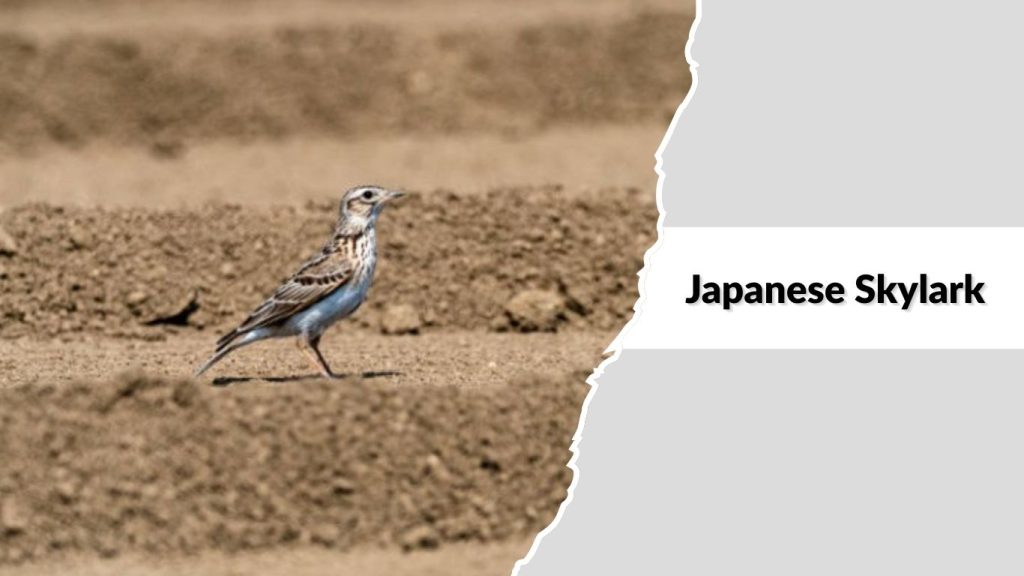
The Japanese Skylark is a skylark species native mainly to Japan and nearby regions of East Asia. It is admired for its sweet, flowing song and is commonly seen in open fields, coastal plains, and rural landscapes.
Identification
- Small to medium-sized skylark, about 15–17 cm long
- Brown, finely streaked upperparts
- Pale buff to whitish underparts with light streaking
- Short, subtle crest that can be raised
- Broad wings and short tail
- Straight, pointed beak adapted for mixed diet
Habitat
Japanese Skylarks prefer open grassy fields, farmland, coastal grasslands, and lowland plains. They nest on the ground among grasses and crops, choosing areas with low vegetation that provide cover while allowing clear visibility.
Behavior
They are ground-oriented birds that forage by walking and running. Males sing from low perches or during aerial displays, flying upward and delivering continuous songs before slowly descending. They are more vocal during spring and early summer.
Diet and Lifespan
Their diet includes seeds, grains, grasses, and insects. During the breeding season, insects become especially important. In natural conditions, Japanese Skylarks usually live around 3 to 5 years.
4. Horned Lark (Eremophila alpestris)
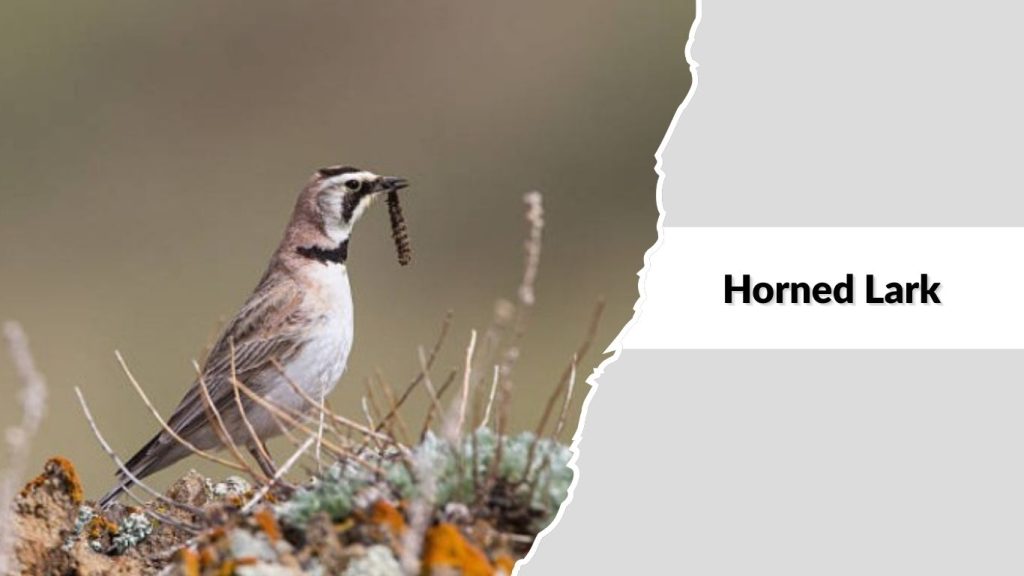
The Horned Lark is a distinctive skylark-type bird recognized by the small black “horns” or feather tufts on the male’s head. It is widely distributed across the Northern Hemisphere and is well adapted to cold, open, and barren landscapes.
Identification
- Small to medium-sized lark, about 16–20 cm long
- Pale brown to sandy upperparts with dark streaks
- Whitish to pale yellow face and underparts
- Black mask and throat patch
- Two small black feather “horns” on the head
- Straight, pointed beak and short tail
Habitat
Horned Larks inhabit open tundra, grasslands, deserts, alpine meadows, and barren plains. They favor wide, treeless landscapes with sparse vegetation, often in colder or drier regions.
Behavior
They are ground-dwelling birds that walk or run while foraging. Males perform fluttering song flights, rising into the air and delivering musical, tinkling songs. Horned Larks often form flocks outside the breeding season.
Diet and Lifespan
Their diet consists mainly of seeds, grasses, and insects. During warmer months, insects are an important food source. In the wild, Horned Larks usually live about 3 to 5 years.
5. Greater Short-toed Lark (Calandrella brachydactyla)
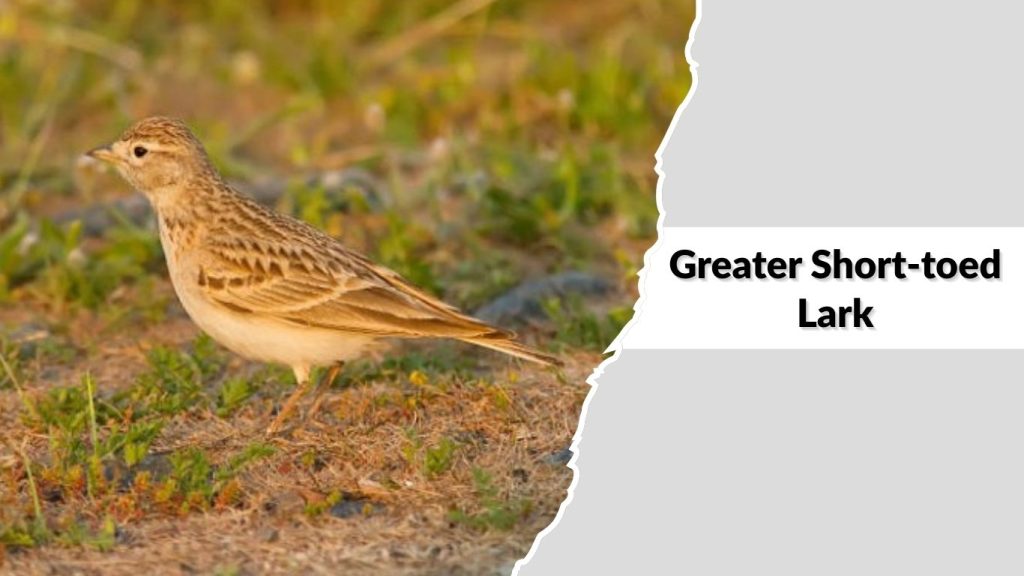
The Greater Short-toed Lark is a small, pale skylark species widely found across southern Europe, North Africa, and large parts of Asia. It is well known for its soft, musical song and its preference for dry, open landscapes with sparse vegetation.
Identification
- Small skylark, about 13–14 cm long
- Sandy-brown upperparts with fine dark streaks
- Pale underparts with faint breast markings
- Short wings and noticeably short toes
- Compact body with a short tail
- Straight, pointed beak suited for seeds and insects
Habitat
Greater Short-toed Larks live in dry grasslands, steppes, semi-deserts, farmland, and open plains. They prefer flat areas with low vegetation and bare ground, which allow easy movement and ground nesting.
Behavior
They are highly ground-oriented birds that walk and run while feeding. Males sing from low perches or during short aerial displays, producing soft, pleasant trills. Outside the breeding season, they often gather in large flocks.
Diet and Lifespan
Their diet mainly consists of small seeds, grasses, and insects. During the breeding season, insects become especially important for feeding chicks. In the wild, Greater Short-toed Larks typically live around 3 to 5 years.
6. Crested Lark (Galerida cristata)
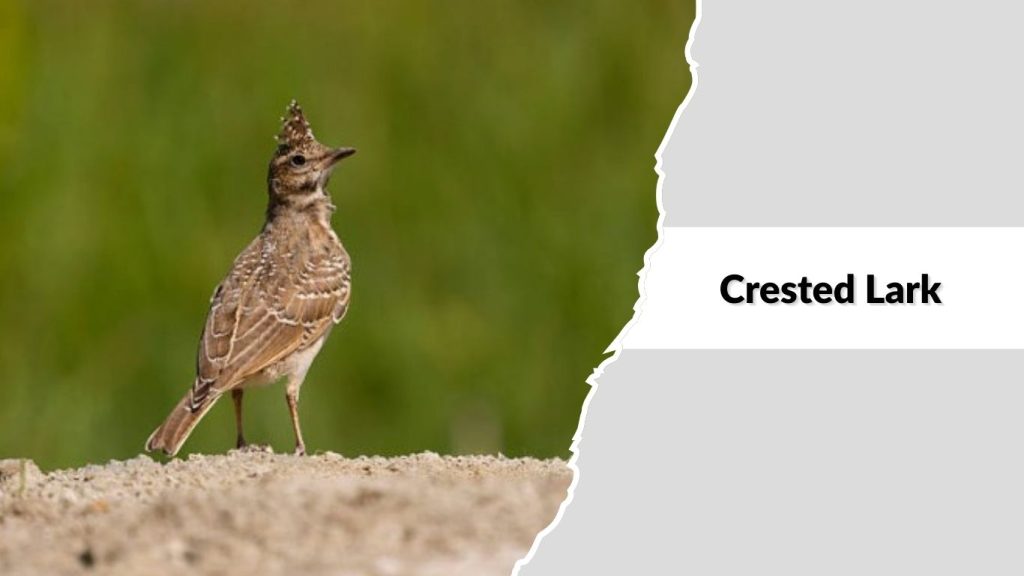
The Crested Lark is a well-known skylark relative easily recognized by the long, pointed crest on its head. It is widespread across Europe, North Africa, and Asia and is often seen walking on open ground near roadsides, villages, and dry farmland.
Identification
- Medium-sized lark, about 17–19 cm long
- Brown, heavily streaked upperparts
- Pale buff underparts with streaked breast
- Long, pointed crest that is often raised
- Strong legs and a slightly curved beak
- Broad wings and medium-length tail
Habitat
Crested larks prefer dry, open habitats such as semi-deserts, grasslands, farmlands, roadsides, and open scrub. They adapt well to human-altered landscapes and are often found near settlements, railways, and cultivated fields.
Behavior
They are mainly ground-dwelling birds that walk or run while foraging. Males sing from low perches, rocks, or during short aerial flights. Their song is a series of pleasant trills and whistles. They are usually seen alone or in pairs, but may form small flocks outside the breeding season.
Diet and Lifespan
Their diet includes seeds, grains, grasses, and many types of insects. Insects are especially important during breeding season. In the wild, Crested Larks generally live about 3 to 6 years.
7. Woodlark (Lullula arborea)
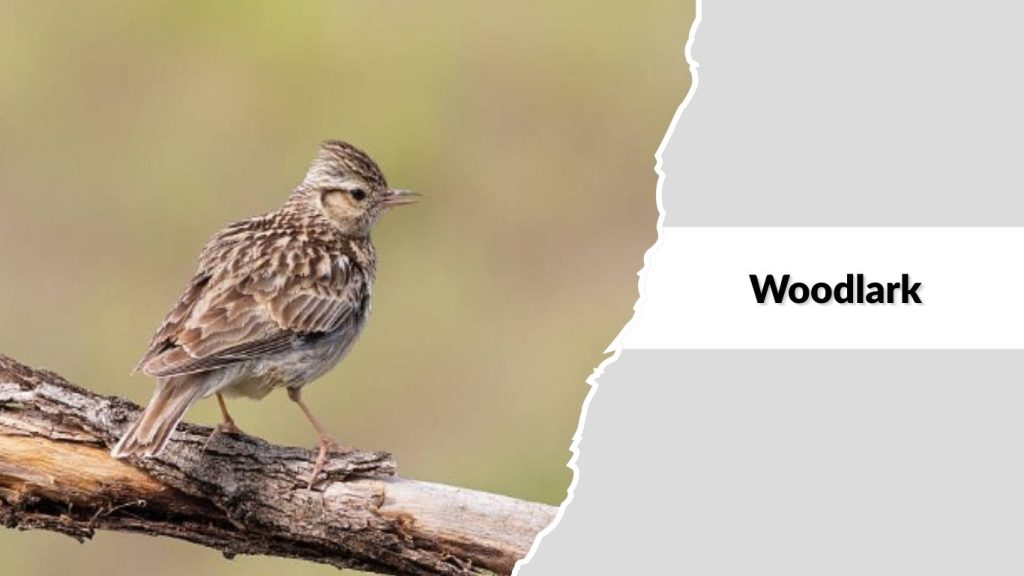
The Woodlark is a small, gentle-looking skylark species known for its sweet, flute-like song and softer, more rounded appearance compared to other larks. Unlike many skylarks that favor wide open plains, the Woodlark is closely associated with open woodland and forest edges.
Identification
- Small lark, about 14–15 cm long
- Warm brown upperparts with fine dark streaks
- Pale buff underparts with light breast markings
- Short, rounded crest
- Distinct pale eyebrow stripe and dark eye line
- Short tail and compact body
Habitat
Woodlarks inhabit open woodlands, forest clearings, heathlands, sandy pine forests, orchards, and woodland edges. They prefer a mix of open ground for feeding and scattered trees or shrubs for singing perches and nesting cover.
Behavior
They are shy, ground-feeding birds that walk and run while searching for food. Males sing beautifully from treetops, low perches, or during gentle circling flight displays. Their song is softer and more musical than that of the Eurasian Skylark.
Diet and Lifespan
Their diet consists of seeds, grasses, small insects, beetles, and caterpillars. During the breeding season, insects become especially important. In the wild, Woodlarks usually live around 3 to 5 years.
8. Bimaculated Lark (Melanocorypha bimaculata)
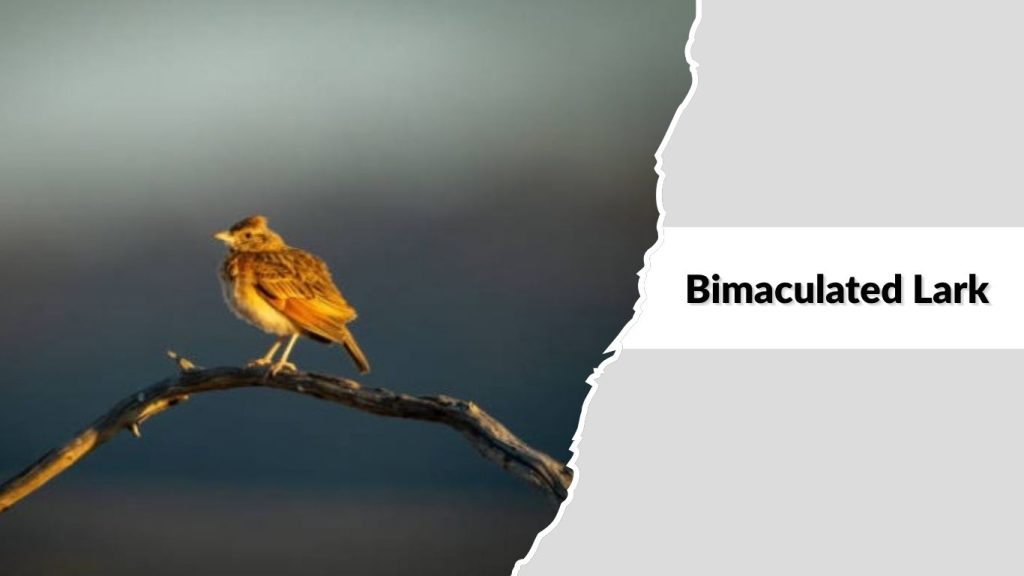
The Bimaculated Lark is a large, robust skylark species found mainly in the Middle East and Central Asia. It is named for the two dark patches on its breast and is admired for its strong, clear song delivered from both the ground and low aerial flights.
Identification
- Large lark, about 18–21 cm long
- Sandy-brown upperparts with dark streaks
- Pale underparts with two dark breast spots
- Strong, thick bill
- Broad wings and short tail
- Sturdy body with powerful legs
Habitat
Bimaculated larks inhabit dry grasslands, semi-deserts, rocky plains, and open steppes. They prefer wide, open landscapes with sparse vegetation and bare ground where they can forage and nest on the ground.
Behavior
They are mainly ground-dwelling birds that walk or run while feeding. Males sing from rocks, low bushes, or during short display flights. Outside the breeding season, they may gather in small flocks.
Diet and Lifespan
Their diet consists mainly of seeds, grains, and insects. During the breeding season, insects become important for chick development. In the wild, Bimaculated Larks usually live about 3 to 6 years.
FAQs
What makes skylarks special among songbirds?
Skylarks are especially famous for their aerial singing displays. Males often rise high into the sky while singing continuously, sometimes for several minutes. This behavior, combined with their rich, flowing songs, makes skylarks one of the most distinctive and celebrated groups of songbirds.
Where are skylarks usually found?
Skylarks mainly live in open habitats such as grasslands, farmland, steppes, meadows, deserts, and tundra. Some species also use woodland edges and open scrub. They are widely distributed across Europe, Asia, Africa, and parts of North America.
Do skylarks build nests in trees?
No, skylarks almost always nest on the ground. They build shallow cup-shaped nests hidden among grasses or low vegetation. Ground nesting allows them to live in wide, open spaces but also makes them vulnerable to predators and farming activities.
What do skylarks eat?
Skylarks feed on a mixture of seeds, grains, grasses, and insects. Insects are especially important during the breeding season because they provide protein for growing chicks. In winter, most skylarks rely more heavily on seeds and plant material.
How long do skylarks usually live?
Most skylarks live between 3 and 6 years in the wild. Their lifespan depends on factors such as habitat quality, food supply, predation, and climate conditions. Some individuals may live longer if they survive early-life risks.