
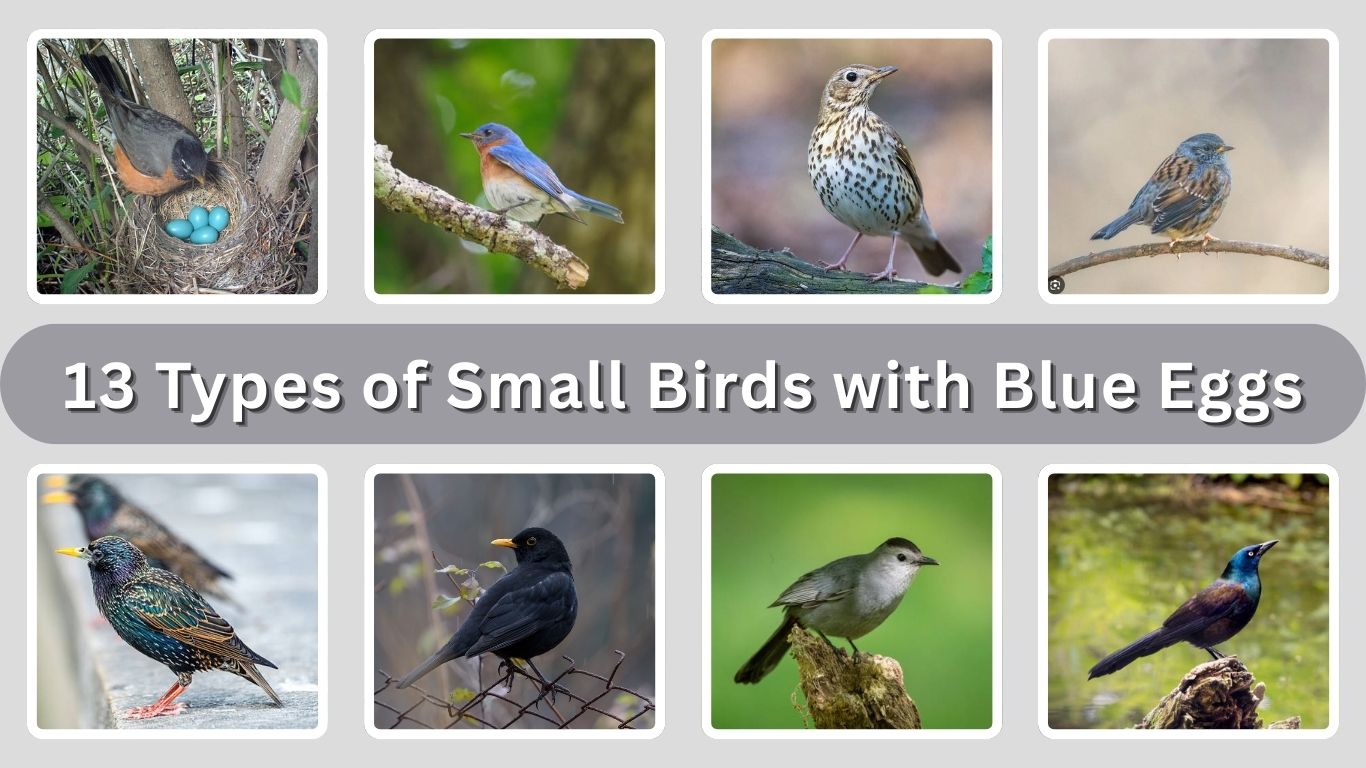
Small birds with blue eggs capture attention not only because of their beauty but also due to the distinctive color of their nests’ contents. Found across gardens, forests, wetlands, and woodlands, these birds belong to different families and regions of the world. Blue eggs can range from pale sky-blue to greenish-blue and may be plain or speckled. This guide explores several small bird species known for laying blue eggs and highlights their unique traits and nesting habits.
1. American Robin (Turdus migratorius)
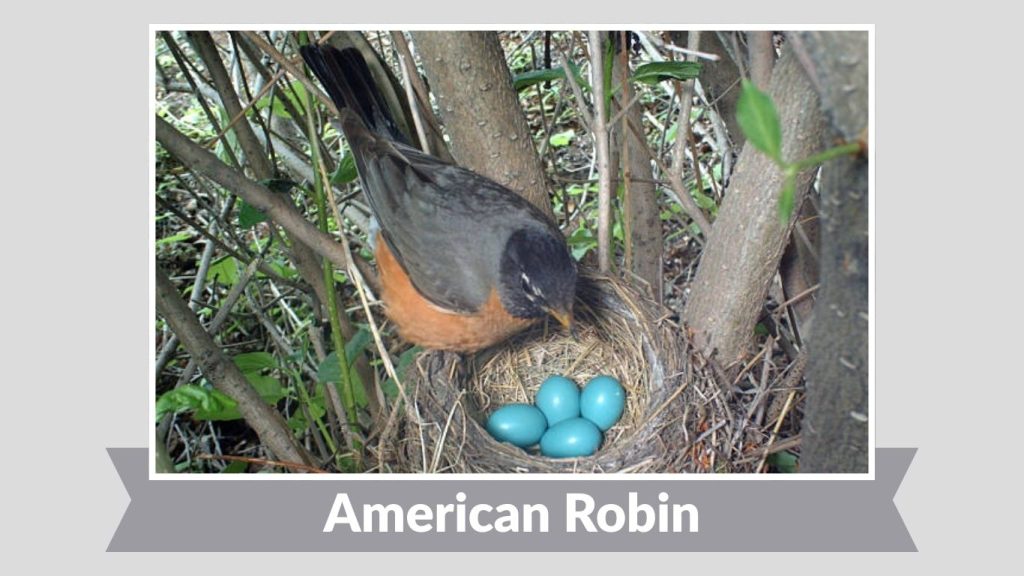
The American Robin is a familiar and well-loved songbird, best known for its rusty-orange chest and cheerful presence in gardens and parks. It is also famous for laying bright blue eggs, which have become one of the most recognizable bird eggs in North America. Robins are often seen hopping across lawns in search of food, especially during early morning hours.
Identification
- Gray-brown upperparts
- Rusty-orange chest and belly
- White throat with dark streaks
- Yellow bill
- Medium-small body with long legs
Habitat
American Robins live in a wide variety of habitats, including gardens, parks, woodlands, forests, farmland, and suburban areas. They adapt easily to human environments as long as trees and open ground are available for nesting and feeding.
Behaviors
These birds are active and alert, often seen running and stopping abruptly on lawns while foraging. During breeding season, they become territorial and are known for their early-morning singing. Robins are partially migratory, with some populations moving south in winter.
Diet
Their diet includes earthworms, insects, snails, and larvae during warmer months. In fall and winter, they switch to fruits and berries such as holly, juniper, and crabapple.
Lifespan
American Robins typically live 2–6 years in the wild, though some individuals have been recorded living much longer under favorable conditions.
2. Eastern Bluebird (Sialia sialis)
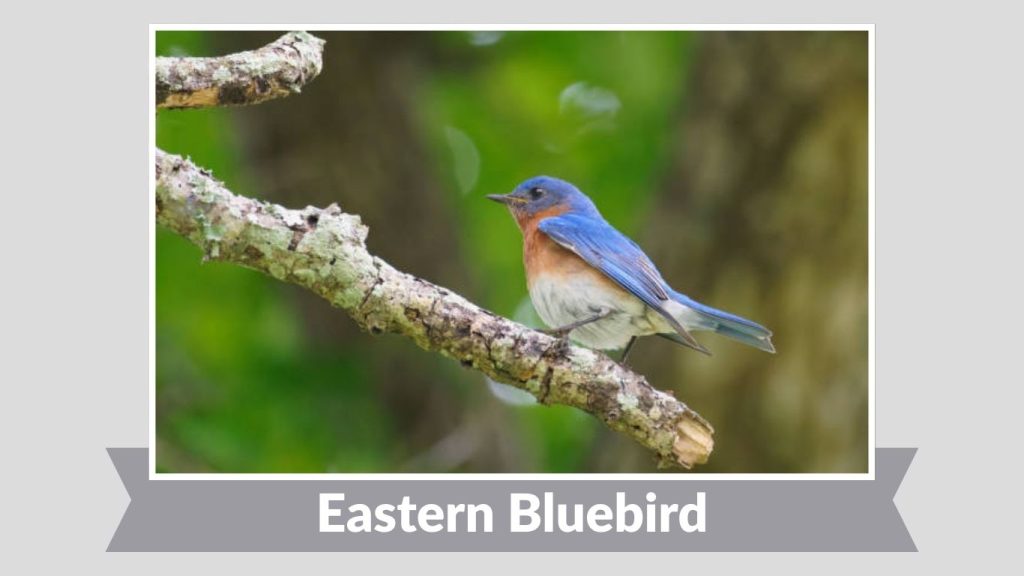
The Eastern Bluebird is a small, colorful songbird admired for its bright blue feathers and warm orange chest. In addition to its beauty, it is well known for laying smooth, pale blue eggs, often in nest boxes provided by humans. This gentle species is a favorite among birdwatchers and a symbol of conservation success in many regions.
Identification
- Bright blue head, back, wings, and tail in males
- Rusty-orange chest and throat
- White belly and undertail
- Female is duller with grayish-blue tones
- Small, straight bill and rounded body
Habitat
Eastern Bluebirds prefer open woodlands, meadows, pastures, and farmland with scattered trees. They frequently nest in natural cavities or man-made nest boxes in gardens and parks.
Behaviors
These birds are calm and social, usually seen in pairs or small family groups. They often hunt by perching quietly before dropping to the ground to catch insects. Males defend territories during the breeding season with soft songs.
Diet
Their diet mainly consists of insects such as beetles, grasshoppers, caterpillars, and spiders. During colder months, they rely more on berries and small fruits.
Lifespan
Eastern Bluebirds typically live 6–10 years in the wild, although many face threats from predators and harsh weather during early life.
3. Song Thrush (Turdus philomelos)
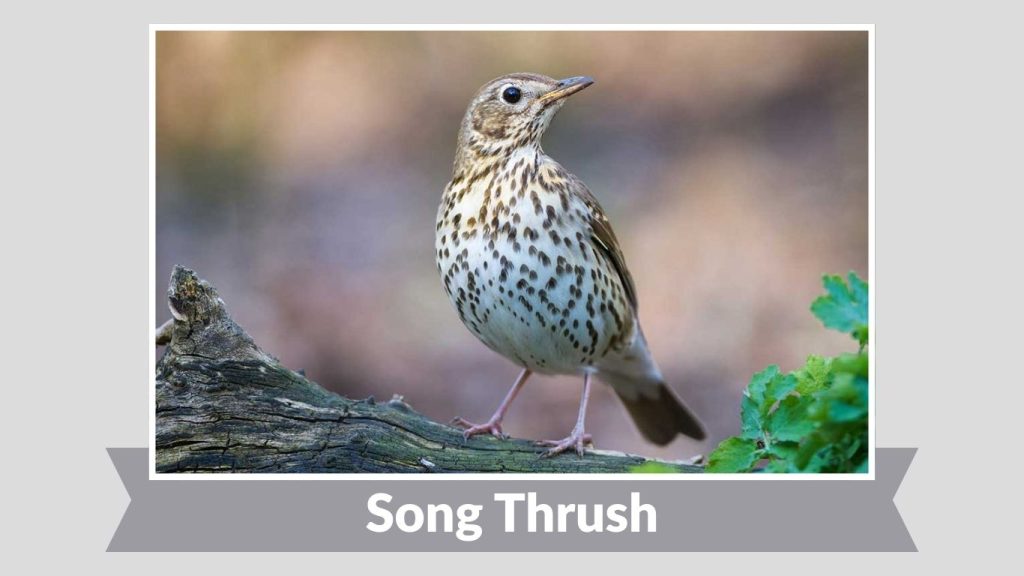
The Song Thrush is a charming European songbird best known for its powerful, repetitive song and its distinctive blue-green eggs marked with dark spots. It is a shy but musical bird that brings rich sound to gardens, woodlands, and hedgerows throughout its range.
Identification
- Warm brown upperparts
- Creamy underparts with dark, arrow-shaped spots
- Slim body with medium-length tail
- Fine, straight bill
- Pale pink legs
Habitat
Song Thrushes inhabit woodlands, parks, gardens, farmland, and hedgerows. They prefer areas with dense shrubs for nesting and open ground for foraging.
Behaviors
These birds are often secretive but become more noticeable during the breeding season when males sing loudly from exposed perches. Song Thrushes are famous for using stones as anvils to crack open snail shells.
Diet
Their diet includes earthworms, snails, insects, berries, and fruits. Snails are especially important during breeding, providing calcium for eggshell production.
Lifespan
Song Thrushes typically live 3–5 years in the wild, though some individuals survive longer in suitable habitats.
4. Dunnock (Prunella modularis)
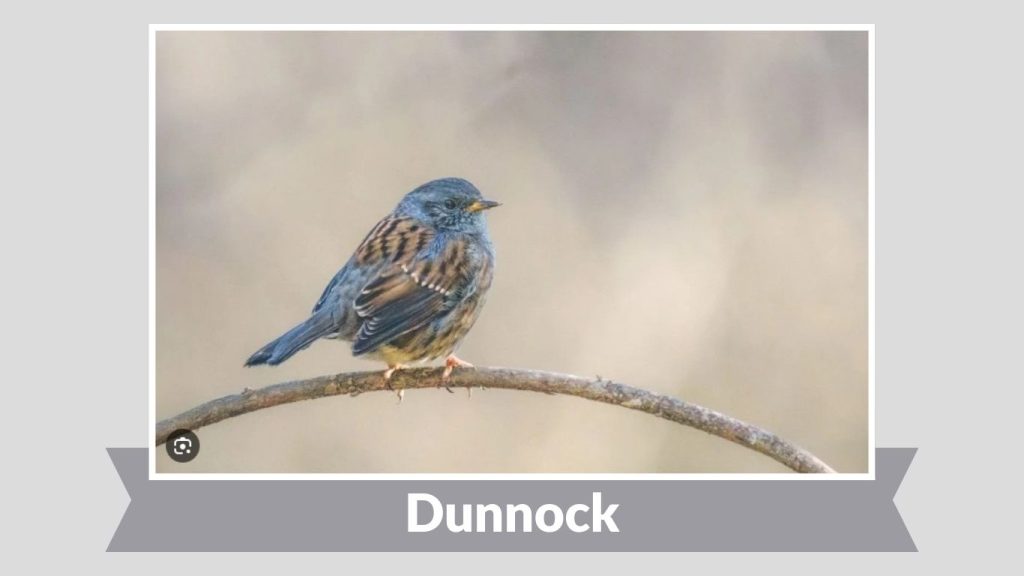
The Dunnock is a small, modestly colored bird often overlooked due to its quiet behavior and subtle appearance. Despite this, it is well known for laying smooth, bright blue eggs that closely resemble those of the American Robin. The Dunnock is a common garden visitor across much of Europe.
Identification
- Brown and gray streaked upperparts
- Slate-gray head, throat, and chest
- Slender body with short tail
- Thin, pointed bill
- Pinkish legs
Habitat
Dunnocks are commonly found in gardens, hedgerows, woodland edges, scrublands, and farmland. They prefer areas with dense low vegetation that provides cover for nesting and protection from predators.
Behaviors
These birds are shy and secretive, often seen creeping low through shrubs or along the ground. Dunnocks have complex mating systems that may include monogamy, polyandry, or polygyny. Their song is a fast, thin, and warbling trill.
Diet
Their diet consists mainly of insects, spiders, small worms, and seeds. They forage primarily on the ground, picking food from soil, leaf litter, and low plants.
Lifespan
Dunnocks typically live 2–4 years in the wild, though some individuals may survive longer under favorable conditions.
5. European Starling (Sturnus vulgaris)
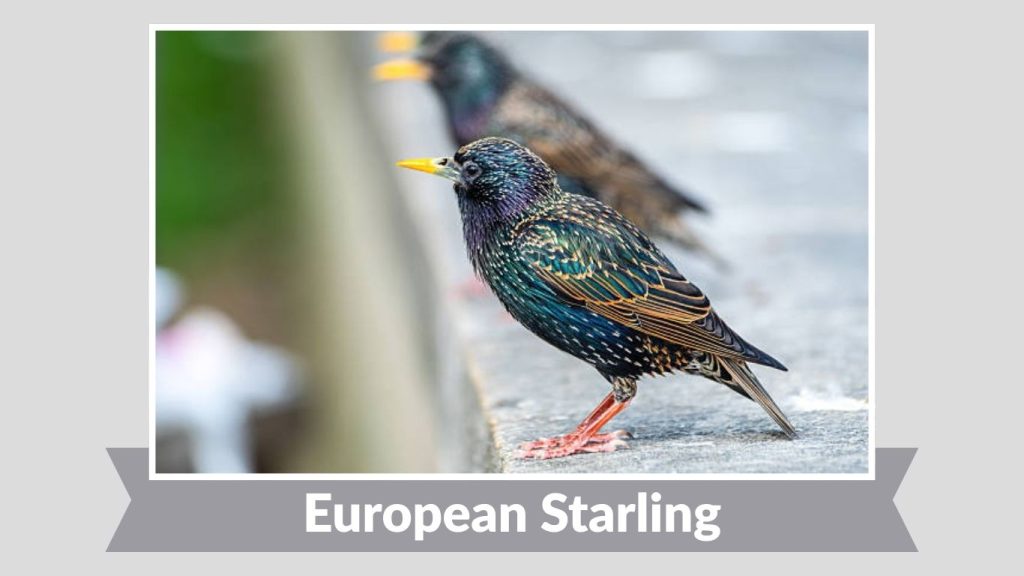
The European Starling is a highly adaptable and social bird recognized for its glossy, iridescent plumage and remarkable vocal abilities. It lays smooth, pale blue eggs and is known for forming massive flocks that create dramatic aerial displays. Although attractive up close, it is often considered invasive in some regions due to its aggressive behavior.
Identification
- Glossy black feathers with green and purple sheen
- White speckles visible in non-breeding season
- Short tail and pointed wings
- Long, slender yellow bill during breeding season
- Compact, stocky body
Habitat
European Starlings inhabit urban areas, farmland, grasslands, parks, and open woodlands. They readily nest in cavities in trees, buildings, and other structures.
Behaviors
These birds are extremely social and often gather in large flocks, especially outside the breeding season. They are excellent mimics and can imitate other birds, mechanical sounds, and even human speech.
Diet
Their diet is omnivorous and includes insects, larvae, fruits, seeds, grains, and food scraps. They forage mostly on the ground using a probing technique.
Lifespan
European Starlings typically live 2–5 years in the wild, though some individuals may live significantly longer.
6. Eurasian Blackbird (Turdus merula)
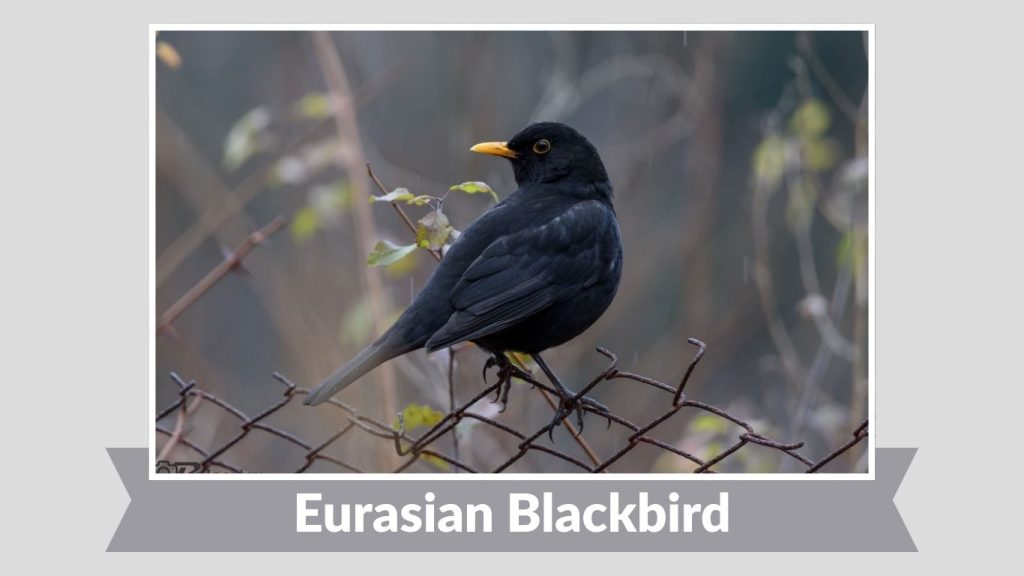
The Eurasian Blackbird is a familiar and melodious songbird, widely known for its rich flute-like song and its smooth blue-green eggs. Males are striking with their black plumage and bright yellow bill, while females are more subtly colored. This species is common across Europe and parts of Asia.
Identification
- Male has glossy black plumage
- Bright yellow bill and eye-ring in males
- Female is dark brown with a duller bill
- Medium-sized body with long tail
- Strong legs adapted for ground foraging
Habitat
Eurasian Blackbirds inhabit woodlands, gardens, parks, hedgerows, and farmland. They adapt well to urban environments and are often one of the first birds heard singing at dawn.
Behaviors
These birds are mostly solitary or found in pairs. They forage on the ground, running and stopping suddenly while searching for prey. Males are territorial during the breeding season and sing to defend their nesting areas.
Diet
Their diet includes earthworms, insects, snails, berries, and fruits. Seasonal changes influence their food choices, with more fruit consumed during winter.
Lifespan
Eurasian Blackbirds typically live 3–5 years in the wild, though some individuals have been recorded living over 10 years.
7. Gray Catbird (Dumetella carolinensis)
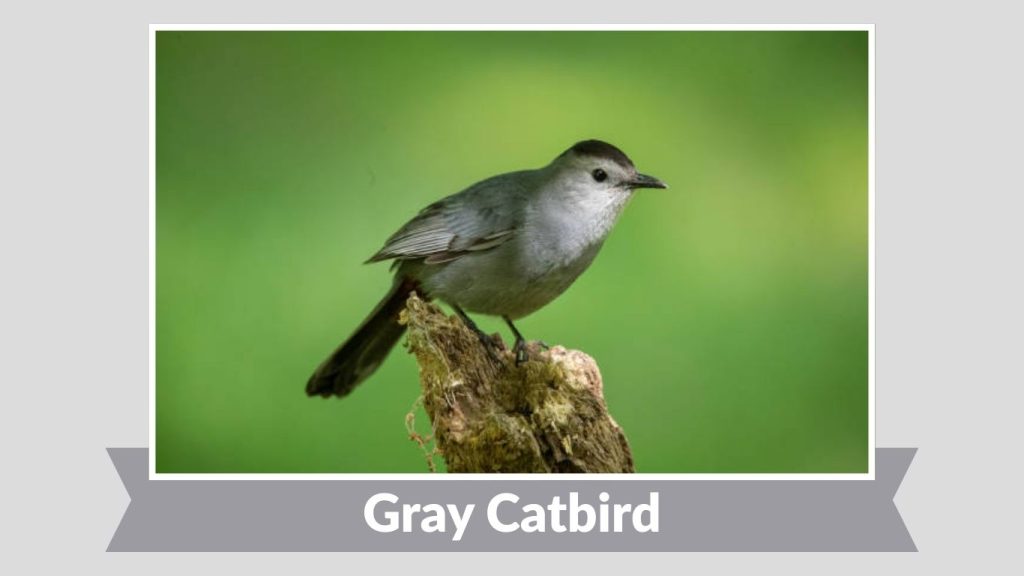
The Gray Catbird is a medium-small songbird best known for its cat-like “mew” call and its beautiful turquoise-blue eggs. Although its plumage is mostly gray, this bird is closely related to mockingbirds and thrashers and is admired for its varied and expressive vocalizations.
Identification
- Smooth slate-gray body
- Black cap on the head
- Rusty-red patch under the tail
- Long, rounded tail
- Slim, slightly curved bill
Habitat
Gray Catbirds inhabit dense shrubs, forest edges, thickets, hedgerows, and suburban gardens. They prefer areas with thick vegetation that provide good cover for nesting and protection from predators.
Behaviors
These birds are secretive but very vocal. They are skilled mimics and can incorporate sounds from other birds into their songs. Gray Catbirds are territorial during breeding season and actively defend their nesting areas.
Diet
Their diet includes insects, caterpillars, beetles, spiders, berries, and fruits. During late summer and fall, fruit makes up a large portion of their food.
Lifespan
Gray Catbirds typically live 2–6 years in the wild, though some individuals may survive longer in safe, food-rich environments.
8. Common Grackle (Quiscalus quiscula)
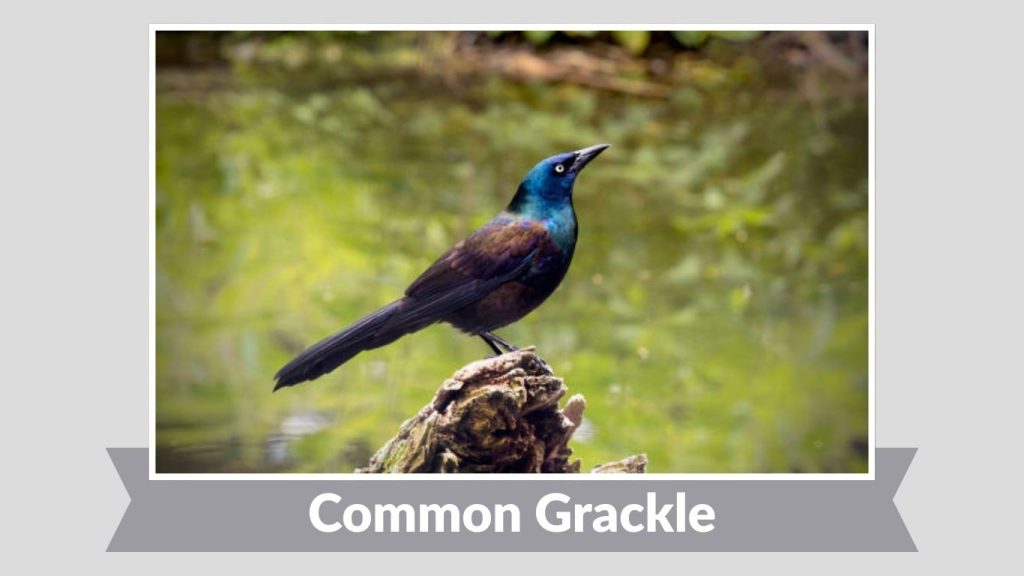
The Common Grackle is a bold, intelligent bird known for its glossy black plumage with iridescent blue and purple tones. It lays smooth, pale blue eggs often marked with darker streaks or spots. Grackles are highly adaptable and frequently seen in both natural and urban environments, where they are hard to miss due to their loud calls and confident behavior.
Identification
- Glossy black body with blue or purple sheen
- Long tail, often held in a keel shape during flight
- Pale yellow to golden eyes
- Strong, slightly curved bill
- Medium-sized, elongated body
Habitat
Common Grackles live in open woodlands, wetlands, fields, parks, farmlands, and cities. They often nest in trees near water and are common around human settlements.
Behaviors
These birds are very social and often gather in large, noisy flocks. They can be aggressive at feeders and are known for their problem-solving abilities. During breeding season, males display and vocalize to attract mates.
Diet
Their diet is omnivorous and includes insects, seeds, grains, fruits, small fish, frogs, and food scraps. They frequently forage on the ground and in shallow water.
Lifespan
Common Grackles typically live 5–7 years in the wild, though some individuals may live longer under favorable conditions.
9. Red-winged Blackbird (Agelaius phoeniceus)
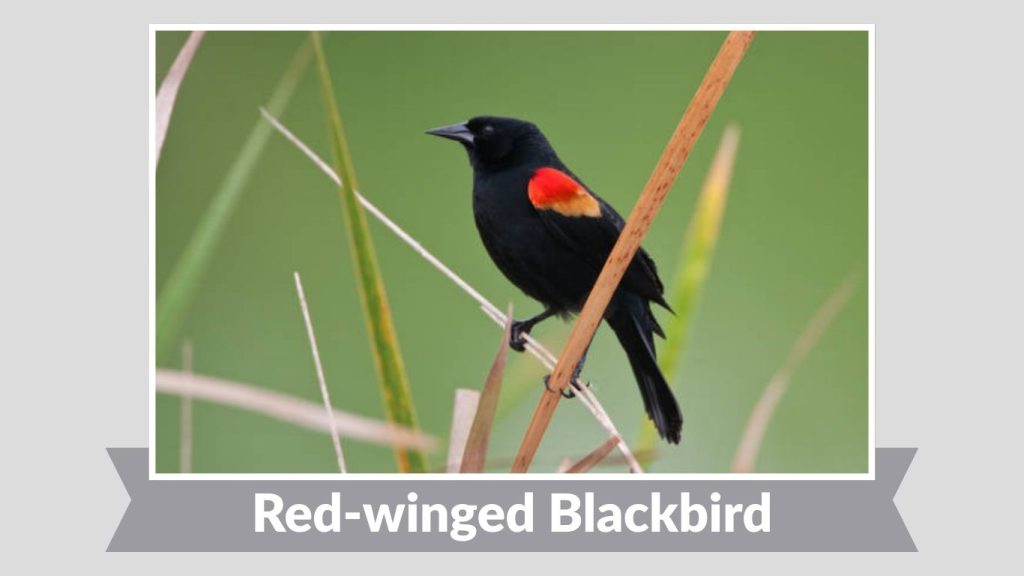
The Red-winged Blackbird is a familiar wetland bird known for the male’s striking red and yellow shoulder patches and its pale blue, dark-marked eggs. It is one of the most abundant birds in North America and plays an important role in wetland ecosystems.
Identification
- Male has glossy black plumage
- Bright red shoulder patches edged with yellow
- Female is brown and heavily streaked
- Medium-sized body with a conical bill
- Long legs and tail
Habitat
Red-winged Blackbirds are commonly found in marshes, wetlands, reed beds, grasslands, and agricultural fields. They nest low among reeds or grasses, often close to water.
Behaviors
Males are highly territorial during breeding season and aggressively defend nesting areas. They are known for their loud, distinctive calls and dramatic flight displays.
Diet
Their diet includes insects, spiders, seeds, grains, and occasionally small amphibians. They forage on the ground and among vegetation.
Lifespan
Red-winged Blackbirds typically live 2–4 years in the wild, though some individuals may survive longer in suitable habitats.
10. Northern Mockingbird (Mimus polyglottos)
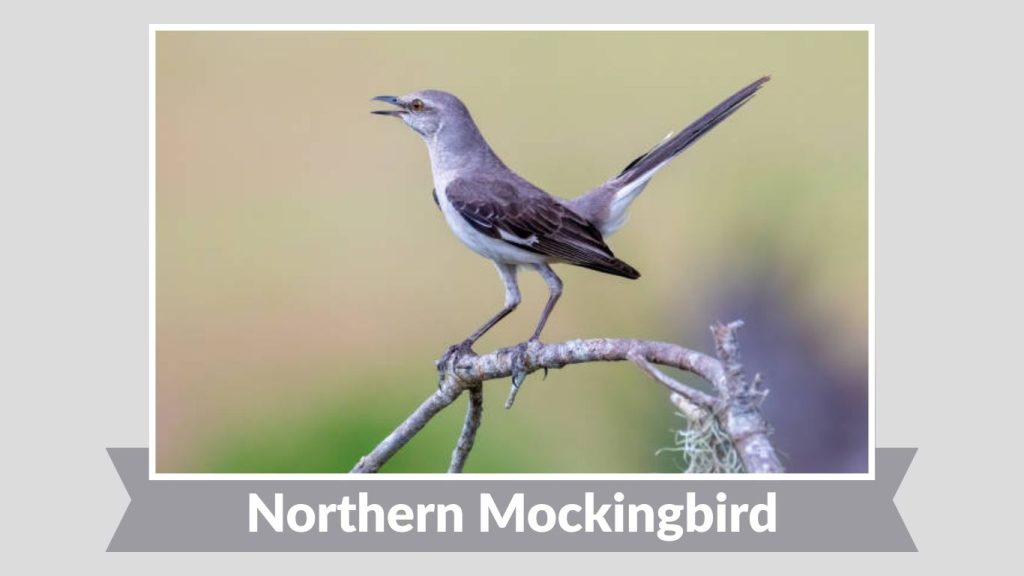
The Northern Mockingbird is a well-known songbird famous for its incredible vocal range and ability to mimic the songs of other birds, animals, and even mechanical sounds. It also lays pale blue to blue-green eggs, usually marked with brown or reddish spots. This bird is admired for both its intelligence and its bold personality.
Identification
- Gray upperparts with paler underparts
- Long tail with white outer feathers
- White wing patches visible in flight
- Slim body with a slightly curved bill
- Dark eyes and alert posture
Habitat
Northern Mockingbirds thrive in open areas with shrubs and trees, including gardens, parks, farmland, woodland edges, and suburban neighborhoods. They adapt very well to human environments.
Behaviors
These birds are highly territorial, especially during breeding season, and will aggressively defend their nests. Mockingbirds sing both day and night, often repeating phrases multiple times, and males may sing hundreds of different song variations.
Diet
Their diet includes insects, beetles, ants, caterpillars, spiders, berries, and fruits. Seasonal changes influence their food choices, with more fruit eaten in fall and winter.
Lifespan
Northern Mockingbirds typically live 3–8 years in the wild, though some individuals have been recorded living much longer.
11. House Finch (Haemorhous mexicanus)
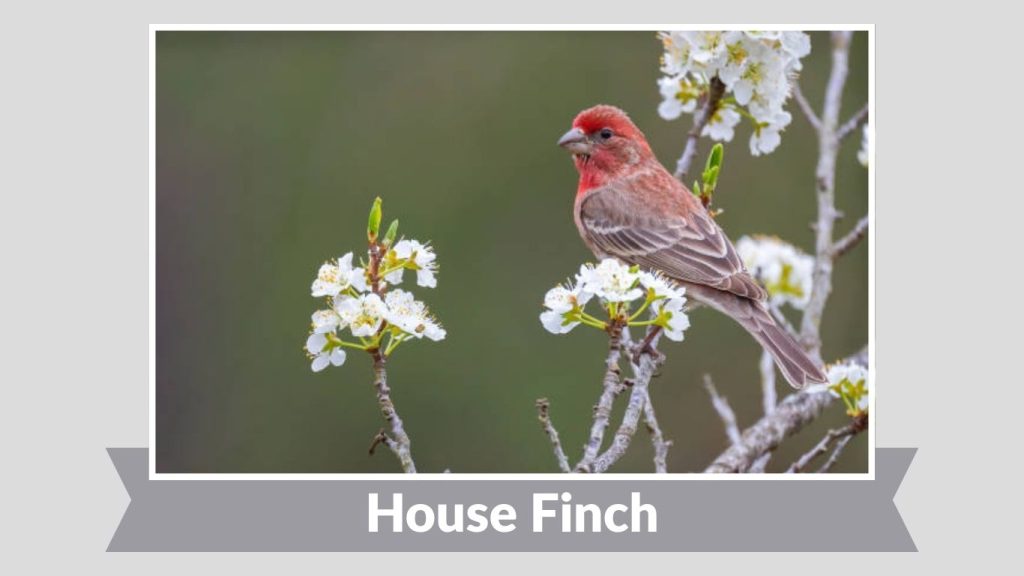
The House Finch is a small, cheerful songbird commonly found around homes and gardens. It lays pale blue to blue-green eggs speckled with dark markings. Known for its adaptability and pleasant warbling song, this species thrives close to human settlements and is a familiar sight at backyard feeders.
Identification
- Male has red coloring on head, chest, and rump
- Female is brown with heavy streaking
- Short, conical seed-eating bill
- Medium-length notched tail
- Compact, rounded body
Habitat
House Finches inhabit urban areas, suburbs, farms, deserts, open woodlands, and grasslands. They frequently nest on buildings, trees, hanging planters, and other man-made structures.
Behaviors
These birds are social and usually seen in pairs or small flocks. They are non-migratory in many areas and are known for their long, cheerful songs. House Finches readily visit bird feeders and tolerate human activity well.
Diet
Their diet consists mainly of seeds, grains, buds, fruits, and berries. They occasionally eat insects, especially during the breeding season.
Lifespan
House Finches typically live 3–7 years in the wild, though some individuals may live longer under favorable conditions.
12. Blue-gray Gnatcatcher (Polioptila caerulea)
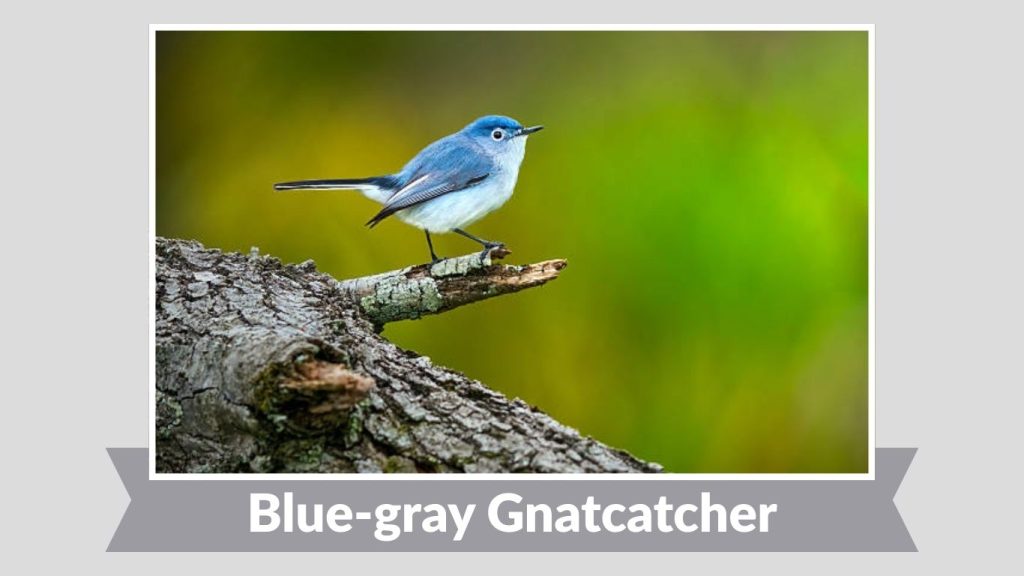
The Blue-gray Gnatcatcher is a tiny, energetic songbird known for its soft blue-gray plumage and delicate blue eggs. Despite its small size, it is highly active and constantly in motion, making it a lively presence in forests and gardens. Its thin calls and flicking tail help distinguish it from other small birds.
Identification
- Soft blue-gray upperparts
- Pale gray to white underparts
- Thin white eye-ring
- Long black tail with white edges
- Very small body with a slender bill
Habitat
Blue-gray Gnatcatchers inhabit deciduous forests, woodland edges, shrublands, and suburban gardens. They prefer areas with tall trees and dense foliage, especially near water sources.
Behaviors
These birds are extremely active and rarely stay still. They constantly flick their tails and move quickly through branches while searching for insects. During breeding season, they become more vocal and territorial.
Diet
Their diet consists mainly of small insects such as gnats, flies, beetles, caterpillars, and spiders. They catch prey by gleaning from leaves and branches.
Lifespan
Blue-gray gnatcatchers typically live 2–4 years in the wild, though some individuals may survive longer in suitable habitats.
13. Great Blue Heron (Ardea herodias)
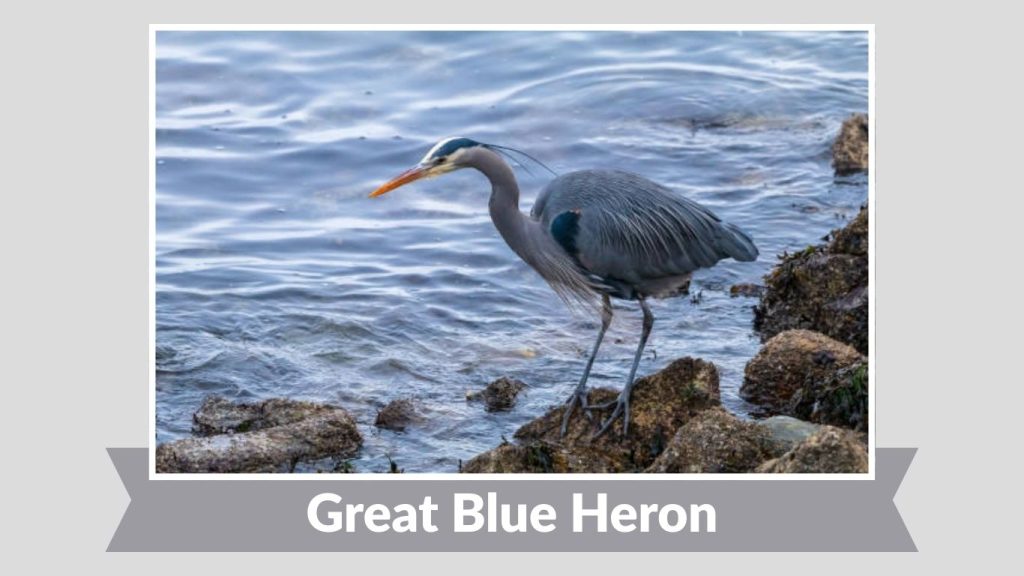
The Great Blue Heron is a large, elegant wading bird best known for its long legs, graceful posture, and calm hunting style. Although much larger than most birds on this list, it is included because it lays pale blue eggs. This species is often seen standing motionless along shorelines, waiting patiently for prey.
Identification
- Tall body with long legs and neck
- Blue-gray plumage with darker wing feathers
- White face with black stripe above the eye
- Long, sharp yellow bill
- Slow, powerful wingbeats in flight
Habitat
Great Blue Herons inhabit wetlands, lakes, rivers, marshes, estuaries, and coastal shorelines. They nest in trees near water, often in large colonies known as heronries.
Behaviors
These birds are solitary hunters and extremely patient. They stand still or move slowly through shallow water before striking quickly to catch prey. During breeding season, they become more social while nesting in colonies.
Diet
Their diet consists mainly of fish, but they also eat frogs, insects, small mammals, reptiles, and crustaceans. They swallow most prey whole.
Lifespan
Great Blue Herons typically live 10–15 years in the wild, with some individuals living even longer in protected environments.
FAQs
What birds lay blue eggs?
Many small and medium-sized birds lay blue or blue-green eggs, including American Robins, Eastern Bluebirds, Song Thrushes, Dunnocks, European Starlings, and Gray Catbirds.
Why are some bird eggs blue?
Blue egg coloration is caused by pigments such as biliverdin deposited in the eggshell. The color may help camouflage the eggs or signal the health of the female to a potential mate.
Are blue bird eggs always unspotted?
No, some blue eggs are plain, while others have brown, gray, or reddish spots. The pattern and color vary by species.
Where are blue eggs usually found?
Blue eggs are commonly found in nests built in trees, shrubs, cavities, nest boxes, or sometimes on building ledges, depending on the bird species.
Is it safe to touch blue bird eggs?
No, bird eggs should not be touched. Handling eggs can cause parents to abandon the nest and may be illegal in many countries due to wildlife protection laws.