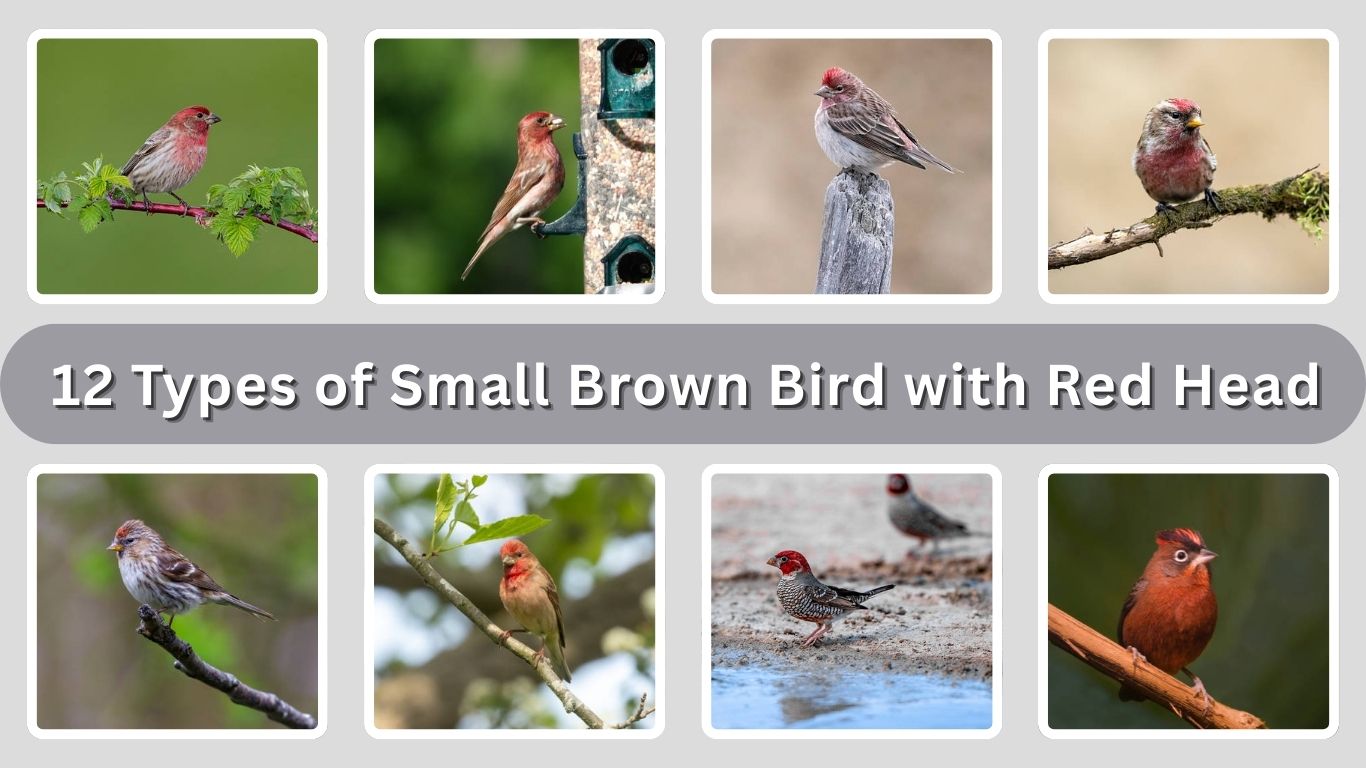
Small brown birds with red heads are easy to notice thanks to their warm, earthy tones paired with bright splashes of color. Found across many regions of the world, these birds belong to different families and inhabit woodlands, grasslands, gardens, and farmlands. While some display bold red heads year-round, others show this coloration mainly during the breeding season. This guide explores several small bird species known for their brown bodies and red heads, highlighting their unique features and behaviors.
1. House Finch (Haemorhous mexicanus)
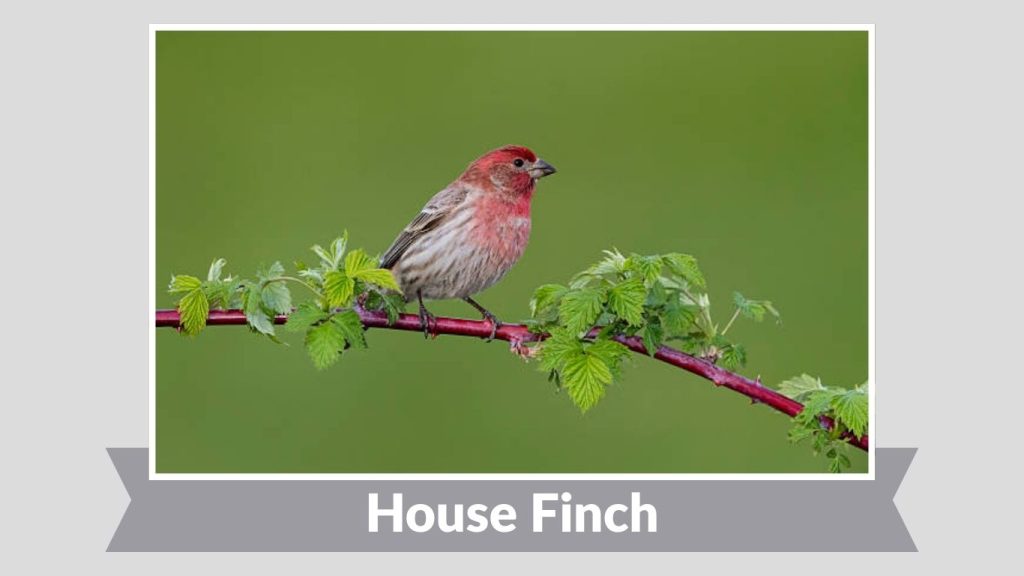
The House Finch is a small, friendly songbird commonly seen around homes, gardens, and feeders. Males are especially recognizable by their red heads and upper chests, which contrast with their brown, streaked bodies. Adaptable and social, House Finches thrive close to human settlements and are known for their cheerful, warbling songs.
Identification
- Male has red head, forehead, and upper chest
- Brown, heavily streaked back and sides
- Female is plain brown with heavy streaking and no red
- Short, conical bill suited for seeds
- Medium-length notched tail
Habitat
House Finches inhabit urban areas, suburbs, farmland, deserts, open woodlands, and grasslands. They frequently nest on buildings, trees, hanging planters, and other man-made structures.
Behaviors
These birds are social and usually seen in pairs or small flocks. They are not shy around humans and often visit backyard feeders. Males sing a long, jumbled song to attract mates and defend territory.
Diet
Their diet consists mainly of seeds, grains, buds, fruits, and berries. They may also eat insects, especially during the breeding season.
Lifespan
House Finches typically live 3–7 years in the wild, though some individuals survive longer under favorable conditions.
2. Purple Finch (Haemorhous purpureus)
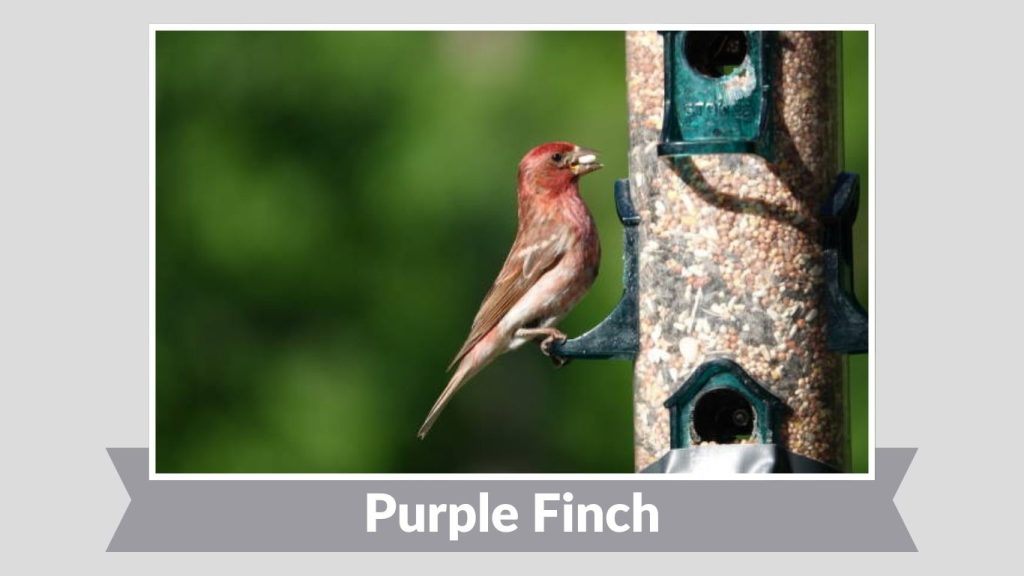
The Purple Finch is a small brown bird with a rich red head and chest, often described as looking “dipped in raspberry juice.” Compared to the House Finch, its red coloration is deeper and more extensive. This species prefers quieter, wooded environments and is a favorite among birdwatchers.
Identification
- Male has deep red head, chest, and back
- Brown wings and tail with light edging
- Female is brown with bold streaking and a pale eyebrow
- Short, conical bill
- Stocky body shape
Habitat
Purple Finches inhabit coniferous and mixed forests, woodland edges, and forested suburbs. In winter, they may visit gardens and feeders, especially in northern regions.
Behaviors
These birds are less aggressive than House Finches and are often seen feeding quietly. Males sing a rich, musical warble from treetops during breeding season to attract mates.
Diet
Their diet includes seeds, buds, berries, insects, and tree sap. They frequently visit feeders for sunflower seeds during colder months.
Lifespan
Purple Finches typically live 3–6 years in the wild, though some individuals may survive longer in suitable habitats.
3. Cassin’s Finch (Haemorhous cassinii)
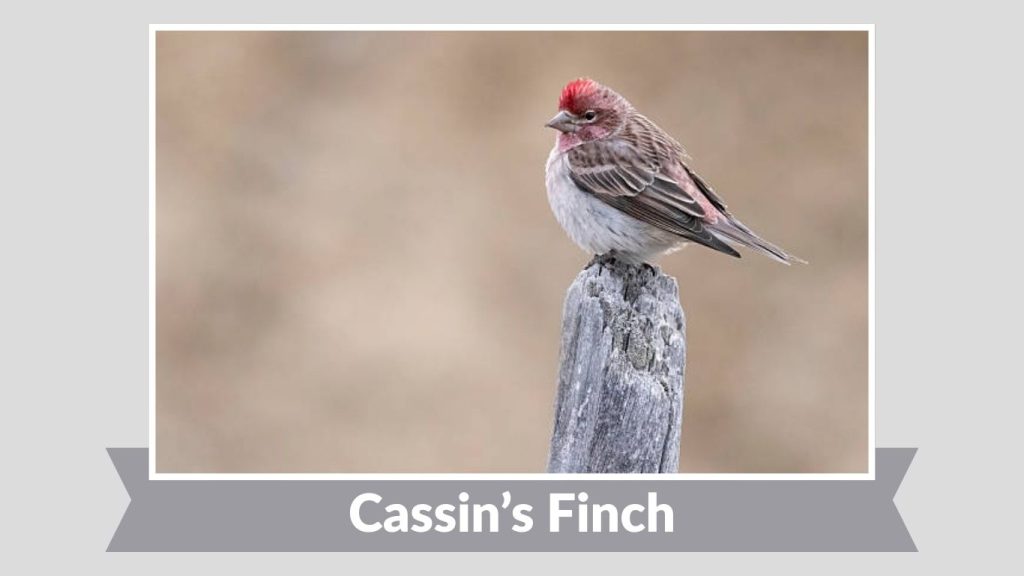
Cassin’s Finch is a small, brown songbird distinguished by the male’s bright red crown and frosty white belly. Subtler in appearance than other finches, it is often overlooked despite its pleasant song and graceful behavior. This species is commonly found in mountainous regions of western North America.
Identification
- Male has bright red crown and rosy wash on head and chest
- Brown back with darker streaks
- Pale belly with minimal streaking
- Female is brown with heavy streaking and a bold facial pattern
- Thick, conical bill
Habitat
Cassin’s Finches prefer coniferous forests, mountain woodlands, and high-elevation habitats. During winter, they may move to lower elevations and occasionally visit feeders.
Behaviors
These birds are usually seen in small flocks or pairs. Males sing a clear, melodic song from treetops during the breeding season. They are generally calm and less aggressive than some other finch species.
Diet
Their diet consists of seeds, buds, berries, and insects. They often feed in trees rather than on the ground.
Lifespan
Cassin’s Finches typically live 4–7 years in the wild, depending on environmental conditions and food availability.
4. Common Redpoll (Acanthis flammea)
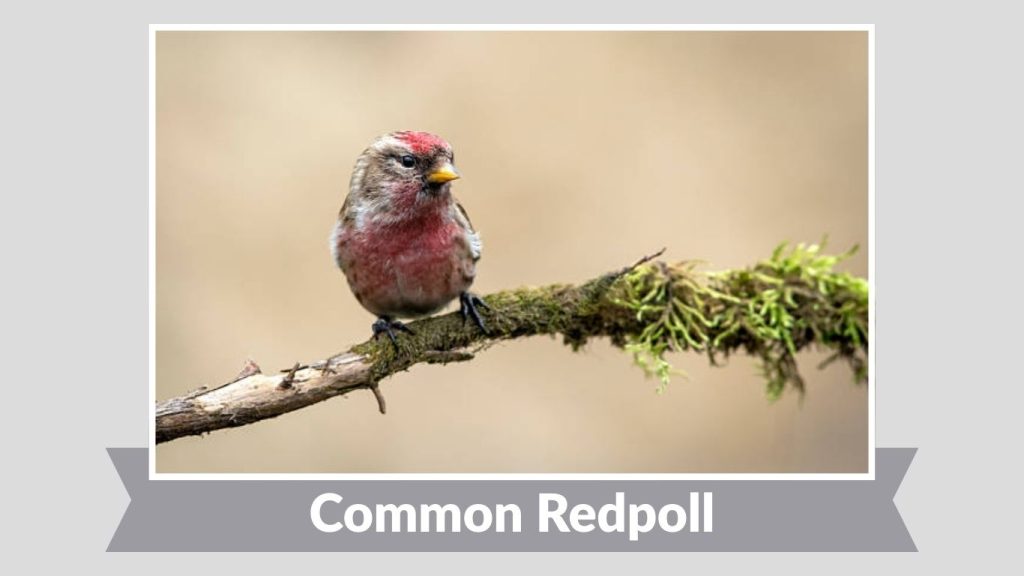
The Common Redpoll is a small, energetic finch recognized by its brown streaked body and bright red patch on the head. Despite its tiny size, it is well adapted to cold climates and is often seen in large, restless flocks during winter.
Identification
- Small red patch on the crown
- Brown and white streaked body
- Black chin patch below the bill
- Pale conical bill
- Forked tail
Habitat
Common Redpolls inhabit tundra, open woodlands, birch forests, and scrubby areas. In winter, they move south into gardens, fields, and open countryside.
Behaviors
These birds are highly active and social, constantly moving and calling while feeding. They often hang upside down on seed heads and branches to reach food.
Diet
Their diet mainly consists of seeds, especially birch and alder seeds. They also eat insects during the breeding season.
Lifespan
Common Redpolls typically live 2–5 years in the wild, though some individuals may survive longer under favorable conditions.
5. Lesser Redpoll (Acanthis cabaret)
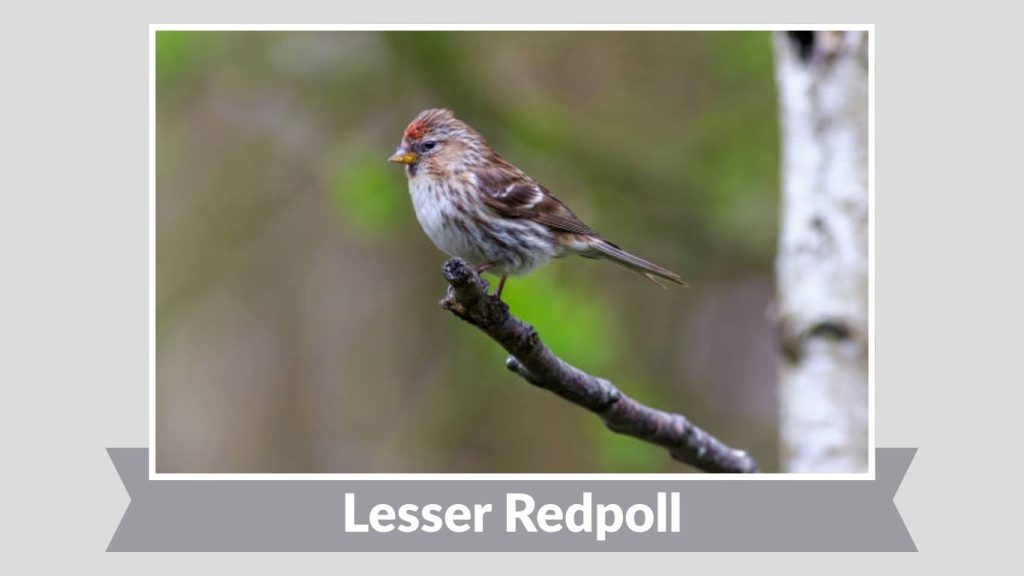
The Lesser Redpoll is a tiny, lively finch with a warm brown body and a bright red patch on its head. Similar in appearance to the Common Redpoll but slightly smaller and darker, it is a familiar sight in woodlands and gardens, especially during the colder months.
Identification
- Small red patch on the crown
- Warm brown upperparts with dark streaking
- Pale underparts with fine streaks
- Black chin patch below the bill
- Small, conical bill and short forked tail
Habitat
Lesser Redpolls are commonly found in open woodlands, scrublands, hedgerows, parks, and gardens. They favor areas with birch, alder, and other seed-bearing trees and shrubs.
Behaviors
These birds are very active and social, usually seen in flocks. They move constantly while feeding and often cling to thin branches or seed heads. Their calls are high-pitched and twittering.
Diet
Their diet mainly consists of seeds from birch, alder, grasses, and weeds. During the breeding season, they also consume small insects and larvae.
Lifespan
Lesser Redpolls typically live 2–4 years in the wild, though some individuals may survive longer under favorable conditions.
6. Common Rosefinch (Carpodacus erythrinus)
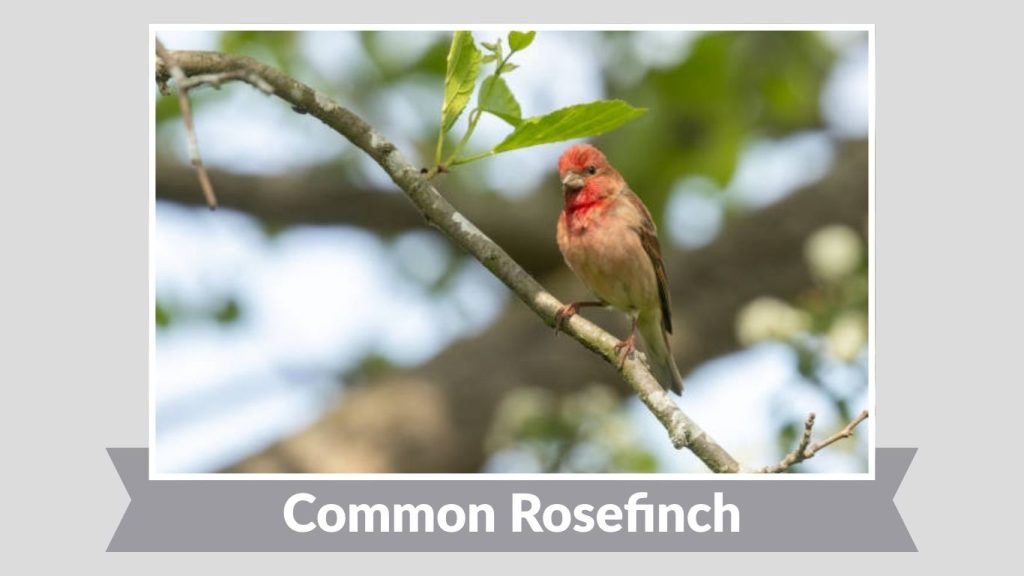
The Common Rosefinch is a small brown bird best known for the male’s rosy-red head and chest, which stand out beautifully against its otherwise muted body. Often shy and quiet, this species adds subtle color to woodlands and shrub-filled landscapes across Europe and Asia.
Identification
- Male has rosy-red head, face, and upper chest
- Brown wings and back with faint streaking
- Pale underside with a pinkish wash
- Female is plain brown with darker streaks
- Thick, conical finch bill
Habitat
Common Rosefinches inhabit open woodlands, forest edges, scrublands, hedgerows, and gardens. They prefer areas with dense shrubs for nesting and nearby open spaces for feeding.
Behaviors
These birds are generally secretive and are often heard before they are seen. Males sing a soft, whistling song during the breeding season, usually from hidden perches within vegetation.
Diet
Their diet includes seeds, buds, berries, and insects. Insects become especially important during the breeding season when protein is needed for chicks.
Lifespan
Common Rosefinches typically live 3–6 years in the wild, depending on habitat quality and environmental conditions.
7. Red-headed Finch (Amadina erythrocephala)
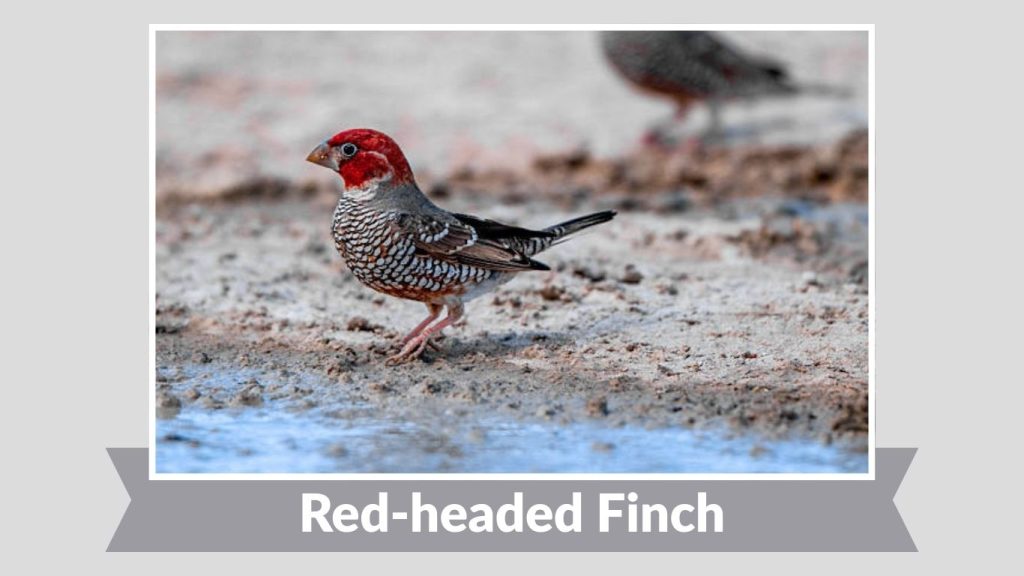
The Red-headed Finch is a striking small bird with a warm brown body and a bold red head, making it easy to recognize within its range. Native to Africa, this finch is often seen in pairs or small groups and is admired for its colorful appearance and calm nature.
Identification
- Bright red head and face
- Brown back, wings, and tail
- Pale underparts with fine barring
- Short, thick conical bill
- Compact body shape
Habitat
Red-headed Finches inhabit savannas, open woodlands, dry grasslands, and agricultural areas. They are often found near water sources and human settlements where food is readily available.
Behaviors
These birds are social and usually seen in pairs or small flocks. They spend much of their time on the ground feeding and are known for their soft, twittering calls.
Diet
Their diet consists mainly of grass seeds, grains, and small insects. They forage on the ground and occasionally feed on fallen seeds near farms.
Lifespan
Red-headed Finches typically live 4–7 years in the wild, with lifespan influenced by food availability and environmental conditions.
8. Red-crowned Finch (Coryphospingus cucullatus)
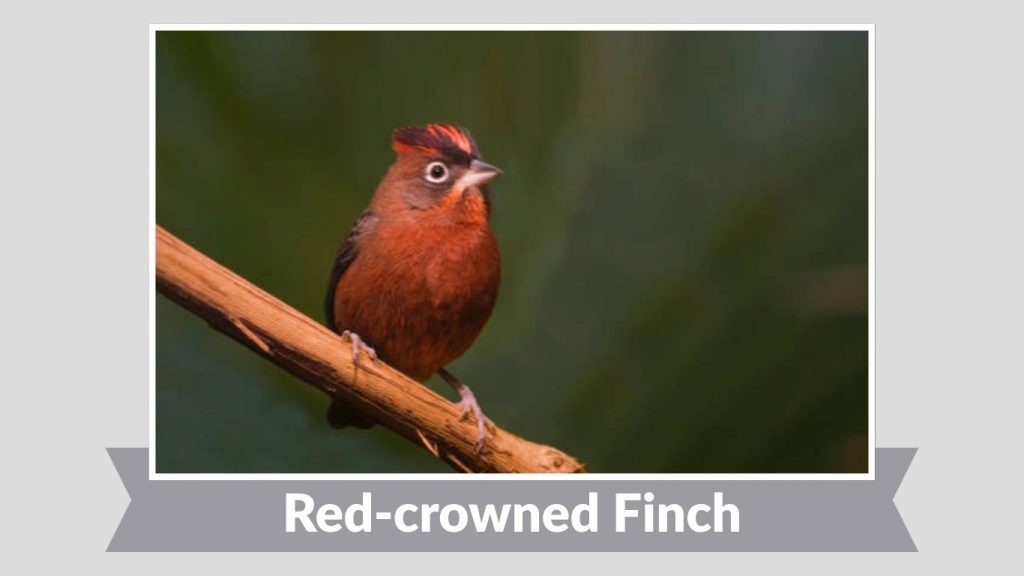
The Red-crowned Finch is a small, lively bird recognized by the male’s bright red head and crown contrasting with its brownish body. Native to Central and South America, it is often seen flitting through shrubs and low vegetation, adding flashes of red to the landscape.
Identification
- Male has vivid red crown and head
- Brown to olive-brown body and wings
- Female is mostly brown with little or no red
- Short, conical bill
- Slender body with medium-length tail
Habitat
Red-crowned Finches inhabit forest edges, scrublands, gardens, and open woodlands. They prefer areas with dense shrubs that provide cover and nesting sites.
Behaviors
These birds are active and social, commonly found in pairs or small groups. They move quickly through low vegetation and often stay close to cover.
Diet
Their diet consists of seeds, berries, and small insects. They forage mainly on or near the ground and among shrubs.
Lifespan
Red-crowned Finches typically live 3–6 years in the wild, depending on habitat conditions and predation pressure.
9. Red-capped Robin (Petroica goodenovii)
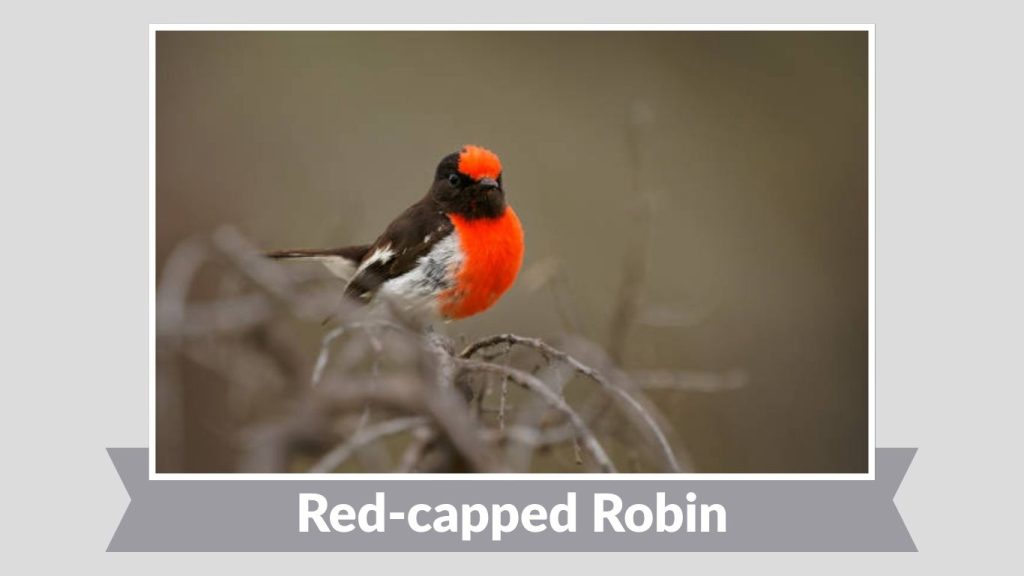
The Red-capped Robin is a small, charming bird best known for the male’s bright red head and chest, which contrast beautifully with its brown and gray body. Native to Australia, this species is admired for its gentle behavior and frequent presence in open woodlands and gardens.
Identification
- Male has vivid red cap and upper chest
- Brown back and wings
- White lower belly
- Female is gray-brown with a faint reddish wash
- Slim body with a thin bill
Habitat
Red-capped Robins inhabit open woodlands, forest edges, parks, and grassy areas with scattered trees. They prefer habitats with open ground for feeding and nearby perches for hunting insects.
Behaviors
These birds are calm and observant, often seen perching quietly before dropping to the ground to catch prey. They are usually found alone or in pairs and are less aggressive than many other small birds.
Diet
Their diet consists mainly of insects and small invertebrates such as beetles, ants, and spiders. They forage mostly on the ground.
Lifespan
Red-capped Robins typically live 3–5 years in the wild, depending on environmental conditions and food availability.
10. Red-headed Bunting (Emberiza bruniceps)
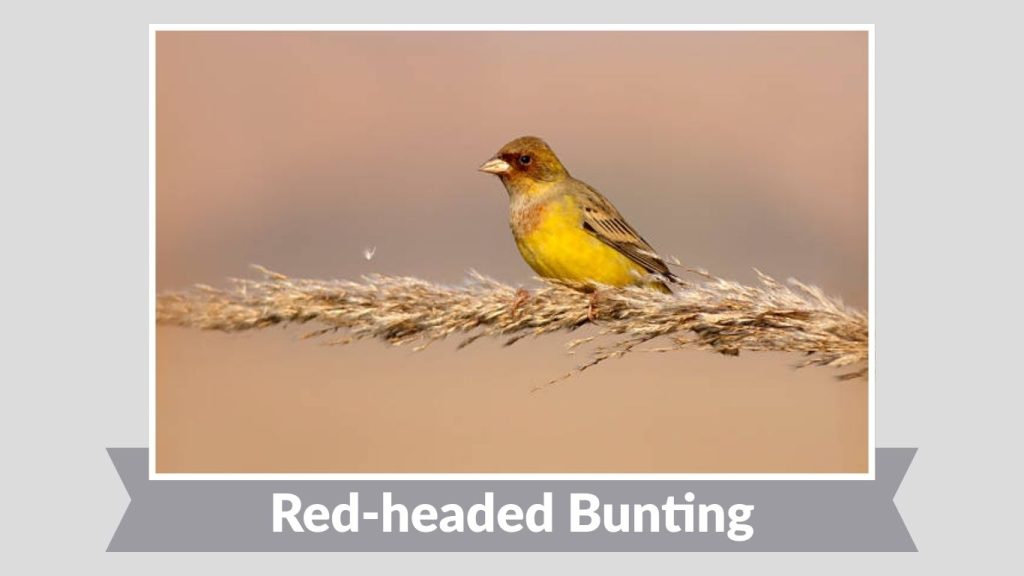
The Red-headed Bunting is a colorful small bird with a rich red to chestnut-colored head and a warm brown body. During the breeding season, males are especially striking and easy to spot as they perch in open areas and sing. This species is commonly found across parts of Central and South Asia.
Identification
- Male has bright red to chestnut head
- Yellow throat and underparts during breeding season
- Brown wings and back with darker streaks
- Female is duller brown with faint markings
- Short, conical bunting bill
Habitat
Red-headed Buntings inhabit open fields, grasslands, scrublands, farmland, and forest edges. They prefer open habitats with scattered bushes or trees for perching and nesting.
Behaviors
These birds are often seen in pairs or small flocks. Males sing from exposed perches during the breeding season to attract mates. Outside breeding periods, they may gather in larger feeding groups.
Diet
Their diet consists mainly of seeds and grains, supplemented by insects during the breeding season when extra protein is needed.
Lifespan
Red-headed Buntings typically live 3–6 years in the wild, depending on habitat quality and environmental conditions.
11. Red-headed Weaver (Anaplectes rubriceps)
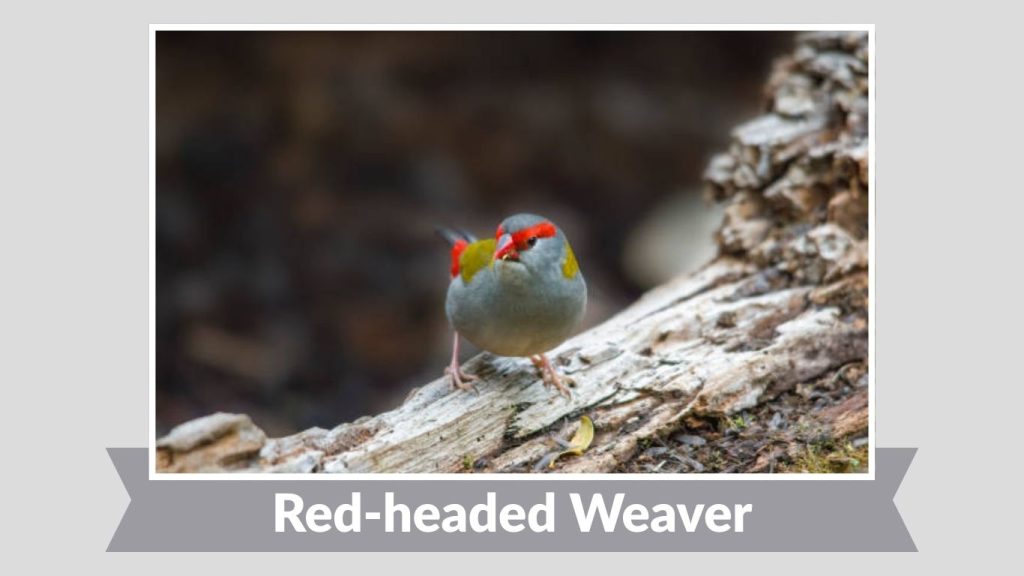
The Red-headed Weaver is a small, striking bird known for the male’s bright red head contrasted against a brown to olive body. Native to sub-Saharan Africa, it is admired for its colorful appearance and intricate nest-building skills, which are typical of weaver birds.
Identification
- Male has vivid red head and face
- Brownish to olive body and wings
- Dark eyes and stout conical bill
- Female is duller brown with no red head
- Compact body with short tail
Habitat
Red-headed Weavers inhabit savannas, open woodlands, forest edges, and gardens. They are often found near water sources and areas with suitable nesting trees.
Behaviors
These birds are social and often seen in small groups or loose colonies. Males build woven nests to attract females and may display actively around nesting sites.
Diet
Their diet includes seeds, grains, insects, and small fruits. They forage in trees and on the ground, often near grassy areas.
Lifespan
Red-headed Weavers typically live 4–8 years in the wild, depending on food availability and habitat conditions.
12. Red-headed Quelea (Quelea erythrops)
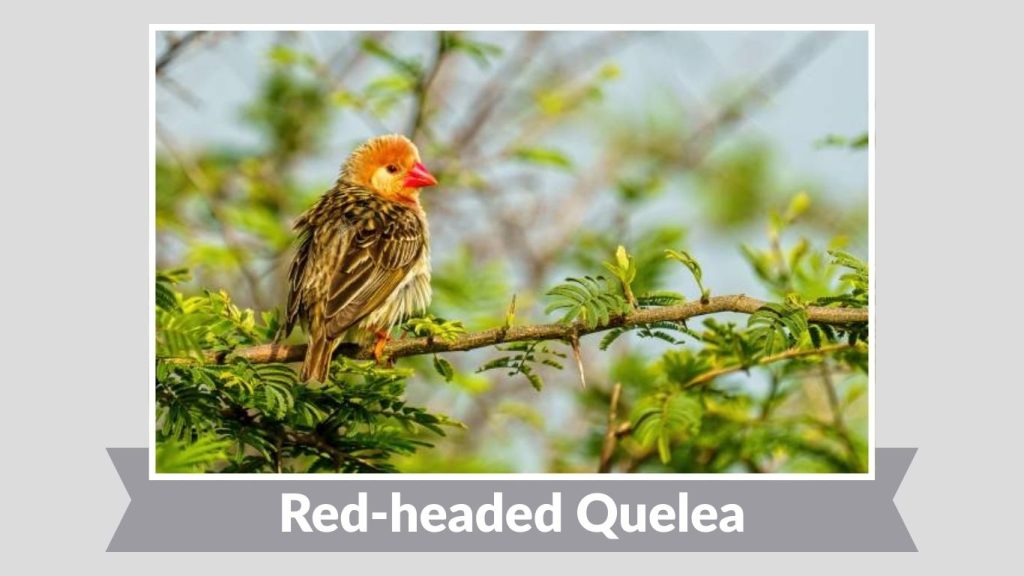
The Red-headed Quelea is a small, active bird recognized for the male’s bright red head during the breeding season, contrasting with its brown body. It is one of Africa’s most numerous bird species and is closely related to other queleas and weavers.
Identification
- Male has vivid red head and face during breeding season
- Brown to buff body with darker streaking
- Short, conical seed-eating bill
- Female and non-breeding males are plain brown
- Small, compact body
Habitat
Red-headed Queleas inhabit savannas, grasslands, open woodlands, and agricultural areas. They often occur near water and are known for forming very large flocks.
Behaviors
These birds are extremely social and may gather in massive flocks, especially outside the breeding season. During breeding, males display actively and nest in colonies.
Diet
Their diet consists mainly of grass seeds and grains, which they forage from the ground and low vegetation. In some areas, they are considered agricultural pests.
Lifespan
Red-headed Queleas typically live 2–4 years in the wild, though some individuals may survive longer in favorable conditions.
FAQs
What are small brown birds with red heads called?
Small brown birds with red heads include species such as the House Finch, Purple Finch, Common Redpoll, Common Rosefinch, and Red-headed Bunting. These birds belong to different families but share similar coloration patterns.
Why do only some birds have red heads?
Red coloration is usually produced by pigments called carotenoids, which birds obtain from their diet. Bright red heads are often used to attract mates or signal health and dominance.
Do female birds also have red heads?
In many species, females are duller in color and may have little or no red on their heads. Bright red heads are most commonly seen in breeding males.
Where are small brown birds with red heads found?
These birds are found worldwide, including North America, Europe, Asia, Africa, Australia, and South America, depending on the species and habitat.
What do small brown birds with red heads eat?
Most feed on seeds, grains, berries, and insects. Their diet may change seasonally, with more insects eaten during the breeding season.