
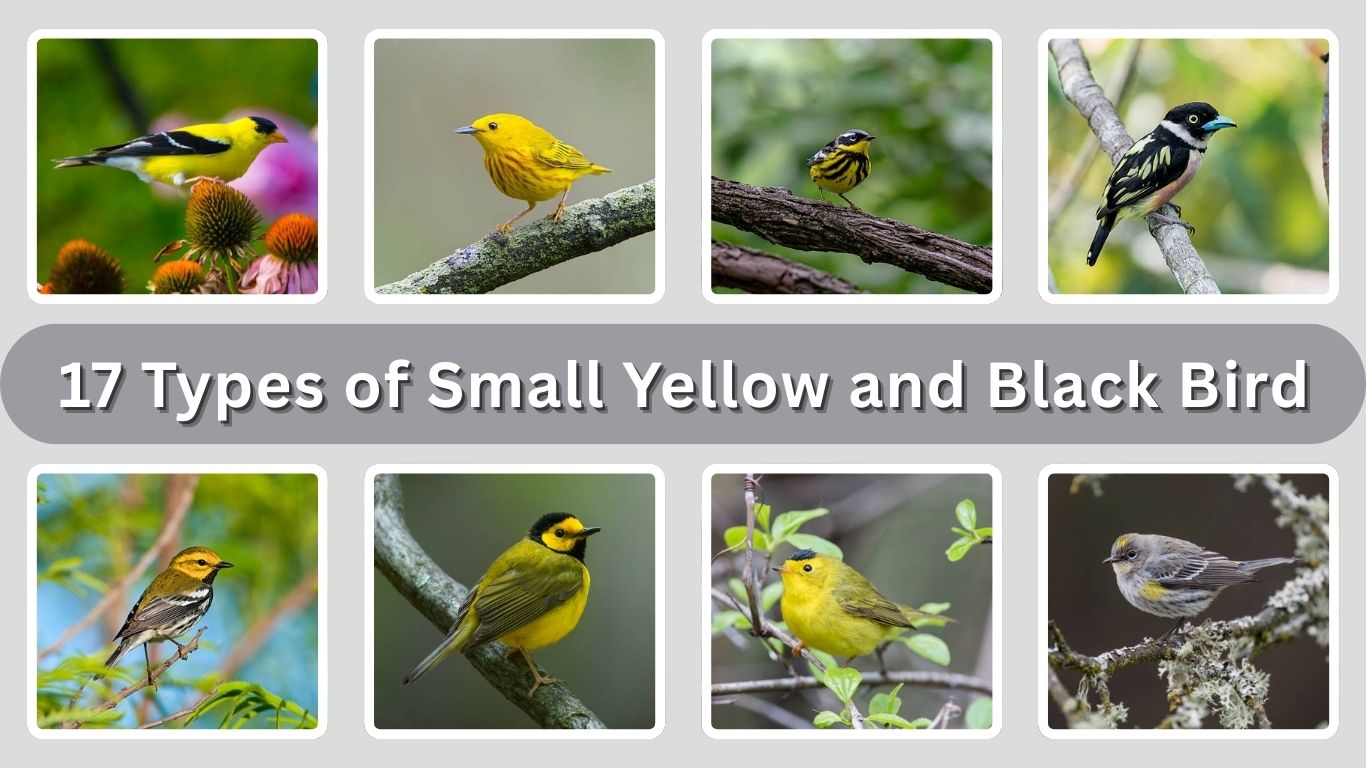
Small yellow and black birds are among the most colorful and energetic songbirds found in nature. Their bright plumage makes them easy to spot as they move quickly through trees, shrubs, and open fields. These birds belong to several different families, including warblers, finches, and orioles, and are found across many regions of the world. Despite their small size, they play an important role in controlling insects and maintaining healthy ecosystems.
1. American Goldfinch
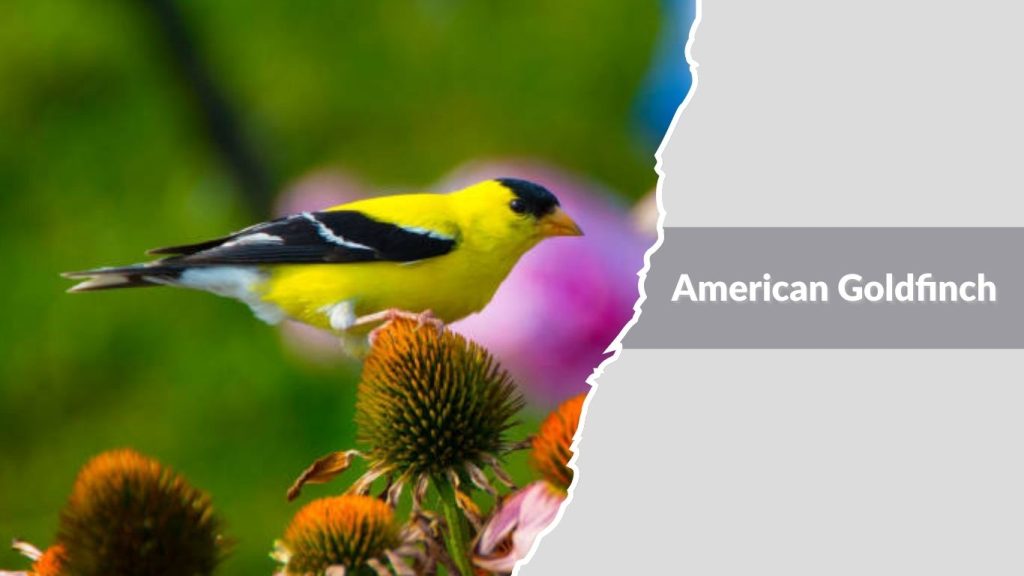
The American Goldfinch is a small, vibrant songbird best known for its bright yellow and black plumage. It is a familiar sight across North America, especially in open fields and backyard feeders, where its cheerful presence and bouncing flight stand out.
Identification
- Bright yellow body in adult males during breeding season
- Black cap on the forehead
- Black wings with white markings
- Short, conical pinkish bill
- Females are duller yellow with less black
Habitat
American Goldfinches are commonly found in open habitats such as meadows, grasslands, farmland, roadsides, and suburban gardens. They prefer areas with abundant weeds and seed-producing plants. This species readily adapts to human environments and is frequently seen at bird feeders, especially those offering sunflower or nyjer seeds.
Behaviors
These birds are social and often travel in small flocks, particularly outside the breeding season. Their flight is distinctive, with an undulating, wave-like pattern. American Goldfinches are late breeders, nesting in mid to late summer when seeds are most plentiful. Their calls are soft and musical, often given during flight.
Diet and Lifespan
The diet of the American Goldfinch consists mainly of seeds from grasses, weeds, and flowers such as thistles and sunflowers. Insects are eaten occasionally, mostly during the breeding season. The average lifespan is around 3–6 years in the wild, though some individuals live longer under favorable conditions.
2. Yellow Warbler
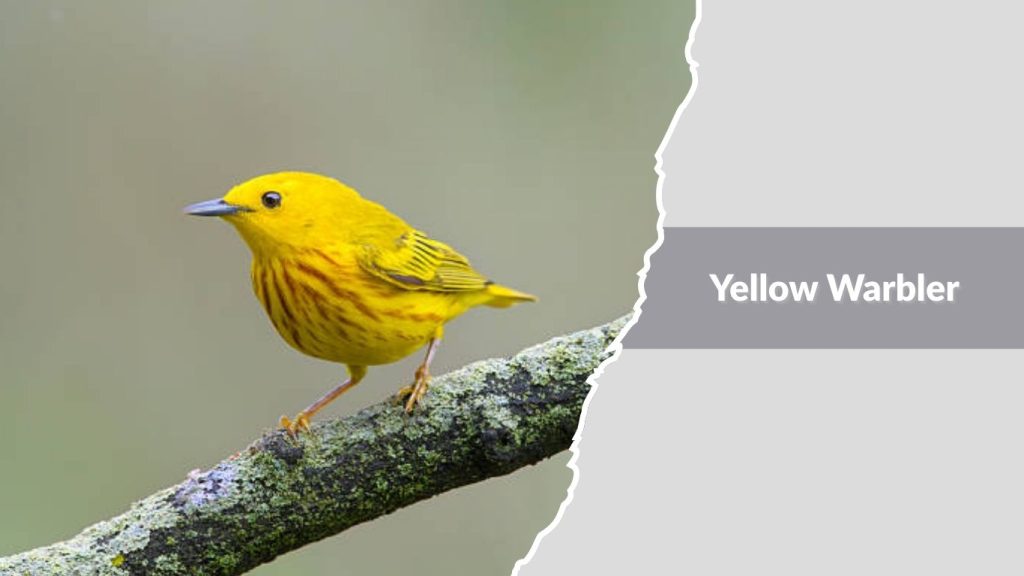
The Yellow Warbler is a small, bright songbird with yellow and black markings, widely admired for its sweet, whistling song. It is one of the most common warblers across the Americas and is easily recognized by its vivid color.
Identification
- Bright yellow body
- Black to reddish streaks on the chest (males)
- Rounded head with dark eyes
- Thin, pointed bill
- Females are paler with fewer markings
Habitat
Yellow Warblers inhabit wetlands, riverbanks, shrublands, forest edges, and gardens. They are especially common in areas with willows and dense shrubs near water. During migration, they may also appear in parks and open woodlands.
Behaviors
This species is active and alert, frequently moving through shrubs and small trees. Yellow Warblers are known for their repetitive, musical song, often described as “sweet-sweet-sweet, I’m-so-sweet.” They are territorial during the breeding season and will aggressively defend nesting areas.
Diet and Lifespan
Yellow Warblers feed mainly on insects, caterpillars, spiders, and small berries. By consuming large numbers of insects, they help control pest populations. The average lifespan of a Yellow Warbler is around 4–6 years in the wild.
3. Magnolia Warbler
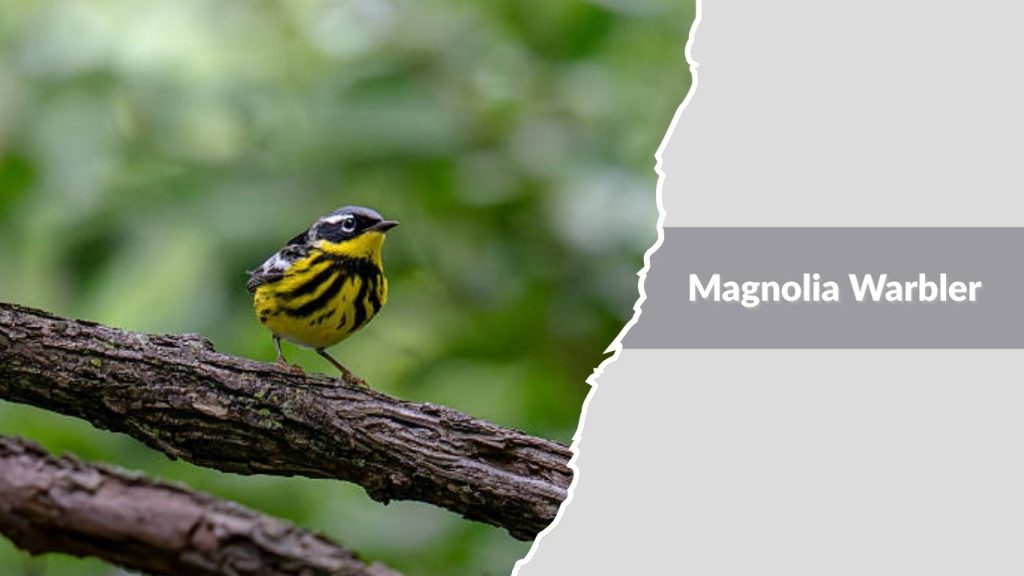
The Magnolia Warbler is a small, eye-catching bird known for its bright yellow body contrasted with bold black markings. It is especially popular among birdwatchers during migration due to its striking appearance.
Identification
- Bright yellow underparts
- Bold black streaks across the chest forming a “necklace”
- Black mask and crown
- White wing patches
- Females are duller with grayish tones
Habitat
Magnolia Warblers breed in dense coniferous forests, especially young spruce and fir stands. During migration and winter, they are found in forest edges, shrublands, gardens, and tropical woodlands, often at lower heights.
Behaviors
This species is active and restless, frequently flicking its tail while foraging. Magnolia Warblers move quickly through foliage, searching for insects. They are solitary or seen in pairs during breeding but may join mixed-species flocks during migration.
Diet and Lifespan
Their diet consists mainly of insects, caterpillars, spiders, and small berries. Magnolia Warblers are effective insect hunters and play a role in maintaining forest health. The average lifespan is estimated at 4–7 years in the wild.
4. Black-and-yellow Broadbill
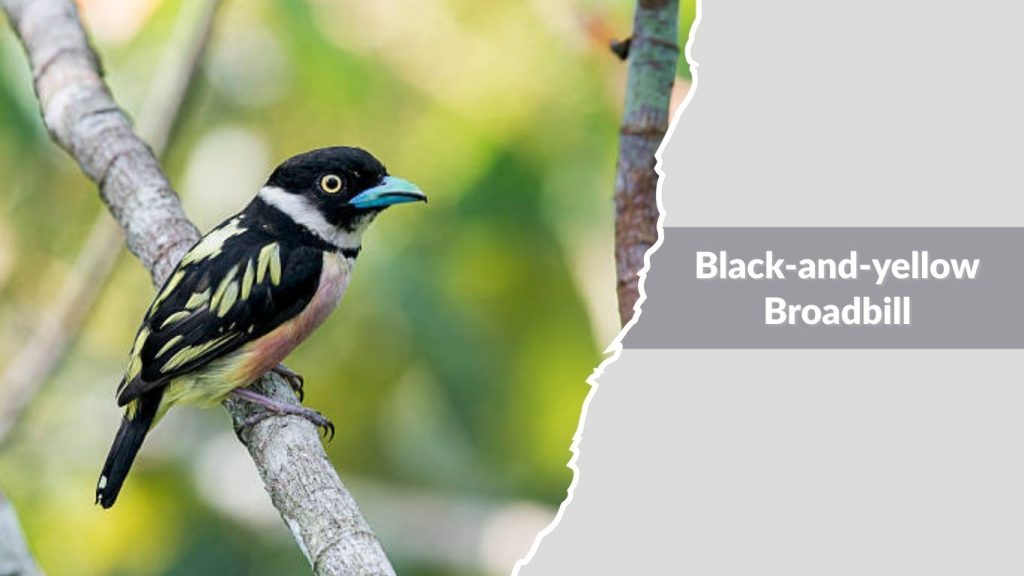
The Black-and-yellow Broadbill is a small, colorful bird recognized for its bright yellow body and contrasting black markings. Native to Southeast Asia, it is often seen perched quietly in forested habitats.
Identification
- Bright yellow underparts
- Black head, wings, and back
- Broad, flat turquoise-blue bill
- Short tail and compact body
- Males and females look similar
Habitat
This species inhabits tropical and subtropical forests, forest edges, and secondary growth areas. It prefers lowland forests with dense vegetation and is often found near clearings or forest margins where insects are abundant.
Behaviors
Black-and-yellow Broadbills are generally calm and deliberate in their movements. They spend long periods perched quietly before making short flights to catch insects. During breeding season, they are known for building hanging, pouch-like nests suspended from branches.
Diet and Lifespan
Their diet mainly consists of insects, spiders, and other small invertebrates. Occasionally, they may consume small fruits. By feeding on insects, they help regulate insect populations. The average lifespan of the Black-and-yellow Broadbill is around 6–9 years in the wild.
5. Black-throated Green Warbler
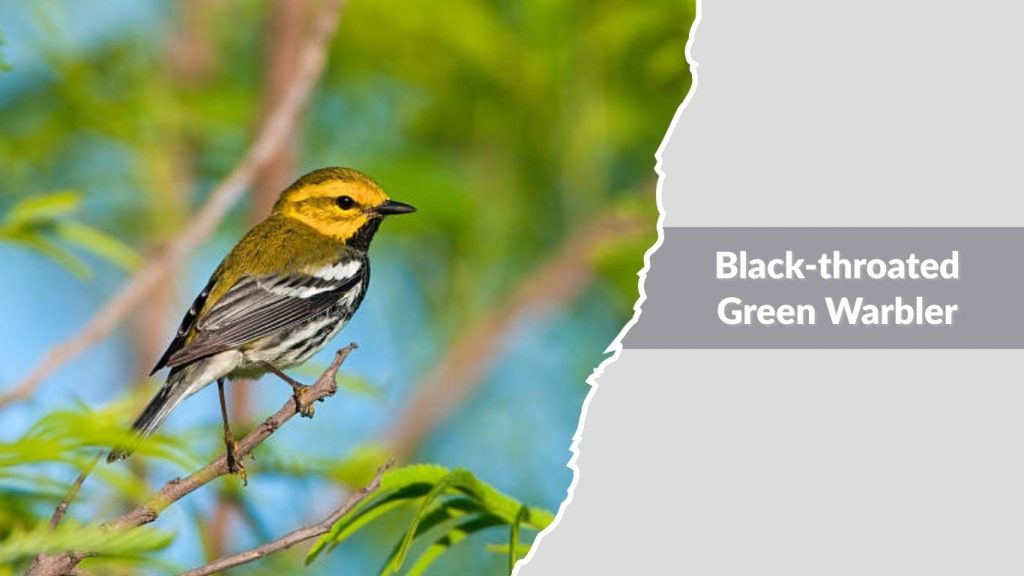
The Black-throated Green Warbler is a small, energetic songbird with striking yellow and black coloration. It is well known for its distinctive song and active foraging style in forested habitats.
Identification
- Yellow face and underparts
- Bold black throat and upper chest in males
- Olive-green back and wings
- White belly
- Females have a paler or broken black throat
Habitat
This species breeds in coniferous and mixed forests, especially spruce and pine woods. During migration and winter, it can be found in forest edges, wooded parks, and tropical forests, often foraging high in trees.
Behaviors
Black-throated Green Warblers are active and agile, constantly moving through branches while searching for food. Males sing a clear, buzzy song during breeding season to establish territory. They often join mixed-species flocks outside the breeding period.
Diet and Lifespan
Their diet consists mainly of insects, caterpillars, spiders, and occasionally berries. They play an important role in controlling forest insect populations. The average lifespan of a Black-throated Green Warbler is about 4–7 years in the wild.
6. Hooded Warbler
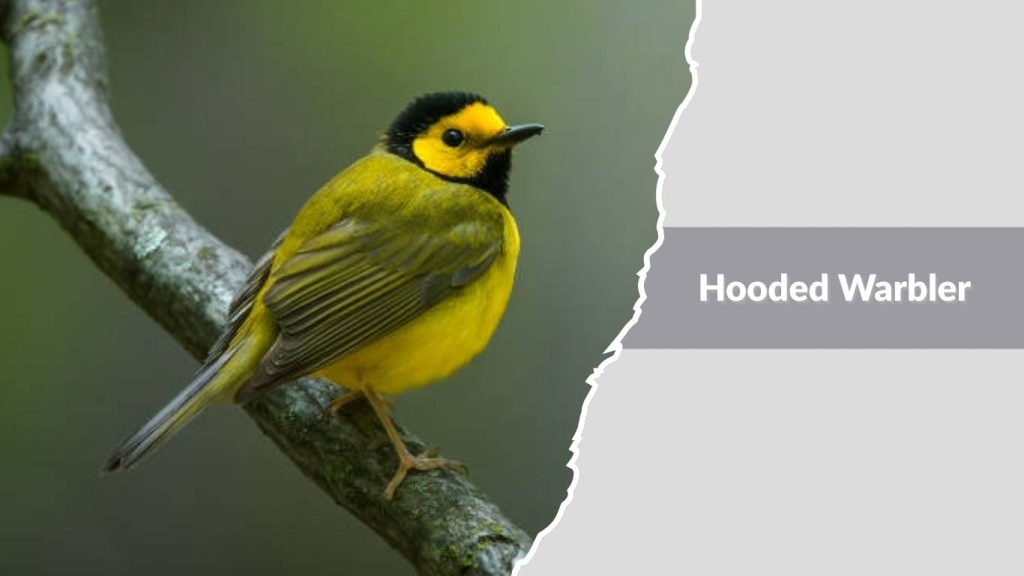
The Hooded Warbler is a small, striking songbird known for its bright yellow body and bold black hood. It is often found in dense forests, where its vivid colors contrast sharply with shaded understory vegetation.
Identification
- Bright yellow face and underparts
- Bold black hood and throat in adult males
- Olive-green back and wings
- Dark eyes that stand out against the yellow face
- Females have a partial or faint black hood
Habitat
Hooded Warblers prefer mature deciduous forests with dense understory growth. They are commonly found in wooded ravines, bottomland forests, and areas with thick shrubs. During migration and winter, they may also use forest edges and tropical woodlands.
Behaviors
This species is shy but active, spending much of its time low in the forest understory. Hooded Warblers frequently flick their tails while foraging and are known for their loud, ringing songs during the breeding season. They are strongly territorial when nesting.
Diet and Lifespan
Hooded Warblers feed mainly on insects, caterpillars, spiders, and other small invertebrates. They occasionally eat berries during migration. The average lifespan of a Hooded Warbler is around 4–6 years in the wild.
7. Wilson’s Warbler
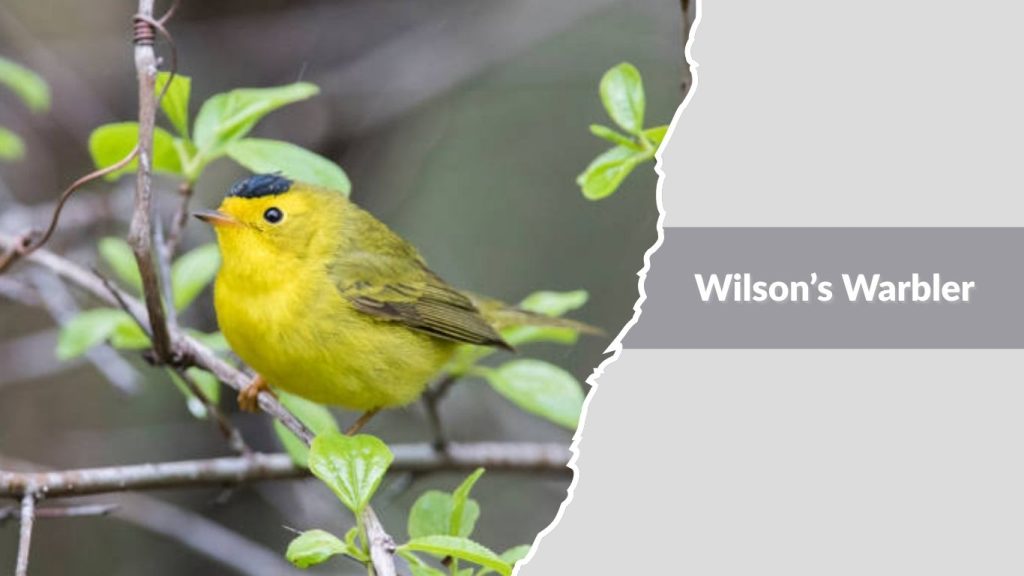
Wilson’s Warbler is a tiny, energetic songbird with bright yellow plumage and contrasting black markings. Despite its small size, it is very active and noticeable due to its constant movement and sharp calls.
Identification
- Bright yellow body
- Small black cap on the head (males)
- Olive-green back and wings
- Thin, pointed bill
- Females lack or have a faint black cap
Habitat
Wilson’s Warblers breed in shrubby areas near streams, wetlands, and forest edges, often in mountainous or northern regions. During migration and winter, they occupy a wide range of habitats, including woodlands, gardens, and tropical forests.
Behaviors
These warblers are highly active and restless, frequently flitting through low vegetation while searching for food. They often flick their tails and wings as they move. Males sing rapid, chattering songs during the breeding season to defend territory and attract mates.
Diet and Lifespan
Their diet consists mainly of insects, spiders, and larvae, with occasional berries during migration. Wilson’s Warblers help control insect populations in their habitats. The average lifespan of this species is around 3–5 years in the wild.
8. Yellow-rumped Warbler
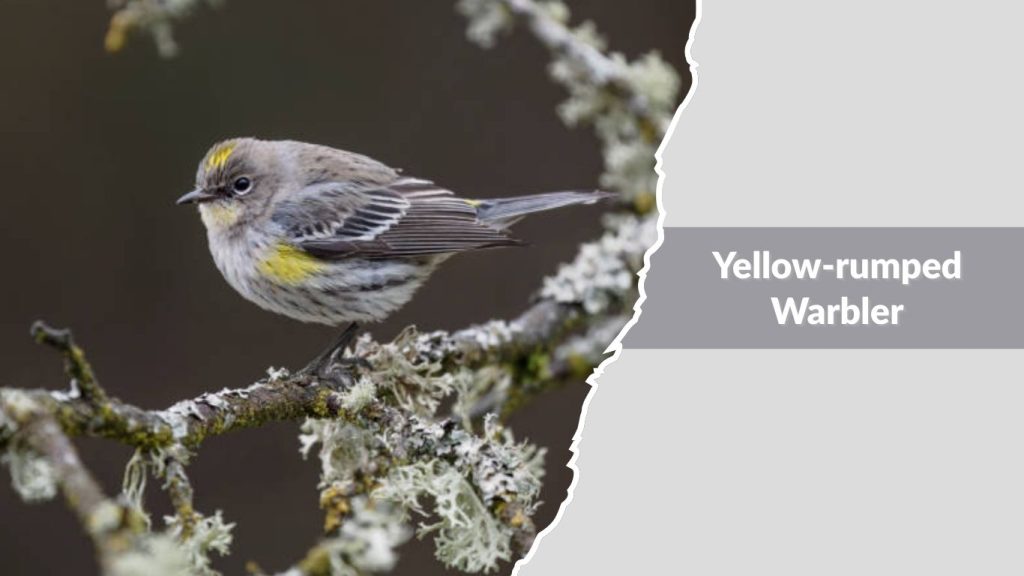
The Yellow-rumped Warbler is a small, hardy songbird easily recognized by its bright yellow patches contrasted with black, gray, and white plumage. It is one of the most widespread and adaptable warblers in North America.
Identification
- Distinct bright yellow rump
- Yellow patches on sides of chest
- Gray to black upperparts with white markings
- White throat in some forms
- Slim body with long wings
Habitat
Yellow-rumped Warblers inhabit a wide range of environments, including coniferous and mixed forests, open woodlands, shrublands, parks, and coastal areas. During winter, they are commonly found in open habitats and can survive in colder regions better than most warblers.
Behaviors
This species is active and versatile, foraging both in trees and on the ground. Yellow-rumped Warblers are often seen in mixed-species flocks outside the breeding season. They have a sharp, trilling song and are known for their ability to digest waxy berries.
Diet and Lifespan
Their diet includes insects, spiders, and berries, especially wax myrtle and bayberry. This flexible diet allows them to overwinter farther north than other warblers. The average lifespan of a Yellow-rumped Warbler is around 4–6 years in the wild.
9. Blackburnian Warbler
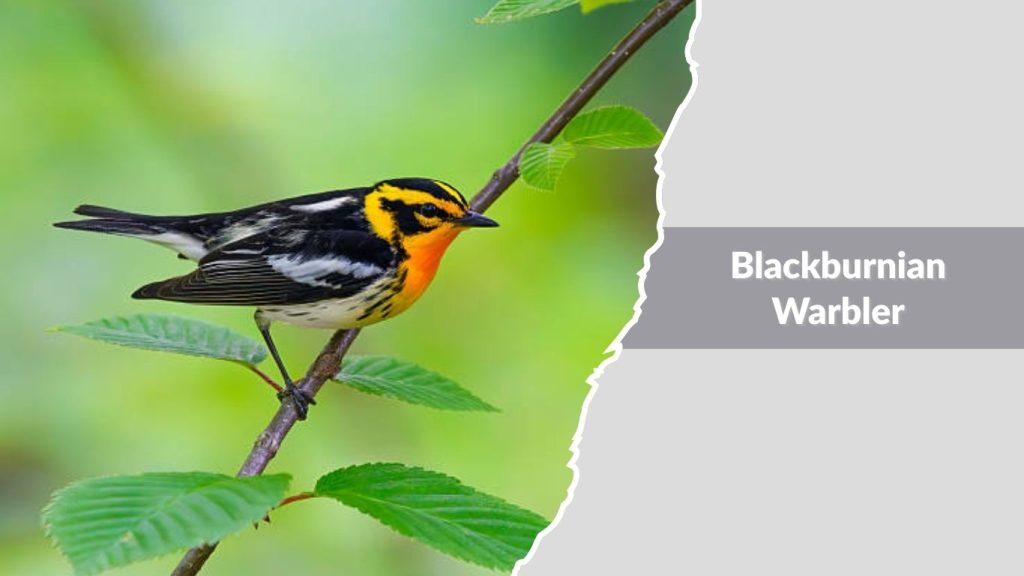
The Blackburnian Warbler is a small, striking songbird known for its vivid yellow and black plumage, highlighted by a bright orange-yellow throat. It is especially admired during migration when its bold colors stand out in trees.
Identification
- Bright orange-yellow throat and face (males)
- Black crown, back, and wings
- White wing patches
- Yellow underparts
- Females are paler with more yellow than orange
Habitat
Blackburnian Warblers breed in mature coniferous and mixed forests, particularly those with tall spruce and hemlock trees. During migration and winter, they are found in forest edges, wooded parks, and tropical forests, often high in the canopy.
Behaviors
This species prefers foraging high in trees, making it more often heard than seen. Blackburnian Warblers are active and agile, moving quickly among branches while searching for insects. Males sing a thin, high-pitched song during the breeding season to defend territory.
Diet and Lifespan
Their diet mainly consists of insects, caterpillars, spiders, and other small invertebrates. They occasionally consume berries during migration. The average lifespan of a Blackburnian Warbler is about 4–7 years in the wild.
10. Yellow-breasted Chat
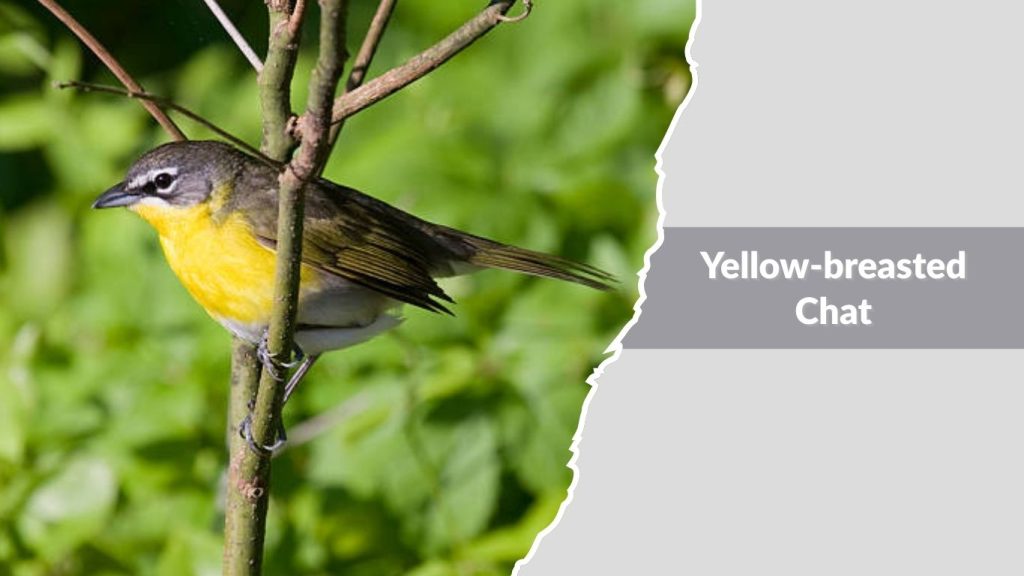
The Yellow-breasted Chat is a small but stocky songbird with bold yellow and black features. Although larger than most warblers, it is often included with them due to its similar behaviors and habitat preferences.
Identification
- Bright yellow throat and chest
- Olive-green back and wings
- White spectacles around the eyes
- Long tail compared to warblers
- Thick, slightly curved bill
Habitat
Yellow-breasted Chats inhabit dense shrublands, thickets, forest edges, overgrown fields, and riparian areas. They prefer thick, tangled vegetation that provides good cover, especially near streams or wetlands. During migration and winter, they are also found in tropical scrub and woodland edges.
Behaviors
This species is secretive and often difficult to spot despite its bright color. Yellow-breasted Chats are known for their loud, varied, and sometimes odd vocalizations, including whistles, clucks, and chatters. Males often perform display flights during the breeding season while singing.
Diet and Lifespan
Their diet consists mainly of insects, caterpillars, spiders, and beetles, along with berries and small fruits. By feeding on insects, they help control pest populations. The average lifespan of a Yellow-breasted Chat is around 4–7 years in the wild.
11. Black-and-yellow Tanager
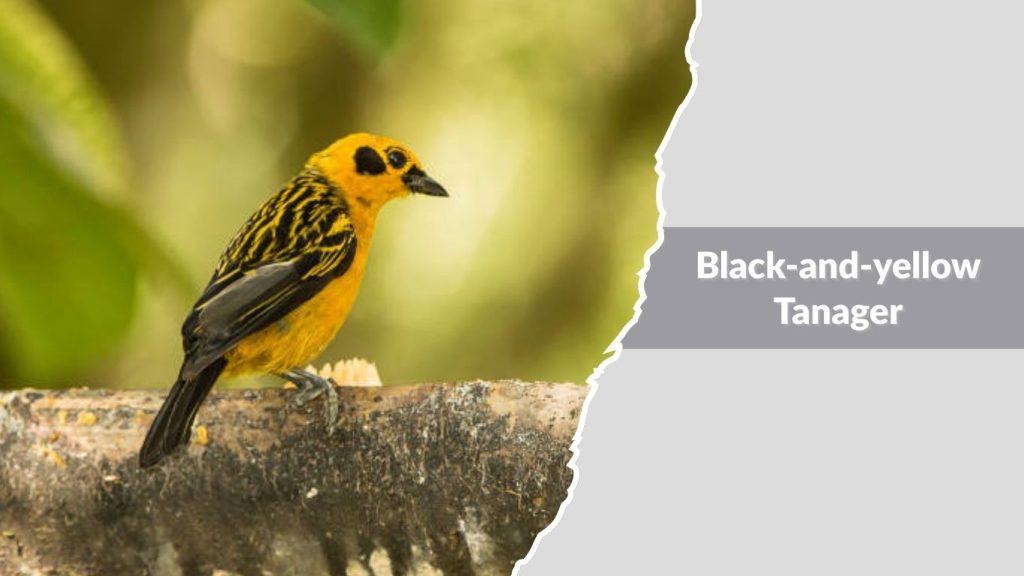
The Black-and-yellow Tanager is a small, brightly colored bird known for its vivid yellow body contrasted with deep black wings and back. Native to Central and South America, it is a lively presence in forested habitats.
Identification
- Bright yellow head and underparts
- Black wings, back, and tail
- Short, pointed black beak
- Compact, rounded body
- Males and females appear similar
Habitat
This species inhabits tropical and subtropical forests, forest edges, secondary growth, and plantations. It prefers humid environments and is most often seen in the mid to upper levels of the forest canopy, especially in lowland regions.
Behaviors
Black-and-yellow Tanagers are active and social, frequently seen in pairs or small groups. They often join mixed-species feeding flocks and move quickly through trees while foraging. Their calls are short and sharp, helping them stay in contact with other birds.
Diet and Lifespan
Their diet consists mainly of fruits, berries, insects, and small invertebrates. By feeding on fruits, they contribute to seed dispersal within forest ecosystems. The average lifespan of the Black-and-yellow Tanager is estimated to be around 6–9 years in the wild.
12. Lesser Goldfinch
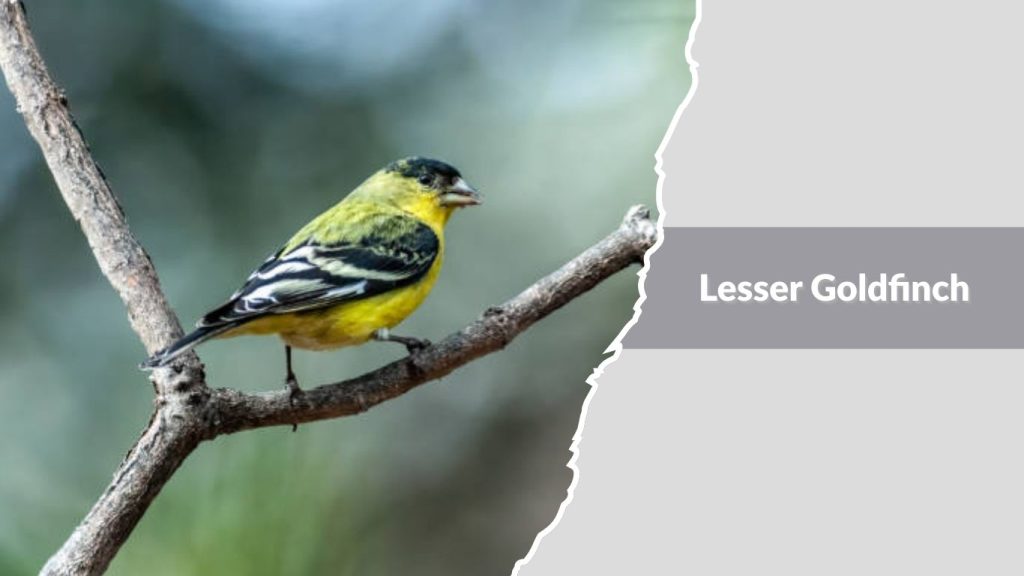
The Lesser Goldfinch is a small, energetic bird with bright yellow and black plumage. It is one of the smallest finches in North America and is often seen at feeders and open habitats.
Identification
- Bright yellow underparts
- Black crown and back in males
- Black wings with white markings
- Short, conical beak
- Females are duller with olive tones
Habitat
Lesser Goldfinches inhabit open woodlands, grasslands, desert scrub, parks, and suburban gardens. They prefer areas with scattered trees and shrubs and readily adapt to human-modified environments, especially where seed sources are available.
Behaviors
These birds are highly active and social, often forming small flocks outside the breeding season. Lesser Goldfinches have a lively, bouncing flight and produce high-pitched, rapid songs. They are frequent visitors to backyard feeders.
Diet and Lifespan
Their diet consists mainly of seeds, especially from sunflowers, grasses, and weeds. They also eat insects during the breeding season. The average lifespan of a Lesser Goldfinch is around 3–6 years in the wild.
13. Eurasian Siskin
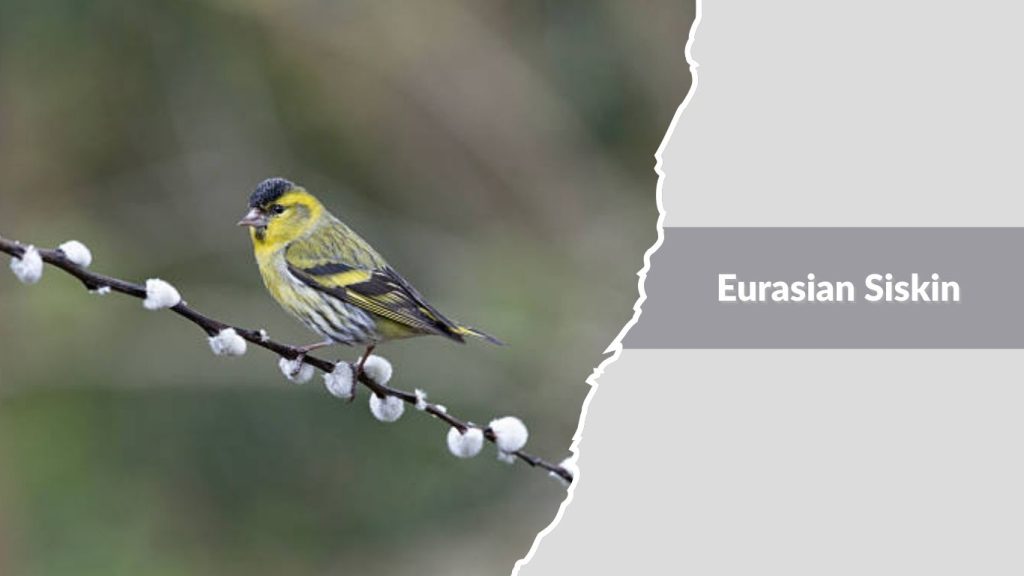
The Eurasian Siskin is a small, lively finch recognized for its yellow and black plumage and energetic behavior. It is widespread across Europe and Asia and is especially noticeable in winter when flocks visit feeders.
Identification
- Yellow body with black streaking
- Black cap and chin in males
- Yellow wing bars and tail edges
- Short, pointed conical beak
- Females are duller with more streaking
Habitat
Eurasian Siskins inhabit coniferous and mixed forests, woodland edges, and wooded parks. During winter, they frequently move into gardens, farmland, and urban areas in search of food, often forming large roaming flocks.
Behaviors
These birds are highly social and active, usually seen in flocks that move constantly while feeding. Eurasian Siskins are agile climbers and often hang upside down to reach seeds. Their calls are high-pitched and twittering, especially when flocking.
Diet and Lifespan
Their diet consists mainly of seeds from alder, birch, conifers, and grasses, along with occasional insects. They are regular visitors to bird feeders. The average lifespan of a Eurasian Siskin is around 3–5 years in the wild.
14. Golden Oriole
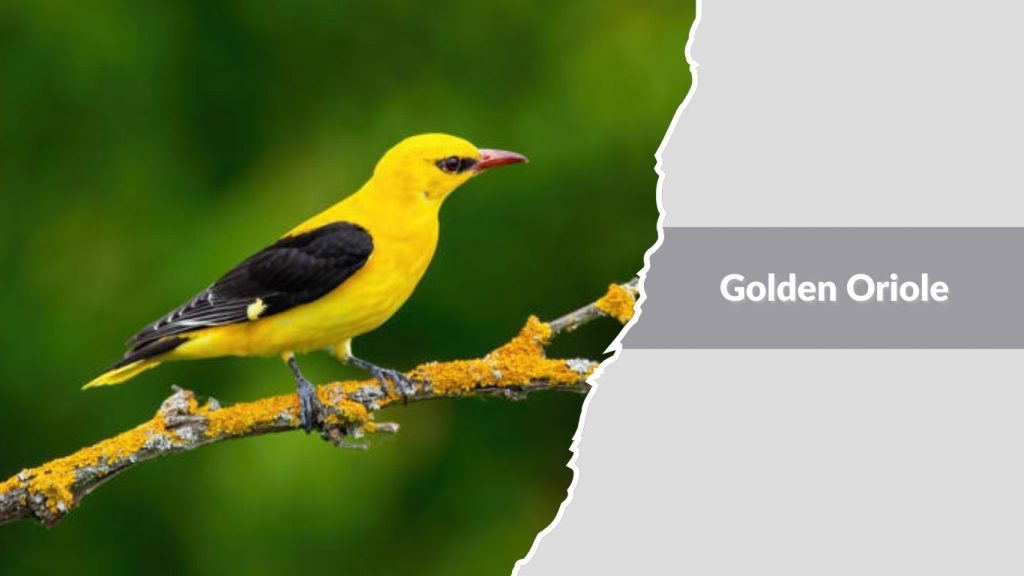
The Golden Oriole is a small to medium-sized bird with striking yellow and black coloration, admired for its bright appearance and rich, flute-like song. Despite its vivid colors, it often remains hidden high in the tree canopy.
Identification
- Bright golden-yellow body
- Black wings and tail
- Black eye stripe extending to the nape
- Strong, slightly curved reddish bill
- Females are duller yellow-green with streaking
Habitat
Golden Orioles inhabit deciduous forests, woodland edges, orchards, parks, and large gardens. They prefer tall trees with dense foliage, especially near rivers or open countryside. This species breeds in temperate regions and migrates to warmer areas during winter.
Behaviors
These birds are shy and elusive, spending most of their time high in trees. Golden Orioles are more often heard than seen, producing clear, whistling songs during the breeding season. They are solitary or found in pairs rather than flocks.
Diet and Lifespan
Their diet includes insects, caterpillars, spiders, fruits, and berries. They play a role in controlling insect populations and dispersing seeds. The average lifespan of a Golden Oriole is around 7–10 years in the wild.
15. Yellow-fronted Canary
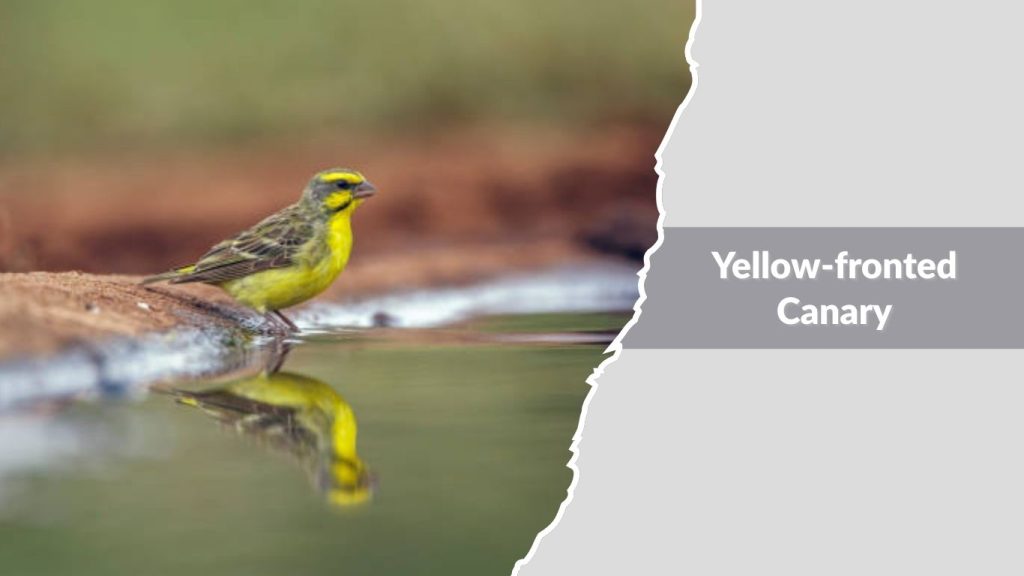
The Yellow-fronted Canary is a small, bright songbird with yellow and black markings, known for its cheerful song and active behavior. It is native to parts of Africa and is often seen in open habitats.
Identification
- Bright yellow forehead and face
- Yellow underparts with dark streaking
- Blackish wings and tail
- Short, conical beak
- Compact finch-like body
Habitat
Yellow-fronted Canaries inhabit open grasslands, savannas, farmland, and lightly wooded areas. They are often found near human settlements and agricultural fields where seeds are abundant. This species adapts well to both natural and modified environments.
Behaviors
These birds are social and usually seen in pairs or small flocks. Yellow-fronted Canaries are active foragers, spending much of their time on the ground or low vegetation. Males are known for their pleasant, melodic songs used to attract mates and defend territory.
Diet and Lifespan
Their diet mainly consists of seeds, grasses, and small insects. During the breeding season, insects become more important. The average lifespan of a Yellow-fronted Canary is around 6–10 years in the wild.
16. Black-backed Oriole
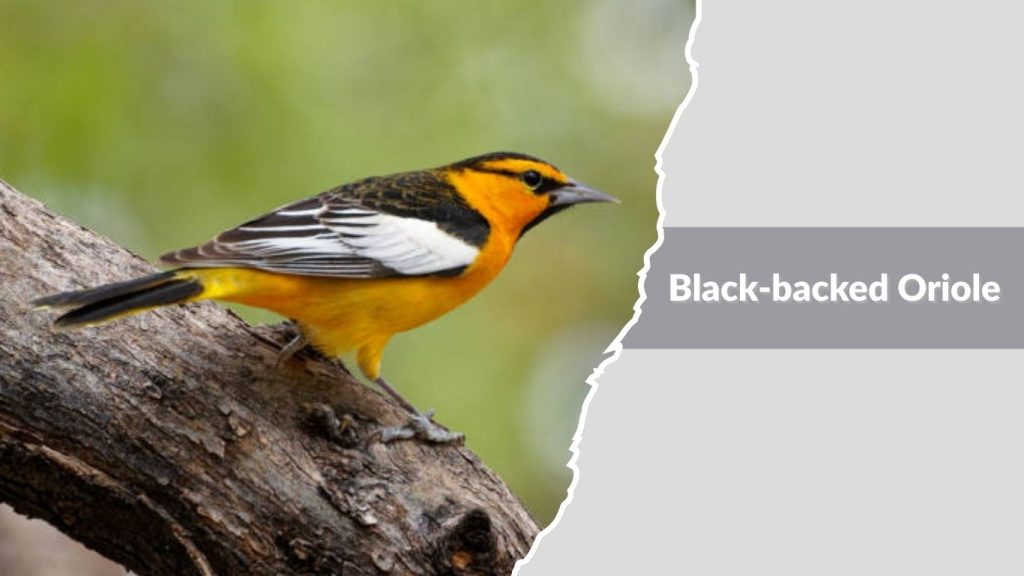
The Black-backed Oriole is a small, striking bird known for its bright yellow body contrasted with a deep black back and wings. Native to parts of Central America, it stands out clearly against green forest surroundings.
Identification
- Bright yellow head and underparts
- Solid black back, wings, and tail
- Slender, slightly curved black bill
- Medium-length tail
- Males and females are similar in appearance
Habitat
Black-backed Orioles inhabit tropical forests, forest edges, secondary growth, and plantations. They are commonly found in lowland areas but may also occur in foothills. This species prefers tall trees where it can forage and nest high above the ground.
Behaviors
These orioles are usually seen alone or in pairs. They move deliberately through the canopy, searching for food among leaves and branches. Black-backed Orioles are vocal birds, producing clear whistles and short calls, especially during the breeding season.
Diet and Lifespan
Their diet includes insects, caterpillars, spiders, fruits, and nectar. By feeding on both insects and fruit, they contribute to pest control and seed dispersal. The average lifespan of a Black-backed Oriole is estimated to be around 7–10 years in the wild.
17. Common Yellowthroat
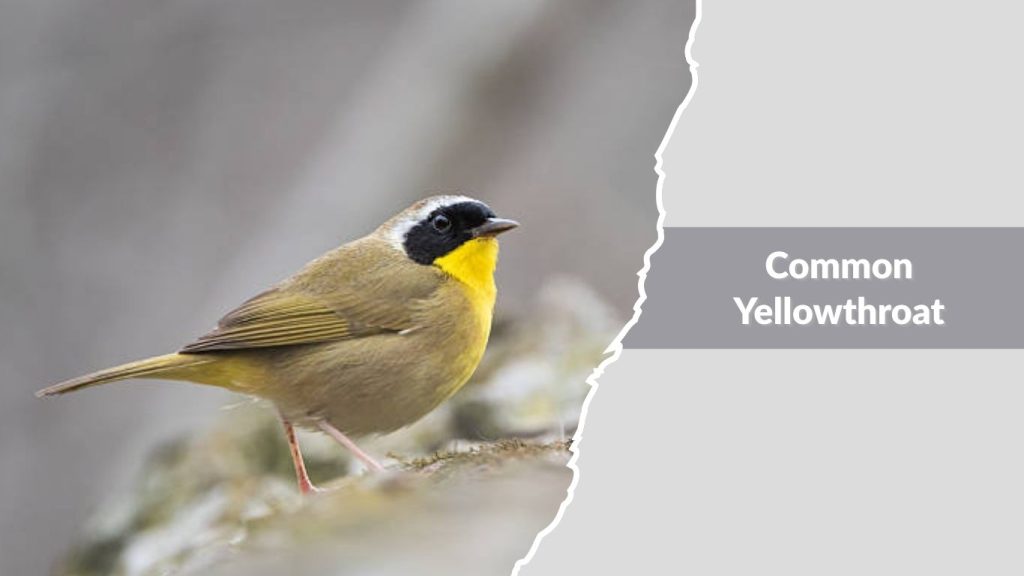
The Common Yellowthroat is a small, energetic songbird with bright yellow and black markings. It is widely known for its distinctive facial mask and its habit of staying low in dense vegetation.
Identification
- Bright yellow throat and chest
- Black facial mask bordered with white (males)
- Olive-green back and wings
- Rounded tail
- Females lack the black mask and appear duller
Habitat
Common Yellowthroats are found in wetlands, marshes, reed beds, grasslands, overgrown fields, and forest edges. They prefer areas with thick, low vegetation that provides cover for nesting and foraging. This species is widespread across North America and parts of Central America.
Behaviors
These birds are secretive but very active, often seen darting through reeds and shrubs. They are more often heard than seen, singing a loud, rolling “wichity-wichity-wichity” song. Common Yellowthroats are territorial during the breeding season and actively defend their nesting areas.
Diet and Lifespan
Their diet consists mainly of insects, spiders, caterpillars, and other small invertebrates. Occasionally, they eat small berries. By feeding on insects, they help control pest populations. The average lifespan of a Common Yellowthroat is around 3–5 years in the wild.
FAQs
What are small yellow and black birds commonly called?
Small yellow and black birds are often songbirds such as warblers, finches, and orioles. Many belong to the warbler family, known for their bright colors and active behavior.
Are yellow and black birds usually migratory?
Yes, many small yellow and black birds are migratory. Species like warblers and orioles travel long distances between breeding and wintering grounds, while others, such as goldfinches, may stay year-round or move short distances.
Why do male birds have brighter yellow and black colors?
Bright colors help males attract mates and signal good health. Females are usually duller to provide better camouflage while nesting and raising young.
Where can I commonly see small yellow and black birds?
They are commonly seen in forests, shrublands, wetlands, gardens, and open fields. Many species also visit backyard feeders, especially during migration or winter.
What do small yellow and black birds eat?
Most feed primarily on insects, caterpillars, and spiders, especially during breeding season. Many also eat seeds, fruits, and berries, depending on the species and time of year.