
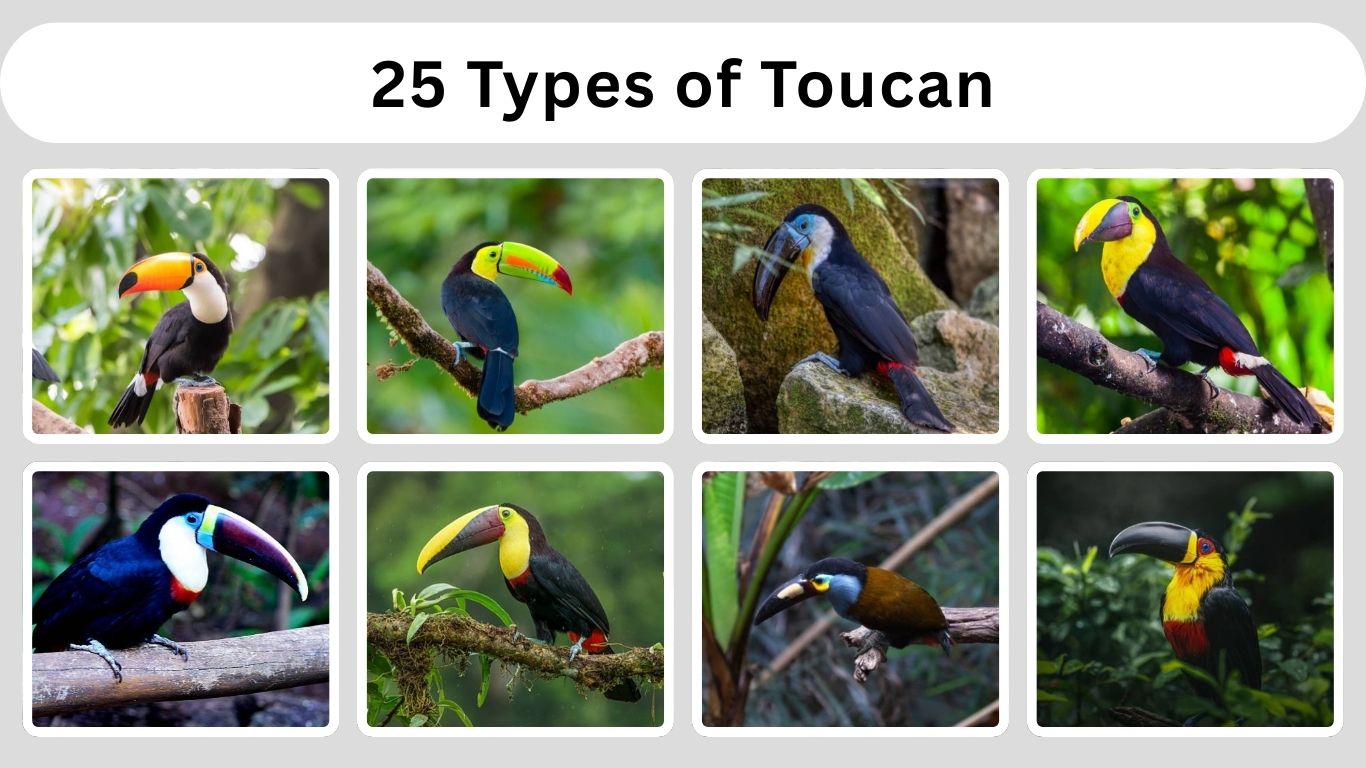
Toucans are some of the most striking birds of the tropical world, instantly recognized by their oversized, colorful bills and bold black, yellow, red, and green plumage. Native to the forests of Central and South America, toucans play an important ecological role as seed dispersers, helping maintain healthy forest ecosystems. From massive canopy-dwelling species to smaller, agile toucanets and aracaris, these birds display remarkable diversity in size, habitat, and behavior.
1. Toco Toucan
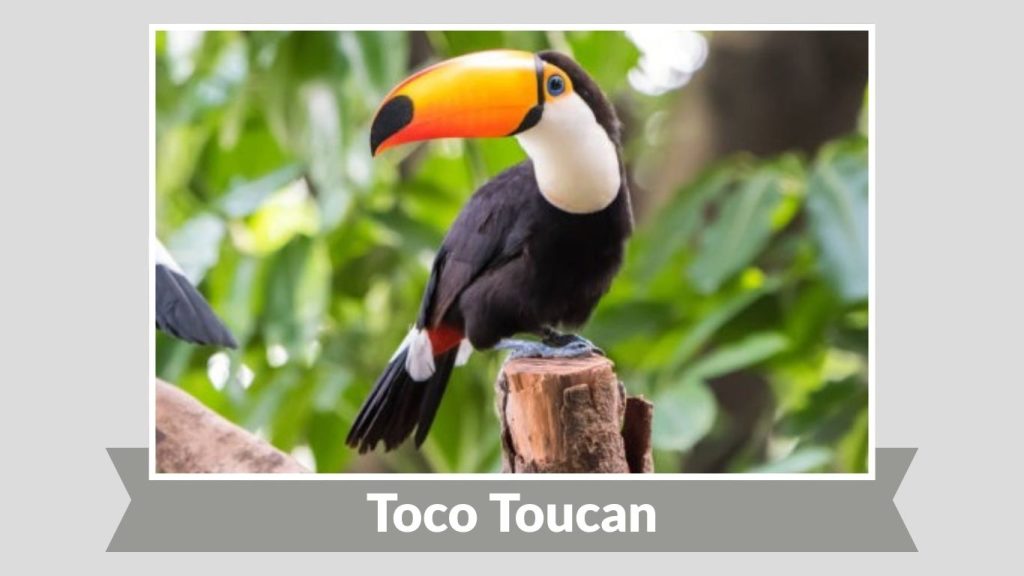
The Toco Toucan is the largest and most recognizable toucan species, famous for its oversized orange bill and bold black-and-white body. It is native to South America, where it inhabits open woodlands, savannas, forest edges, and palm groves. This species is highly adaptable and often seen in pairs or small groups, using its massive beak to reach fruit and regulate body temperature.
Identification
- Very large toucan with an oversized bright orange bill
- Black upper body with a white throat, chest, and undertail
- Blue skin around the eyes with an orange ring
- Strong, slightly curved beak with a dark tip
- Long tail and broad wings
Habitat
Toco toucans are commonly found in open forests, woodland edges, tropical savannas, and riverine habitats. They prefer areas with scattered trees rather than dense rainforest, allowing them to move easily between perches while foraging for fruit.
Diet
Their diet mainly consists of fruits such as figs, palm fruits, and berries. They also opportunistically eat insects, small reptiles, eggs, and nestlings, making them omnivorous rather than strictly frugivorous.
Behavior
Toco toucans are social, noisy birds often seen hopping between branches or gliding in short flights. They use their large bills for feeding, courtship displays, and temperature control, and they communicate with loud croaks and rattling calls.
2. Keel-billed Toucan
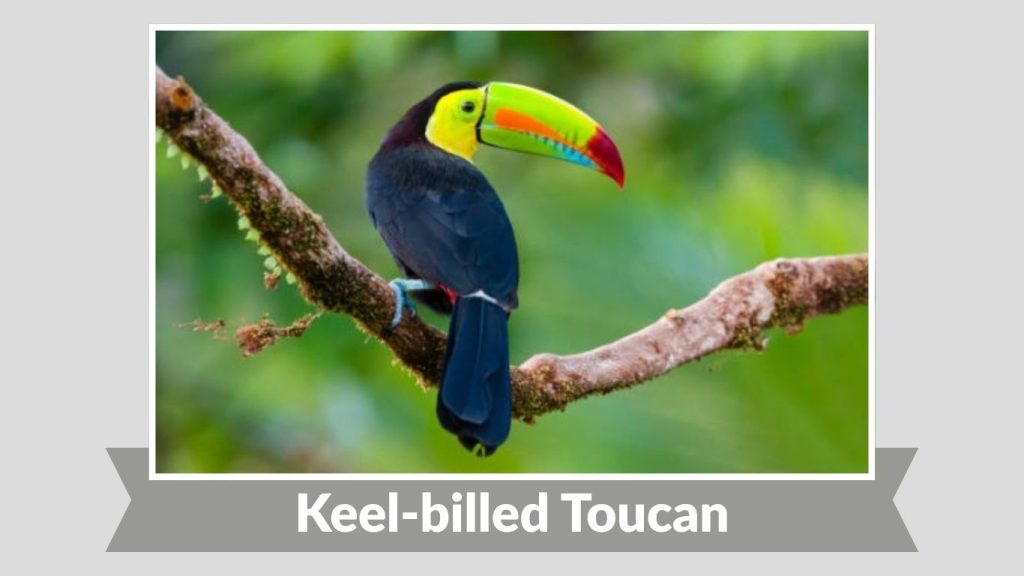
The Keel-billed Toucan is one of the most colorful toucan species, instantly recognized by its bright, rainbow-colored bill and vivid plumage. Native to Central and northern South America, it inhabits tropical and subtropical forests, forest edges, and lowland rainforests. This active, social bird is often seen in small flocks moving through the canopy.
Identification
- Medium-large toucan with a multicolored, rainbow-like bill
- Black body with a bright yellow throat and chest
- Red undertail coverts
- Green skin around the eyes
- Short, rounded wings and long tail
Habitat
Keel-billed toucans live mainly in lowland rainforests, humid tropical forests, and forest edges. They are commonly found high in the canopy, where fruiting trees are abundant.
Diet
They primarily feed on fruit, including figs and tropical berries, but also eat insects, lizards, frogs, and bird eggs when available.
Behavior
This species is highly social and vocal, often traveling in small groups. It moves by hopping along branches and making short, undulating flights between trees while calling loudly to communicate with flock members.
3. Channel-billed Toucan
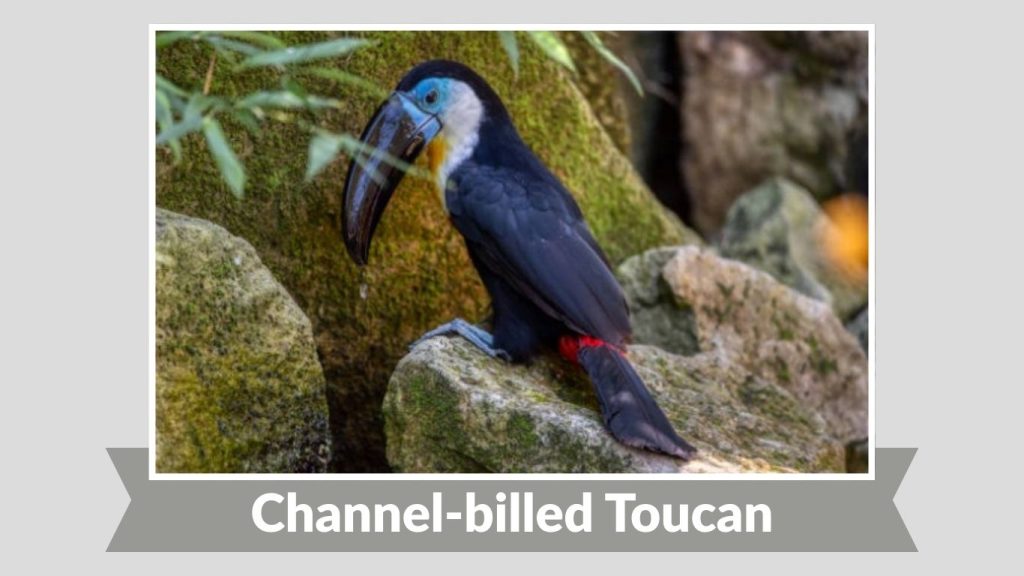
The Channel-billed Toucan is a large, striking toucan species known for its massive, pale bill with distinctive grooves. It is native to the Amazon Basin and surrounding regions, where it occupies tropical rainforests, gallery forests, and forest edges. This species is often observed in pairs or small groups high in the forest canopy.
Identification
- Very large toucan with a long, pale yellow to horn-colored bill
- Distinct grooves (“channels”) along the upper bill
- Black body with a white throat and chest
- Red undertail coverts
- Blue bare skin around the eyes
Habitat
Channel-billed toucans mainly inhabit lowland tropical rainforests, riverine forests, and forest edges. They prefer tall trees where they can forage and nest in natural cavities.
Diet
Their diet is mostly fruit-based, including figs and palm fruits, but they also eat insects, small vertebrates, and eggs.
Behavior
They are social birds, usually found in pairs or small flocks. Channel-billed toucans are strong fliers for their size and are often heard before they are seen due to their loud, yelping calls.
4. Choco Toucan
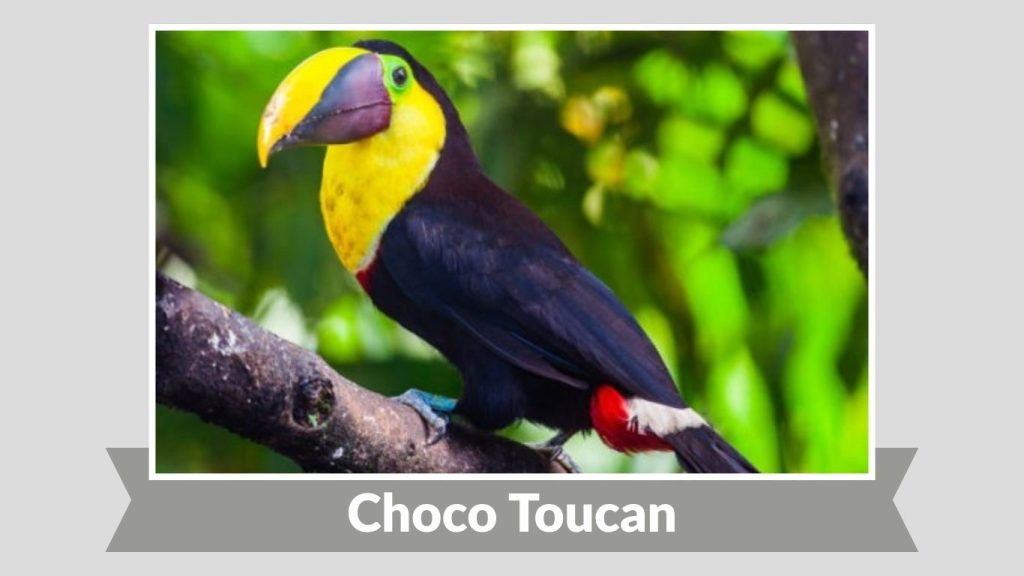
The Choco Toucan is a rare and regionally restricted toucan species found primarily in the Chocó forests of western Colombia and northwestern Ecuador. It closely resembles the Channel-billed Toucan but is slightly smaller and darker, with subtle differences in bill color and vocalizations. This species prefers humid lowland rainforests and is most often seen high in the canopy.
Identification
- Large toucan with a thick, pale bill
- Mostly black body with a white throat and upper chest
- Red undertail coverts
- Bluish skin around the eyes
- Bill often slightly darker and shorter than Channel-billed Toucan
Habitat
Choco toucans live in humid lowland rainforests, foothill forests, and forest edges of the Chocó bioregion. They depend heavily on mature forest with large fruiting trees.
Diet
They feed mainly on a wide variety of tropical fruits, along with insects, small reptiles, and bird eggs when available.
Behavior
This species is usually seen alone, in pairs, or in small groups. It is vocal and alert, moving through the upper canopy with slow, deliberate hops and short flights between trees.
5. White-throated Toucan
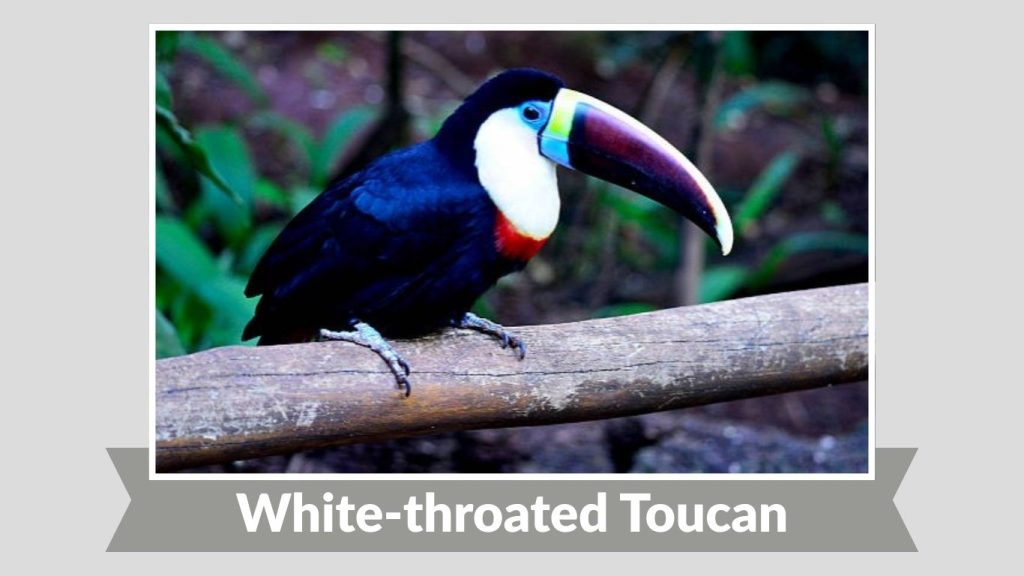
The White-throated Toucan is a large and impressive species native to the Amazon Basin and surrounding regions. It is best known for its bright bill and clean white throat that contrasts sharply with its black body. This toucan inhabits tropical lowland forests and is often encountered in small, noisy groups high in the canopy.
Identification
- Large toucan with a long, brightly colored bill
- White throat and upper chest contrasting with black body
- Red undertail coverts
- Blue to green bare skin around the eyes
- Strong, lightweight bill with a dark tip
Habitat
White-throated toucans are mainly found in lowland rainforests, riverine forests, and forest edges. They favor tall, mature forests with abundant fruiting trees.
Diet
Their diet consists largely of fruit such as figs and palm fruits. They also eat insects, small vertebrates, eggs, and nestlings.
Behavior
They are social and vocal birds, often traveling in pairs or small flocks. Their loud, frog-like calls echo through the forest as they move between treetops in slow, undulating flight.
6. Red-billed Toucan
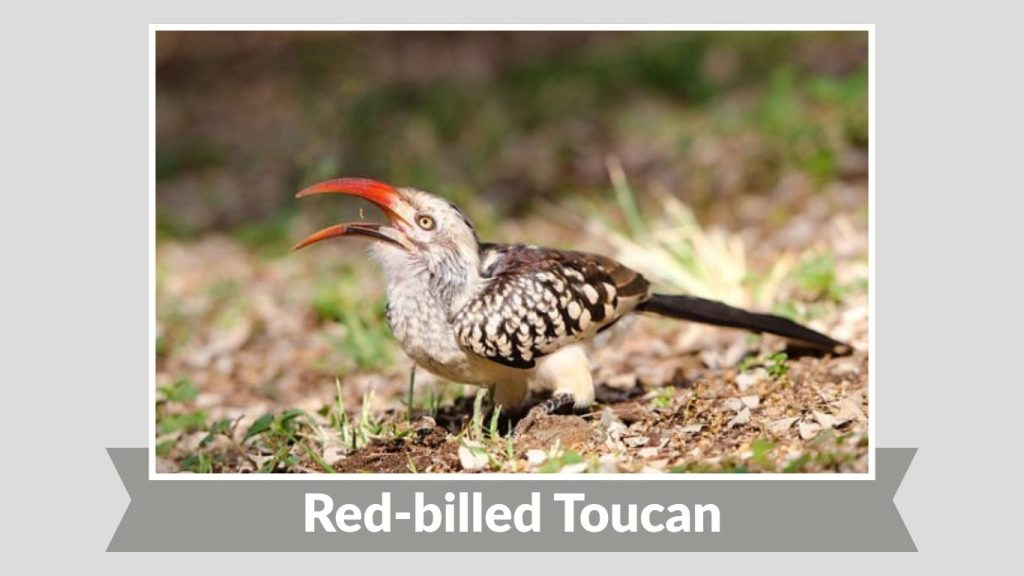
The Red-billed Toucan is a colorful member of the toucan family, closely related to the White-throated Toucan and often considered part of the same species group. It is distinguished by its vivid red bill and striking black-and-white plumage. This toucan inhabits tropical forests of northern and central South America, where it is commonly seen in the upper canopy.
Identification
- Large toucan with a bright red bill
- Black body with a clean white throat and chest
- Red undertail coverts
- Blue bare skin around the eyes
- Long tail and broad wings
Habitat
Red-billed toucans live in lowland tropical rainforests, riverine forests, and forest margins. They prefer tall forests with large fruiting trees.
Diet
They mainly eat fruit, including figs, berries, and palm fruits. In addition, they consume insects, small reptiles, eggs, and nestlings.
Behavior
This species is social and often found in pairs or small groups. It is active and vocal, moving through the canopy with hopping motions and short, gliding flights while producing loud, yelping calls.
7. Yellow-throated Toucan
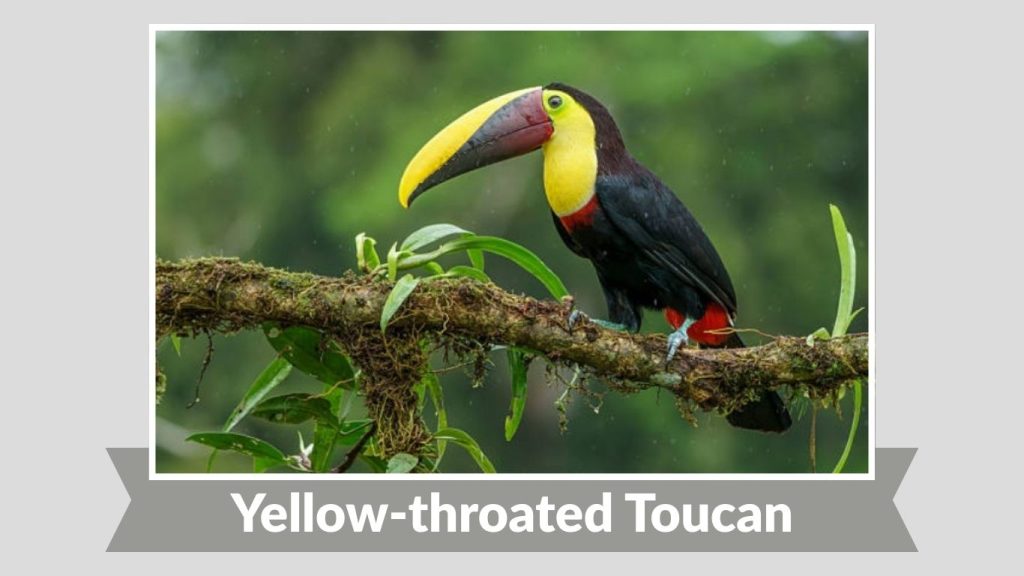
The Yellow-throated Toucan is a large, striking toucan species recognized for its bright yellow throat and powerful, colorful bill. It is native to Central America and the northwestern regions of South America, where it inhabits humid tropical forests and forest edges. This toucan is active and vocal, often seen high in the canopy.
Identification
- Large toucan with a long, colorful bill
- Bright yellow throat and upper chest
- Black body with red undertail coverts
- Blue skin around the eyes
- Strong, slightly curved bill
Habitat
Yellow-throated toucans are mainly found in lowland rainforests, foothill forests, and forest edges. They favor tall trees in humid environments where fruit is abundant.
Diet
Their diet is largely fruit-based, including figs and various tropical berries. They also eat insects, small vertebrates, eggs, and nestlings.
Behavior
They are social birds usually seen in pairs or small flocks. Yellow-throated toucans communicate with loud calls and move through the canopy with a series of hops and short, gliding flights.
8. Cuvier’s Toucan
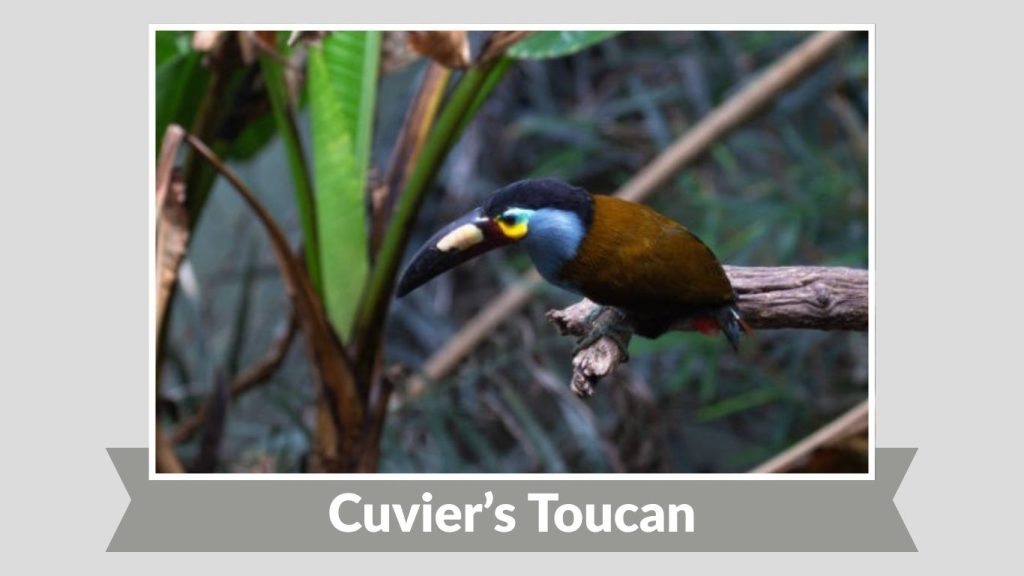
The Cuvier’s Toucan is a large Amazonian toucan known for its massive, colorful bill and bold black-and-white plumage. It is often treated as a subspecies within the White-throated Toucan complex, but it is commonly referred to by this name in field identification. This bird inhabits tropical lowland forests and is frequently seen high in the canopy.
Identification
- Large toucan with a long, pale to yellowish bill
- White throat and upper chest
- Black upperparts with red undertail coverts
- Blue bare skin around the eyes
- Heavy bill with a dark tip
Habitat
Cuvier’s toucan lives mainly in lowland Amazonian rainforests, seasonally flooded forests, and forest edges. It prefers tall, mature forests rich in fruiting trees.
Diet
It feeds mostly on fruits such as figs and palm fruits, but also eats insects, small reptiles, eggs, and nestlings.
Behavior
This species is social and vocal, often encountered in pairs or small groups. Its loud, croaking calls can be heard from far away as it moves between treetops.
9. Ariel Toucan
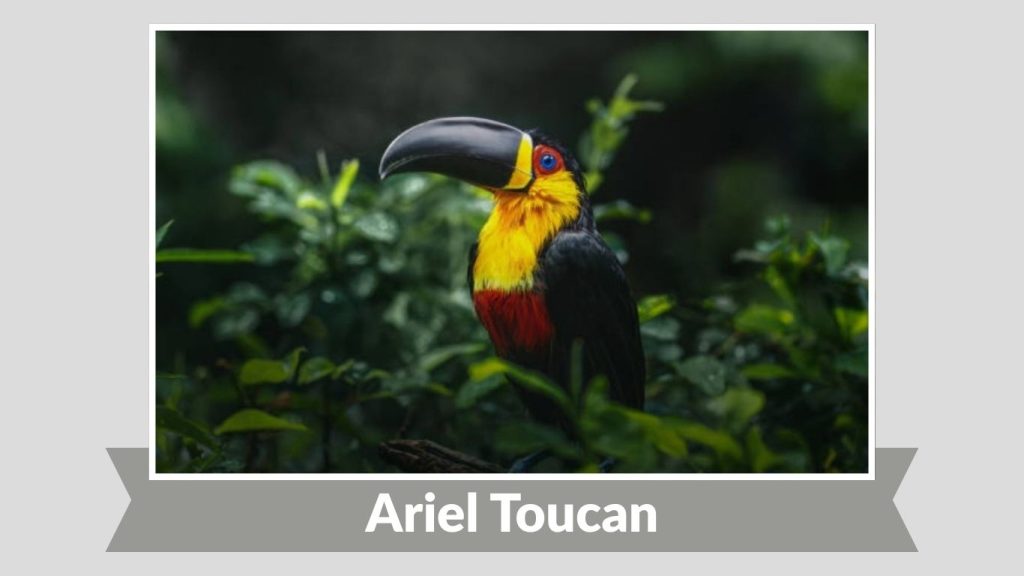
The Ariel Toucan is a large and visually striking toucan, closely related to the Channel-billed and White-throated toucans. It is mainly found in eastern and southeastern Brazil, where it inhabits Atlantic Forests, gallery forests, and woodland edges. This species is often seen in pairs or small flocks high in the canopy.
Identification
- Large toucan with a long, pale yellow bill
- Black body with a white throat and upper chest
- Bright red undertail coverts
- Bluish bare skin around the eyes
- Broad wings and long tail
Habitat
Ariel toucans are primarily found in Atlantic rainforests, semi-deciduous forests, and forest edges. They prefer tall trees and mature woodland habitats.
Diet
They mainly eat fruit such as figs, berries, and palm fruits, along with insects, small reptiles, eggs, and nestlings.
Behavior
This species is social and vocal, usually moving through the canopy in small groups. It uses loud calls to stay in contact and travels with slow wingbeats and short glides between trees.
10. Citron-throated Toucan
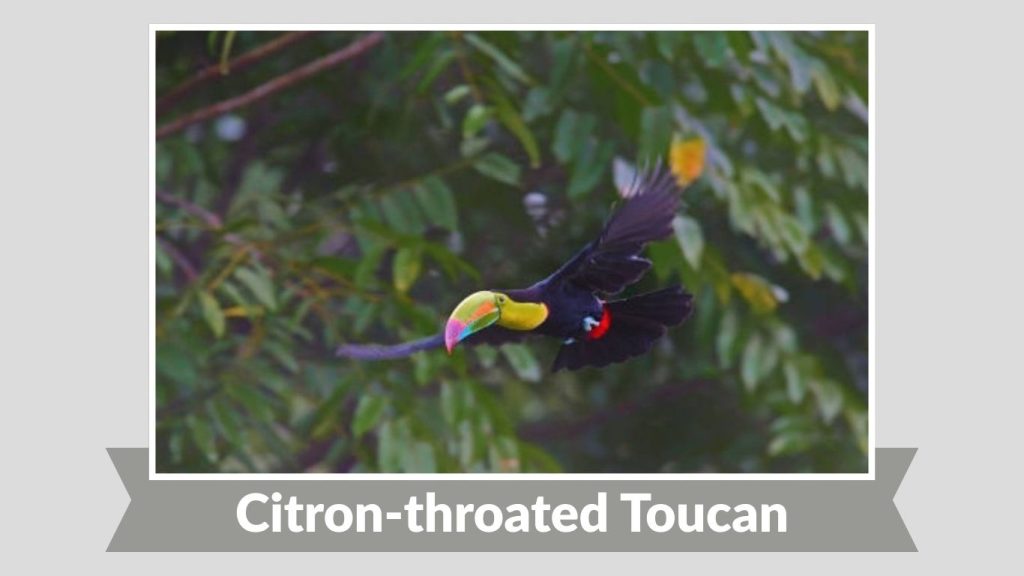
The Citron-throated Toucan is a large and elegant toucan species distinguished by its pale yellow (citron-colored) throat and impressive bill. It is native to Central America and northwestern South America, where it inhabits humid tropical forests and forest edges. This species is typically observed in pairs or small groups in the upper canopy.
Identification
- Large toucan with a long, mostly pale bill
- Pale yellow to citron-colored throat and upper chest
- Black body with red undertail coverts
- Blue bare skin around the eyes
- Strong, lightweight bill with a darker tip
Habitat
Citron-throated toucans live mainly in lowland rainforests, foothill forests, and forest margins. They prefer tall forest canopies with abundant fruiting trees.
Diet
Their diet consists primarily of fruit, including figs and tropical berries. They also feed on insects, small vertebrates, eggs, and nestlings.
Behavior
They are social, noisy birds often found in pairs or small flocks. They move through the canopy by hopping along branches and making short, gliding flights while calling loudly.
11. Swainson’s Toucan
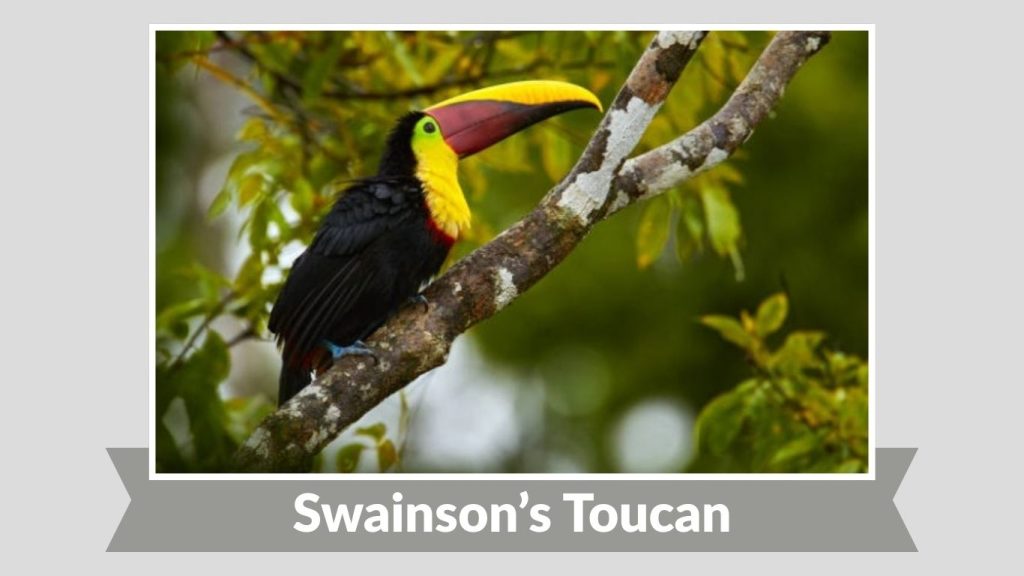
The Swainson’s Toucan is a large, colorful toucan species native to Central America and the northwestern parts of South America. It is well known for its bright bill and bold yellow throat, which strongly contrasts with its dark body. This toucan inhabits humid tropical forests, forest edges, and tall secondary growth.
Identification
- Large toucan with a long, brightly colored bill
- Bright yellow throat and upper chest
- Black body with red undertail coverts
- Blue bare skin around the eyes
- Broad wings and long tail
Habitat
Swainson’s toucans are mainly found in lowland rainforests, foothill forests, and forest margins. They prefer tall trees and are most often seen high in the canopy.
Diet
They primarily feed on fruit such as figs, palm fruits, and berries. They also consume insects, small reptiles, eggs, and nestlings.
Behavior
This species is social and vocal, usually encountered in pairs or small groups. It moves through the treetops with hopping motions and short flights, producing loud, croaking calls.
12. Emerald Toucanet
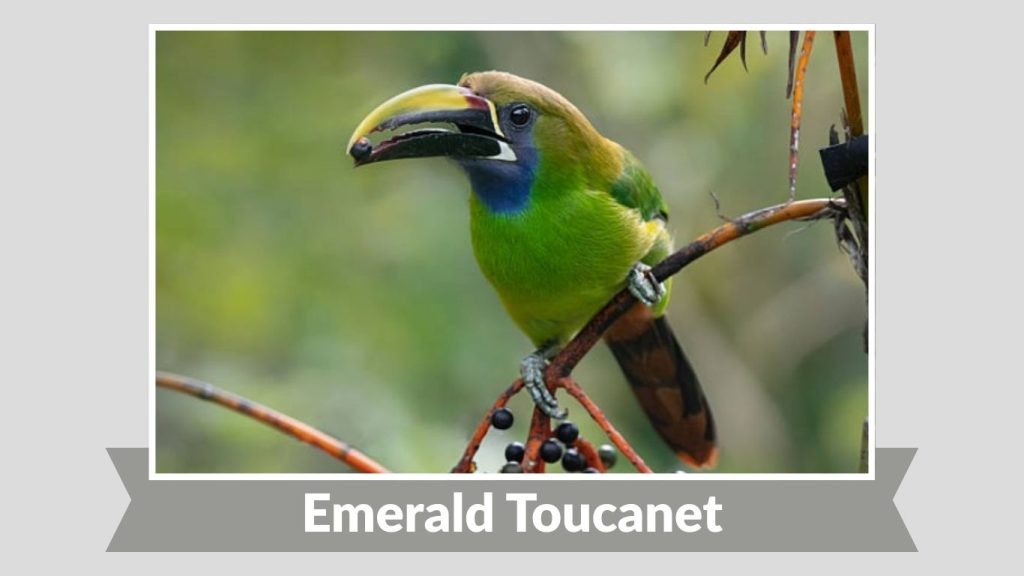
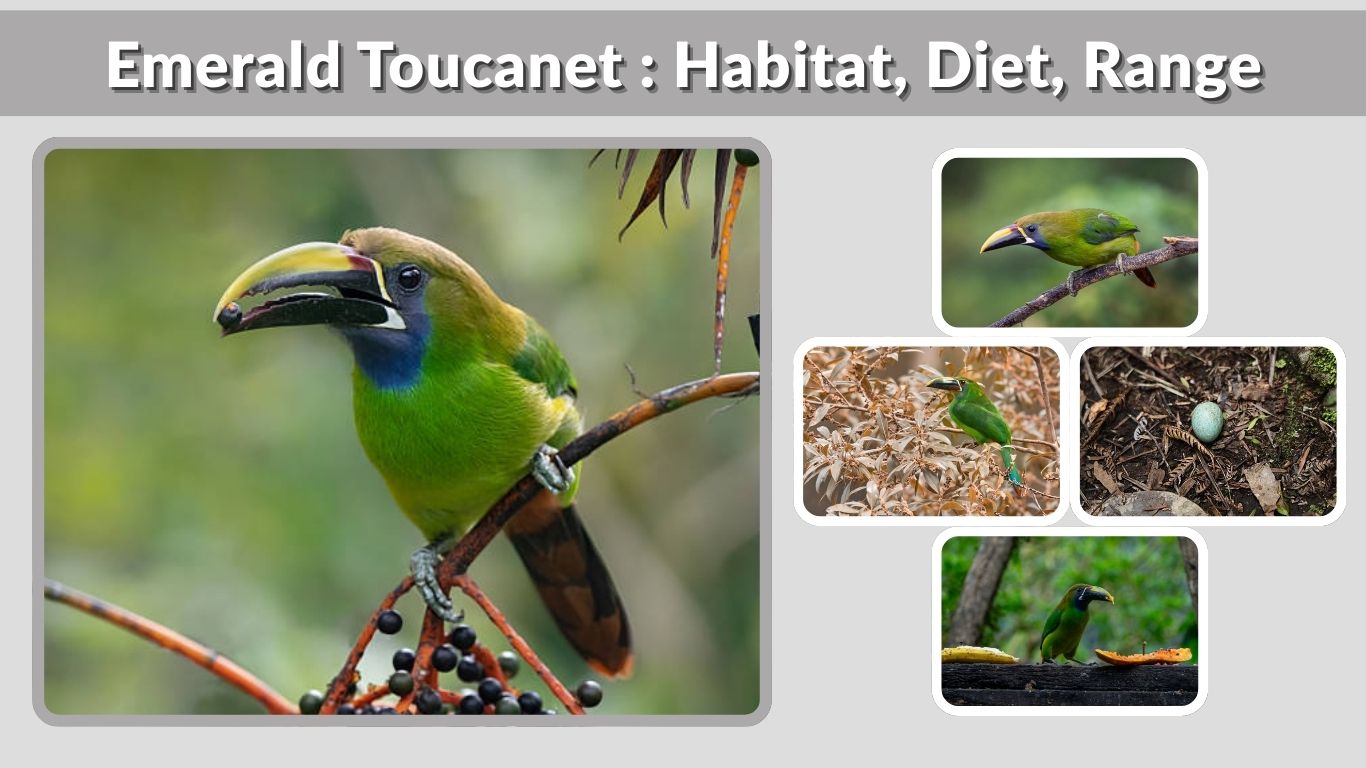
The Emerald Toucanet is a smaller, more slender member of the toucan family, notable for its bright green plumage and compact, colorful bill. It is found in Central America and parts of northern South America, where it inhabits humid montane forests, cloud forests, and forest edges. Compared to large toucans, this species is quieter and more secretive.
Identification
- Small toucan with vivid emerald-green body
- Short, thick bill with yellow, blue, and black markings
- Pale throat and chest
- White or light skin around the eyes
- Long tail relative to body size
Habitat
Emerald toucanets live mainly in cloud forests, montane forests, and humid forest edges, often at higher elevations than large toucans.
Diet
They feed mostly on small fruits and berries, but also eat insects and other small invertebrates.
Behavior
This species is usually seen alone or in pairs, quietly moving through the mid to upper forest layers. It is less noisy than large toucans and often remains hidden among dense foliage.
13. Blue-throated Toucanet
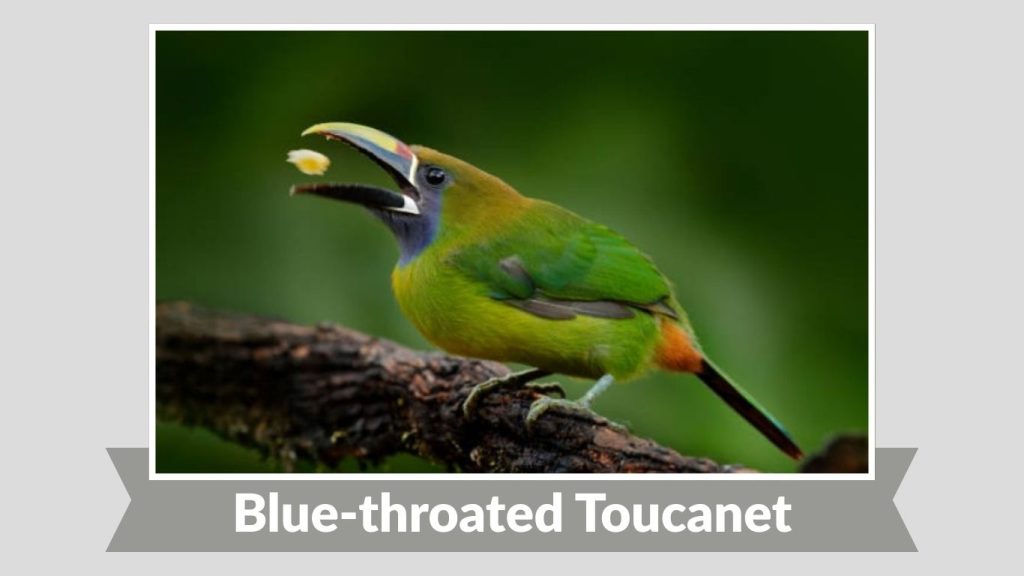
The Blue-throated Toucanet is a small, beautifully colored toucan species known for its rich green body and distinctive bluish throat. It is native to the highland forests of Central America, where it inhabits cloud forests, humid montane forests, and forest edges. This species is more secretive than large toucans and is often seen quietly foraging in dense foliage.
Identification
- Small toucan with bright green upperparts
- Distinct blue to bluish-gray throat and chest
- Short, thick bill with dark and yellow markings
- Pale skin around the eyes
- Long, narrow tail
Habitat
Blue-throated toucanets are mainly found in cloud forests and humid montane forests, usually at middle to high elevations. They prefer dense vegetation with plenty of fruiting trees.
Diet
They feed mostly on small fruits and berries. Insects and other small invertebrates are also an important part of their diet, especially during the breeding season.
Behavior
This species is typically seen alone or in pairs. It moves quietly through the forest canopy and midstory, hopping between branches and making soft calls compared to the loud vocalizations of larger toucans.
14. Crimson-rumped Toucanet
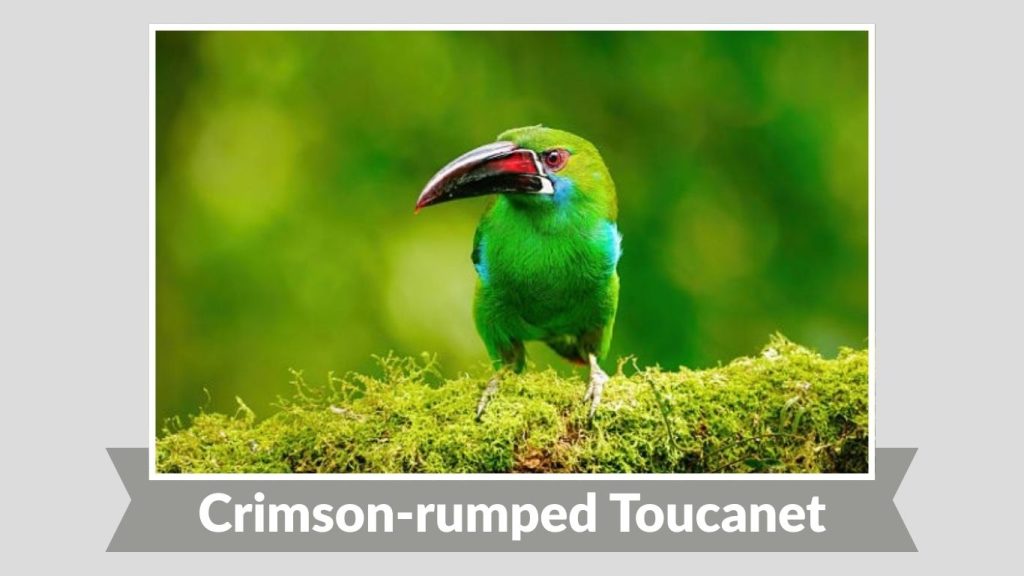
The Crimson-rumped Toucanet is a small, striking toucan species easily recognized by its bright green body and vivid red rump. It is native to the humid forests of western South America, where it inhabits cloud forests, montane forests, and forest edges. This bird is usually observed in pairs or small family groups.
Identification
- Small toucan with glossy green plumage
- Bright crimson-red rump and undertail area
- Short, thick bill with yellow and black markings
- Pale skin around the eyes
- Long, narrow tail
Habitat
Crimson-rumped toucanets live mainly in cloud forests, montane forests, and humid foothill forests. They favor dense vegetation and mature forest canopies.
Diet
Their diet consists largely of small fruits and berries. They also eat insects and other small invertebrates.
Behavior
This species is generally quiet and shy, often moving in pairs through dense foliage. It forages methodically along branches and is less vocal than the larger toucan species.
15. Yellow-eared Toucanet
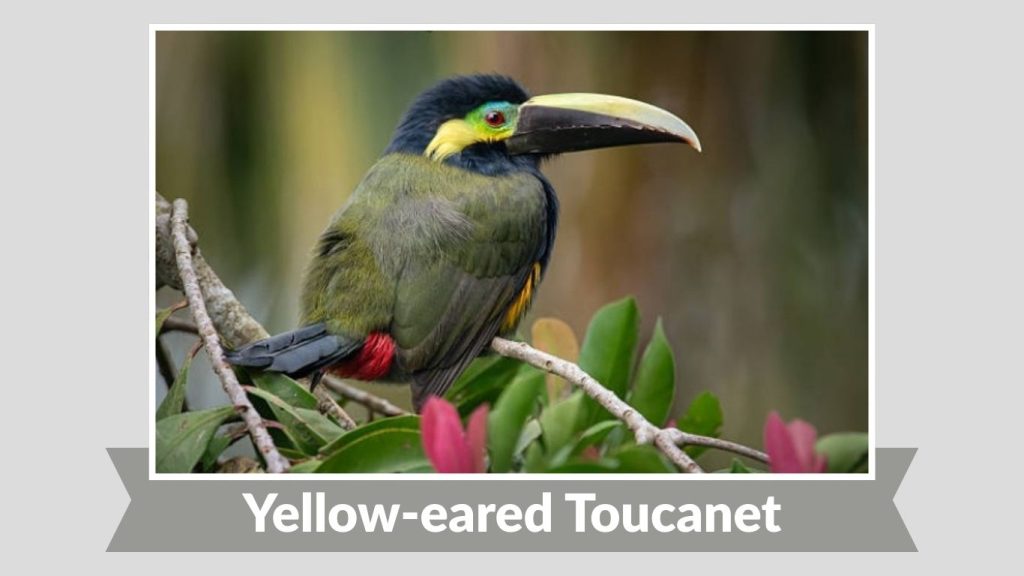
The Yellow-eared Toucanet is a small, colorful toucan species named for the bright yellow patch of skin behind its eyes. It is native to the cloud forests of the northern Andes, where it inhabits humid montane forests and forest edges. This species is often found in pairs or small groups, moving quietly through the mid to upper canopy.
Identification
- Small toucan with glossy green body
- Distinct yellow bare skin patch behind the eyes
- Short, thick bill with black, yellow, and red markings
- Pale throat and chest
- Long tail
Habitat
Yellow-eared toucanets live primarily in cloud forests and humid montane forests at mid to high elevations. They prefer dense forest with abundant fruiting plants.
Diet
They mainly feed on small fruits and berries, along with insects and other small invertebrates.
Behavior
This species is usually seen in pairs or small groups. It moves quietly through the canopy, hopping between branches and giving soft calls compared to the loud croaks of larger toucans.
16. Grey-breasted Mountain Toucan
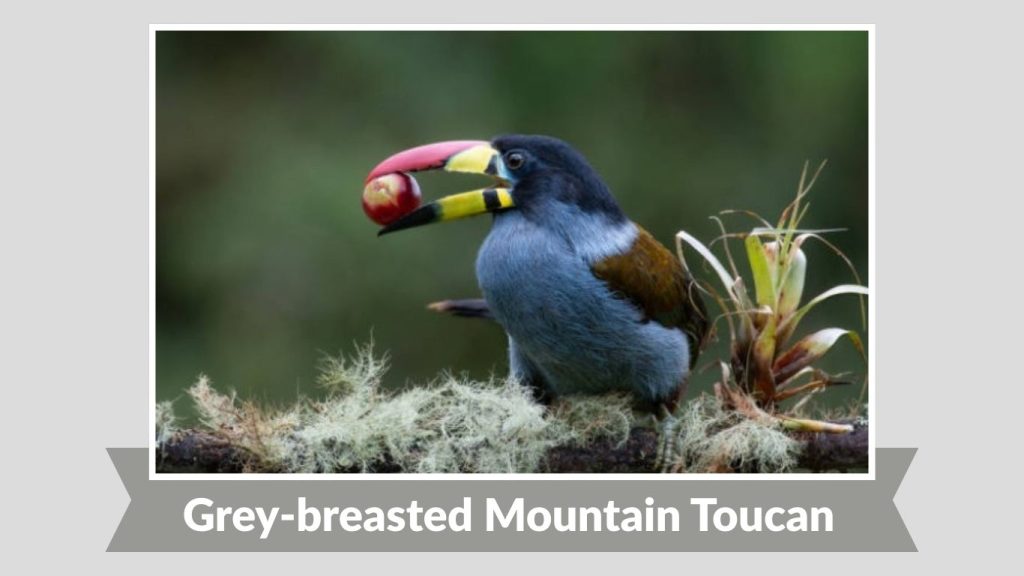
The Grey-breasted Mountain Toucan is a medium-sized, highland toucan known for its striking coloration and preference for cool, misty forests. It inhabits the Andean cloud forests of South America, where it lives among moss-covered trees and dense vegetation. This species is often seen in pairs or small groups moving slowly through the canopy.
Identification
- Medium-sized toucan with a grayish breast
- Bright, multicolored bill with red, yellow, and black tones
- Dark upperparts with chestnut and yellow accents
- Blue skin around the eyes
- Long tail and broad wings
Habitat
Grey-breasted mountain toucans live in cloud forests and humid montane forests, typically at high elevations. They favor mature forests with thick canopy cover and abundant epiphytes.
Diet
They mainly eat fruit, including berries and small figs, along with insects and other invertebrates.
Behavior
This species is relatively slow-moving and quiet. It is usually seen in pairs or small groups, foraging deliberately through mossy branches and making soft, croaking calls.
17. Plate-billed Mountain Toucan
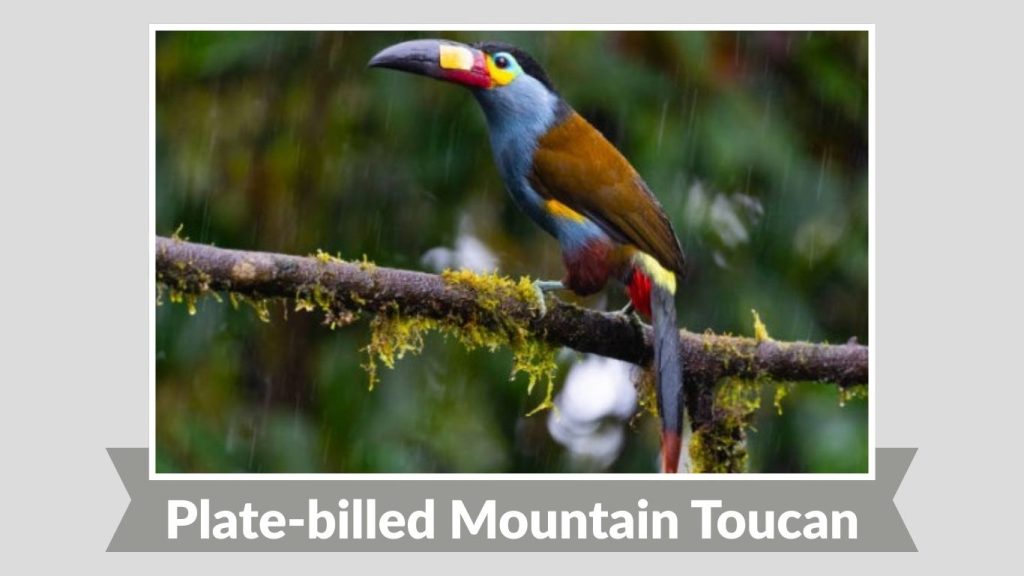
The Plate-billed Mountain Toucan is a spectacular highland toucan distinguished by the colorful “plate-like” patterns on its large bill. It is native to the Andean cloud forests of South America, where it inhabits cool, humid montane forests and forest edges. This species is often seen in pairs or small groups high in the canopy.
Identification
- Medium to large toucan with a massive, patterned bill
- Bill marked with bright yellow, red, and green patches
- Dark body with a lighter throat and chest
- Blue bare skin around the eyes
- Long tail and broad wings
Habitat
Plate-billed mountain toucans live mainly in cloud forests and humid montane forests at higher elevations. They prefer tall, mature forests rich in fruiting trees.
Diet
They feed largely on fruits such as berries and figs, and also consume insects and other small invertebrates.
Behavior
This species is social but less noisy than lowland toucans. It moves slowly through the canopy, often perching quietly before making short, gliding flights between trees.
18. Hooded Mountain Toucan
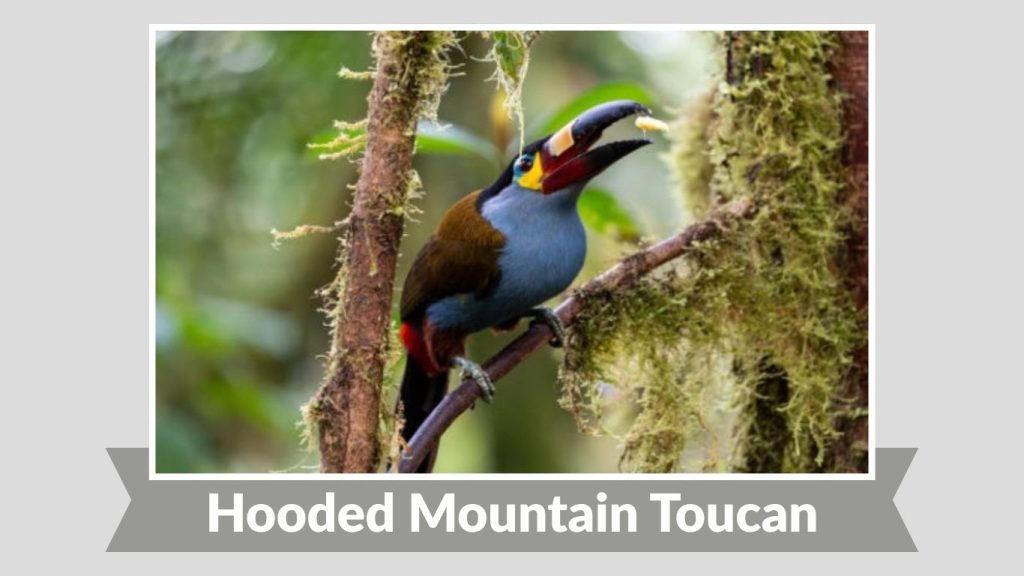
The Hooded Mountain Toucan is a beautifully colored highland toucan known for its dark “hooded” head and vivid body markings. It is found in the cloud forests of the northern Andes, where it inhabits humid montane forests rich in mosses and epiphytes. This species is typically observed in pairs or small family groups.
Identification
- Medium-sized toucan with a dark hooded head
- Brightly colored bill with red, yellow, and green tones
- Chestnut, gray, and yellow plumage on the body
- Blue bare skin around the eyes
- Long tail and strong wings
Habitat
Hooded mountain toucans live mainly in cloud forests and humid montane forests at mid to high elevations. They favor dense, mature forest with abundant fruiting trees.
Diet
Their diet consists largely of fruits, especially small forest berries and figs. They also eat insects and other small invertebrates.
Behavior
This species is generally calm and deliberate in its movements. It is often seen in pairs or small groups, foraging quietly through the canopy and making soft, croaking calls.
19. Collared Aracari
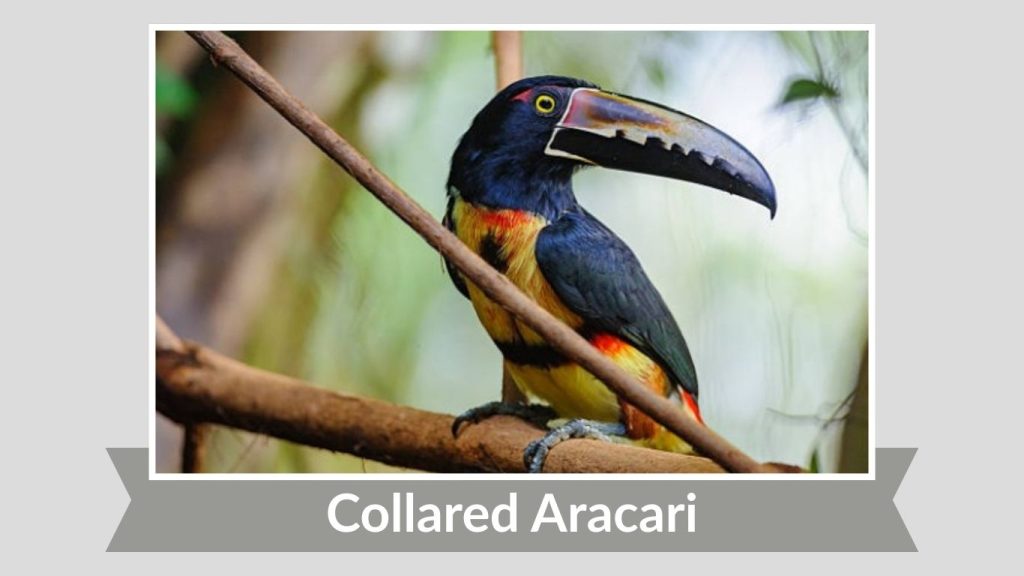
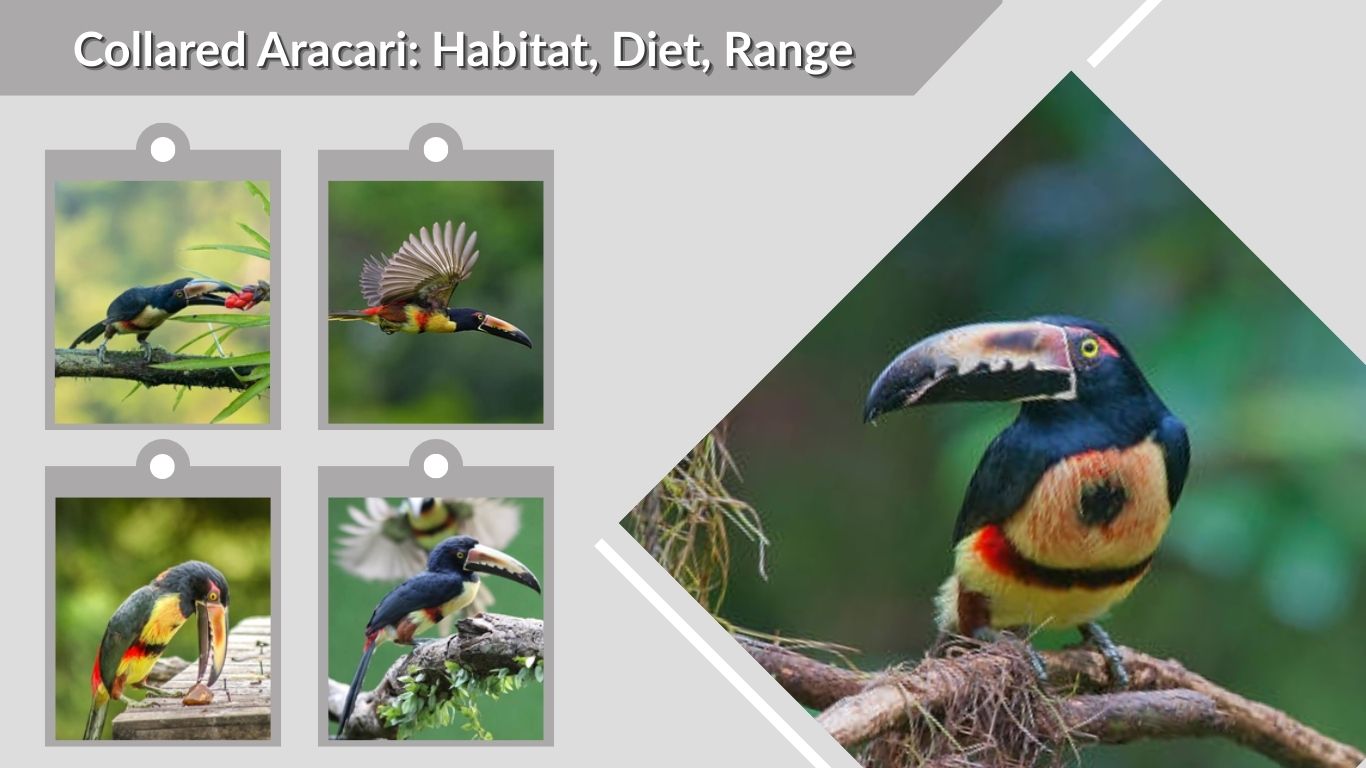
The Collared Aracari is a slender, medium-sized member of the toucan family, known for its long bill, bright facial markings, and social nature. It is native to Central America and northern South America, where it inhabits lowland rainforests, forest edges, and tall secondary forests. This species is often seen in noisy flocks moving through the canopy.
Identification
- Medium-sized toucan with a long, narrow bill
- Black head with a yellow “collar” around the neck
- Yellow chest with a red belly band
- Green upperparts and long tail
- Pale bare skin around the eyes
Habitat
Collared aracaris live in lowland rainforests, gallery forests, and forest edges. They are also common in secondary forests and plantations with tall trees.
Diet
They mainly feed on fruit, especially figs and palm fruits. They also eat insects, eggs, and small vertebrates.
Behavior
This species is highly social and often seen in groups. It is active and vocal, moving quickly through the canopy, hopping between branches and making sharp, chattering calls.
20. Green Aracari
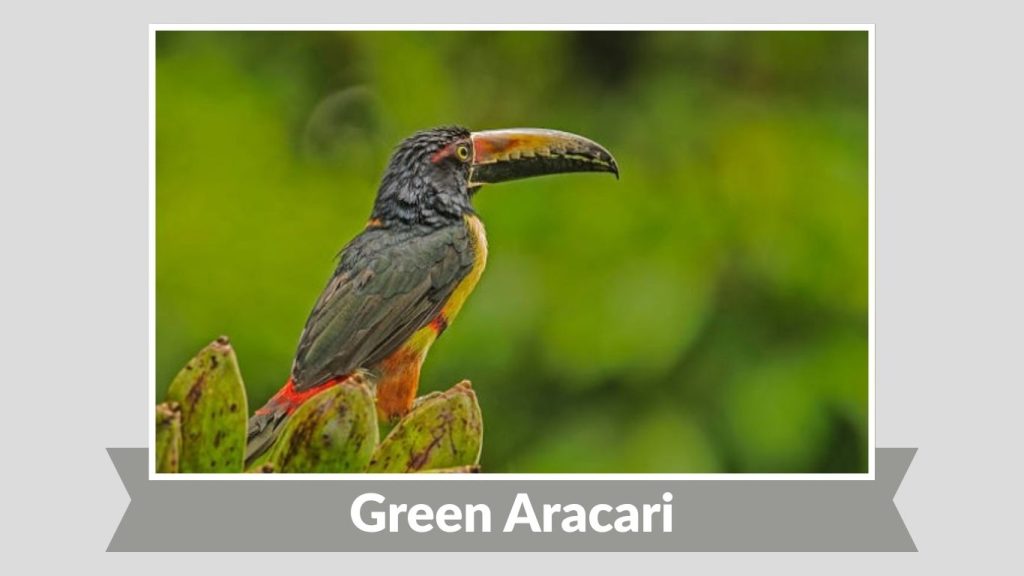
The Green Aracari is a small, slim toucan species recognized for its bright green upperparts and long, slightly curved bill. It is native to the tropical forests of Central America and northern South America, where it inhabits lowland rainforests, forest edges, and tall secondary growth. This bird is often seen in lively flocks.
Identification
- Small to medium toucan with bright green back and wings
- Long, narrow bill with black and yellow markings
- Yellow chest with a red belly band
- Black head with chestnut crown
- Pale skin around the eyes
Habitat
Green aracaris are mainly found in lowland rainforests, forest edges, and wooded clearings. They adapt well to secondary forests and areas near human settlement.
Diet
They primarily eat fruit such as figs and berries. Insects, eggs, and small reptiles are also taken when available.
Behavior
This species is social and energetic, commonly seen in small flocks. It moves rapidly through the canopy, often chasing one another and producing sharp, chattering calls.
21. Chestnut-eared Aracari
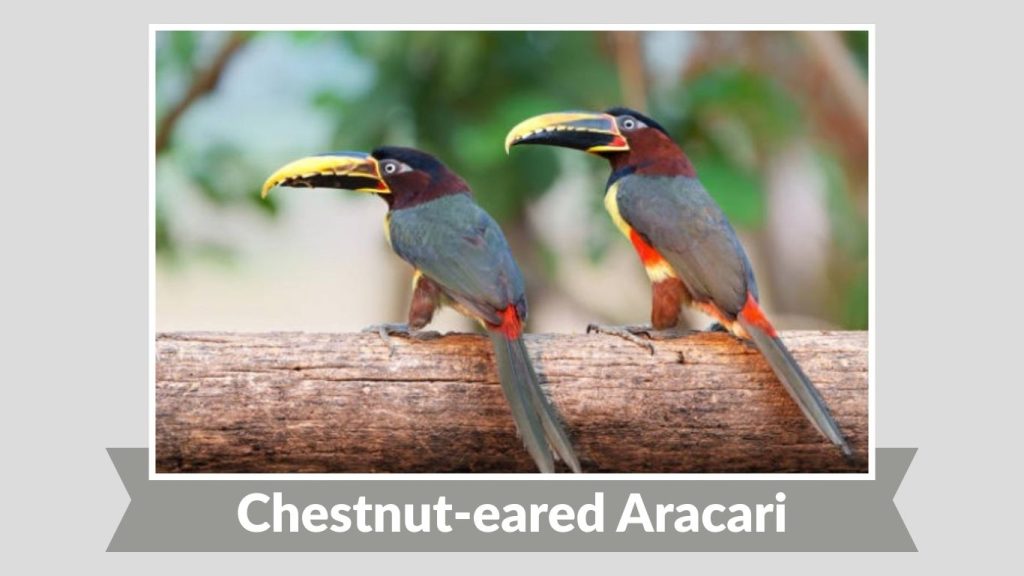
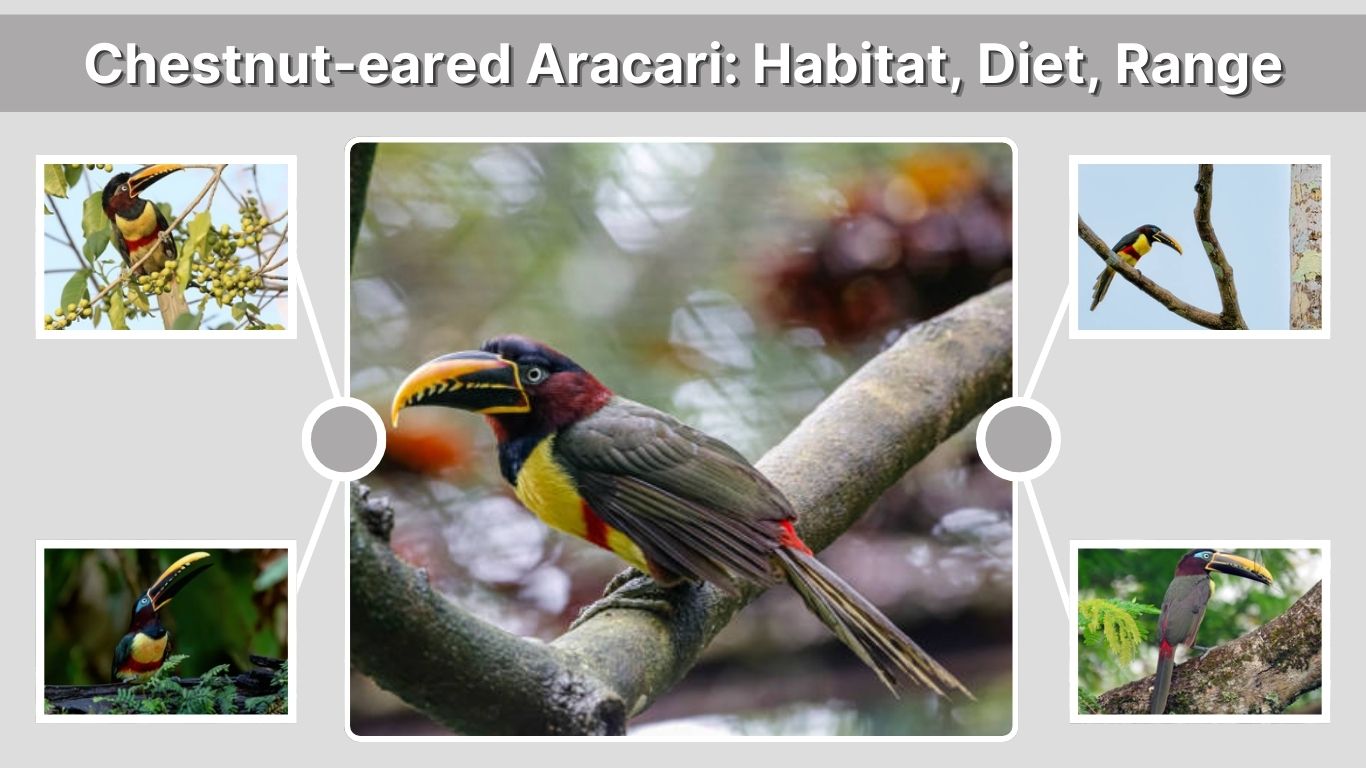
The Chestnut-eared Aracari is a small, colorful toucan species known for the rich chestnut patches on the sides of its head. It is widely distributed across the Amazon Basin and surrounding regions, where it inhabits tropical rainforests, riverine forests, and forest edges. This species is active and social, often moving in small groups.
Identification
- Small toucan with chestnut-colored ear patches
- Long, narrow bill with yellow and dark markings
- Yellow chest with a red belly band
- Green upperparts and long tail
- Pale bare skin around the eyes
Habitat
Chestnut-eared aracaris live mainly in lowland rainforests, flooded forests, and forest margins. They prefer areas with tall fruiting trees.
Diet
They feed largely on fruit, including figs and berries. They also consume insects, eggs, and small vertebrates.
Behavior
This species is social and vocal, usually seen in pairs or small flocks. It moves quickly through the canopy, hopping between branches and calling frequently.
22. Ivory-billed Aracari
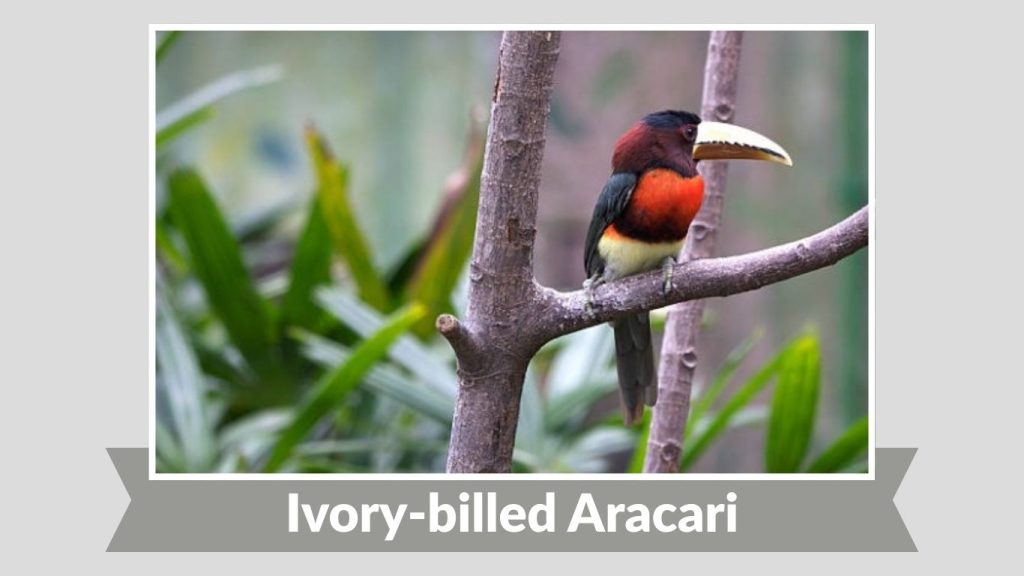
The Ivory-billed Aracari is a slender, attractive toucan species distinguished by its pale, ivory-colored bill. It is native to the Amazon Basin and nearby regions, where it inhabits tropical lowland rainforests, river edges, and tall secondary forests. This species is often observed in small, active groups.
Identification
- Small to medium toucan with a pale ivory-colored bill
- Black head with chestnut tones on the crown
- Yellow chest with a red belly band
- Green upperparts and long tail
- Pale skin around the eyes
Habitat
Ivory-billed aracaris are mainly found in lowland rainforests, seasonally flooded forests, and forest edges. They favor areas with tall trees and abundant fruit.
Diet
They mainly eat fruit such as figs and berries, along with insects, eggs, and small reptiles.
Behavior
This species is social and energetic, usually moving through the canopy in small flocks. It forages actively, hopping between branches and making sharp, chattering calls.
23. Black-necked Aracari
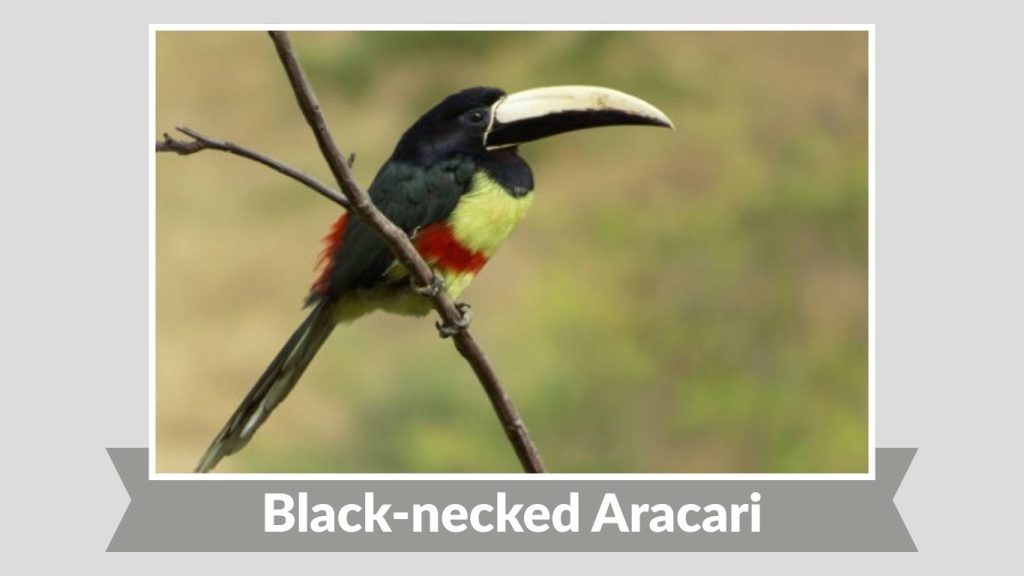
The Black-necked Aracari is a slender toucan species recognized for its dark neck and colorful body pattern. It is native to Central America and parts of northern South America, where it inhabits tropical lowland forests, forest edges, and secondary woodlands. This bird is often seen in small, lively groups.
Identification
- Small to medium toucan with a black neck and throat
- Long, narrow bill with yellow and dark markings
- Yellow chest with a red belly band
- Green upperparts and long tail
- Pale bare skin around the eyes
Habitat
Black-necked aracaris live mainly in lowland rainforests, forest edges, and secondary forests. They adapt well to disturbed habitats with tall trees.
Diet
They feed mostly on fruit such as figs and berries. Insects, eggs, and small reptiles are also part of their diet.
Behavior
This species is social and active, commonly moving in small flocks. It hops quickly through branches, often calling loudly to maintain contact with group members.
24. Curl-crested Aracari
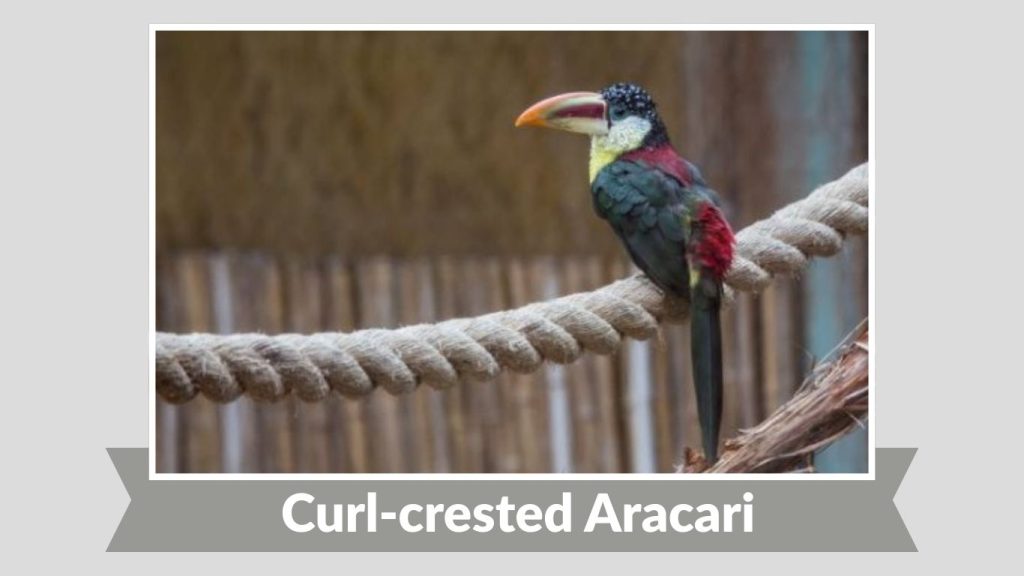
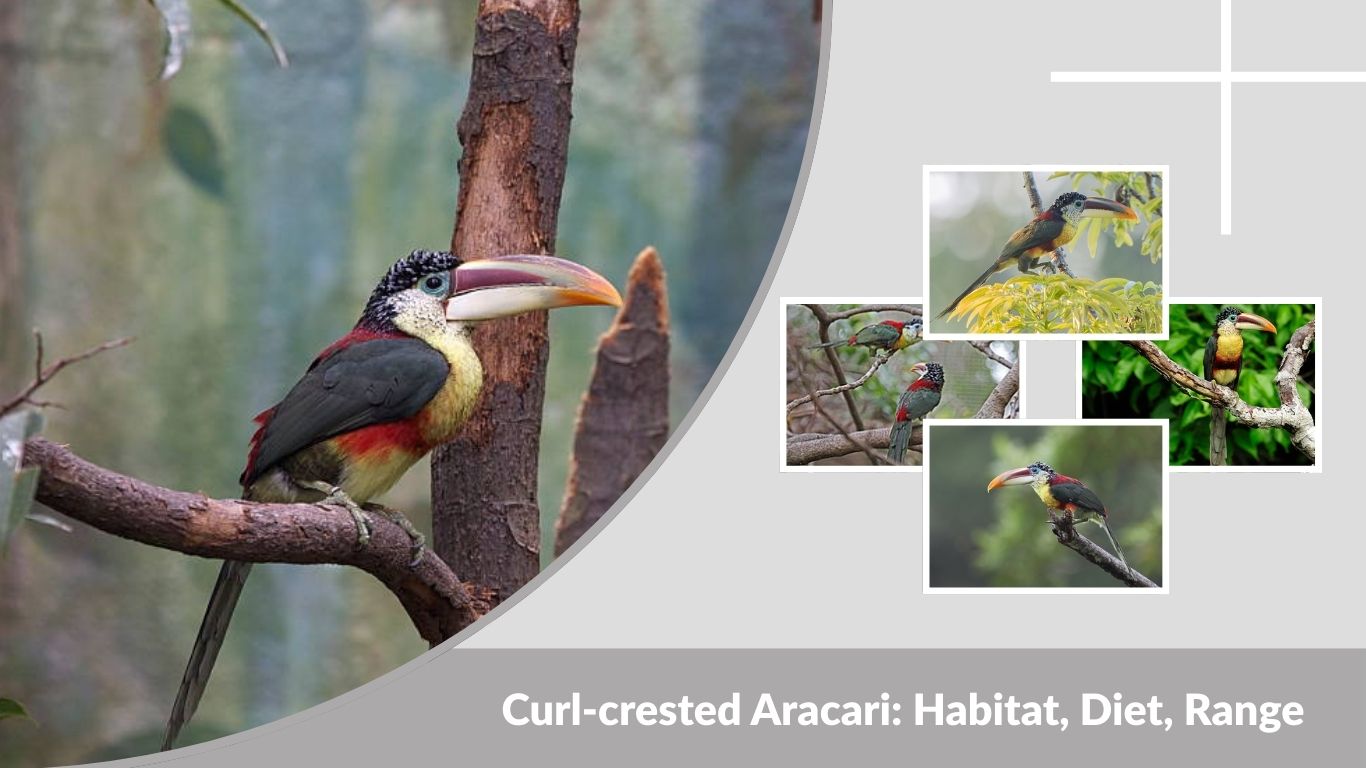
The Curl-crested Aracari is one of the most unusual members of the toucan family, instantly recognizable by the stiff, curled feathers on the top of its head. It is native to the western Amazon Basin, where it inhabits humid lowland rainforests and tall secondary forests. This striking species is often seen in pairs or small groups.
Identification
- Small to medium toucan with distinctive curled crest feathers
- Long, narrow bill with yellow and dark markings
- Black head and chestnut facial tones
- Yellow chest with a red belly band
- Pale bare skin around the eyes
Habitat
Curl-crested aracaris live mainly in lowland tropical rainforests and forest edges. They prefer mature forests with large fruiting trees.
Diet
They mainly eat fruit such as figs and berries. They also consume insects, eggs, and small reptiles.
Behavior
This species is social but not extremely noisy. It moves through the canopy in small groups, hopping between branches and occasionally giving sharp, chattering calls.
25. Lettered Aracari
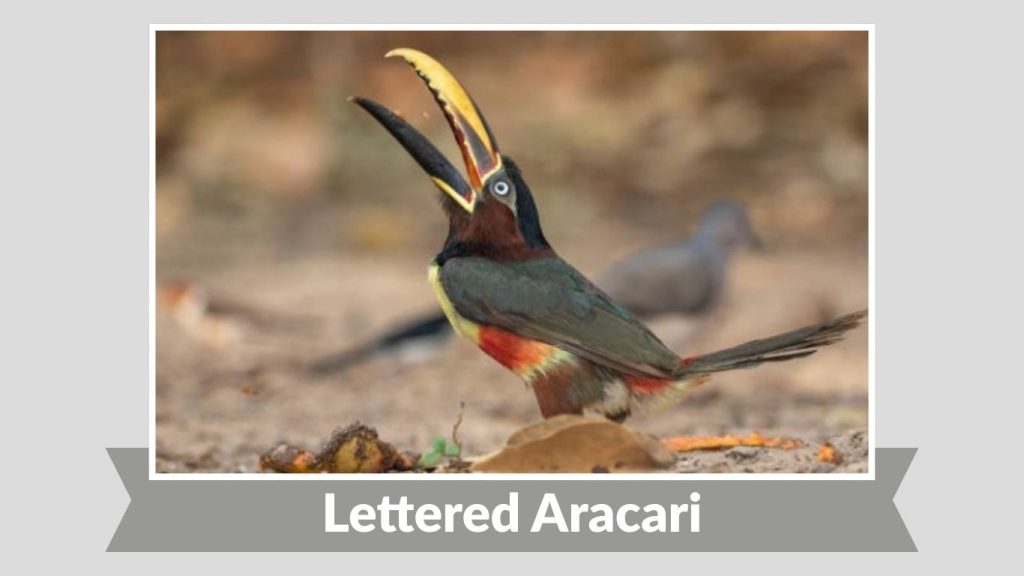
The Lettered Aracari is a slender, colorful toucan species named for the distinctive black “letter-like” markings on its pale bill. It is found mainly in the Amazon Basin, where it inhabits lowland rainforests, riverine forests, and tall secondary growth. This bird is typically seen in pairs or small groups.
Identification
- Small to medium toucan with pale bill marked by black lines
- Black head with chestnut crown
- Yellow chest with a red belly band
- Green upperparts and long tail
- Pale skin around the eyes
Habitat
Lettered aracaris live primarily in lowland tropical rainforests, flooded forests, and forest margins. They favor areas with abundant fruiting trees.
Diet
They mainly feed on fruit such as figs and berries. Insects, eggs, and small vertebrates are also eaten.
Behavior
This species is social and active, often seen in pairs or small flocks. It moves quickly through the canopy, hopping between branches and making sharp, chattering calls.
FAQs
What is a toucan best known for?
Toucans are best known for their large, lightweight, and brightly colored bills. Despite their size, the bill is made of keratin and is surprisingly light. It helps toucans reach fruit, peel food, display to mates, and even regulate body temperature in hot climates.
Where do toucans mostly live?
Toucans mainly live in the tropical and subtropical forests of Central and South America. They are commonly found in rainforests, cloud forests, and forest edges, where tall trees and abundant fruit are available. Most species spend their lives high in the canopy.
What do toucans eat in the wild?
Toucans primarily eat fruit, especially figs, berries, and palm fruits. However, they are omnivores and also consume insects, lizards, frogs, eggs, and nestlings. This varied diet helps them survive seasonal changes in food availability within tropical forests.
Are toucans social birds?
Yes, toucans are highly social birds. Most species live in pairs or small flocks and communicate using loud, croaking, or chattering calls. They often travel and feed together, moving through the forest canopy as a group while searching for fruiting trees.
Do all toucans have huge beaks?
All toucans have relatively large bills, but the size and shape vary by species. Large toucans like the Toco Toucan have massive beaks, while toucanets and aracaris have smaller, slimmer bills adapted for feeding on smaller fruits and insects.