

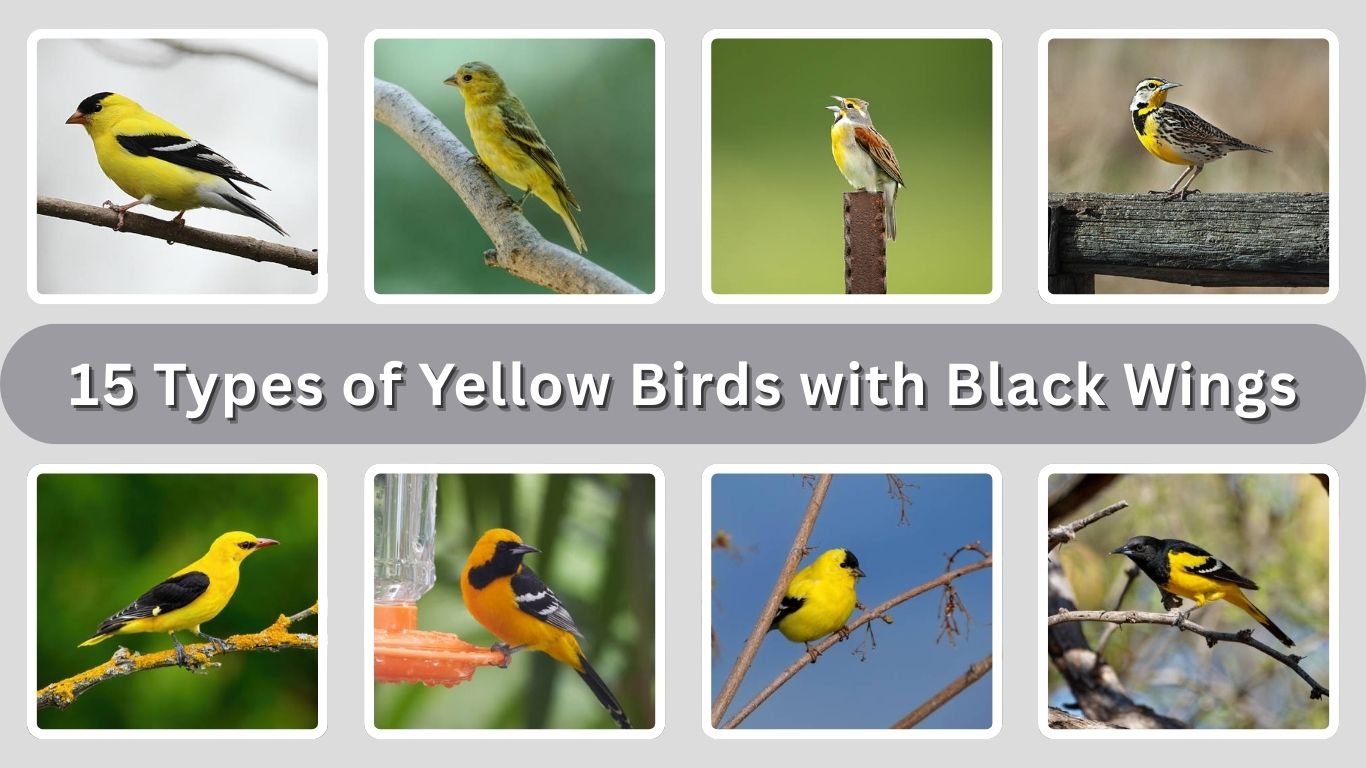
Yellow birds with black wings are some of the most eye-catching species in the bird world. The bright yellow plumage often symbolizes energy and warmth, while the contrasting black wings add bold definition and elegance. These birds can be found across a wide range of habitats, from open grasslands and deserts to tropical forests and suburban gardens.
1. American Goldfinch

A small, vibrant songbird commonly seen across North America, the American Goldfinch is especially striking in summer when its bright yellow plumage contrasts sharply with black wings.
Identification
- Bright yellow body (males in breeding season)
- Black wings with white markings
- Black cap on the forehead (males)
- Short, conical pinkish bill
Habitat
American Goldfinches prefer open areas such as meadows, fields, roadsides, and gardens, especially where thistles and other seed-bearing plants are abundant.
Diet
Their diet consists mainly of seeds, particularly thistle, sunflower, and grasses. Unlike many birds, they rarely eat insects.
Behavior
These birds are social and often seen in small flocks. They have an undulating flight pattern and a distinctive, cheerful song.
2. Lesser Goldfinch
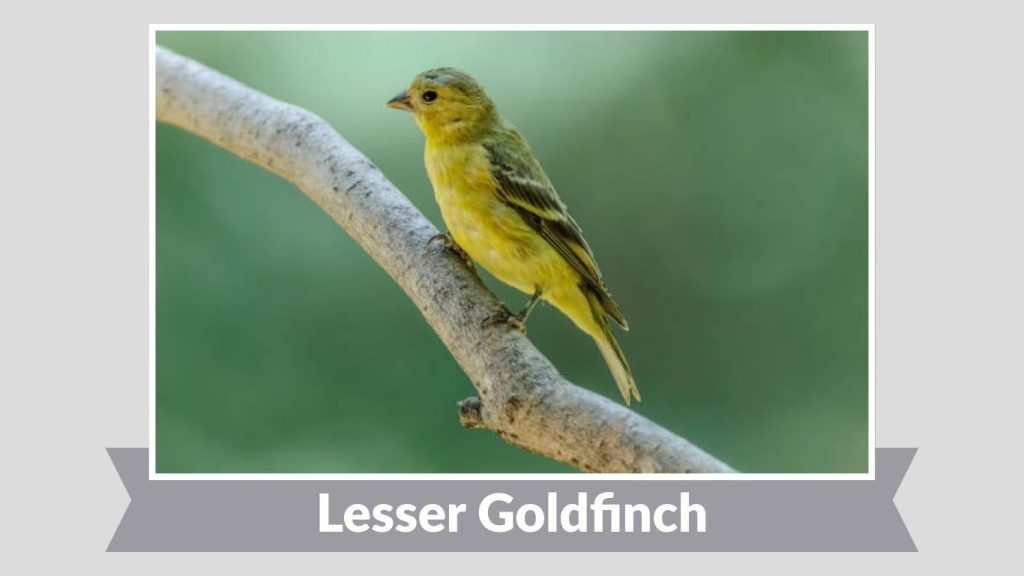
The Lesser Goldfinch is a small, energetic songbird found mainly in the southwestern United States, Mexico, and parts of Central America. Though smaller than the American Goldfinch, it is equally eye-catching, with vivid yellow underparts and contrasting black wings. Its adaptability allows it to thrive in both natural landscapes and urban environments.
Identification
- Bright yellow underparts (males more vibrant than females)
- Black wings with distinct white wing bars
- Black crown and back (in most males)
- Short, pointed conical bill
- Small, compact body size
Habitat
Lesser Goldfinches inhabit a wide range of environments, including open woodlands, scrublands, grasslands, desert edges, and suburban gardens. They are especially common in areas with scattered trees and shrubs. Unlike many birds, they readily adapt to human-altered habitats and are frequent visitors to backyard feeders.
Diet
This species feeds primarily on seeds, favoring sunflower, thistle, and weed seeds. They also consume buds and occasionally small insects, particularly during the breeding season. Their strong, pointed bill is well suited for cracking open small seeds.
Behavior
Lesser Goldfinches are lively and social birds, often seen in flocks outside the breeding season. They are agile fliers and frequently cling to seed heads while feeding. Their song is fast-paced and musical, consisting of rapid, high-pitched notes that vary between individuals.
3. Eastern Meadowlark
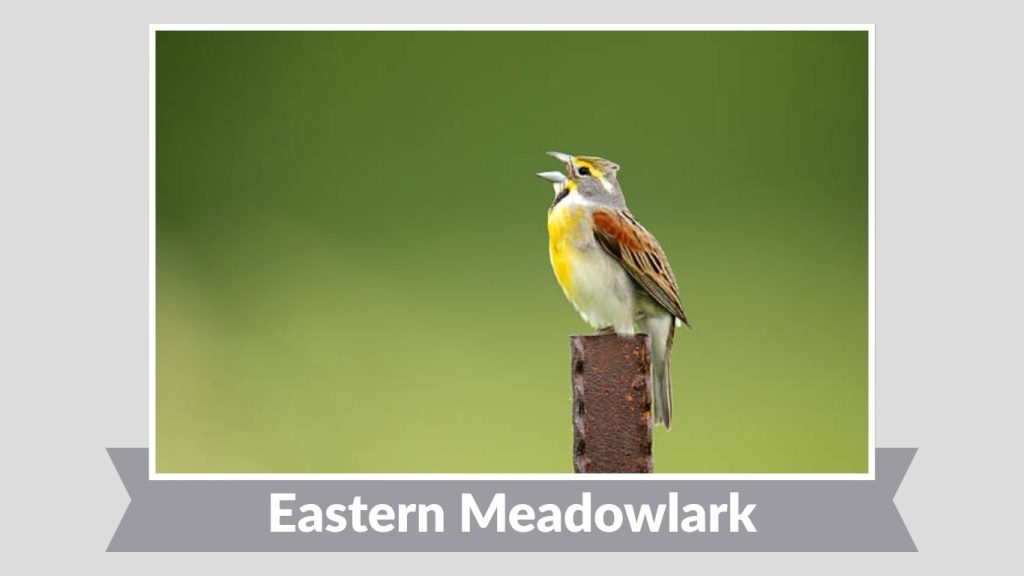
The Eastern Meadowlark is a medium-sized grassland bird known for its bright yellow chest and bold black markings. Unlike finches and orioles, it has a more robust build and is often seen walking on the ground rather than perching high in trees. Its clear, flute-like song is a familiar sound across open countryside in eastern and central North America.
Identification
- Bright yellow underparts with a bold black “V” on the chest
- Brown and black streaked back
- Black wings with brown edging
- Long, pointed bill
- White outer tail feathers visible in flight
Habitat
Eastern Meadowlarks prefer wide open spaces such as grasslands, prairies, pastures, hayfields, and agricultural fields. They avoid dense forests and are most commonly found in areas with tall grasses that provide cover for nesting. During winter, they may move short distances south or gather in loose flocks.
Diet
Their diet is varied and changes with the seasons. In spring and summer, Eastern Meadowlarks feed mainly on insects such as beetles, grasshoppers, caterpillars, and spiders. During fall and winter, they rely more on seeds and grains, including corn and weed seeds found on the ground.
Behavior
These birds spend much of their time foraging on the ground, walking rather than hopping. They are known for their beautiful, whistled songs, which males use to defend territory and attract mates. Despite their bright coloration, Eastern Meadowlarks can be surprisingly hard to spot due to their excellent camouflage.
4. Western Meadowlark

The Western Meadowlark closely resembles its eastern relative but is best known for its rich, complex, and melodic song. With its bright yellow chest and contrasting black markings, this bird is a signature species of open landscapes across western and central North America. It is often seen perched on fence posts or walking through grassy fields.
Identification
- Bright yellow underparts with a bold black “V” on the chest
- Brown, black, and buff streaked back
- Black wings with brown and white edging
- Long, pointed bill
- White outer tail feathers visible during flight
Habitat
Western Meadowlarks inhabit open country such as prairies, grasslands, plains, pastures, and agricultural fields. They prefer areas with low to moderate vegetation, which allows them to forage easily on the ground while still providing cover. During colder months, some populations migrate southward, while others remain year-round residents.
Diet
Their diet consists mainly of insects during the breeding season, including grasshoppers, beetles, ants, and caterpillars. In fall and winter, they switch to seeds and grains, feeding on weed seeds and leftover crops. This seasonal flexibility helps them survive in a variety of environments.
Behavior
Western Meadowlarks are ground foragers and often walk rather than hop. Males are famous for their flute-like, bubbling songs, which are more varied and musical than those of the Eastern Meadowlark. These songs are used to establish territory and attract mates, making them a defining sound of western grasslands.
5. Eurasian Golden Oriole
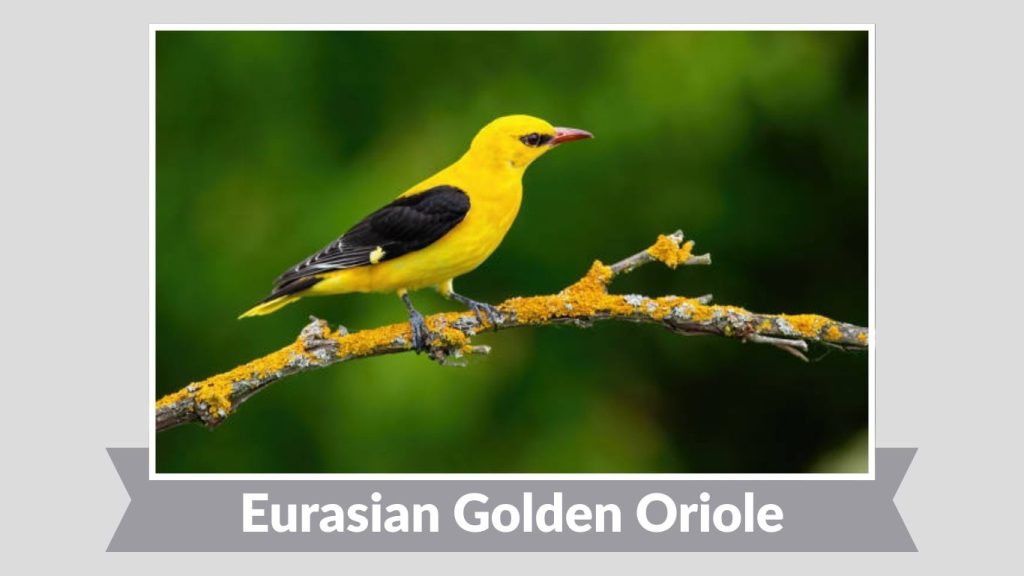
The Eurasian Golden Oriole is a strikingly beautiful bird known for its bright golden-yellow body and contrasting black wings. Found across Europe, parts of Asia, and North Africa, this species is often heard more easily than seen, as it prefers the canopy of tall trees. Its rich, fluting song adds a tropical feel to temperate forests during spring and summer.
Identification
- Bright golden-yellow body (adult males)
- Jet-black wings with yellow highlights
- Black tail with yellow edges
- Reddish-pink, slightly curved bill
- Females are more greenish-yellow with darker wings
Habitat
Eurasian Golden Orioles favor deciduous woodlands, forest edges, orchards, river valleys, and large gardens with tall trees. They are especially attracted to areas with poplar, oak, or elm trees. Although widespread, they are often elusive due to their preference for staying high in the treetops. This species is migratory, spending winters in sub-Saharan Africa.
Diet
Their diet is mixed and seasonal. Eurasian Golden Orioles feed on insects such as caterpillars, beetles, and spiders, which they skillfully pick from leaves and branches. They also eat fruits and berries, including figs, cherries, and mulberries, especially later in the summer when fruits are abundant.
Behavior
These birds are usually solitary or found in pairs during the breeding season. They are agile and graceful while moving through tree canopies. Despite their bright colors, they remain well hidden among foliage. Their loud, melodious whistles are often the first clue to their presence, making them a favorite among birdwatchers.
6. Hooded Oriole
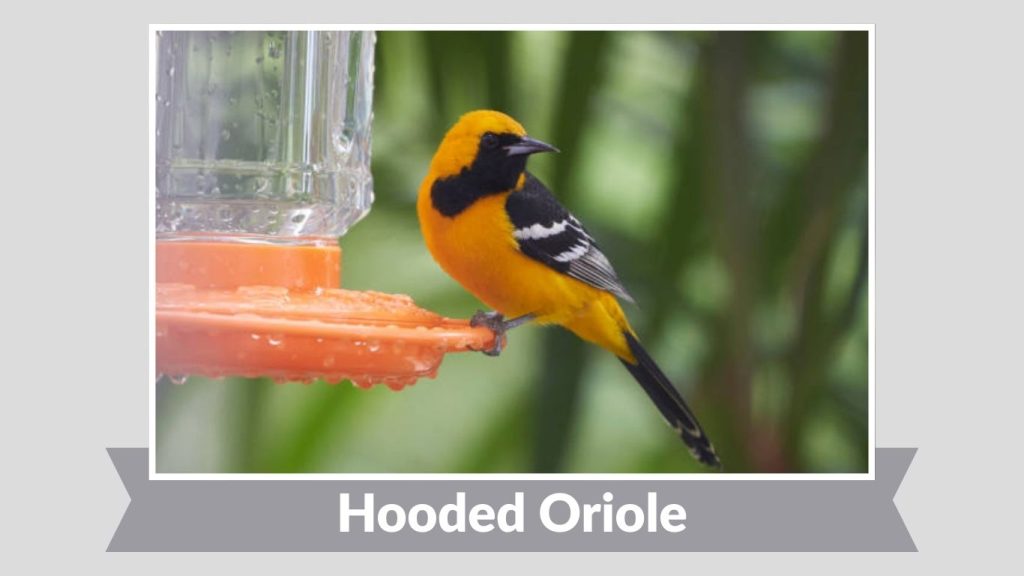
The Hooded Oriole is a slender, elegant songbird recognized for its bright yellow-orange body and deep black wings. Native to the southwestern United States, Mexico, and Central America, it is commonly seen in warm, open habitats and suburban areas with tall trees. Its vivid coloring and hanging nest make it especially distinctive.
Identification
- Bright yellow to orange body
- Black wings with sharp contrast
- Black throat and face forming a “hood” (adult males)
- Long, slightly curved bill
- Females are more olive-yellow with darker wings
Habitat
Hooded Orioles prefer open woodlands, desert edges, palm groves, and suburban parks. They are closely associated with palm trees, which they often use for nesting. During the breeding season, they are common in the southwestern U.S., while many migrate south to Mexico for the winter.
Diet
Their diet includes insects, spiders, nectar, and fruit. Hooded Orioles frequently visit flowering plants and feeders for nectar or sugar water. They also forage among leaves and branches for caterpillars and other insects, especially during the breeding season when protein is essential.
Behavior
Hooded Orioles are active and agile, often moving quickly through trees and shrubs. They are best known for their beautifully woven, pouch-like nests that hang from palm fronds or thin branches. Their song is a mix of clear whistles and chatter, and males are especially vocal during the breeding season.
7. Bullock’s Oriole
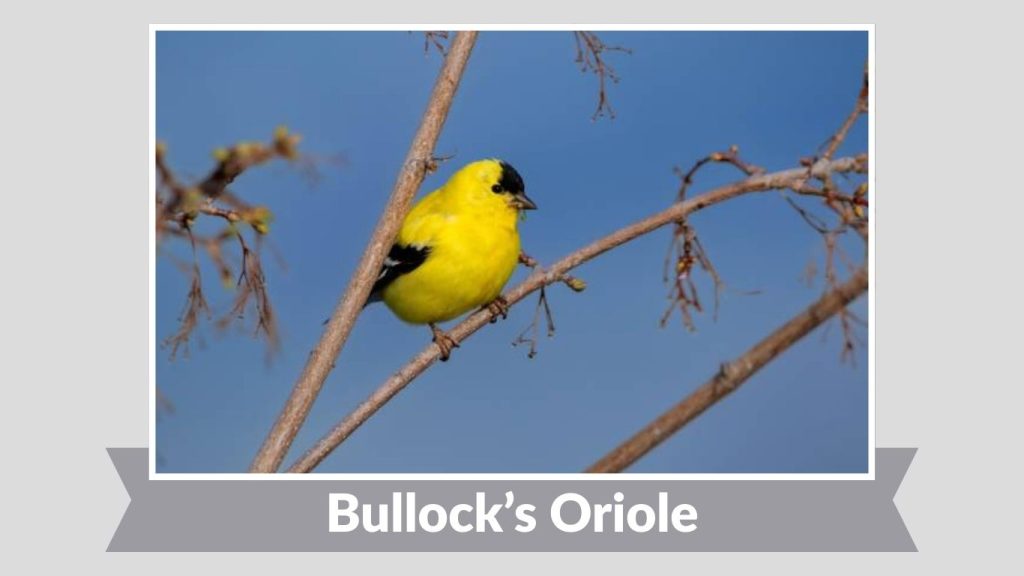
Bullock’s Oriole is a brightly colored songbird of western North America, admired for its bold yellow-orange body and contrasting black wings. Often seen high in trees along rivers and open woodlands, this species is active, vocal, and visually striking, especially during the breeding season.
Identification
- Bright yellow-orange underparts
- Black wings with prominent white wing bars
- Black crown, eye line, and throat (adult males)
- Long, pointed bill
- Females are paler yellow with grayish-black wings
Habitat
Bullock’s Orioles favor open woodlands, riparian corridors, forest edges, and suburban areas with tall deciduous trees. They are particularly common along rivers and streams lined with cottonwoods and willows. This species is migratory, breeding in the western United States and southern Canada, then traveling to Mexico and Central America for winter.
Diet
Their diet consists of insects, fruit, and nectar. Bullock’s Orioles feed on caterpillars, beetles, ants, and spiders during the breeding season. They also consume berries and soft fruits and are frequent visitors to nectar feeders and flowering plants.
Behavior
These birds are often seen foraging high in tree canopies, moving swiftly between branches. Bullock’s Orioles are known for their elaborate, hanging, basket-like nests woven from plant fibers and hair. Males sing a series of rich whistles mixed with harsh notes to defend territory and attract mates.
8. Scott’s Oriole
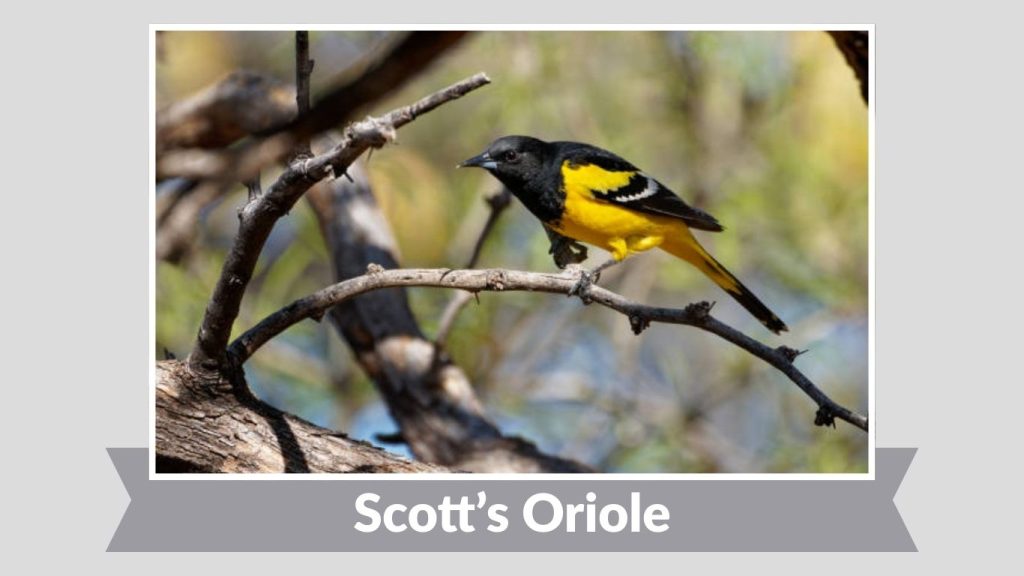
Scott’s Oriole is a striking desert songbird known for its lemon-yellow body and bold black wings and head. Native to the arid regions of the southwestern United States and Mexico, it stands out vividly against rocky hillsides and desert vegetation. Its clear, ringing song often echoes through open canyons and desert slopes.
Identification
- Bright yellow underparts and rump
- Jet-black head, back, and wings
- Black throat extending onto the chest
- Long, slightly curved bill
- Females are duller yellow with grayish-black wings
Habitat
Scott’s Orioles prefer desert mountains, rocky slopes, open canyons, and arid scrublands, especially areas with yucca, agave, or sotol plants. They are strongly associated with these plants, often nesting within their stiff leaves. During winter, many individuals migrate south into central Mexico.
Diet
Their diet includes insects, nectar, and fruit. Scott’s Orioles frequently feed on caterpillars, beetles, and grasshoppers, as well as nectar from desert flowers and hummingbird feeders. They also eat berries and soft fruits when available.
Behavior
Scott’s Orioles are usually seen alone or in pairs. They forage deliberately, often probing flowers and leaves for food. The male’s song is loud, whistled, and flute-like, making it one of the most recognizable sounds of desert habitats during spring and early summer.
9. Altamira Oriole
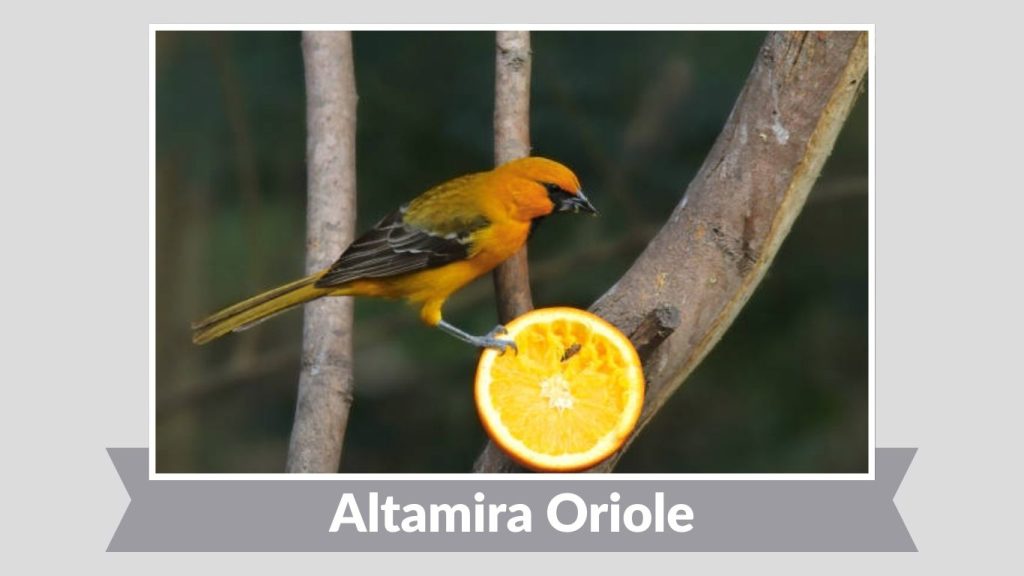
The Altamira Oriole is the largest oriole species in North America, known for its bold coloring and powerful voice. Its bright yellow-orange body contrasts dramatically with black wings and a black face, making it easy to recognize where it occurs. This species is most commonly found in southern Texas, Mexico, and Central America.
Identification
- Bright yellow-orange body
- Black wings with subtle yellow edging
- Black face and throat forming a mask
- Long, thick, slightly curved bill
- Females slightly duller but similarly patterned
Habitat
Altamira Orioles favor open woodlands, forest edges, river corridors, savannas, and suburban areas with large trees. They often nest high in tall trees such as oaks, palms, or mesquites. Unlike many other orioles, Altamira Orioles are mostly non-migratory, though some populations move locally in response to food availability.
Diet
Their diet includes insects, spiders, fruit, and nectar. Altamira Orioles feed on caterpillars, beetles, grasshoppers, and ants, as well as figs, berries, and other soft fruits. They are also known to visit feeders offering fruit or nectar.
Behavior
These birds are confident and vocal. Males produce loud, whistled songs that carry long distances, often sounding almost tropical. Altamira Orioles build large, hanging nests and vigorously defend their nesting territory, sometimes even chasing away much larger birds.
10. Black-winged Oriole
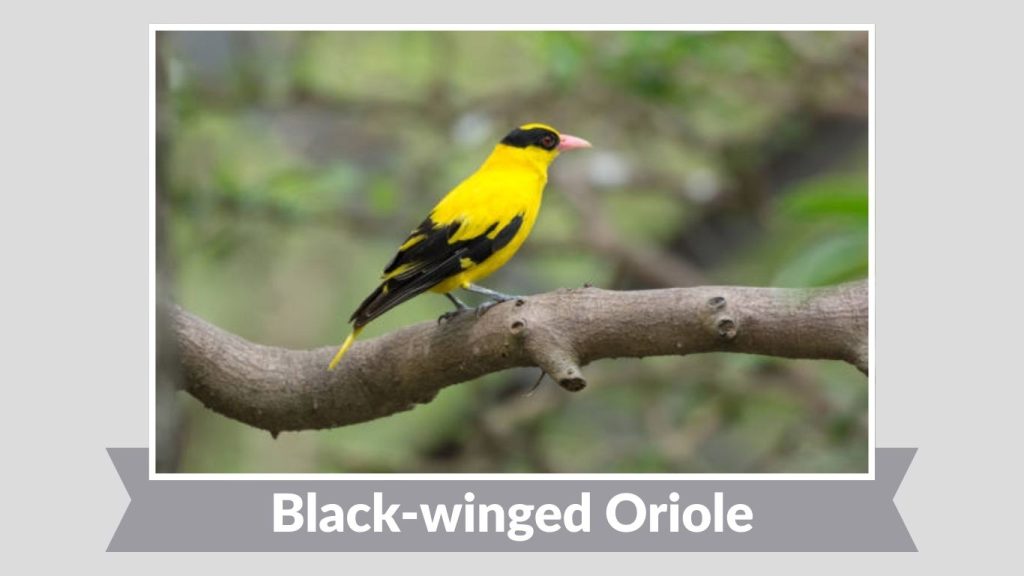
The Black-winged Oriole is a brightly colored bird of South and Southeast Asia, admired for its vivid yellow body and sharply contrasting black wings. Often seen alone or in pairs, it frequents open woodlands and cultivated areas. Its rich whistling calls make it noticeable even when hidden among foliage.
Identification
- Bright yellow body
- Jet-black wings with a clean contrast
- Black eye stripe extending toward the nape
- Stout, slightly curved pinkish bill
- Females slightly duller than males
Habitat
Black-winged Orioles inhabit open forests, forest edges, plantations, orchards, and gardens. They are adaptable and often found near human settlements, especially in areas with fruiting trees. This species is generally resident, though some populations may move locally depending on season and food availability.
Diet
Their diet consists mainly of insects and fruit. They feed on caterpillars, beetles, grasshoppers, and spiders, as well as figs, berries, and cultivated fruits. Black-winged Orioles are skilled foragers, often gleaning food from leaves and branches high in the canopy.
Behavior
These orioles are usually solitary or seen in pairs. They move deliberately through trees, pausing often while foraging. Their calls are strong, clear whistles, repeated at intervals. Despite their bright coloration, they can remain surprisingly well concealed among dense foliage.
11. Yellow Oriole
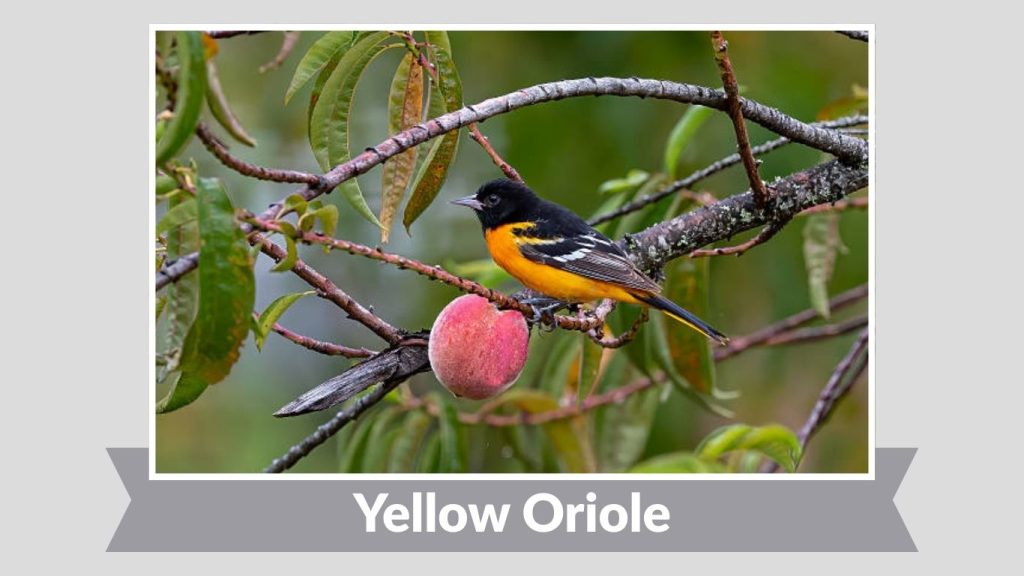
The Yellow Oriole is a striking Asian songbird known for its bright yellow plumage and contrasting black wings. Found mainly in tropical and subtropical regions, this species is often associated with forest edges and wooded countryside. Its vivid coloration and clear, melodious calls make it a standout among orioles.
Identification
- Bright yellow body
- Black wings with sharp contrast
- Black eye stripe extending to the nape
- Pinkish to reddish bill
- Females slightly duller, with more olive tones
Habitat
Yellow Orioles inhabit open forests, woodland edges, plantations, orchards, and gardens. They are commonly seen in areas with tall trees and abundant fruiting plants. Although generally resident, some populations may make short seasonal movements in response to food availability.
Diet
Their diet includes insects, fruit, and nectar. Yellow Orioles feed on caterpillars, beetles, ants, and spiders, as well as berries, figs, and other soft fruits. They may also visit flowering trees to drink nectar, especially during dry seasons.
Behavior
These birds are usually seen alone or in pairs, moving calmly through tree canopies. They forage by picking insects and fruit from leaves and branches. The song consists of clear, fluting whistles that are often repeated, making the bird easy to detect even when it remains hidden among foliage.
12. Yellow-backed Oriole
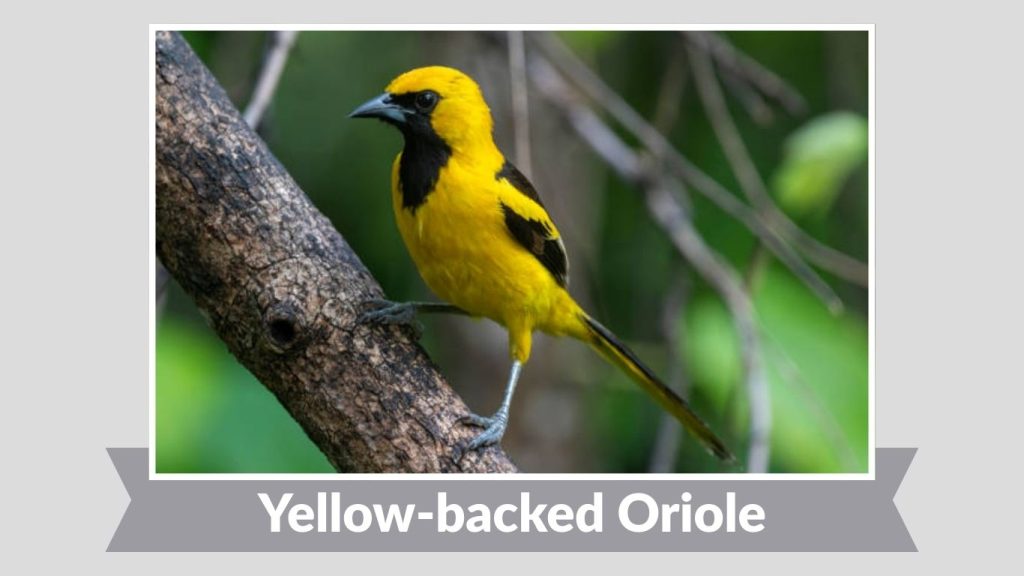
The Yellow-backed Oriole is a colorful songbird native to parts of Central America and northern South America. It is recognized for its bright yellow back and underparts, which contrast strongly with its black wings and head. This species is often seen in open woodlands and forest edges, where it adds flashes of color to the canopy.
Identification
- Bright yellow back and underparts
- Black head, wings, and tail
- Black throat extending onto the chest
- Strong, slightly curved bill
- Females are duller with more olive-yellow tones
Habitat
Yellow-backed Orioles prefer open forests, woodland edges, riverine forests, and plantations. They are also found in agricultural areas with scattered trees. This species is mostly resident, remaining in the same general area year-round, though it may move locally in response to seasonal changes in food supply.
Diet
Their diet consists mainly of insects and fruit. They feed on caterpillars, beetles, grasshoppers, and spiders, as well as berries and other soft fruits. Yellow-backed Orioles often forage in the mid to upper canopy, carefully searching leaves and branches.
Behavior
These birds are usually solitary or found in pairs. They move deliberately through trees and are less active than some other orioles. Their song is a series of clear, whistled notes, often delivered from a concealed perch, making them more frequently heard than seen.
13. Golden Tanager
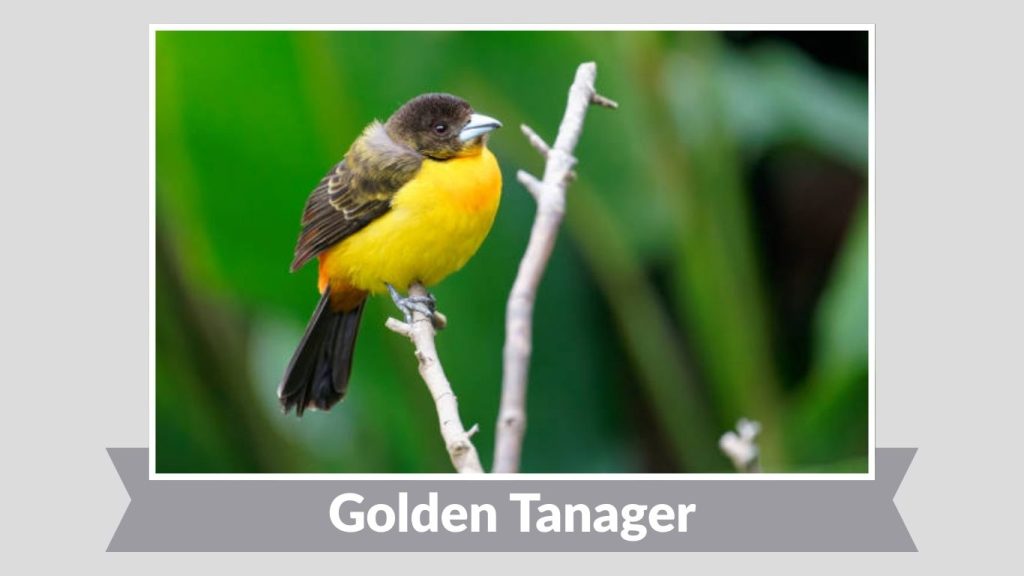
The Golden Tanager is a brilliantly colored bird native to South America, best known for its rich golden-yellow body contrasted by black wings and markings. Found mainly in tropical forests and mountainous regions, this species adds vivid color to mixed-species flocks moving through the canopy. Its bold appearance makes it one of the most eye-catching tanagers in its range.
Identification
- Bright golden-yellow body
- Black wings with sharp contrast
- Black markings on the back and face
- Medium-length, slightly pointed bill
- Females are slightly duller but similarly patterned
Habitat
Golden Tanagers inhabit tropical and subtropical forests, forest edges, cloud forests, and wooded hillsides. They are most commonly found in mid to upper elevations of the Andes and nearby regions. This species prefers dense foliage and is often seen high in trees, where it blends surprisingly well despite its bright colors.
Diet
Their diet consists mainly of fruit and insects. Golden Tanagers feed on berries, small fruits, and figs, as well as caterpillars, beetles, ants, and other insects. They often forage actively, picking food from leaves, branches, and clusters of fruit while moving steadily through the canopy.
Behavior
Golden Tanagers are social birds and are frequently observed in pairs or as part of mixed-species feeding flocks. They move energetically through trees, rarely staying in one place for long. While not especially loud, they produce short calls to stay in contact with flock members. Their combination of bright plumage and constant movement makes them a favorite among birdwatchers in tropical forests.
14. Black-winged Yellow Tanager
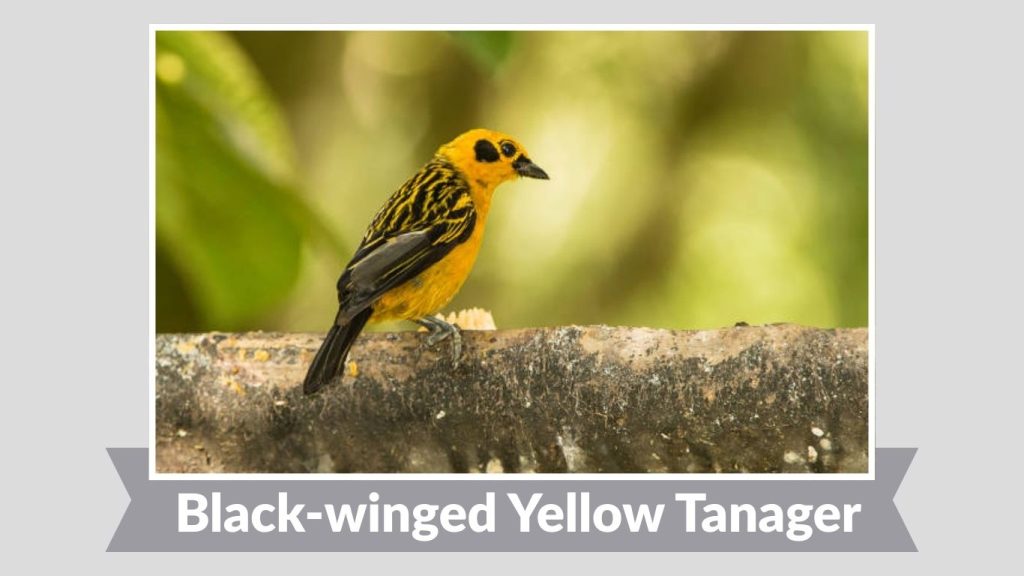
The Black-winged Yellow Tanager is a vivid and elegant bird of Central and South America, easily recognized by its bright yellow body and contrasting black wings. It is a canopy-dwelling species that brings flashes of color to tropical forests and woodland edges. Though not always easy to spot, its striking plumage stands out when seen in good light.
Identification
- Bright yellow head, back, and underparts
- Deep black wings creating strong contrast
- Short, slightly pointed bill
- Compact, medium-sized body
- Females slightly duller yellow than males
Habitat
Black-winged Yellow Tanagers are commonly found in tropical lowland forests, forest edges, secondary growth, and wooded clearings. They also occur in plantations and gardens with tall trees. This species prefers warm, humid regions and is most often seen in the mid to upper canopy, where dense foliage provides both food and cover.
Diet
Their diet consists mainly of insects and fruit. They feed on caterpillars, beetles, ants, and other small arthropods, along with berries and soft fruits. Black-winged Yellow Tanagers forage by moving steadily through branches, picking prey from leaves or fruit clusters. They may occasionally join mixed-species feeding flocks, which helps increase foraging efficiency.
Behavior
These tanagers are usually seen alone or in pairs. They are active but not noisy, communicating with soft calls while foraging. Their movements are smooth and deliberate as they travel through the canopy. Despite their bright coloration, they can be surprisingly difficult to detect when partially hidden among sunlit leaves.
15. Yellow-rumped Cacique
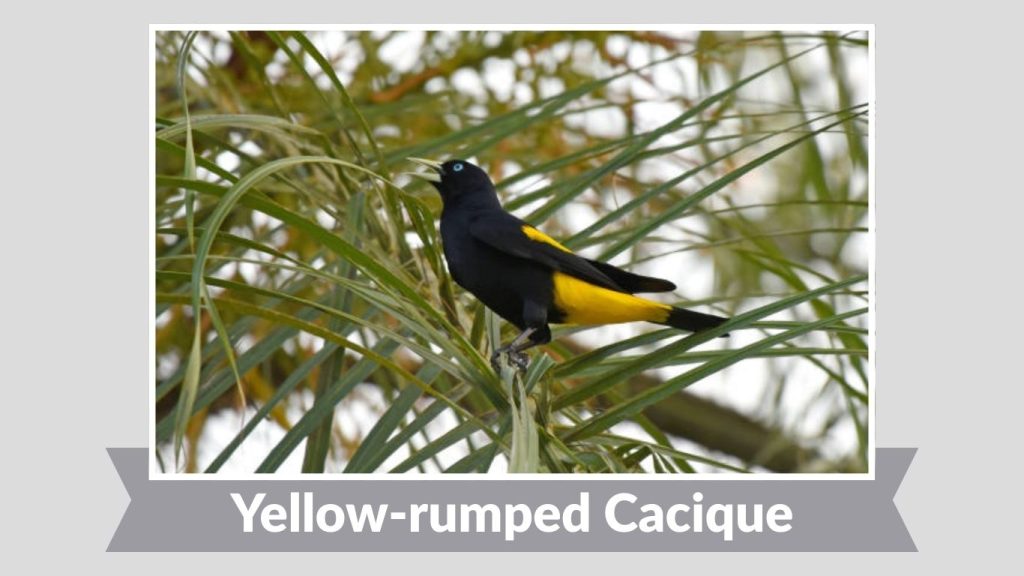
The Yellow-rumped Cacique is a striking black-and-yellow bird native to Central and South America. Known for its bold coloration and colonial nesting behavior, it is often seen in noisy groups near forest edges and open woodlands. Its bright yellow rump stands out sharply against the otherwise dark body and wings.
Identification
- Mostly black body and wings
- Bright yellow rump and lower back
- Pale yellow eyes in adults
- Long, pointed bill
- Large, sturdy body
Habitat
Yellow-rumped Caciques inhabit lowland forests, forest edges, riverbanks, plantations, and open wooded areas. They are commonly found near water and in areas with tall trees suitable for nesting. This species is largely resident, though it may move locally depending on food availability.
Diet
Their diet includes insects, fruit, nectar, and small invertebrates. Yellow-rumped Caciques feed on caterpillars, beetles, ants, and spiders, as well as berries and fruits. They also visit flowering trees for nectar and occasionally forage in agricultural areas.
Behavior
These birds are highly social and often nest in colonies, with multiple hanging nests suspended from tall trees. They are very vocal, producing a wide range of calls, whistles, and harsh sounds. Yellow-rumped Caciques are bold and active, frequently moving in groups and drawing attention with both their behavior and striking appearance.