


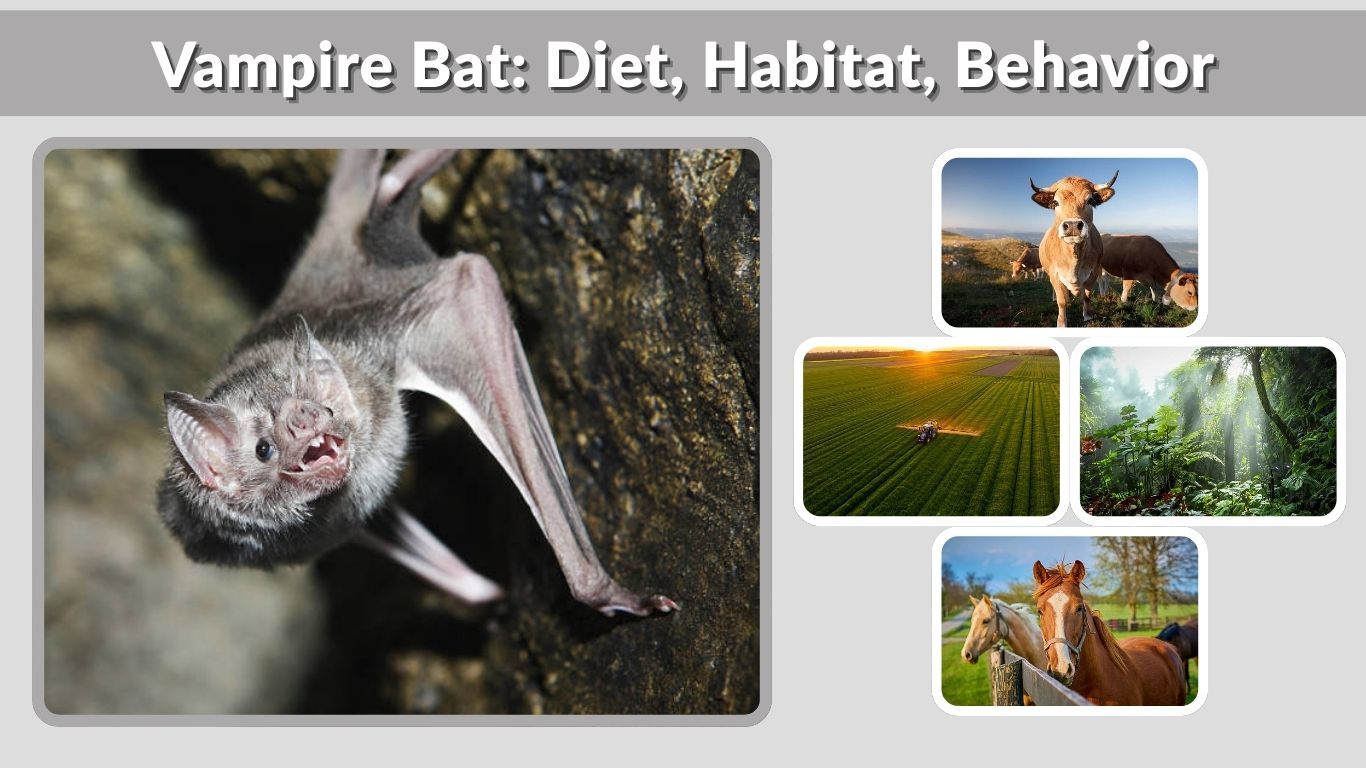
The vampire bat is one of the most fascinating and unusual animals in the world. Unlike most bats that feed on insects or fruit, vampire bats survive by drinking the blood of other animals. This feeding behavior, known as hematophagy, makes them unique among mammals. Vampire bats are mainly found in Central and South America, where they live in forests, caves, and rural areas. Despite their frightening name, these bats are generally small and play interesting roles in nature and scientific research.
What Is a Vampire Bat?
A vampire bat is a small mammal belonging to the order Chiroptera, the same group that includes all bats. What makes vampire bats different from other bat species is their specialized diet and physical adaptations that allow them to feed on blood.
There are only three species of vampire bats in the world, and they all belong to a group within the bat family Phyllostomidae.
Scientific Classification
Vampire bats are classified as follows:
- Kingdom: Animalia
- Phylum: Chordata
- Class: Mammalia
- Order: Chiroptera
- Family: Phyllostomidae
- Subfamily: Desmodontinae
This group of bats has evolved unique features that make blood feeding possible.
Types of Vampire Bats
There are three known species of vampire bats:
- Common vampire bat (Desmodus rotundus) – the most widespread and well-known species.
- Hairy-legged vampire bat (Diphylla ecaudata) – mainly feeds on birds.
- White-winged vampire bat (Diaemus youngi) – also prefers bird blood.
Among these, the common vampire bat is the species most often studied by scientists.
Physical Characteristics
Vampire bats are relatively small animals, but they have several features that help them survive on a blood-based diet.
Common physical traits include:
- Short, blunt snout
- Large ears that help detect sounds
- Brown or gray fur
- Sharp front teeth designed for cutting skin
Unlike many bats, vampire bats also have strong hind legs, allowing them to move surprisingly well on the ground.
Vampire Bat Size and Identification
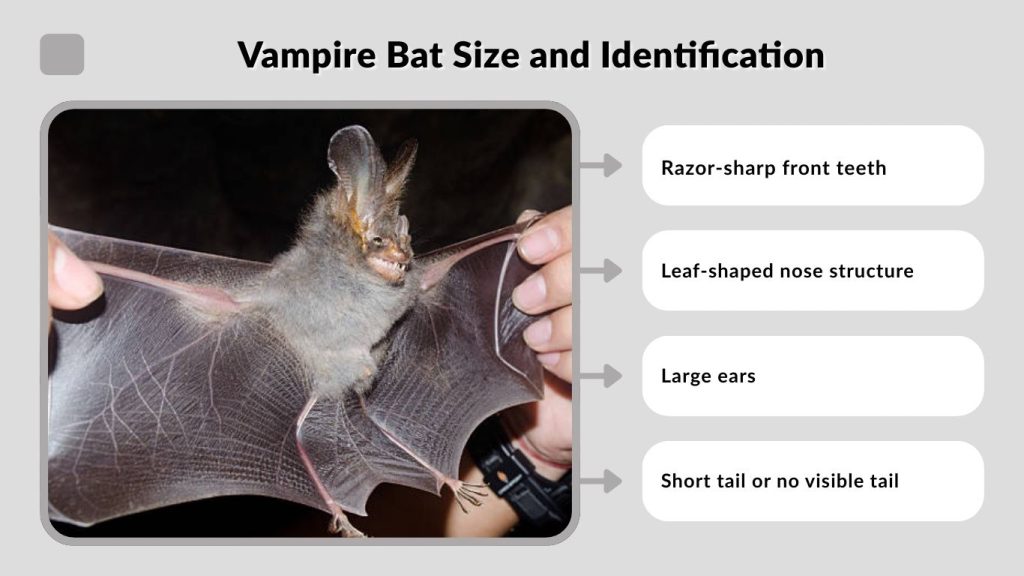
Vampire bats are not large creatures, despite their reputation in stories and myths. In fact, they are quite small compared to many other mammals.
Vampire Bat Size
Typical vampire bat measurements include:
- Body length: 7–9 cm (about 3–3.5 inches)
- Wingspan: 18–20 cm (7–8 inches)
- Weight: 30–40 grams
Although their bodies are small, their wings allow them to fly efficiently while searching for food during the night.
Unique Identification Features
Vampire bats can be recognized by several distinctive features that set them apart from other bat species.
Key identification traits include:
- Razor-sharp front teeth used for making small cuts
- Leaf-shaped nose structure that helps with sensory detection
- Large ears that assist with hearing and navigation
- Short tail or no visible tail
Another important feature is their heat-sensitive nose, which helps them detect warm blood vessels near the skin of animals.
Adaptations for Blood Feeding
Vampire bats have developed remarkable biological adaptations that allow them to feed on blood.
Important adaptations include:
- Sharp incisors that make painless cuts in animal skin
- Anticoagulant saliva, which prevents blood from clotting
- Grooved tongue that helps them lap up blood
Interestingly, vampire bats do not suck blood like popular myths suggest. Instead, they make a tiny cut and lick the blood as it flows.
Vampire Bat Habitat
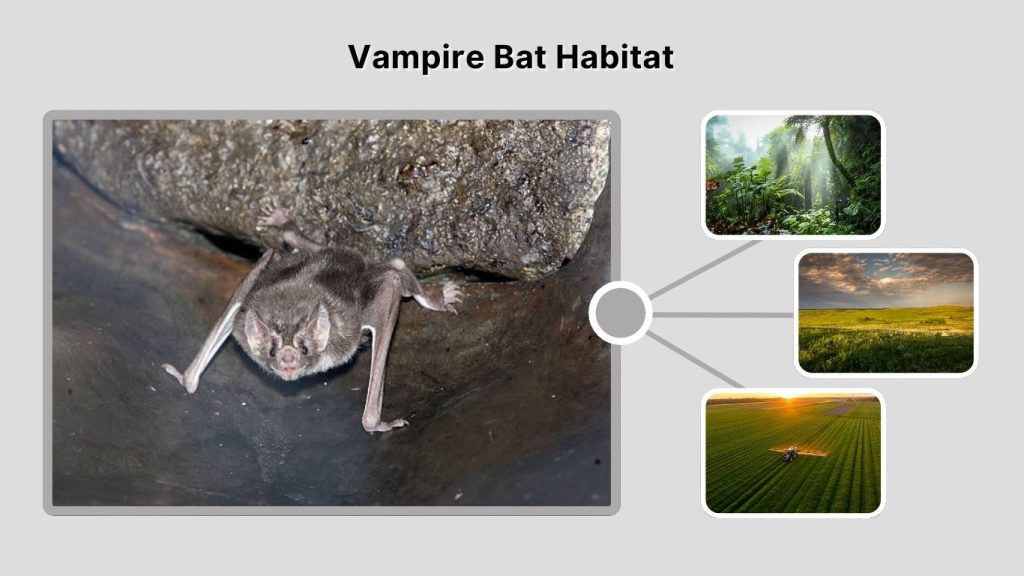
Vampire bats live primarily in warm regions where suitable food sources are available. They prefer environments where animals such as livestock or wildlife are present.
Geographic Distribution
Vampire bats are found mainly in Central and South America. Their range includes:
- Mexico
- Central American countries
- Brazil
- Argentina
- Chile
- Peru and surrounding regions
These bats are most common in tropical and subtropical climates.
Preferred Habitats
Vampire bats can survive in several types of environments as long as they have access to food and safe roosting locations.
Their common habitats include:
- Tropical forests
- Grasslands
- Agricultural areas
- Rural environments with livestock
Livestock farms often provide reliable feeding opportunities for vampire bats.
Roosting Locations
During the day, vampire bats sleep in sheltered locations called roosts. These places protect them from predators and extreme temperatures.
Typical roosting sites include:
- Caves
- Hollow trees
- Abandoned buildings
- Mines and tunnels
Vampire bats usually live in colonies, which may contain dozens or even hundreds of individuals.
Vampire Bat Diet
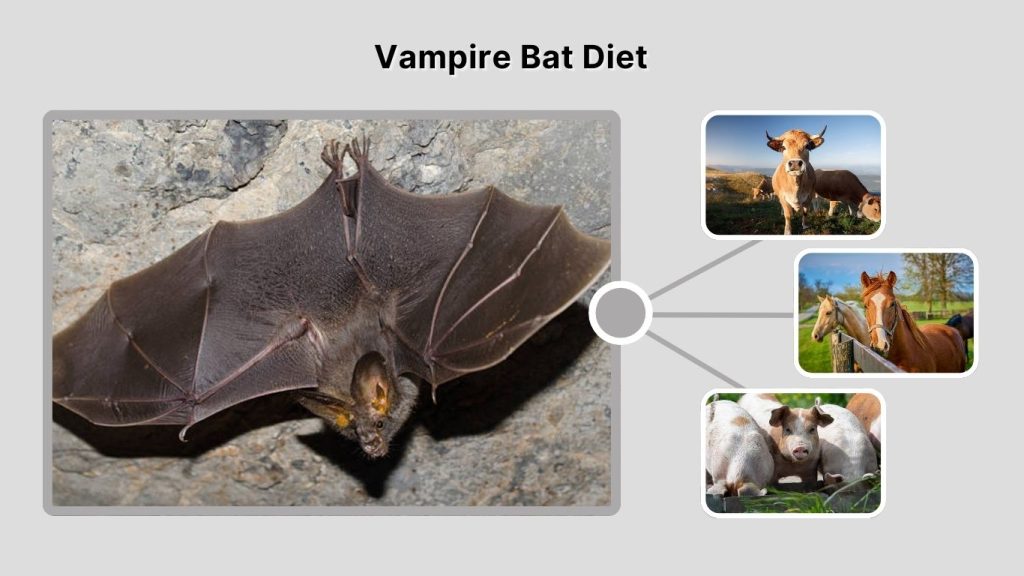
The diet of vampire bats is what makes them truly unique among mammals.
What Do Vampire Bats Eat?
Vampire bats feed exclusively on blood, a diet known as hematophagy. They typically drink blood from animals such as:
- Cattle
- Horses
- Pigs
- Birds
- Wild mammals
A vampire bat usually drinks about one tablespoon of blood per feeding, which is enough to sustain it for the night.
Feeding Behavior
Vampire bats feed at night, usually after midnight when animals are resting. They approach their host quietly and land nearby.
Using their sharp teeth, they make a small, shallow cut in the animal’s skin. Their saliva contains chemicals that prevent the blood from clotting, allowing them to lick the blood as it flows.
This feeding process typically lasts 20–30 minutes.
Vampire Bat Behavior and Lifestyle
Vampire bats display several unique behaviors that make them different from most other bat species. Their survival depends on cooperation, social interaction, and efficient nighttime feeding habits.
Nocturnal Activity
Like most bats, vampire bats are nocturnal, meaning they are active at night. They typically leave their roosts shortly after sunset to search for animals on which they can feed. Their excellent night vision and echolocation help them navigate in darkness.
During the day, they rest in dark and sheltered places such as caves or abandoned structures. These daytime roosts protect them from predators and extreme weather.
Social Structure
Vampire bats are highly social animals and often live in colonies that may include dozens or even hundreds of individuals. Within these colonies, bats form strong social bonds.
Researchers have discovered that vampire bats can recognize individual colony members and maintain long-term social relationships. These connections help improve survival, especially when food is scarce.
Food Sharing Behavior
One of the most remarkable behaviors of vampire bats is food sharing. If a bat fails to find food during the night, another bat in the colony may regurgitate some of the blood it consumed and share it.
This behavior is important because vampire bats cannot survive long without food. A bat that goes more than two days without feeding may starve. Food sharing helps ensure that colony members survive difficult periods.
Reproduction and Life Cycle
The reproduction of vampire bats follows a pattern that ensures young bats are born when conditions are favorable.
Mating Behavior
In many regions, vampire bats can breed throughout the year, although certain seasons may have higher mating activity. Males often compete for access to females within the colony.
Pregnancy and Birth
The gestation period for vampire bats lasts about six to seven months. Female bats typically give birth to one pup at a time.
Newborn bats are very small and completely dependent on their mothers. The mother carries and nurses the pup until it grows stronger.
Development of Young
Young vampire bats develop quickly. For the first few weeks, they rely on their mother’s milk. After about two months, they begin learning how to feed on blood.
Juvenile bats usually remain close to their mothers while they learn the skills needed to locate hosts and survive independently.
Vampire Bat Lifespan
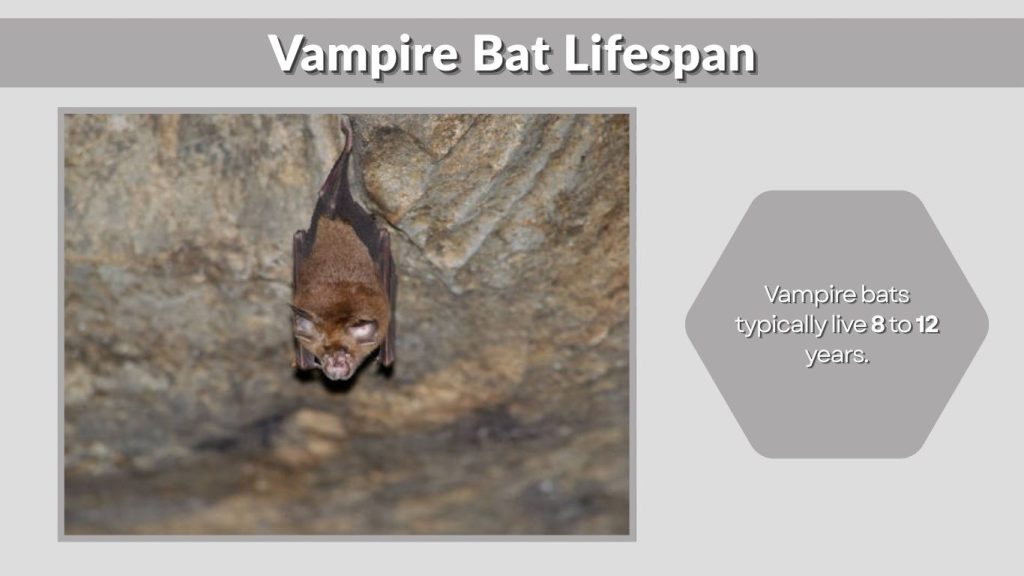
Vampire bats can live relatively long lives compared to many small mammals.
Average Lifespan
In the wild, vampire bats typically live 8 to 12 years. Their survival depends on factors such as food availability and environmental conditions.
Lifespan in Captivity
In controlled environments such as research facilities or zoos, vampire bats may live up to 20 years or more because they are protected from predators and have consistent access to food.
Factors Affecting Lifespan
Several factors can influence how long vampire bats live, including:
- Disease
- Predators
- Habitat destruction
- Human disturbance
Stable habitats and reliable food sources help improve survival rates.
Myths and Misconceptions About Vampire Bats
Because of their name and feeding habits, vampire bats are often misunderstood.
Connection to Vampire Legends
The term “vampire” is strongly connected to folklore about supernatural creatures that drink human blood. Early explorers in the Americas observed bats feeding on livestock and associated them with these legends.
This connection helped create the myth of the vampire bat.
Do Vampire Bats Attack Humans?
Although vampire bats are capable of feeding on human blood, such events are extremely rare. They usually prefer animals like cattle, horses, and birds.
Most vampire bats avoid humans whenever possible.
Reality vs Popular Culture
Movies and stories often portray vampire bats as dangerous creatures that attack people aggressively. In reality, they are small animals that usually feed quietly on livestock without causing serious harm.
Understanding the difference between myth and reality helps reduce unnecessary fear of bats.
Threats to Vampire Bats
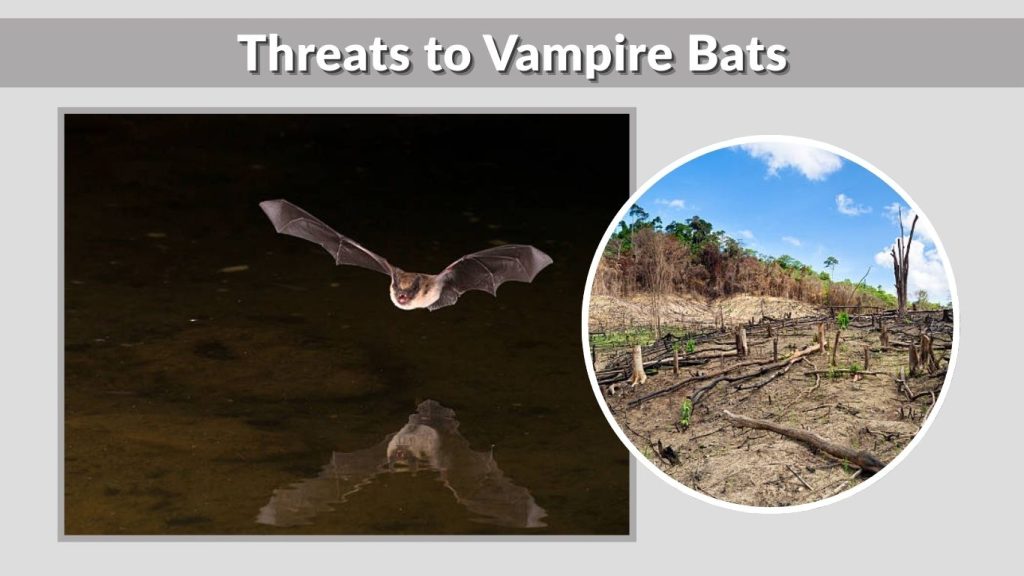
Like many wildlife species, vampire bats face several threats in the modern world.
Habitat Loss
Deforestation and land development reduce the number of natural roosting sites available for bats. When forests are destroyed, bats may struggle to find safe places to live.
Human Persecution
Because of fear and misunderstanding, people sometimes attempt to eliminate vampire bats. This can disrupt ecosystems and harm bat populations.
Disease Concerns
Vampire bats can occasionally carry rabies, which has led to concerns in livestock farming regions. However, scientists emphasize that proper livestock management and vaccination can reduce these risks.
Interesting Vampire Bat Facts
Vampire bats have several fascinating traits that make them unique among mammals:
- They are the only mammals that feed entirely on blood.
- They can detect body heat from animals using specialized sensors in their noses.
- Vampire bats can walk, run, and even jump on the ground, which is unusual for bats.
- They have excellent memory and can remember individuals that share food with them.
- Their saliva contains chemicals that scientists study for medical treatments related to blood clotting.
Conservation and Research
Scientists continue to study vampire bats to better understand their behavior and biology.
Ecological Importance
Although they are sometimes viewed negatively, vampire bats are part of complex ecosystems. Like other bats, they contribute to ecological balance and biodiversity.
Scientific Research
The anticoagulant compounds in vampire bat saliva have inspired medical research, particularly for treatments related to strokes and blood clotting disorders.
Conservation Efforts
Protecting bat habitats and educating the public about bats helps promote coexistence between humans and wildlife.
Conclusion
Vampire bats are among the most unusual mammals on Earth due to their blood-based diet and remarkable adaptations. Despite their reputation in myths and legends, they are small animals that play important roles in nature and scientific research. Their complex social behavior, unique feeding strategies, and ecological significance make them fascinating subjects for study. Understanding vampire bats helps dispel myths and encourages greater appreciation for these remarkable creatures.