

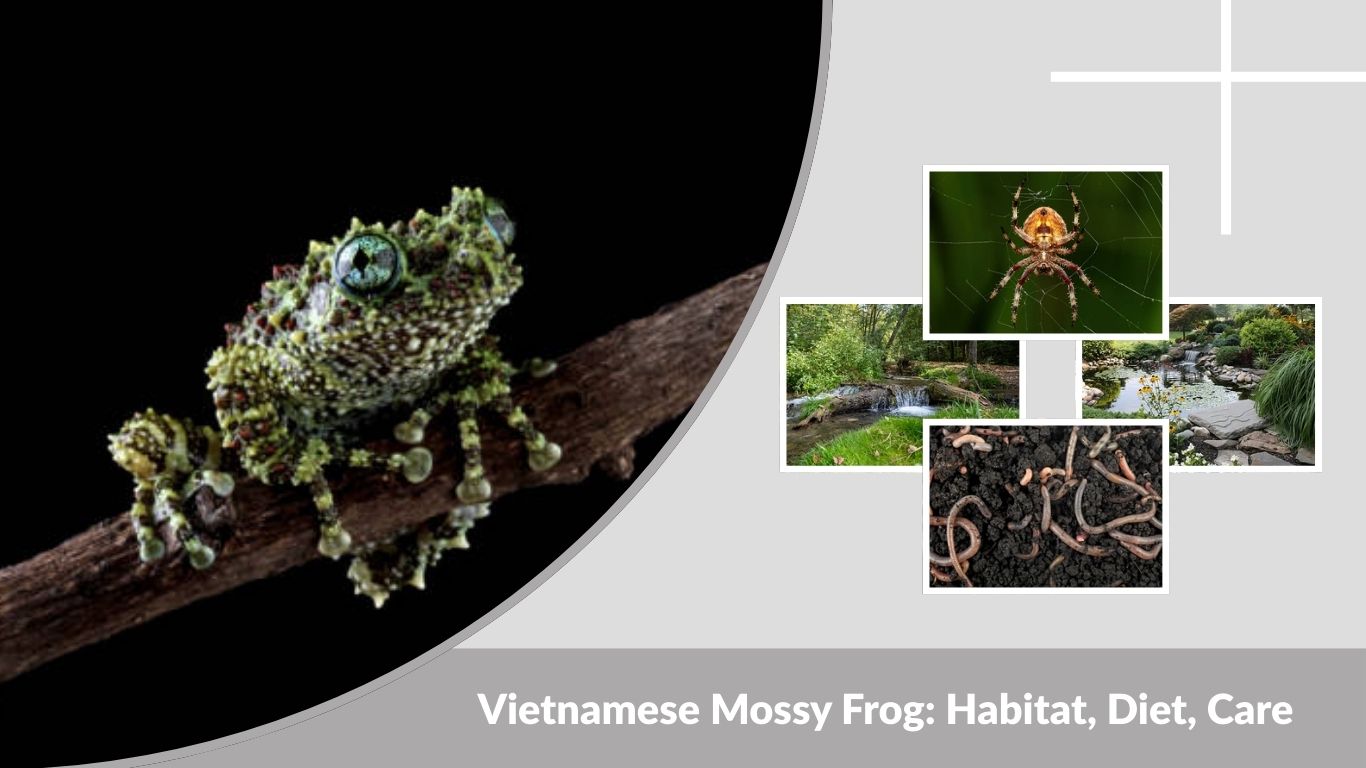
The Vietnamese mossy frog (Theloderma corticale) is one of the most visually fascinating amphibians in the world. Native to the humid forests of northern Vietnam, this small tree frog is famous for its incredible camouflage. Its bumpy, green-and-brown skin makes it look almost exactly like a patch of moss growing on a rock. This natural disguise helps it survive in dense forest habitats filled with predators. In this article, we’ll explore its physical features, habitat, behavior, and the unique adaptations that make it a true master of disguise.
Scientific Classification
- Kingdom: Animalia
- Phylum: Chordata
- Class: Amphibia
- Order: Anura
- Family: Rhacophoridae
- Genus and Species: Theloderma corticale
The Vietnamese mossy frog belongs to the Rhacophoridae family, often known as the “Old World tree frogs.” Many species in this family are excellent climbers, and the mossy frog is no exception. Its scientific name, corticale, refers to its bark-like appearance, highlighting its natural camouflage.
Physical Description
Size and Body Structure
The Vietnamese mossy frog is relatively small, measuring about 2 to 3.5 inches (5–9 cm) in length. It has a compact, sturdy body with relatively long limbs suited for climbing. Like other tree frogs, it has expanded toe pads that allow it to grip onto wet surfaces such as rocks, tree trunks, and leaves.
Its eyes are large and slightly protruding, providing good night vision. The pupils are horizontal, which helps it detect movement in low-light conditions.
Skin Texture and Color
What truly sets this frog apart is its remarkable skin. The surface of its body is covered in irregular bumps and tubercles that resemble clumps of moss or lichen. The coloration varies from deep green to brown and black, often with lighter speckles. These color patterns break up the outline of its body, making it nearly invisible against moss-covered rocks or tree bark.
When the frog remains still, it can be almost impossible to distinguish from its surroundings. This camouflage is so effective that even experienced researchers sometimes struggle to spot it in the wild.
Unique Adaptations
The moss-like skin is not just decorative—it is a critical survival tool. Predators such as snakes and birds rely heavily on sight, and the frog’s appearance allows it to blend seamlessly into the forest environment.
In addition to camouflage, the frog’s sticky toe pads help it climb vertical surfaces with ease. This climbing ability allows it to move between rocks, vegetation, and small trees in search of food and safe hiding spots.
Habitat and Distribution
Geographic Range
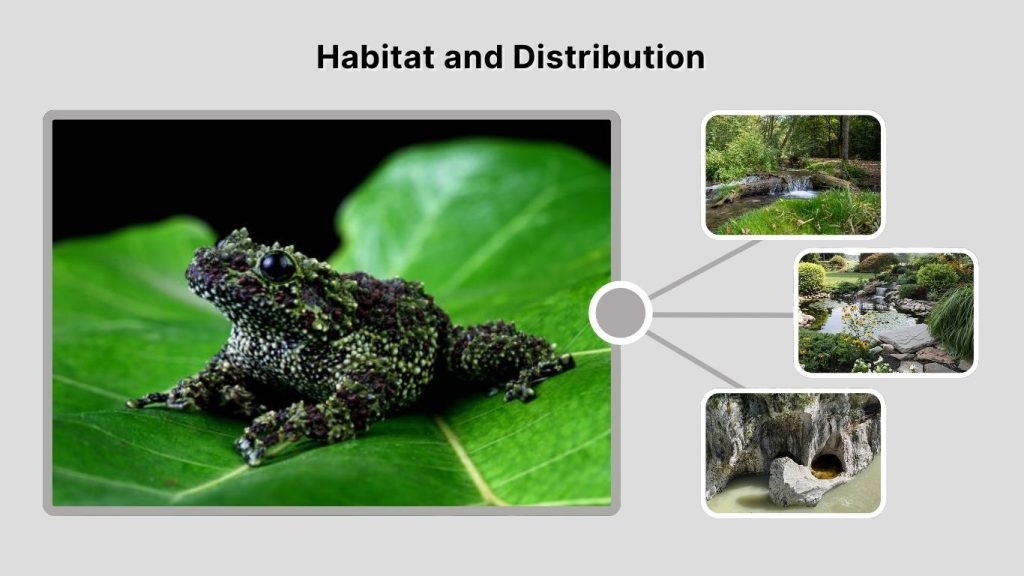
The Vietnamese mossy frog is primarily found in northern Vietnam. Its distribution is relatively limited, though small populations may also occur in neighboring parts of Laos. Because it lives in specific forest environments, its range is not widespread.
Natural Habitat
This species prefers tropical and subtropical evergreen forests, particularly in mountainous regions. It is commonly found in limestone karst landscapes, where rocky outcrops, caves, and crevices create ideal hiding places.
Mossy frogs are closely associated with water. They are often found near small forest streams, ponds, or water-filled rock cavities. These moist environments are essential for their survival, as amphibians rely on damp skin to breathe and regulate moisture.
Environmental Conditions
The frog thrives in areas with high humidity and relatively cool forest temperatures. Dense vegetation and constant moisture create the perfect conditions for moss growth—an ideal backdrop for its camouflage.
Because it depends on stable, humid habitats, the Vietnamese mossy frog is sensitive to environmental changes. Deforestation and habitat disturbance can significantly impact local populations.
Behavior and Lifestyle
Nocturnal Activity
The Vietnamese mossy frog is primarily nocturnal. During the day, it remains motionless, pressed against rocks or tree trunks, relying on its camouflage to avoid detection. At night, it becomes active, climbing and exploring in search of food.
This nighttime activity reduces the risk of predation and helps it hunt more effectively.
Defensive Behavior
When threatened, the mossy frog uses a combination of stillness and posture to protect itself. Its first line of defense is to freeze completely, blending into the background. If the threat persists, it may curl its body inward and tuck its limbs close, further resembling a lump of moss.
Unlike some frogs, it does not rely heavily on toxins or bright warning colors. Instead, invisibility is its greatest weapon.
Diet and Feeding Habits
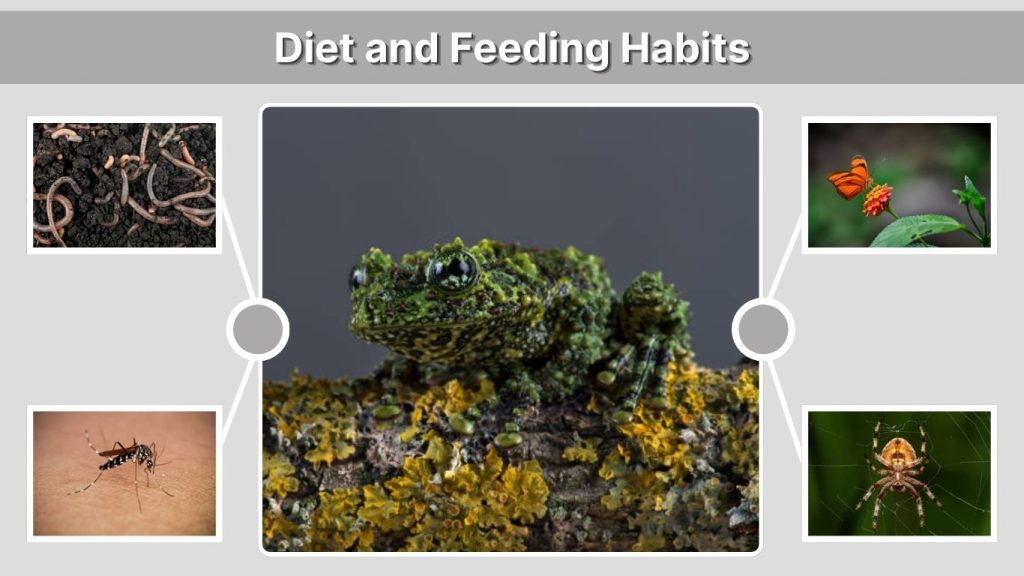
The Vietnamese mossy frog is a carnivorous predator that feeds mainly on small invertebrates. Its diet includes:
- Insects
- Spiders
- Worms
- Small arthropods
It is an ambush hunter. Rather than actively chasing prey, it waits patiently until an insect comes within reach. When the moment is right, it quickly extends its sticky tongue to capture the prey.
Its camouflage not only protects it from predators but also allows it to approach prey without being noticed. This dual advantage makes it highly effective in its forest habitat.
Reproduction and Life Cycle
The Vietnamese mossy frog breeds during the rainy season, when humidity levels rise and water sources become more abundant. Increased rainfall creates temporary pools and fills tree holes and rock cavities with water, providing safe environments for reproduction.
Courtship and Egg Laying
Males attract females by producing soft, repetitive calls at night. These vocalizations echo through forest streams and rocky crevices. Once a female approaches, the male grasps her in a mating position known as amplexus.
Unlike many frogs that lay eggs directly in open water, the Vietnamese mossy frog prefers sheltered locations. Females deposit their eggs in water-filled tree holes, rock crevices, or small forest cavities near streams. These hidden sites protect the eggs from strong currents and many aquatic predators.
Tadpole Development
After hatching, the tadpoles develop in these small, contained water sources. Because the pools are often isolated, the tadpoles must rely on limited nutrients within the cavity. As they grow, they undergo metamorphosis, gradually developing legs and absorbing their tails.
Once fully transformed, the young froglets leave the water and begin their lives in the surrounding forest. Their moss-like skin develops as they mature, improving their camouflage and chances of survival.
Predators and Survival Strategies
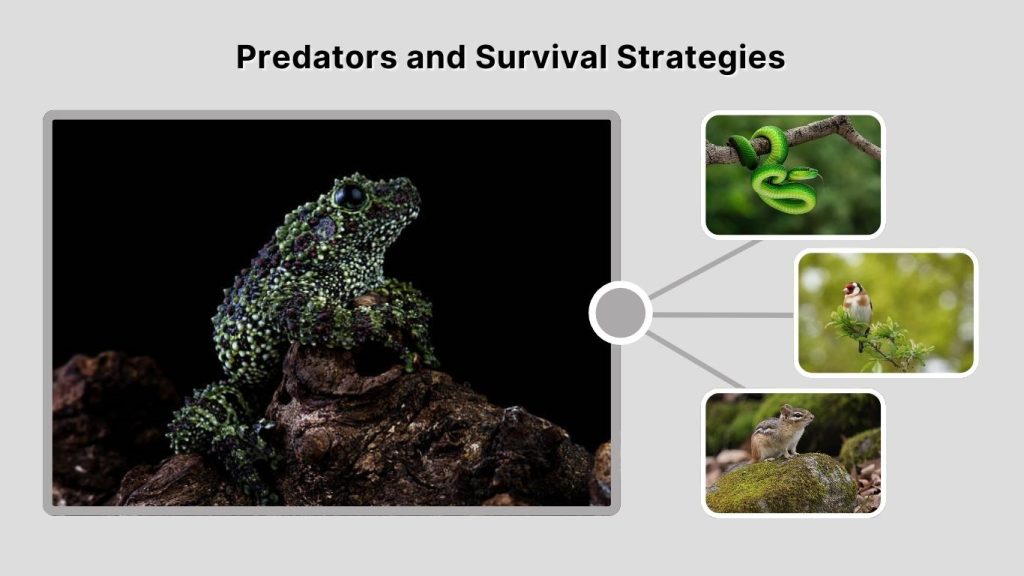
Despite their exceptional camouflage, Vietnamese mossy frogs still face threats in the wild. Common predators include:
- Snakes
- Birds
- Small mammals
- Larger amphibians
Their primary defense remains their ability to blend perfectly into mossy surfaces. By staying completely motionless, they can avoid detection even at close range.
If camouflage fails, they may attempt to escape by leaping into nearby water or dense vegetation. However, they are not particularly fast compared to other frogs. Their survival depends far more on disguise than on speed.
Lifespan and Growth
In the wild, Vietnamese mossy frogs are believed to live between 10 and 15 years, although exact lifespans can vary depending on environmental conditions and predation.
In captivity, where they are protected from predators and receive consistent care, they may live even longer. Proper humidity, temperature control, and a well-designed enclosure are essential for their long-term health.
Young frogs grow steadily after metamorphosis. As they mature, their coloration deepens, and their skin texture becomes more pronounced, enhancing their moss-like appearance.
Conservation Status
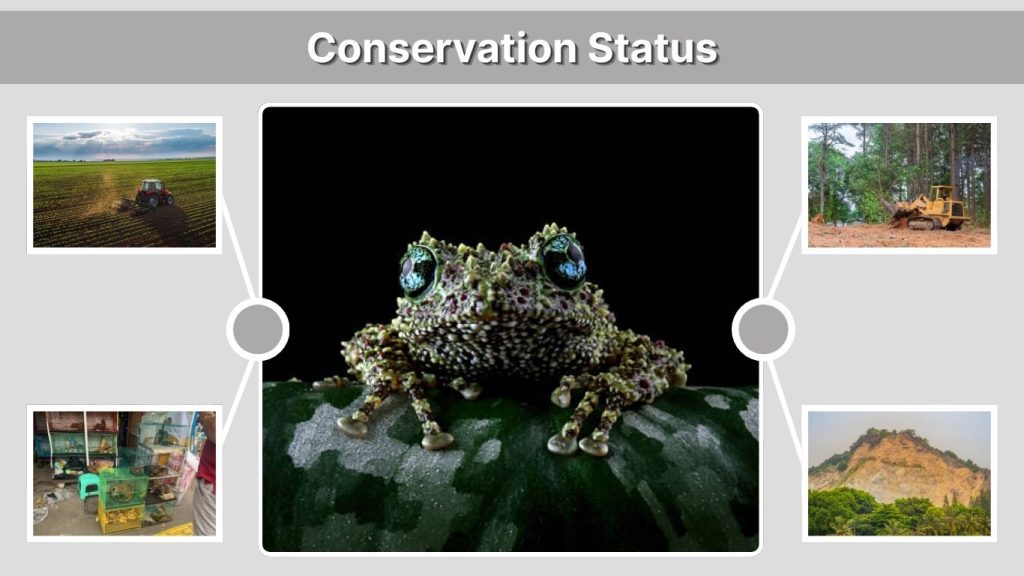
The Vietnamese mossy frog is currently classified as Near Threatened by conservation organizations. While not yet endangered, its population faces increasing pressure.
Major Threats
The main threats to this species include:
- Deforestation
- Habitat destruction from limestone quarrying
- Agricultural expansion
- Illegal collection for the exotic pet trade
Because the frog relies on specific forest habitats and limestone ecosystems, habitat loss can have a direct and serious impact on its survival.
Conservation Efforts
Protected forest areas in northern Vietnam play a crucial role in safeguarding the species. Conservation programs also focus on regulating wildlife trade and raising awareness about habitat preservation.
Captive breeding programs in zoos and research institutions have helped reduce pressure from wild collection. These programs also provide valuable knowledge about the frog’s reproductive biology and care requirements.
Vietnamese Mossy Frog in Captivity
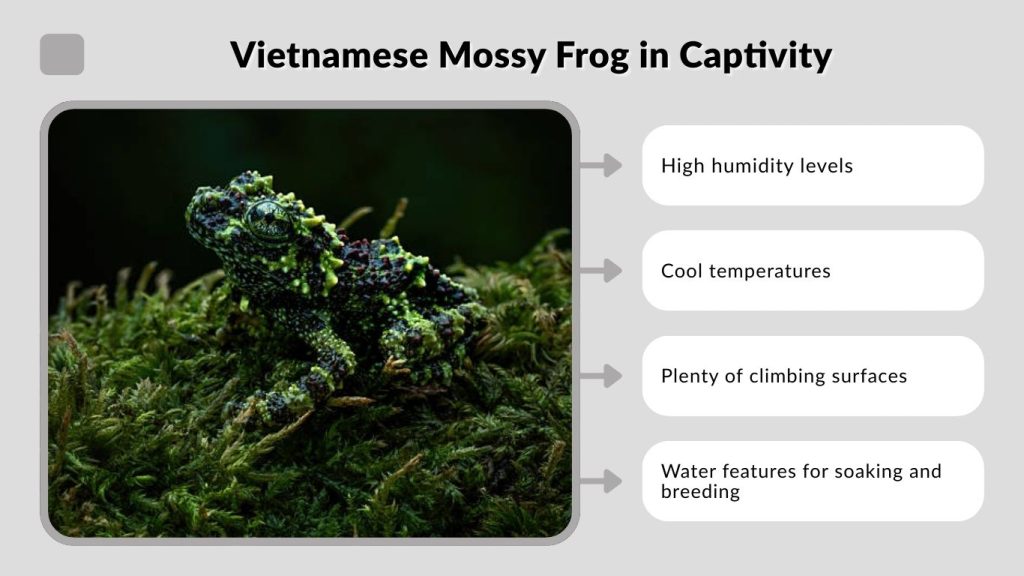
The Vietnamese mossy frog has become popular in the exotic pet trade due to its unique appearance. However, it requires specialized care that may not be suitable for beginners.
A proper enclosure must mimic its natural habitat, including:
- High humidity levels
- Cool temperatures
- Plenty of climbing surfaces
- Water features for soaking and breeding
Without the correct environmental conditions, the frog can experience stress or health problems. Responsible ownership and legal sourcing are essential to ensure that wild populations are not harmed.
Interesting Facts About the Vietnamese Mossy Frog
- It is often called the “Tonkin bug-eyed frog.”
- Its skin closely resembles living moss or lichen.
- It can remain perfectly still for long periods to avoid detection.
- Its scientific name refers to its bark-like texture.
- It is one of the most camouflaged amphibians in the world.
Conclusion
The Vietnamese mossy frog is a remarkable example of nature’s creativity and adaptation. With its moss-like skin, nocturnal habits, and preference for hidden forest habitats, it has evolved into a master of camouflage. Yet, despite its impressive defenses, it faces growing threats from habitat destruction and wildlife trade.
Protecting tropical forests and limestone ecosystems is essential to ensuring the survival of this extraordinary amphibian. The Vietnamese mossy frog reminds us that even the smallest creatures can hold some of the most fascinating secrets of the natural world.