

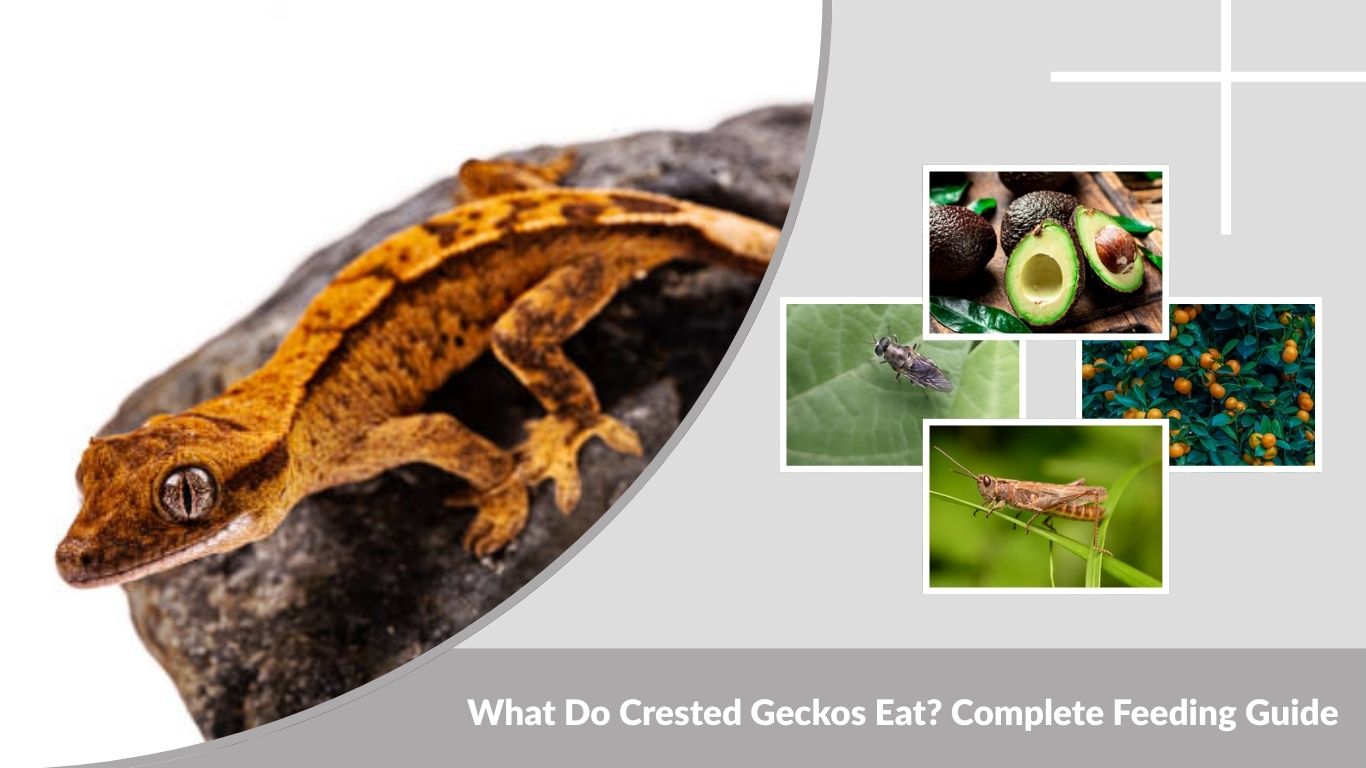
Crested geckos are one of the most popular pet reptiles in the world—and for good reason. They’re hardy, relatively low-maintenance, and incredibly charming. But one of the most important aspects of keeping a crested gecko healthy is proper nutrition. If you’re wondering what crested geckos eat, this complete guide covers everything you need to know, from commercial diets to live insects and feeding schedules.
What Do Crested Geckos Eat in the Wild?
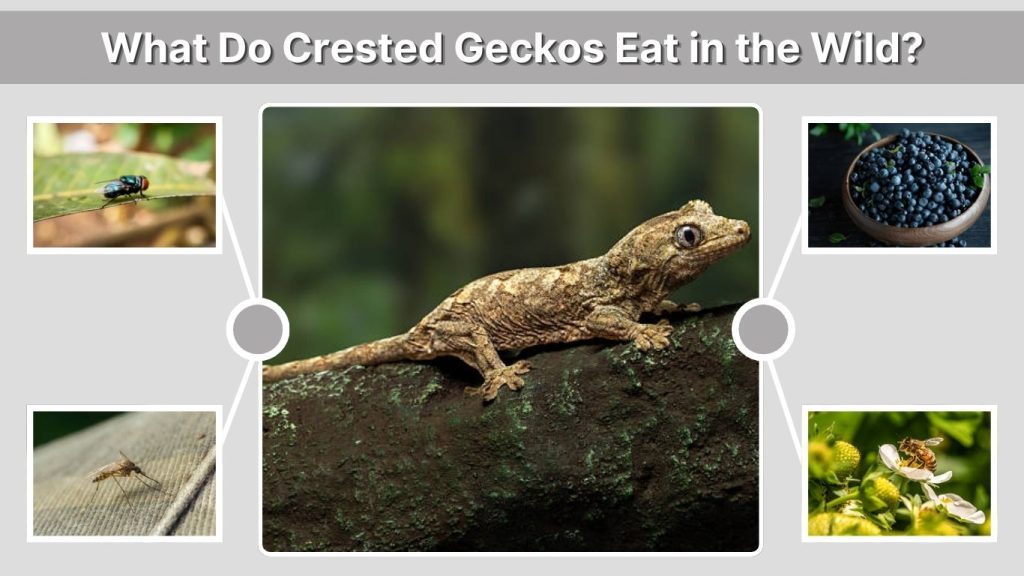
Crested geckos (Correlophus ciliatus) are native to New Caledonia, a group of islands in the South Pacific. In the wild, they are omnivores, meaning they eat both plant and animal matter.
Their natural diet typically includes:
- Soft fruits
- Nectar
- Pollen
- Insects
- Small invertebrates
They are opportunistic feeders and consume what’s available in their environment. This varied diet is important because it provides a balance of protein, carbohydrates, vitamins, and minerals.
Captive diets aim to replicate this natural nutritional balance as closely as possible.
The Best Food for Pet Crested Geckos
In captivity, crested geckos thrive on a combination of:
- Commercial crested gecko diet (CGD)
- Live insects
- Occasional fresh fruit (as a treat)
Let’s break down each category.
Commercial Crested Gecko Diet (CGD)
For most owners, high-quality commercial crested gecko diet powder is the foundation of proper nutrition.
Why It’s Recommended
Commercial diets are specially formulated to provide:
- Balanced protein
- Essential vitamins and minerals
- Proper calcium-to-phosphorus ratio
- Fruit-based carbohydrates
These powdered diets are mixed with water to create a smoothie-like consistency. They are designed to be a complete food source, meaning your gecko can live a healthy life eating primarily this diet.
How to Prepare It
- Mix powder with water (usually 1 part powder to 2 parts water).
- Aim for a ketchup-like consistency.
- Let it sit for a few minutes to thicken.
- Replace uneaten food after 24 hours.
Most adult crested geckos should be fed CGD every 2–3 days.
Live Insects for Crested Geckos
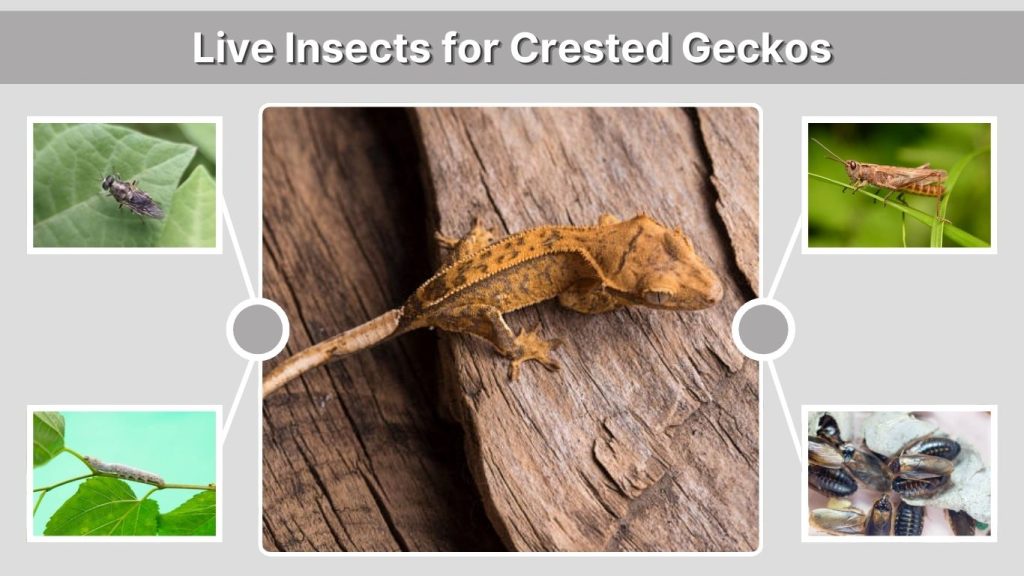
Although commercial diets are complete, feeding live insects provides enrichment and additional protein.
Safe Insects to Feed
- Crickets
- Dubia roaches
- Black soldier fly larvae
- Mealworms (occasionally)
- Silkworms
Insects should be appropriately sized—generally no larger than the space between your gecko’s eyes.
Gut-Loading and Dusting
Before feeding insects:
- Gut-load them with nutritious foods for 24 hours.
- Dust them lightly with calcium powder (with or without vitamin D3 depending on your UVB setup).
This ensures your gecko gets essential nutrients, especially calcium.
How Often to Feed Insects
- Juveniles: 2–3 times per week
- Adults: 1–2 times per week
If your gecko eats insects, you can slightly reduce CGD frequency but never eliminate it entirely.
Can Crested Geckos Eat Fruit?
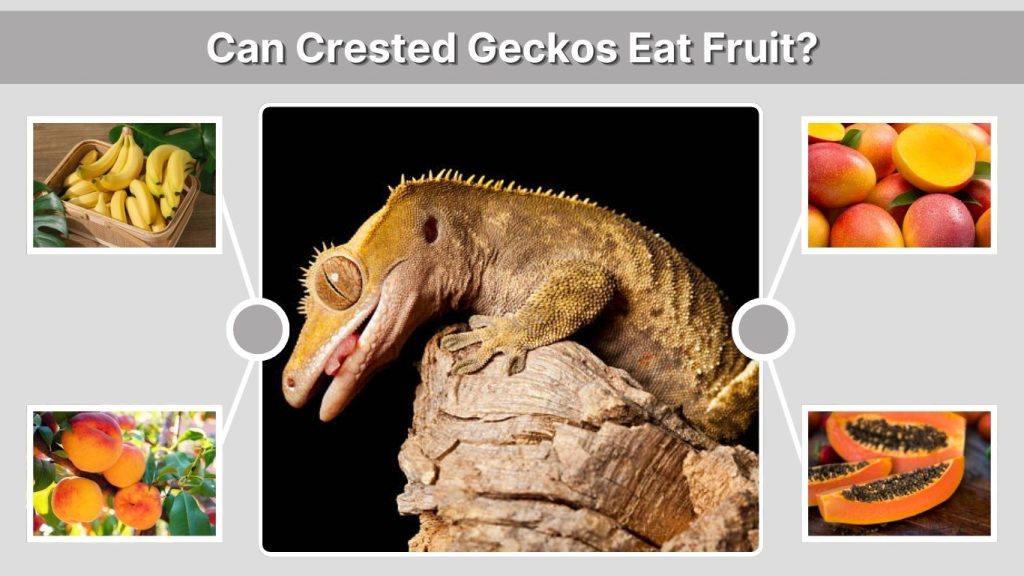
Yes—but fruit should only be an occasional treat.
In the wild, crested geckos consume ripe fruit. However, too much fruit in captivity can cause nutritional imbalance due to high sugar content.
Safe Fruits (Mashed or Pureed)
- Mango
- Papaya
- Banana (sparingly)
- Peach
- Apricot
- Figs
Fruits to Avoid
- Citrus fruits (too acidic)
- Avocado (toxic)
- Rhubarb
Offer fruit no more than once every 1–2 weeks, and only in small amounts.
Feeding Schedule by Age
Crested geckos have different nutritional needs depending on their age.
Hatchlings (0–6 months)
- Feed CGD daily
- Offer small insects 2–3 times per week
- Ensure frequent calcium supplementation
Juveniles (6–12 months)
- Feed CGD every other day
- Offer insects 2–3 times per week
Adults (12+ months)
- Feed CGD every 2–3 days
- Offer insects 1–2 times per week
Monitor weight and body condition regularly. A healthy gecko has a plump tail base and good muscle tone.
Do Crested Geckos Need Supplements?
If you use a high-quality commercial diet, most vitamin and mineral needs are already covered.
However:
- Calcium dusting is essential when feeding insects.
- If you do not provide UVB lighting, you may need calcium with vitamin D3.
- With UVB lighting, use calcium without D3 to avoid overdosing.
Always avoid over-supplementation, as too much vitamin D3 or calcium can be harmful.
Foods Crested Geckos Should Never Eat
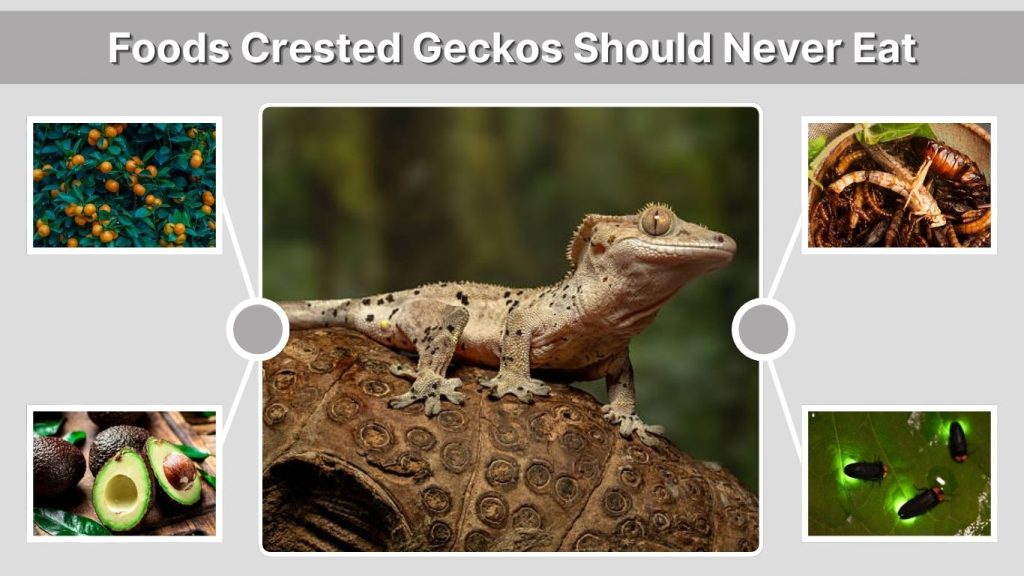
Some foods are dangerous or unsuitable for crested geckos.
Avoid:
- Wild-caught insects (may carry pesticides or parasites)
- Fireflies (toxic)
- Citrus fruits
- Avocado
- Dairy products
- Processed human foods
- Dog or cat food
Stick to reptile-safe foods and commercially prepared diets for safety.
Hydration and Water Needs
Crested geckos don’t usually drink from water bowls. Instead, they lick water droplets from leaves and enclosure walls.
To keep them hydrated:
- Mist the enclosure once or twice daily.
- Provide a shallow water dish as backup.
- Maintain humidity between 50–70%.
Proper hydration supports digestion and overall health.
Signs of Nutritional Problems
Poor diet can lead to health issues such as:
Metabolic Bone Disease (MBD)
Caused by calcium deficiency. Symptoms include:
- Soft jaw
- Weak limbs
- Tremors
- Difficulty climbing
Obesity
Overfeeding insects or fruit can lead to excessive weight gain.
Malnutrition
Signs include:
- Thin tail
- Lethargy
- Poor shedding
If you notice any of these symptoms, consult a reptile veterinarian.
Tips for Encouraging a Picky Eater
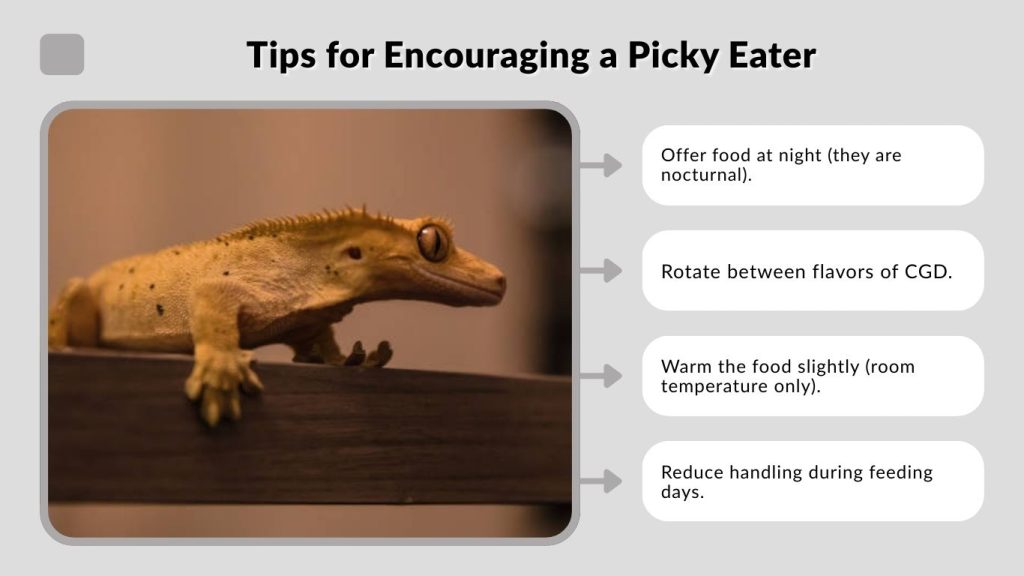
Some crested geckos can be selective.
Try these strategies:
- Offer food at night (they are nocturnal).
- Rotate between flavors of CGD.
- Warm the food slightly (room temperature only).
- Reduce handling during feeding days.
- Try tong-feeding insects for stimulation.
Patience is key—avoid constantly switching diets too quickly.
FAQs
Can crested geckos live without insects?
Yes, they can live on a high-quality commercial crested gecko diet alone. However, insects provide enrichment and extra protein, which can improve growth and activity levels. While not strictly required, occasional insects are highly recommended for optimal health.
How often should I feed my crested gecko?
Hatchlings should eat daily, juveniles every other day, and adults every 2–3 days. Insects can be offered 1–3 times per week depending on age. Always monitor body condition and adjust feeding frequency accordingly.
Can crested geckos eat mealworms?
They can eat mealworms occasionally, but they are not ideal as a staple insect. Mealworms have a harder exoskeleton and higher fat content. Offer them sparingly and ensure they are properly gut-loaded and dusted with calcium.
Do crested geckos need water bowls?
While they primarily drink from misted surfaces, a shallow water dish is still recommended. It acts as a backup hydration source and helps maintain enclosure humidity. Fresh water should be available at all times.
Is fruit necessary in their diet?
Fruit is not necessary if you are feeding a complete commercial diet. It can be offered occasionally as a treat but should not replace balanced gecko food. Too much fruit can lead to excess sugar intake and nutritional imbalance.