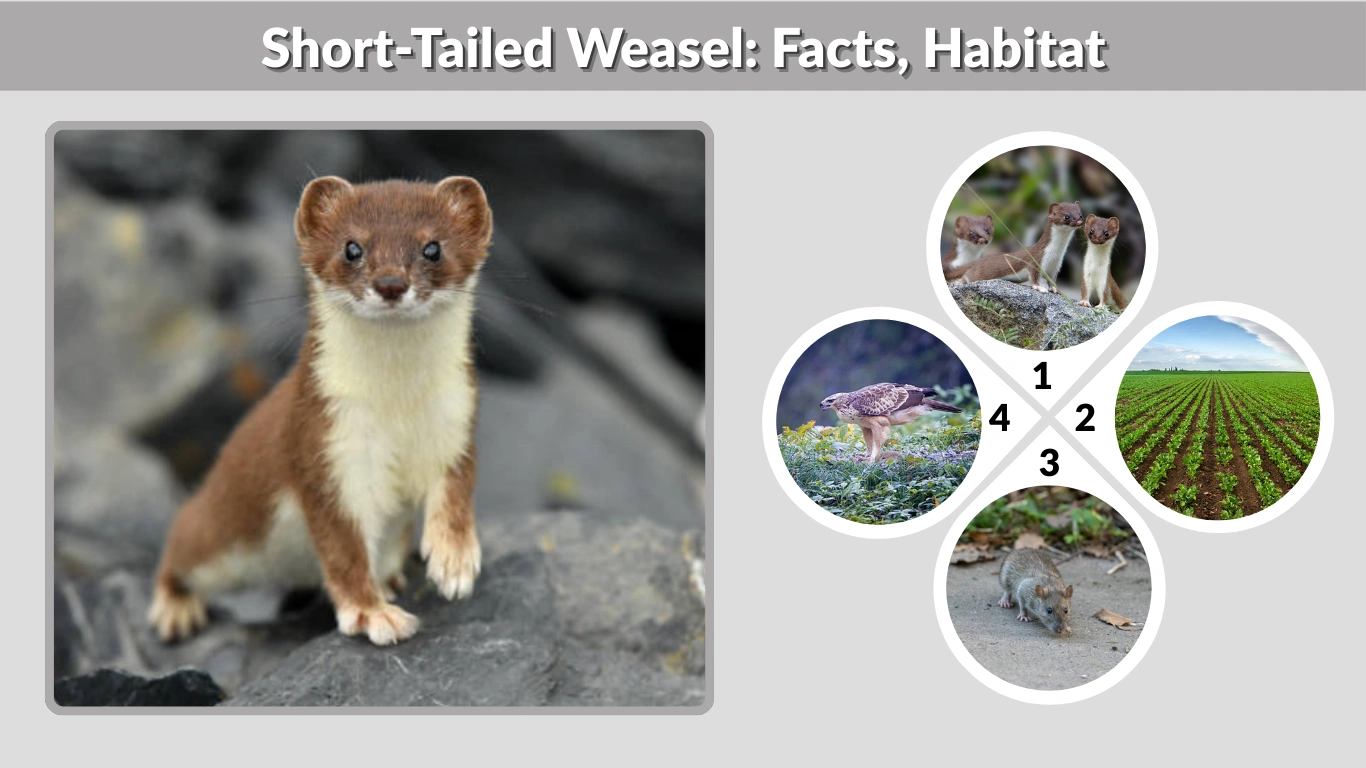





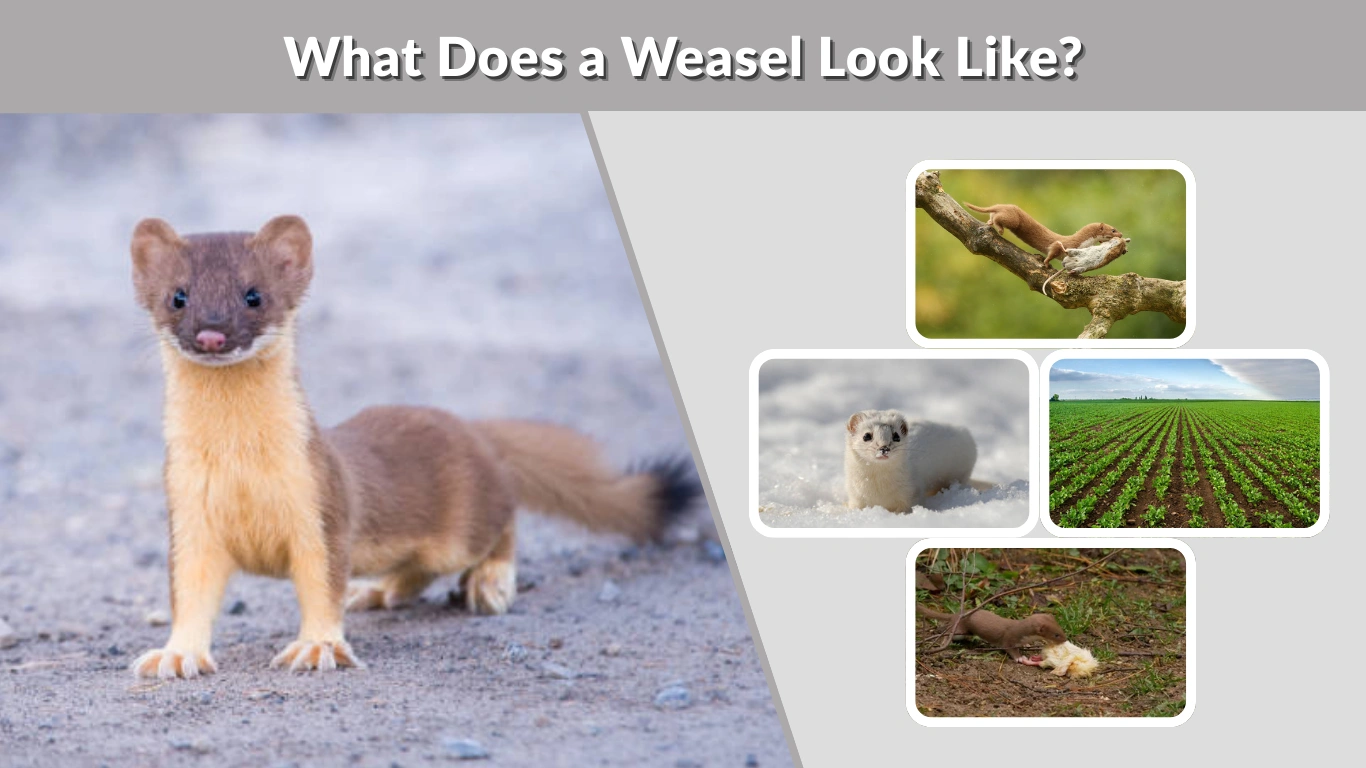
Weasels are small, fast-moving mammals that often surprise people with their sleek bodies and bold personalities. Although they are sometimes confused with ferrets, stoats, or minks, weasels have distinct physical traits that make them unique. Known for their long, slender shape and sharp hunting skills, these animals belong to the Mustelidae family. In this guide, you’ll learn exactly what a weasel looks like, including its size, color, body structure, and the key features that help you identify one in the wild.
What Does a Weasel Look Like at First Glance?
At first glance, a weasel looks like a small, elongated animal with a smooth coat and a very flexible body. Its shape is often described as tube-like because of its long torso and short legs. Weasels stay low to the ground and move quickly, which makes them appear almost snake-like as they dart through grass or brush.
Their fur is usually sleek and close to the body, giving them a streamlined appearance. Even though they are small, they look alert and confident. Their posture, quick movements, and sharp facial features give them a bold expression that stands out among other small mammals.
Physical Characteristics of a Weasel
Body Shape and Structure
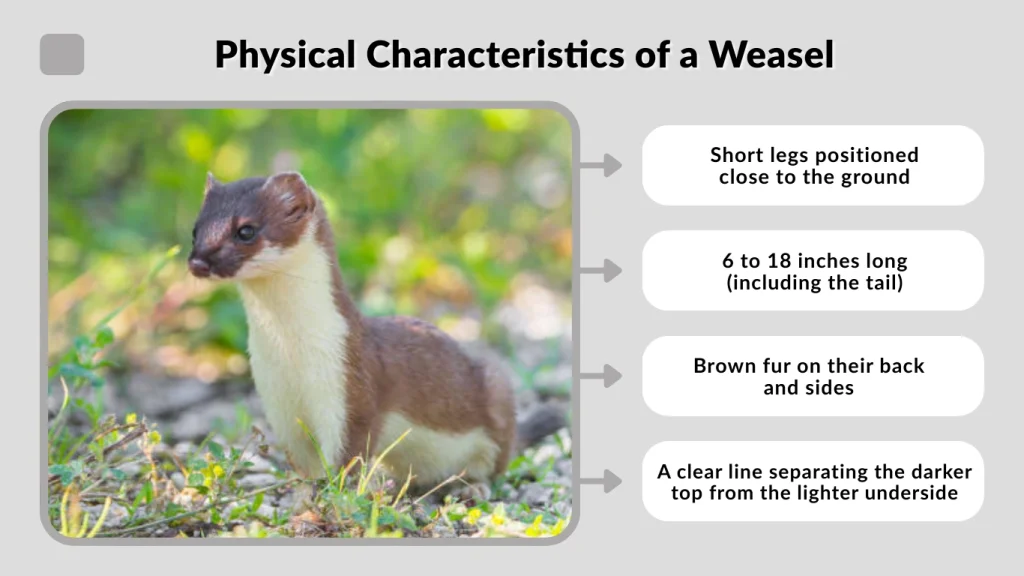
One of the most noticeable features of a weasel is its long, slender body. This narrow shape allows it to slip into tight spaces, including rodent burrows and small holes in walls or logs. Their flexible spine helps them twist and turn easily while hunting.
Weasels have:
- Short legs positioned close to the ground
- A narrow neck
- A small, slightly flattened head
- A long body compared to their height
This body design is not accidental. It is perfectly adapted for chasing prey into underground tunnels. Their slim frame gives them access to places many predators cannot reach.
Size and Weight
Weasels are small animals, but their size varies depending on the species.
Most weasels measure:
- 6 to 18 inches long (including the tail)
- Weigh between 1 to 12 ounces
Males are typically larger than females. For comparison, a weasel is usually around the size of a small squirrel or slightly bigger than a large rat. The tail can make up about one-third of the animal’s total length, especially in long-tailed species.
Despite their small size, weasels are strong and energetic. Their compact bodies are built for speed and agility rather than bulk.
Fur Color and Markings
When asking, “What color is a weasel?” the most common answer is brown and white.
Most weasels have:
- Brown fur on their back and sides
- A white or cream-colored belly
- A clear line separating the darker top from the lighter underside
Some species, such as the long-tailed weasel, have a distinctive black tip at the end of their tail. This feature can help with identification.
Their fur is usually smooth and not very fluffy, giving them a sleek appearance. The coat is short but dense enough to provide insulation.
Face and Facial Features
A weasel’s face is small but expressive. Key features include:
- Small, rounded ears
- Dark, bright eyes
- A pointed snout
- Prominent whiskers
Their eyes are positioned forward enough to give them good depth perception, which helps when hunting. The pointed snout and sharp teeth are designed for gripping prey.
Even though their head is small, it looks alert and focused. Their facial expression often appears curious or intense due to their hunting nature.
Do Weasels Change Color in Winter?
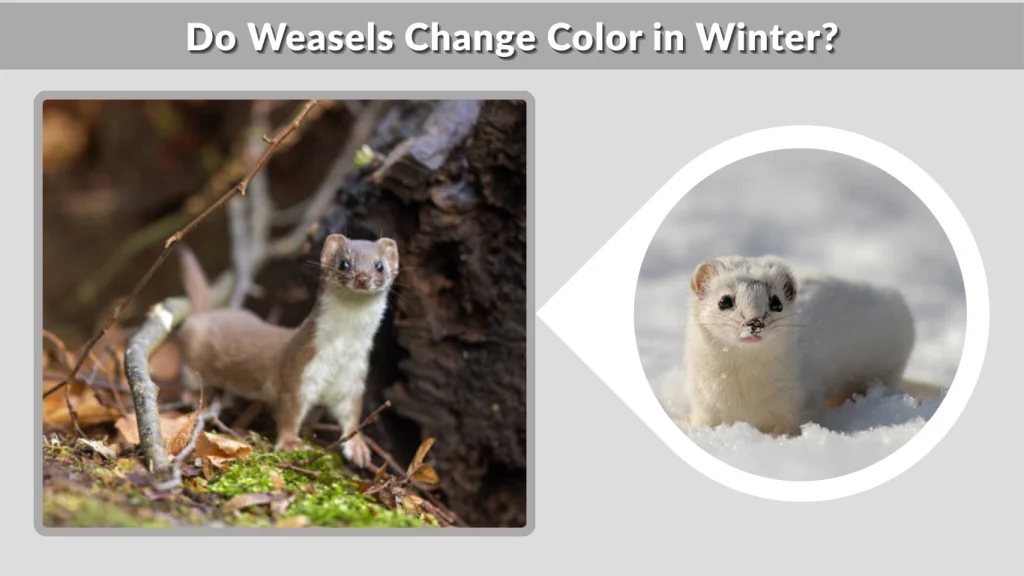
Seasonal Coat Changes
Some weasel species change color during winter. In colder regions, their brown fur can turn completely white as snow begins to cover the ground. This winter coat helps them blend into snowy landscapes.
Not all weasels change color, though. The transformation depends on the species and the climate. In warmer areas with little snow, many weasels remain brown year-round.
The winter coat is usually thicker and slightly denser, providing extra warmth during cold months.
Why This Adaptation Matters
The color change serves an important purpose: camouflage. A white coat in winter helps weasels avoid predators such as hawks, owls, foxes, and larger mammals. It also makes it easier for them to approach prey without being noticed.
This seasonal adaptation increases their chances of survival, especially in regions where snow remains on the ground for long periods. Camouflage is one of the reasons weasels remain effective hunters despite their small size.
Different Types of Weasels and How They Look
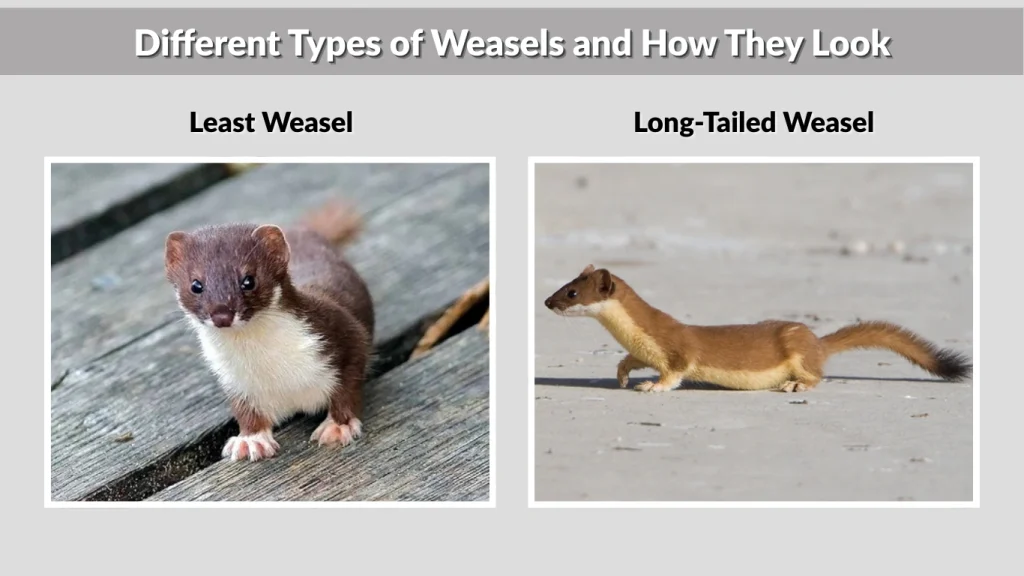
Least Weasel
The least weasel is the smallest member of the weasel family. It has:
- A very short tail
- A compact body
- Brown fur on top and white underneath
Unlike some other species, the least weasel does not usually have a black tip on its tail. Its small size makes it especially difficult to spot in the wild.
Long-Tailed Weasel
The long-tailed weasel is larger and more noticeable. It features:
- A longer body
- A longer, bushier tail
- A black tip at the end of the tail
This species may also change to white during winter in colder regions. The longer tail and slightly bigger size make it easier to distinguish from smaller weasel species.
Stoat (Often Mistaken for a Weasel)
Stoats look very similar to weasels and are often confused with them. In fact, stoats belong to the same Mustelidae family. They have a slender body, brown back, and white underside—just like many weasels.
However, one key difference is the tail. Stoats usually have a distinct black tip on their tail, even when they turn white in winter. During colder months, stoats may develop a fully white coat (often called ermine), while keeping that black tail tip. This feature is one of the easiest ways to tell them apart from some weasel species.
Stoats are also generally slightly larger than the smallest weasels, with proportionally longer tails.
Animals That Look Similar to a Weasel
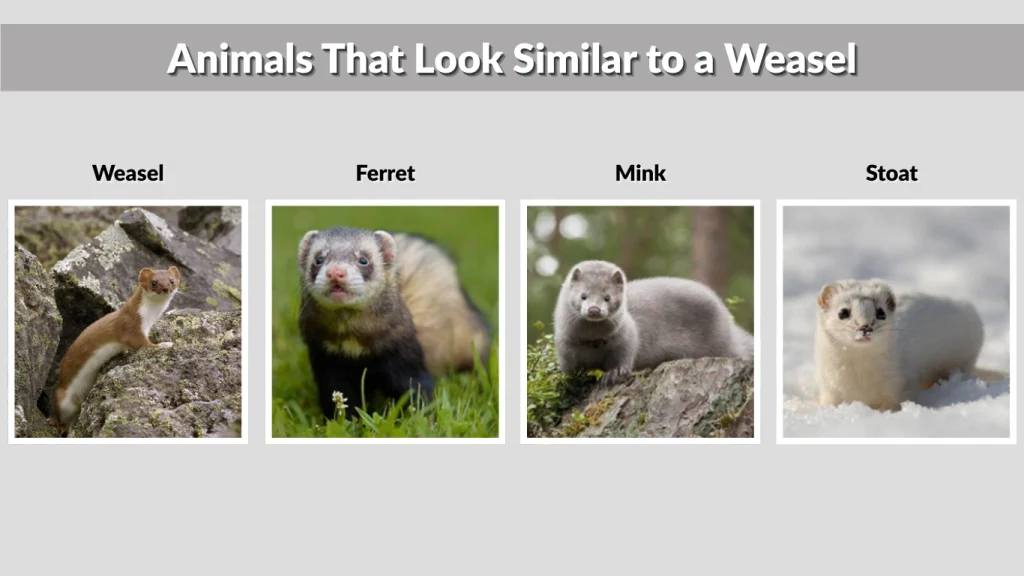
Because of their body shape and size, weasels are commonly mistaken for other small mammals. Knowing the differences can help you correctly identify what you’re seeing.
Weasel vs Ferret
Ferrets are domesticated relatives of wild polecats and are often kept as pets. While they share a similar long body shape, ferrets usually look thicker and heavier than wild weasels.
Key differences include:
- Ferrets have a bulkier build
- They often have visible facial mask markings
- Their fur may come in a wider range of colors
- They are typically seen around homes, not wild fields
Weasels, in contrast, are slimmer, lighter, and more streamlined. Their faces are usually plain brown and white without bold mask patterns.
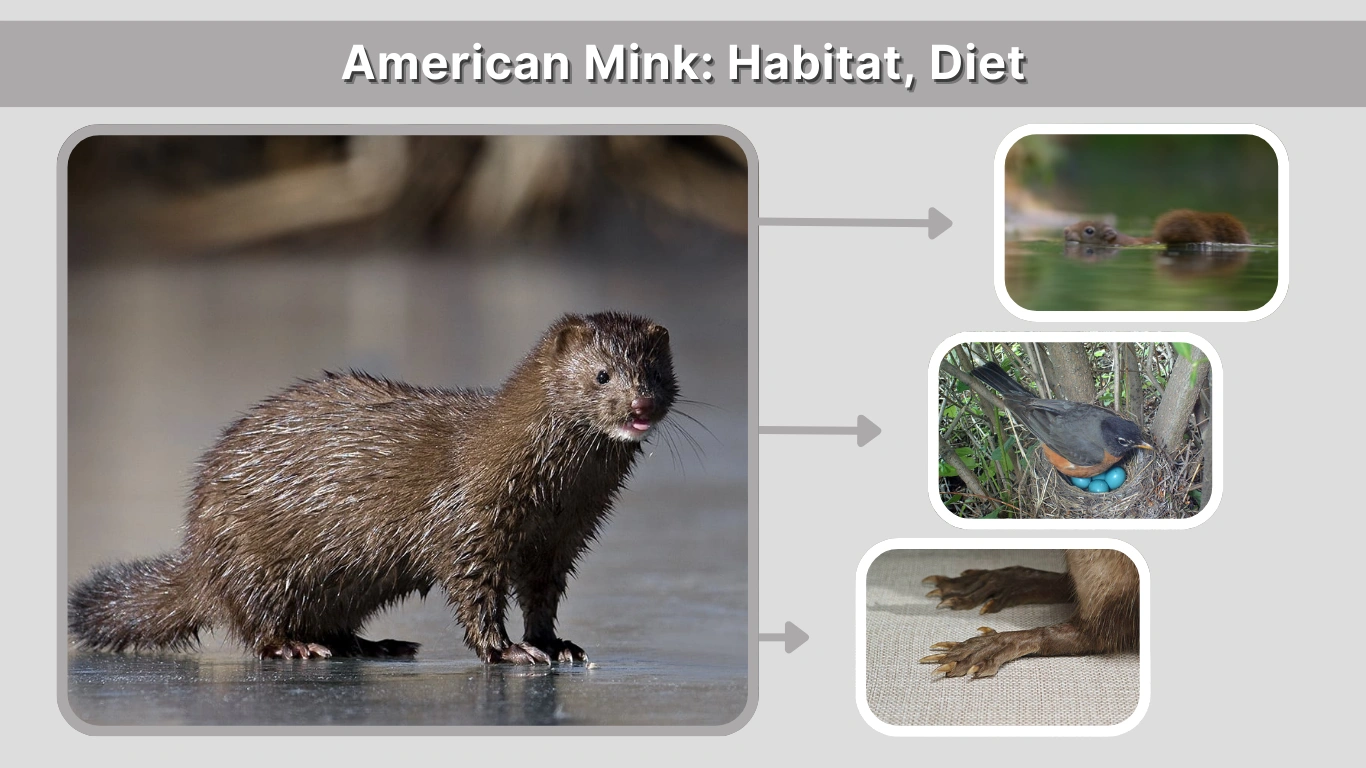
Weasel vs Mink
Minks are another relative in the Mustelidae family, but they are noticeably larger than most weasels.
Differences include:
- Minks have darker, often chocolate-brown fur
- They have a slightly stockier body
- They are commonly found near water
- Their fur appears glossier and denser
If you see a weasel-sized animal near a river or lake that looks bigger and darker, it may be a mink rather than a weasel.
Weasel vs Stoat
As mentioned earlier, tail length is one of the biggest clues. Stoats tend to have:
- Longer tails
- A clear black tip on the tail
- Slightly larger body size
Weasels may or may not have a black tail tip depending on the species. Observing the tail carefully can help with identification.
How to Identify a Weasel in the Wild
Spotting a weasel can be tricky because they move quickly and stay close to the ground. However, certain behaviors and movement patterns can help you recognize one.
Movement and Behavior
Weasels are extremely active and energetic. Their movement is often described as:
- Quick and darting
- Bounding or hopping in a curved motion
- Low to the ground
- Sudden stops followed by rapid direction changes
They rarely move slowly. Instead, they zigzag through grass, brush, or snow in search of prey. This energetic movement is one of their most recognizable traits.
Weasels are usually solitary animals, meaning you’ll most likely see only one at a time.
Habitat Clues
Weasels can live in a variety of environments, including:
- Grasslands
- Farmland
- Forest edges
- Meadows
- Barns and rural properties
They often take over abandoned rodent burrows rather than digging their own. If you see a long, slender animal quickly entering a small hole in the ground, it may very well be a weasel.
Why Weasels Look the Way They Do
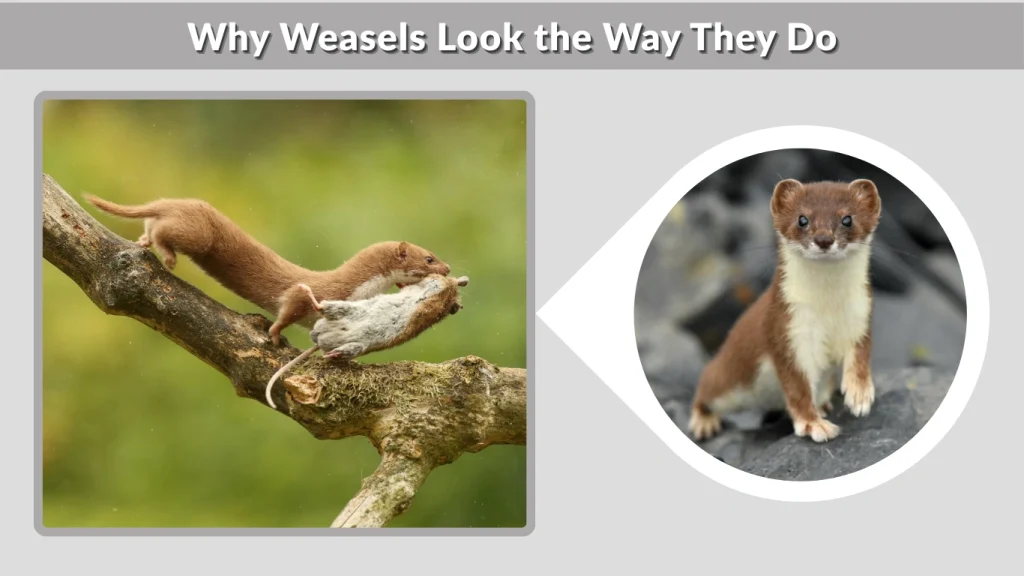
A weasel’s appearance is not random—it’s shaped by evolution and survival needs.
Their long, narrow bodies allow them to chase prey like mice and voles into tight tunnels. Short legs keep them close to the ground, helping them stay hidden from predators. Their brown-and-white coloration provides natural camouflage in grass and woodland settings.
The ability of some species to turn white in winter is another survival advantage. Blending into snowy landscapes makes them less visible to both predators and prey.
Every physical feature of a weasel supports its role as a fast, efficient hunter.
Quick Identification Checklist
If you’re trying to determine whether you’ve seen a weasel, look for these key traits:
- Long, slender, tube-shaped body
- Short legs
- Brown back with white or cream belly
- Small rounded ears
- Sharp, pointed snout
- Quick, low-to-the-ground movement
- Black-tipped tail (in some species)
If most of these characteristics match what you observed, you likely spotted a weasel.
FAQs
Is a weasel bigger than a rat?
Most weasels are similar in size to a large rat, though their bodies are longer and more slender. Some species are smaller, while others, like the long-tailed weasel, can be slightly larger. However, weasels are generally lightweight and compact animals.
Are weasels aggressive?
Weasels can be fierce hunters, but they are not aggressive toward humans unless threatened. They primarily hunt small animals like rodents. Because they are shy and fast, they usually avoid human contact whenever possible.
Do all weasels turn white in winter?
No, not all weasels change color. Seasonal coat changes depend on the species and climate. In snowy regions, some weasels turn white for camouflage, while those in warmer areas may stay brown year-round.
Can you keep a weasel as a pet?
Weasels are wild animals and are not commonly kept as pets. In many places, it is illegal to keep them without special permits. They are highly active, independent, and not suited to typical household life.
Where are weasels most commonly found?
Weasels are found across North America, Europe, Asia, and parts of North Africa. They prefer areas with plenty of cover and prey, such as fields, forests, and farmland.
Conclusion
So, what does a weasel look like? It’s a small, slender mammal with a long body, short legs, and smooth brown-and-white fur. Some species feature a black-tipped tail, and in colder climates, their coats may turn white during winter. Their narrow shape, sharp face, and quick movements make them highly efficient hunters. By paying attention to body structure, coloration, and behavior, you can confidently identify a weasel if you ever spot one in the wild.