




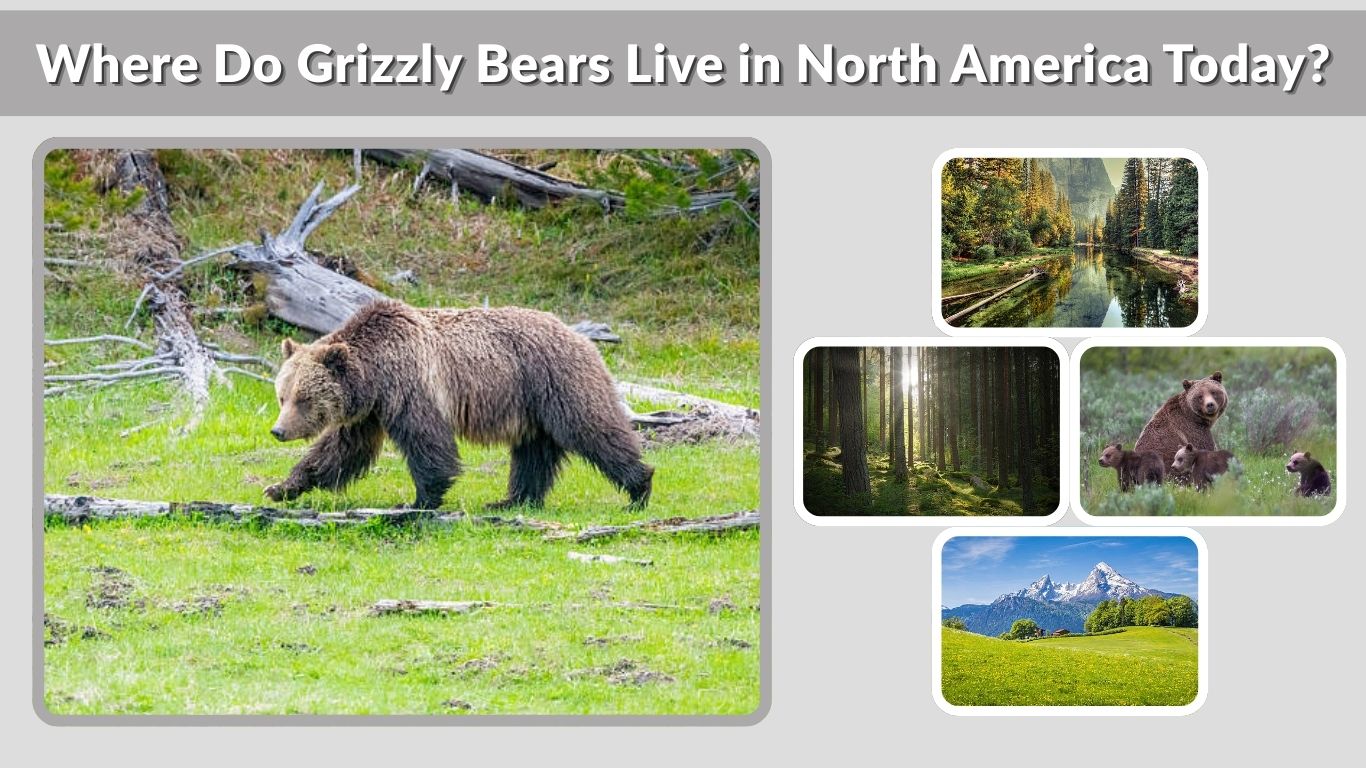
Grizzly bears are among North America’s most iconic and powerful mammals. Known for their impressive size, muscular build, and distinctive shoulder hump, these bears roam some of the continent’s wildest landscapes. Although their range was once far broader, grizzlies now occupy specific regions shaped by geography, climate, food availability, and human activity. Understanding where grizzly bears live helps us appreciate their ecological importance and the conservation efforts that protect their remaining habitats.
The Historical Range of Grizzly Bears
Grizzly bears (Ursus arctos horribilis) are a subspecies of the brown bear. Historically, they roamed much of western and central North America. Their territory once stretched from northern Mexico through the western United States and into Canada, even reaching parts of the Great Plains.
Early explorers and settlers recorded grizzlies in states such as California, Colorado, Texas, and even Kansas. However, habitat loss, hunting, and westward expansion dramatically reduced their population and range by the early 20th century. Today, grizzlies inhabit only a fraction of their former territory in the lower 48 United States, though they remain more widespread in Canada and Alaska.
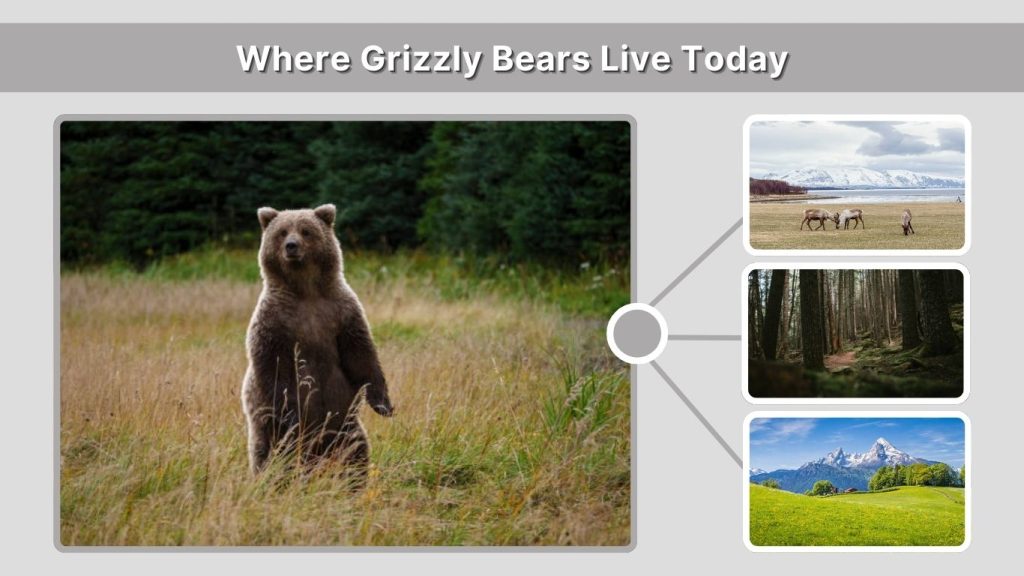
Where Grizzly Bears Live Today
1. Alaska: The Grizzly Stronghold
Alaska is home to the largest population of grizzly bears in the United States. In fact, the majority of U.S. grizzlies live there. Alaska’s vast wilderness, remote mountain ranges, coastal regions, and abundant salmon streams provide ideal conditions.
Grizzlies in Alaska thrive in diverse habitats, including:
- Coastal tundra
- Dense forests
- Alpine meadows
- River valleys
The availability of salmon, berries, moose, and other food sources supports healthy populations. Because much of Alaska remains sparsely populated by humans, bears have more room to roam with fewer conflicts.
2. Western Canada: A Major Habitat
Canada holds a significant portion of North America’s grizzly population. They are primarily found in:
- British Columbia
- Alberta
- Yukon
- Northwest Territories
British Columbia alone supports thousands of grizzlies, especially in coastal rainforests and mountainous interior regions. The Canadian Rockies, stretching through Alberta and British Columbia, provide critical habitat with dense forests, open meadows, and abundant wildlife.
Northern Canada’s remote wilderness offers expansive territory, allowing bears to follow seasonal food sources across large distances.
3. The Lower 48 United States
In the contiguous United States, grizzly bears now live in small, isolated populations mainly in the northern Rocky Mountains.
Yellowstone Ecosystem (Wyoming, Montana, Idaho)
The Greater Yellowstone Ecosystem is one of the most well-known grizzly habitats. Centered around Yellowstone National Park, this region provides forests, grasslands, and mountains rich in food sources such as elk, bison carcasses, whitebark pine seeds, and berries.
This population has rebounded significantly due to conservation efforts, though it remains carefully monitored.
Northern Continental Divide Ecosystem (Montana)
This region, which includes Glacier National Park and surrounding wilderness areas, supports one of the largest grizzly populations in the lower 48. The landscape features rugged mountains, thick forests, and river valleys—ideal for shelter and feeding.
Cabinet-Yaak and Selkirk Ecosystems
Located in northwestern Montana and northern Idaho, these smaller populations are more vulnerable due to isolation and limited habitat connectivity.
Types of Habitats Grizzly Bears Prefer
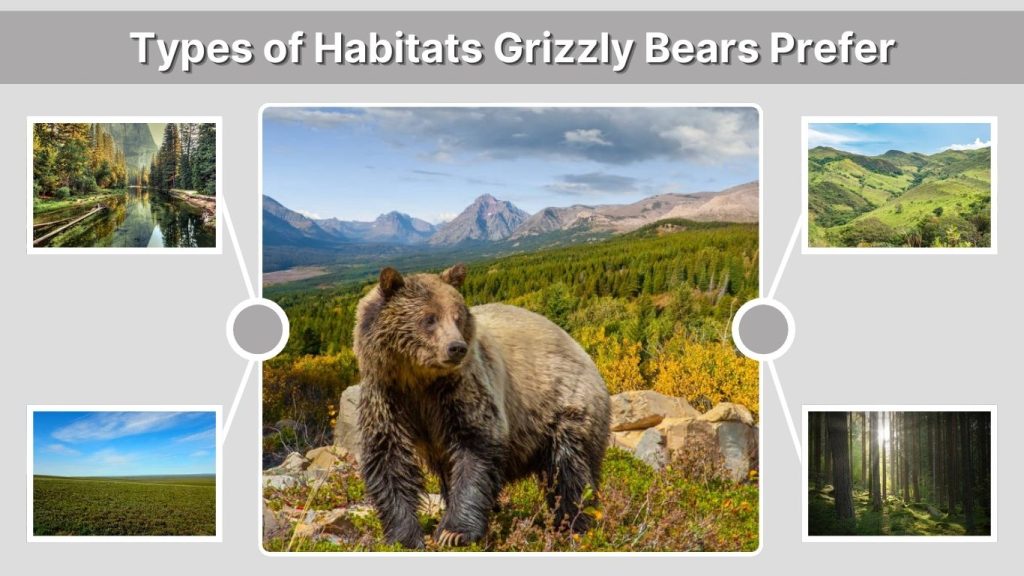
Grizzly bears are highly adaptable, but they generally prefer environments that provide three essential elements: food, space, and security.
Mountainous Regions
Grizzlies commonly inhabit mountainous areas where forests meet alpine meadows. These landscapes offer seasonal food variety, from spring grasses to summer berries and autumn nuts.
Forests
Dense forests provide shelter, denning sites, and protection from extreme weather. Fallen logs, shrubs, and understory vegetation also support insects and plant foods.
River Valleys and Coastal Areas
Near rivers and coastlines, grizzlies find rich food supplies such as salmon. Coastal grizzlies often grow larger than inland bears because of high-protein diets.
Tundra and Open Plains
In Alaska and northern Canada, grizzlies also live in tundra regions. These open areas allow them to spot prey and forage for roots and small mammals.
Seasonal Movement and Home Range
Grizzly bears do not stay in one small area year-round. Instead, they travel widely depending on food availability and seasonal changes.
- Spring: Bears emerge from hibernation and seek grasses, roots, and winter-killed animals.
- Summer: They move toward berry patches, insect-rich areas, and high elevations.
- Fall: Bears focus on high-calorie foods like salmon and nuts to build fat reserves for winter.
- Winter: Grizzlies hibernate in dens, often dug into hillsides or beneath tree roots.
A single grizzly’s home range can vary dramatically. Males may roam across hundreds of square miles, while females typically occupy smaller territories, especially when raising cubs.
Why Grizzly Bears No Longer Live in Some Areas
Grizzlies once thrived across much of western North America, but several factors reduced their range:
- Habitat Loss: Expansion of cities, farms, and roads fragmented wilderness areas.
- Hunting and Predator Control: In the 19th and early 20th centuries, grizzlies were heavily hunted.
- Human-Bear Conflict: As humans settled bear territory, livestock predation and safety concerns led to population declines.
Today, conservation laws, protected national parks, and wildlife corridors help preserve remaining habitats.
The Importance of Habitat Connectivity
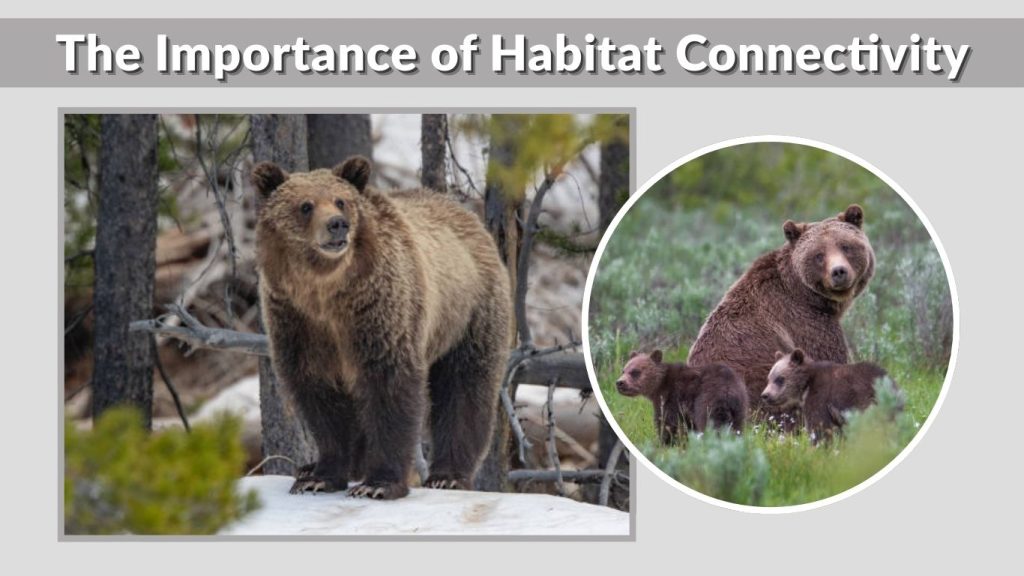
One of the biggest challenges for modern grizzly populations is habitat fragmentation. Roads, highways, and urban development can isolate bear populations, limiting genetic diversity.
Wildlife corridors—protected land routes connecting habitats—allow grizzlies to safely move between ecosystems. These corridors are especially important in the lower 48 states, where populations are smaller and more separated.
Maintaining connected habitats ensures long-term survival by allowing bears to expand into suitable territories and maintain healthy gene flow.
Climate Change and Future Habitat Shifts
Climate change may influence where grizzly bears live in the future. Rising temperatures affect food sources such as whitebark pine trees and salmon populations. Wildfires and changing vegetation patterns also alter habitat conditions.
Some regions may become less suitable, while northern areas could potentially support expanding populations. Scientists continue to monitor how these environmental changes affect grizzly distribution.
Coexisting with Grizzly Bears
Because many grizzly habitats overlap with recreational areas like national parks, hikers and campers must understand bear safety. Proper food storage, carrying bear spray, and respecting wildlife distances reduce conflict.
Communities living near grizzly habitats also use bear-resistant garbage containers and livestock management practices to prevent attractants.
Successful coexistence depends on education, responsible land use, and continued conservation efforts.
Conclusion
Grizzly bears today primarily live in Alaska, western Canada, and isolated regions of the northern Rocky Mountains in the United States. Though their historical range once covered much of western North America, human expansion significantly reduced their territory. These powerful animals prefer mountainous regions, forests, river valleys, tundra, and coastal areas where food is abundant and human disturbance is limited.
Ongoing conservation, habitat protection, and wildlife corridors play a crucial role in ensuring that grizzlies continue to roam North America’s wild landscapes for generations to come.
FAQs
Where do most grizzly bears live?
Most grizzly bears live in Alaska and western Canada. Alaska alone holds the largest U.S. population due to its vast wilderness and abundant food sources. Canada’s British Columbia and Alberta also support significant numbers, especially in mountainous and coastal regions.
Do grizzly bears live outside North America?
Grizzly bears are a subspecies of brown bears, which live in parts of Europe and Asia. However, true grizzly bears (Ursus arctos horribilis) are native to North America and are found primarily in Alaska, Canada, and the northern Rocky Mountains of the United States.
Why don’t grizzly bears live in California anymore?
Grizzly bears once lived in California, even appearing on the state flag. However, extensive hunting, habitat loss, and human settlement led to their extinction there by the early 1900s. Today, no wild grizzlies remain in California.
What kind of environment do grizzly bears prefer?
Grizzly bears prefer environments with abundant food, space, and cover. They commonly inhabit mountains, forests, river valleys, tundra, and coastal areas. Access to seasonal foods such as salmon, berries, roots, and large mammals strongly influences their habitat choices.
Are grizzly bears endangered?
In the lower 48 United States, grizzly bears are listed as threatened under the Endangered Species Act. However, populations in Alaska are stable and well established. Conservation efforts continue to focus on habitat protection, connectivity, and reducing human-bear conflicts.