




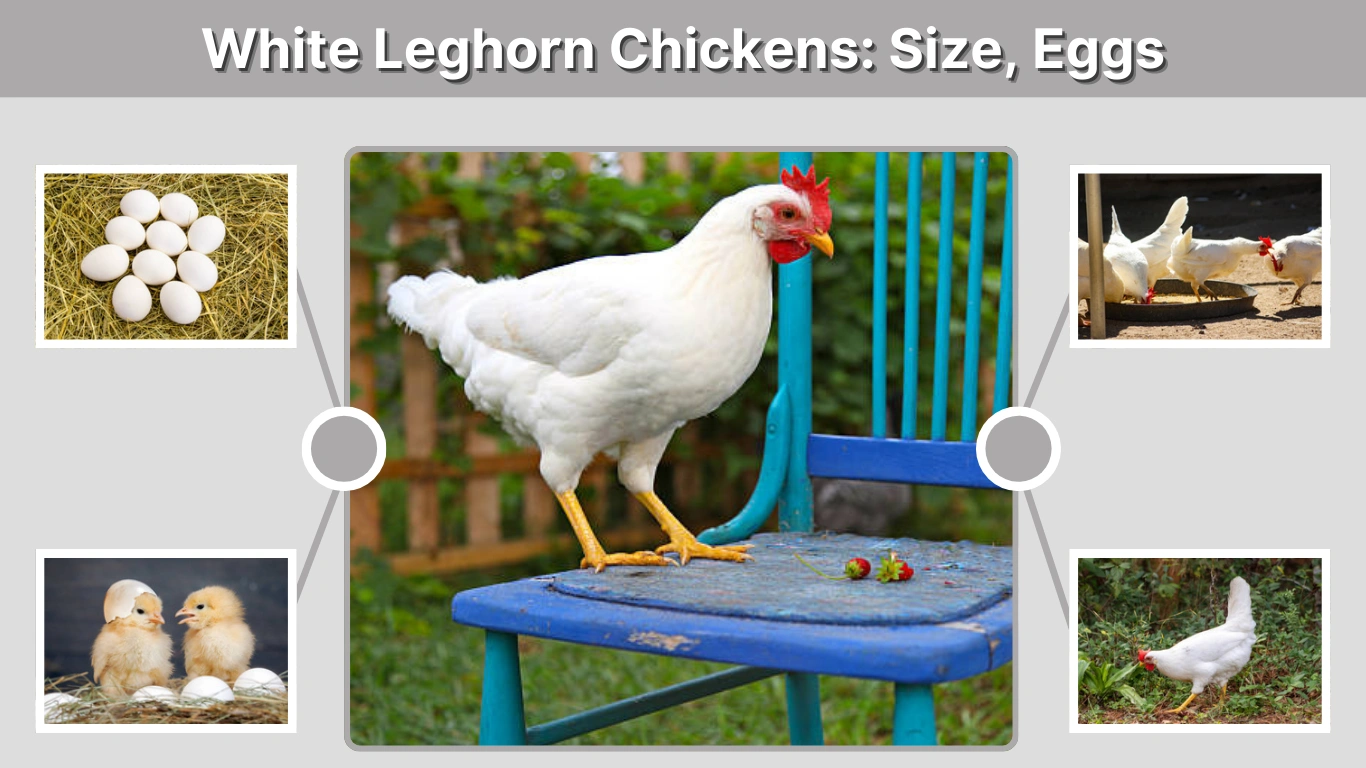
White Leghorn chickens are among the most famous egg-laying breeds in the world. Originally developed from Mediterranean stock, they are best known for their brilliant white feathers, lightweight bodies, and exceptional ability to produce large numbers of white eggs. Today, White Leghorns form the foundation of most commercial egg-laying strains and are also popular with small farmers who want efficient, active layers. This guide explores their origin, identification, size, color, and egg-laying performance in detail.
Origin and Breed Background
White Leghorn chickens trace their roots to Italy, particularly the port city of Livorno, which English speakers later pronounced as “Leghorn.” During the 1800s, these birds were exported to Europe and the United States, where poultry breeders selectively refined them for productivity, hardiness, and consistent egg laying. Over time, American and European breeding programs emphasized lighter body weight, stronger laying instincts, and better feed efficiency.
By the early twentieth century, White Leghorns had become the backbone of the commercial egg industry. Their ability to start laying early, produce eggs steadily, and thrive in a range of management systems made them ideal for large-scale farms. Even today, most white-egg commercial hybrids descend genetically from the White Leghorn, proving the breed’s long-standing global importance.
Identification of White Leghorn Chickens

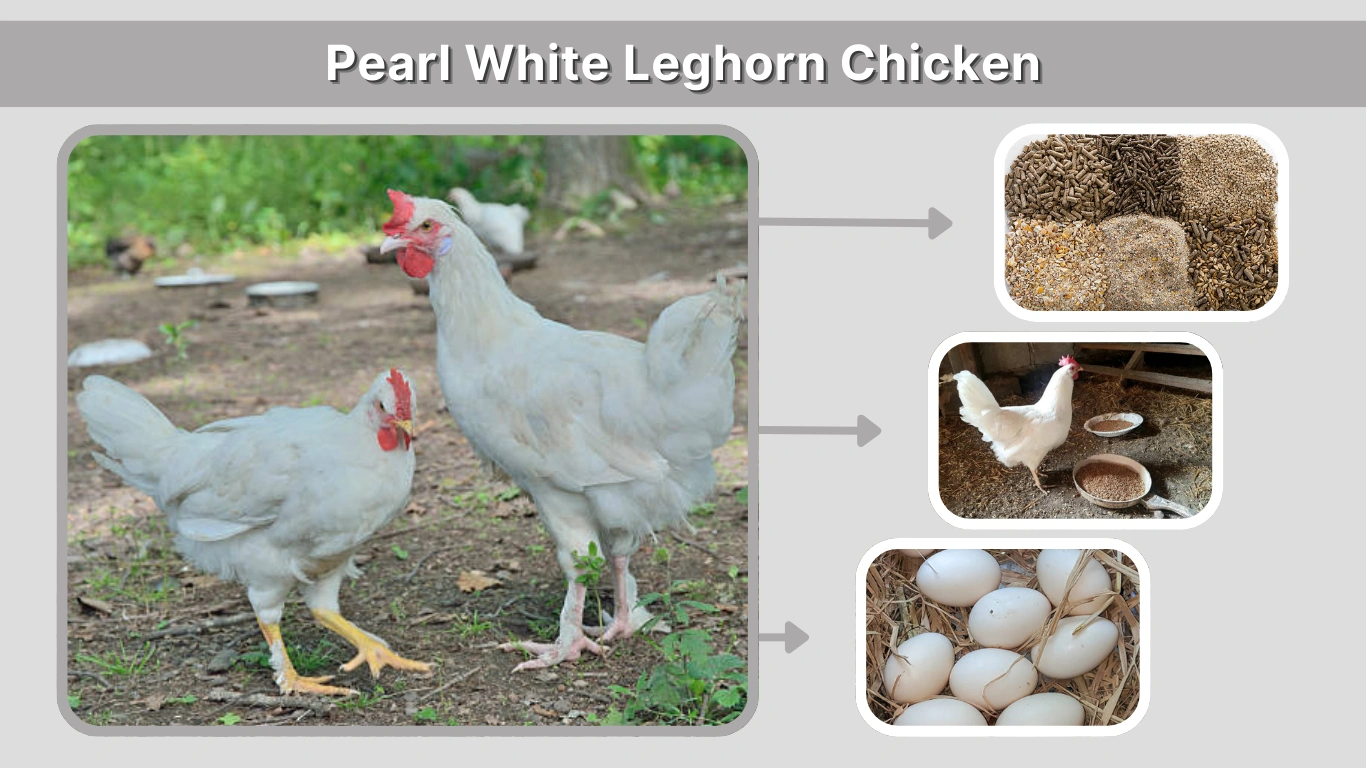
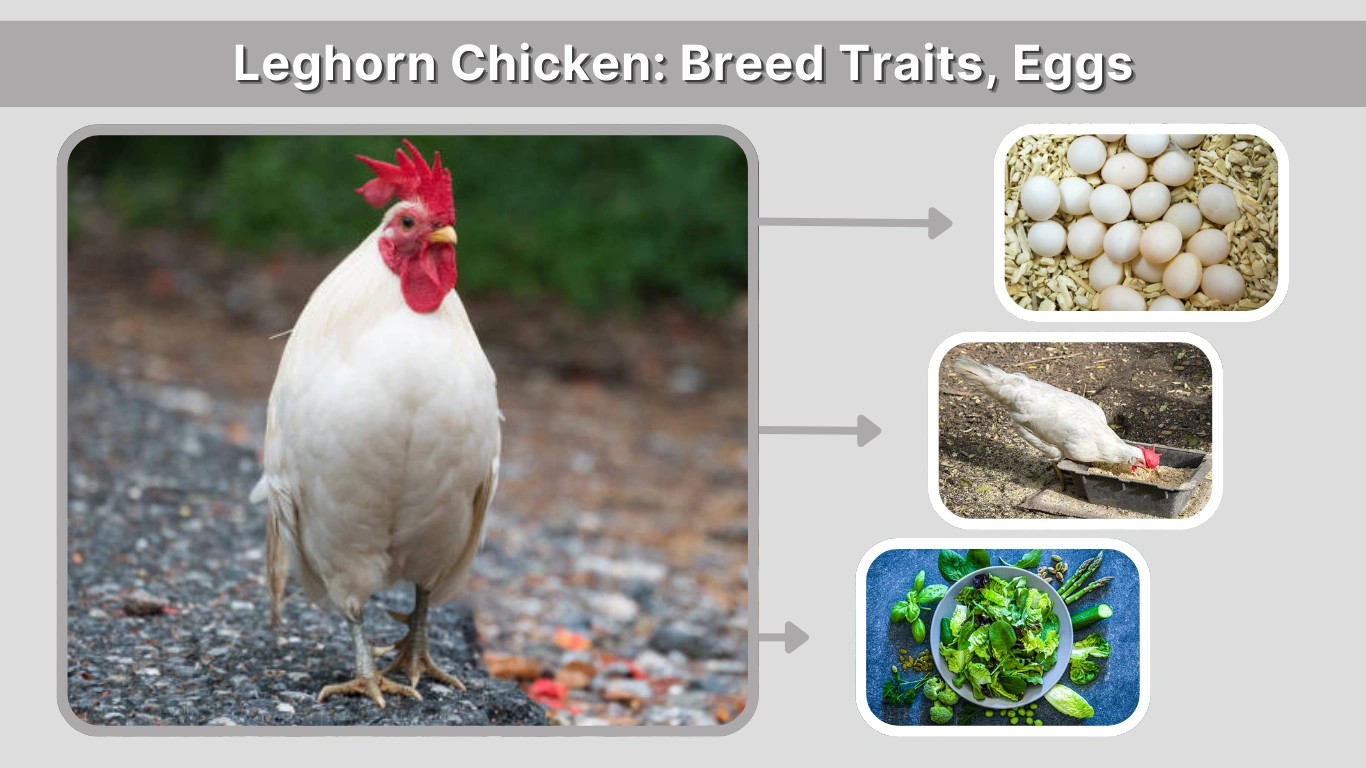
White Leghorns have a very distinctive appearance that sets them apart from heavier dual-purpose or ornamental breeds. They are built for activity and egg production rather than meat.
- Bright, snow-white plumage over the entire body
- Large, upright single red comb (especially prominent in roosters)
- Smooth white earlobes, a classic trait of white-egg layers
- Yellow beak and clean yellow legs
- Slim, wedge-shaped body with a light frame
- Long, well-arched tail carried high
- Alert, upright posture and quick movements
- Overall lean and athletic look compared to bulky farm breeds
These combined features make White Leghorns easy to recognize in both backyard flocks and commercial environments.
Size, Weight, and Body Structure

White Leghorns are considered a lightweight chicken breed. Their bodies are narrow and refined, designed to convert feed efficiently into eggs rather than muscle mass. Adult hens usually weigh around 1.8–2.3 kg (4–5 pounds), while roosters average about 2.7–3.4 kg (6–7.5 pounds). Compared with breeds like Plymouth Rocks or Rhode Island Reds, Leghorns appear slimmer, taller, and more angular.
Their breast is not heavily muscled, and their legs are relatively long and fine-boned. This light structure allows them to be energetic foragers and active movers, traits closely linked to their strong metabolism and high laying performance. Because of this build, White Leghorns are rarely kept for meat; their true value lies in consistent egg production and low feed costs.
Rooster vs Hen Size Differences
Roosters are noticeably larger and more dramatic in appearance than hens. They develop much bigger combs and wattles, longer curved tail feathers, and a more upright stance. Hens, on the other hand, look more streamlined, with slightly smaller combs that often flop gently to one side once they reach maturity. The difference becomes clear at around four to five months of age.
Color and Physical Appearance
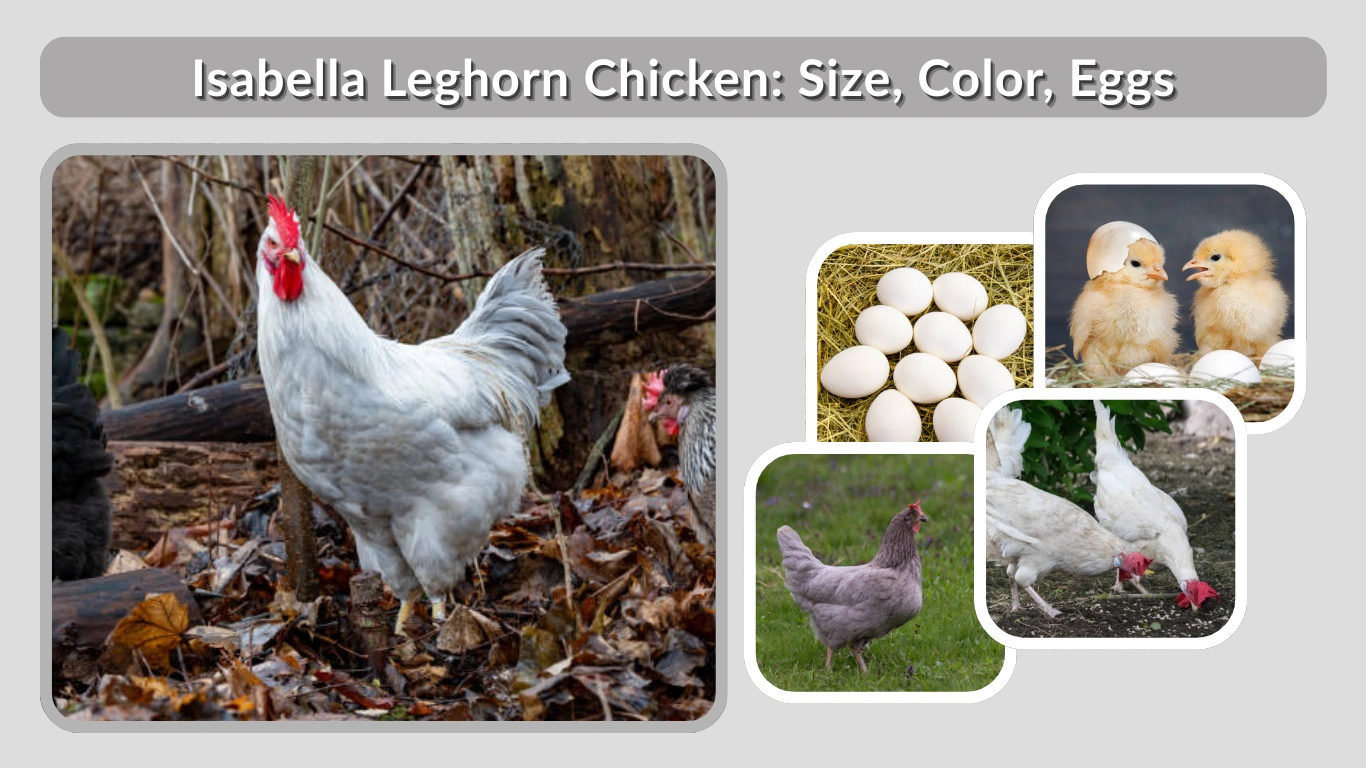
As the name suggests, White Leghorns are pure white from head to tail. Their feathers are tight, smooth, and glossy, giving them a clean, bright look in sunlight. This white coloration is not only aesthetic but also practical, as lighter feathers reflect heat better than dark plumage, helping the birds tolerate warm climates.
Beneath their feathers, White Leghorns have yellow skin, yellow legs, and yellow beaks. Their eyes are typically reddish-orange, adding contrast to their white faces and bright red combs. The combination of white plumage, red facial features, and yellow legs is one of the most classic and recognizable chicken appearances in the world.
Comb, Earlobes, and Facial Features
One of the most important identification markers is the large single comb. In warm climates, this comb helps release excess body heat. The white earlobes are another defining trait and are genetically linked to the production of white-shelled eggs. Wattles are long and thin, and the face is smooth, making the breed visually distinctive even from a distance.
Egg Production and Egg Characteristics

White Leghorns are legendary for their laying ability and remain unmatched by most traditional breeds when it comes to efficiency and output.
- Average production of 250–320 eggs per year
- Egg color is bright, clean white
- Eggs are usually medium to large in size
- Pullets often begin laying around 16–18 weeks
- Strong laying consistency throughout the year
- Excellent feed-to-egg conversion rate
- Widely used in commercial egg operations
Their productivity is the primary reason they dominate the global egg industry. A healthy White Leghorn hen can maintain good laying levels for several years, especially when given proper nutrition, light management, and low-stress living conditions.
Why White Leghorns Are Famous for Eggs
White Leghorns gained worldwide popularity because they mature early, lay frequently, and require less feed than heavier breeds. Their metabolism is highly efficient, meaning more of the nutrients they consume go directly into egg formation rather than body mass. This makes them extremely economical for farmers and explains why almost all commercial white-egg hybrids have White Leghorn genetics.
They are also known for maintaining production even when conditions are less than ideal. While good care always improves results, Leghorns tend to keep laying in warm climates and under intensive management systems where some heritage breeds may struggle.
Temperament and Behavior
White Leghorns are active, alert, and intelligent birds. They are excellent foragers and love to roam, scratch, and explore when given space. Compared to heavier backyard breeds, they are more independent and less inclined to seek human attention. Many keepers describe them as flighty or nervous, especially if they are not handled from a young age.
However, this cautious temperament makes them very good at avoiding predators. They are fast runners, strong flyers, and quick to take cover. In free-range systems, they often prefer roosting high and choosing their own safe resting spots rather than staying low to the ground.
Are White Leghorns Good for Backyards?
White Leghorns can do well in backyard flocks, especially where space is available. They are not usually lap chickens, but they reward keepers with excellent egg numbers and low feed costs. Secure fencing and covered runs are important, as their flying ability allows them to clear low barriers easily.
Lifespan and Growth Cycle

White Leghorn chicks grow quickly and feather out faster than many heavy breeds. Pullets typically reach point-of-lay between 16 and 18 weeks of age. Egg production rises rapidly after the first eggs appear and usually peaks within the first year.
With good care, White Leghorns can live 6 to 8 years or longer. Peak laying usually lasts 2 to 3 years, after which egg numbers slowly decline. Even then, many hens continue producing eggs at a moderate level well into older age.
Habitat, Climate Tolerance, and Hardiness
White Leghorns are especially well suited to warm and hot climates. Their large combs, light bodies, and tight feathering help them release excess heat efficiently. They are very common in tropical and subtropical regions for this reason.
In cold climates, they need extra care. Their large combs and wattles are vulnerable to frostbite, so dry, draft-free housing and sometimes protective measures are necessary. Despite this, they are generally hardy birds that adapt well to different management systems, from free-range farms to commercial housing.
Diet and Feeding Requirements

Because White Leghorns are high-performance layers, nutrition plays a major role in their health and productivity. Chicks need a high-protein starter feed to support rapid early growth. Growers benefit from balanced rations that develop strong frames without excess fat.
Once laying begins, a quality layer feed rich in calcium is essential for strong eggshells. Access to clean water, grit for digestion, and occasional greens or insects helps maintain overall condition and activity levels.
Feed Efficiency Compared to Other Breeds
One of the White Leghorn’s greatest advantages is how little feed it needs to produce each egg. Compared to heavier dual-purpose breeds, Leghorns consume less while laying more, making them one of the most economical chickens in the world.
Health, Common Issues, and Care Tips
White Leghorns are generally robust, but their productivity makes routine care especially important.
- Vulnerability to comb frostbite in cold, damp conditions
- Susceptibility to common poultry parasites if hygiene is poor
- Need for steady calcium intake to prevent weak shells
- Stress sensitivity in overcrowded environments
- Importance of clean, well-ventilated coops
- Regular health checks and vaccination where recommended
- Strong need for predator-proof housing
Good management, space, and nutrition go a long way toward keeping this breed healthy and productive.
White Leghorn vs Other Egg-Laying Breeds
Compared with Rhode Island Reds, Plymouth Rocks, or ISA Browns, White Leghorns are lighter, more active, and usually less docile. While some brown-egg breeds may be calmer and better for close backyard interaction, White Leghorns typically outperform them in total egg numbers and feed efficiency. They are the clear choice when white eggs and maximum output are the main goals.
Uses in Farming and the Poultry Industry
White Leghorns dominate the global egg industry. Specialized breeding lines are used to produce commercial hybrids that supply most supermarket white eggs. On small farms, they are valued for low maintenance costs, strong laying persistence, and adaptability to warm climates. Their influence extends far beyond the breed itself, shaping modern poultry farming worldwide.
FAQs
What makes White Leghorn chickens different from other breeds?
White Leghorns are different mainly because of their lightweight bodies and exceptional egg-laying ability. They were bred specifically for efficiency, meaning they eat less feed while producing more eggs. Their white feathers, large red combs, and white earlobes also make them visually distinct from most backyard breeds.
How many eggs does a White Leghorn lay per year?
A healthy White Leghorn hen typically lays between 250 and 320 eggs per year under good conditions. Some well-managed birds may even exceed this. Their eggs are usually medium to large in size and have bright white shells, making them highly desirable for both farms and home use.
Are White Leghorn chickens friendly or aggressive?
White Leghorns are not aggressive, but they are usually more nervous and independent than heavier backyard breeds. They prefer space, are quick to move, and are excellent at avoiding danger. With early handling, some individuals become calm, but most remain active rather than cuddly.
Can White Leghorns survive in cold climates?
White Leghorns can live in cold regions, but they need extra protection. Their large combs are prone to frostbite, so dry housing, good ventilation without drafts, and proper winter care are essential. They are much better naturally suited to warm and moderate climates.
Are White Leghorns good for small backyard farms?
Yes, White Leghorns can be very good for small farms focused on egg production. They provide a high number of eggs while consuming relatively little feed. However, they need secure fencing, space to move, and patient handling if the goal is to keep them calm around people.