
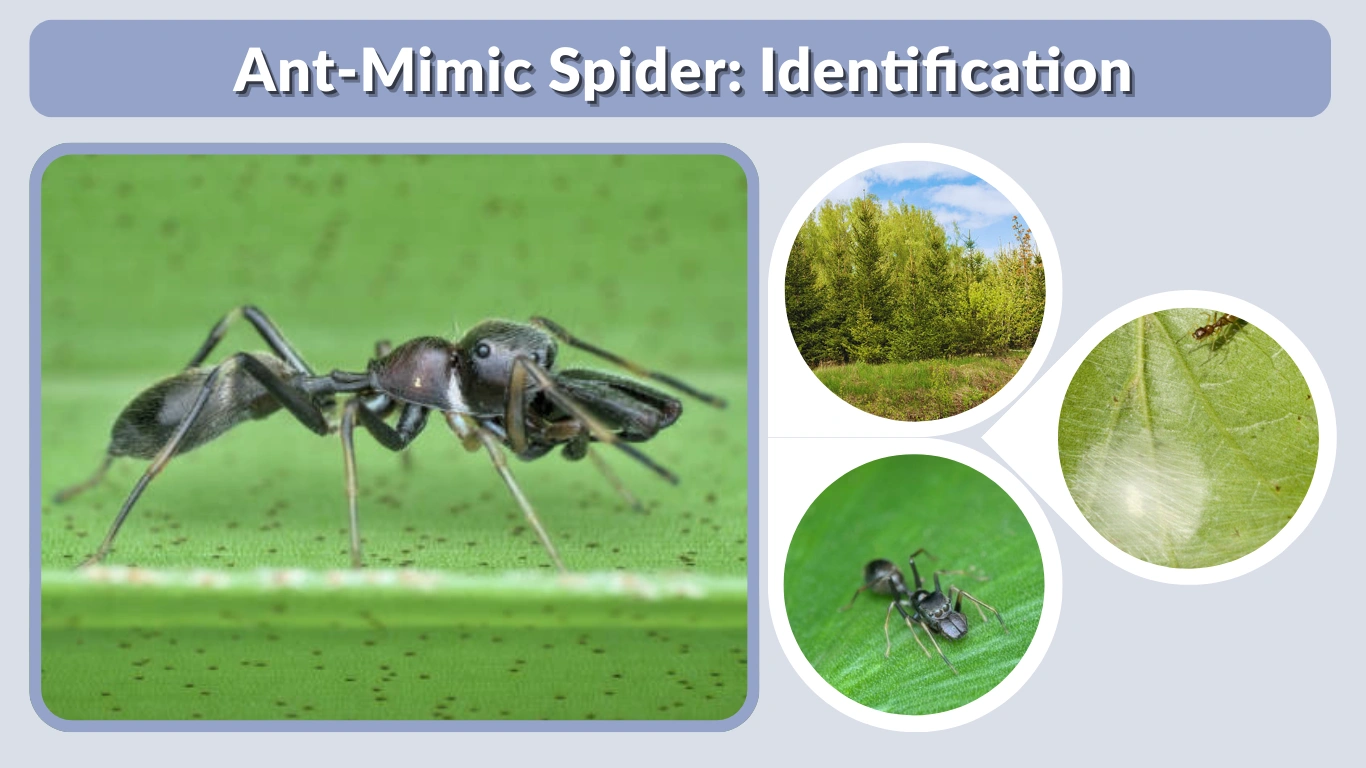
The ant-mimic spider is one of the most fascinating examples of mimicry found in the animal kingdom. These small spiders closely resemble ants in both appearance and movement, allowing them to blend in among ant colonies and avoid predators. Because they look so similar to ants, many people do not even realize they are spiders. Others may wonder whether an ant-mimic spider bite is dangerous. Understanding how these spiders imitate ants, where they live, and how they behave can help reveal the remarkable survival strategies behind this unusual species.
What Is an Ant-Mimic Spider?
Ant-mimic spiders are specialized spiders that have evolved to resemble ants in body shape, movement, and behavior. This adaptation helps them survive in environments where predators often avoid ants because of their aggressive nature and strong defenses.
Definition of Ant Mimicry in Spiders
Ant mimicry is a type of biological adaptation known as myrmecomorphy. In this process, spiders evolve physical and behavioral traits that make them appear similar to ants.
This resemblance protects them from predators such as birds, reptiles, and larger insects that typically avoid ants due to their ability to bite, sting, or release defensive chemicals.
By looking and acting like ants, these spiders gain a form of natural protection without actually possessing the same defenses.
Spider Families That Mimic Ants
Several spider families contain species that mimic ants, but the most well-known ant-mimic spiders belong to the Salticidae family, also known as jumping spiders.
Within this family, the genus Myrmarachne includes many famous ant-mimicking species. These spiders have evolved extremely convincing ant-like appearances.
Other spider families that include ant mimics are:
- Corinnidae – fast-running ground spiders that resemble ants
- Gnaphosidae – some species mimic ants in shape and color
Each of these spiders has developed slightly different ways of imitating ants depending on their environment and lifestyle.
Why Ants Are Imitated by Spiders
Ants are one of the most dominant insect groups in many ecosystems. They often travel in large groups and defend themselves aggressively when threatened.
Because many predators have learned to avoid ants, resembling them offers a significant survival advantage. Animals that mimic ants may gain protection simply by looking similar.
For ant-mimic spiders, this strategy helps them move through environments filled with predators without attracting attention.
How to Identify an Ant-Mimic Spider
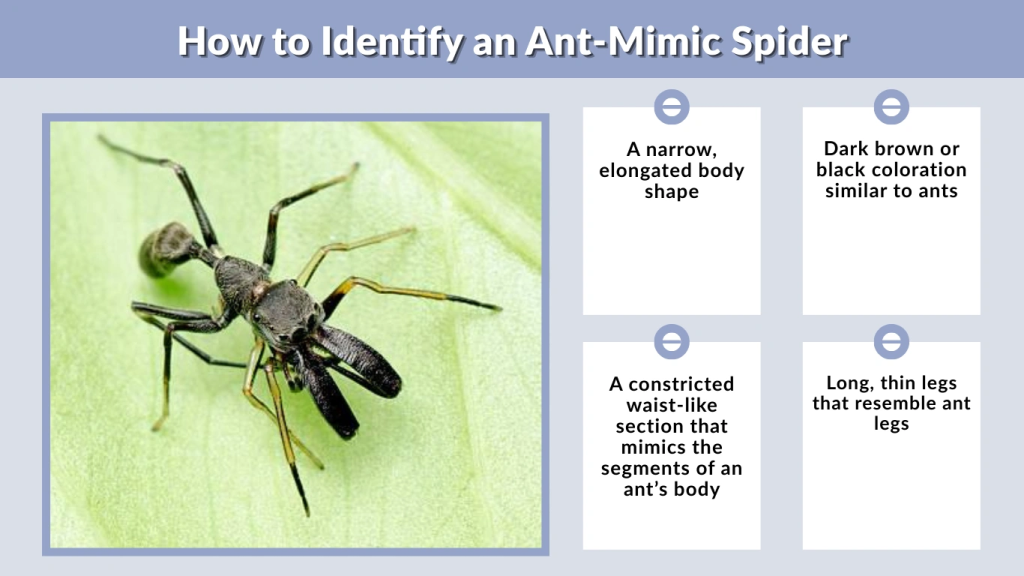
Although ant-mimic spiders resemble ants, careful observation reveals several features that distinguish them from real ants.
Physical Characteristics
Ant-mimic spiders have a body structure that differs from typical spiders. Instead of the usual rounded body shape seen in many species, these spiders have a more slender and segmented appearance.
Key identifying characteristics include:
- A narrow, elongated body shape
- Dark brown or black coloration similar to ants
- A constricted waist-like section that mimics the segments of an ant’s body
- Long, thin legs that resemble ant legs
This unique body structure helps create the illusion that the spider is actually an ant.
Ant-Like Movement and Behavior
One of the most convincing features of ant-mimic spiders is their movement.
Unlike most spiders that move smoothly, these spiders walk in a jerky, irregular pattern that closely resembles the way ants move. This behavior makes the mimicry even more believable.
Many ant-mimic spiders also raise their front pair of legs while walking. These legs are held up in front of the body and moved in a way that resembles ant antennae.
Since spiders do not have antennae, this clever behavior helps complete the illusion.
Size and Appearance
Ant-mimic spiders are generally small in size, which helps them blend into real ant populations.
Most species measure only a few millimeters to about one centimeter in body length. Their small size and dark coloration allow them to hide easily among ants, leaves, and other small objects in their environment.
Although they resemble ants at first glance, closer inspection often reveals the presence of eight legs instead of six and the typical spider body structure.
How Ant-Mimic Spiders Look Like Ants
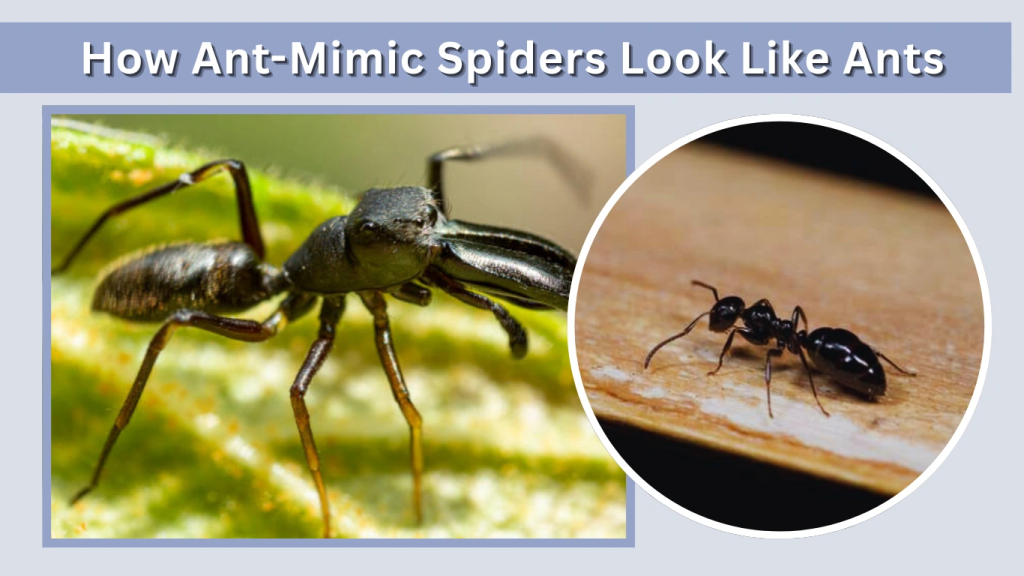
The remarkable resemblance between these spiders and ants is the result of both physical adaptations and behavioral tricks.
Body Structure Adaptations
Many ant-mimic spiders have evolved bodies that visually imitate the three-part structure of ants. While spiders normally have two main body sections, ant-mimic spiders often develop a narrow constriction in the abdomen that creates the illusion of additional segments.
Their bodies are usually smooth and shiny, further enhancing their resemblance to the exoskeleton of ants.
Leg Position and Antenna Illusion
Ants use antennae to sense their surroundings, but spiders do not have these organs.
To compensate for this difference, ant-mimic spiders lift their front pair of legs and move them like antennae while walking. This behavior tricks predators into thinking they are seeing a real ant.
Behavioral Mimicry
In addition to physical similarities, these spiders also mimic ant behavior.
They often move along ant trails or stay close to ant colonies. Their quick, erratic movements resemble the busy activity of worker ants searching for food.
This combination of physical and behavioral mimicry makes ant-mimic spiders one of the most convincing examples of disguise in the spider world.
Ant-Mimic Spider Habitat and Distribution
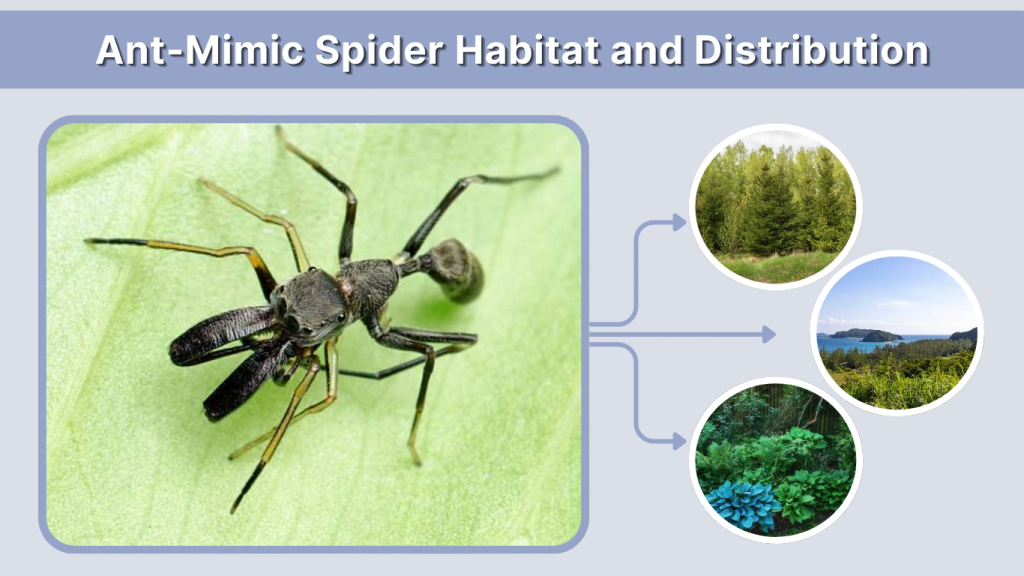
Ant-mimic spiders are found in many regions of the world, especially in areas where ants are abundant. Their ability to imitate ants helps them live safely in environments that might otherwise be dangerous for small spiders.
Where Ant-Mimic Spiders Live
Most ant-mimic spiders prefer habitats with plenty of vegetation and active insect populations. These environments provide both food and protection.
Common habitats include:
- Forest floors and woodland edges
- Tropical and subtropical forests
- Gardens and shrubs
- Grasslands and leaf litter
Because ants are present in almost every ecosystem, ant-mimic spiders can adapt to a wide variety of environments.
Global Distribution
Ant-mimic spiders are widely distributed around the world. Different species exist across multiple continents.
They are commonly found in:
- Asia – Many species of the genus Myrmarachne occur here
- Africa – Various ant-mimicking jumping spiders live in tropical regions
- North and South America – Several species mimic local ant species
- Australia – Home to diverse ant-mimic spider species
Their distribution often depends on the presence of suitable ant species to imitate.
Common Places to Spot Them
Although they are widespread, ant-mimic spiders can be difficult to notice because they blend so well with ants.
They are often seen:
- Walking along ant trails
- On tree bark and plant stems
- Among fallen leaves
- Around garden plants and shrubs
Because they resemble ants so closely, people often overlook them entirely.
Ant-Mimic Spider Behavior
The behavior of ant-mimic spiders is just as interesting as their appearance. Their movements, hunting style, and interactions with ants reveal how effective their mimicry really is.
Hunting Strategy
Many ant-mimic spiders are active hunters, meaning they do not build webs to catch prey.
Instead, they move through vegetation or along the ground searching for small insects. Once prey is detected, the spider quickly attacks and injects venom to immobilize it.
Some species even prey on ants themselves, although this behavior depends on the spider species and its environment.
Interaction With Ant Colonies
One surprising feature of ant-mimic spiders is their ability to live near ant colonies without being immediately attacked.
Their disguise helps them blend into the environment around ants, allowing them to move among them with less risk of detection. However, they usually keep a safe distance to avoid provoking aggressive ants.
This relationship demonstrates how powerful mimicry can be as a survival strategy.
Daily Activity Patterns
Most ant-mimic spiders are diurnal, meaning they are active during the day. This activity pattern matches that of many ant species, making their disguise more effective.
During daylight hours, they can often be seen moving quickly across leaves, stems, and ground surfaces in search of food.
Ant-Mimic Spider Bite
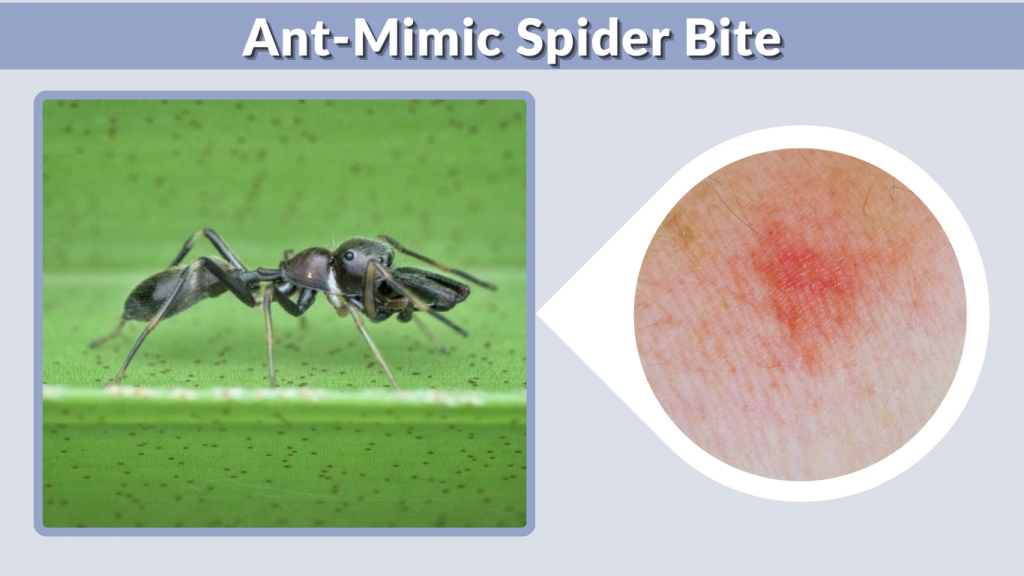
Although ant-mimic spiders may look unusual, people often wonder whether they are capable of biting humans.
Do Ant-Mimic Spiders Bite Humans?
Like most spiders, ant-mimic spiders are not aggressive toward humans. They usually attempt to escape if disturbed.
A bite may occur only if the spider feels trapped or threatened, such as when it is accidentally pressed against the skin. Even in these cases, bites are rare.
Ant-Mimic Spider Bite Symptoms
If a bite does occur, the symptoms are typically mild and short-lived.
Possible symptoms include:
- Slight pain or stinging sensation
- Minor redness around the bite area
- Small swelling or irritation
These effects are generally comparable to a mild insect bite.
Bite Treatment
Basic first-aid measures are usually sufficient for treating an ant-mimic spider bite.
Recommended treatment steps include:
- Washing the bite with soap and water
- Applying a cold compress to reduce swelling
- Avoiding scratching the affected area
- Using anti-itch cream if necessary
Symptoms usually disappear quickly without medical treatment.
Are Ant-Mimic Spiders Dangerous?
Despite their unusual appearance, ant-mimic spiders are not considered dangerous to humans.
Venom and Its Purpose
Like most spiders, ant-mimic spiders possess venom that helps them capture prey. The venom is mainly used to paralyze small insects so the spider can safely consume them.
Because their venom is adapted for small prey, it has very little effect on humans.
Toxicity to Humans
The venom of ant-mimic spiders is not medically significant. In most cases, it causes only mild irritation if a bite occurs.
Serious reactions are extremely rare.
Comparison With Dangerous Spiders
Compared with medically important spiders, ant-mimic spiders pose very little risk.
For example:
- Black widow spiders have strong neurotoxic venom
- Brown recluse spiders can cause tissue damage in rare cases
Ant-mimic spiders do not have venom capable of producing these severe effects.
Life Cycle of an Ant-Mimic Spider

Like other spiders, ant-mimic spiders go through several stages during their development.
Egg Stage
Female spiders lay eggs inside small silk sacs. These sacs protect the eggs while they develop.
Spiderling Development
After hatching, the young spiders—called spiderlings—begin their early development. As they grow, they gradually develop the ant-like body shape and behavior seen in adults.
Growth Into Adult Spiders
The spiderlings molt several times as they grow larger. Eventually they reach adulthood and begin hunting independently.
Most ant-mimic spiders live for about one year, although lifespan can vary depending on environmental conditions.
Benefits of Ant-Mimic Spiders in Nature
Ant-mimic spiders contribute to the health of ecosystems by helping control insect populations.
Pest Control Role
Because they feed on various small insects, these spiders help reduce pest numbers that could otherwise damage plants and crops.
Importance in Biodiversity
Ant-mimic spiders are part of complex ecological food webs. They serve as predators for insects and also become prey for larger animals.
Role in Predator–Prey Balance
Their presence helps maintain balance in natural ecosystems, preventing certain insect populations from becoming too large.
Conclusion
Ant-mimic spiders are remarkable examples of evolutionary adaptation. By imitating ants in both appearance and behavior, they gain protection from predators and improve their chances of survival. Despite their unusual look, these spiders are harmless to humans and rarely bite. Their small size, clever mimicry, and beneficial role in controlling insect populations make them an important part of many ecosystems. Understanding these unique spiders helps reveal just how diverse and fascinating the world of spiders can be.