
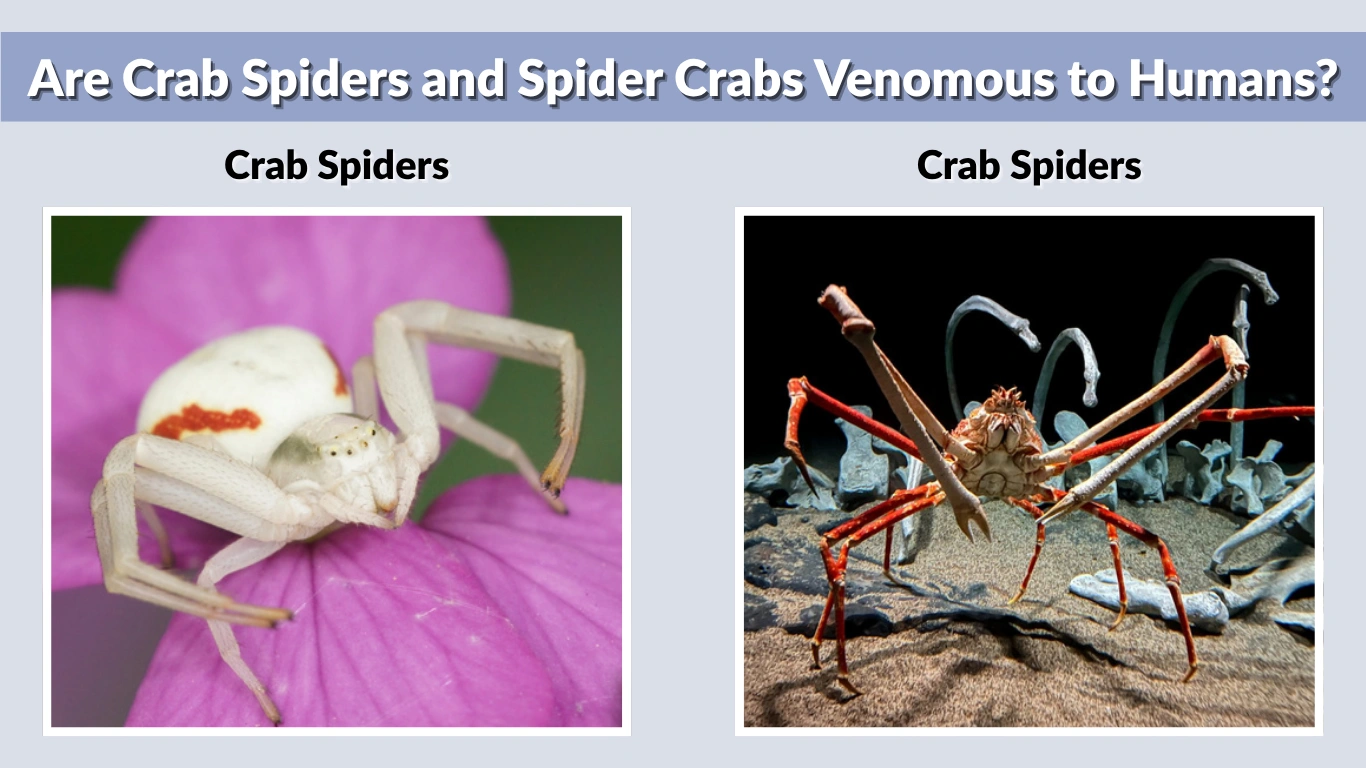
Crab spiders and spider crabs share similar names but belong to completely different animal groups. One is a small garden-dwelling spider, and the other is a massive marine crab. This similarity in names often leads to confusion about whether they’re venomous or dangerous to humans. In reality, crab spiders do possess venom—but only strong enough to subdue insects—while spider crabs have no venom at all. Let’s explore their differences in detail.
What Is a Crab Spider?

Description and Behavior
Crab spiders belong to the family Thomisidae and are known for their distinctive sideways movement, similar to that of true crabs. They’re typically found in gardens, meadows, and forests, resting on flowers or leaves where they ambush unsuspecting prey. Their compact bodies, wide front legs, and incredible camouflage make them excellent hunters.
Unlike web-building spiders, crab spiders rely on stealth rather than silk to capture prey. They often sit motionless, blending with flower petals, and attack bees, flies, or butterflies that land nearby.
Species Examples
Several species of crab spiders are found worldwide, each adapted to specific environments:
- Goldenrod Crab Spider (Misumena vatia) – famous for its ability to change color between white and yellow to match its surroundings.
- Green Crab Spider (Diaea dorsata) – bright green, commonly seen on foliage.
- White Crab Spider and Eight-Spotted Crab Spider – variations with region-specific appearances.
Each of these spiders shares the same predatory method and mild venom, used to immobilize prey instantly.
Is the Crab Spider Venomous?
Purpose of Venom
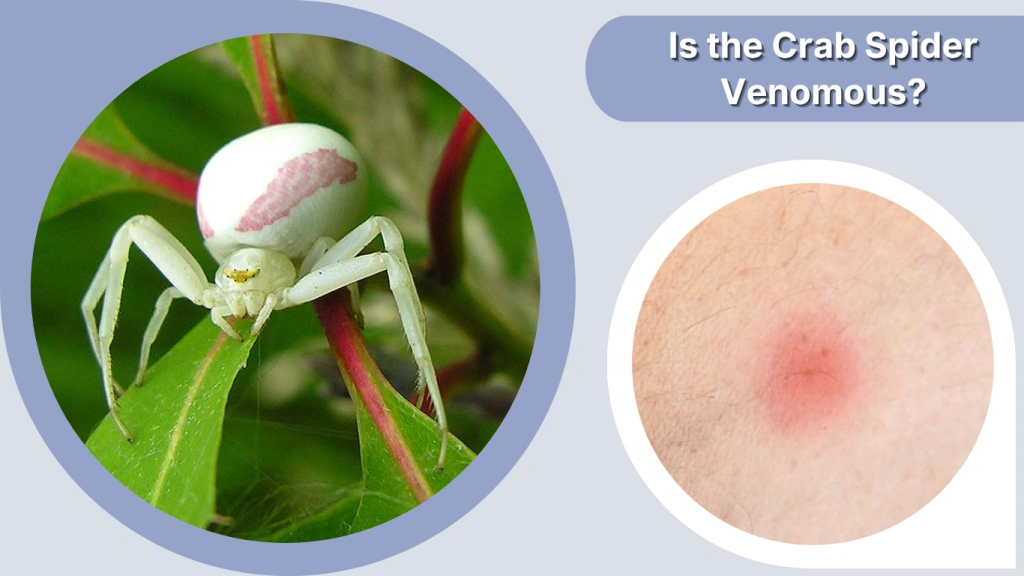
Crab spiders are indeed venomous—but only to their prey. Their venom helps them paralyze insects quickly after biting. It’s a specialized hunting tool rather than a defense mechanism. Because their fangs are tiny and their venom is weak against mammals, crab spiders pose virtually no threat to humans.
Effects of a Crab Spider Bite on Humans
Bites from crab spiders are extremely rare since they are non-aggressive and tend to flee when disturbed. In rare cases where a person might accidentally press against one, the bite may cause mild irritation, redness, or slight swelling. These symptoms usually disappear within a few hours and do not require medical treatment.
For most people, a crab spider bite feels no worse than a mosquito sting.
Venom Composition
The venom of crab spiders contains mild neurotoxic components designed to disrupt the nervous system of insects. These chemicals quickly paralyze smaller prey, ensuring an efficient kill. However, the concentration and potency are far too low to affect larger creatures like humans or pets. In short, crab spiders are venomous—but harmless.
Species Spotlight — The Goldenrod Crab Spider
Are Goldenrod Crab Spiders Venomous to Humans?
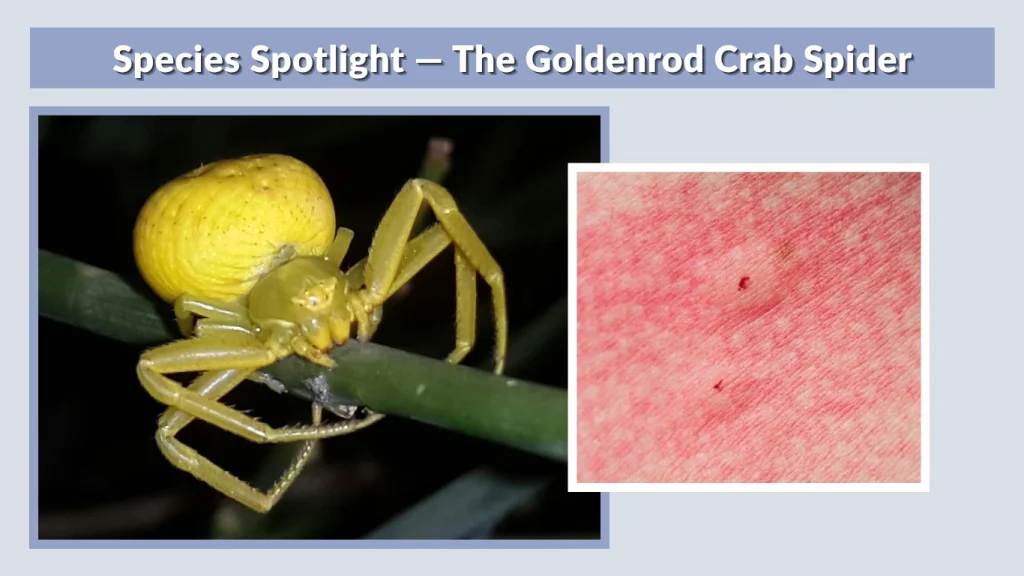
The Goldenrod Crab Spider is perhaps the most recognized species in this group. It’s small, colorful, and often seen waiting patiently on yellow or white flowers. Like other crab spiders, it has venom—but only potent enough for insects. For humans, its bite is harmless and rarely felt. If bitten, the area might show mild redness that fades quickly without treatment.
Adaptive Camouflage and Hunting Style
One of the Goldenrod Crab Spider’s most fascinating traits is its ability to change color. It can switch between yellow and white shades depending on the flower it inhabits, making it nearly invisible to prey. When a bee or butterfly lands nearby, it delivers a swift venomous bite to immobilize the insect instantly. This ability makes it an efficient ambush predator but not a threat to humans.
What About Spider Crabs?
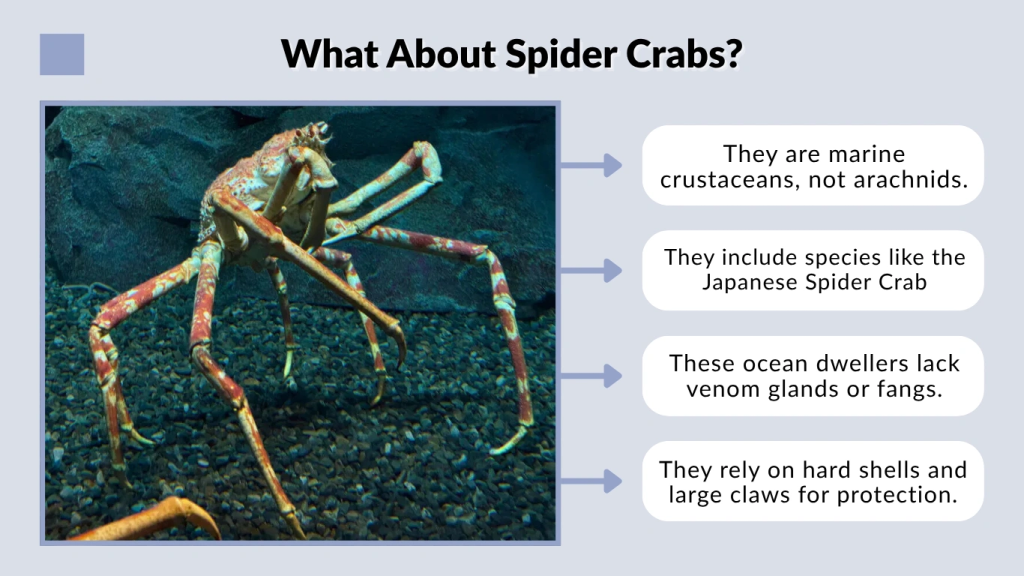
While the name sounds similar, spider crabs belong to an entirely different group—they are marine crustaceans, not arachnids. They include species like the Japanese Spider Crab, European Spider Crab, and Giant Spider Crab, which live in deep or coastal waters.
These ocean dwellers lack venom glands or fangs. Instead, they rely on hard shells and large claws for protection. Some species may pinch if provoked, but they pose no venom-related danger to humans.
Venom Myths and Misconceptions
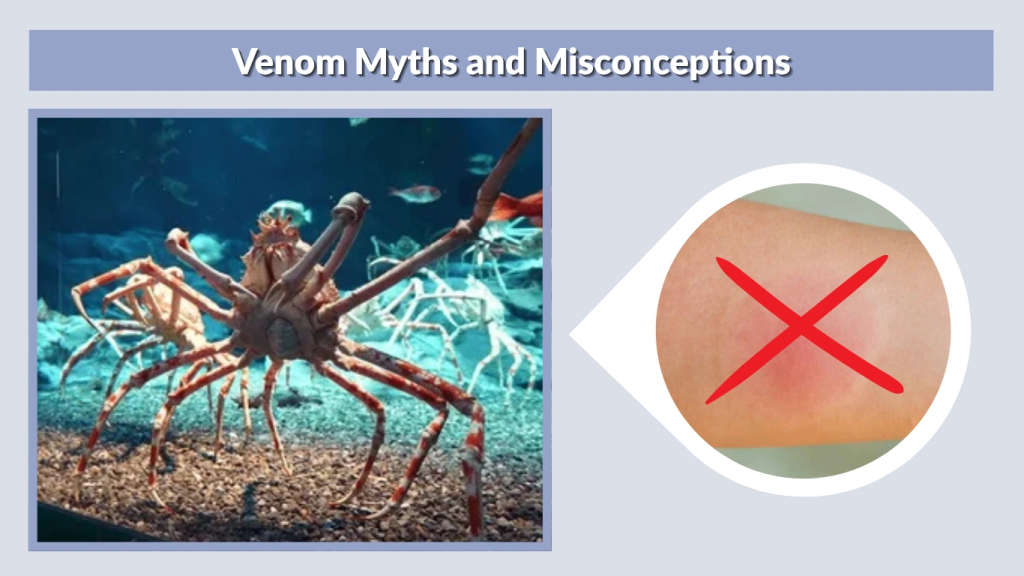
Many people mistakenly believe that spider crabs and crab spiders are related or equally venomous simply because of their similar names. In reality, they belong to entirely different biological groups. Crab spiders are true spiders (arachnids) that possess mild venom used only for hunting insects. Spider crabs, however, are crustaceans related to lobsters and shrimp, completely lacking venom glands.
Viral stories about “venomous spider crabs” found in regions like the UK or Cornwall are pure myth. These crabs may look intimidating due to their long, spindly legs, but they are harmless scavengers that clean the ocean floor. The confusion often arises from their alien appearance and exaggerated online claims.
Another common misconception is that all brightly colored crab spiders are dangerous. The goldenrod crab spider, for example, is often mistaken for a venomous threat because of its vibrant yellow coloration. In truth, the color serves as camouflage among flowers rather than a warning. Its venom affects only small insects and poses no harm to humans or pets.
Safety and Precautions
Handling Crab Spiders
Crab spiders rarely bite unless threatened or trapped against the skin. If you find one in your garden or home, gently relocate it outside rather than killing it. These spiders play a vital role in natural pest control, feeding on flies and pollinators. When gardening, wearing gloves can prevent accidental bites, though even if bitten, symptoms are minimal—mild itching or redness that fades quickly.
Interacting with Spider Crabs
Spider crabs, including the Japanese spider crab, are slow-moving and non-aggressive. Divers often encounter them in deep waters and describe them as peaceful creatures. On rare occasions, they may pinch if handled roughly, but their claws are not venomous and cause no lasting injury.
For seafood lovers, spider crabs are completely safe to eat. Their meat is sweet, tender, and free of toxins. Cooking them thoroughly, as with any crustacean, ensures a safe and delicious meal.
FAQs
Are crab spiders dangerous to humans?
Crab spiders are not dangerous to humans. Their venom is designed to immobilize insects, not people, and their fangs are too small to cause significant damage. At worst, a bite may result in slight redness or swelling that resolves within a few hours.
Is the goldenrod crab spider venomous to humans?
The goldenrod crab spider is mildly venomous but harmless to humans. Its venom only affects small insects. Even if it bites, the effects are minor—similar to a mosquito bite—and do not require medical care.
Are spider crabs venomous or poisonous?
No, spider crabs are neither venomous nor poisonous. They lack fangs or venom glands and are entirely safe to handle and eat. Their primary defense mechanism is their large claws, which they use only when threatened.
Can you eat spider crabs safely?
Absolutely. Spider crabs are a delicacy in many regions, especially Japan and Europe. Their meat is sweet, mild, and completely non-toxic. When properly cooked, spider crabs are among the safest and most flavorful seafood options available.
What should you do if bitten by a crab spider?
If bitten, wash the area with soap and water, apply ice to reduce swelling, and avoid scratching. Over-the-counter antihistamines or topical creams can relieve minor irritation. Serious reactions are extremely rare, but if you experience severe swelling or pain, consult a doctor.