
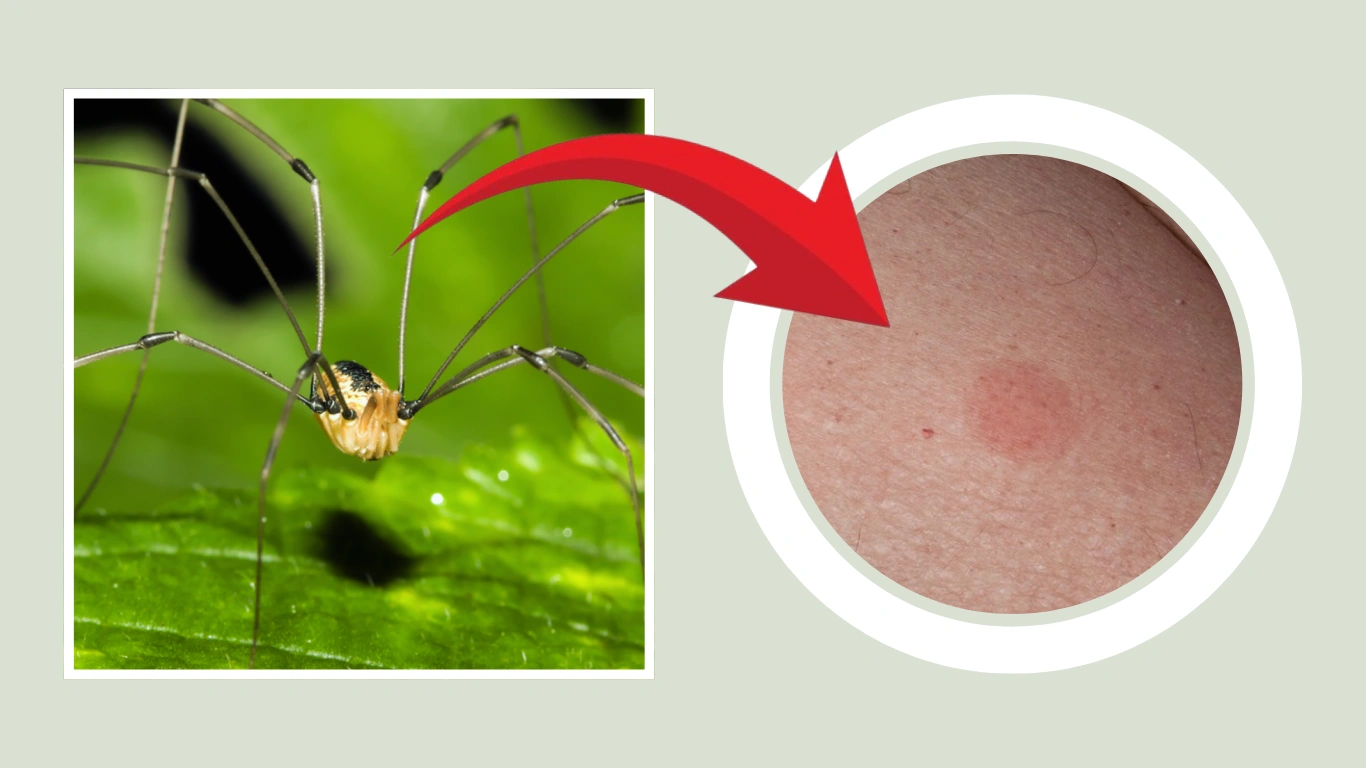
If you’ve ever seen a creature with a tiny round body and incredibly long legs crawling across your ceiling or hanging in a corner of your home, you’ve likely spotted what most people call a “Daddy Long Legs.” For years, these long-legged creatures have been at the center of one of the most persistent myths in the insect world — that they’re the most poisonous spiders on Earth, but their mouths are too small to bite humans.
But is that really true? Let’s dig into the facts, clear up the confusion, and finally answer the big question: Are Daddy Long Legs poisonous?
Are Daddy Long Legs Poisonous?

No, Daddy Long Legs are not poisonous to humans. In fact, the term “poisonous” is itself misleading. It’s important to distinguish between “poisonous” (harmful if ingested or touched) and “venomous” (delivers toxins through a bite or sting).
Here’s the truth:
- Harvestmen, the creatures most often called Daddy Long Legs, do not have venom glands or fangs. So, they’re not venomous or poisonous.
- Cellar Spiders, another creature often given the same nickname, do have venom, but it’s extremely mild and harmless to humans.
- Crane Flies, which also get lumped into this nickname, are entirely non-venomous and non-poisonous.
The idea that Daddy Long Legs are dangerously poisonous is a myth with no scientific backing.
What Are Daddy Long Legs?
The nickname “Daddy Long Legs” doesn’t refer to a single species. It’s a common name used for three very different creatures:
1. Harvestmen (Order: Opiliones)

- Not true spiders
- One body segment (unlike spiders, which have two)
- No silk, no venom glands
- Completely harmless to humans
2. Cellar Spiders (Family: Pholcidae)

- True spiders
- Found in dark, damp areas like basements and cellars
- Can produce silk and build webs
- Have venom, but it’s weak and not dangerous to people
3. Crane Flies (Family: Tipulidae)

- Flying insects, resemble giant mosquitoes
- No venom or poison
- Don’t bite or sting
- Harmless and often confused due to their long legs
Myth vs Reality

The myth likely started from cellar spiders, which can kill other spiders with their venom. Someone may have observed them defeating more “dangerous-looking” spiders and assumed they must be more poisonous.
Then the story evolved: “They’re the most poisonous spider, but their fangs are too short to bite humans.”
That’s false.
Scientific studies have proven that:
- Cellar spiders can bite humans, but rarely do
- Their fangs are long enough to pierce human skin
- Even if they bite, the venom is too weak to cause harm
As for harvestmen and crane flies, they don’t even have venom, so the myth doesn’t apply to them at all.
Do Daddy Long Legs Bite Humans?

Let’s look at each type:
- Harvestmen: No venom, no fangs. They can’t bite.
- Cellar Spiders: Rarely bite. Even if they do, it might cause a tiny red bump, like a mosquito bite. No medical threat.
- Crane Flies: Can’t bite. Their mouthparts are not built for it.
So overall — no reason to worry. None of these creatures pose any real risk to humans.
Why the Confusion Exists
This confusion stems from the casual way people use the name “Daddy Long Legs.” It’s used to describe three unrelated species. Because they all have long, thin legs, people lump them together.
Add in pop culture, TV shows, and viral social media posts, and the myth kept spreading. But scientifically, it has been debunked multiple times.
Interesting Facts About Daddy Long Legs
- Harvestmen eat decomposing plant and animal matter, playing a vital role in the ecosystem.
- Cellar Spiders actually help reduce the population of other household pests by trapping flies, ants, and other bugs.
- Crane Flies may look scary when they fly indoors, but they don’t bite or sting. They live short adult lives and are often just trying to get back outside.
Conclusion
So, are Daddy Long Legs poisonous?
No, they are not.
Despite the common myth, none of the creatures called “Daddy Long Legs” are dangerous to humans. Harvestmen don’t have venom. Crane flies can’t bite. And while cellar spiders have mild venom, it’s completely harmless to humans.
These long-legged creatures may look a bit spooky, but they’re actually harmless helpers in our environment. Next time you see one in your home or garden, consider letting it go about its business — it’s not out to hurt you.