

Tangle-web spiders are common worldwide, often found in homes and gardens. Their messy webs help trap pests, playing a key role in natural insect control. Despite their abundance, questions remain about whether habitat loss or pesticides could threaten their long-term survival.
Are Tangle-Web Spiders Endangered?

Conservation Status
Currently, tangle-web spiders as a group are not endangered. Most species are:
- Stable
- Widespread
- Not listed on the IUCN Red List
For example, black widow spiders—despite their fearsome reputation—are not in danger of extinction. They are well-established in their native ranges and have even expanded in some areas.
Many tangle-web spiders are also highly reproductive, with females laying hundreds of eggs at a time. This helps maintain population strength even in fluctuating conditions.
Stable or Thriving Populations
The adaptability of these spiders contributes significantly to their success:
- Able to survive indoors and outdoors
- Tolerant of dry or moist climates
- Thrive in both urban and rural settings
Their ability to colonize human structures gives them a major survival advantage over more habitat-specific species.
Where Are Tangle-Web Spiders Found?

Global Distribution
Tangle-web spiders are globally distributed, with species found on every continent except Antarctica. Their adaptability has allowed them to survive in both natural and man-made environments. In fact, some species—like Parasteatoda tepidariorum (the American house spider)—are more common indoors than out.
Their presence spans:
- Urban and suburban areas
- Forest floors and trees
- Rocky hillsides
- Grasslands and shrublands
Typical Habitats
These spiders thrive in places where they can remain undisturbed and where prey insects are readily available. Common habitats include:
Indoor structures: attics, basements, closets
Outdoor areas: sheds, garden fences, under debris
Natural crevices: tree bark, stone piles, caves
The key to their survival is their adaptability. Unlike many species that suffer from habitat change, tangle-web spiders often benefit from human-made environments.
Potential Threats to Their Survival
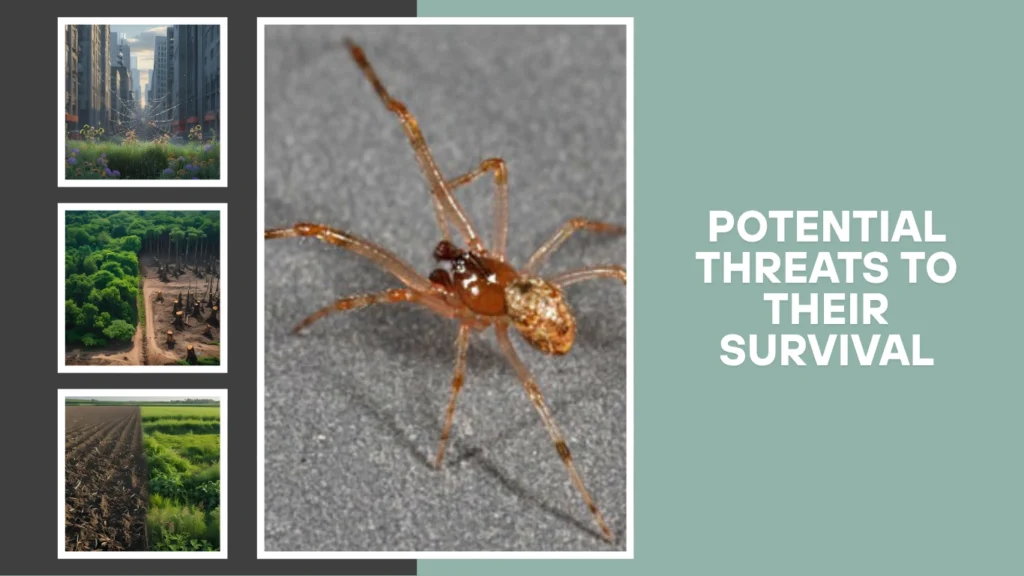
While not endangered globally, some threats could pose risks—especially to specific species or isolated populations.
Habitat Destruction
Urbanization can eliminate microhabitats for wild spider populations.
Deforestation and land conversion may lead to regional declines.
Intensive agriculture reduces invertebrate biodiversity, affecting prey availability.
That said, many tangle-web spiders benefit from urban sprawl, unlike many forest- or grassland-specialist spiders.
Human Persecution
Due to fear and misunderstanding, spiders are often killed on sight. This is especially true for widow spiders, which are venomous but not aggressive and rarely bite unless provoked.
Widespread use of insecticides and pest control services can also reduce spider numbers—even indirectly by killing their food sources.
Climate and Environmental Changes
Some species may be sensitive to:
- Temperature extremes
- Loss of humidity
- Disruption in seasonal prey cycles
However, most tangle-web spiders appear resilient in the face of climate variability, especially those that dwell indoors or in sheltered environments.
Do Any Species Need Protection?
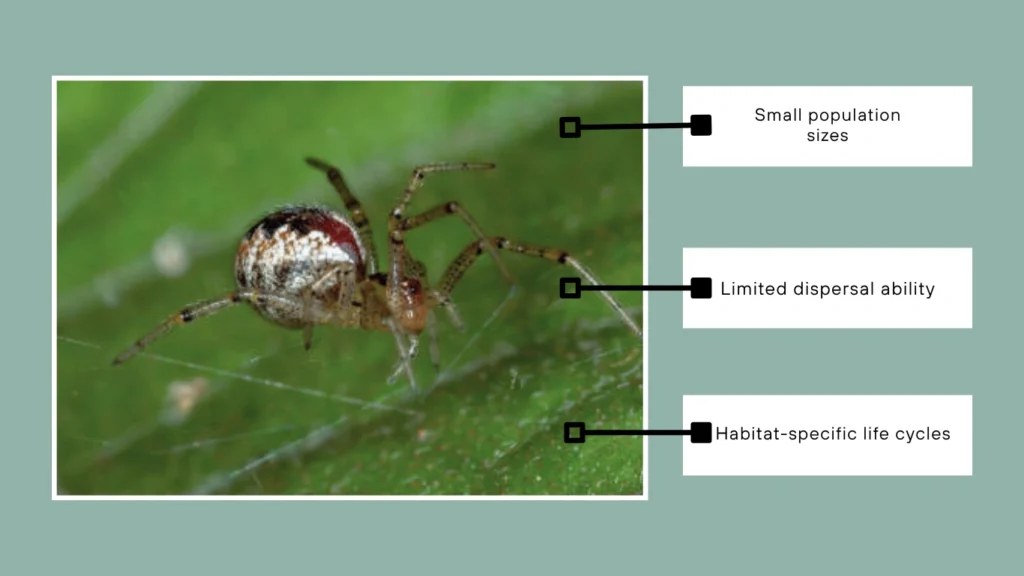
While the majority of tangle-web spiders are safe from extinction, there could be exceptions worth monitoring.
Regional Vulnerabilities
Species restricted to islands, mountain zones, or cave ecosystems may be more at risk due to:
- Small population sizes
- Limited dispersal ability
- Habitat-specific life cycles
Such species may not be formally assessed but could be vulnerable due to their narrow geographic range.
Conservation Research Gaps
- Many tangle-web species have not been studied in detail.
- Population trends are unknown for lesser-known genera.
- Taxonomic confusion in some groups makes conservation assessment difficult.
More research is needed to identify if certain subpopulations or localized species face genuine threats.
Why Tangle-Web Spiders Matter
Ecological Role
Tangle-web spiders help maintain a healthy ecosystem by:
- Controlling insect populations, such as flies, mosquitoes, and ants
- Serving as prey for birds, reptiles, and small mammals
- Contributing to natural pest control in homes and gardens
Without spiders, insect populations could explode, leading to ecological imbalance and increased use of chemical pesticides.
Human Benefit
Beyond pest control, tangle-web spiders are important for scientific and medical research.
- Black widow venom has been studied for potential treatments in nerve and muscle disorders.
- Web silk structures inspire materials research in engineering and textiles.
These tiny predators are more valuable alive than many realize.
Final Verdict – Are They Really Endangered?
In conclusion, tangle-web spiders are not endangered. On the contrary, many species are widespread and thriving, thanks to their adaptability and reproductive efficiency. While individual populations may face localized threats, there is currently no global conservation concern for this group.
That said, not all species are equally well-known. Continued monitoring, public education, and responsible pest management can help ensure even the lesser-known cobweb spiders continue to play their ecological roles undisturbed.
Killing spiders out of fear not only harms biodiversity but also removes natural allies from our environment. By understanding and respecting these arachnids, we contribute to a more balanced and healthy ecosystem.
FAQs
Are black widow spiders endangered?
No. Black widow spiders are not endangered and are found across North and South America, Africa, and parts of Europe and Asia. They are medically significant but not ecologically threatened.
Do any tangle-web species face habitat loss?
Most species are generalists and adapt well to habitat change. However, rare or habitat-specialist species—like those living in caves or on islands—could be more sensitive to habitat loss.
Why are tangle-web spiders often found indoors?
They are drawn to quiet, dark spaces with easy access to insects. Indoor environments offer safety from predators and stable conditions year-round.
Are all tangle-web spiders venomous?
Yes, but most are not dangerous to humans. Only a few, like the black widow, have medically significant venom. The vast majority pose no threat and do not bite unless trapped or provoked.
Can tangle-web spiders adapt to climate change?
Many species have already demonstrated resilience to various climates. Their ability to live in controlled environments (like homes) makes them less vulnerable to climate shifts than outdoor-dependent species.