
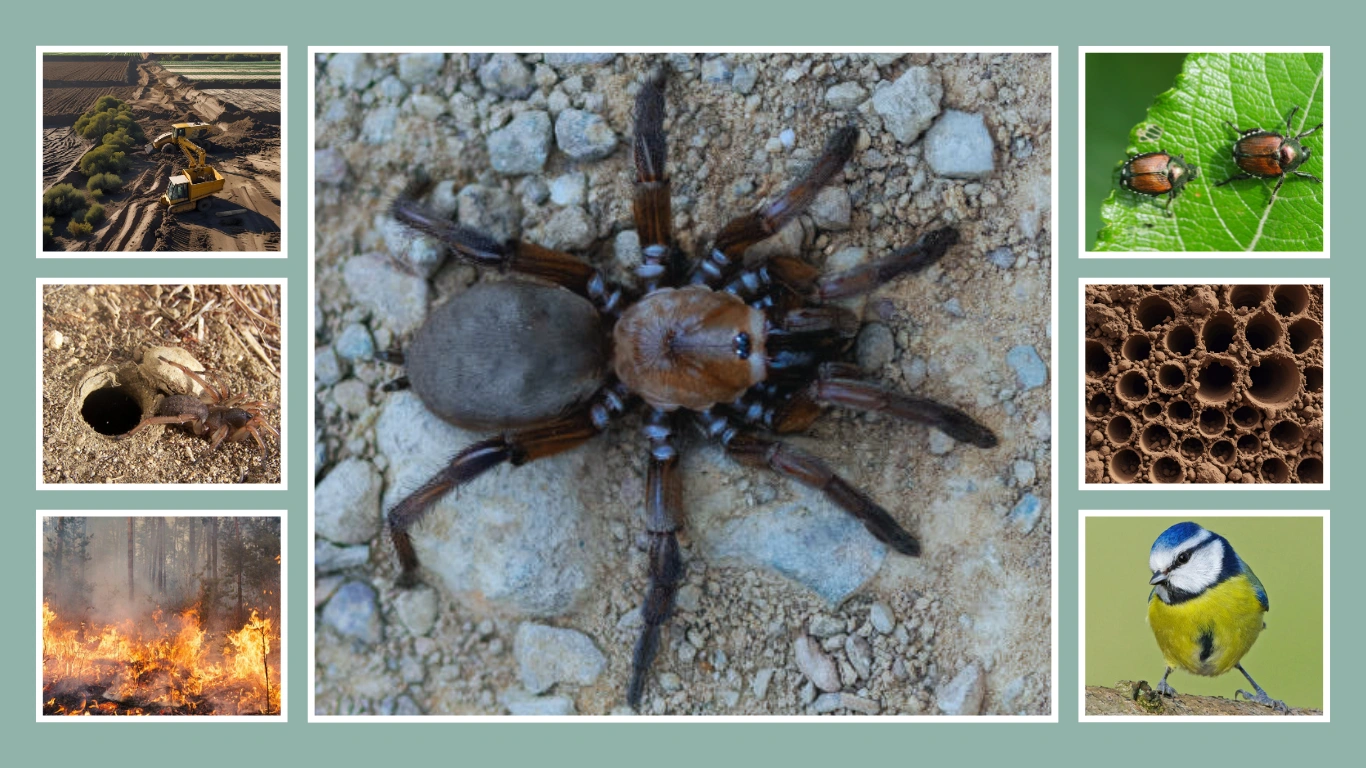
Trapdoor spiders are fascinating creatures, known for their secretive lifestyle and impressive hunting technique. Living underground and ambushing prey from camouflaged silk-lined burrows, they’re rarely seen, leading some people to wonder if they’re disappearing. But just because a spider is hard to spot doesn’t mean it’s endangered. So, are trapdoor spiders endangered of extinction? The answer is more complex than a simple yes or no.
Are Trapdoor Spiders Endangered?

Most trapdoor spiders are not endangered, but some specific species are at risk due to habitat loss, climate change, and human disturbance. The group of spiders commonly referred to as “trapdoor spiders” includes many different genera and species, some of which have stable populations while others are threatened or critically endangered.
For example:
- The Shield-backed Trapdoor Spider (Idiosoma nigrum) is listed as endangered in parts of Western Australia.
- Other species, such as Aptostichus angelinajolieae (named after Angelina Jolie), are not classified as endangered but may be data deficient due to limited study.
What Are Trapdoor Spiders?

Scientific Classification
- Infraorder: Mygalomorphae
- Families: Ctenizidae, Idiopidae, Cyrtaucheniidae, and others
- Common Name: Trapdoor spider
- Global Range: Australia, USA (especially California and the southern states), Asia, Africa, South America
Trapdoor spiders build silk-lined burrows underground, often with a lid or “trapdoor” made from silk, soil, and debris. They lie in wait near the entrance and launch out when prey passes by.
Physical Features
- Stocky, hairy bodies (often brown or black)
- Strong fangs and thick legs
- Females are much larger than males and can live up to 20 years
- Males usually die after mating
Where Do Trapdoor Spiders Live?
Trapdoor spiders are distributed widely across the globe and are particularly diverse in:
- Australia
- South Africa
- Western United States (especially California)
- South America
They prefer loose, undisturbed soil where they can construct burrows and often live in dry forests, scrublands, deserts, and even backyards in rural areas.
Why Are Some Species Endangered?
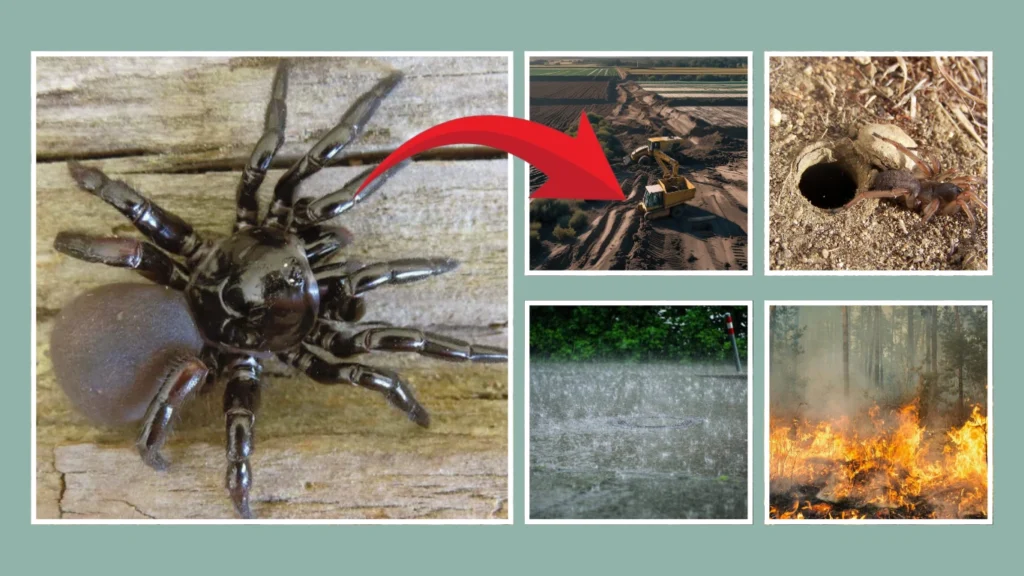
1. Habitat Loss
Urbanization, agriculture, and mining projects often destroy the precise habitat conditions that trapdoor spiders need—especially soil stability and undisturbed ground cover.
2. Limited Dispersal Ability
Trapdoor spiders are not mobile. They spend nearly their entire lives in one burrow. If their habitat is destroyed, they can’t easily migrate or adapt to new locations.
3. Climate Change
Changes in temperature, rainfall, and soil moisture can significantly affect burrow stability, prey availability, and survival—especially for juvenile spiders.
4. Bushfires and Natural Disasters
In areas like Australia and California, wildfires are becoming more intense and frequent, often destroying entire spider populations that cannot escape or burrow deep enough to survive the heat.
Are All Trapdoor Spiders Protected?
No. Only a few species of trapdoor spiders have been studied in enough detail to receive protection. Others may be at risk but are classified as “data deficient” because scientists don’t have enough information to assess their conservation status accurately.
The Importance of Trapdoor Spiders
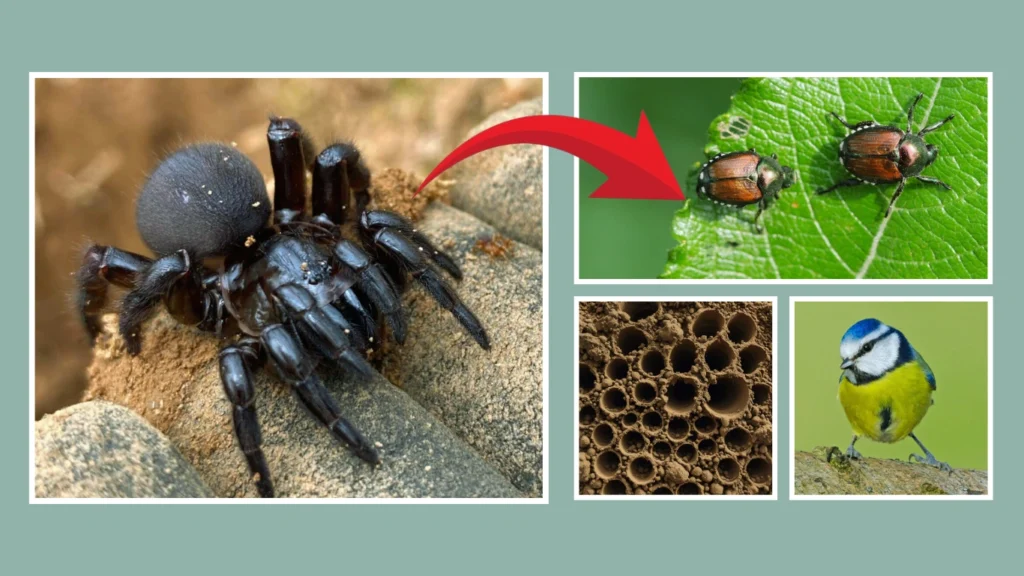
Though often unnoticed, trapdoor spiders serve important ecological functions:
- Pest control: They consume insects, beetles, and even small vertebrates
- Soil structure: Their burrows help aerate soil and improve drainage
- Food source: Birds, reptiles, and mammals eat them, making them part of the food chain
Their long lifespan and specialized behavior make them valuable for scientific study and understanding soil-based ecosystems.
Misconceptions About Trapdoor Spiders
| Myth | Truth |
| Trapdoor spiders are aggressive | They are shy and remain hidden unless disturbed |
| All species are rare or endangered | Only certain species face population threats |
| They live only in Australia | Many species are found globally |
| Trapdoor spiders dig large holes | Most burrows are just a few centimeters wide |
FAQs
1. Which trapdoor spider species are actually endangered?
Some trapdoor spider species have been assessed and declared at risk:
- Idiosoma nigrum (Shield-backed trapdoor spider): Endangered due to mining and habitat fragmentation in Western Australia
- Moggridgea tingle (Tingle Trapdoor Spider): Endemic to a small forest area in WA and considered rare
- Cyclocosmia truncata (a U.S. species): Not listed as endangered, but has a very small range and faces habitat pressure
Other species may also be vulnerable but lack enough data for formal classification.
2. Can trapdoor spiders survive habitat destruction?
Not easily. Trapdoor spiders are site-specific, meaning they dig a single burrow where they live for most of their life. If their immediate area is destroyed—by roadwork, land clearing, or landscaping—they usually cannot relocate or rebuild elsewhere. This makes them particularly vulnerable to sudden changes.
3. What can be done to protect endangered trapdoor spiders?
Several conservation strategies can help:
- Habitat preservation: Protecting native forest floors and limiting land clearance
- Soil conservation: Avoiding soil compaction from vehicles or construction
- Controlled burns: Preventing uncontrolled wildfires by managing brush buildup
- Public education: Helping people recognize trapdoor spiders and avoid harming them
Australia, in particular, has created conservation plans for certain trapdoor spider species through local environmental authorities.
4. Why aren’t more trapdoor spiders studied?
Trapdoor spiders are hard to find and observe, spending most of their lives underground. Their slow life cycle (females reproduce infrequently and live for decades) makes long-term study difficult. Additionally, funding for invertebrate research is limited compared to more charismatic animals like birds or mammals. As a result, many trapdoor species remain poorly understood.
5. Could climate change make more trapdoor species endangered?
Yes. Climate change may become a major threat in the coming decades. Rising temperatures, droughts, and soil changes can:
- Disrupt their prey availability
- Dry out their burrows
- Trigger habitat shifts that leave them stranded
Because of their limited mobility and deep reliance on specific microhabitats, trapdoor spiders are especially sensitive to even slight environmental changes. In the long run, more species could be listed as threatened if conservation efforts don’t address climate impacts.