
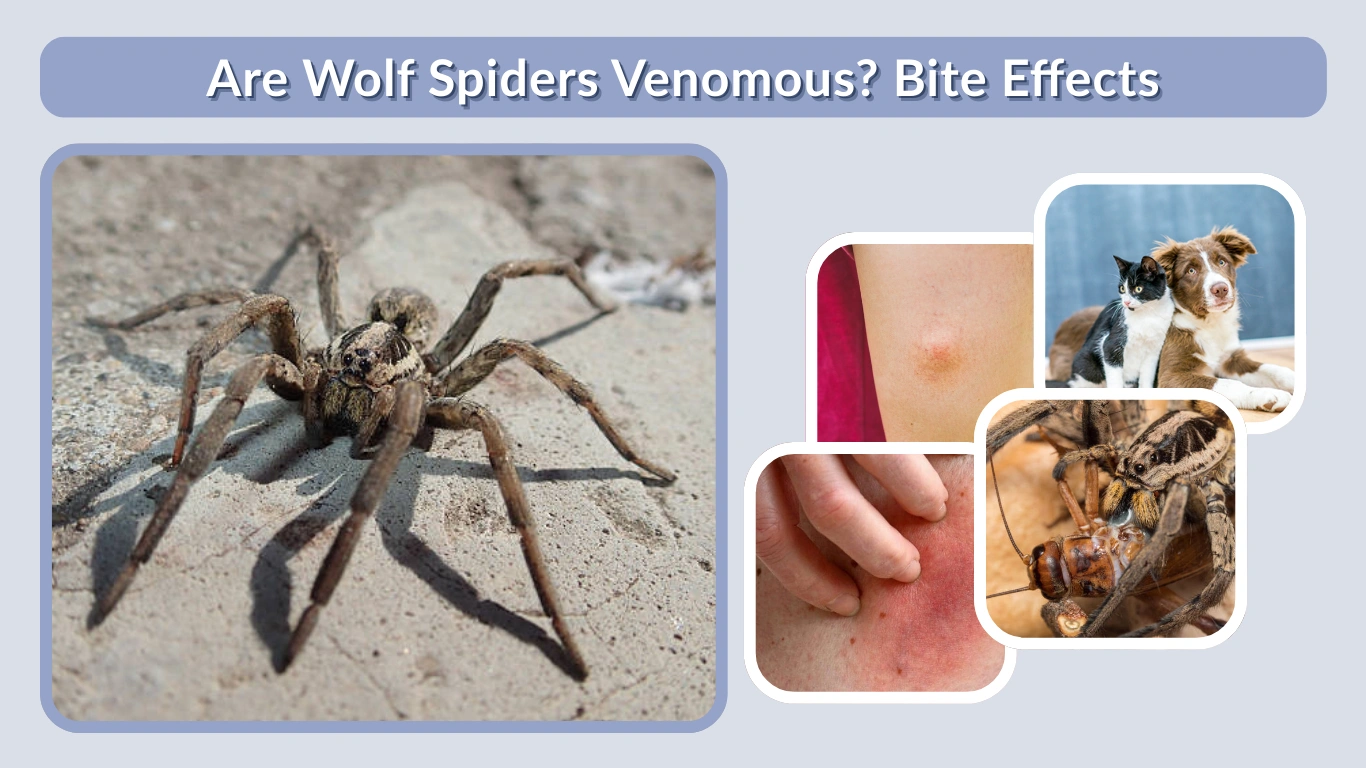
Many people wonder if wolf spiders are venomous, especially after seeing these large, fast-moving spiders in their homes or gardens. Wolf spiders belong to the Lycosidae family, a group of hunting spiders known for their speed, strong eyesight, and active hunting style. Unlike web-building spiders, wolf spiders chase and capture their prey directly. While they do possess venom used to subdue insects, their venom is generally mild and rarely harmful to humans. Understanding how their venom works can help reduce unnecessary fear.
What Are Wolf Spiders?
Wolf spiders are ground-dwelling spiders known for their active hunting behavior. Instead of building webs to catch insects, they stalk and chase their prey, similar to how wolves hunt—this is how they earned their name.
These spiders are commonly found in outdoor environments such as gardens, forests, and fields, but they can sometimes wander indoors while searching for food or shelter.
Quick Facts
| Feature | Details |
| Scientific Family | Lycosidae |
| Common Name | Wolf Spider |
| Size | 10–35 mm |
| Color | Brown, gray, or black |
| Habitat | Gardens, forests, fields, homes |
| Diet | Insects and small arthropods |
| Venom Presence | Yes |
| Risk Level | Low for humans |
Wolf spiders are beneficial predators because they help control insect populations in many ecosystems.
Are Wolf Spiders Venomous?
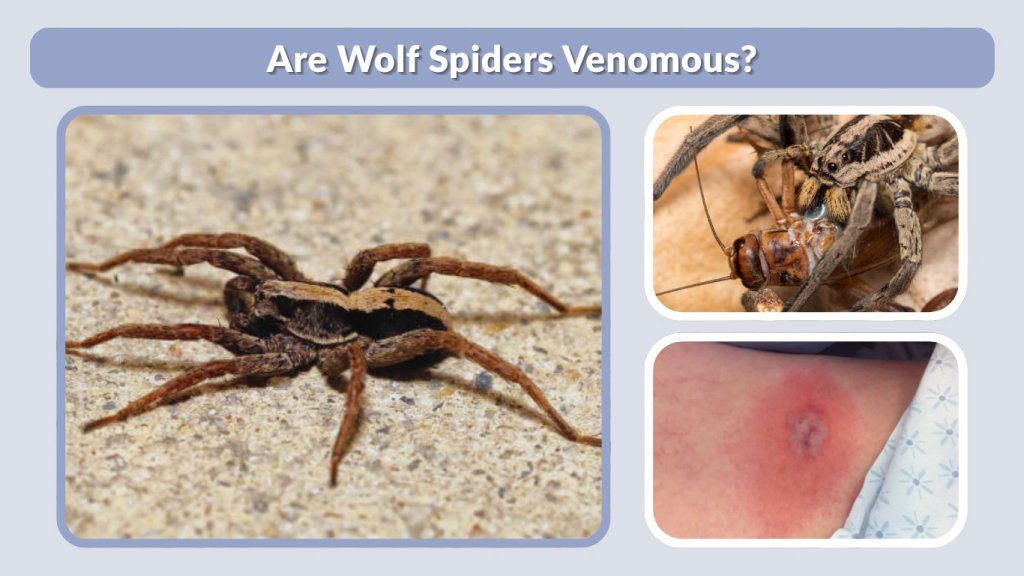
Yes, wolf spiders are venomous. Like most spiders, they possess venom glands connected to their fangs. This venom is injected into prey when the spider bites.
However, the purpose of wolf spider venom is primarily to immobilize insects, not to harm humans.
Do Wolf Spiders Have Venom?
All wolf spiders produce venom as part of their hunting strategy. When a wolf spider captures prey, it bites the insect and injects venom through its fangs. The venom quickly paralyzes the prey, making it easier for the spider to feed.
The venom also begins breaking down the insect’s tissues, helping the spider digest its food.
Purpose of Their Venom
Wolf spider venom serves several important functions:
- Paralyzing prey so it cannot escape
- Helping with digestion of the captured insect
- Protecting the spider if it feels threatened
Because wolf spiders are active hunters, venom is essential for their survival.
Venom Strength
Although wolf spider venom is effective against small insects, it is relatively mild compared to venom from medically significant spiders.
For humans, wolf spider venom typically causes only minor reactions such as:
- Slight pain
- Redness
- Mild swelling
These symptoms usually disappear within a short period of time.
Wolf Spider Venom Effects on Humans
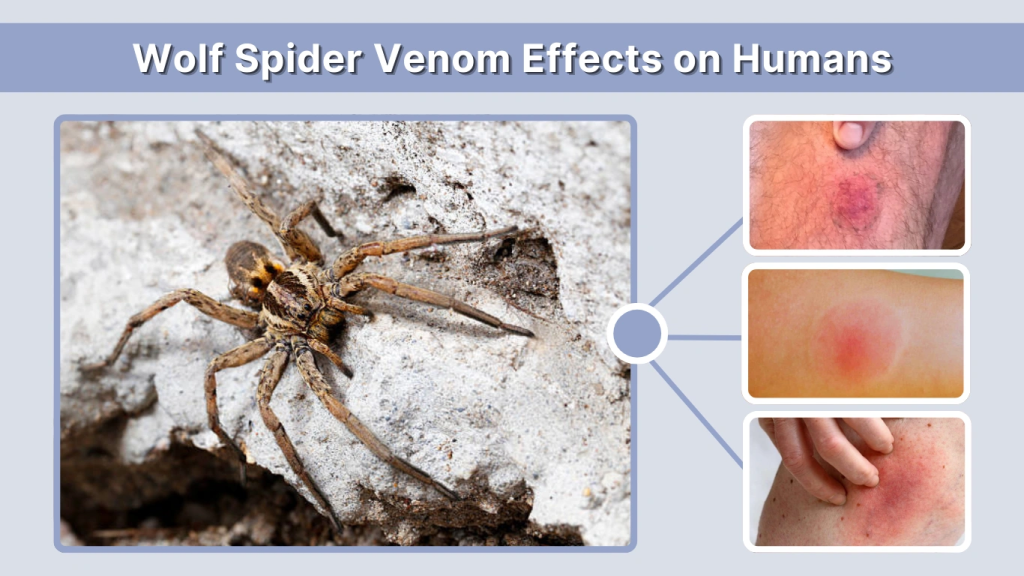
When people ask if wolf spiders are venomous, they are usually concerned about what happens if a spider bites them.
Fortunately, wolf spider bites are uncommon and usually harmless.
What Happens If a Wolf Spider Bites You?
If a wolf spider bites a person, the venom may cause a small localized reaction on the skin. The bite often feels similar to a mild insect sting.
Typical reactions include:
- Immediate mild pain
- A small red bump
- Slight swelling around the bite
- Temporary irritation or itching
Most symptoms improve within a few hours or days.
In many cases, the bite does not require medical treatment.
Common Bite Symptoms
The most common symptoms of wolf spider venom include:
- Mild redness around the bite area
- Minor swelling
- Slight pain or tenderness
- Mild itching
These symptoms are usually limited to the area around the bite and do not spread throughout the body.
Rare Symptoms
Although uncommon, some people may experience additional symptoms depending on their sensitivity to spider venom.
Rare reactions may include:
- Headache
- Mild nausea
- Fatigue
- Slight dizziness
These symptoms are typically temporary and mild.
Are Wolf Spiders Dangerous to Humans?
Even though wolf spiders are venomous, they are generally not considered dangerous to humans.
Most wolf spiders prefer to avoid people and will try to escape rather than bite.
Venom Toxicity
Wolf spider venom is designed to immobilize small prey like insects. It is not strong enough to cause serious harm to healthy humans.
In most cases, the venom produces only a localized reaction similar to other minor insect bites.
Risk Level
Compared with spiders such as the black widow or brown recluse, wolf spiders pose a much lower risk. Their venom does not typically cause severe medical complications.
Most bites heal naturally within a short period of time.
Who Should Be More Careful
Although wolf spider bites are usually harmless, certain individuals should monitor symptoms more closely.
People who should be cautious include:
- Individuals with venom allergies
- Young children
- People with weakened immune systems
If unusual symptoms occur after a bite, medical advice should be sought.
Are Wolf Spiders Venomous to Pets?
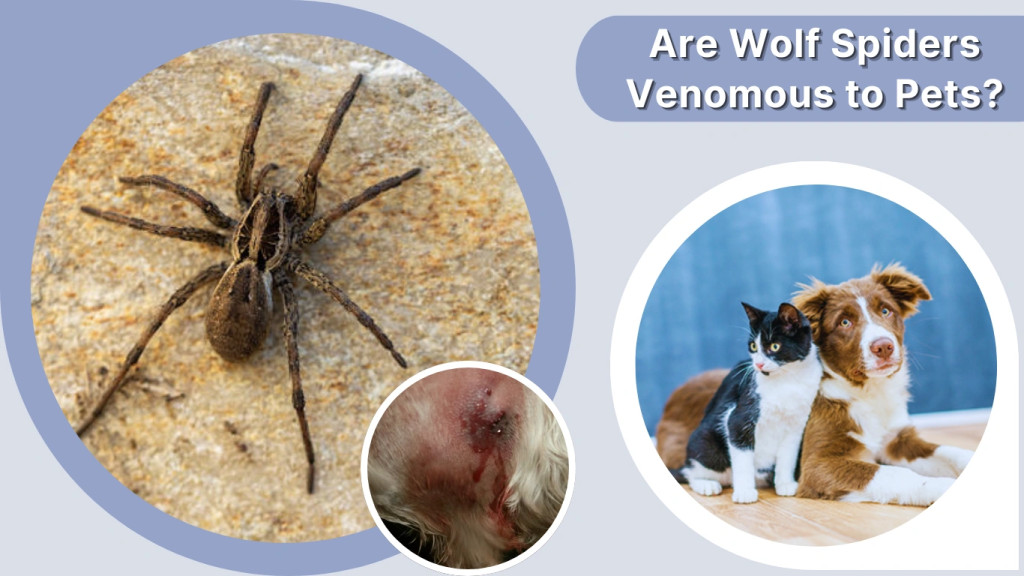
Many pet owners worry about spiders harming their animals. Fortunately, wolf spiders are generally not dangerous to pets such as cats and dogs.
Although wolf spiders do have venom, it is mainly designed to paralyze small insects. For larger animals like pets, the venom usually causes only mild and temporary reactions.
Possible Effects on Dogs and Cats
If a wolf spider bites a pet, the animal may experience:
- Mild pain at the bite site
- Temporary swelling
- Slight redness or irritation
Most pets recover quickly and show no serious symptoms. However, pets may react by licking or scratching the bite area because of irritation.
When to Contact a Veterinarian
In rare cases, it may be best to contact a veterinarian if your pet shows unusual symptoms such as:
- Excessive swelling
- Persistent pain
- Lethargy or weakness
- Signs of infection at the bite site
These reactions are uncommon but should be evaluated if they occur.
Wolf Spider Bite Appearance
A wolf spider bite usually looks similar to other minor insect bites, which can make it difficult to identify without seeing the spider.
Visual Signs of a Wolf Spider Bite
Common visual signs include:
- Two small puncture marks from the spider’s fangs
- A small red bump on the skin
- Mild swelling around the bite area
- Slight redness or irritation
The bite may feel tender or itchy but usually remains limited to a small area.
How Long a Wolf Spider Bite Lasts
Most wolf spider bites heal fairly quickly. Symptoms typically last:
- Several hours to a few days in mild cases
- Up to about a week for sensitive individuals
Keeping the bite clean and avoiding scratching can help the skin heal faster.
Wolf Spider Venom vs Dangerous Spider Venom
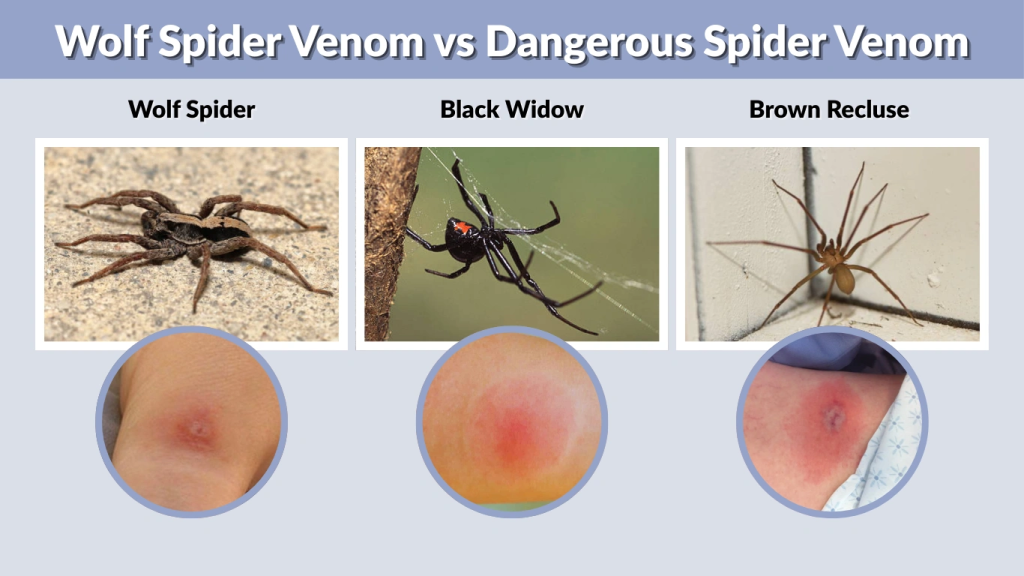
Many people worry about wolf spiders because they resemble some more dangerous species. However, their venom is far less harmful.
Wolf Spider vs Black Widow Venom
Black widow spiders possess powerful neurotoxic venom that affects the nervous system.
Symptoms of a black widow bite may include:
- Severe muscle pain
- Cramping
- Sweating
- Nausea
Wolf spider venom, on the other hand, usually causes only mild localized symptoms such as redness and swelling.
Wolf Spider vs Brown Recluse Venom
Brown recluse spiders are known for venom that can damage skin tissue.
A brown recluse bite may cause:
- Blisters
- Open wounds
- Skin tissue damage (necrosis)
Wolf spider bites rarely cause these severe reactions and typically heal without complications.
Benefits of Wolf Spiders
Despite their intimidating appearance, wolf spiders are actually beneficial predators in many environments.
Natural Pest Control
Wolf spiders feed on a wide variety of insects that people often consider pests. Their diet commonly includes:
- Cockroaches
- Crickets
- Beetles
- Ants
- Flies
By hunting these insects, wolf spiders help reduce pest populations naturally.
Important Role in Ecosystems
Wolf spiders play an important role in maintaining ecological balance. As predators, they help regulate insect populations and support healthy ecosystems.
They also serve as food for larger animals such as birds, reptiles, and small mammals.
How to Avoid Wolf Spider Bites
Although wolf spider bites are rare, simple precautions can reduce the chances of encountering them.
Home Prevention Tips
To prevent wolf spiders from entering your home:
- Seal cracks and gaps around doors and windows
- Reduce clutter in storage areas
- Keep floors and corners clean
- Control insect populations indoors
Since wolf spiders enter homes mainly in search of prey, reducing indoor insects can discourage them from staying.
Outdoor Safety Tips
When spending time outdoors, consider the following precautions:
- Wear gloves while gardening
- Shake out shoes and clothing before wearing them
- Be careful when moving rocks, logs, or debris
These simple steps can help prevent accidental contact with spiders.
FAQs
Are wolf spiders poisonous?
Wolf spiders are venomous, not poisonous. They use venom to capture prey, but the venom is usually harmless to humans.
How strong is wolf spider venom?
Their venom is strong enough to paralyze insects but generally too mild to cause serious harm to people.
Can wolf spider venom cause serious reactions?
Serious reactions are extremely rare. Most bites result in mild redness or swelling.
Should I kill wolf spiders?
It is usually unnecessary. Wolf spiders help control insect pests and play an important role in the ecosystem.
Conclusion
Wolf spiders are venomous, but their venom is mainly used to capture insects and is usually harmless to humans. While a bite may cause mild symptoms such as redness, swelling, or slight pain, serious reactions are extremely rare. In fact, wolf spiders provide important benefits by controlling pest insects and maintaining ecological balance. Understanding their venom and behavior can help people see these spiders as useful predators rather than dangerous threats.