

The Australian garden orb weaver spider is one of the most recognizable arachnids across the country. Known for its impressive circular webs and striking body patterns, this spider is a familiar sight in gardens, verandas, and backyards. Despite its intimidating appearance, the garden orb weaver is harmless to humans and plays an important role in maintaining insect balance in the ecosystem.
Scientific Classification and Common Names

The Australian garden orb weaver belongs to the Araneidae family, which includes hundreds of orb-weaving spiders worldwide. These spiders share a similar web structure but differ in color, size, and regional presence across Australia.
Key Details:
- Scientific Name: Eriophora transmarina, Eriophora biapicata, and closely related species.
- Common Names: Garden orb weaver, Australian garden spider, garden orb spider, or garden web spider.
- Taxonomy: Class Arachnida, Order Araneae, Family Araneidae.
- Close Relatives: Banded orb weavers and white-backed orb weavers.
In different Australian states, locals often refer to them by color or pattern, such as “yellow garden spider,” “brown orb weaver,” or “white-backed garden spider.”
Identification and Appearance

The garden orb weaver’s body design and coloring make it easy to identify compared with other Australian spiders. Though individuals can look quite different depending on region and age, several traits are consistent.
Distinct Features:
- Size: Females are typically 15–25 mm long; males are smaller at 10–15 mm.
- Shape: Large, rounded abdomen with visible bands or markings.
- Color Variations: Ranges from reddish-brown and orange to black or white-backed. Some have yellow or cream stripes.
- Legs: Strong and slightly hairy, often with darker rings at the joints.
- Web Type: Circular orb webs reaching up to 1 meter in diameter, often built between trees, fences, or house eaves.
When light hits their silk at night, the web can appear silver — a mesmerizing sight under porch lights or garden lamps.
Distribution Across Australia
Garden orb weavers are widespread throughout the Australian mainland and Tasmania. Their adaptability allows them to thrive in both urban and rural environments.
- Western Australia: Large, darker-colored orb weavers dominate, commonly seen in gardens during the summer months.
- Victoria and Tasmania: Cooler climates favor smaller, paler spiders with orange or cream markings.
- Queensland and New South Wales: Brightly colored varieties, often with yellow or red hues, are typical.
- South Australia: Garden orb weavers are especially abundant in open suburban yards and parks.
These spiders prefer areas where flying insects are plentiful, which explains their frequent presence near lights and flowering plants.
Habitat and Behavior
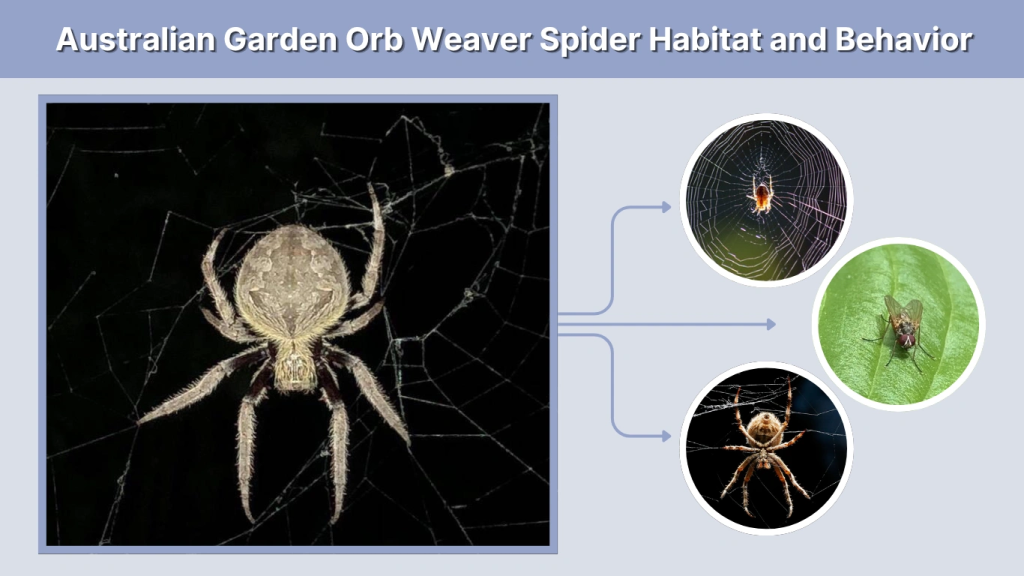
Garden orb weavers are nocturnal hunters. They remain hidden in the daytime, tucked into foliage or behind leaves, emerging at dusk to rebuild their intricate webs.
Typical Behaviors:
- Web Rebuilding: Each evening, the spider constructs a new web and consumes the old one to recycle its silk proteins.
- Prey Capture: Flies, moths, beetles, and mosquitoes are their primary diet.
- Resting Position: Usually found hanging upside down in the center of the web.
- Seasonal Activity: Most active during warm months (November – April).
- Defensive Reaction: If disturbed, they vibrate the web rapidly, a tactic that makes them appear blurry and larger to predators.
Their patient hunting style makes them an effective natural pest control agent in Australian backyards.
Bite and Safety Information
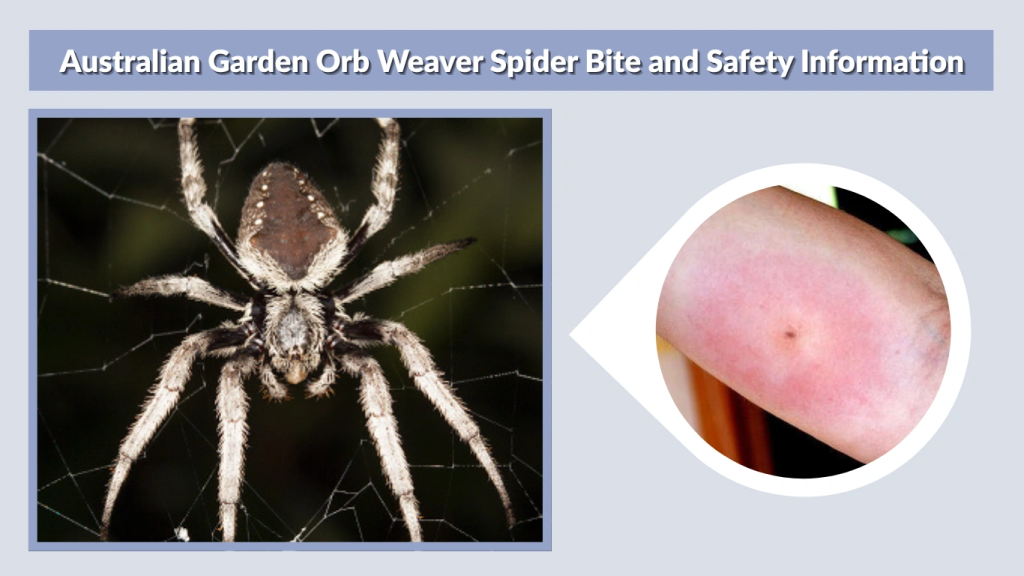
Although their size and color can appear alarming, Australian garden orb weavers are non-aggressive and rarely bite. When bites occur, they are generally the result of accidental contact while gardening or handling outdoor furniture.
About the Bite:
- Venom: Mild and not dangerous to humans.
- Symptoms: Localized redness, mild pain, and slight swelling; effects usually subside within an hour or two.
- First Aid: Wash the affected area with soap and water, apply ice, and use antiseptic if needed.
- Medical Care: Seek attention only if severe pain or allergic reactions occur.
Their venom is designed to immobilize small insects rather than large animals, so they pose no threat to humans or pets. Many Australians coexist peacefully with them, appreciating their pest-control benefits.
Role in the Australian Garden Ecosystem
Garden orb weavers are among the most beneficial creatures in the Australian garden landscape. They actively manage insect populations and help keep ecosystems balanced without chemical interference.
Environmental Importance:
- Natural Pest Control: They feed on mosquitoes, flies, and moths that damage plants and crops.
- Biodiversity Support: Their webs serve as mini-ecosystems attracting other small predators.
- Food Source: Birds, frogs, and lizards rely on them as a nutritional food supply.
- Pollination Aid: By reducing harmful pests, they allow pollinators like bees to thrive.
Encouraging their presence in gardens supports natural pest management and reduces the need for pesticides, promoting a healthier outdoor environment.
Comparison with Other Australian Garden Spiders

Because Australia hosts numerous spider species, it’s common for people to confuse the garden orb weaver with others. Understanding the distinctions helps with safe identification.
| Spider Type | Distinct Feature | Web or Hunting Style | Venom Level |
| Garden Orb Weaver | Large, circular web, rounded abdomen | Builds orb web nightly | Harmless |
| Wolf Spider | Hairy body, strong legs | Ground hunter, no web | Mild bite |
| Jumping Spider | Compact, colorful | Leaps on prey | Harmless |
| Crab Spider | Flat body, crab-like legs | Ambushes on flowers | Harmless |
These comparisons make it clear that the orb weaver’s impressive size does not equal danger — it simply reflects its specialized web-building lifestyle.
Variants and Color Forms in Australia

Australia’s diverse climates produce several striking variations of the garden orb weaver. Each region hosts its own color form, allowing the spider to blend into its local surroundings.
Common Variants:
- Yellow Garden Spider: Bright yellow markings with brown or black accents, mostly found in Queensland and northern New South Wales.
- White-Backed Orb Weaver: Recognized by its silvery-white abdomen; often seen in gardens in Western Australia.
- Orange or Red Orb Weaver: Common in southern states like Victoria and South Australia, usually appearing in warmer months.
- Green Garden Spider: Small, leaf-colored variety that camouflages easily among shrubs and plants.
- Banded Garden Spider: Displays alternating black and white stripes and sometimes yellow tones.
These color variations not only enhance camouflage but also reflect regional adaptations to temperature, humidity, and vegetation.
Behavior and Life Cycle

Garden orb weavers follow a fascinating seasonal rhythm that aligns with Australia’s warmer months. Their activity peaks during summer and declines as temperatures drop.
Life Cycle Stages:
- Egg Stage: Females produce egg sacs late in summer, attaching them to sheltered areas such as leaves or eaves.
- Spiderlings: Hatch in spring; tiny spiderlings disperse using silk threads carried by the wind — a process called ballooning.
- Juvenile Stage: Grow steadily through multiple molts, developing recognizable color patterns.
- Adult Stage: Mature spiders reach full size by mid-summer and construct large webs for hunting.
- End of Life: Females die soon after laying eggs, while their offspring continue the yearly cycle.
This predictable pattern ensures that every summer, new generations of orb weavers return to gardens across Australia.
Interaction with Humans
Although their appearance can startle people, garden orb weavers are friendly neighbors. They prefer avoiding conflict and typically stay outdoors.
Human Interaction Tips:
- Avoid touching or disturbing their webs; they rebuild them nightly.
- If one enters your home, gently relocate it using a container and release it outside.
- Keep outdoor lights on at night if you enjoy observing them — insects attracted to the light often become their prey.
- Never use pesticides; they kill beneficial spiders that naturally protect your garden.
These peaceful creatures coexist beautifully with humans, providing free pest control without causing harm.
Interesting Facts About Garden Orb Weavers
- Night Architects: They rebuild their entire web every evening, sometimes within an hour.
- Recycled Silk: Old webs are consumed for protein and reused in new constructions.
- Silk Strength: Their silk is five times stronger than steel of the same diameter.
- Upside-Down Hunters: They hang head-down at the web’s center to sense prey vibrations faster.
- Short Lifespan: Most live only one season, yet females may produce hundreds of eggs.
Their efficiency and instinctive design make them one of nature’s finest engineers.
Common Myths and Misidentifications
Because Australia has a reputation for dangerous spiders, many people mistake the garden orb weaver for venomous species. However, this spider is harmless and should not be confused with aggressive types.
Myths to Clarify:
- “They are poisonous.” – False. Their venom is too mild to harm humans.
- “They attack people.” – False. They only bite defensively when handled.
- “They’re the same as redbacks.” – Incorrect. Redbacks belong to the Theridiidae family and are far more venomous.
- “They stay active all year.” – False. Orb weavers appear mostly in warm months and die off before winter.
Understanding these differences promotes appreciation rather than fear of these beautiful spiders.
FAQs
What is the scientific name of the Australian garden orb weaver spider?
The most recognized species are Eriophora transmarina and Eriophora biapicata, members of the Araneidae family. These spiders are known for their impressive orb-shaped webs and are found across all Australian states, from urban gardens to bushlands and coastal areas.
Are Australian garden orb weaver spiders venomous or dangerous?
No, they are not dangerous. Their venom is designed for catching insects and poses no risk to humans. Bites are rare and usually occur through accidental contact. The reaction is mild, with slight redness or itching that fades quickly without treatment.
Where are garden orb weaver spiders most common in Australia?
They are found throughout Australia, particularly in Victoria, Queensland, Western Australia, and Tasmania. They prefer warm, humid conditions and often build webs near porch lights, garden fences, or flowering plants where insects gather.
Do garden orb weavers bite humans frequently?
Biting incidents are extremely uncommon. These spiders are non-aggressive and prefer retreating rather than fighting. When a bite happens, it’s mild and easily managed with basic first aid. Their calm nature makes them ideal garden residents.
Why do garden orb weavers rebuild their webs every night?
They rebuild webs to maintain strength and stickiness, ensuring efficient prey capture. During the day, they eat the old silk to recycle proteins, then reconstruct a new, perfectly symmetrical web at dusk. This nightly process keeps them healthy and efficient hunters.
