Wolf spiders aren’t just fast hunters—they’re also surprisingly caring parents. When their babies hatch, they ride on the mother’s back for days, a rare sight in the spider world. This guide dives into everything about baby wolf spiders—from how they look and grow to what they eat and where they live—in a clear, down-to-earth way.
What Does a Baby Wolf Spider Look Like?

Baby wolf spiders, also called spiderlings, are miniature versions of the adult wolf spider—but much smaller and lighter in color. They usually measure just a few millimeters across when they first hatch.
Identification (List):
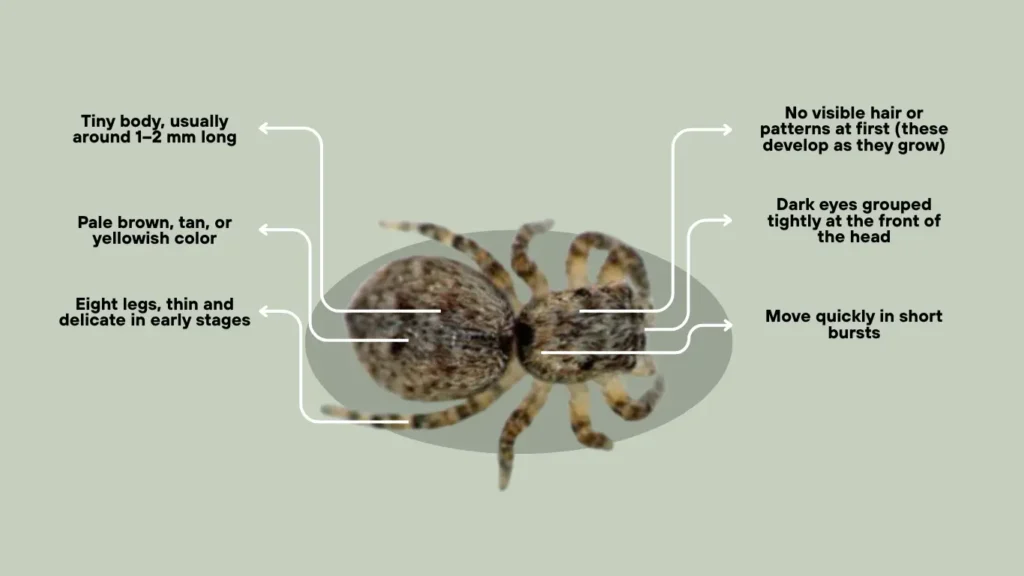
- Tiny body, usually around 1–2 mm long
- Pale brown, tan, or yellowish color when newly hatched
- Eight legs, thin and delicate in early stages
- No visible hair or patterns at first (these develop as they grow)
- Dark eyes grouped tightly at the front of the head
- Move quickly in short bursts
As they mature, baby wolf spiders gradually grow darker and develop the signature patterns and stripes that adults are known for. Despite their size, they already show the same alertness and quick movement that helps them survive in the wild.
How Are Baby Wolf Spiders Born?

The journey of a baby wolf spider begins with the mother. Unlike many other spiders that abandon their eggs, the female wolf spider shows strong maternal behavior, guarding her young even before they hatch.
The Birth Process:
- Egg Sac Creation: The female wolf spider produces a round, white silk egg sac and attaches it to her spinnerets at the back of her body.
- Constant Protection: She carries the sac everywhere—even while hunting—ensuring it stays safe and warm.
- Hatching: After about 2–3 weeks, the baby spiders hatch inside the sac.
- Climbing on Her Back: Once the sac opens, the spiderlings crawl out and climb onto their mother’s back, where they stay for several days.
This back-carrying behavior is extremely rare among spiders. It helps the babies stay protected from predators and environmental threats while they’re most vulnerable.
Mother Wolf Spider and Her Babies

Wolf spiders are one of the few spider species that show real maternal care. After the babies hatch, the mother doesn’t walk away—instead, she becomes their shield, ride, and home for the first days of life.
Key Behaviors:
- Carrying on Her Back: Dozens of spiderlings cling tightly to the mother’s back using their tiny legs.
- Movement Together: She moves carefully, making sure not to knock off her babies as she hunts or hides.
- Protective Instincts: If threatened, she will try to flee or hide rather than abandon the young.
How Long Do They Stay?
- Baby wolf spiders usually remain on their mother’s back for about 5 to 10 days.
- When they’re strong enough, they begin to scatter and explore the world on their own.
This brief but intense period of care helps increase their chances of survival and is a defining trait of wolf spider behavior.
Behavior and Development of Baby Wolf Spiders

Life After Leaving the Mother
After detaching from their mother’s back, baby wolf spiders begin life on their own. Despite their small size, they are quick, alert, and fully capable of moving independently. As they scatter in different directions, each spiderling seeks its own space to grow and hunt, avoiding competition with siblings.
Growth and Molting Process
As they develop, baby wolf spiders go through several molting stages. Each molt allows their body to grow larger and stronger. Over time, their features begin to change—their legs lengthen, their body becomes more defined, and their coloring darkens. By the time they reach juvenile size, they closely resemble adult wolf spiders in both appearance and behavior.
Becoming Solitary Hunters
From the moment they leave their mother, baby wolf spiders live alone. They don’t build webs or rely on group protection. Instead, they hunt by stalking and ambushing small prey. This solitary, fast-paced lifestyle is a key part of their survival strategy from a very young age.
What Do Baby Wolf Spiders Eat?
Baby wolf spiders are active hunters from the start. Instead of building webs, they use their sharp eyesight and quick legs to catch prey. Though small, they are efficient predators that feed on tiny insects they can manage to overpower.
Hunting Style of Baby Wolf Spiders
They rely on ground-level hunting, using ambush tactics rather than traps. With strong instincts and decent speed, even the youngest spiderlings can take down soft-bodied insects. Their tiny fangs inject venom into the prey, which helps them feed easily.
Foods Baby Wolf Spiders Commonly Eat
- Fruit flies
- Gnats
- Springtails
- Ant larvae
- Small moths
- Aphids
- Tiny beetles
- Small caterpillars
- Insect eggs
As they grow, the size and variety of their prey expand. Their diet plays a key role in helping them molt and reach the next stage of development.
Do Baby Wolf Spiders Bite?

Baby wolf spiders have fangs and venom just like adults, but their size limits both the reach and impact of their bite. While they can technically bite, it’s extremely rare for them to bite humans—and even if they do, the effects are usually very mild.
Are Their Bites Dangerous?
For most people, a bite from a baby wolf spider feels like a small pinch or doesn’t register at all. Their fangs are tiny and often can’t penetrate human skin deeply. Even if they do manage to bite, their venom is not medically harmful.
When Do Bites Happen?
Bites only occur when the spider feels trapped or threatened—such as being squished or handled roughly. Baby wolf spiders prefer to run away rather than fight. They are not aggressive by nature and will avoid human interaction if possible.
What to Do If Bitten
If a bite does happen, it can be treated easily. Clean the area with soap and water, apply a cold compress if there’s slight swelling, and monitor for any signs of irritation. Serious allergic reactions are extremely rare.
Where Can You Find Baby Wolf Spiders?

Baby wolf spiders are commonly found in the same places as adult wolf spiders—but spotting them requires a bit more patience due to their tiny size. They prefer quiet, dark, and slightly moist environments where they can safely grow and hunt.
Typical Habitats
You might find baby wolf spiders in gardens, under rocks, in piles of leaves, or within cracks in soil. They also hide under logs, woodpiles, and loose bark. In homes, they may appear in basements, garages, or crawl spaces—especially if the mother has brought them inside.
Best Time to See Them
Late spring to early summer is when most spiderlings hatch and begin moving around. This is the most active period for sightings. Early mornings or late evenings, when the ground is cool and damp, are good times to observe them in natural settings.
How to Observe Them Safely
If you spot a mother wolf spider with babies on her back, it’s best to observe from a distance. Avoid touching or disturbing her. For spiderlings on their own, use a magnifying glass or camera for a closer look. Their speed and small size make them easy to miss, but once you know where to look, they become easier to spot.
Common Myths About Baby Wolf Spiders
Baby wolf spiders often spark curiosity—and sometimes fear. But many of the things people believe about them aren’t true. Here are five common myths, debunked:
- Baby wolf spiders eat their mother.
This is false. Baby wolf spiders do not eat their mother. They ride on her back for protection, and once they’re ready, they scatter on their own. - They are highly venomous to humans.
Not true. Their venom is only strong enough to subdue tiny insects. A bite from a baby wolf spider is harmless to humans and extremely rare. - They live in webs.
Unlike many other spiders, wolf spiders—including their babies—do not spin webs to catch food. They are ground hunters. - They stay in groups after leaving their mother.
Baby wolf spiders are independent hunters. After leaving their mother’s back, they do not travel or live in groups. - If you see one baby spider, there’s an infestation.
Seeing a single baby wolf spider doesn’t mean there are hundreds more inside. Most will scatter outdoors and stay hidden unless disturbed.
Baby Wolf Spider vs Other Spiderlings
Baby wolf spiders are quite different from the spiderlings of web-building species. While most baby spiders rely on webs or silk strands for survival, wolf spider spiderlings start off as active hunters. Their behavior, development, and parental interaction stand out in the spider world.
| Feature | Baby Wolf Spider | Other Spiderlings (e.g., orb-weavers, house spiders) |
| Parental care | Rides on mother’s back after hatching | Often abandoned immediately after hatching |
| Hunting style | Ground hunter, stalks prey | Web-based hunters or passive feeders |
| Web building | Does not spin web to catch prey | Builds webs or silk traps early in life |
| Development behavior | Scatters and grows independently | Stays near hatching site for a while |
| Defense strategy | Relies on speed and hiding | Hides in webs or nearby shelters |
| Appearance at birth | Pale, tiny version of adults | Varies widely—some are nearly transparent |
Facts About Baby Wolf Spiders

Baby wolf spiders may be small, but they have some impressive and surprising traits. Here are five fascinating facts that make them stand out:
- They ride on their mother’s back.
This rare behavior is one of the most iconic things about wolf spiders. No other common spider in North America does this. - They can see well, even as babies.
Wolf spiders have excellent vision for spiders, and their spiderlings inherit this trait—making them skilled hunters from the start. - They don’t spin webs to catch food.
Even as babies, they rely on speed, stealth, and instinct to catch their prey on the ground. - They molt several times before becoming adults.
Each time they grow, they shed their outer skin—a process called molting, which happens multiple times as they mature. - They help control pests naturally.
Baby wolf spiders eat tiny insects like aphids and gnats, making them beneficial in gardens and around homes.
FAQs
Many people have questions when they come across baby wolf spiders for the first time. Below are answers to some of the most common and curious questions.
What are baby wolf spiders called?
They’re usually referred to as “spiderlings,” a general term for young spiders. There’s no special name for baby wolf spiders, but they belong to the Lycosidae family.
How many babies does a wolf spider have?
A single female wolf spider can carry between 100 to 300 eggs in one sac. Once they hatch, all the spiderlings climb onto her back.
Are baby wolf spiders venomous?
Yes, but only to the small insects they hunt. Their venom is not dangerous to humans, and bites are extremely rare.
Can you keep baby wolf spiders as pets?
It’s possible, but challenging. They are solitary, require live prey, and are very small and quick—making them hard to manage.
How long do baby wolf spiders stay with their mother?
Usually around 5 to 10 days. Once they’re ready, they leave her back and begin life on their own.