
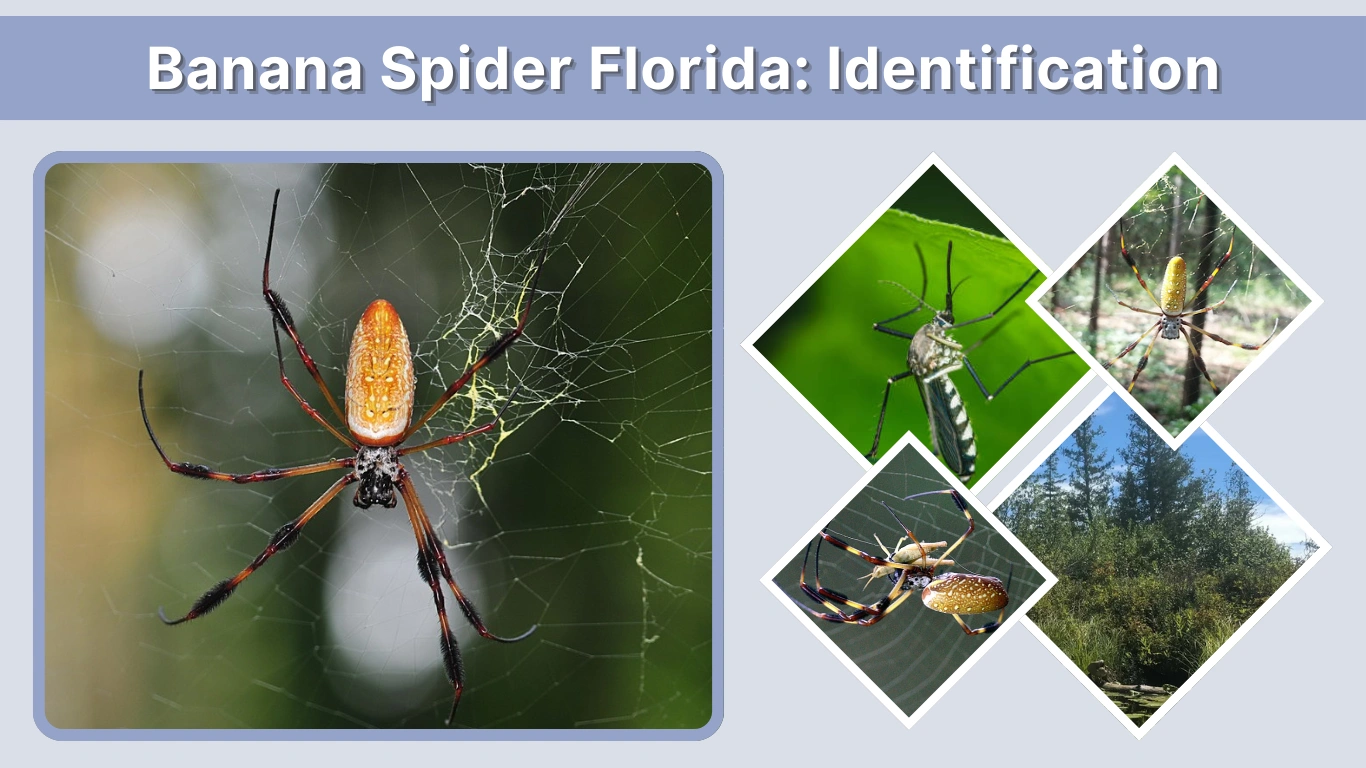
Banana spiders are among the most recognizable large spiders found in Florida. Known for their impressive size and large golden webs, these spiders are a common sight in gardens, forests, and parks across the state. In Florida, the spider commonly referred to as the “banana spider” is usually the golden silk orb-weaver (Trichonephila clavipes). Although their long legs and large webs may appear intimidating, banana spiders are generally harmless to humans and are beneficial predators that help control insect populations. Understanding how to identify these spiders and where they live can help people appreciate their role in Florida’s natural environment.
What is a Banana Spider in Florida?
In Florida, the term banana spider most commonly refers to the golden silk orb-weaver, a large orb-weaving spider known for producing strong golden-colored silk. These spiders belong to the genus Trichonephila and are part of the orb-weaver spider family.
The name “banana spider” is a common nickname that has been used for different spider species around the world. In Florida, however, it typically describes the golden silk orb-weaver because of its yellowish coloring and large, golden webs.
Golden silk orb-weavers are widely distributed across the southeastern United States, especially in warm and humid environments like Florida. They are often found in wooded areas, gardens, and near walking trails where they can build large webs between trees or shrubs.
Despite their large size, banana spiders are not aggressive. They usually remain in their webs and only react when prey becomes trapped in the silk threads.
Banana Spider Florida Identification
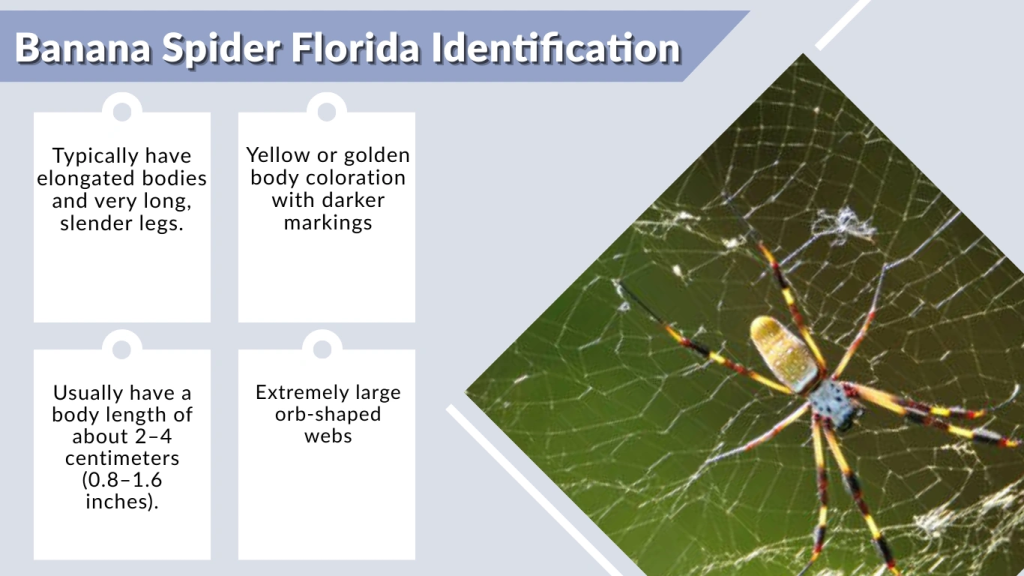
Identifying a Florida banana spider is relatively easy because of its size, coloration, and distinctive web structure. Several physical characteristics help distinguish this spider from other species found in the state.
Physical Appearance
Florida banana spiders typically have elongated bodies and very long, slender legs. Their coloration often includes bright yellow or golden tones combined with darker brown or black markings.
The abdomen may display unique patterns, including spots or stripes, which help the spider blend into its environment. These markings can vary slightly depending on the individual spider.
Female banana spiders are usually much larger and more colorful than males. Males are significantly smaller and often remain near the female’s web.
Size of Florida Banana Spiders
Banana spiders in Florida are known for their impressive size. Female spiders usually have a body length of about 2–4 centimeters (0.8–1.6 inches). However, when their legs are included, the total leg span can reach 12–15 centimeters (5–6 inches).
Male banana spiders are much smaller, sometimes measuring only a few millimeters in body length. Because of this size difference, males are often difficult to notice unless they are near the female’s web.
Key Identifying Features
Several characteristics make Florida banana spiders easy to recognize:
- Very long legs that extend outward from the body
- Yellow or golden body coloration with darker markings
- Extremely large orb-shaped webs
- Small male spiders near the female’s web
These features help distinguish banana spiders from other large spiders commonly seen in Florida.
Banana Spider Web in Florida
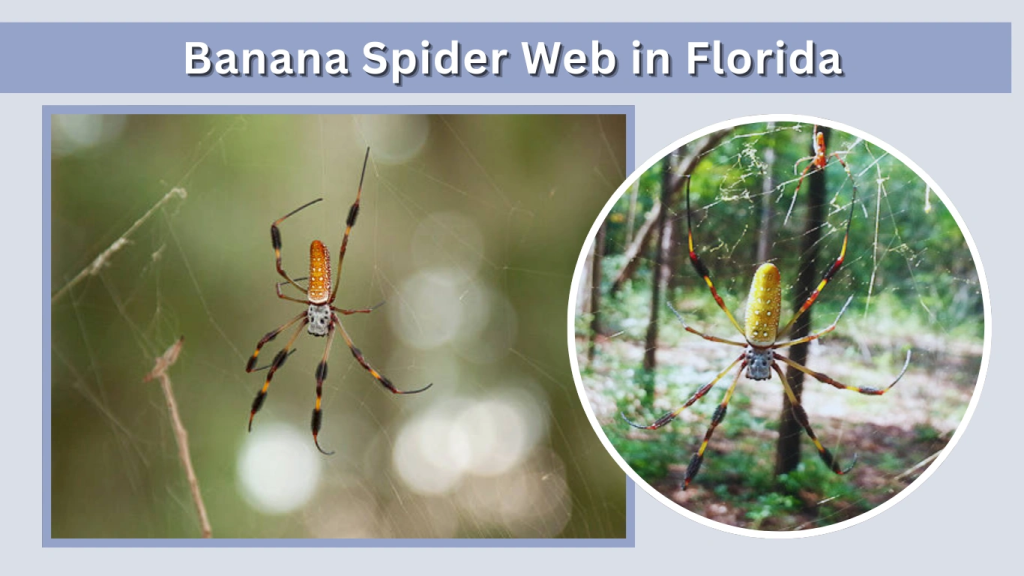
One of the most remarkable features of the Florida banana spider is its web. These spiders are skilled web builders and create large, strong webs that can stretch between trees and shrubs.
Golden Orb Web Structure
Banana spiders build orb-shaped webs, which are circular webs formed by strong radial silk threads. The web structure resembles a wheel, with threads extending from the center outward.
A unique feature of these webs is the golden color of the silk, which can appear bright yellow in sunlight. This golden appearance is the reason these spiders are often called golden silk orb-weavers.
The silk produced by banana spiders is also extremely strong and flexible. Scientists have studied this silk because of its potential uses in advanced materials and engineering.
Where Webs Are Commonly Found
In Florida, banana spider webs are commonly found in places where flying insects are abundant. Typical locations include:
- Forest edges
- Gardens and residential yards
- Parks and nature trails
- Between trees, shrubs, or tall plants
The webs are often positioned several feet above the ground so that insects flying through the area become trapped.
How Banana Spiders Use Their Webs to Hunt
Once the web is built, the spider usually waits in the center or along the edge of the web. When an insect flies into the web and becomes trapped in the sticky strands, the spider quickly moves toward the prey.
The spider wraps the insect in silk to prevent it from escaping. After immobilizing the prey, the spider delivers a bite that paralyzes the insect before feeding on it.
Habitat and Distribution in Florida
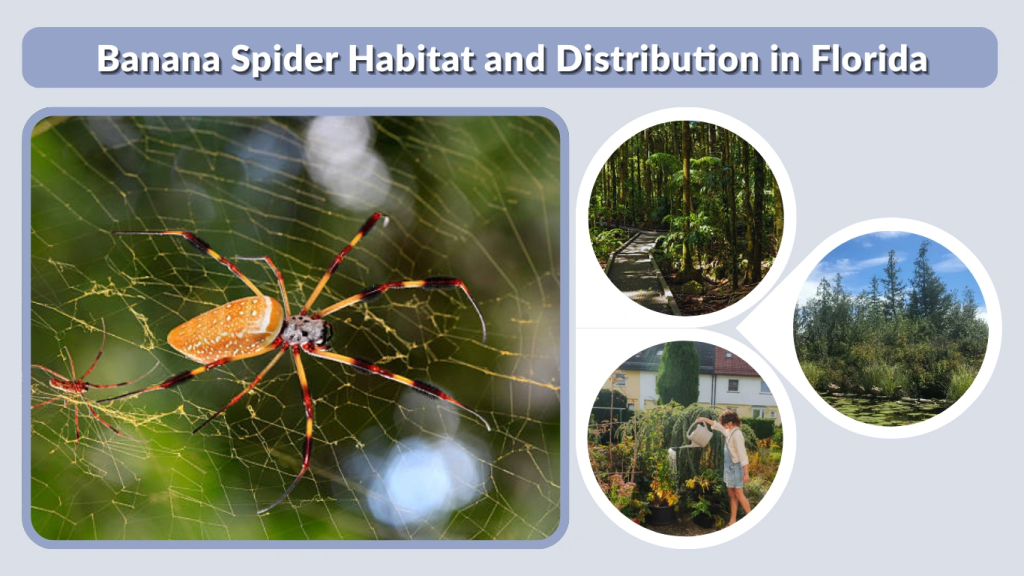
Florida provides an ideal environment for banana spiders because of its warm climate and abundant insect populations.
Natural Habitats
Banana spiders in Florida are commonly found in areas with dense vegetation and open spaces suitable for web construction. These spiders prefer environments where they can anchor their webs between branches, shrubs, or tall plants.
Common habitats include:
- Forests and wooded areas
- Gardens and landscaped yards
- Parks and nature reserves
- Areas near lakes, swamps, and wetlands
These locations provide both shelter and a steady supply of flying insects for the spider to capture.
Regions in Florida Where They Are Common
Banana spiders are widely distributed throughout Florida due to the state’s warm, humid climate. They are especially common in areas with dense vegetation where trees and shrubs provide strong anchor points for their webs.
These spiders can be found in:
- Central Florida – Common in suburban yards, parks, and wooded areas.
- Northern Florida – Frequently seen along forest edges and rural landscapes.
- Southern Florida – Found in tropical gardens, wetlands, and nature reserves.
Because Florida supports a large population of flying insects, banana spiders thrive in both natural habitats and residential areas with gardens or landscaping.
Seasonal Activity
Banana spiders in Florida are most visible during the late summer and early fall months. During this time, adult females build large webs and become more noticeable as they grow in size.
In early morning hours, their webs are often easier to see because dew collects on the silk strands. As temperatures cool later in the year, many adult spiders complete their life cycle, leaving egg sacs that hatch the following season.
Banana Spider Behavior
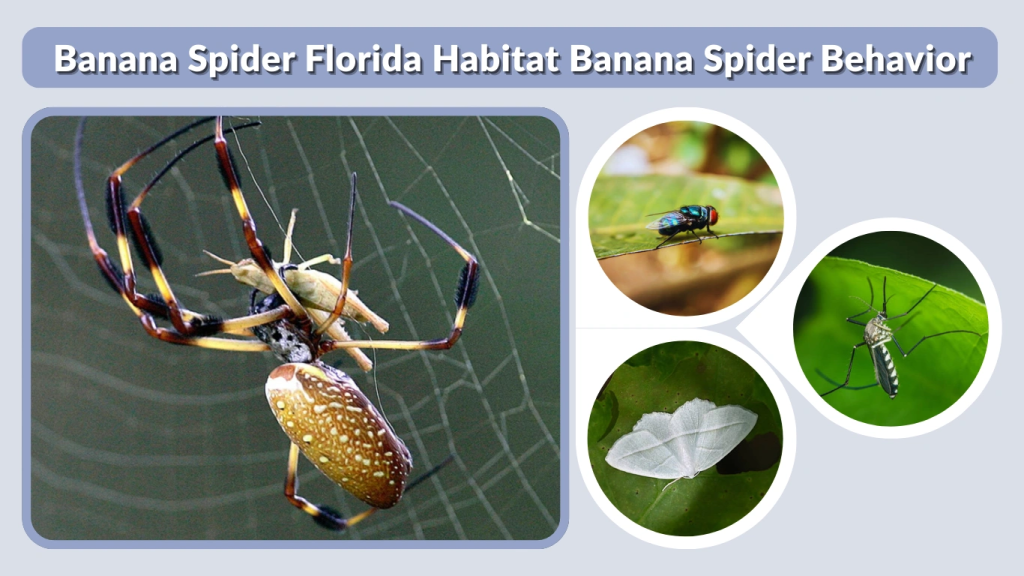
Banana spiders are generally calm and non-aggressive spiders that spend most of their time maintaining their webs and waiting for prey.
Hunting Techniques
These spiders rely on their large orb-shaped webs to catch insects. The sticky silk strands trap flying insects such as:
- Flies
- Mosquitoes
- Moths
- Beetles
- Wasps
When an insect becomes caught in the web, the spider quickly senses the vibrations traveling through the silk. It then moves rapidly toward the prey and wraps it in silk to prevent escape.
After securing the insect, the spider delivers a bite that immobilizes the prey before feeding.
Daily Activity Patterns
Banana spiders are usually active during the daytime. They often sit in the center of their web while monitoring movement through the silk threads.
Throughout the day, the spider may repair damaged sections of the web or rebuild areas that have been torn by wind or struggling prey.
Interaction With Humans
Although banana spiders may appear intimidating due to their size, they rarely interact with humans. These spiders typically remain in their webs and will retreat if disturbed.
If a person accidentally walks into a web, the spider usually drops down or moves quickly to the side of the web to avoid contact.
Banana Spider Florida Bite
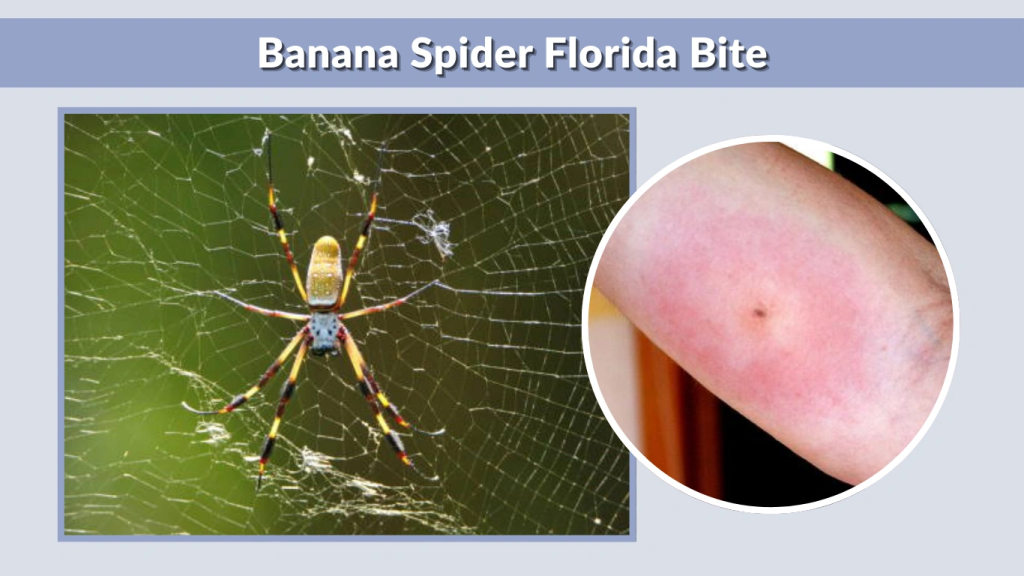
Many people worry about being bitten by a banana spider, but bites are uncommon.
Do Banana Spiders Bite?
Banana spiders can bite if they are handled or accidentally trapped against the skin. However, they are shy spiders and prefer to escape rather than defend themselves.
Most encounters with banana spiders end with the spider moving away rather than biting.
Are Banana Spiders Dangerous?
Banana spiders are not considered dangerous to humans. Their venom is designed to immobilize insects and usually has little effect on people.
Because of their calm nature, bites are very rare.
Symptoms of a Bite
If a banana spider bite occurs, the symptoms are usually mild and may include:
- Slight pain at the bite site
- Minor redness
- Mild swelling or itching
These symptoms typically disappear within a short period and rarely require medical treatment.
What to Do If Bitten
Basic first aid is usually sufficient for a banana spider bite. Washing the bite area with soap and water and applying a cold compress can help reduce irritation.
If unusual symptoms occur or discomfort persists, it is advisable to seek medical attention.
Banana Spider vs Golden Orb Weaver in Florida
In Florida, the banana spider is often the same spider as the golden silk orb-weaver, which can cause confusion.
Appearance Comparison
Golden orb-weavers have bright yellow markings and long slender legs. Their bodies may also display black or brown patterns that help them blend into their environment.
Web Differences
Golden orb-weavers build large orb-shaped webs that can stretch several feet between trees or shrubs. These webs often appear golden in sunlight because of the color of the silk.
Behavior Differences
Both banana spiders and golden orb-weavers behave similarly. They remain on their webs and wait for flying insects to become trapped before attacking.
Benefits of Banana Spiders in Florida Ecosystems
Banana spiders provide important benefits to Florida’s ecosystems. They act as natural pest controllers by feeding on many flying insects.
By reducing populations of flies, mosquitoes, and other pests, these spiders help maintain balance in gardens, forests, and natural habitats.
Because they rarely pose any threat to humans and provide natural pest control, banana spiders are often considered beneficial wildlife.
Interesting Facts About Florida Banana Spiders
Banana spiders produce some of the strongest spider silk in nature. Their golden silk is extremely flexible and durable, which is why scientists have studied it for potential uses in advanced materials.
Their webs can reach several feet across and are capable of catching surprisingly large insects.
Another interesting fact is the size difference between males and females. Female banana spiders are much larger and more colorful, while males are small and often remain near the female’s web.
FAQs
Are banana spiders common in Florida?
Yes, banana spiders are very common in Florida, especially in gardens, forests, and parks.
How big are banana spiders in Florida?
Female banana spiders can reach a leg span of about 5–6 inches, making them one of the larger spiders commonly seen in the state.
Are Florida banana spiders poisonous?
They are venomous like most spiders, but their venom is not dangerous to humans.
Where do banana spiders build webs in Florida?
Banana spiders usually build webs between trees, shrubs, garden plants, and along forest trails where flying insects are abundant.