
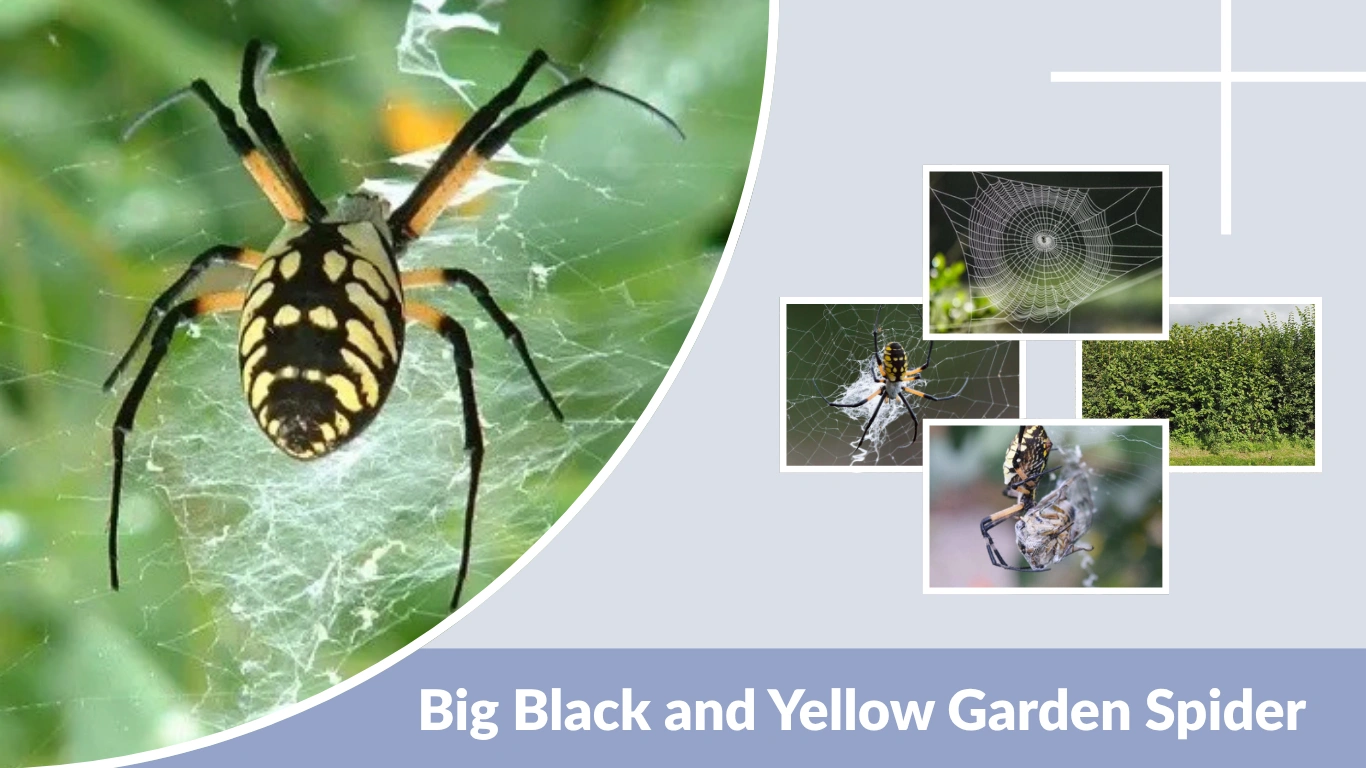
A striking presence in many backyards, the big black and yellow garden spider captures attention with its vivid patterns and impressive size. Though intimidating in appearance, it’s an essential ally in natural pest control. These spiders spin intricate orb webs, adding beauty and balance to the garden ecosystem while keeping insect populations under control.
Identification
Appearance
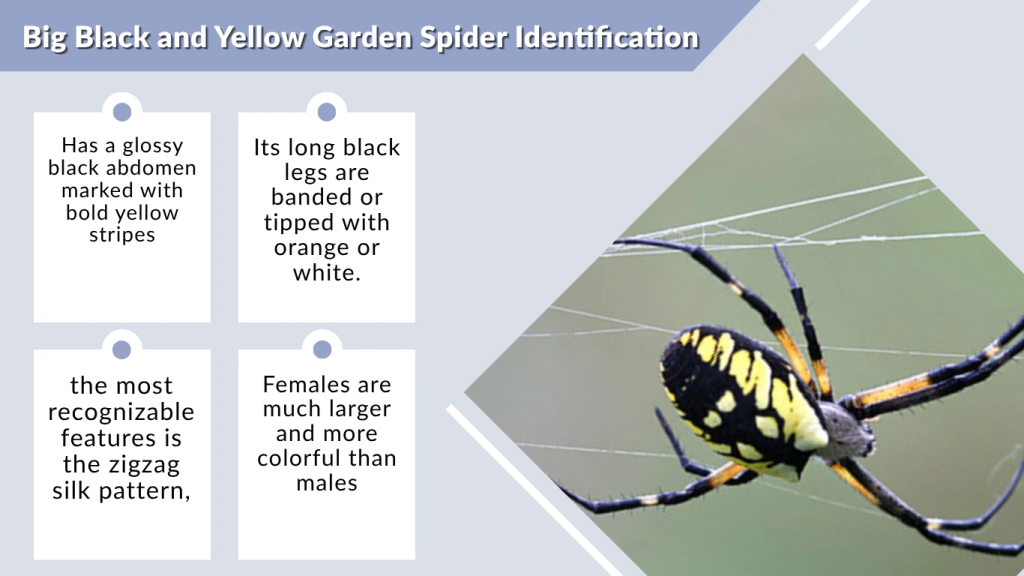
The black and yellow garden spider, often known as the writing or wasp spider, has a glossy black abdomen marked with bold yellow stripes. Its long black legs are banded or tipped with orange or white, giving it a striking appearance. Females are much larger and more colorful than males, which are smaller and paler in tone.
Distinctive Features
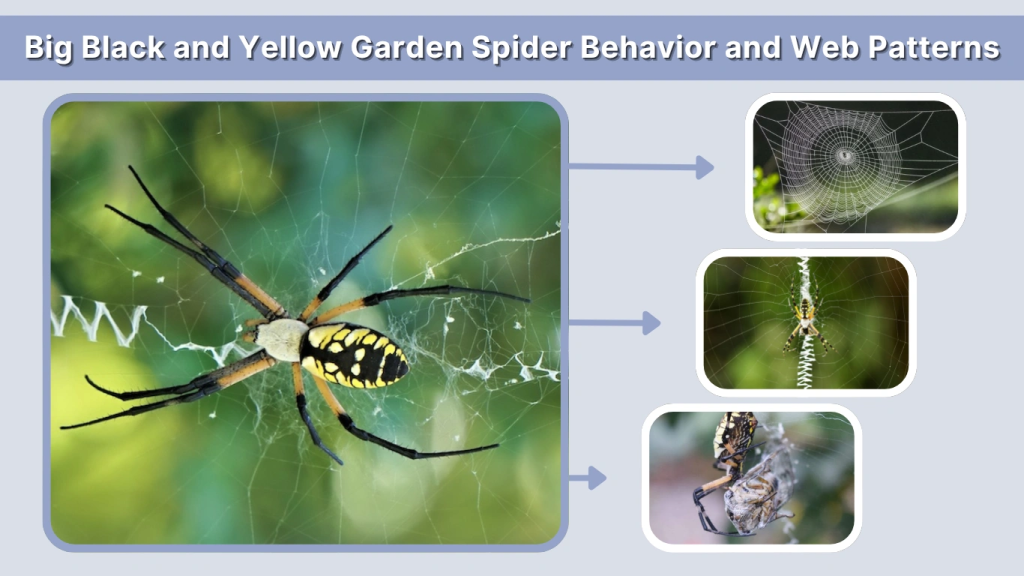
One of the most recognizable features is the zigzag silk pattern, called a stabilimentum, woven through the center of the web. This pattern serves as both decoration and defense—reflecting light to deter birds and perhaps attracting prey. The spider’s web can stretch over two feet across, strong enough to capture large flying insects like bees or grasshoppers.
Species Overview
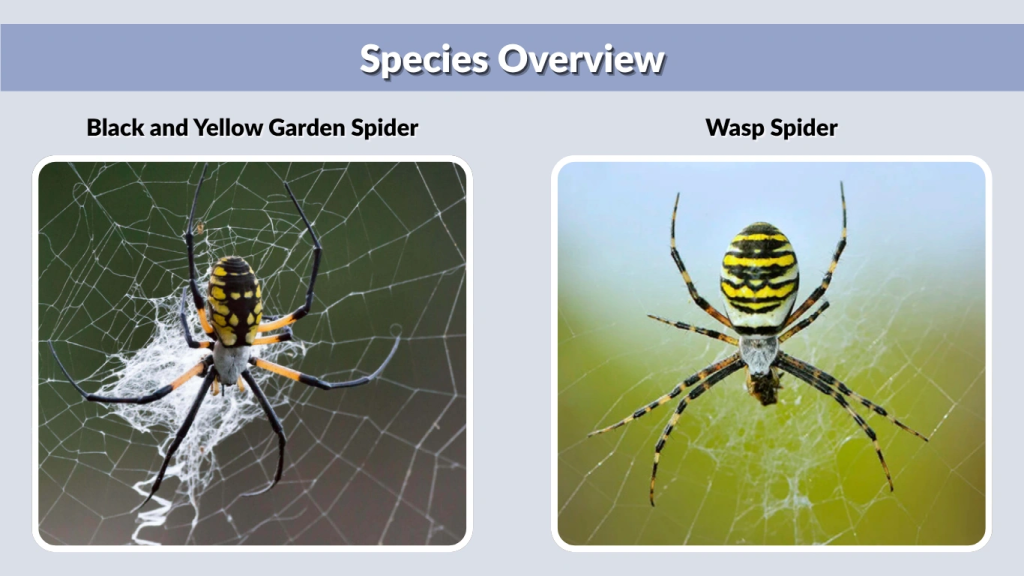
| Common Name | Scientific Name | Region | Color Pattern | Typical Habitat |
| Black and Yellow Garden Spider | Argiope aurantia | North America | Black abdomen with yellow bands | Gardens, meadows, tall grass |
| Wasp Spider | Argiope bruennichi | UK & Europe | Yellow, black, and white stripes | Grasslands, hedgerows, sunny gardens |
Both species belong to the Argiope genus and are known for their large size and elaborate orb webs. The North American species (A. aurantia) is more robust, while the UK’s A. bruennichi is slightly smaller but just as colorful.
Habitat and Distribution
Global Range
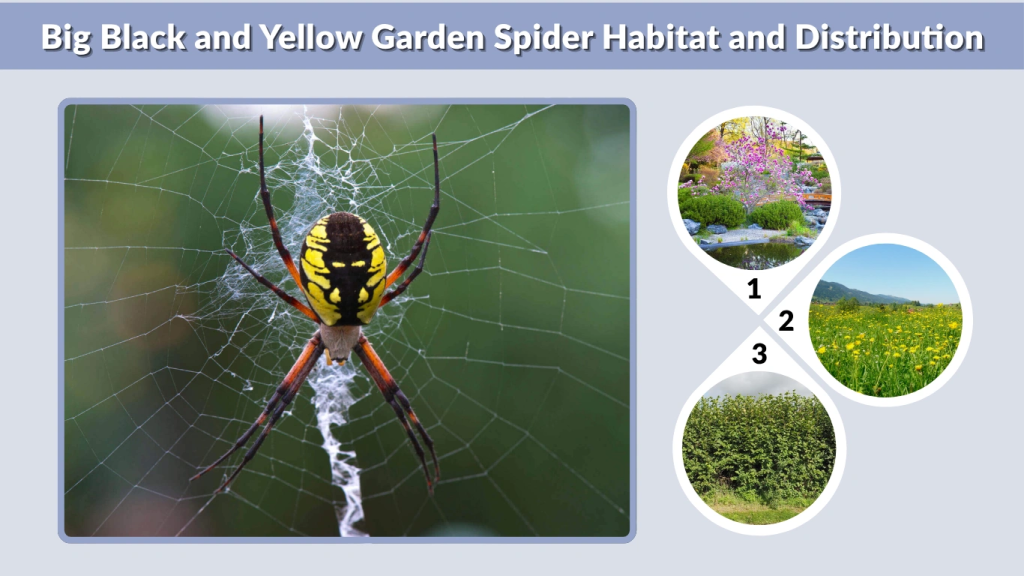
These spiders thrive in warm, sunny environments and are often seen in gardens, meadows, and along hedgerows. They prefer spots with tall vegetation where they can anchor their webs between plants. The Argiope species are found in North America, Europe, Asia, and parts of Africa, adapting easily to various temperate climates.
In the UK
In the United Kingdom, the wasp spider (Argiope bruennichi) is the main black and yellow garden species. It first became established in southern England but is now spreading northward as the climate warms. Sightings in gardens, especially in late summer, are becoming increasingly common.
Behavior and Web Patterns
Web Structure
The black and yellow garden spider is an orb-weaver, building circular webs that can span up to 60 cm (two feet). The zigzag stabilimentum in the center is its hallmark, visible even from a distance. Each web is typically rebuilt daily, ensuring strength and effectiveness for capturing prey.
Feeding Habits
These spiders primarily feed on flies, bees, grasshoppers, and other flying insects. Once prey is caught, the spider quickly injects mild venom to immobilize it before wrapping it in silk. The venom is harmless to humans but deadly to small insects, making this spider a natural pest controller.
Size and Growth
Typical Size
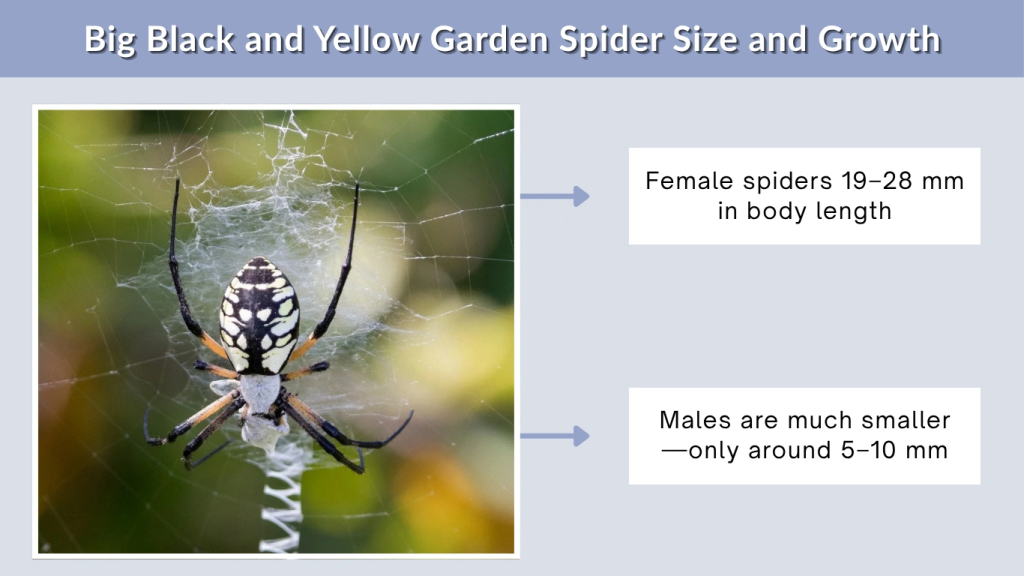
The black and yellow garden spider is among the largest orb-weavers seen in gardens. Female spiders measure between 19–28 mm in body length, but with legs extended, they can span nearly 7 cm (about 3 inches) across. Males are much smaller—only around 5–10 mm—and often go unnoticed near the female’s web. This size difference is common in the Argiope family and helps females handle larger prey.
Growth Cycle
These spiders begin life in spring, hatching from silk egg sacs laid the previous autumn. Tiny spiderlings disperse using a method called ballooning, letting the wind carry them to new locations. Through summer, they molt several times before reaching maturity. By late summer and early autumn, adults are fully grown and visible in gardens, where they spend their short adult lives mating and spinning webs.
Safety and Human Interaction
Despite their imposing look, the big black and yellow garden spider is harmless to humans. They are not aggressive and will retreat if disturbed. Their venom is mild, comparable to a bee sting, and rarely causes more than temporary redness or swelling. These spiders play an important ecological role by reducing pest populations, feeding on flies, mosquitoes, and small insects that damage plants.
Gardeners often consider them beneficial allies, and observing them can be fascinating. If one appears near your home, it’s best to leave it undisturbed—it’s quietly protecting your garden from pests.
Interesting Facts
- Web Artists: Their webs are rebuilt daily, often in the same spot, and can reach over two feet in diameter.
- Stabilimentum Mystery: The zigzag pattern in their web may help attract prey or warn off predators.
- Female Dominance: Females outlive and outsize males; sometimes, the male is eaten after mating.
- Super Silk: Their silk is five times stronger than steel by weight and can stretch without breaking.
- Seasonal Beauty: You’re most likely to spot them during late summer, when they are fully mature and webs glisten in the morning dew.
FAQs
What is the big black and yellow spider in my garden?
It’s likely the black and yellow garden spider (Argiope aurantia) or the wasp spider (Argiope bruennichi) in the UK. These orb-weavers are recognized by their bright colors and large webs. Despite their fearsome appearance, they are harmless and beneficial garden predators.
How big do yellow and black garden spiders get?
Adult females typically grow to 19–28 mm in body length with a leg span up to 7 cm, making them one of the largest common garden spiders. Males are significantly smaller, usually around 5–10 mm, and less noticeable due to their duller coloration and reclusive habits.
Are big black garden spiders dangerous?
No, these spiders are not dangerous. They rarely bite unless provoked, and their venom is too weak to harm humans. At most, a bite may cause mild itching or redness. Their natural instinct is to flee, not fight, making them safe to have around gardens.
Why do they have a zigzag in their web?
The zigzag, known as the stabilimentum, may help strengthen the web, reflect light, or deter birds from flying into it. Some scientists suggest it helps the spider camouflage itself or signal its presence to larger animals to avoid web damage.
Where can I find black and yellow garden spiders in the UK?
The wasp spider is now widespread across southern and central England, particularly in grassy meadows, fields, and sunny gardens. Warmer temperatures are helping it spread northward, and sightings in Wales and the Midlands have become more frequent in recent years.