The black and yellow garden spider, scientifically known as Argiope aurantia, is one of the most recognizable spiders found in gardens across North America and other regions. With its bold coloration and intricate web patterns, this harmless yet fascinating orb-weaver often sparks curiosity—and sometimes concern—among gardeners. But is it truly dangerous?
In this detailed guide, we’ll explore everything about the black and yellow garden spider, from its identification and habitat to its bite, behavior, and benefits to your garden. Whether you’ve spotted one in Texas, Ohio, or your own backyard, this spider deserves a closer look.
Overview of the Black and Yellow Garden Spider
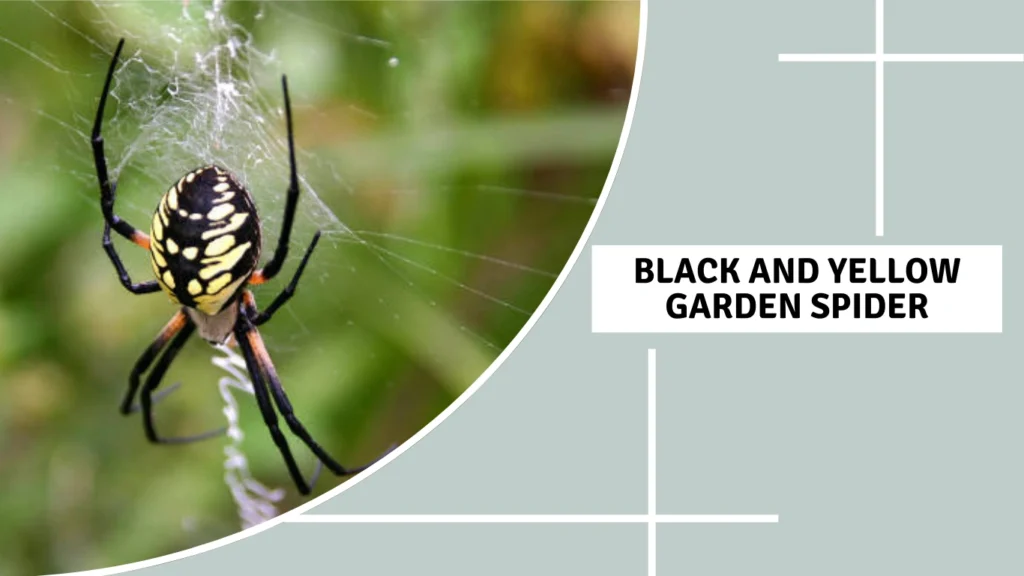
The black and yellow garden spider, also called the writing spider or zigzag spider, belongs to the species Argiope aurantia. It is a member of the orb-weaver family and is famous for the large circular webs it builds in sunny, open areas such as gardens, fields, and meadows. These spiders are non-aggressive and pose little to no threat to humans, making them a beneficial garden companion that controls insect populations.
They are easy to identify due to their vivid black and yellow coloration, especially on the abdomen, and are often mistaken for more dangerous spiders due to their striking appearance. Females are much larger than males and often remain in the center of their web during the day.
Identification and Appearance
What Spider Is Black and Yellow?
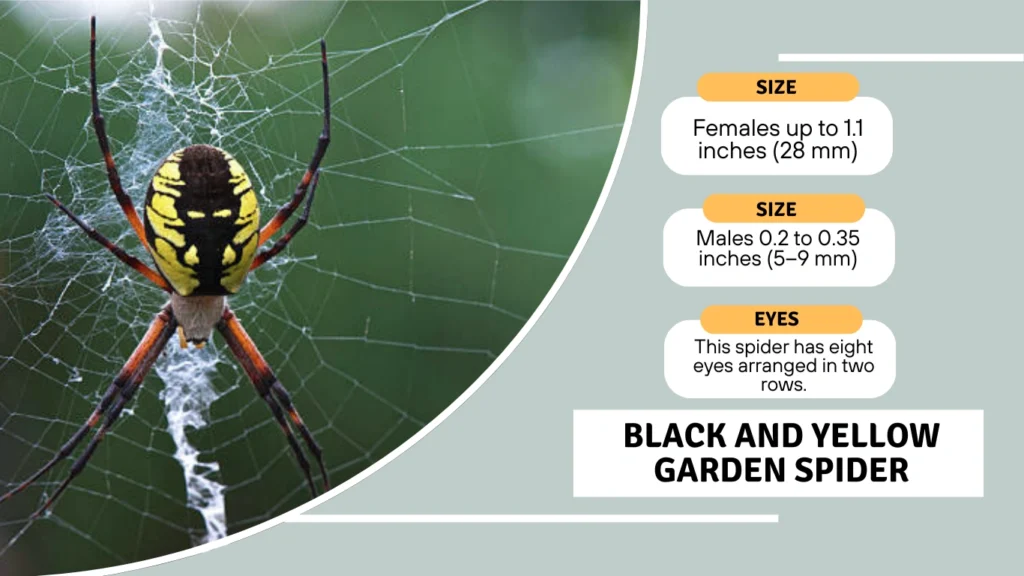
The black and yellow garden spider is a distinct species known for its bold yellow markings on a black abdomen. Its legs are also banded with black and orange or yellow, helping it blend with its surroundings while also warning predators.
Black and Yellow Garden Spider Size
Adult females can grow up to 1.1 inches (28 mm) in body length, with a leg span reaching up to 3 inches (76 mm). Males are considerably smaller, usually about 0.2 to 0.35 inches (5–9 mm), and are rarely noticed unless seen near the female’s web.
Black and Yellow Garden Spider Eyes
Like most orb-weavers, this spider has eight eyes arranged in two rows. Their eyesight is limited, so they rely on web vibrations to detect prey and threats.
Black and Yellow Garden Spider Drawing
If you were to sketch this spider, the most notable features would be the large oval abdomen with symmetrical yellow patterns, long legs with striped segments, and its web’s signature zigzag stabilimentum at the center.
Picture of Black and Yellow Garden Spider
Photos of this spider usually show it positioned in the middle of its web, legs held in an “X” shape, and the yellow markings forming an eye-catching pattern on its dark body.
Distribution and Habitat

Where Do Black and Yellow Garden Spiders Live?
These spiders are native to North and Central America but are also found in parts of South Africa, Australia, and Europe. They thrive in warm to temperate climates, especially in areas with access to flying insects.
Black and Yellow Garden Spider Habitat
They prefer sunny, open spaces like gardens, meadows, fields, and along forest edges. You’ll often find their webs attached between tall plants, fences, or eaves of buildings. The spider remains at the center of the web during the day, using its coloring to blend into the background.
Black and Yellow Garden Spider Range
Their range includes most of the United States and southern Canada, with a high population density in the Midwest and Southern states. They’re also common in backyards, parks, and agricultural areas.
Regional Sightings and Variants
- Texas: Commonly spotted in rural and suburban gardens.
- Ohio, Illinois, Michigan, and Minnesota: Active during late summer and fall.
- Ontario & New York: Seen in flower beds and farms from late June to September.
- California & Florida: Present year-round due to the mild climate.
- Oklahoma, Oregon, and Maine: Found in gardens and wildflower fields.
- South Africa & Australia: Introduced populations exist in some areas.
Black and Yellow Garden Spider UK
Although not native to the UK, similar-looking species may appear there. However, the true Argiope aurantia is rarely found in Britain.
Web Structure and Nesting
Black and Yellow Garden Spider Web
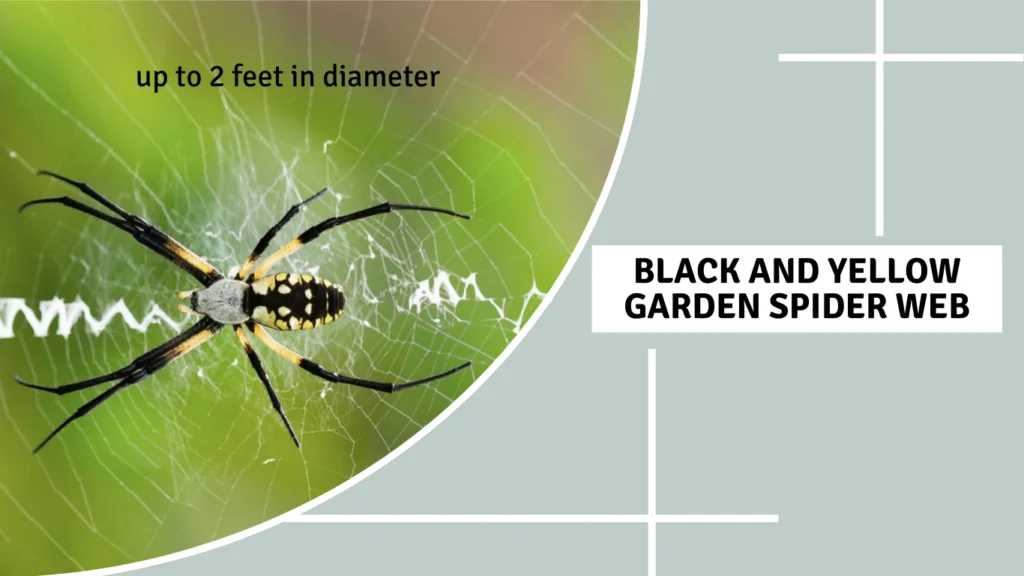
This spider spins large, circular orb webs, sometimes up to 2 feet in diameter. The most unique feature is the zigzag-shaped silk in the center, called the stabilimentum, which may help deter predators or attract prey.
Black and Yellow Garden Spider Egg Sac
Females create round, papery brown egg sacs that can contain 400–1,000 eggs. These sacs are usually hidden nearby the web and are guarded by the female until she dies.
Nesting and Web Location
They typically build webs in high-traffic insect zones, such as near porch lights, between flower stalks, or in tall grass. The spider rebuilds or repairs its web each day, especially after catching large prey.
Pregnant Black and Yellow Garden Spider
A gravid (pregnant) female appears more bloated, especially in late summer. She will spend much of her time reinforcing her web and preparing a safe place to lay her egg sac.
Life Cycle and Baby Black and Yellow Garden Spider
Egg sacs hatch in the spring, releasing hundreds of spiderlings. The babies stay together briefly before ballooning away on silk strands to find their own space and food source.
Behavior and Daily Activity
Black and Yellow Garden Spider Male vs Female
The female is much larger, colorful, and more visible in the web, while the male is smaller and brownish. Males typically build smaller webs nearby and wait for the right moment to mate. After mating, females may sometimes eat the males—a behavior known as sexual cannibalism, though it doesn’t always happen.
Male Black and Yellow Garden Spider Traits
Males are usually less than half the size of females. They lack the bright yellow patterns and are harder to spot. Their main focus is locating a mate during late summer. Unlike females, they don’t stay in the center of large webs.
Giant Black and Yellow Garden Spider
While most females grow up to 1.1 inches (28 mm), some are described as “giant” when found in regions like Texas or Florida, often due to their body size and leg span reaching over 3 inches. This can appear intimidating but is completely natural for the species.
Daily Web-Spinning Behavior
They often rebuild their webs every evening, especially if the web has been damaged or cluttered with debris. During the day, they stay at the center, legs in an “X” shape, waiting for prey.
Mating and Reproduction
Mating usually occurs in late summer. Males use vibrations to signal females and reduce the risk of being mistaken for prey. After mating, the female lays eggs in sac(s) and guards or remains near them until she dies in fall or winter.
Diet and Predation
What Do Black and Yellow Garden Spiders Eat?
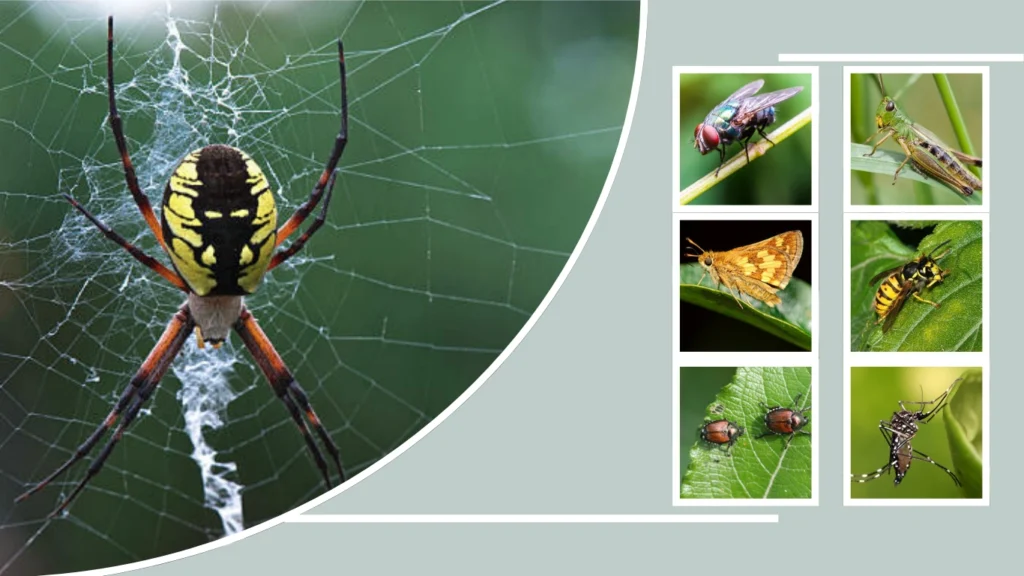
Their diet includes a wide range of flying insects:
- Flies
- Grasshoppers
- Moths
- Wasps
- Beetles
Once prey gets stuck in the web, the spider quickly rushes over, bites it, and wraps it in silk.
Black and Yellow Garden Spider Food Sources
They rely heavily on insects attracted to light, flowering plants, or open fields. This makes gardens and porches with lights ideal feeding zones.
Black and Yellow Garden Spider Diet
Their liquid diet comes from liquefying prey with digestive enzymes. After injecting venom, they suck out the insides over a few hours.
Role in Insect Control
They are extremely beneficial to gardeners by reducing pest insects, helping protect vegetables, flowers, and other plants from infestations.
Are They Beneficial for Gardens?
Yes, these spiders are considered natural pest control agents. Unlike chemicals or traps, they pose no harm to plants, people, or pets and require no maintenance.
Bite, Venom, and Human Interaction

Do Black and Yellow Garden Spiders Bite?
Yes, they can bite, but it’s extremely rare. Bites typically occur only when the spider feels directly threatened—such as being handled or accidentally pressed. In most cases, the spider will flee rather than bite.
Black and Yellow Garden Spider Bite Symptoms
If a bite occurs, symptoms may include:
- Mild swelling
- Redness at the site
- Itching or slight pain (similar to a bee sting)
These symptoms usually subside within a few hours to a day without treatment.
Is the Black and Yellow Garden Spider Dangerous?
No, they are not dangerous to humans. Despite their bold colors and large size, they are non-aggressive and pose no serious medical threat. Most people never experience a bite even when the spider is nearby.
Are Black and Yellow Garden Spiders Poisonous to Humans or Dogs?
They are venomous to their prey, but not poisonous to humans or dogs. Their venom is designed to paralyze small insects. Even if a dog disturbs the spider, a bite is unlikely and would only cause mild, localized irritation.
Venomous vs Poisonous: What’s the Truth?
This spider is venomous (not poisonous). That means it uses venom to immobilize prey, not to harm predators. The venom isn’t strong enough to cause any danger to humans or pets unless someone has an unusual allergy—similar to a bee sting reaction.
Myths, Comparisons, and Fun Facts
Banana Spider vs Black and Yellow Garden Spider
Both spiders are large and colorful, but banana spiders (golden orb-weavers) are usually larger and found in more tropical climates. The banana spider’s web is golden-hued, while the black and yellow garden spider creates a white-silk web with a zigzag stabilimentum.
Black and Yellow Garden Spider vs Joro Spider
The Joro spider, recently found in the southern U.S., is also brightly colored and an orb-weaver. Joro spiders have blue and yellow markings, while Argiope aurantia has black and yellow markings. Joros are slightly larger and spread rapidly, but both species are harmless.
Black and Yellow Garden Spider Fun Facts
- Females can eat their mates after reproduction.
- They often stay motionless in the web for hours, conserving energy.
- The zigzag web pattern may reflect UV light to attract insects.
- Each spider may consume hundreds of pests per month.
- The species has inspired folklore and spider-themed tattoos.
Meaning and Symbolism
In some cultures, the spider represents creativity, patience, and balance, reflecting its web-building abilities. Gardeners often see it as a symbol of natural pest control and ecosystem harmony.
Can You Keep One as a Pet or For Sale?
While not common in the pet trade, some nature enthusiasts may keep them temporarily in terrariums for observation. However, they are best left in the wild, where they can contribute to the local ecosystem.
FAQ
1. Are black and yellow garden spiders venomous?
Yes, but only to insects. Their venom is used to immobilize prey like flies and beetles. It’s not dangerous to humans or pets and usually causes no more than mild swelling if a bite occurs.
2. How big can a black and yellow garden spider get?
Female spiders can reach up to 1.1 inches (28 mm) in body length, with leg spans up to 3 inches (76 mm). Males are much smaller, typically 0.2–0.35 inches (5–9 mm) long.
3. Where do black and yellow garden spiders commonly live?
They are found throughout North America, particularly in gardens, fields, forests, and around homes. They prefer sunny areas with vegetation where they can anchor large orb-shaped webs.
4. What should I do if I find one in my garden?
Leave it be. These spiders are beneficial predators that help control insect pests naturally. If it’s in an inconvenient location, gently relocate it using a stick or jar.
5. What’s the purpose of the zigzag in their web?
The zigzag pattern is called a stabilimentum. It may help camouflage the spider, attract prey by reflecting UV light, or deter larger animals from walking through the web.