
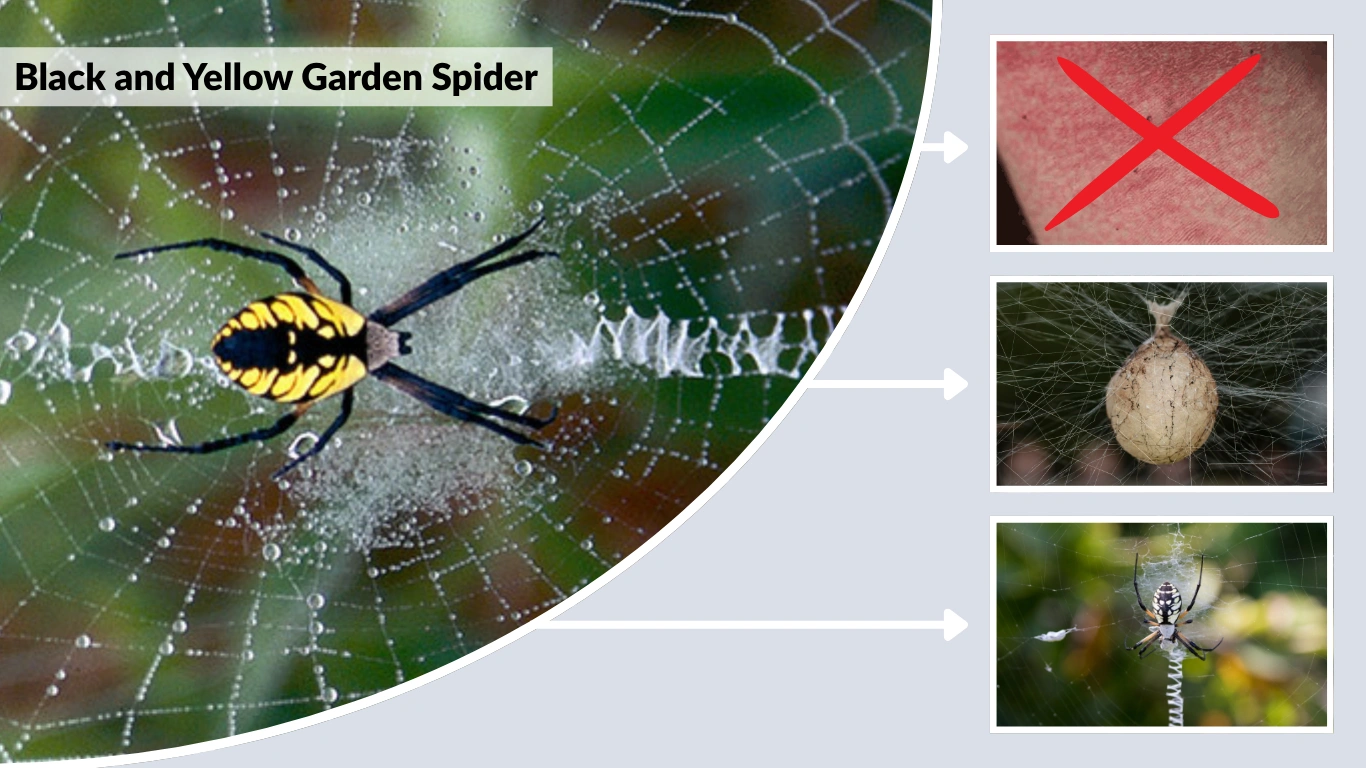
The black and yellow garden spider (Argiope aurantia), also known as the yellow garden orb-weaver, is one of the most striking and commonly seen spiders in North America. Its vibrant color pattern—shiny black with bright yellow markings—often draws attention and sometimes fear. However, despite its intimidating appearance, this species is not dangerous to humans. In fact, it plays a crucial ecological role by controlling insect populations. Let’s explore its behavior, bite, habitat, and why it’s more helpful than harmful.
Identification of the Black and Yellow Garden Spider
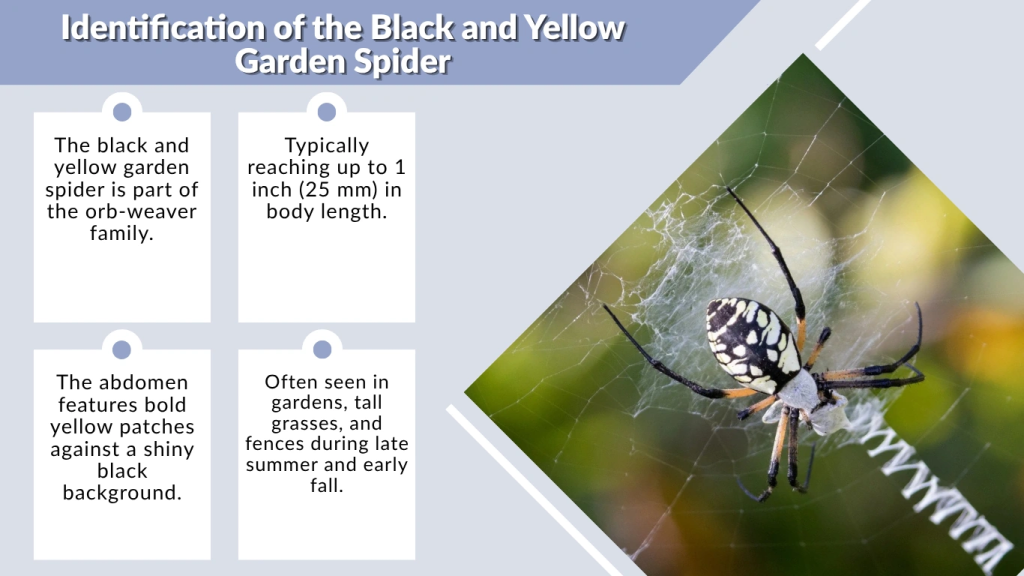
The black and yellow garden spider is part of the orb-weaver family (Araneidae), known for constructing large, symmetrical webs. The female is much larger than the male, typically reaching up to 1 inch (25 mm) in body length, with long legs marked in alternating black and yellow bands. Males are smaller and less colorful.
The abdomen features bold yellow patches against a shiny black background, and the cephalothorax (front part) is covered in silvery hairs. These spiders are easy to recognize because of their large, circular webs—often seen in gardens, tall grasses, and fences during late summer and early fall.
Behavior and Web Construction
The yellow and black garden spider builds one of the most intricate webs found in nature. The web can span over two feet in diameter, usually anchored between plants or garden posts. A unique feature of its web is the zigzag-shaped silk band in the center, called a stabilimentum. Scientists believe it may reflect ultraviolet light to attract insects or strengthen the web’s structure.
Unlike aggressive spiders, the black and yellow garden spider remains calm and motionless, waiting for prey to become ensnared. When insects like flies, grasshoppers, or bees touch the sticky silk, the spider quickly immobilizes them with venom before wrapping them in silk to eat later.
Is the Black and Yellow Garden Spider Dangerous?
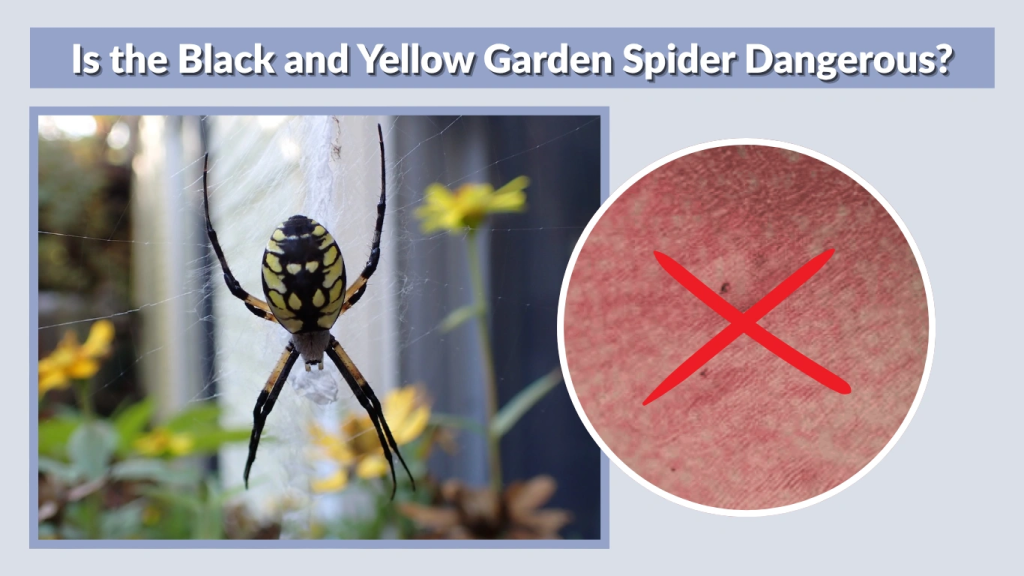
Despite its size and vivid color, this spider is not dangerous to humans. It does produce venom, but it’s designed to paralyze small prey—not harm people. Its fangs are too small to pierce thick human skin effectively.
- Venom Strength: Mild, harmless to humans.
- Bite Sensation: Comparable to a mild bee sting—slight redness or swelling that fades quickly.
- Allergic Reactions: Extremely rare and mild.
These spiders are shy and non-aggressive. They will not bite unless directly provoked or handled roughly. Most encounters occur outdoors, and the spider typically retreats rather than attacks. The fear associated with them is based on appearance rather than behavior or toxicity.
Comparing It to Dangerous Spiders
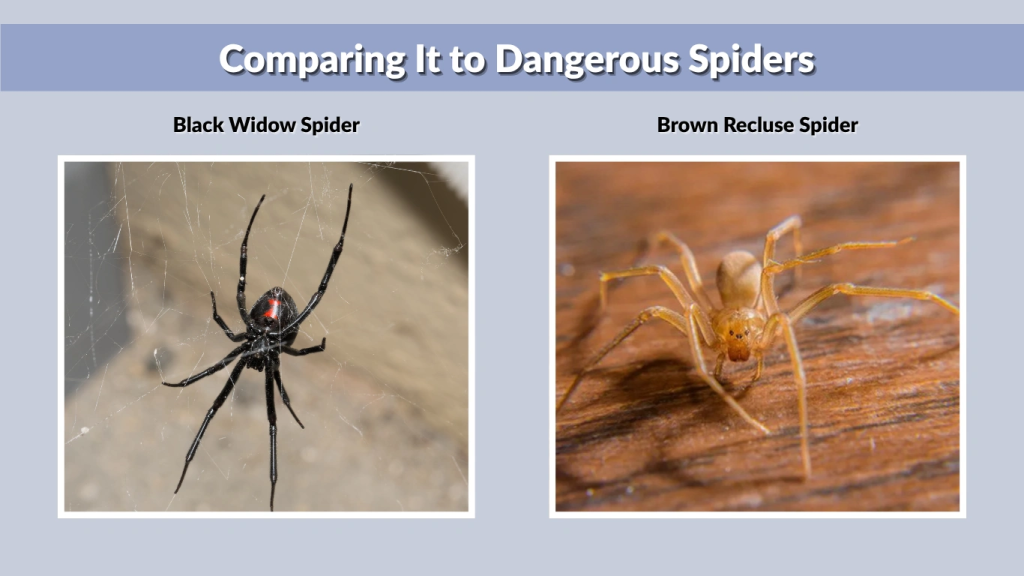
It’s easy to mistake the black and yellow garden spider for venomous species because of its vivid colors, but there are key differences:
- Black Widow Spider: Smaller, with a shiny black body and a red hourglass marking. Its venom is far more potent and medically significant.
- Brown Recluse Spider: Has a violin-shaped mark and prefers dark indoor spaces. Its bite causes tissue damage, unlike the harmless garden spider’s bite.
The Argiope aurantia is beneficial, not threatening. It helps reduce pest populations and poses no danger to humans, pets, or crops.
Habitat and Distribution
The black and yellow garden spider is widespread across the United States, southern Canada, Mexico, and parts of Central America. It prefers sunny, open areas with access to flying insects—gardens, meadows, and field edges are ideal habitats.
These spiders are solitary and territorial. Once they find a suitable location, they may rebuild their web daily in the same spot. In rural areas, you might see several webs spaced out across a field or garden, each belonging to a single female spider.
During colder months, adult spiders die after laying eggs, while egg sacs—protected in silk—survive the winter. In spring, hundreds of spiderlings hatch and disperse, continuing the species’ life cycle.
Reproduction and Egg Sacs
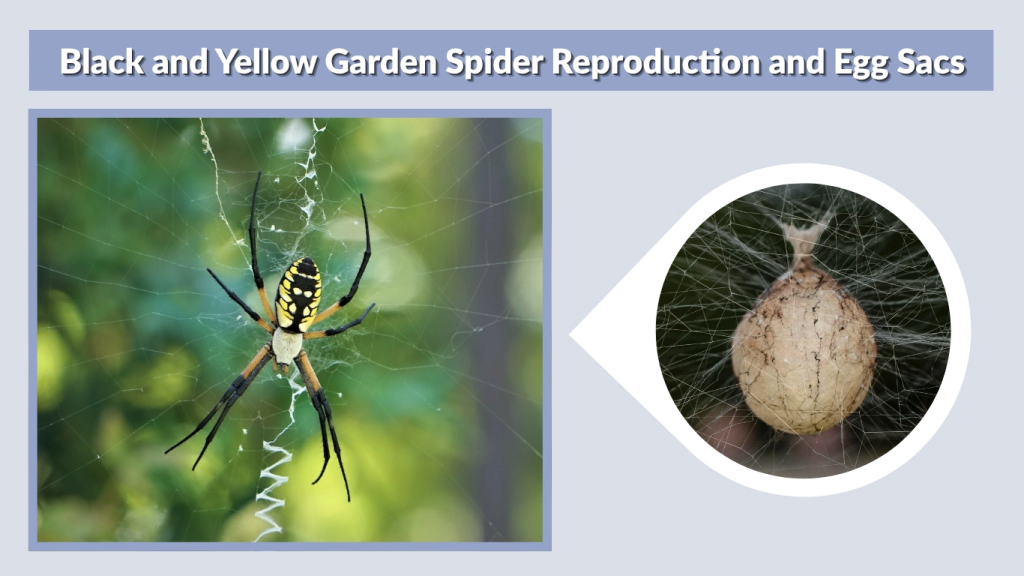
Mating usually occurs in late summer. The smaller male cautiously approaches the female’s web to avoid being mistaken for prey. After mating, the female constructs one or more egg sacs, each about an inch wide and shaped like a paper lantern.
Each sac contains hundreds of eggs wrapped in multiple layers of silk, ensuring protection against cold and predators. The female guards her egg sacs until she dies in autumn. The spiderlings hatch in spring and often balloon—floating away on silk threads—to find new habitats.
This reproductive cycle ensures that black and yellow garden spiders reappear every year in the same regions, contributing to balanced garden ecosystems.
Role in the Ecosystem
The black and yellow garden spider is a vital part of the natural food chain. It helps control insect populations by consuming flies, mosquitoes, beetles, and even small wasps. One spider can capture dozens of insects daily, reducing the need for chemical pest control.
Additionally, birds, wasps, and small mammals occasionally prey on these spiders, making them a food source for higher predators. This balance keeps ecosystems stable and gardens healthier.
Their presence often indicates an environment rich in biodiversity—something gardeners should value rather than fear.
Myths and Misconceptions
Myth 1: “Black and yellow garden spiders are poisonous.”
Truth: They are venomous (like most spiders) but harmless to humans. Their venom works only on insects.
Myth 2: “They attack humans.”
Truth: They avoid confrontation. A garden spider will flee or drop from its web when disturbed.
Myth 3: “They invade homes.”
Truth: These spiders prefer the outdoors. They rarely enter houses unless accidentally carried in.
Myth 4: “Their bite is deadly to pets.”
Truth: The venom has no dangerous effect on cats or dogs. Most bites do not even occur because pets usually ignore them.
These clarifications prove that the black and yellow garden spider is far more misunderstood than menacing.
Observing the Spider Safely
If you come across one in your garden, enjoy the opportunity to observe it. Keep a respectful distance, and avoid touching or moving the web. They are fascinating to watch while rebuilding webs, capturing prey, or guarding egg sacs.
For photographers, early morning dew highlights their webs beautifully. Just remember not to destroy their silk structure—it’s their hunting and survival tool.
If the spider is in an inconvenient location, gently relocate it by moving the web to nearby shrubs using a long stick. Always wear gloves and handle it carefully to avoid stressing the spider.
Final Thoughts: Beautiful, Not Dangerous
The black and yellow garden spider is one of the most beneficial and least harmful arachnids in your backyard. Its vibrant pattern and calm behavior symbolize balance and natural pest control. Though it may appear fearsome, it deserves appreciation, not fear.
So, the next time you see a yellow garden spider web sparkling in sunlight, remember—it’s not a threat but a silent guardian keeping your garden insect-free. By coexisting with these spiders, you support biodiversity and the delicate equilibrium of nature.
