
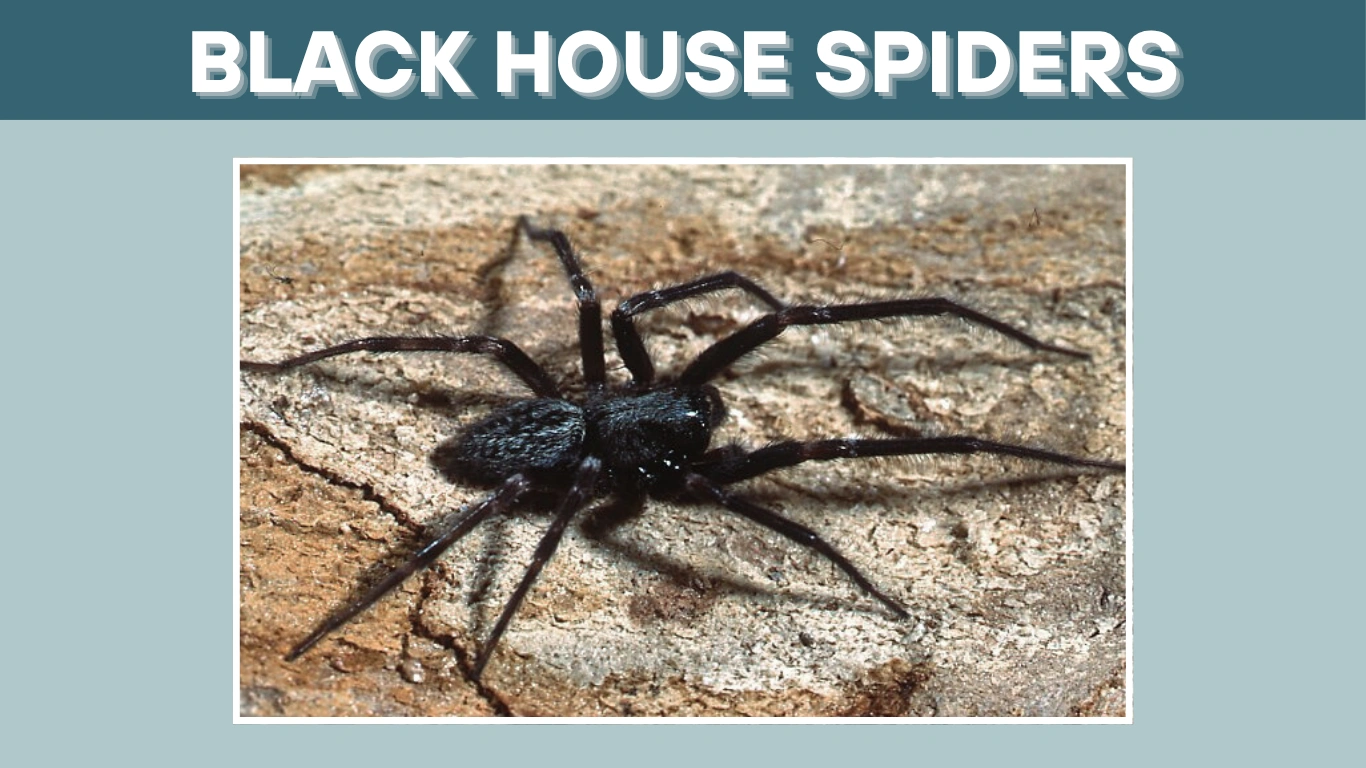
Black house spiders are common yet misunderstood visitors in homes and gardens. With their dark bodies and web-filled corners, they often raise questions: Are they dangerous? Do they bite? What do they eat? In this quick guide, we answer 13 of the most common questions about black house spiders, covering their venom, habits, diet, and where they live. If you’ve spotted one nearby, here’s exactly what you need to know.
FAQs About Identification & Habitat

Black house spiders are often seen in quiet corners of homes and outdoor structures, but many people don’t know what they actually are. This section explains what black house spiders look like, where they live, and how common they are.
What is a black house spider?
The black house spider (Badumna insignis) is a dark, robust spider native to Australia but also found in other regions, including parts of the U.S. and New Zealand. These spiders have:
- Charcoal-gray to black bodies
- A slightly velvety texture
- Legs that appear thicker and hairier than those of typical cobweb spiders
They are often confused with other dark spiders but can be identified by their messy webs, usually tucked into crevices, windows, or outdoor corners.
Are small black spiders common in houses?

Yes, small black spiders are common in many homes, especially in areas with mild or warm climates. While not all of these are black house spiders, many harmless species like cobweb spiders or jumping spiders are black in color.
Black house spiders, in particular, are drawn to:
- Windowsills
- Eaves and door frames
- Sheds and fence corners
- Gaps in brickwork or wood
Their preference for quiet, sheltered places makes them a regular indoor guest.
Where do black house spiders live?
Black house spiders typically live:
- Outdoors in tree bark, rock crevices, garden sheds, fences, and brick walls
- Indoors near windows, door frames, ceiling corners, and inside outdoor-facing cracks
They are territorial web builders that often stay in the same spot for long periods. Their tangled webs are not decorative but highly functional for catching flies, beetles, and other insects.
These spiders prefer dry, sheltered environments and will retreat into their web funnel when disturbed.
FAQs About Biting & Venom
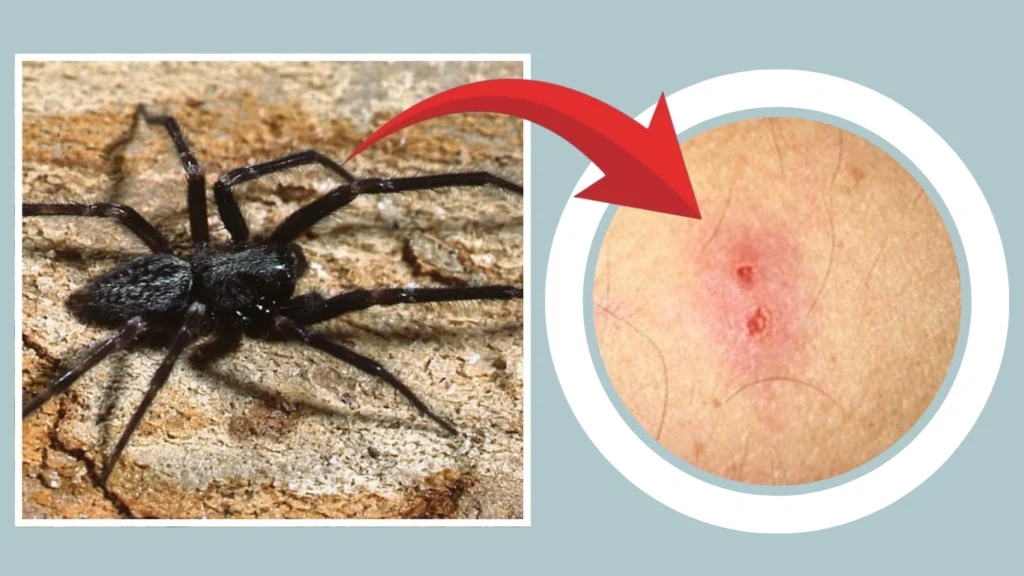
Although black house spiders may look intimidating due to their dark color and thick legs, they are generally not dangerous to humans. Here’s what you need to know about their venom, bite, and whether they pose any real threat.
Do black house spiders bite?
Yes, black house spiders can bite if provoked or accidentally pressed against the skin. However, they are shy and non-aggressive. Most bites occur only when the spider feels cornered or is disturbed while in its web.
Are black house spiders venomous?
Yes, they are venomous, like nearly all spiders. Their venom is used to paralyze insect prey. However, their venom is not dangerous to humans unless there is a rare allergic reaction. It may cause mild symptoms such as:
- Localized pain or swelling
- Redness or itching
- Slight numbness around the bite site
These effects typically go away within a day or two.
Are black house spiders poisonous?
No. “Poisonous” means harmful if eaten or touched, while “venomous” means harmful if injected. Black house spiders are not poisonous and pose no danger if accidentally ingested (though that’s obviously not advised).
Are black house spiders dangerous?
In general, no—they are not dangerous to humans. Their bite may be mildly painful, like a bee sting, but it is not considered medically significant. They are reclusive spiders that prefer avoiding contact with people.
Are black house spider dangerous?
This is a duplicate of the previous question. To clarify again: black house spiders are not considered dangerous and are unlikely to bite unless provoked. They are more helpful than harmful, as they reduce the number of flying insects around homes.
FAQs About Diet & Behavior
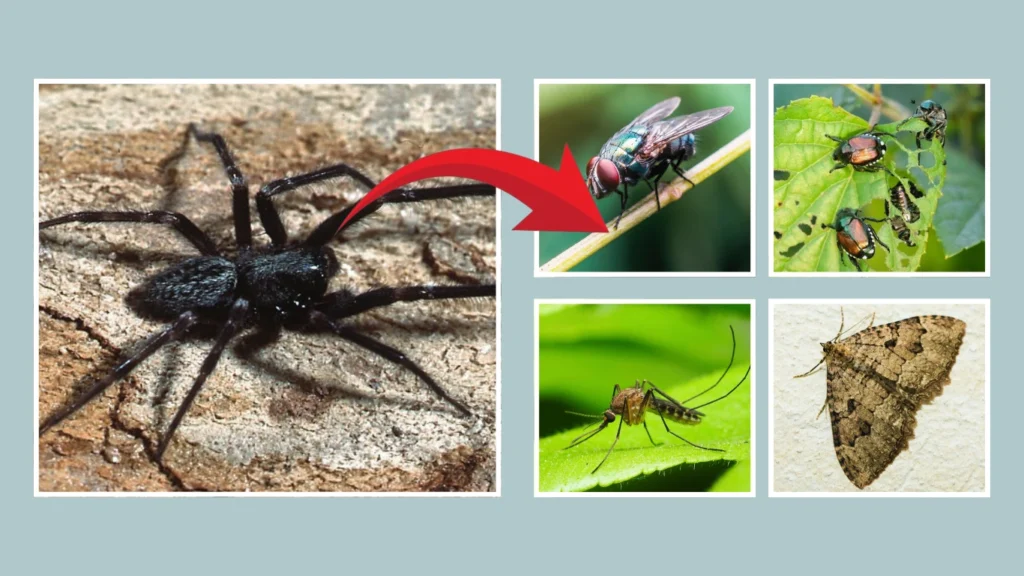
Black house spiders are quiet, web-building hunters that play an important role in natural pest control. This section covers what they eat and how they behave, especially indoors.
What do black house spiders eat?
Black house spiders primarily feed on insects and small arthropods that get caught in their web. Their diet includes:
- Flies
- Moths
- Mosquitoes
- Beetles
- Ants and other crawling insects
They are sit-and-wait predators, staying in their messy web funnels until they feel vibration from prey. Once detected, they rush out, bite the insect to inject venom, and drag it back into the funnel to feed.
Do black house spiders jump?
No, black house spiders do not jump.
Unlike jumping spiders, which are active hunters, black house spiders are web-dwellers. They stay close to their web, using it for both shelter and hunting. If startled, they may retreat quickly but do not leap or pounce on prey. Their movement is cautious and defensive rather than aggressive or energetic.
FAQs About Conservation & Rarity
Black house spiders are common in many regions, especially around human dwellings, but some people wonder if they are threatened or rare. Here’s what you should know.
Are black house spiders endangered species?
No, black house spiders are not endangered.
They are a stable and widespread species, especially in Australia and regions where they’ve adapted well to urban environments. Because they thrive in sheltered places like sheds, brick walls, and window frames, human structures have actually helped them expand their presence.
There is no conservation concern for this species at the moment—they are neither rare nor at risk of extinction.