
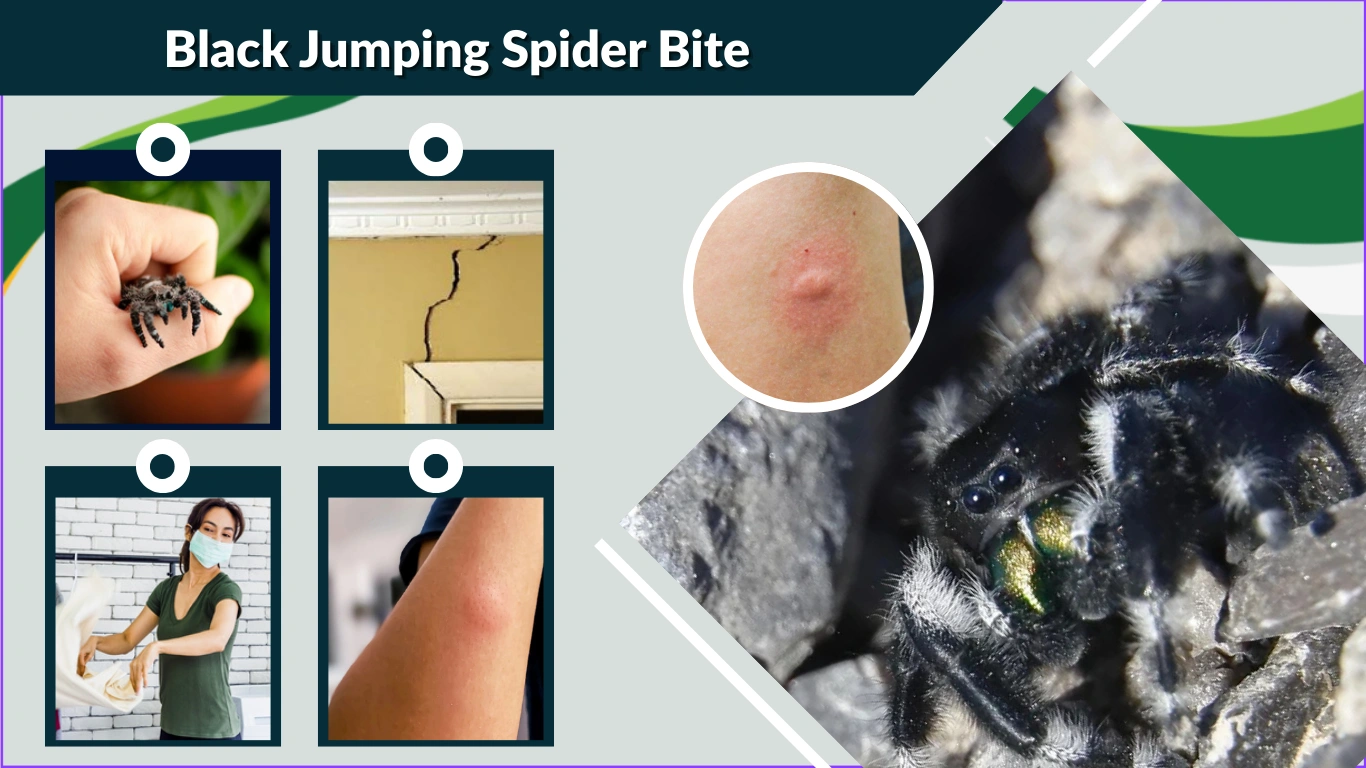
A bite from a black jumping spider is an uncommon event and rarely poses serious danger to humans. These spiders are small, active hunters that rely on their excellent vision and jumping ability rather than venom for defense. Still, when a bite does happen, people often confuse it with more dangerous species such as the wolf spider or the brown recluse. Understanding what a black jumping spider bite looks like, its symptoms, and how it differs from other spider bites helps reduce unnecessary worry.
Identifying Black Jumping Spiders

General Appearance
Black jumping spiders are small to medium in size, typically ranging from 4 to 18 mm. Their compact bodies and large front-facing eyes give them an almost curious expression. Many species feature black bodies with white markings or stripes, which sometimes causes confusion with other jumping spider types.
Common Types Linked to Bites
- Bold Jumper (Phidippus audax) – one of the most recognizable black jumping spiders, known for its distinctive white spots and metallic green or blue chelicerae.
- Black-and-White Jumping Spiders – smaller variants that also display spotted or banded patterns.
- Tiny or Small Black Jumping Spiders – juveniles or smaller species that are often seen indoors or around windows.
Regions Where They Are Found
Black jumping spiders are widespread:
- North America – especially in the United States, often around homes and gardens.
- South Africa – some species found in warmer climates, sometimes mistaken for more harmful spiders.
- Urban and Rural Areas Worldwide – they adapt well to human environments, making them common house visitors.
Do Black Jumping Spiders Bite?

Defensive Nature
Jumping spiders are not aggressive toward humans. They prefer to flee rather than fight. A bite usually occurs only if the spider feels cornered, trapped in clothing, or accidentally handled.
Bite Frequency
Compared to other spiders, jumping spider bites are extremely rare. Many reported bites are misattributed to them, since symptoms overlap with those from mosquitoes, wolf spiders, or even allergic skin reactions.
Symptoms of a Black Jumping Spider Bite

Mild Reactions
Most black jumping spider bites result in only minor, localized symptoms such as:
- Redness around the bite site
- Slight swelling
- Itching or mild irritation
- A small raised bump, sometimes resembling a mosquito bite
Pictures and Identification
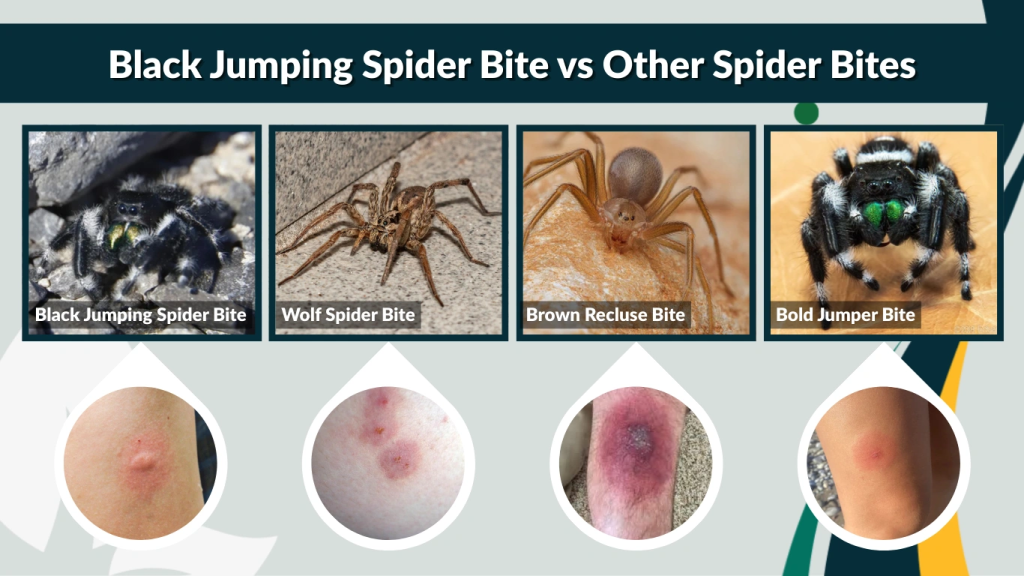
In photos, a black jumping spider bite generally appears as a small red spot with minimal swelling. Unlike dangerous spider bites, it does not spread rapidly, nor does it form necrotic wounds. Comparing pictures of bites can help distinguish between:
- Jumping spider bites – small, mild redness
- Wolf spider bites – larger swelling with noticeable pain
- Brown recluse bites – ulcer-like wounds that worsen over time
Severe Reactions (Rare Cases)
In rare cases, some individuals may experience stronger reactions:
- Widespread swelling beyond the bite area
- Headaches or dizziness
- Nausea or mild fever (very uncommon)
These cases are typically due to allergic sensitivity rather than venom potency, since jumping spiders are not considered medically significant.
Black Jumping Spider Bite vs Other Spider Bites
Bold Jumper Black Jumping Spider Bite
The bold jumper (Phidippus audax) is the most common black jumping spider linked to bites. Its bite causes localized redness, itching, and minor swelling, which usually subsides within a few hours or a day. Because this spider is larger than most jumpers, its bite may feel slightly sharper, but it remains harmless compared to venomous species.
Wolf Spider vs Black Jumping Spider Bite
Wolf spiders are larger and more robust hunters. Their bites can cause deeper pain, significant swelling, and sometimes open sores if untreated. In contrast, black jumping spider bites remain superficial and mild. Many people confuse the two, but wolf spider bites are more noticeable and uncomfortable.
Brown Recluse vs Black Jumping Spider Bite
The brown recluse is one of the most feared spiders in the world. Its bite may cause necrosis (tissue death), spreading ulcers, and long-lasting wounds. Black jumping spiders do not have necrotic venom. If a bite site worsens over time, it’s far more likely from a recluse than a jumping spider.
Treatment for Black Jumping Spider Bites
First Aid at Home
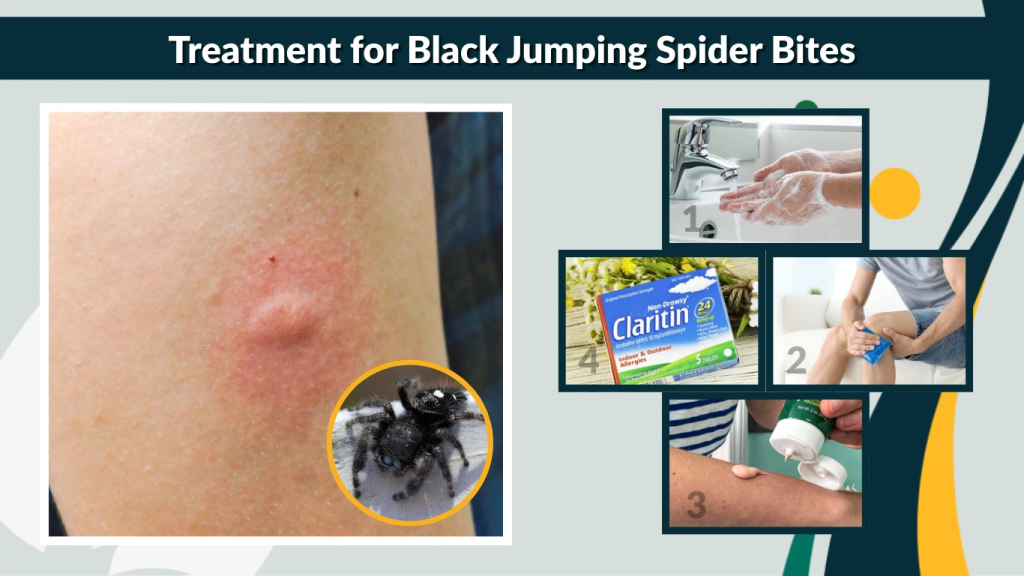
Most bites from black jumping spiders can be treated without medical help. Steps include:
- Clean the bite area thoroughly with soap and water.
- Apply a cold compress to reduce swelling.
- Take over-the-counter pain relievers like ibuprofen or acetaminophen if needed.
- Use antihistamine creams or oral tablets to control itching.
When to Seek Medical Help
You should see a doctor if you notice:
- Rapidly spreading swelling or redness
- Signs of infection (pus, increased pain, warmth around the bite)
- Allergic reactions such as difficulty breathing or dizziness
Preventing Black Jumping Spider Bites

Around the House
Jumping spiders often enter homes looking for prey. To reduce encounters:
- Shake out clothes, shoes, and towels before using them.
- Keep windows and door cracks sealed.
- Regularly clean corners, closets, and storage areas.
Outdoors
If you garden or spend time outside:
- Wear gloves while handling soil, rocks, or firewood.
- Avoid pressing your hands into dark crevices.
- Store firewood away from the house to prevent spiders from nesting.
FAQs
Are black jumping spiders poisonous?
No. Their venom is too weak to harm humans. They are considered harmless and beneficial since they eat pests like flies and mosquitoes.
Can a small or tiny black jumping spider bite hurt?
Bites from smaller spiders may feel like a pinprick but usually cause no lasting pain. The reaction is often milder than from larger jumping species.
Do black jumping spiders bite in South Africa?
Yes, they exist in South Africa, but bites are still rare. The effects remain mild and do not pose a medical threat.
What does a bold jumper bite look like?
It typically appears as a small, red bump with slight swelling. It may itch but does not lead to tissue damage or spreading ulcers.
Can you confuse a black jumping spider bite with a recluse bite?
Yes. At first, they may look similar. However, recluse bites worsen over hours or days, while black jumping spider bites fade quickly.